SHEIN

Search documents
极兔抢滩巴西,也在悄然改变巴西贫民窟
Guan Cha Zhe Wang· 2025-08-07 08:37
Core Insights - Brazil is emerging as a significant market for Chinese companies, particularly in e-commerce, as it is viewed as a "last blue ocean" after intense competition in Southeast Asia and Europe [1][2] - The logistics infrastructure in Brazil presents both challenges and opportunities for Chinese logistics companies like J&T Express, which aim to tap into previously neglected consumer segments [1][6] Market Overview - Brazil has a population of 217 million, with 188 million internet users and over 100 million active e-commerce users, indicating strong consumer potential [2] - E-commerce sales in Brazil increased from approximately 126 billion reais in 2020 to 185.7 billion reais in 2023, with projections to exceed 200 billion reais in 2024 [4] - The market concentration among the top ten e-commerce platforms in Brazil is high, with a CR10 of 51.9%, led by Mercado Livre and Shopee [4] Infrastructure Challenges - Brazil's logistics infrastructure is underdeveloped, with only 1.7% of its 1.72 million kilometers of roads being highways, leading to high logistics costs [6] - The presence of favelas complicates logistics, as many areas lack proper access for delivery vehicles, resulting in low delivery success rates [6][12] J&T Express Strategy - J&T Express began operations in Brazil in May 2022, viewing the market as a key growth area due to its rapid e-commerce growth and less established competition [7][8] - The company has focused on building a nationwide delivery network, becoming the first private courier service to cover all 26 states and one federal district in Brazil [13] Competitive Landscape - J&T Express faces competition from local e-commerce platforms that have their own logistics systems, such as Mercado Livre and Shopee [9] - The company emphasizes a strategy of investing in infrastructure rather than competing solely on price, which has proven ineffective in the Brazilian market [10][12] Local Impact - J&T Express employs over 99% local staff, enhancing communication and operational efficiency while providing job opportunities in underserved communities [19] - The company has positively impacted local economies by offering competitive wages, which are significantly higher than the average income in Brazil [21][22]


第四届数贸会筹备进入冲刺阶段
Hang Zhou Ri Bao· 2025-08-07 02:46
Group 1 - The fourth Global Digital Trade Expo will open on September 25 in Hangzhou, with significant preparations underway and a notable increase in exhibitor participation [1] - A total of 1,614 exhibitors have registered, surpassing last year's total, and pre-registered professional buyers have exceeded 24,047, including 7,012 international buyers from 50 countries and regions [1] - The expo aims to attract over 40,000 professional buyers, with international buyers expected to exceed 10,000, targeting a growth of over 50% compared to last year [1] Group 2 - The expo will feature a first-time procurement list for buyers, with an initial release of international procurement needs totaling $190 million from 23 countries, and an additional 300 procurement demands amounting to approximately 2.3 billion yuan [1] - The event will showcase cutting-edge technologies and products, particularly in the artificial intelligence sector, with a larger exhibition area and broader industry coverage [1] - The expo coincides with the 10th anniversary of the first cross-border e-commerce pilot zone in Hangzhou, leveraging its advantages to host activities from global platforms like Amazon, AliExpress, TikTok, and SHEIN [1] Group 3 - During the expo, authoritative reports such as the "Global Digital Trade Development Report 2025" and "China Digital Trade Development Report 2025" will be released, along with the global and national TOP 100 digital trade enterprises list [2] - The event will also introduce the "Top Ten Young Digital Trade Innovators Under 35" list, establishing a three-dimensional evaluation system covering talent, enterprises, and ecosystems [2] - A "Digital Trade Investment Day" will be held to match 100 core technology digital trade projects with 100 global quality venture capital firms, promoting innovation projects and teams in Hangzhou [2]
第四届数贸会进入50天倒计时
Mei Ri Shang Bao· 2025-08-06 22:55
Core Insights - The fourth Global Digital Trade Expo (referred to as "Digital Trade Expo") will take place from September 25 to September 29, 2025, in Hangzhou, focusing on enhancing digital trade as a new engine for global economic growth [1] Group 1: Trade Promotion - The expo will feature 1,614 exhibitors, surpassing last year's total, and is expected to attract over 40,000 professional buyers, including more than 10,000 international buyers [2] - A significant increase in international procurement demand has been noted, with nearly 300 new procurement requests totaling approximately 2.3 billion yuan following the initial release of a $190 million procurement list from 23 countries [2] - The expo will leverage its location in Hangzhou, which celebrates the 10th anniversary of its first cross-border e-commerce pilot zone, to host activities involving major global platforms like Amazon, TikTok, and Facebook [2] Group 2: Technology Empowerment - The expo aims to showcase cutting-edge digital technologies and products, focusing on generative AI and multimodal sensory interaction, while eliminating traditional national pavilions to highlight leading digital trade enterprises [3] - The "Artificial Intelligence+" concept will be a central theme, demonstrating applications of AI across various sectors such as cross-border e-commerce, green transportation, and medical diagnostics [3] - New products and technologies, including the "Turing One" cleaning robot and XR glasses, will be presented, providing immersive experiences for attendees [3] Group 3: Investment Cooperation - The expo will facilitate global resource integration and promote bilateral investments, responding to the demand for global interconnected development [6] - Special events will be organized, including a focus on trade exchanges with the UAE as the guest country and the establishment of a "BRICS Special Economic Zone Cooperation Week" [6] - New initiatives like "International Bulk Commodities and Derivatives Dialogue" will support the development of a smart trading hub for bulk commodities, enhancing financial, technological, and talent empowerment [6]
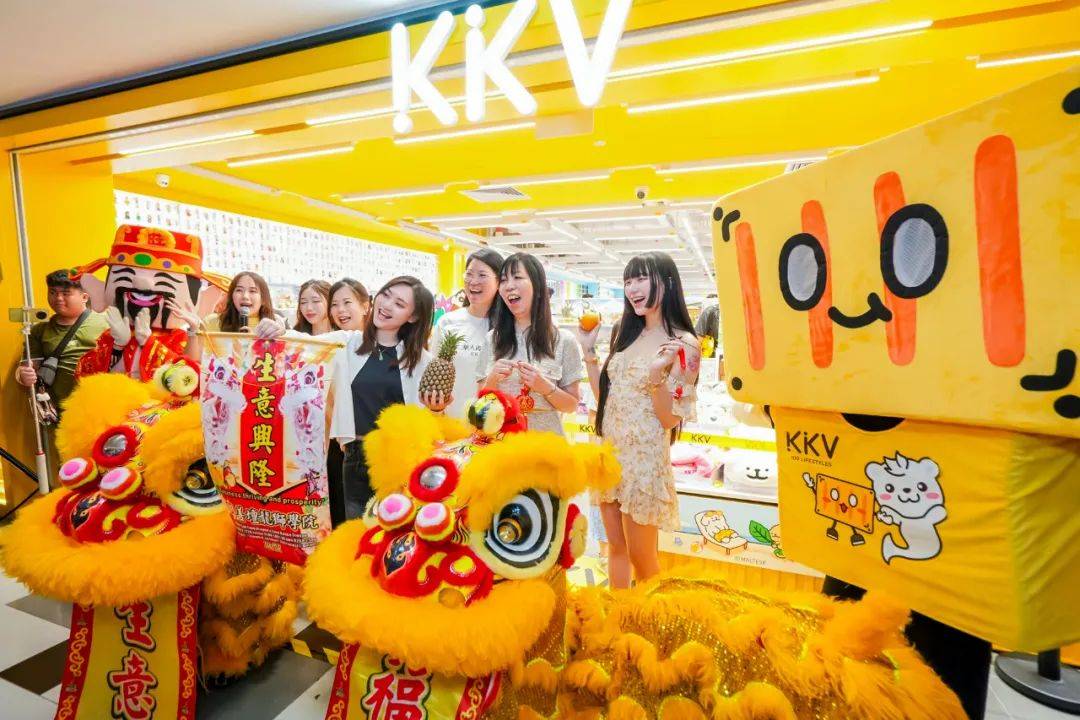
搭乘KKV驶向全球,中国新消费品牌开启大航海时代
Sou Hu Cai Jing· 2025-08-06 22:28
Core Insights - Southeast Asia is emerging as a high-certainty area for new consumption, with growth rates projected at 4.5% to 4.7% for ASEAN countries compared to a global average of 3.2% [2] - Chinese brands are capitalizing on this consumption upgrade trend, establishing a strong presence in Southeast Asia through various sectors, including tea, toys, and electronics [2][5] - The rise of Chinese brands in Southeast Asia reflects a broader trend of globalization and the adaptation of brands to local markets [2][6] Group 1 - Chinese tea brand Mixue Ice City has become particularly popular in Southeast Asia, with over a thousand stores in Vietnam and significant market penetration in Indonesia [6][8] - The toy brand Labubu has sparked a "Chinese toy craze" in Southeast Asia, significantly boosting sales and tourism in Thailand and Vietnam [8][10] - KKV, a new consumption brand, has opened over 50 stores in Southeast Asia, collaborating with numerous Chinese brands to enhance market presence [10][11] Group 2 - The initial strategy for Chinese brands entering Southeast Asia focused on rapid market penetration, exemplified by Mixue Ice City's aggressive store openings [13] - The second phase involves capturing consumer mindshare, as the Southeast Asian market is still in its early stages of market education [13] - Challenges for brands include regulatory hurdles and the need for localized operations, which can complicate market entry [16][17] Group 3 - KKV has facilitated market entry for various brands by handling import regulations and reducing costs associated with entering local markets [19][20] - The collaborative approach among Chinese brands has proven effective, allowing them to leverage shared resources and market knowledge [21][22] - The success of KKV's model in Southeast Asia may serve as a blueprint for future expansions into other regions, including the Middle East and Europe [38][42]
掘金泰国-市场洞察与战略机遇报告2025-海域出海研究
Sou Hu Cai Jing· 2025-08-06 17:02
Group 1: Thailand Overview - Thailand is the second largest economy in ASEAN with a GDP of $545 billion in 2023, and a per capita GDP of $7,830, which is above the ASEAN average of $5,210 [7][9] - The country has a population of 67.9 million, with over 90% practicing Buddhism, and Thai is the official language [9][7] - Thailand's total foreign trade reached $585 billion, accounting for 15.2% of ASEAN's total trade, and it attracted $12 billion in foreign direct investment, ranking third in ASEAN [7][9] Group 2: Policy Incentives and Opportunities - The Thai government supports nine key industries, including automotive and electronics, aiming to enhance GDP by at least 1% [23][19] - The EV3.0 and EV3.5 policies target a 30% production rate for electric vehicles by 2030, with Chinese companies holding a 75% market share in Thailand's electric vehicle sector [24][25] - The report highlights the importance of compliance, including ODI registration, trademark protection, and adherence to import regulations [30][19] Group 3: Consumer Insights - The Thai consumer market is shifting towards convenience and digitalization, with over 80% of online consumption occurring on mobile devices [30] - E-commerce is dominated by Shopee with a 49% market share, followed by Lazada at 30%, and TikTok Shop is rapidly growing with a live shopping penetration rate exceeding 40% [30] - The report identifies five trends in luxury consumption, including high-end dining experiences, cultural entertainment privileges, luxury travel, personalized health services, and collectible investments [28][30] Group 4: Chinese Enterprises in Thailand - Chinese companies are performing well in various sectors, including electric vehicles (BYD, Great Wall), home appliances (Haier, Midea), fast fashion (SHEIN, Pop Mart), and cosmetics (ZEESEA,橘朵) [30][19] - The report emphasizes the need for localization strategies and leveraging policy benefits to tap into consumer and industrial opportunities in Thailand [30][19]

探访SHEIN“匠心工具”:一个深度赋能产业的“链主”是如何让供应链飞轮“自转”的?
创业邦· 2025-08-05 10:33
Core Viewpoint - SHEIN is not just providing orders to suppliers; its continuous technological innovation, represented by digitalization and "artisan tools," is the key to upgrading the entire industry chain [2][6]. Group 1: Technological Innovation and Supplier Empowerment - SHEIN has developed over 170 innovative tools and delivered nearly 6,000 pieces to suppliers, with these lean tools improving process efficiency by an average of 80% [5][6]. - In 2023, SHEIN announced an investment of 500 million yuan over five years to further empower suppliers and established a garment manufacturing innovation research center in Guangzhou [5][6]. - The company focuses on digital transformation across the entire supply chain, enhancing production efficiency and resource utilization while reducing inventory risks through a flexible supply chain model [8][19]. Group 2: Impact on Employment and Industry Transformation - SHEIN's initiatives have positively impacted over a million upstream and downstream employees in the supply chain, fostering mutual learning and self-updating among all roles [6][26]. - The transformation from "Made in China" to "Intelligent Manufacturing in China" is supported by SHEIN's efforts to create a sustainable fashion ecosystem through technological innovation [19][28]. Group 3: Training and Skill Development - SHEIN conducts extensive training programs for suppliers, with over 1,000 training sessions held in 2023 alone, covering various aspects of garment production and management [21][23]. - The company has established "dojos" for hands-on training in quality inspection, lean management, and sewing, ensuring that suppliers' employees can quickly adapt to new tools and processes [23][25]. Group 4: Infrastructure and Community Support - SHEIN has invested over 100 billion yuan in building smart logistics parks to enhance automation in sorting and order distribution [27]. - The company has also initiated community support projects, including upgrading facilities for suppliers' employees and their families, demonstrating a commitment to social responsibility [28][29]. Group 5: Competitive Positioning - Through deep empowerment and collaboration, SHEIN has positioned itself as a "chain master" in the garment industry, surpassing established brands like ZARA and H&M to become the third-largest fashion retailer globally [28][29].

SHEIN生态赋能,中小工厂转型“技术派”的实践样本
Sou Hu Cai Jing· 2025-08-05 10:30
Core Insights - The global fashion industry is undergoing a transformation driven by digitalization, with SHEIN exemplifying the "on-demand fashion" model that shifts from "predictive production" to "demand-driven" strategies [1][3][9] Industry Challenges - The traditional fashion industry relies on a "predictive production" model, which involves long lead times of 3 to 6 months for product development, while the lifecycle of trending items can be as short as one week [3] - The complexity of the fashion supply chain, including product planning, material procurement, production, and logistics, typically requires 6 to 12 months to complete [3] SHEIN's Innovative Approach - SHEIN's "small order quick response" model allows for the production of only 100 to 200 pieces initially, enabling real-time sales data to dictate further production, thus maintaining low inventory levels [3][4] - The company employs digital upgrades and smart tools throughout the design and production processes, significantly reducing trial and error, waste, and costs while enhancing efficiency [4][6] Digital Empowerment of Suppliers - SHEIN provides suppliers with digital tools to synchronize production standards and offers extensive training to instill lean management principles, resulting in improved operational efficiency [8][9] - The transformation of traditional manufacturing practices into modern, demand-driven operations is evident in the case of suppliers like Xie Shuangtao, who transitioned from experience-based order taking to a more responsive production model [6][8] Market Response and Sustainability - SHEIN's digital ecosystem enables rapid market response and precise supply-demand matching, leading to higher sell-through rates and reduced resource waste, contributing to sustainable growth [9]

刘强东豪掷180亿,“欧洲版京东”要来了?
阿尔法工场研究院· 2025-08-05 00:06
Core Viewpoint - JD.com is intensifying its competition in the global e-commerce landscape by acquiring CECONOMY, Germany's largest consumer electronics group, for approximately €2.2 billion (over ¥18 billion), marking a significant step in its international expansion strategy [5][6][10]. Group 1: Acquisition Details - JD.com announced the acquisition of CECONOMY, which operates over 1,000 stores across 12 European countries and holds a market share of over 30% in Germany through its brands MediaMarkt and Saturn [9][10]. - The acquisition aims to enhance CECONOMY's growth and maintain its independent operations while transitioning into a leading omnichannel consumer electronics platform in Europe [10][12]. - JD.com plans to leverage CECONOMY's existing management team and infrastructure to expedite its entry into the European market [10][16]. Group 2: Strategic Rationale - The acquisition provides JD.com with a robust offline channel network, allowing it to bypass complex distribution systems in Europe and gain immediate access to retail markets [16]. - CECONOMY's stores and warehouses will serve as "front warehouses" for JD.com, improving its supply chain capabilities and addressing cross-border logistics challenges [16]. - JD.com is adopting a "self-built + acquisition + cooperation" strategy for internationalization, emphasizing the importance of local operations and infrastructure [14][16]. Group 3: Competitive Landscape - JD.com is competing against major players like Alibaba, Pinduoduo, SHEIN, and TikTok in the global e-commerce arena, with a focus on differentiation through service and experience rather than price wars [18][19]. - The competitive environment is intensifying, with Pinduoduo's Temu facing growth challenges and SHEIN evolving into a major e-commerce platform [17][18]. - The article highlights a broader trend of consumer mergers and acquisitions, with various companies seeking to strengthen their market positions amid economic fluctuations [20][24].

180亿,刘强东买走了
36氪· 2025-08-01 10:15
Core Viewpoint - JD.com is expanding its international presence by acquiring CECONOMY, Germany's largest consumer electronics group, for approximately €2.2 billion (over ¥18 billion), marking a significant step in its European strategy [5][6][11]. Group 1: Acquisition Details - The acquisition of CECONOMY is aimed at enhancing JD.com's growth in Europe, allowing it to leverage CECONOMY's extensive offline retail network of over 1,000 stores [11][16]. - CECONOMY, formed in 2017, operates under the brands MediaMarkt and Saturn, holding over 30% market share in Germany [10][11]. - The deal is expected to facilitate JD.com's transition into a leading omnichannel consumer electronics platform in Europe while maintaining CECONOMY's independent operations [11][16]. Group 2: Market Context - JD.com has been actively pursuing various investments and acquisitions in 2023, indicating a competitive landscape in the Chinese retail sector [7][18]. - The rise of e-commerce giants like Amazon has posed challenges for CECONOMY, leading to a decline in its sales, although online sales have seen a 7.4% increase [11]. - JD.com aims to differentiate itself in the global e-commerce market by focusing on a strategy of "self-built + acquisition + cooperation" to establish a robust presence [17][20]. Group 3: Broader Industry Trends - The consumer merger and acquisition landscape is vibrant, with notable deals such as the interest in Starbucks China and KKR's acquisition of a beverage company [23][24]. - There is a growing trend of private equity firms targeting the Chinese operations of multinational companies, reflecting a shift in investment strategies [26][27]. - The consumer sector is viewed as resilient and attractive for capital investment, especially during economic fluctuations, leading to increased M&A activity [27][28].

电商出海日本报告:阿里、字节、拼多多在日鏖战有感
创业邦· 2025-08-01 03:24
Core Viewpoint - The article discusses the challenges and strategies of Chinese e-commerce companies, particularly Temu and SHEIN, as they enter the Japanese market, highlighting the differences in consumer behavior and marketing strategies between China and Japan [6][81]. Group 1: Market Conditions - Japan has favorable conditions for e-commerce, including strong payment capabilities, high internet penetration, and a stable demand for fashion and beauty products [9]. - Despite the strong offline retail presence, there is a significant base of online shoppers, including older demographics [9]. Group 2: Company Strategies - Temu, launched in 2022, has rapidly gained traction in Japan with 15.5 million monthly active users by July 2023, largely due to aggressive advertising spending [16]. - SHEIN entered Japan earlier and has also seen success, with projections of over 8.39 million users by 2024, surpassing local competitors [17]. - AliExpress, while an early entrant, has struggled to compete effectively against local giants like Rakuten and Amazon Japan [18]. Group 3: Consumer Behavior - Japanese consumers exhibit cautious purchasing behavior, often conducting extensive research before making a decision, contrasting with the impulsive buying tendencies seen in Chinese consumers [61][62]. - The preference for PC-based shopping in Japan is notable, with over 50% of e-commerce transactions occurring on desktop platforms [62]. Group 4: Marketing Approaches - Chinese e-commerce strategies often include gamification and aggressive discounting, which may not resonate well with Japanese consumers who prefer clear and stable pricing strategies [36][37]. - Japanese e-commerce typically emphasizes loyalty programs and long-term promotional strategies, contrasting with the high-frequency promotional tactics common in China [37]. Group 5: Cultural Considerations - There is a significant cultural gap in social sharing and marketing approaches, with Japanese consumers generally less inclined to share shopping experiences or engage in social commerce [32][33]. - The article suggests that successful entry into the Japanese market requires understanding local consumer preferences and adapting marketing strategies accordingly [80][81].