
百威亚太

Search documents
本届唯一获奖中国日化企业,立白科技集团荣获亚洲企业社会责任奖“绿色领导奖”
Zhong Jin Zai Xian· 2025-08-04 06:54
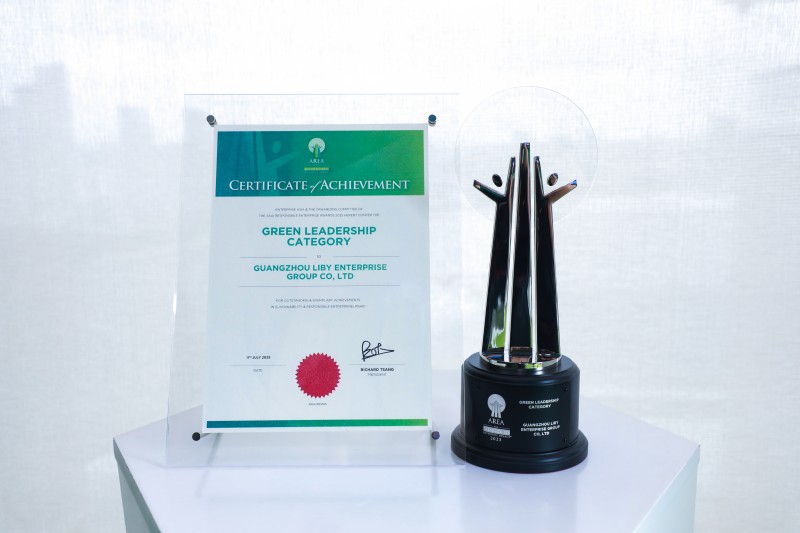
Group 1 - Liby Technology Group won the "Green Leadership Award" at the 2025 Asia Responsible Enterprise Awards, becoming the only Chinese daily chemical company to receive this honor [1][3] - The award ceremony took place on July 11, 2025, in Shanghai, organized by the Asia Corporate Social Responsibility Chamber [3][4] - Liby is the first Chinese household cleaning company to announce a net-zero target, with its "Green Future·Net Zero Liby" climate action plan outlining eight major initiatives and 30 pathways [3][5] Group 2 - The Asia Responsible Enterprise Awards (AREA) has been a leading ESG award in Asia since its establishment in 2011, recognizing over 900 companies for their ESG and sustainability projects [5] - The awards cover eight categories, highlighting outstanding performance in environmental, social responsibility, and corporate governance [5] - This year's winners include prominent companies across various industries, such as China Bank (Hong Kong), China Construction Bank, and JD Group, showcasing a diverse representation of the business landscape [5]

光大证券晨会速递-20250804
EBSCN· 2025-08-04 00:49
Group 1 - The report highlights a significant downward revision in the US non-farm employment data for June, with a total adjustment of 90,000 jobs, primarily affecting government, leisure, and construction sectors, indicating potential economic instability due to tariffs [2] - The Federal Reserve is expected to maintain a hawkish stance on inflation, with a possibility of 1-2 rate cuts in the second half of the year as trade negotiations progress [3] - The market is anticipated to enter a new upward phase in the second half of the year, with a focus on cyclical sectors and emerging industries [4][5] Group 2 - The FDCA industry is projected to grow significantly due to increasing demand for PEF as a superior alternative to PET, with recommended investments in companies like Tongkun Co., New Fengming, and Zhenhai Refining [13] - The "anti-involution" policy is expected to continue, benefiting sectors like photovoltaic materials, with a focus on price elasticity in the supply chain [14][16] - The coal industry is seeing improved price expectations due to recent policy measures, with recommendations for investments in major coal companies [18] Group 3 - Qingdao Bank reported a 7.5% year-on-year increase in revenue for the first half of 2025, with a net profit growth of 16%, indicating strong performance and asset quality [20] - China Petroleum & Chemical Corporation (Sinopec) anticipates a significant decline in net profit for the first half of 2025, but maintains a "buy" rating based on long-term competitive advantages [23] - Huaneng International's second-quarter net profit increased by 50% year-on-year, driven by lower fuel costs and expansion in renewable energy [24] Group 4 - Ningde Times reported a 33.73% year-on-year increase in net profit for the second quarter of 2025, with strong market positioning in lithium batteries and new product developments [25] - Tencent is expected to see strong growth in core gaming and advertising revenues, with an upward revision of profit forecasts for 2025-2027 [26] - Meta Platforms exceeded revenue expectations in Q2 2025, with plans for increased investment in AI infrastructure [27]
食品饮料周观点:育儿补贴政策落地,推新积极挖掘增量-20250803
GOLDEN SUN SECURITIES· 2025-08-03 10:36
Investment Rating - The report maintains an "Increase" rating for the food and beverage industry, indicating a positive outlook for the sector [5]. Core Insights - The implementation of the childcare subsidy policy is expected to stimulate growth in the food and beverage sector, particularly benefiting the infant formula and dairy product markets [4]. - The report highlights three main investment themes in the liquor segment: strong leading brands, sustained regional advantages, and recovery-driven elastic stocks [1][2]. - In the beer and beverage segment, Budweiser faces sales pressure but is seeing price recovery, while the sugary tea category is gaining market share during peak seasons [3]. Summary by Sections Liquor Industry - Leading brands such as Moutai, Wuliangye, and Luzhou Laojiao dominate the global rankings, with Moutai valued at $58.4 billion, maintaining its position as the most valuable liquor brand globally [2]. - The liquor sector is transitioning from scale growth to high-quality development, with a focus on brand strength and market positioning [2]. Beer and Beverage Sector - Budweiser's Q2 2025 results show a revenue decline of 3.9% and a profit drop of 31.1%, with a notable 6.2% decrease in sales volume [3]. - The sugary tea segment is experiencing a resurgence, with brands like Kang Shifu and Uni-President maintaining leading positions, and sales of Yuanqi Forest's iced tea growing by 53.9% year-on-year [3]. Food Sector - The national childcare subsidy program, effective from January 1, 2025, is projected to enhance birth rates and subsequently increase demand for dairy products [4]. - New product launches by companies like Qiaqia and Ximai are aimed at expanding market presence and tapping into health-oriented consumer trends [4][7].



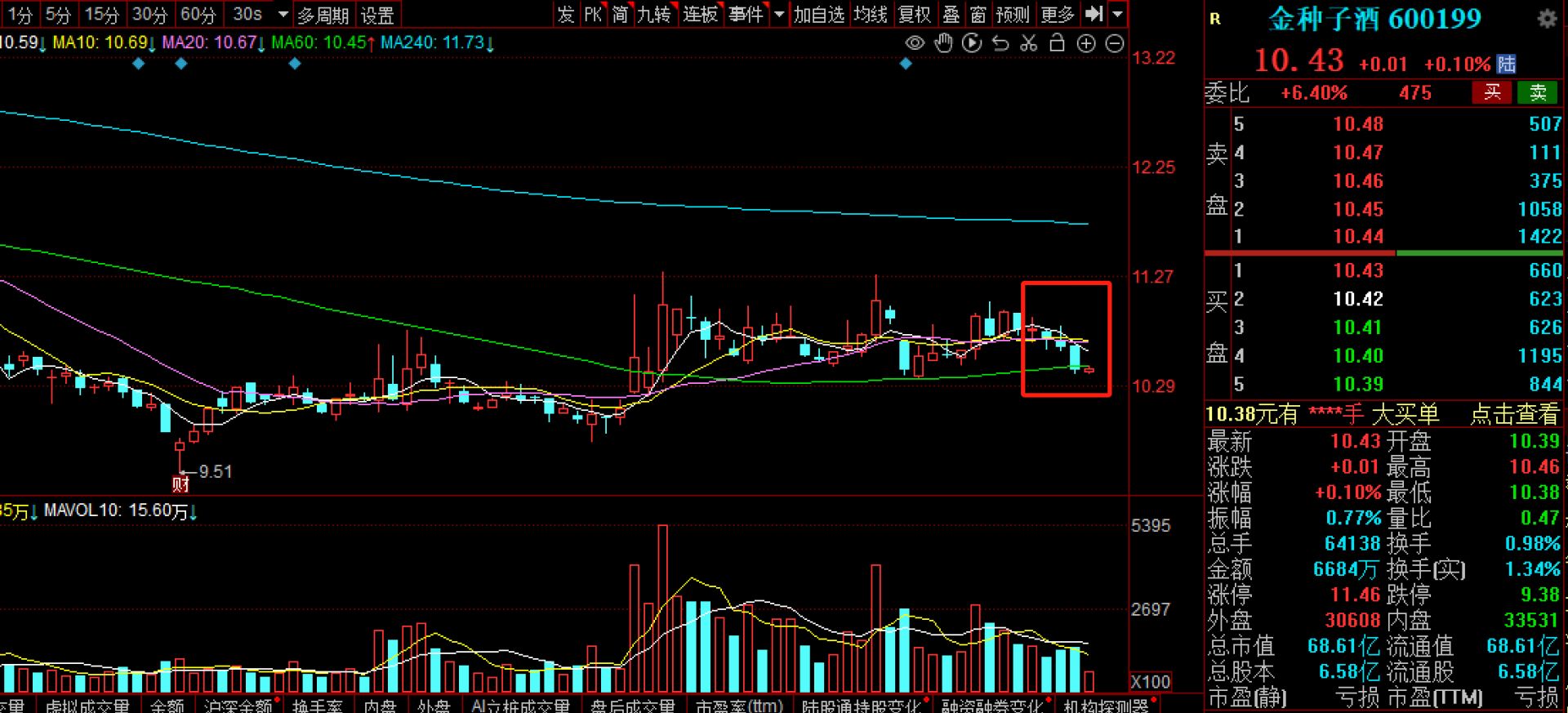
金种子酒等白酒股周跌超3%,白酒指数未能实现周线7连阳
Xin Lang Cai Jing· 2025-08-03 10:33
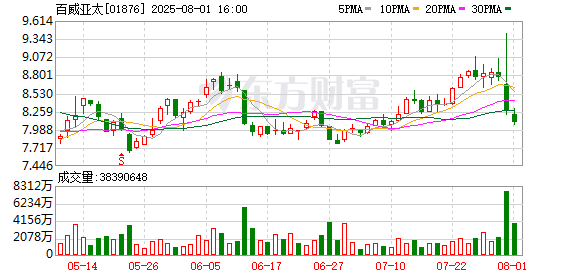
Group 1 - The white liquor index experienced a weekly decline of 2.15%, failing to achieve a seven-week upward trend [1] - The white liquor sector is characterized by low valuation, low expectations, low holdings, and high dividend returns, indicating a potential investment opportunity as consumer demand gradually recovers [1][5] - Major liquor companies are showing strong competitive advantages due to their robust market positions and brand strength [1] Group 2 - Hong Kong's San Miguel Brewery reported a 26% weekly increase in stock price, driven by a mid-term performance that exceeded expectations, with a revenue of approximately HKD 390 million, up 3.22% year-on-year [3] - In contrast, Budweiser APAC faced a 7.75% weekly decline due to poor performance, with a reported 8.2% decrease in sales and a 9.5% drop in revenue in the Chinese market for the first half of 2025 [3] - The white liquor industry is undergoing significant changes, including a shift towards lower alcohol content, younger demographics, and higher cost-performance ratios [3][5] Group 3 - The white liquor industry is currently marked by low valuation metrics, with the white liquor index's price-to-earnings ratios at historical lows, indicating potential undervaluation [5] - The proportion of fund holdings in the white liquor sector has significantly decreased, reaching a new low compared to previous years, reflecting reduced investor confidence [5] - Despite the challenges, the dividend yield for leading liquor brands has become relatively attractive, with several companies showing an increase in dividend rates [5]

市场遭遇夹击!百威亚太上半年净利大跌24.4%,高端领域“腹背受敌”
Hua Xia Shi Bao· 2025-08-03 07:48
Core Insights - Budweiser APAC continues to face declining performance with no signs of recovery, as evidenced by a decrease in sales, revenue, and net profit in the first half of 2025 compared to the previous year [4][6] - The company is experiencing significant challenges in the Chinese market, where both sales and revenue have shown negative growth [6][7] - Budweiser APAC's strategy shift towards the 8-10 RMB price segment is hindered by strong competition from established players like Yanjing Beer and China Resources Beer [4][8] Financial Performance - In the first half of 2025, Budweiser APAC reported sales of 4.363 billion liters, a year-on-year decrease of 6.3%, with revenue at $3.136 billion, down 7.7%, and net profit at $409 million, down 24.4% [6] - The company's revenue from the Asia-Pacific West region, which includes China, India, and Vietnam, was $2.522 billion, a decrease of 8.3%, accounting for 80.4% of total revenue [6] Market Challenges - The Chinese market's performance remains weak, with a 8.2% decline in sales and a 10.2% drop in net revenue in the first half of 2025 [7] - The decline is attributed to a combination of overall industry demand weakness, increased competition, and over-reliance on the struggling nightlife and dining channels [7][8] - The new CEO, Cheng Yanjun, acknowledged that regional layout and channel weaknesses have impacted business performance [7] Strategic Adjustments - Budweiser APAC is shifting its focus from super-premium products to the core++ segment (8-10 RMB products) in response to changing consumer trends [8] - The company aims to enhance its presence in the non-drinking channel and strengthen its marketing efforts for brands like Harbin Beer [9] - Despite entering the 8-10 RMB market later than competitors, there are still opportunities for Budweiser APAC to capture market share through strategic brand positioning [9] Competitive Landscape - The high-end beer market in China is increasingly competitive, with brands like China Resources Beer and Qingdao Beer gaining market share [10] - Budweiser APAC plans to maintain its focus on flagship brands and invest in marketing to counteract competitive pressures [10][11] - Analysts suggest that Budweiser APAC should leverage its core brand strengths and explore new channels like e-commerce to meet consumer demands [11]
茅台明晟ESG评级提升至A;泸州老窖下周分红
2 1 Shi Ji Jing Ji Bao Dao· 2025-08-03 03:57
Core Viewpoint - The Chinese liquor industry is experiencing varied performance among major companies, with some showing signs of recovery while others face challenges in sales and profitability [3][4][19]. Financial Performance - Budweiser APAC reported a revenue of $3.136 billion for the first half of 2025, with a normalized EBITDA of $983 million, despite a decline in key operating metrics compared to the previous year [3]. - Heineken's revenue in China reached €16.924 billion, with a 30% increase in authorized beer sales under China Resources Beer, although overall sales volume decreased by 1.2% [4][5]. - Luzhou Laojiao announced a cash dividend of approximately ¥6.759 billion, distributing ¥45.92 per 10 shares [6]. Company Developments - The controlling shareholder of Baijiu Co. pledged 35.1 million shares, representing 8.25% of his holdings, while the total pledged shares reached 72 million [7][8]. - Jinhuijiu's major shareholder pledged 1 million shares, with a total of 75% of his holdings now pledged [9]. - Moutai opened two new cultural experience centers in Shanghai and Kunming, expanding its brand presence [10]. Industry Trends - The production of beer in Guangdong province decreased by 0.6% in the first half of 2025, with a total production of 241.89 million liters [18]. - The liquor, beverage, and refined tea manufacturing industry in Guizhou province grew by 3.7% in the first half of 2025, with retail sales of tobacco and alcohol increasing by 7.4% [19]. New Products - Kuaijishan announced the launch of new products, including 1743 raw yellow wine, utilizing advanced preservation techniques [13]. - Langjiu will begin accepting orders for the 2025 version of Langjiu on August 11, with shipments starting on August 25 [14]. Personnel Changes - The resignation of the former chairman of Shede Liquor, Ni Qiang, was announced, marking a significant leadership change [20]. - The vice president of Guyue Longshan, Lü Danlin, also resigned, indicating further shifts in management [21]. - Tianyoude Liquor appointed Lu Shuilong as vice president, focusing on market strategy and expansion [22][23].

茅台明晟ESG评级提升至A;泸州老窖下周分红|观酒周报
2 1 Shi Ji Jing Ji Bao Dao· 2025-08-03 03:24
Group 1: Industry Performance - A-share and Hong Kong stock market liquor companies have officially entered the semi-annual report period [1] - Guizhou Moutai's MSCI ESG rating has been upgraded from BBB to A, ranking second in the beverage industry in China [2] - The liquor, beverage, and refined tea manufacturing industry in Guizhou grew by 3.7% in the first half of 2025 [18] Group 2: Company Financials - Budweiser APAC reported revenue of $3.136 billion and EBITDA of $983 million for the first half of 2025, with a decline in key operating metrics compared to the previous year [3] - Heineken achieved revenue of €16.924 billion and operating profit of €1.433 billion in the first half of 2025, with a notable growth in authorized beer sales in China exceeding 30% [4][5] - Luzhou Laojiao announced a cash dividend of approximately ¥6.759 billion, distributing ¥45.92 per 10 shares [6] Group 3: Corporate Actions - Budweiser APAC is focusing on non-drinking channels and cost control measures to mitigate revenue and profit declines [3] - Jinwei Wine's controlling shareholder pledged 10 million shares, with a total of 75.36% of their shares now pledged [8][9] - The resignation of the former chairman of Shede Liquor, Ni Qiang, was announced, marking a significant leadership change [19] Group 4: New Product Launches - Kuaijishan plans to launch new products including 1743 raw yellow wine and pure five-year raw Shaoxing wine [13] - The new version of Langjiu will start accepting sales orders on August 11, 2025, with shipments beginning on August 25 [14] Group 5: Regulatory and Compliance - The Guizhou market supervision authority issued a reminder to liquor producers to maintain the reputation of Guizhou liquor and comply with production standards [15] - The Chongqing market regulatory authority reported that a beer was found to contain a harmful substance similar to Viagra, leading to the company's cancellation [12] Group 6: Management Changes - The resignation of the deputy general manager of Guyue Longshan, Lü Danlin, was announced [20] - Tianyoude Liquor has reappointed Lu Shuilong as deputy general manager, responsible for market strategy and business development [21]
消费变化,百威中国如何让啤酒讲出新故事?
Sou Hu Cai Jing· 2025-08-02 09:12
Group 1: Event and Market Trends - The "Tomorrowland" music festival will debut its first official indoor version in Shanghai this November, marking its first appearance in China [1] - The event has generated significant buzz on social media, with nearly 300,000 discussions, and will feature a diverse lineup of international DJs and cutting-edge visual effects [1] - The collaboration between Budweiser China and the event is particularly significant amid fluctuations in the beer industry [1] Group 2: Changing Consumer Behavior - Beer consumption patterns in China are shifting, especially among younger adults, who prefer outdoor experiences like music festivals over traditional venues [3] - The role of beer has evolved into being an "emotional companion" in these new social settings [3] - The number of new beer SKUs launched in 2024's first three quarters indicates a strong trend towards craft and fresh beer concepts, accounting for over 50% of all new SKUs [4] Group 3: Competitive Landscape - The competition among major beer brands is intensifying, particularly in the price segments above 10 yuan and between 6-8 yuan [5] - Budweiser Group's strategy focuses on flagship brands, with Budweiser and Harbin Beer being the primary brands in China, aiming to create differentiation in the market [5][6] - The "flagship brand, mega platform" strategy is designed to connect major brands with globally relevant events, contributing to a projected 4.6% net profit growth for Budweiser in 2024 [5][6] Group 4: Channel and Digital Transformation - The traditional on-premise beer sales channels are declining, while non-on-premise channels like convenience stores are experiencing strong growth [11] - Budweiser China has developed a new digital model through its B2B platform "BEES," which has expanded to over 320 cities [12] - Non-on-premise channels now account for approximately 50% of Budweiser China's business, with higher profit margins compared to on-premise channels [12] Group 5: Product Innovation and Health Trends - There is a growing consumer preference for healthier beer options, with products like "0 sugar" and non-alcoholic beers gaining popularity [12] - Budweiser's new Harbin zero-sugar product saw a 70% sales increase among young consumers in the first quarter of this year [12] - The market for non-alcoholic beer is projected to reach 69.1 billion yuan by 2029, reflecting a significant trend towards health-conscious consumption [12]

百威亚太上半年净利大跌24.4%:中国市场遭遇夹击,高端领域“腹背受敌”
Hua Xia Shi Bao· 2025-08-02 08:20
Core Insights - Budweiser APAC continues to show no signs of recovery in its performance, with sales, revenue, and net profit all declining in the first half of 2025 compared to the previous year, particularly in the Chinese market [2][3][4] - The company has faced ongoing pressure from a deteriorating external consumption environment and has shifted its strategic focus towards the popular 8-10 RMB price segment, although competitors like Yanjing Beer and China Resources Beer have already established a presence in this market [2][5][6] Financial Performance - In the first half of 2025, Budweiser APAC's sales volume was 4.363 billion liters, a year-on-year decrease of 6.3%, with revenue at $3.136 billion, down 7.7%, and net profit at $409 million, down 24.4% [3][4] - The company's revenue from the Western Asia-Pacific region, which includes China, accounted for $2.522 billion, representing 80.4% of total revenue, but also saw a decline of 8.3% year-on-year [3] Market Challenges - The Chinese market remains weak, with sales down 8.2% and net revenue down 10.2% in the first half of 2025, continuing a trend of over 10% declines in 2024 [4][5] - The new CEO, Cheng Yanjun, acknowledged that the poor performance in China is due to regional layout issues and weak on-premise channels, compounded by over-reliance on coastal provinces and a lack of expansion in non-on-premise channels [4][6] Competitive Landscape - The high-end beer market in China is facing significant competition, with brands like China Resources Beer and Qingdao Beer gaining market share, while Budweiser APAC's high-end strategy has been hindered by late entry into the sub-premium segment [5][6] - Analysts suggest that while Budweiser APAC's late entry into the 8-10 RMB price segment presents challenges, there are still opportunities to leverage the Harbin brand in non-on-premise channels [6][7] Strategic Adjustments - Budweiser APAC is reallocating resources from the super-premium segment to focus on the core++ (8-10 RMB) segment, with plans to invest more in the Harbin brand and enhance marketing efforts in non-on-premise channels [5][6] - The company aims to maintain brand premium and visibility through sports/IP marketing and to innovate differentiated products to meet consumer demands in the competitive landscape [7]
百威亚太(01876.HK)2025年中报点评:延续去库 务实调整
Ge Long Hui· 2025-08-01 19:21
Core Viewpoint - The company reported a decline in revenue and profitability for the first half of 2025, with a total revenue of $3.14 billion, a normalized EBITDA of $980 million, and a normalized net profit of $470 million, reflecting year-on-year decreases of 7.7%, 10.6%, and 14.1% respectively [1] Group 1: Financial Performance - In Q2 2025, the company achieved a revenue of $1.68 billion, with a year-on-year decline of 4.6% in reported terms and 3.9% in organic terms [1] - The normalized EBITDA for Q2 2025 was $500 million, showing a year-on-year decrease of 5.7% in reported terms and 4.5% in organic terms [1] - The normalized net profit for Q2 2025 was $240 million, reflecting a year-on-year decline of 6.3% [1] Group 2: Regional Performance - In the Asia-Pacific West region, revenue declined by 2.7% year-on-year in Q2 2025, while normalized EBITDA showed a 1.4% organic growth due to a low base effect [1] - The China region continued to experience inventory reduction, with a revenue decline of 6.4% year-on-year in Q2 2025, driven by policy impacts and a focus on inventory reduction [1] - The Indian market showed strong growth in high-end and ultra-high-end products, offsetting the weak demand in China, contributing to a more stable performance in the Asia-Pacific West region [1] Group 3: Future Outlook - The company expects to continue its inventory adjustment in Q3 2025, with a potential return to normal growth in Q4 2025 due to low base effects [3] - The non-current drinking channel in China is being expanded, with high-end and ultra-high-end products gaining a larger share compared to current drinking channels [3] - The Indian region is anticipated to maintain its growth momentum, with double-digit growth in high-end and ultra-high-end products [3]