
饿了么

Search documents
“镇江超级夜”全域看“苏超”活动启动 “1+6+8”激活全城互动体验式消费
Zhen Jiang Ri Bao· 2025-08-15 23:50
Core Points - The "Zhenjiang Super Night" event aims to activate the night economy through innovative consumption scenarios and online-offline integration, running from August 15 to September [1] - The event framework consists of "1 main venue, 6 sub-venues, and 8 major segments," focusing on new business models and experiential consumption [1] - The main venue, "Jingji Relaxation Collection," features over 50 food and beverage vendors, creating a vibrant atmosphere for night-time activities [1] Group 1 - Six core commercial complexes, including Suning Plaza and Wanda Plaza, will host large-screen viewing events and various promotional activities centered around "emotional economy" and "night economy" [2] - The event encourages businesses to extend their operating hours and offers incentives such as "overtime discounts" and "energy supply stations" to enhance the consumer experience [2] - The city has previously launched a consumption promotion plan to stimulate the local economy, distributing over 10 million yuan in subsidies through various platforms [2] Group 2 - During the event, nighttime consumption accounted for over 40% of total sales, with a 13% year-on-year increase in dining expenditures [3] - The event attracted over one million spectators through various viewing points, significantly boosting sales in key commercial complexes, which saw an average increase of over 10% year-on-year [3] - The initiative aims to create a collective economic resonance and enhance the night economy in Zhenjiang, inviting citizens to participate in the festivities [3]
行业告别双寡头割据时代 京东外卖在战略预期下的破局
Jing Ji Guan Cha Wang· 2025-08-15 16:17
Core Insights - The article highlights the emergence of JD.com as a significant player in China's food delivery market, challenging the existing duopoly of Meituan and Ele.me by addressing key industry pain points such as high commissions and rider welfare [2][3][5] - JD.com's second-quarter earnings report shows a total revenue of 356.7 billion RMB, a year-on-year increase of 22.4%, with its new business segment driven by food delivery experiencing a staggering 199% revenue growth [2][3][8] - The management emphasizes a long-term strategy for the food delivery business, focusing on sustainable growth rather than short-term gains, aiming to create a win-win situation for merchants, riders, and consumers [5][14][18] Business Performance - JD.com’s food delivery service has expanded to cover 350 cities and over 1.5 million quality dining establishments, establishing a reliable service network for consumers [3][5] - The number of orders has surpassed 25 million, reflecting a strong internal operational strategy that enhances consumer experience and merchant services [5][15] - The company has reported a significant increase in active users and shopping frequency, with over 40% year-on-year growth in both metrics [7][8] Strategic Positioning - JD.com aims to innovate within the food delivery sector by leveraging its supply chain capabilities, moving away from the "two landlord" model to a self-operated brand approach [15][16] - The introduction of the "Seven Fresh Kitchen" model has shown promising results, with daily orders exceeding 1,000 and a repurchase rate significantly higher than the industry average [16] - The management's focus on long-term value creation is evident in their commitment to addressing the longstanding issues in the food delivery industry, aiming for a sustainable business model [14][18] Market Dynamics - The competitive landscape is intensifying, with JD.com opting not to engage in aggressive subsidy wars, instead focusing on building a robust operational framework [5][14] - The company’s strategic collaboration with quality restaurants aims to enhance the overall dining experience and drive growth for restaurant partners [16][18] - JD.com’s food delivery service is positioned as a critical component of its broader retail strategy, contributing to the overall growth of its core e-commerce business [10][18]


行业告别双寡头割据时代 京东外卖在战略预期下的破局
经济观察报· 2025-08-15 15:48
Core Viewpoint - The article emphasizes that JD's new business model in the food delivery sector has successfully withstood market tests, showcasing its strategic depth and value creation beyond just competing in a duopoly market [1][19]. Group 1: Market Context and Challenges - China is the world's largest food delivery market, yet it has faced issues such as declining prices, high commissions, and difficulties for riders, leading to a stagnant competitive landscape dominated by two major players [2]. - The entry of JD into the food delivery market is seen as a disruptive force, addressing industry pain points with a focus on zero commissions for merchants, quality delivery, and rider protections [2][9]. Group 2: Financial Performance and Growth - JD's Q2 2025 earnings report revealed total revenue of 356.7 billion RMB, a year-on-year increase of 22.4%, with the new business segment driven by food delivery seeing a staggering 199% revenue growth [2][11]. - The number of active users and purchase frequency on JD's platform increased by over 40% year-on-year, indicating strong user engagement and cross-purchase potential between food delivery and other retail categories [11]. Group 3: Strategic Development and Long-term Vision - JD's management emphasizes a long-term approach to its food delivery strategy, aiming to establish a sustainable business model over the next five to twenty years [4][6]. - The company has expanded its food delivery service to cover 350 cities and over 1.5 million quality dining establishments, creating a reliable service network for consumers [6][8]. Group 4: Competitive Positioning and Innovation - JD has positioned itself as a "third pole" in the food delivery market, effectively breaking the duopoly of Meituan and Ele.me, and is focused on enhancing user experience and merchant confidence [6][18]. - The company has chosen to avoid engaging in destructive subsidy wars, instead opting for a strategy that emphasizes quality and sustainability [9][18]. Group 5: Supply Chain and Operational Efficiency - JD's food delivery service leverages its supply chain capabilities to enhance operational efficiency and reduce costs, aiming to solve long-standing issues in the food delivery industry [18][21]. - The launch of the "Seven Fresh Kitchen" brand has shown promising results, with daily orders exceeding 1,000 and a repurchase rate significantly higher than the industry average [19]. Group 6: Future Outlook - JD's management believes that the food delivery business will play a crucial role in the company's overall strategy, particularly in enhancing its instant retail capabilities [21]. - The company is committed to exploring sustainable growth models that benefit all stakeholders in the food delivery ecosystem, including merchants, riders, and consumers [16][19].

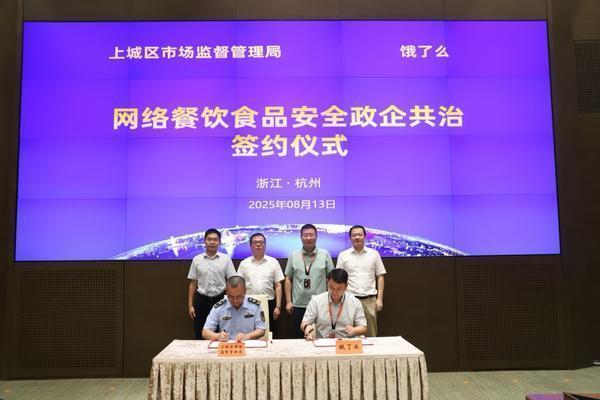
杭州上城区市监局、饿了么、钉钉开展数字化合作,探索食品安全社会共治新模式
Huan Qiu Wang Zi Xun· 2025-08-15 08:06
Core Viewpoint - The collaboration between Hangzhou's market supervision bureau, Ele.me, and DingTalk aims to enhance food safety in online dining through digital technology and AI, establishing a new model for "smart supervision and collaborative governance" [1][3]. Group 1: Collaboration Details - The partnership leverages the "Mingchu Liangzao 2.0" and "Food Safety Ding" to integrate digital technology deeply into food safety regulation practices [1][3]. - The collaboration is expected to create a replicable path for social governance, enhancing visibility and management of food safety through digitalization and AI [3]. Group 2: Statements from Key Representatives - Zhang Hongge, Deputy Director of Hangzhou's Market Supervision Bureau, emphasized the importance of digitalization and AI in making food safety regulation more manageable and effective [3]. - Fang Yongxin, President of Ele.me, highlighted that food safety should not only be about regulation but also about empowering merchants with management tools, noting that many users check kitchen live streams on the Ele.me app before ordering [3][4]. - Yang Meng, Commercial President of DingTalk, mentioned that DingTalk's capabilities can facilitate intelligent inspections and compliance checks, shifting food safety management from reactive to proactive [3]. Group 3: Product Features and Benefits - The "Food Safety Ding" product offers a one-stop digital solution for restaurant management, including food safety governance and operational management for merchants, while providing regulatory staff with tools for data analysis and reporting [4][5]. - The "Mingchu Liangzao 2.0" features AI inspections that promptly notify merchants of identified risks, helping to close the governance loop and enhance operational support for good merchants [5]. - The collaboration aims to improve food safety governance efficiency and daily operational effectiveness for regulatory authorities, ultimately enhancing the safety and health of the dining experience for consumers [5].
社保新规与人服企业机会
2025-08-14 14:48
Summary of Conference Call Records Industry Overview - The records discuss the impact of new social security regulations on the flexible employment model prevalent in industries such as express delivery, food delivery, and ride-hailing services. Workers in these sectors often register as individual business owners, forming cooperative relationships with companies to avoid traditional social security obligations, but they face issues of insufficient protection [1][2][3]. Key Points and Arguments - **Social Security Payment Willingness**: The willingness to pay social security is significantly influenced by economic factors. Low-income blue-collar workers prefer immediate income over long-term social security benefits. Under the new regulations, if employees regret their previous agreement not to pay social security, courts typically support back payments [1][9]. - **Legal Interpretations**: The Supreme Court's interpretation supports back payments for social security but only on a case-by-case basis. Companies are not required to pay for all employees unless regulatory bodies enforce comprehensive recovery, which requires legislative support [1][10]. - **Tax Reporting Regulations**: New tax reporting regulations for internet platform companies have increased tax rates for flexible employment platforms, potentially pushing companies to larger professional firms to mitigate risks. The impact on food delivery riders and domestic service workers remains to be seen [1][15]. - **Cost Implications**: Compliance with social security payments can increase labor costs by 20% to 50%, with higher costs in major cities. Hiring retirees and student interns typically involves labor relations that do not require social security payments [1][17][19]. - **Employment Types**: There are three main employment types: labor relations, employment relations, and cooperative relations. Flexible employment primarily involves cooperative relations, where workers do not need to pay social security [2][4]. - **Social Security Payment Variability**: The payment of social security varies by brand. For instance, JD Express typically pays social security, while other companies may not. The proportion of food delivery riders paying social security is very low, as most prioritize immediate income [6][7]. - **Impact of New Regulations**: The new regulations may lead to increased scrutiny and potential back payments for social security by large companies in the food and internet sectors. This could impose significant financial burdens and necessitate adjustments in human resource management strategies [1][20][23]. - **Labor Resource Companies**: Human resource service companies are expected to see increased demand for their services due to policy changes. These companies provide various services, including helping individuals register as individual business owners and ensuring compliance with tax obligations [14][19]. - **Market Opportunities**: The new regulations may create opportunities for large human resource companies as businesses seek compliance and risk mitigation. The shift towards compliance could lead to more orders being consolidated with larger, capable firms [21][23]. Other Important Content - **Challenges in Implementation**: The execution of new social security regulations faces challenges due to high enforcement costs. The actual impact on sectors like food delivery and ride-hailing will depend on how strictly these regulations are enforced [24][25]. - **Social Security Payment Locations**: There are concerns about compliance with social security payment locations, as some platforms allow workers to choose their payment locations, which can be considered a violation of regulations [26]. - **Rising Labor Costs**: The overall trend of rising labor costs is expected to drive up service prices. This trend is correlated with economic growth and increasing social security payment rates [27].
淘天集团“更名”,与饿了么、飞猪为并行关系
Guan Cha Zhe Wang· 2025-08-14 12:22
Group 1 - The core viewpoint of the article is the restructuring of TaoTian Group, which has been renamed to China E-commerce Group - TaoTian Group, indicating a strategic shift towards a larger consumer platform [1] - Following the restructuring, TaoTian Group is now on par with Ele.me and Fliggy, which have also been integrated into Alibaba's China E-commerce Group [1] - The CEO of Alibaba Group, Wu Yongming, announced this change as part of a strategic upgrade from an e-commerce platform to a broader consumer platform, focusing on optimizing business models and organizational structures from the user's perspective [1]


淘天集团,内部更名
财联社· 2025-08-14 10:54
Group 1 - The core viewpoint of the article highlights the restructuring within Alibaba's e-commerce sector, specifically the renaming of Taotian Group to China E-commerce Group - Taotian Group, establishing it in parallel with Ele.me and Fliggy [1] Group 2 - The internal structure of Taotian Group has been clarified following the integration of Fliggy and Ele.me into Alibaba's China e-commerce business group [1] - The new organizational structure aims to streamline operations and enhance collaboration among the three entities [1]

外卖大战风向变了:内卷式竞争,没有出路
3 6 Ke· 2025-08-14 10:40
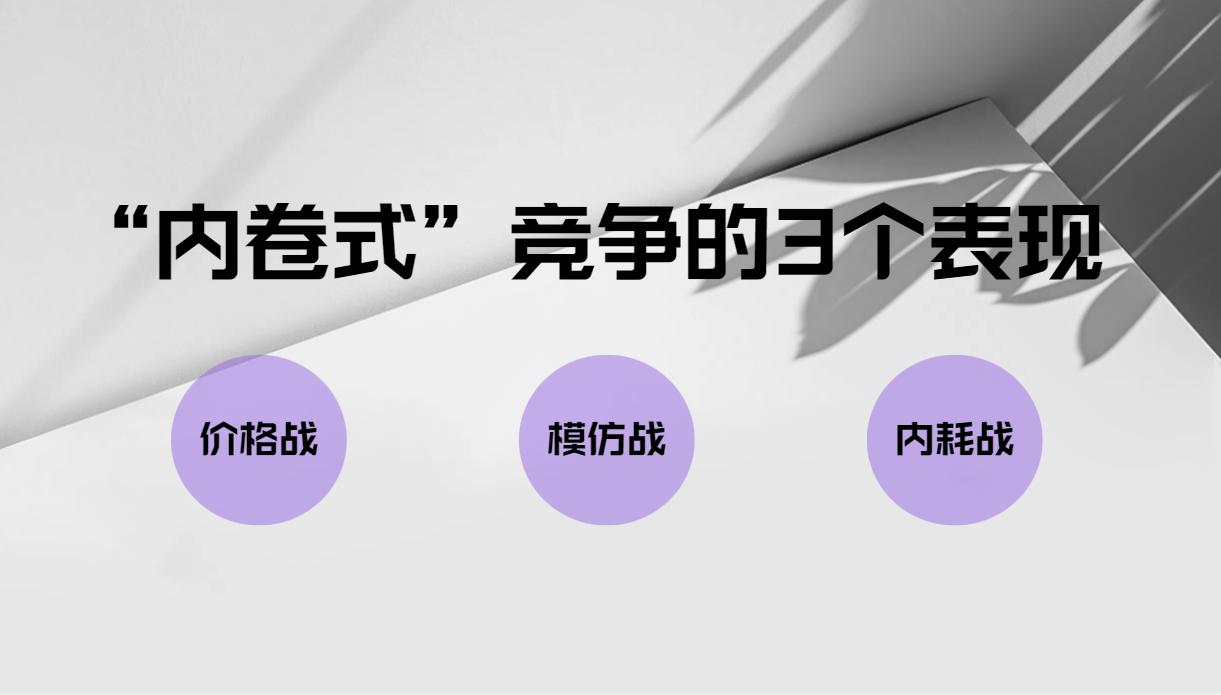
Core Viewpoint - The ongoing competition in the food delivery industry is shifting from aggressive subsidy wars to a more rational approach, as major players like JD.com, Meituan, and Ele.me express their intention to resist "involutionary" competition [1][2][3]. Group 1: Characteristics of Involutionary Competition - Involutionary competition is characterized by chaotic expansion and zero-sum games among companies vying for limited market share [8]. - Three typical manifestations of involutionary competition include: 1. Price Wars: When prices are driven down to unsustainable levels, leading to losses across the industry [9]. 2. Imitation Wars: Companies blindly follow trends without maintaining their unique offerings, resulting in homogenized products [10]. 3. Internal Strife: Companies focus on undermining competitors rather than expanding the market, often through unethical practices [12][13]. Group 2: Strategies to Avoid Involutionary Competition - Companies should focus on creating value rather than competing on price, ensuring customers perceive their offerings as worth the price [16][20]. - Differentiation is essential for competitive advantage, allowing companies to avoid resource-draining competition by offering unique value propositions [21][24]. - Transitioning from zero-sum games to win-win relationships is crucial, as illustrated by the example of Ford and General Motors, where mutual support can lead to overall industry health [25][30].
淘天集团内部更名为中国电商事业群,淘天集团与饿了么、飞猪并行
Jin Rong Jie· 2025-08-14 10:23
继飞猪和饿了么并入阿里中国电商事业群后,据悉,近期淘天集团内部架构也进一步明晰,即由原来的 淘天集团更名为中国电商事业群-淘天集团,与饿了么、飞猪为平行关系。 ...
外卖大战不能简单定义为“内卷式竞争”,专家呼吁包容审慎监管
Xin Lang Cai Jing· 2025-08-14 08:15
Core Viewpoint - The ongoing food delivery competition is not simply a case of "involution" but rather contributes to social welfare by fostering new consumption habits and increasing market penetration in previously underserved areas [1][5]. Group 1: Competition and Market Dynamics - The competition in the food delivery sector has led to an increase in social welfare, as it has encouraged new consumption habits among previously low-penetration demographics [1][5]. - Non-price competition has shown signs of "involution," but price competition does not meet the criteria for being classified as "malicious" competition [1][6]. - The recent political discourse has shifted from "low-price" competition to a broader focus on "disorderly competition," indicating that price is a crucial competitive factor [2][7]. Group 2: Economic Impact - Instant economy, as a new business model, has the potential to enhance consumer satisfaction and stimulate macroeconomic growth by outsourcing household activities to the market [2][16]. - The food delivery sector has demonstrated significant scale and regional effects, particularly in western regions where growth rates have reached up to 300% [2][17]. - The shift from tangible goods to intangible services in the instant economy reflects a broader change in consumer behavior and market dynamics [17]. Group 3: Employment and Labor Market - The rise of the instant economy has created a substantial employment pool, particularly among marginalized groups, including those who are unemployed or unable to work full-time [19][20]. - The flexibility of gig work allows individuals to engage in multiple roles, contributing to a trend of "slash youth" who juggle various jobs across platforms [20][22]. - The increase in delivery personnel has implications for urban integration, as many riders find pathways to stable employment and social integration through their roles [22]. Group 4: Regulatory Considerations - The concept of "inclusive and prudent regulation" emphasizes the need for a solid theoretical foundation and evidence-based actions in regulating market behaviors [3][8]. - Regulatory bodies should focus on specific unfair competition behaviors while allowing for the natural evolution of the instant economy [3][8]. - There is a call for more attention to the working conditions and safety of delivery personnel, as well as the need for platforms to provide better support for this workforce [22].