可口可乐

Search documents
每日投资策略-20251215
Zhao Yin Guo Ji· 2025-12-15 06:18
Macro Economic Overview - The credit recovery in China remains uneven, with the total social financing (TSF) in November exceeding market expectations due to a rebound in off-balance-sheet financing and corporate bond issuance, while government bond issuance stabilized [2] - The growth rate of RMB loans to the real sector continues to decline, indicating weak credit demand, with household loans shrinking for the first time in history, reflecting low housing demand and consumer sentiment [2] - Corporate loan financing has improved, driven mainly by bill financing and short-term loans, but new long-term loans remain weak, indicating that corporate financing is more reflective of short-term liquidity needs rather than capital expenditure [2] Market Performance - The Hang Seng Index closed at 25,977, up 1.75% for the day and 29.50% year-to-date, while the Hang Seng Tech Index rose 1.87% [3] - The Shanghai Composite Index increased by 0.41% to close at 3,889, with the Shenzhen Composite Index up 0.66% [3] - The US markets saw declines, with the Dow Jones down 0.51% and the S&P 500 down 1.07%, while the Nasdaq fell by 1.69% [3] Company Analysis - Zhongji Xuchuang (300308 CH) is identified as a direct beneficiary of global AI infrastructure capital expenditures, with a strong performance in 2025 expected for AI-related optical module suppliers [6] - The company reported a significant increase in revenue and net profit for the first nine months of 2025, with revenue up 44% and net profit up 90% year-on-year, and a gross margin increase of 9 percentage points to 43% in Q3 2025 [6] - The stock price of Zhongji Xuchuang has risen over 380% year-to-date, and the target price has been raised to 707 RMB, reflecting continued optimism in the AI sector and infrastructure investment cycles [6]

可口可乐,CEO大消息:60岁詹鲲杰即将卸任 接任者曾任大中华区总裁
Mei Ri Jing Ji Xin Wen· 2025-12-11 05:26
Group 1 - The core point of the article is the announcement of Coca-Cola's CEO succession plan, with Henrique Braun set to become the new CEO on March 31, 2026, while current CEO James Quincey will transition to Executive Chairman after his term ends [2][3] - James Quincey, aged 60, has been with Coca-Cola since 1996 and has played a significant role in transforming the company from a single carbonated beverage producer to a "total beverage company," adding over 10 billion-dollar brands during his tenure [4] - Under Quincey's leadership, Coca-Cola has focused on digital transformation and marketing innovation to enhance resilience against challenges like the COVID-19 pandemic, while divesting non-core assets [4] Group 2 - Henrique Braun, the new CEO, has extensive experience within Coca-Cola, having held various significant positions across North America, Europe, Latin America, and Asia since joining in 1996 [4] - Braun's key tasks will include identifying global growth opportunities, aligning the company closer to consumer needs, and leveraging technology to drive business performance and growth [5] - In the third quarter of 2025, Coca-Cola reported a revenue increase of 5% to $12.455 billion and a net profit growth of 29% to $3.683 billion, with global single-serve sales increasing by 1% [5]

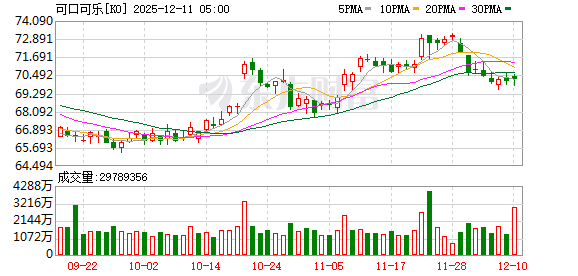
可口可乐(KO.N)任命首席运营官亨德里克·布劳恩(Henrique Braun)接替詹姆斯·昆西(James Quincey)担任首席执行官,任期将于...
Jin Rong Jie· 2025-12-10 22:37
本文源自:金融界AI电报 可口可乐(KO.N)任命首席运营官亨德里克·布劳恩(Henrique Braun)接替詹姆斯·昆西(James Quincey)担任首席执行官,任期将于2026年开始。 ...
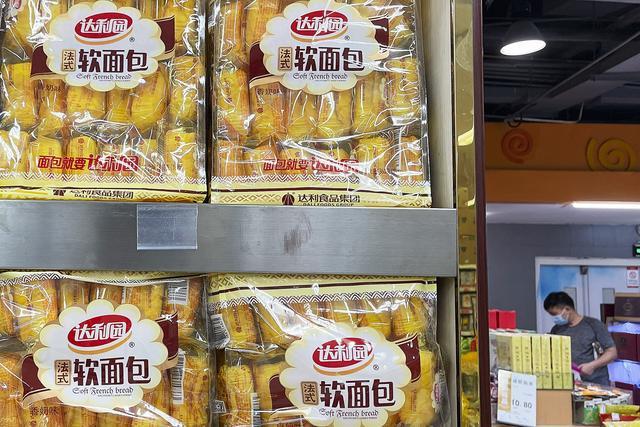
达利迎来“80后”二代掌舵 “跟随战略”将迎转变?
Xin Lang Cai Jing· 2025-11-21 21:20
Core Viewpoint - Dali Food Group has officially entered the "second-generation leadership" era with the appointment of Xu Yangyang, daughter of founder Xu Shihui, as president, amid challenges such as declining revenue and market competition [3][4]. Group 1: Leadership Transition - Xu Yangyang has 17 years of experience within the company, starting from grassroots positions and rising to executive director and vice president [4]. - She played a crucial role in Dali's IPO in 2015, which was the largest in the global consumer goods sector that year [4]. - Xu Yangyang's international education and experience in capital markets are expected to bring a forward-looking strategic vision to Dali [4][5]. Group 2: Strategic Challenges - Dali has faced a decline in revenue, with a drop from 222.94 billion yuan in 2021 to an estimated 180.73 billion yuan in 2024, indicating a loss of over 42 billion yuan [7]. - The company's traditional sales channels are under pressure from e-commerce and new retail formats, necessitating a shift in strategy [5][7]. - Dali's core brands are experiencing aging and slower product iteration, which poses a challenge in meeting the demands of younger consumers [7][8]. Group 3: Market Position and Future Directions - Dali's historical success relied on a "follow strategy" rather than innovation, which may not suffice in the current fragmented market [6][9]. - The company is urged to focus on creating a few competitive product categories to regain market confidence and performance [9]. - Dali plans to initiate a global strategy by 2025, but faces significant competition from established multinational brands and local players [9].
逆势上涨,风格再次切换
Ge Long Hui· 2025-11-19 14:16
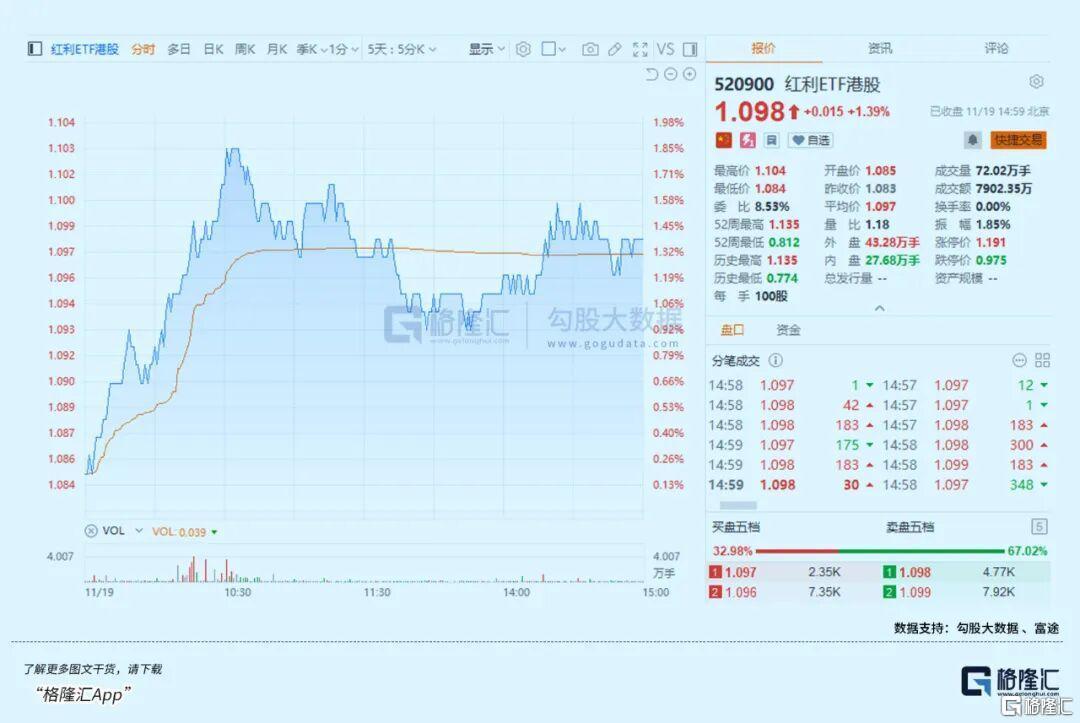
Group 1 - Energy metals lead the market, with traditional dividend assets like oil, chemicals, and banks showing strength, particularly the "three oil giants" which have boosted the Hong Kong stock market's dividend ETF, Guangfa (520900), by 1.39% [1] - Since the fourth quarter, technology stocks have entered a valuation adjustment phase, while market funds have shifted towards dividend assets, indicating a style switch [3] - The "technology" and "dividend" sectors have alternated in performance, highlighting the importance for investors to understand and adapt to these style changes rather than betting on a single style [4] Group 2 - A stable asset allocation strategy is crucial for investment safety, with successful investors often choosing robust leaders as a ballast in their portfolios [5] - In China, key sectors such as energy, utilities, communications, and finance have benefited significantly from the country's rapid economic growth since 2000, with state-owned enterprises playing a vital role [6] - China Petroleum and Chemical Corporation (Sinopec) has seen its revenue grow from 360 billion yuan in 2000 to over 3 trillion yuan in 2024, a 7.5-fold increase, while maintaining stable net profits [6] Group 3 - Sinopec has distributed over 650 billion yuan in cash dividends since its listing in 2001, with a dividend yield consistently above 5% for the past decade [7] - China National Petroleum Corporation (CNPC) has also performed well, distributing 320 billion yuan in dividends from 2020 to 2024 while maintaining over 50% of domestic crude oil supply [7] - China Shenhua Energy, a leading coal enterprise, has seen its revenue grow nearly tenfold since its listing in 2007, with cumulative dividends exceeding 700 billion yuan and a dividend yield reaching 6.8% in 2024 [8] Group 4 - The trend of style switching in the A-share market is becoming more evident, with both "technology" and "dividend" sectors coexisting as viable investment options [9] - The performance of high-dividend indices has shown resilience during market downturns, with the Smart High Dividend Index demonstrating significant cumulative gains since 2017 [12] - The National Hong Kong Stock Connect Central Enterprise Dividend Index has also shown strong performance, with a cumulative increase of 119% since its inception [19] Group 5 - The high dividend ETF (159207) has consistently achieved positive returns from 2020 to 2024, with a cumulative increase of 111.54% over the past five years [15][17] - Hong Kong stocks often exhibit higher dividend yields compared to their A-share counterparts, making them attractive for investors seeking high-yield assets [17] - The top sectors in the National Hong Kong Stock Connect Central Enterprise Dividend Index include oil and petrochemicals, telecommunications, and transportation, with significant weight in leading state-owned enterprises [18] Group 6 - The cyclical nature of technology and high-dividend assets is a consistent pattern, with both sectors expected to grow in the context of China's stable economic growth and technological advancements [21] - Finding a balance in investment strategies across different market environments is essential for achieving long-term stable returns [21]
从拆机学起,这家顺德企业拿下全球人形机器人首个万台订单
2 1 Shi Ji Jing Ji Bao Dao· 2025-11-19 12:22
在广东顺德龙眼工业区一座朴素的厂房门口,矗立着一台高达3米的变形金刚机器人"大黄蜂"。"这个机 器人承载着我们坚持了十多年的梦想,这一次感觉风口真的来了。"天太机器人联合创始人张兴华告诉 南财智库研究员。 这家接下了全球首个万台人形机器人订单的广东企业,最初团队中大部分是跨界创业者,他们凭着一腔 热血,在家门口创业,主攻机器人的核心零部件。 "12年前,我们从零开始研发,买机器人进行拆解,当时做了大量实验,材料损坏拿去卖废铁,一年都 能卖20万元。"张兴华表示,上百吨的废料背后,正是这家企业一步一个踏实脚印的印证。 创业维艰,九死一生。技术每次突破都不容易,张兴华和他的伙伴们多次碰壁,看着同行们倒闭关门, 时常感到迷茫。但从去年开始,许多从未接触过的行业都有客户前来洽谈业务,公司订单数量急剧增 加,机器人应用到各行各业正在成为现实。 从拆机学习到1万台人形机器人订单 张兴华当时对机器人没有概念,"何总是做金融的,我是做家电行业的,只用过机器人但是也不知道任 何技术原理。"但他们对机器人的发展前景寄予厚望。"随着劳动力成本上涨,劳动密集型产业必然产生 机器人代替一部分低价值劳动力需求。" 创始团队一开始做的事情 ...

白砂糖重回配料表
东京烘焙职业人· 2025-11-16 08:32
Core Viewpoint - The article discusses the resurgence of white sugar in beverage ingredient lists, highlighting a shift in consumer preferences towards a balance of taste and health, as well as the evolving strategies of beverage companies in response to these trends [5][14][26]. Group 1: Market Trends - The beverage market has seen a significant shift with the rise of sugar-free drinks, initiated by brands like Yuanqi Forest in 2018, which led to a decline in the presence of white sugar in ingredient lists [8][12]. - However, in the recent beverage season, traditional beverage companies have reintroduced white sugar in their products, indicating a change in consumer perception towards health and taste [7][14]. - The market for sugary tea beverages is substantial, nearing 900 billion, and is experiencing a transition from rapid expansion to a focus on quality development [31][34]. Group 2: Consumer Preferences - Consumers are increasingly seeking a balance between health and taste, leading to a demand for products that offer lower sugar content without sacrificing flavor [18][26]. - The trend of "controlled indulgence" is emerging, where brands are marketing products with reduced sugar while still incorporating white sugar to enhance taste [16][20]. - Younger consumers are particularly interested in products that provide enjoyable flavors without the guilt associated with high sugar content [21][26]. Group 3: Company Strategies - Companies like Yuanqi Forest and Nongfu Spring have launched new products featuring white sugar, emphasizing low-sugar and reduced-sugar branding to attract health-conscious consumers [14][16]. - The use of alternative sweeteners like erythritol and sucralose has been prevalent, but companies are now recognizing the unique taste benefits of white sugar, leading to its reintroduction in various products [10][20]. - Major brands such as Master Kong and Uni-President maintain significant market shares in the sugary tea segment, indicating their strong influence and the stability of this market despite health trends [34][35].


三连板背后 金富科技业绩承压
Bei Jing Shang Bao· 2025-11-13 15:59
Core Viewpoint - Jinfu Technology's stock price has surged nearly 100% since the beginning of the year, despite a decline in revenue and net profit in the first three quarters of the year, indicating market optimism about its long-term growth potential [1][2]. Financial Performance - For the first three quarters of the year, Jinfu Technology reported revenue of approximately 662 million yuan, a year-on-year decrease of 9.12% [1][2]. - The company achieved a net profit attributable to shareholders of about 93.44 million yuan, down 19.45% year-on-year [1][2]. - The decline in performance is attributed to new production bases entering a ramp-up phase, leading to increased depreciation and amortization costs, as well as temporary production disruptions [1][2]. Market Position and Client Base - Jinfu Technology primarily serves major beverage companies such as JingTian, Coca-Cola, and Yanjing Group, with a high customer concentration [2][3]. - The company ranks fifth in revenue among eight industry peers, with its revenue of 662 million yuan, while the top company, Zijiang Enterprise, reported 7.82 billion yuan [3][4]. - In terms of net profit, Jinfu Technology ranks third, with a net profit of 93.44 million yuan, compared to Zijiang Enterprise's 966 million yuan [3]. Industry Trends - The demand for plastic bottle caps is driven by the significant growth in global bottled water, juice, and functional beverage consumption [3]. - The Chinese bottled water market has surpassed 100 billion yuan, leading to increased demand for standard 28mm bottle caps [3]. - There is a growing trend towards high-end, lightweight, and biodegradable caps due to the rising health consciousness among consumers [3]. Strategic Initiatives - Jinfu Technology is transitioning from plastic packaging to metal packaging, with plans to invest in new metal cap production lines [3][4]. - The company has reduced its investment commitments for several projects, including the plastic cap production base expansion, and is reallocating funds towards the metal cap project and the acquisition of Xiangzhao Technology [4][5]. - The acquisition of Xiangzhao Technology aims to enhance production capacity for new metal pull-ring caps, securing orders from clients like Yanjing Beer [5].
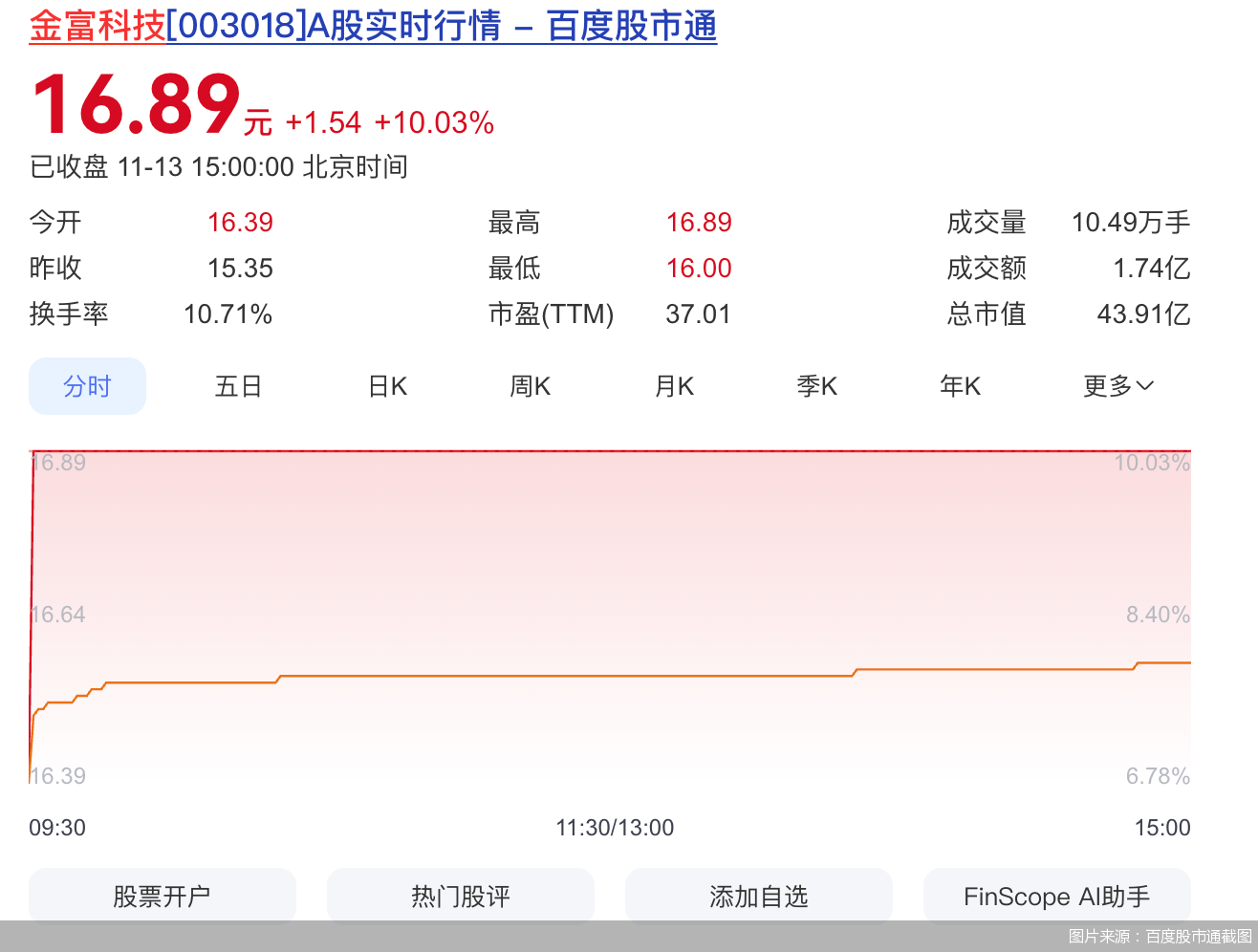
金富科技三连板背后:三季度业绩下滑,营收依赖大客户
Bei Jing Shang Bao· 2025-11-13 13:33
Core Viewpoint - Jinfu Technology's stock price has surged nearly 100% since January 1, despite poor financial performance in the first three quarters of 2025, indicating market optimism about its long-term growth potential and strategic partnerships with major clients like JingTian and Coca-Cola [1][5][6]. Financial Performance - For the first three quarters of 2025, Jinfu Technology reported revenue of approximately 662 million yuan, a year-on-year decline of 9.12%, and a net profit of about 93.44 million yuan, down 19.45% year-on-year [5]. - The decline in performance is attributed to new production bases entering a ramp-up phase, leading to increased depreciation and amortization costs, as well as temporary production disruptions [5]. Market Position and Client Base - Jinfu Technology primarily serves major beverage companies, with its top five clients contributing significantly to its revenue, although the proportion of sales to these clients has decreased [6]. - The company ranks fifth in revenue among eight industry peers, with its revenue of 662 million yuan, while the top competitor, Zijiang Enterprise, reported 7.82 billion yuan [7]. Strategic Initiatives - Jinfu Technology is transitioning from plastic packaging to metal packaging, with plans to invest in new projects and acquire 100% of Xiangzhao Technology to enhance its production capacity for new types of pull-ring caps [8]. - The company has reduced its investment commitments for several projects, indicating a strategic shift in focus towards metal cap production [8]. Industry Trends - The demand for plastic bottle caps is increasing due to the growth in bottled water and beverage consumption, with the bottled water market in China exceeding 100 billion yuan [7]. - The industry is experiencing a shift towards high-end products, driven by health-conscious consumer trends and the demand for lightweight and biodegradable caps [7].
2025年第45周:食品饮料行业周度市场观察
艾瑞咨询· 2025-11-13 00:05
Industry Environment - Japan's consumer market thrives on high-frequency innovation, evolving from imitation to user-driven innovation since the 1980s, with companies establishing consumer research centers to deeply explore needs [3][4] - The "medicinal food" industry in China has surpassed 370 billion yuan, with a total industry valuation exceeding 2 trillion yuan, driven by health awareness and policy support [5] - The plant-based protein beverage market is facing pressure, but leading companies are preparing for peak seasons with channel expansion and new product promotions [6] Beverage Market Trends - HPP cold brew tea, combining high-pressure cold sterilization with cold brewing, is gaining popularity among young consumers, despite its higher cost and niche market status [7] - The beverage market is witnessing a return of sugary drinks, with brands like Yuanqi Forest and Wahaha launching new sugary products, reflecting consumer preferences for taste and pleasure [8] - The bottled water market is shifting from price competition to value competition, with companies like Nongfu Spring and China Resources leading through product innovation and channel transformation [9][10] Brand Dynamics - Mondelez International reported a 5.9% revenue growth in Q3 2025, but faced profit margin pressures due to rising costs and declining consumer confidence in emerging markets like China [20] - Xu Fu Ji's Meilu energy biscuits have rapidly gained popularity in the sports nutrition market, leveraging event sponsorships and targeted marketing strategies [21] - Coca-Cola's Q3 2025 revenue reached $12.455 billion, driven by price increases and strong sales of sugar-free products, despite a slight decline in the Chinese market [22] Plant-Based and Health Trends - Yangyuan Beverage is enhancing its leadership in the plant-based protein beverage sector through product innovation and channel restructuring [23] - The low-sugar trend is becoming mainstream, with brands like Holleyou launching new products that balance health and taste [25] - Mengniu's milk powder business has achieved double-digit growth by focusing on emotional marketing and channel optimization to meet diverse consumer needs [26] Emerging Opportunities - The plant milk market is projected to exceed 100 billion yuan by 2025, with B2B channels becoming crucial for growth [14] - The sports drink segment is rapidly growing, with brands like Magic leveraging product upgrades and sports marketing to strengthen their market position [33] - The electrolyte drink market is dominated by brands like Dongpeng and Alien, with both focusing on channel strategies and product diversification to capture market share [31][32]