TOP TOY

Search documents
潮玩品牌TOP TOY第三季度营收增111%至5.7亿元,正在冲刺港股IPO
Sou Hu Cai Jing· 2025-11-21 14:26
Group 1 - TOP TOY brand under Miniso reported a revenue increase of 111.4% to 575 million yuan in Q3 2025 [1] - For the first three quarters of 2025, TOP TOY's revenue rose by 87.9% to 1.317 billion yuan [1] - As of September 30, 2025, TOP TOY had 307 stores, with a net increase of 73 stores year-on-year [4] Group 2 - TOP TOY is recognized as the largest and fastest-growing trendy toy collection brand in China [4] - In 2024, the company achieved a GMV of 2.4 billion yuan in mainland China, with nearly 50% of revenue coming from self-developed products, the highest among Chinese trendy toy brands according to Frost & Sullivan [4] - The compound annual growth rate of GMV from 2022 to 2024 exceeded 50%, making TOP TOY the fastest-growing trendy toy collection brand in China and the quickest to surpass a GMV of 1 billion yuan [4] Group 3 - On September 26, 2025, TOP TOY submitted its prospectus to the Hong Kong Stock Exchange, with J.P. Morgan, UBS, and CITIC Securities serving as joint sponsors [4]


金添动漫赴港上市:渠道、IP依赖症难解 与奥特曼授权方分道?
Xin Lang Zheng Quan· 2025-11-21 10:26
Core Viewpoint - The company Guangdong Jintian Animation Co., Ltd. (Jintian Animation) is preparing for an IPO on the Hong Kong Stock Exchange, aiming to capitalize on the growing market for IP-based consumer products, despite facing challenges in sales growth and reliance on key IPs like Ultraman [1][10]. Financial Performance - Jintian Animation's revenue is projected to grow from 5.96 billion RMB in 2022 to 8.77 billion RMB in 2024, with a compound annual growth rate (CAGR) of approximately 20.9% [1]. - Adjusted net profit is expected to rise from 36.86 million RMB in 2022 to 131 million RMB in 2024, reflecting a CAGR of 52.6% [1]. Sales and Inventory Challenges - The company has experienced a slowdown in growth, with revenue and adjusted net profit for the first half of 2025 increasing by only 9.8% and 13.4%, respectively [2]. - Sales of key product categories, including puffed snacks, chocolate, and seaweed snacks, have declined significantly, with year-on-year decreases of 25.0%, 31.8%, and 30.0% respectively in the first half of 2025 [3]. - Inventory levels have been rising, with total inventory reaching 76.18 million RMB in the first half of 2025, which is 93.6% of the total inventory for 2024 [5]. Customer Concentration and Sales Model Shift - The company has shifted its sales strategy from relying on distributors to direct sales to retail chains, with direct sales revenue increasing from 3.5% in 2022 to 43.2% in the first half of 2025 [6]. - This shift has led to increased customer concentration, with the top five customers accounting for 39.5% of total revenue by mid-2025, compared to only 4.1% in 2022 [7]. IP Dependency and Market Trends - Jintian Animation holds 26 licensed IPs, with Ultraman being the primary revenue driver, contributing 62.6% of total revenue in 2022, but its share has declined to 43.9% in the first half of 2025 [10]. - The company faces risks related to the expiration of IP licenses, with approximately 57.1% of its agreements set to expire within two years [11]. Management and Ownership Changes - Key management figures, including the actual controller of the Ultraman IP, have divested their stakes in the company, raising concerns about the future of the company's IP agreements and overall stability [14].
想做成泡泡玛特第二,TOP TOY还差什么?
Xin Lang Cai Jing· 2025-11-20 05:41
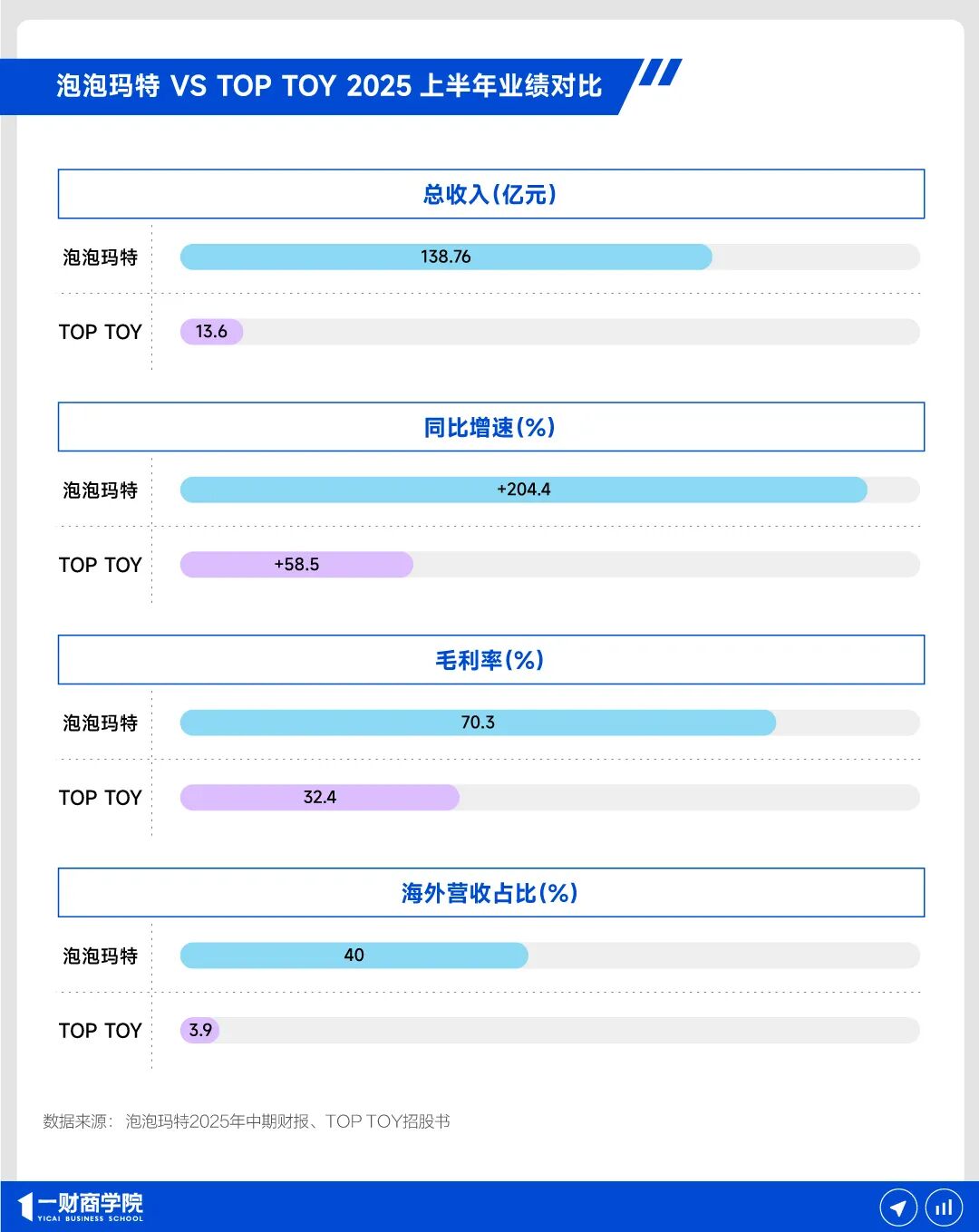
Core Insights - TOP TOY has submitted its listing application to the Hong Kong Stock Exchange, marking a significant step for the brand under the ownership of Miniso, which recently acquired Yonghui Supermarket [1] - The founder of Miniso, Ye Guofu, expresses strong confidence in the retail sector, indicating a strategic vision for expanding TOP TOY alongside its other retail ventures [1] - TOP TOY aims to position itself closer to the success of Pop Mart, despite following a different business model, by enhancing its own IP portfolio and expanding overseas [1][4] Business Model Analysis - The collectible toy industry features three primary business models: licensed IP, proprietary IP, and third-party IP [2] - TOP TOY incorporates all three models but is increasing its focus on proprietary IP ahead of its IPO [3] - By 2025, TOP TOY's proprietary IP is expected to contribute 5%-10% of total revenue, compared to Pop Mart's 90% [4] Financial Performance Comparison - In the first half of 2025, Pop Mart reported a profit of approximately 4.6 billion, while TOP TOY's profit was only 180 million, highlighting a significant disparity in revenue scale and profit margins [6] - Pop Mart's gross margin stands at 70.3%, more than double that of TOP TOY, indicating a challenge for TOP TOY in achieving similar profitability [9] Strategic Initiatives - TOP TOY's strategy includes reducing reliance on third-party IP and increasing proprietary product development to enhance profit margins [13] - The company has successfully launched its proprietary IP "Nuomi Er," achieving sales of 50 million within a year and a half, aiming to replicate the success of Pop Mart's Molly [13][21] - TOP TOY is also focusing on expanding its online sales, which currently account for only 8.5% of total sales, compared to Pop Mart's 35.5% [14] Global Expansion Plans - TOP TOY has initiated a global strategy to establish 1,000 overseas stores within five years, leveraging its existing retail network for market penetration [18][19] - The company plans to utilize its extensive offline presence, including nearly 300 brand stores and over 8,000 stores from Miniso and Yonghui, to gather consumer data and refine its IP selection process [19][22] Competitive Landscape - TOP TOY is currently perceived as following Pop Mart's lead rather than innovating, as evidenced by its recent product adaptations [20] - The company recognizes the importance of capital in acquiring successful IPs, with plans to leverage its market position for future growth [21] - The ability to effectively market and distribute IPs through its extensive channels is seen as a critical advantage for TOP TOY [22][23]

快手商业化变动:大一统的开始,大扩张的终结 | 「钛度号」作品月榜第132期
Tai Mei Ti A P P· 2025-11-12 01:26
Core Insights - The article highlights the launch of the "Titanium Praise" ranking list by Titanium Media APP, which evaluates outstanding works based on popularity, content quality, and editorial recommendations [2][3]. Group 1: Rankings and Notable Works - The top-ranked work is by @刀客Doc, discussing Kuaishou's commercialization changes, indicating a shift towards a more focused advertising strategy [2][3]. - @沈素明's work on the concept of "country" explores historical transitions and their implications for understanding current global political dynamics [2][3]. - @镜相工作室 analyzes the implications of宗馥莉's resignation from Wahaha, questioning the future of the brand and its leadership succession [3][4]. - @娱乐资本论 examines TOP TOY's market strategies, including store expansion and celebrity marketing, to determine its potential as a leading brand in the toy industry [4][5]. - @财经故事荟 discusses the competitive landscape in the home delivery sector, highlighting the rivalry between Alibaba, Meituan, and Douyin [5][6]. Group 2: Investment and Market Trends - @AlphaEngineer presents insights on copper as a cyclical commodity, emphasizing the mismatch between supply rigidity and demand elasticity [6][7]. - @象先志 addresses the evolving narratives in the e-commerce sector during the Double Eleven shopping festival, advocating for a shift away from data-centric approaches [7][8]. - @定焦One reflects on the changing nature of weddings among young people, suggesting a move towards personalized celebrations [8][9]. - @霞光社 discusses the international perception of mooncakes, advocating for a blend of cultural storytelling and traditional craftsmanship to enhance global appeal [9][10].

TOP TOY:成于渠道,困于渠道
3 6 Ke· 2025-11-10 09:50
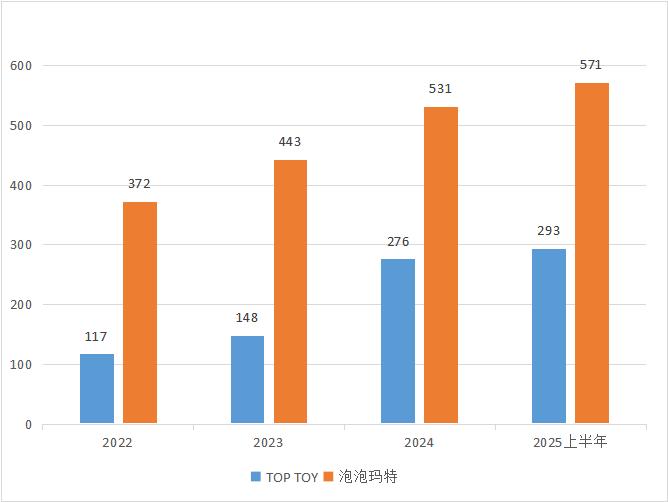
Core Insights - TOP TOY, a潮玩 brand under Miniso, has submitted its prospectus to the Hong Kong Stock Exchange, aiming to raise approximately $300 million [1] - The brand has experienced rapid expansion in the潮玩 market since its establishment in 2020, positioning itself as a "潮玩聚集地" [1][2] - Despite impressive revenue growth, TOP TOY faces challenges in maintaining its expansion rate and profitability due to reliance on external IPs and a franchise model [8][12] Company Overview - TOP TOY was founded in 2020 and has quickly grown to become a significant player in the潮玩 market, which is projected to grow from RMB 207 billion in 2019 to RMB 587 billion by 2024, with a CAGR of 23.2% [1][2] - The company reported a revenue of RMB 19.09 billion in 2024, marking a year-on-year increase of 30.64% [2][5] - The product range includes self-developed and externally sourced IPs, with a focus on figures, 3D models, and plush toys [1][4] Market Position and Growth - TOP TOY's store count increased from 117 in 2022 to 293 by mid-2025, with a notable rise in franchise stores [2][4] - However, the growth in store numbers has not translated into proportional revenue growth, indicating a potential slowdown in expansion [2][4] - The company’s revenue structure shows that潮玩 product sales account for approximately 97% of total income, with distributors contributing nearly 50% of revenue [4][5] Profitability and Financial Performance - TOP TOY achieved profitability in 2023, with net profits of RMB 2.97 billion in 2024 and RMB 1.8 billion in the first half of 2025, resulting in a net profit margin of about 13.2% [5][8] - The gross margin has been relatively low, ranging from 28% to 30%, primarily due to the franchise model and reliance on external IPs [4][5] IP Strategy and Challenges - The company has a significant number of licensed IPs but lacks strong self-developed IPs, which limits its competitive edge in the market [8][12] - The reliance on external IPs poses risks such as rising licensing costs and potential expiration of contracts, which could impact long-term growth [8][12] - TOP TOY is investing in developing its own IPs, having acquired stakes in companies to enhance its IP portfolio [11][12] Channel Structure and Future Outlook - The current channel structure is heavily reliant on distributors and franchisees, with over 50% of revenue coming from this model [13][15] - The company aims to reduce dependency on its parent company’s distribution channels to enhance brand identity and market presence [17] - Future plans include expanding the store count to 380-400 by the end of the year and targeting 1,000 stores globally within five years [17]
首店经济迎来新“大腕” 名创优品MINISO FRIENDS华南首店亮相
Sou Hu Cai Jing· 2025-11-09 09:30
Group 1 - MINISO FRIENDS opened its first store in South China, located in Shenzhen, aiming to create a new landmark for youth culture through immersive IP experiences [2] - The store features a unique "Right Right Sauce" glass window and various interactive installations, integrating popular global IPs such as Disney and Harry Potter [2] - MINISO's latest financial report indicates a total revenue of 4.97 billion yuan in Q2, representing a year-on-year growth of 23.1%, with a gross margin of 44.3%, up 40 basis points from the previous year [2] Group 2 - Shenzhen is promoting consumption upgrades through the "first store economy," with trendy toys becoming a significant aspect of this initiative [2] - Jin Guanghua Plaza has introduced 21 first-store brands, including high-traffic toy brands like WANGXIAOBEN and TOP TOY [3] - Shenzhen leads the nation in the toy industry, housing over 3,000 toy-related companies, which account for 14.4% of the total number of toy enterprises in China, forming a complete industry chain from design to export [3]

背靠母企勇闯港交所,TOP TOY“独立行走”尚待时日
Zhi Tong Cai Jing· 2025-11-06 09:33
Core Insights - The article highlights the rapid growth of the trendy toy sector, driven by the consumption power of Generation Z and the evolving consumption structure, with TOP TOY emerging as a significant player in this market [1][2]. Company Overview - TOP TOY, established in 2020 and incubated by Miniso, focuses on selling licensed IP toys, proprietary IP toys, and third-party brand toys, covering various categories such as blind boxes, building blocks, figurines, and dolls [2]. - The company has shown impressive financial performance, with revenue increasing from 679 million RMB in 2022 to 1.909 billion RMB in 2024, representing a compound annual growth rate (CAGR) of 67.7% [2]. - TOP TOY achieved a net profit of 212 million RMB in 2023, further increasing to 293 million RMB in 2024, indicating a successful turnaround from previous losses [2]. Market Position - By 2024, TOP TOY captured a market share of 2.2%, positioning itself as a notable player in the trendy toy industry, although still significantly behind competitors like Pop Mart and LEGO [3]. - Despite its growth, TOP TOY's profitability remains low compared to Pop Mart, with a net profit of 294 million RMB in 2024, which is less than one-tenth of Pop Mart's earnings [3]. Financial Performance - TOP TOY's gross margin improved from 19.9% in 2022 to 32.7% in 2024, although it slightly decreased to 32.4% in the first half of 2025 [2]. - The company faces challenges with rising sales and distribution expenses, which increased by 102.4% in the first half of 2025, outpacing revenue growth of 58.5% [3]. Cash Flow Analysis - The company maintains positive operating cash flow, but its investment and financing cash flows are negative due to store expansion and debt repayments, indicating a reliance on external financing [4]. IP and Product Strategy - TOP TOY's IP strategy relies heavily on licensed IPs, with 43 licensed IPs contributing 889 million RMB in revenue in 2024, while its proprietary IPs generated only 6.8 million RMB [5][6]. - The company faces risks associated with its dependence on licensed IPs, as the expiration of key licenses could impact product supply and profitability [6]. Channel Strategy - TOP TOY's distribution strategy is primarily based on a franchise and distribution model, with a significant portion of revenue coming from offline distributors [8]. - The company has 293 stores, with a notable reliance on Miniso for channel support, which could limit its long-term growth potential if Miniso alters its partnership terms [9]. Long-term Outlook - While TOP TOY has demonstrated strong growth and potential in the trendy toy market, structural issues such as IP dependency and channel reliance pose significant challenges to its independent growth [10]. - The company's long-term valuation will depend on its ability to enhance its IP autonomy, reduce channel dependency, and optimize its financial structure, alongside the overall growth trends in the trendy toy industry [10].
新股前瞻|背靠母企勇闯港交所,TOP TOY“独立行走”尚待时日
Zhi Tong Cai Jing· 2025-11-06 08:19
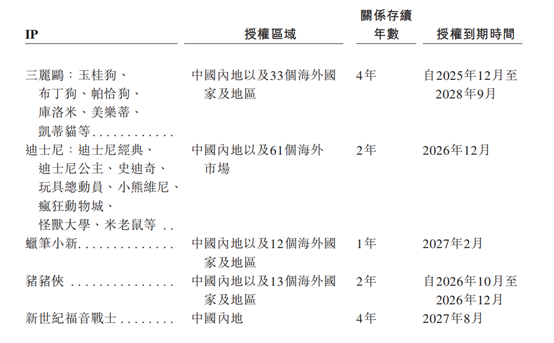
Core Viewpoint - The rise of the Z generation's consumption power and the upgrade of new consumption structures are driving the strong growth of the trendy toy sector, with companies like TOP TOY gaining attention in the capital market as they prepare for IPOs [1][2]. Company Overview - TOP TOY, established in 2020 and a subsidiary of Miniso, focuses on selling licensed IP toys, proprietary IP toys, and third-party brand toys, covering various categories such as blind boxes, building blocks, figurines, and more [1][2]. Financial Performance - TOP TOY has shown impressive financial growth, with revenue increasing from 679 million yuan in 2022 to 1.909 billion yuan in 2024, representing a compound annual growth rate (CAGR) of 67.7%. In the first half of 2025, revenue reached 1.36 billion yuan, a year-on-year increase of 58.5% [2][3]. - The company's gross margin improved from 19.9% in 2022 to 32.7% in 2024, although it slightly decreased to 32.4% in the first half of 2025 [2][3]. - TOP TOY transitioned from a loss in 2022 to a net profit of 212 million yuan in 2023, further increasing to 293 million yuan in 2024, with a net profit of approximately 180 million yuan in the first half of 2025, reflecting a year-on-year growth of 26.8% [2][3]. Market Position - By 2024, TOP TOY captured a market share of 2.2%, significantly lower than Pop Mart's 12.3% and slightly below Lego's 4.2%, yet it remains a notable player in the trendy toy industry [2][3]. Competitive Landscape - Despite its growth, TOP TOY's profitability is less than one-tenth of Pop Mart's, with a gross margin of 32.7% compared to Pop Mart's 66.8% in 2024, highlighting a significant gap in financial performance [3]. - The company relies heavily on licensed IPs, with 43 licensed IPs contributing 889 million yuan in revenue in 2024, while its proprietary IPs generated only 6.8 million yuan [4][5]. Challenges and Risks - TOP TOY's heavy reliance on licensed IPs poses a risk, as the expiration of key licenses could impact product supply and profitability. Key licenses for popular IPs like Sanrio and Disney are set to expire between 2026 and 2028 [5][6]. - The company's sales and distribution expenses surged by 102.4% in the first half of 2025, outpacing revenue growth, primarily due to overseas expansion costs [3][9]. - The cash flow structure shows positive operating cash flow but negative investment and financing cash flows, indicating a potential reliance on external financing to cover short-term liquidity needs [3][9]. Strategic Insights - TOP TOY's channel strategy relies on a franchise and distribution model, with significant revenue coming from Miniso, which accounted for 36.8% to 53.5% of total revenue over recent years [7][8]. - While the support from Miniso has facilitated rapid market entry, it may also limit TOP TOY's long-term growth if Miniso adjusts its partnership terms [8][9]. Conclusion - TOP TOY's rapid growth in the trendy toy sector showcases its potential, but structural issues related to IP dependency and channel reliance may hinder its ability to operate independently in the long term [9][10].
资本市场,被潮玩“坑”怕了
创业邦· 2025-11-03 10:11
Core Viewpoint - The article discusses the current state and challenges of the Chinese潮玩 (trendy toy) industry, highlighting the contrasting performance of leading companies like泡泡玛特 (Pop Mart) and new entrants likeTOP TOY as they navigate market dynamics and investor sentiment [6][8]. Market Performance - TOP TOY has recently initiated its IPO process in Hong Kong, following a $59.426 million A-round financing led by Temasek, valuing the company at $1.3 billion [6]. -泡泡玛特 reported a significant revenue increase of 245%-250% year-on-year for Q3 2025, with overseas market growth reaching 365%-370% [6][10]. - Despite strong revenue growth,泡泡玛特's stock price has seen a decline, with a notable drop of 8.08% on the day of its earnings report [6][8]. Market Growth and Trends - The Chinese潮玩 market is projected to grow from 22.9 billion yuan in 2020 to 76.3 billion yuan by 2024, with a compound annual growth rate (CAGR) of 35.1% [10]. - The growth drivers include a structural upgrade in consumer demographics, diversification of product categories, and a trend of covering all age groups [10]. - The Z generation contributes over 40% of the market share, driven by a desire for self-pleasure in consumption [10]. Capital Market Concerns - Investors are increasingly cautious about the潮玩 industry due to its heavy reliance on intellectual property (IP), which is subject to changing consumer emotions and trends [12]. - The premium consumers are willing to pay for top IPs has decreased significantly, indicating a potential decline in market enthusiasm [12]. - The influx of new brands has intensified competition, leading to market saturation and reduced investor confidence in smaller brands [13]. Global Expansion and Challenges -泡泡玛特's overseas revenue reached 5.59 billion yuan in the first half of 2025, accounting for 40% of total revenue, with significant growth in the Asia-Pacific and Americas regions [14][16]. - However, many brands are merely replicating domestic strategies abroad without adapting to local cultures, raising concerns about sustainable growth [16]. Profit Margins and Business Models - The潮玩 industry enjoys high profit margins, with泡泡玛特's gross margin increasing from 57.5% in 2022 to 70.3% in the first half of 2025 [18][19]. - The high margins are attributed to the emotional resonance of IPs and low material costs, but there are concerns about the sustainability of this model [19][23]. - TOP TOY's reliance on IP licensing rather than owning its IP has resulted in lower profitability compared to泡泡玛特 [23]. Comparison with Disney - Despite the growth of潮玩 brands, none have reached the scale or cultural impact of Disney, which has a market capitalization over four times that of泡泡玛特 [28]. - Disney's success is attributed to its comprehensive ecosystem of stories, IPs, and merchandise, which潮玩 brands have yet to replicate [28][29]. - The lack of deep cultural narratives and emotional connections in the潮玩 industry limits its potential for long-term growth and consumer loyalty [30].

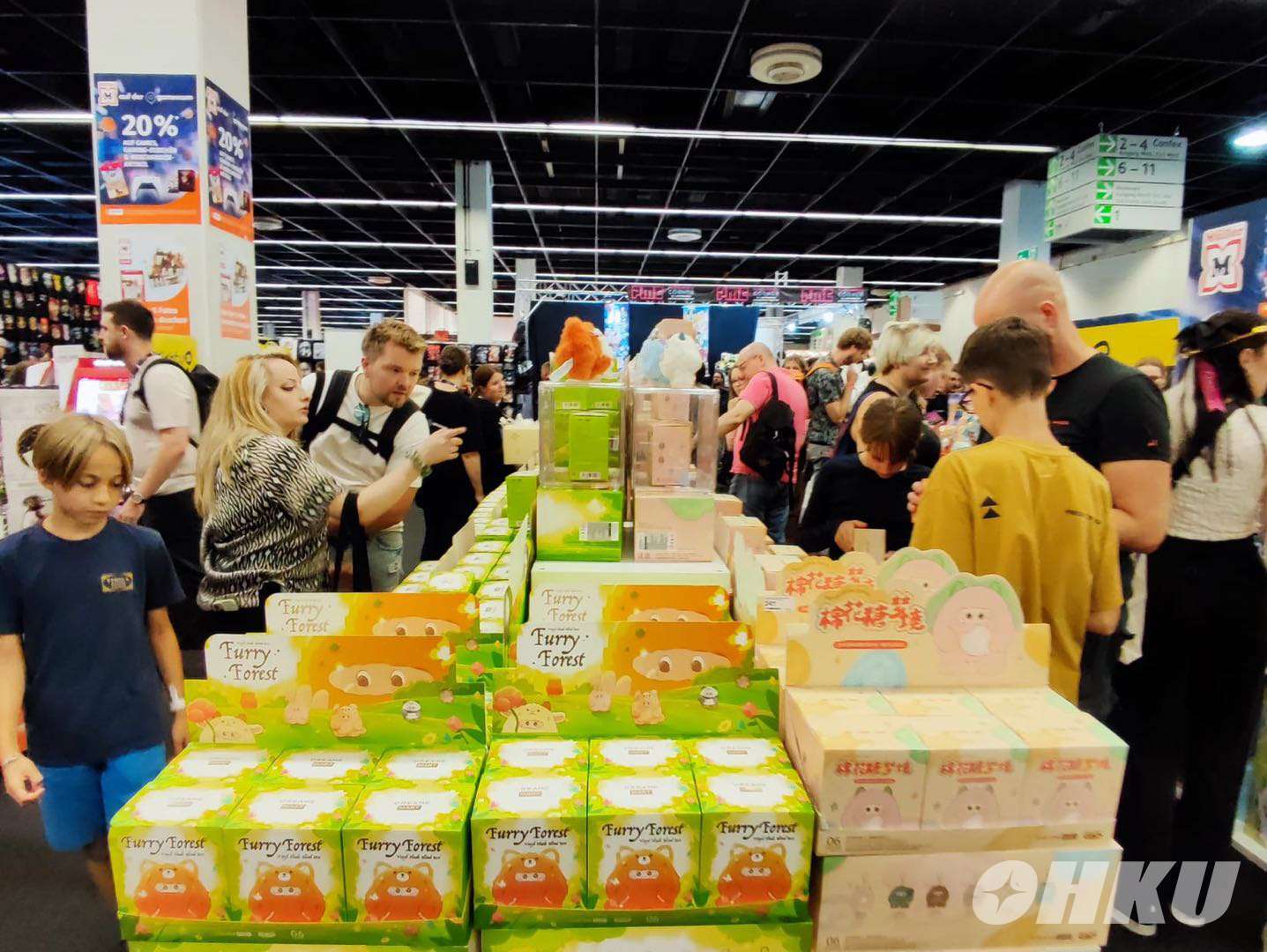
OHKU单月营收近千万,中国潮玩奇袭欧美市场
Sou Hu Cai Jing· 2025-10-30 14:57
Core Insights - A number of Chinese brands, including the emerging brand OHKU, are successfully penetrating the high-end markets in Europe and North America, diverging from the trend of focusing on Southeast Asia [1][2] - OHKU achieved nearly 10 million yuan in monthly revenue within its first year, with over 80% of its income coming from the European and American markets [1] - The leading player, Pop Mart, reported a staggering year-on-year revenue growth of 1265%-1270% in the Americas and 735%-740% in Europe and other regions for Q3 2025, indicating that these markets are becoming new growth engines for Chinese toy brands [1] Strategic Approach - OHKU's strategy involves a differentiated approach by targeting North America and Europe directly, avoiding the saturated Southeast Asian market [2] - The North American toy consumption per capita is 12.1 times that of China, while Europe is 4.6 times higher, showcasing the vast market potential [2] - OHKU employs a "direct sales + distribution" light asset model, balancing brand control and expansion speed, which is key to its success [2] Channel Strategy - OHKU utilizes a "1+N" channel strategy, starting with flagship stores to drive regional networks, establishing over 800 sales points in the U.S. alone [4] - The company has built a global sales network with over 3000 terminal points, including more than 2500 overseas sales points covering core markets in Europe and North America [4] - OHKU has developed a comprehensive online and offline sales system in China [4] Product Development and Localization - OHKU's flagship IP "Fluffy Monster" has shown strong sales performance, with expectations of annual sales exceeding 100 million yuan [6] - The company has over 28 IPs in its portfolio, including key IPs like Fluffy Monster, DREAM BOY, and MOI, indicating a robust IP incubation capability [6] - OHKU's localization strategy involves deep integration into local markets through the establishment of local teams and participation in global industry events [8] Industry Growth and Competition - The global toy industry is projected to exceed $15 billion (approximately 1000-1100 billion yuan) by 2027, indicating a significant growth phase for the industry [9] - The competition is evolving from "shelf space" to "mind share," with brands increasingly focusing on direct consumer engagement through events and user-generated content [10] - Pop Mart reported overseas revenue of 5.59 billion yuan in the first half of 2025, a 440% year-on-year increase, with a gross margin of 70.3% [10] Future Outlook - OHKU plans to accelerate store openings globally, focusing on key cities in Europe, North America, and the Asia-Pacific region [12] - The next few years will be crucial for Chinese toy brands to transition from "hot sales" to "sustained success" in the global market [12]