呷哺呷哺

Search documents
巴奴国际赴港上市:高溢价低净利、基本盘增长乏力 “产品主义”难讲新故事
Xin Lang Zheng Quan· 2025-06-20 09:29
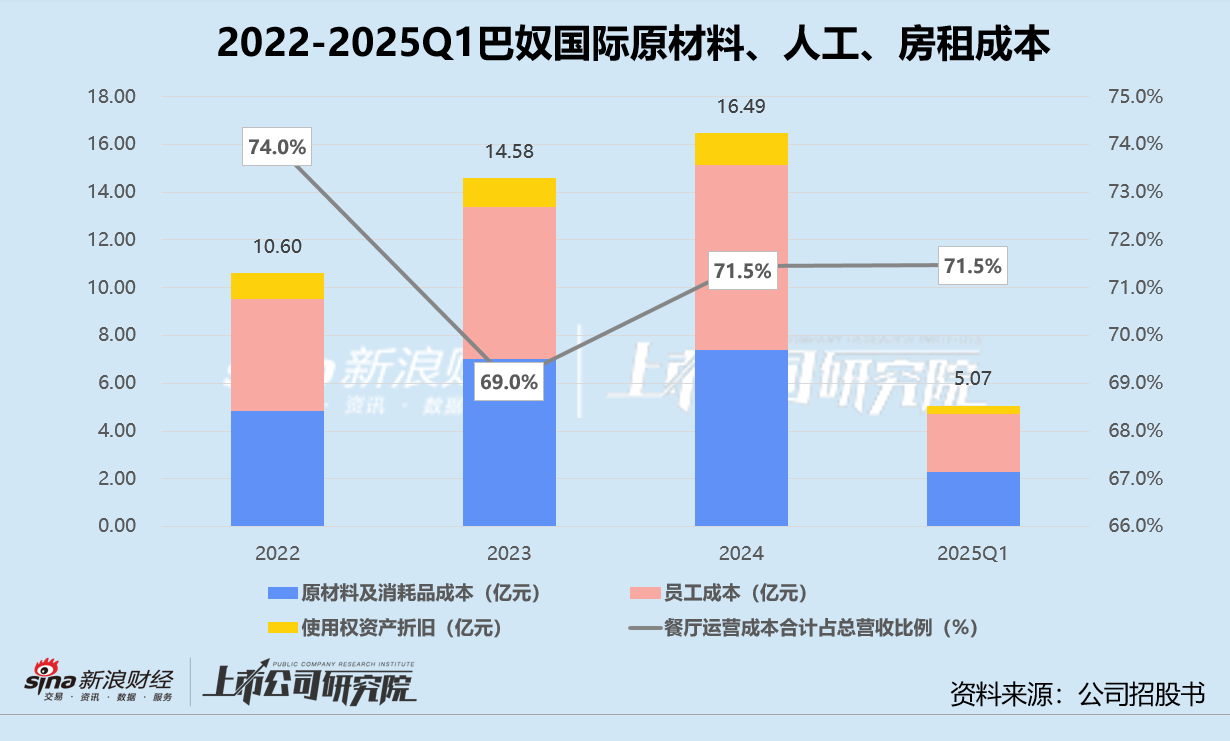
Core Viewpoint - Banu International Holdings Limited has submitted an application for a mainboard listing on the Hong Kong Stock Exchange, following in the footsteps of other hotpot chains like Xiaobuxiang and Haidilao [2] Financial Performance - Banu International's total revenue for 2022-2024 is projected to be 1.433 billion, 2.112 billion, and 2.307 billion yuan, with adjusted net profits of 41.46 million, 144 million, and 196 million yuan, reflecting compound annual growth rates of 17.5% and 67.8% respectively [2] - In Q1 2025, the company reported total revenue of approximately 709 million yuan, a year-on-year increase of 25.7%, and adjusted profits of about 76.68 million yuan, up 33.2% from the same period in 2024 [2] - The number of operating restaurants reached 144, with a profit margin of 23.7% at the store level [2] Market Position and Challenges - Despite impressive growth figures, Banu International faces challenges in profitability and operational efficiency compared to industry leader Haidilao [2] - The company’s same-store sales growth was only 2.1% in Q1 2025, a significant drop from 22.6% in the previous year [7] - Banu's average customer spending remains high at 138 yuan in Q1 2025, but this has not translated into higher profit margins, with adjusted net profit margins of 2.9%, 6.8%, and 8.5% for 2022-2024 [3][4] Cost Structure and Expansion Plans - Banu's cost structure is heavily impacted by fixed costs related to self-operated restaurants, including raw materials, labor, and rent, which accounted for 74.1% of total revenue in Q1 2025 [4] - The company plans to open 177 new restaurants from 2026 to 2028, requiring an aggressive expansion strategy that may pressure profit margins [4] Target Market - Banu primarily operates in second-tier and lower-tier cities, with 82.6% of its restaurants located in these areas as of 2024 [6] - However, the performance in these markets is concerning, with same-store turnover rates not exceeding 3.0 times per day [6] Investment and Valuation - Banu's valuation has increased from 769 million yuan in 2015 to 5 billion yuan in 2022, but this growth is modest compared to other new consumer brands [8] - The company has relied heavily on Tomato Capital for funding, which has raised concerns about its financial independence and market perception [11][12]

食饮吾见 | 一周消费大事件(6.16-6.20)
Cai Jing Wang· 2025-06-20 08:26
Food and Beverage - Lianhua Holdings reported that its new product, Lianhua 1983 Red Bean and Job's Tears Water, has maintained a high sales growth rate since its launch in April 2025 [1] - The company plans to introduce an electrolyte drink with flavors including lemon, grapefruit, and blood orange, as well as a 100% fruit and vegetable juice product in the second half of the year [1] - Haitian Flavoring and Food Co. officially listed on the Hong Kong Stock Exchange, closing at HKD 36.5 per share, a 0.55% increase from the opening price [2] Company Developments - Black Sesame Group received a warning letter from the Guangxi Securities Regulatory Bureau due to issues such as non-operating fund occupation by controlling shareholders and irregular corporate governance [3] - IFBH Limited, the parent company of coconut water brand if, has passed the listing hearing on the Hong Kong Stock Exchange [4] - Three Squirrels decided to terminate the acquisition of Hunan Ailingshi Technology Co., with no significant adverse impact on its operations or future development strategy [5] Market Trends - Xiaobu Group's collaboration with Li Jiaqi's live streaming resulted in over 9,000 vouchers sold in a single session, indicating strong consumer engagement [8] - Ba Nu International Holdings submitted its prospectus to the Hong Kong Stock Exchange, reporting revenues of CNY 7.09 billion in Q1 2025 and a profit of CNY 55.16 million [10] - Huan Niu Cake House announced its closure due to rising costs and market competition, while addressing customer concerns regarding membership balances [11]



谁在定义新消费信仰?消费巨变进行时
格隆汇APP· 2025-06-20 08:19
Core Viewpoint - The article discusses the shift in consumer behavior in China, highlighting the rise of "new consumption" and its contrast with traditional consumption, emphasizing the emotional value and social aspects of modern purchasing decisions [1][4][21]. Group 1: Current Consumption Landscape - Domestic consumption has become a primary focus for the economy, with various government initiatives like subsidies and consumption vouchers aimed at boosting spending [1][2]. - China's household consumption accounts for less than 40% of GDP, significantly lower than the 70% in the US and 60% in Japan, indicating substantial growth potential [3]. - There is a notable disparity in the consumption market, with traditional sectors declining while new consumption categories are thriving [4]. Group 2: Traditional vs. New Consumption - Traditional dining sectors are struggling, with significant losses reported by established brands, while new beverage brands like Mixue Ice City are rapidly expanding [5]. - Traditional retail channels are experiencing a decline, with hypermarkets down 11.4% for four consecutive years, while snack stores are booming [7][8]. - The high-end liquor market is facing challenges, with prices for premium brands like Moutai dropping significantly, reflecting inventory pressures [9]. Group 3: Emotional and Social Aspects of New Consumption - New consumption is characterized by a shift from basic needs to "self-pleasing" demands, focusing on emotional value rather than practical utility [21][22]. - The success of products like LABUBU from Pop Mart illustrates the importance of social media and emotional marketing in driving consumer interest [30][31]. - Over 40% of young consumers prioritize emotional value in their purchases, with a significant portion seeking to please themselves through spending [35][36]. Group 4: Evolution of Consumer Behavior - The article outlines the historical evolution of consumer behavior in China, indicating three major shifts in consumption patterns since the 1990s [47][48]. - The emergence of the third consumption era reflects a transition towards valuing symbolic meanings over practical use, aligning with global trends [52][53]. - As consumer needs evolve, there is a potential shift towards a fourth consumption era, characterized by rational consumption and a focus on value [68][72]. Group 5: Future Outlook - The new consumption trend is expected to continue growing, particularly in sectors like pet economy and new consumer electronics, despite potential market corrections [62][63]. - The interplay between traditional and new consumption is seen as a driver for domestic demand recovery, supported by policy initiatives [75][76].



谁在定义新消费信仰?消费巨变进行时
格隆汇APP· 2025-06-20 08:08
Core Viewpoint - The article discusses the shift in consumer behavior in China, highlighting the rise of "new consumption" and its contrast with traditional consumption, emphasizing the importance of emotional value in purchasing decisions [1][2][4][30]. Group 1: Current Consumption Landscape - Domestic consumption in China accounts for less than 40% of GDP, compared to 70% in the US and 60% in Japan, indicating significant growth potential [3]. - There is a notable disparity in the consumption market, with traditional sectors declining while new consumption categories are thriving [4][5]. - Traditional dining categories are struggling, with brands like 湊湊火锅 closing 73 stores and incurring losses exceeding 3.5 billion yuan, while new tea beverage brands like 蜜雪冰城 are rapidly expanding [6]. Group 2: Traditional vs. New Consumption - Traditional consumption focuses on essential daily needs, while new consumption shifts towards "self-pleasing" demands [21][22]. - The rise of "emotional consumption" is evident, with over 40% of young consumers prioritizing emotional value in their purchases [31]. - The concept of new consumption encompasses various sectors, including snack retail and new tea beverages, reflecting a broader trend towards personalized and emotional purchasing [34]. Group 3: Market Trends and Future Outlook - The article notes that new consumption trends are not merely a passing fad but are rooted in changing consumer environments and behaviors [54]. - Despite the current enthusiasm for new consumption, many companies are experiencing stock price corrections, indicating potential overvaluation [52][53]. - Long-term prospects for sectors like pet economy and new consumer electronics appear promising, with emerging trends suggesting continued growth [55][56].

20元一顿管饱?“不务正业”的海底捞盯上“牛马经济”
3 6 Ke· 2025-06-19 03:24
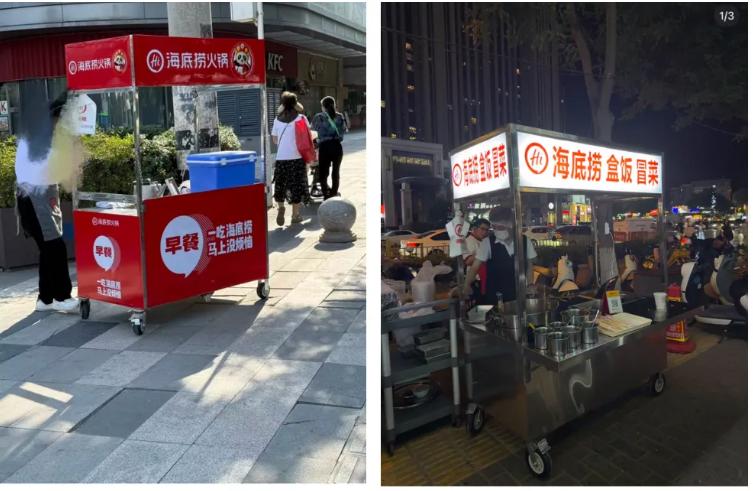
Core Insights - Haidilao has recently gained attention in the working community by launching a self-service lunch option, offering meals priced around 20 yuan, which includes various dishes and beverages, appealing to office workers [1][4][8] - The company is expanding its business model beyond traditional hotpot offerings, creating a new consumption map that includes various meal options for different times and settings [1][3][10] Business Strategy - The introduction of the self-service lunch is a strategic move to activate underutilized resources during off-peak hours, as lunch remains a low-traffic period for the company [3][11] - Haidilao's diversification efforts include launching new brands and meal options, such as boxed meals and children's menus, to cater to a broader audience and different dining scenarios [8][10][22] Market Context - The overall restaurant industry in China is experiencing slower growth, with Haidilao's revenue growth declining to single digits in 2024, indicating a shift in the competitive landscape [11][12][13] - The hotpot industry is facing intense competition, with many brands engaging in price wars, leading to a decrease in profit margins and an increase in store closures [16][17][18] Financial Performance - Haidilao reported a revenue of 427.55 billion yuan in 2024, with a modest growth of 3.1%, and a net profit of 47 billion yuan, reflecting a slowdown compared to previous years [11][12] - The company's average table turnover rate has improved to 4.1 times per day, but the average customer spending has decreased below 100 yuan, highlighting the impact of price sensitivity among consumers [14][15] Consumer Perception - The introduction of affordable meal options has altered consumer perceptions of Haidilao, with some viewing it as a value-driven choice while others question the brand's premium positioning [7][8] - The success of the self-service lunch and other new offerings will be crucial in determining Haidilao's ability to adapt to changing consumer preferences and market conditions [21][22]

巴奴闯港股:人均消费跌至138元,火锅身价被“打下来”
Bei Ke Cai Jing· 2025-06-19 01:41
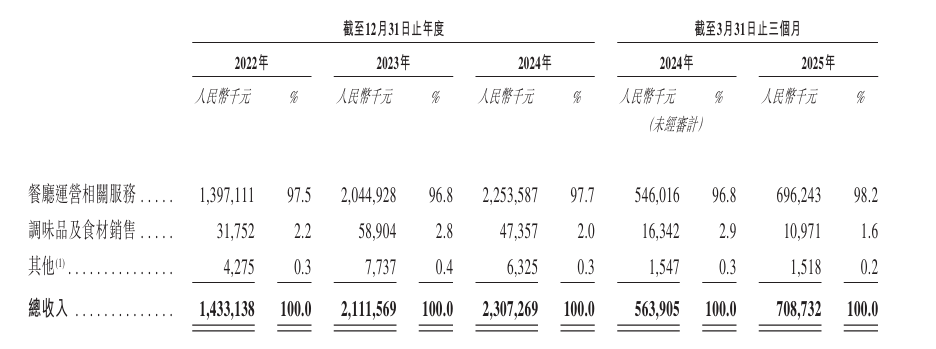
Core Viewpoint - Banu, a hot pot chain, is preparing for an IPO in Hong Kong, following a trend of consumer companies successfully listing in the market, indicating a strategic move for capital planning and expansion [1][20]. Financial Performance - Banu's revenue has shown significant growth, with figures of approximately 14.33 billion RMB in 2022, 21.12 billion RMB in 2023, and 23.07 billion RMB in 2024, alongside a profit turnaround from a loss of 5.2 million RMB in 2022 to a profit of 1.23 billion RMB in 2024 [3][5]. - The adjusted net profit for the same periods was approximately 420 million RMB, 1.44 billion RMB, and 1.96 billion RMB, with a net profit of 550 million RMB in the first quarter of 2025 [3][5]. Customer Metrics - The average customer spending has decreased from 147 RMB in 2022 to 138 RMB in the first quarter of 2025, reflecting a shift in consumer behavior [2][7]. - Banu's same-store sales increased by 22.6% from 2022 to 2023 but then declined by 9.9% from 2023 to 2024, attributed to changes in product offerings and customer spending [9][10]. Expansion Plans - Banu plans to open approximately 52, 61, and 64 new restaurants in China from 2026 to 2028, aiming to expand its self-operated restaurant network [2][15]. - As of June 9, 2023, Banu operates 145 stores across 39 cities, with a rapid growth strategy in place [11][15]. Market Position - Banu aims to become the third hot pot company listed on the Hong Kong Stock Exchange, following Haidilao and Xiaobuxiang [2]. - The hot pot market in China is fragmented, with the top five players holding only about 8.1% of the market share, and Banu's share is less than 1% [18]. Operational Efficiency - Banu's restaurant operating profit margins have improved, with figures of 15.2%, 21.3%, 21.5%, and 23.7% from 2022 to the first quarter of 2025 [5]. - The table turnover rate has increased from 3 times per day in 2022 to 3.7 times per day in the first quarter of 2025, indicating improved operational efficiency [6].
劝你月薪5000不要吃的巴奴,要上市了
Sou Hu Cai Jing· 2025-06-19 00:43
Core Viewpoint - Banu Hot Pot is attempting to become the "third hot pot stock" in the market, following Xiabuxiabu and Haidilao, despite facing challenges in performance stability and public controversies [2][4]. Financial Performance - Banu Hot Pot's revenue grew from 1.433 billion yuan in 2022 to 2.307 billion yuan in 2024, with a significant increase of 47.3% in 2023, but a decline to 9.3% growth in 2024, followed by a recovery to 25.7% in Q1 2025 [4]. - The number of restaurants increased from 86 in 2022 to 145 in 2024, covering 39 cities nationwide [3]. - Average customer spending in first-tier cities decreased from 183 yuan in 2022 to 159 yuan by March 2025, while overall average spending across all city tiers fell from 147 yuan to 138 yuan [3]. Operational Metrics - Key operational metrics in first-tier cities showed a decline: table turnover rate dropped from 3.9 times per day in 2022 to 3.6 times in 2024, average daily customer count fell from 426 to 351, and daily sales per restaurant decreased from 77,900 yuan to 58,000 yuan [3][4]. - In second and third-tier cities, while table turnover rates maintained an upward trend, the average customer count per restaurant continued to decline, leading to a decrease in daily sales [3]. Controversies and Public Perception - Banu Hot Pot faced significant public backlash due to controversial statements made by its chairman, Du Zhongbing, regarding customer spending, which sparked widespread criticism on social media [5]. - The company was also involved in a "sky-high potato" incident where a customer received an unsatisfactory portion of a dish, leading to negative publicity [6]. - Food safety issues have been reported, including incidents of foodborne illness and allegations of selling fake meat products, which have further damaged the brand's reputation [7].

【新华财经调查】餐饮业“内卷”竞争如何破局?
Xin Hua Cai Jing· 2025-06-18 23:19
Core Viewpoint - The restaurant industry is experiencing intensified price wars, with many companies resorting to low-cost strategies to attract customers, leading to concerns about long-term profitability and sustainability [1][2][3]. Group 1: Price Wars and Market Dynamics - Many restaurant chains have engaged in a "9.9 yuan" price war, with various brands offering discounted items and meal sets to draw in customers [2][4]. - The competition has been exacerbated by a surge in new entrants to the restaurant sector, driven by low barriers to entry, resulting in oversupply and increased rivalry [4][5]. - Data indicates that the average dining order price has decreased by 10.2% while the number of orders has increased by 15.4% year-on-year [4]. Group 2: Financial Performance and Concerns - Companies like Xiaobububao have reported significant losses, with a 100.8% year-on-year increase in losses to 401 million yuan, alongside the closure of numerous outlets [3]. - The financial health of many listed companies is under scrutiny, as some rely heavily on franchise fees and product sales, with reports of declining customer traffic and revenue among franchisees [3][4]. Group 3: Consumer Trends and Competitive Strategies - There is a notable shift in consumer behavior, particularly in first-tier cities, where price sensitivity and value-for-money are becoming more prominent [6]. - The rise of food delivery platforms has intensified competition, leading to extreme price reductions, with some products being sold at unsustainable prices [6][7]. - Companies are encouraged to innovate and differentiate their offerings rather than engage in price competition, as this could harm brand image and profitability in the long run [7][8]. Group 4: Innovation and Differentiation - Some companies are exploring innovative strategies, such as collaborations with well-known brands and creating unique dining experiences to attract customers [8][9]. - Emphasis is placed on enhancing service quality and utilizing technology to improve operational efficiency and customer experience [9].
又一知名火锅品牌冲刺港股IPO,火锅第三股要来了?
Sou Hu Cai Jing· 2025-06-18 23:08
Core Viewpoint - The hot pot industry in China is witnessing the emergence of a new player, Banlu, which aims to become the third listed company in the sector, following Haidilao and Xiaobuxiang. Banlu emphasizes product quality over service, positioning itself uniquely in a market that has seen a shift towards rational consumption and operational efficiency challenges [2][17]. Company Overview - Banlu, founded in 1999 in Zhengzhou, has evolved from a "tripe expert" to a brand known for its diverse product matrix, including beef, mushroom soup, and goose intestines. It is recognized for its slogan that challenges the traditional service-centric approach in the hot pot industry [7][5]. - As of the end of 2023, Banlu operates 123 stores, with 104 being directly managed, covering 25 cities primarily in North, Central, and East China [8]. Financial Performance - In 2023, Banlu reported total revenue of 1.86 billion RMB, representing a year-on-year growth of 41.6%. The adjusted net profit reached 133 million RMB, with a net profit margin of 7.1%, significantly higher than many competitors [10]. - Core products such as tripe, mushroom soup, and fresh beef account for over 70% of the main revenue, indicating strong customer loyalty and repeat purchase rates [11]. Business Strategy - Banlu adopts a "productism" strategy, focusing on high-quality ingredients and a robust supply chain, which differentiates it from competitors reliant on service models. This approach aims to build a brand based on product strength rather than service gimmicks [4][11]. - The company has a cautious expansion strategy, prioritizing mature commercial areas in first-tier cities, which allows for better brand control and service quality. The average revenue per store is 17.5 million RMB, with an average customer spending of 120 RMB, both above industry averages [16][14]. Market Positioning - Banlu's entry into the public market is seen as a potential revitalization of investor interest in the hot pot sector, offering a new model that emphasizes product quality over service. This could signal a shift in market dynamics, especially as consumer preferences evolve [19][20]. - The hot pot industry faces challenges in maintaining growth and investor interest, particularly as previous high valuations for established brands like Haidilao and Xiaobuxiang have diminished. Banlu's success will depend on its ability to present a clear growth trajectory and maintain operational efficiency [17][19].
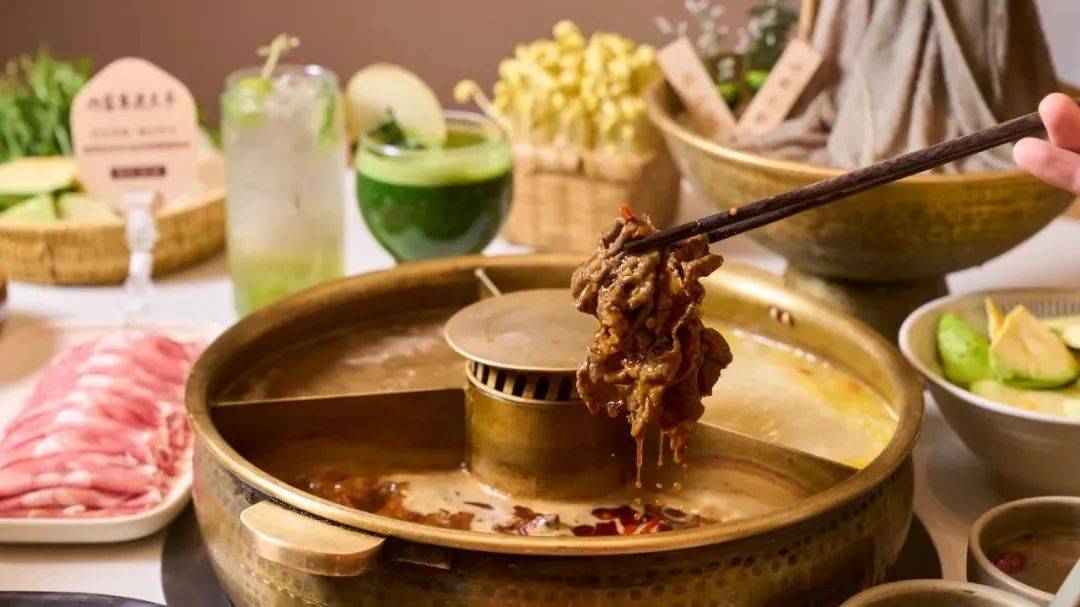
巴奴冲刺港股 IPO,火锅江湖再掀风云!
Sou Hu Cai Jing· 2025-06-18 08:30
Group 1 - The core point of the news is that Banu International Holdings Limited, the parent company of Banu Hot Pot, has submitted its IPO application to the Hong Kong Stock Exchange, marking a significant milestone in its development and indicating its intention to become the third publicly listed hot pot company in China after Xiaobuxiang and Haidilao [1][3]. Group 2 - Banu Hot Pot was founded in 2001, with its first restaurant opened in Anyang, Henan. The company began its national expansion in 2009 and rebranded to focus on its signature product, beef tripe, in 2012. As of June 9, 2025, Banu has expanded to 145 stores across 39 cities, a 74.7% increase from 83 stores at the end of 2021 [3]. Group 3 - Financial performance shows steady growth, with revenues of 1.433 billion yuan, 2.112 billion yuan, and 2.307 billion yuan for 2022, 2023, and 2024 respectively. The company turned a profit in 2023 with a net income of 102 million yuan, and projected profits of 123 million yuan in 2024. The first quarter of 2025 saw revenues of 709 million yuan, a 25.7% year-on-year increase [4][5]. Group 4 - Banu holds a 0.4% market share in the overall hot pot market and is the largest brand in the quality hot pot segment with a 3.1% market share in 2024, indicating strong brand recognition among quality-focused consumers [5]. Group 5 - The table turnover rates for Banu increased from 3.0 times per day in 2022 to 3.7 times in the first quarter of 2025, reflecting improved operational efficiency. However, average customer spending decreased from 147 yuan in 2022 to 138 yuan in early 2025 [7]. Group 6 - Banu plans to open approximately 52, 61, and 64 new restaurants in 2026, 2027, and 2028 respectively, indicating a significant acceleration in its expansion strategy compared to previous years [8]. Group 7 - The company aims to strengthen its presence in lower-tier cities, with 78.6% of its 145 stores located in second-tier and below cities. The profit margin for these stores is higher than that of first-tier cities, suggesting a lucrative opportunity in these markets [9]. Group 8 - The funds raised from the IPO will be allocated to expanding the restaurant network, enhancing digital management capabilities, strengthening brand presence, and optimizing the supply chain, including the construction of central kitchens and satellite warehouses [10]. Group 9 - The hot pot industry in China is expected to grow at a compound annual growth rate of approximately 6.5% from 2024 to 2029, with the quality hot pot segment projected to grow at 7.8%, presenting a favorable market environment for Banu [12].