千禾味业

Search documents
白象回应“多半”争议:为更大包装 后续将调整避免误解
Jing Ji Guan Cha Bao· 2025-06-04 15:54
Core Viewpoint - White Elephant Food Co., Ltd. has responded to the controversy surrounding its "Duoban" trademark, clarifying that the product is a larger version of its original offerings, aimed at distinguishing itself from regular-sized products for consumer convenience [2][3]. Group 1: Company Overview - White Elephant Food was established in 1997 and primarily focuses on the production and sale of noodle products. The company has set up 12 production bases across 10 provinces in China and operates over 20 subsidiaries [2]. - The company has completed a B+ round of financing, with investors including Fosun Group and GF Securities [2]. Group 2: Recent Developments - In 2023, White Elephant Food launched the "White Elephant Chinese Noodle" strategy, emphasizing the importance of Chinese branding, flavors, quality, and spirit. The company has also developed new flavors, including a cilantro-flavored instant noodle in collaboration with Douyin [3]. - The company's sales reached 9.175 billion yuan in 2023, as reported in the 2024 list of the top 100 private enterprises in Henan Province [3]. Group 3: Controversy and Response - The "Duoban" trademark faced criticism for potentially misleading consumers regarding the actual content of the products, similar to a previous incident involving Qianhe Flavor Industry's "Qianhe 0" soy sauce [3]. - In response to the backlash, White Elephant stated that it would adjust the packaging of the "Duoban" products to prevent further consumer misunderstanding [3].
白象致歉
证券时报· 2025-06-04 15:23
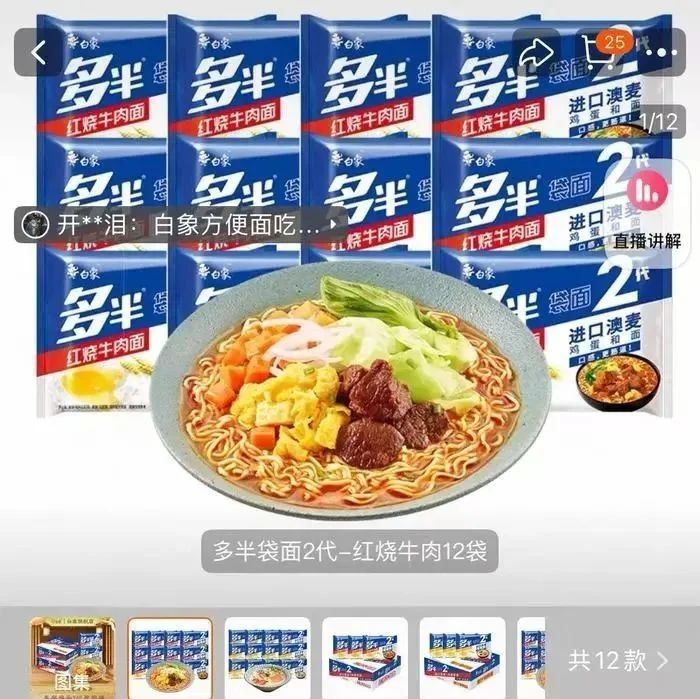
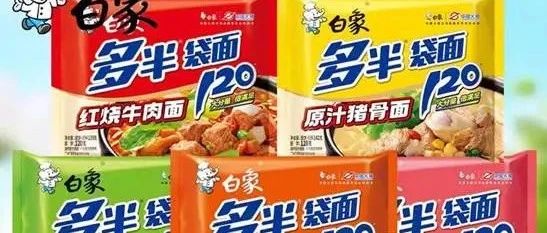
热搜爆了。 今日晚间,@白象食品 发布声明称,目前公司在售的"多半"产品,是基于原70克面饼基础上推出的 110-120克面饼的大份量产品。"多一半"是基于原60克面饼推出的100克面饼的产品。"多半"商标申请 注册的初心是为了与常规份量产品做区分,便于消费者选购。如因此给消费者造成误解,公司诚挚地表 示歉意。后续公司将尽快调整"多半"产品包装,避免引发消费者的误解。 近日,多位网友反映称,白象多半袋面、多半桶面系列产品包装上显示"多半"为注册商标,并质疑企 业"在宣传上玩文字游戏",消息引发热议。对此,白象食品官方客服人员向记者确认,"'多半'确实是商 标。" 记者在第三方电商平台的"白象官方旗舰店"看到,确实有描述为"白象多半牌袋面方便面"的产品,口味 分为红烧牛肉、老坛酸菜等,12袋装的产品售价为30.9元,24袋装的产品售价为58.9元。 据上述报道,相关画面显示,产品包装"多半袋面""多半桶面"旁边写着"大分量,倍满足"的标语,在生 产信息下方还有一句"'多半'是白象食品股份有限公司注册商标"。 对此,白象食品官方客服人员向记者表示,"多半"确实是商标,产品具体克重以包装上显示的为准。对 于被质疑" ...

热搜爆了!白象道歉,这次惹上了大麻烦
凤凰网财经· 2025-06-04 13:49
Core Viewpoint - The controversy surrounding White Elephant instant noodles stems from the misleading use of the trademark "Duoban" (meaning "more than half"), which consumers interpreted as indicating a larger quantity, rather than a brand name [1][2][3]. Group 1: Trademark Issues - The term "Duoban" is confirmed to be a registered trademark of White Elephant, not an indication of increased product weight [4][5]. - White Elephant's other trademark applications, such as "Duoban" bags and buckets, have been rejected and are currently invalid [5][6]. - The "Duoyiban" (meaning "more than half") product only offers a 25% increase in noodle quantity compared to standard products, raising further consumer concerns [2][7]. Group 2: Industry Trends - The phenomenon of "trademark edge cases" is prevalent in the food industry, where companies exploit descriptive terms to mislead consumers [2][11][13]. - This practice reflects a deeper conflict between corporate profit motives and consumer rights protection, as companies prioritize market share over transparency [3][14]. Group 3: Consumer Reactions - Following the revelation about the "Duoban" trademark, public backlash against White Elephant has intensified, with consumers expressing disappointment and distrust [16][18]. - The incident highlights the gap between consumer expectations for brand integrity and the reality of misleading marketing practices [18]. Group 4: Company Background - White Elephant Food Co., established in 1997, focuses on producing high-quality noodle products and has expanded its operations across multiple provinces in China [10]. - The company has completed a B+ funding round, attracting investments from notable firms like Fosun Group and GF Securities [10]. Group 5: Regulatory Context - The use of misleading trademarks contradicts the principles outlined in the Trademark Law, which mandates honesty and transparency in marketing [14][15]. - The National Food Safety Standards require that food labeling be truthful and objective, further emphasizing the need for compliance in marketing practices [14].
中炬高新净利再降股价累跌77% 余健华年薪268万百亿营收被指画饼
Chang Jiang Shang Bao· 2025-06-02 22:38
Core Viewpoint - Zhongju Gaoxin (600872.SH), known as the "second in soy sauce," is facing dual pressures on its operations and stock price, with significant declines in both revenue and net profit [1][5]. Financial Performance - In Q1 2024, Zhongju Gaoxin reported revenue of approximately 1.1 billion yuan and a net profit attributable to shareholders of about 180 million yuan, representing year-on-year declines of approximately 26% and 24% respectively [2][5]. - For the full year 2024, the company anticipates a revenue increase of over 7%, but a drastic net profit decline of 47% [2]. - The revenue for the subsidiary Meiwai Xian in 2024 was 5.075 billion yuan, showing a modest year-on-year growth of only 2.9% [3]. Market Comparison - In contrast, leading competitor Haitian Flavoring (603288) achieved a net profit of 2.202 billion yuan in Q1 2024, marking a year-on-year increase of 14.77% [6]. - Zhongju Gaoxin's net profit has been declining while competitors are experiencing growth, widening the gap with Haitian Flavoring [7]. Internal Challenges - The company is currently dealing with internal conflicts, including a delayed board election and ongoing disputes related to shareholder control [11][12]. - The internal strife has hindered the company's ability to execute its growth plans effectively, including the ambitious goal of generating 10 billion yuan in revenue for Meiwai Xian by 2026 [13]. Strategic Initiatives - In 2024, Zhongju Gaoxin initiated a marketing transformation, shifting from a centralized management model to a division-controlled model, which has faced challenges in execution [9]. - The company has resolved a long-standing equity issue with Guangdong Chubang Food Co., which is now a wholly-owned subsidiary, but this has not translated into improved financial performance [7][8].

专家访谈汇总:中国人现在每天只消费100克奶制品
阿尔法工场研究院· 2025-05-28 14:28
Group 1: Global Gold Consumption Insights - Global gold consumption is expected to grow by 1.4% in 2024, with significant structural changes, particularly in the Asia-Pacific region, reflecting increased wealth accumulation and asset allocation awareness in emerging markets [1] - Amid rising economic uncertainty and persistent inflation, gold's safe-haven attributes are widely recognized, leading to increased investment demand from both central banks and individual investors [1] - Gold is increasingly viewed as a "global reserve asset alternative" due to rising risks in dollar assets and the trend of de-dollarization in the global monetary system [1] - The global gold supply remains stable, with a gold reserve-to-production ratio of 19.4 years in 2024, indicating no near-term depletion risk [1] - Gold production is projected at 3,661 tons in 2024, a 2% year-on-year increase, but the correlation between price and production is low, suggesting a moderate impact of supply on market prices [1] - While there is potential for gold price increases, short-term attention should be paid to Federal Reserve policy changes, geopolitical risks, and uncertainties in industrial gold demand [1] - Investors are advised to flexibly allocate gold ETFs and futures based on their risk preferences, while also considering quality gold mining companies and recycling leaders for long-term investment [1] Group 2: Chinese Optical Device Industry Analysis - Optical devices are essential components for high-speed optical communication, playing a critical role in key areas such as 5G, data centers, artificial intelligence, and industrial internet [3] - The industry includes active devices (like lasers and photodetectors) and passive devices (like wavelength division multiplexers and fiber optic connectors), representing a core segment of advanced technology [3] - Silicon photonics and CPO (Co-Packaged Optics) technologies are reshaping the industry landscape, transitioning optical devices from "electronic assistance" to "optical-electrical integration" [3] - There is a rigid demand for high-speed optical communication driven by data center expansion, 5G/6G deployment, autonomous driving, and industrial internet, particularly in AI training clusters [3] - Although core materials and high-end chips are still partially reliant on imports, domestic leading companies are advancing self-replacement through technological breakthroughs and vertical integration [3] - The high-end market is still dominated by overseas giants, but Chinese companies have formed scale effects in the mid-to-low-end market through product optimization and channel expansion [3] Group 3: Dairy Industry Trends - The Chinese dairy industry is experiencing its first decline in both production and consumption in 2024, marking a shift from growth-driven to structural optimization [4] - Liquid milk production has decreased by 2.8% year-on-year, with per capita dairy consumption dropping to 41.5 kg, about one-third of the global average [4] - Major dairy companies like Yili, Mengniu, and Guangming are facing revenue declines of 8%-10% in 2024, indicating industry-wide pressure and challenges in the traditional liquid milk-driven model [4] - Dairy companies can expand from liquid milk to various forms such as cheese, protein powder, and low-lactose products, tapping into multiple consumption scenarios [4] Group 4: Consumer Goods Industry Outlook - The consumer goods industry in 2024 is characterized by "slow recovery and deep differentiation," with overall revenue declining by 2.47% and net profit down by 4.09% [4] - From a quarterly perspective, revenue and profit margins began to improve in Q4 2024, indicating initial signs of recovery amidst cyclical fluctuations [4] - Stable sales and profit recovery are led by top brands like Qingdao Beer, Chongqing Beer, and Yanjing Beer, which possess dual advantages in branding and cost [4] - Despite unstable demand recovery and intense competition, leading companies maintain advantages through deep operations in branding, channels, and products [4] - The health supplement additives sector benefits from consumption upgrades and aging trends, with rising demand for precision nutrition products [4] Group 5: Electric Motor Industry Developments - Electric motors are the core "driving units" of robots, with technological advancements shifting from traditional general-purpose servo motors to higher performance, customized solutions [5] - The rise of humanoid and collaborative robots emphasizes lightweight, responsive, and compact structures as key performance indicators, driving the growth of frameless torque motors and hollow cup motors [5] - These motors are better suited for complex movements and can be deeply integrated with reducers and control systems, forming a complete "motor + module + algorithm" closed-loop system [5] - Companies like Tuobang Co., Haoshi Electric, and Leisai Intelligent are rapidly adapting to new demand scenarios by iterating fourth-generation frameless motors and 10mm-level hollow cup motors [5]
拆解海天味业“A+H”上市:高成长+低负债“范式”=“酱油茅”?
Zhi Tong Cai Jing· 2025-05-28 02:21
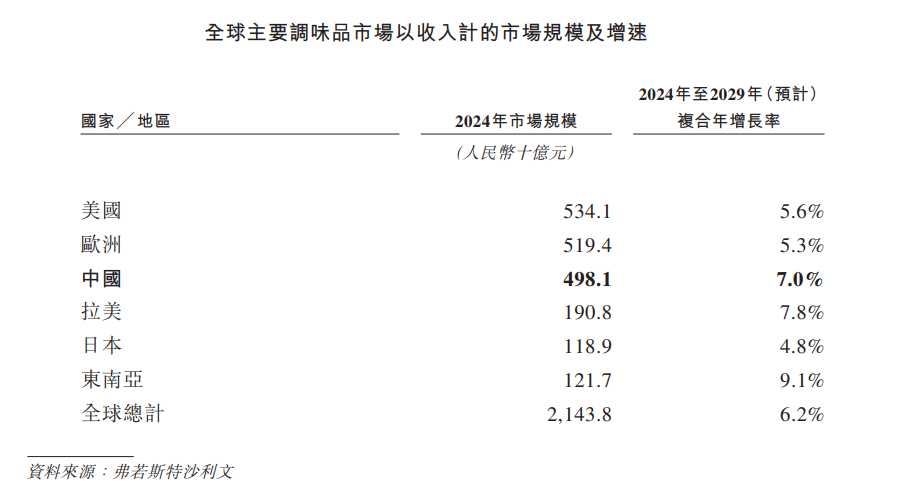
Core Viewpoint - Haitan Flavor Industry (603288) is set to go public in Hong Kong, aiming to raise at least $1.5 billion for R&D, capacity expansion, digital supply chain, and global market expansion, highlighting its strong market position and investor interest [1][2]. Company Overview - Haitan Flavor Industry has a rich history of over 400 years, originating from "Foshan Ancient Sauce Garden" and evolving into a leading player in China's condiment industry [3][4]. - The company has a comprehensive product range, including soy sauce, oyster sauce, and various other condiments, with over 1,450 SKUs and a significant number of high-revenue products [5]. Financial Performance - The company reported revenues of approximately 25.61 billion, 24.56 billion, and 26.90 billion RMB for 2022, 2023, and 2024 respectively, with a projected growth rate of 9.53% for 2024 [6]. - Net profits for the same years were around 6.20 billion, 5.64 billion, and 6.36 billion RMB, with a growth rate of 12.65% expected for 2024 [6]. - Haitan Flavor Industry maintains a healthy financial structure with a cash flow of 6.84 billion RMB and a low debt ratio of 23.1% [6][7]. Market Position - The global condiment market is projected to reach 2,143.8 billion RMB by 2024, with a compound annual growth rate (CAGR) of 6.2% from 2024 to 2029, driven by stable demand and consumption upgrades [8][9]. - Haitan Flavor Industry holds a leading market share in various segments, including 13.2% in the soy sauce market and 40.2% in the oyster sauce market in China [10]. Industry Challenges - The company faces increasing competition from other leading brands and rising raw material costs, which could impact profit margins [11].
海天味业:短期经营稳健,长期竞争力巩固-20250527
海通国际· 2025-05-27 13:30
Investment Rating - The report maintains an "Outperform" rating for the company with a target price of Rmb50.40, indicating an expected upside from the current price of Rmb44.78 [2][5]. Core Insights - The company is expected to achieve stable short-term operations while solidifying its long-term competitive strength through product upgrades and new product penetration [3][10]. - Revenue projections for 2025, 2026, and 2027 are Rmb29.7 billion, Rmb32.8 billion, and Rmb36.3 billion, respectively, with year-on-year growth rates of 10%, 11%, and 11% [13]. Summary by Sections Revenue and Profit Forecast - Revenue for the fiscal year ending December 2024 is projected at Rmb26.9 billion, with a growth rate of 9.5%. For 2025, revenue is expected to increase to Rmb29.7 billion, reflecting a 10.4% growth [8]. - Net profit for 2024 is estimated at Rmb6.4 billion, with a growth rate of 12.8%. The net profit is projected to reach Rmb7.0 billion in 2025, representing a 10.6% increase [8]. Product Development and Market Strategy - The company will focus on upgrading classic product categories such as soy sauce and oyster sauce while expanding into health-oriented products like organic and low-salt options. New product categories have shown significant growth, with revenue increases of 16.8% and 20.8% for cooking wine and vinegar, respectively [3][9]. - The company is transitioning from extensive development to refined operations, aiming for full category coverage [9]. Supply Chain and Sales Network - A flexible supply chain transformation is underway to adapt to diverse channel demands, enhancing the company's market share through improved cost control and responsiveness to customized demands [10][11]. - Online sales channels have shown remarkable growth, achieving Rmb1.24 billion in revenue for 2024, a year-on-year increase of 39.8%, which is significantly better than the overall company performance [10]. International Expansion - The company's listing on the Hong Kong Stock Exchange supports its internationalization strategy, with a focus on steady overseas market expansion and localized business strategies [12][5]. Financial Metrics - The projected diluted EPS for 2025 is Rmb1.26, with a P/E ratio of 36X, decreasing to 29X by 2027 [8][13].
赴港上市,是海天的逆袭局吗?
Sou Hu Cai Jing· 2025-05-21 12:27
Core Viewpoint - Haitian Flavor Industry is set to initiate its Hong Kong listing process, marking a significant strategic move following a trust crisis and market challenges after the "double standard" incident, which led to a substantial market value loss of over 400 billion yuan [2][4][5]. Company Overview - Haitian, known as the "soy sauce king," had a peak market value exceeding 700 billion yuan but faced a trust crisis in 2022 due to the "double standard" incident, compounded by intense industry competition [4]. - The company's revenue and net profit have declined for two consecutive years, with 2022 revenue at 25.61 billion yuan (down 7.09% year-on-year) and 2023 revenue at 24.56 billion yuan (down 4.09% year-on-year), totaling a decline of approximately 10.8% over two years [5]. Strategic Intent - The Hong Kong IPO is viewed as a crucial strategic maneuver for Haitian to seek new growth opportunities amid a stagnating domestic market and ongoing trust rebuilding efforts [5][8]. - The company aims to leverage the international capital market to enhance its brand image and prepare for global expansion, with plans to establish a global brand presence and improve overseas supply chains [8][10]. Market Positioning - Despite being labeled as the "fifth largest condiment company globally," Haitian's overseas revenue accounts for only 7%, indicating a significant gap compared to competitors like Lee Kum Kee [8]. - The company is accelerating its international strategy under new leadership, with plans to establish subsidiaries in Vietnam and Indonesia, viewing the Hong Kong IPO as a "capital accelerator" for its globalization efforts [8][10]. Industry Context - The global demand for condiments is rising, driven by the increasing popularity of Chinese cuisine, with the market for Chinese restaurants exceeding 3 trillion yuan [10]. - However, Haitian faces challenges in adapting to diverse international markets, where consumer preferences and food safety standards vary significantly [10][14]. Competitive Landscape - The condiment industry is experiencing heightened competition, with brands like Qianhe and Lee Kum Kee innovating in product offerings and marketing strategies [17]. - Haitian's reputation as a brand associated with additives poses a challenge, necessitating a shift in consumer perception and a robust response to competitive pressures [19][20]. Innovation and Adaptation - To overcome market challenges, Haitian must leverage its patented fermentation technologies to create differentiated products and enhance its digital transformation [20][24]. - The company is encouraged to adopt a dual approach in international markets, replicating successful domestic strategies in Southeast Asia while focusing on cultural integration in Western markets [20][24]. Conclusion - The upcoming Hong Kong listing represents a critical juncture for Haitian Flavor Industry, as it seeks to navigate a complex landscape of trust rebuilding and market competition, with innovation and strategic adaptation being key to its long-term success [24].
浙江省台州市市场监督管理局食品安全监督抽检信息通告(2025年第9期)
Zhong Guo Zhi Liang Xin Wen Wang· 2025-05-21 06:41
Summary of Key Points Core Viewpoint The recent food safety inspection conducted by the Taizhou Market Supervision Administration revealed that out of 312 food samples tested, 307 passed while 5 were found to be non-compliant with national food safety standards. The non-compliance primarily involved excessive food additives and pesticide residues. Group 1: Food Safety Inspection Results - A total of 312 food samples from 23 categories, including grain products, edible oils, and dairy products, were tested [3][4] - 307 samples were compliant, while 5 samples failed the inspection [3][4] - The non-compliant samples were related to excessive food additives and pesticide residues [3][4] Group 2: Specific Non-Compliant Products - Non-compliant products included: - Shrimp from a vendor in Wenling with sulfur dioxide residue exceeding the standard [3] - Green rice cakes from a vendor in Taizhou containing prohibited colorants [3] - Green rice cakes from a vendor in Sanmen with excessive sorbic acid [3] - Green rice cakes from another vendor in Linhai also with excessive sorbic acid [3] - Celery from a vendor in Wenling with pesticide residue exceeding the standard [4] Group 3: Regulatory Actions - The Taizhou Market Supervision Administration has mandated local market regulatory bodies to take immediate actions such as recalling and removing the non-compliant products from shelves [4] - Local authorities are required to report the rectification measures and results to the Taizhou Market Supervision Administration within three months [4]
调味品趋势分化,谁在重新征服年轻人的味蕾?
Sou Hu Cai Jing· 2025-05-21 00:45
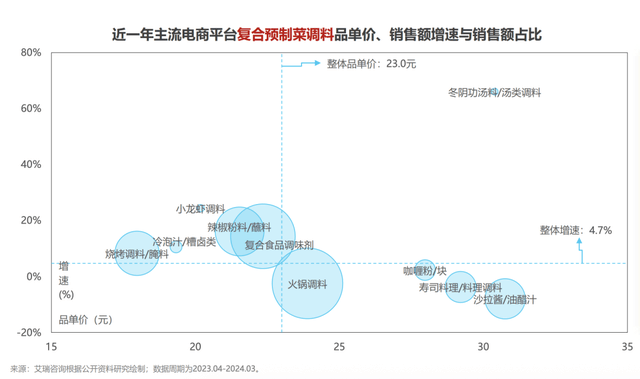
Core Insights - The Chinese seasoning market has seen significant growth, with market size increasing from 259.5 billion yuan in 2014 to 592.3 billion yuan in 2023, reflecting a compound annual growth rate (CAGR) of 9.60% [1][2] - The shift in consumer behavior towards home cooking and health-conscious eating, particularly among younger generations, is reshaping the seasoning landscape [1][2] Group 1: Market Dynamics - The seasoning market in China is characterized by a mix of established brands and emerging players, with over 6,000 companies and the top ten brands holding less than 30% market share, indicating a highly fragmented market [2][3] - Traditional brands like Haidilao and Lee Kum Kee dominate, while new entrants focusing on health and natural ingredients are gaining traction [2][3] Group 2: Product Trends - The compound seasoning segment is experiencing rapid growth, with a CAGR of 13.90% from 2011 to 2021, driven by the increasing popularity of ready-to-use cooking solutions [4][6] - Health-conscious consumers are prioritizing clean ingredient labels, leading to a rise in products that emphasize natural and additive-free formulations [7][8] Group 3: Consumer Behavior - New consumption scenarios, such as solo dining and outdoor activities, are driving demand for convenient and personalized seasoning options [8][9] - Brands targeting younger consumers are leveraging aesthetics and lifestyle branding to create emotional connections with their products [11][14] Group 4: Cultural and Regional Influences - The diverse culinary landscape in China fosters regional seasoning brands that resonate with local tastes, creating opportunities for cultural storytelling and brand differentiation [15][16] - Successful regional brands can achieve high profit margins, but the challenge lies in expanding their reach beyond local markets [15][16] Group 5: Competitive Landscape - The competition in the seasoning industry is evolving, with a focus on digital marketing and e-commerce channels, such as live-streaming sales and instant retail [16][17] - Brands that can effectively address niche consumer needs and create standout products are likely to succeed in this competitive environment [17][18]