新世界发展

Search documents
香港郑氏家族,静待875亿救命钱
首席商业评论· 2025-06-25 03:47
Core Viewpoint - The Zheng family, led by Zheng Jiachun, is actively working to manage and reduce debt amid a liquidity crisis faced by New World Development, a property company with significant leverage and debt burdens [5][10][12]. Group 1: Debt Management and Financial Status - New World Development is negotiating a refinancing deal of up to HKD 87.5 billion to alleviate financial pressure [5][15]. - As of the end of 2024, the company has total borrowings exceeding HKD 151 billion, with a net debt ratio of 57.5% and short-term debts exceeding HKD 32 billion, while cash reserves stand at HKD 21.8 billion [10][11]. - The company has delayed interest payments on perpetual bonds totaling USD 3.4 billion, which may increase debt costs and affect refinancing negotiations [12][11]. Group 2: Sales Performance and Market Strategy - New World achieved contract sales of approximately HKD 24.8 billion from July 2024 to May 2025, exceeding 95% of its annual sales target [17]. - The mainland market, contributing 70% of revenue, has seen smooth sales, with cumulative contract sales reaching approximately RMB 13.4 billion [19]. - The management has raised the sales target for the mainland from RMB 11 billion to RMB 14 billion for the year [20]. Group 3: Leadership and Management Changes - Zheng Jiachun has appointed his daughter, Zheng Zhiwen, to the core management team, indicating a potential succession plan [22][24]. - The company continues to rely on professional managers for daily operations, especially after the resignation of the previous CEO [27]. - The new management is focused on reducing leverage and improving cash flow, with a target of generating HKD 26 billion in cash for the fiscal year ending June 30 [30]. Group 4: Broader Business Context - The Zheng family's business interests span various sectors, including jewelry, retail, and infrastructure, with Chow Tai Fook, a leading jewelry retailer, also facing challenges [35][36]. - Chow Tai Fook plans to issue HKD 8.8 billion in convertible bonds to support its business amid declining revenues and store closures [38][39]. - The family's other business, which includes infrastructure and logistics, has shown resilience, with a reported profit increase of 15% in the first half of the fiscal year [44].


商场开始被抛弃了
投资界· 2025-06-24 03:12
Core Viewpoint - Shanghai is experiencing a commercial supply surplus, with a significant number of shopping malls opening without a corresponding increase in consumer demand, leading to many malls being abandoned or underperforming [3][5][10]. Group 1: Commercial Landscape in Shanghai - Shanghai has over 400 shopping centers, with one large shopping center for every 80,000 people, compared to Tokyo's one for every 200,000 [3]. - The city is expected to open around 60 new commercial spaces this year, totaling over 3 million square meters, with Minhang leading in new openings [3]. - Despite the increase in commercial space, the retail sales growth in Shanghai was negative in the first quarter of this year, indicating a disconnect between supply and consumer spending [4]. Group 2: Decline of Shopping Malls - Many shopping malls in prime locations are closing, including notable names like Pacific Department Store and Isetan, highlighting a trend of commercial attrition [5][6]. - The Aegean Shopping Center, which opened in 2017, has seen a dramatic increase in vacancy rates, with outdoor shops nearly 90% vacant [6][9]. - The competition among large malls, such as the Aegean and China Resources Mixc, is fierce, with the latter currently attracting more foot traffic [10]. Group 3: Market Dynamics and Consumer Behavior - The emergence of new shopping centers has led to a phenomenon where older malls are being abandoned, as consumer preferences shift [11][12]. - The Seven Puxian Road wholesale market has seen rental prices plummet from a peak of 70,000 to 500 yuan per month, indicating a significant decline in demand [15][17]. - The market is experiencing a bifurcation, with some malls successfully transitioning to high-end offerings while others remain stagnant [19][20]. Group 4: Corporate Strategies and Asset Sales - Wanda Group has been actively selling off commercial assets, including over 90 Wanda Plazas, to alleviate financial pressures, reflecting a broader trend among real estate companies [21][22]. - Other companies, such as Vanke and various insurance firms, are also divesting commercial properties to improve liquidity and focus on core assets [24][27]. - The shift from expansion to efficiency in the commercial real estate sector is evident, as companies adapt to a new era of competition and consumer behavior [28][29].

零售周报 | 消费回暖、离境退税扩围、LV亚洲旗舰店落子香港
Sou Hu Cai Jing· 2025-06-23 09:53
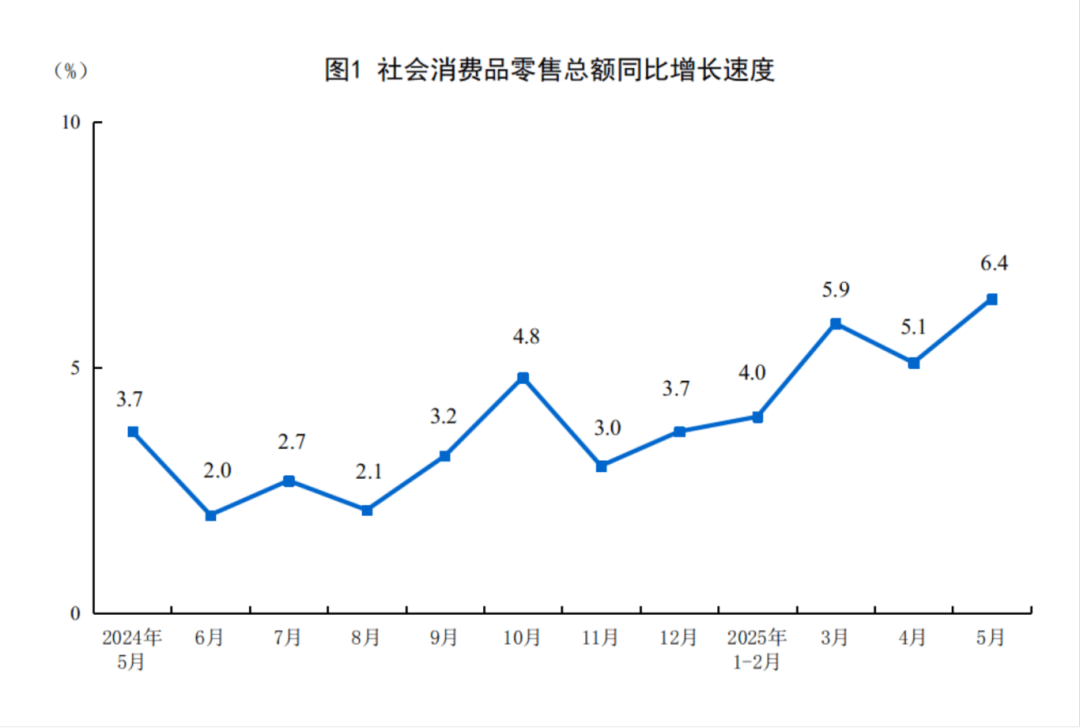
Economic Data - In May, the total retail sales of consumer goods reached 41,326 billion yuan, a year-on-year increase of 6.4% [1] - Excluding automobiles, retail sales amounted to 37,316 billion yuan, growing by 7.0% [1] - From January to May, total retail sales were 203,171 billion yuan, up 5.0% [1] Urban and Rural Consumption - In May, urban retail sales were 36,057 billion yuan, with a year-on-year growth of 6.5%, while rural retail sales were 5,269 billion yuan, growing by 5.4% [3] - For the first five months, urban retail sales totaled 176,490 billion yuan, increasing by 5.1%, and rural retail sales reached 26,681 billion yuan, up 4.9% [3] Retail Categories - In May, the retail sales of goods were 36,748 billion yuan, a year-on-year increase of 6.5%, while catering revenue was 4,578 billion yuan, growing by 5.9% [3] - From January to May, goods retail sales were 180,398 billion yuan, up 5.1%, and catering revenue was 22,773 billion yuan, increasing by 5.0% [3] Online Retail - From January to May, the online retail sales reached 60,402 billion yuan, a year-on-year increase of 8.5% [5] - Among online retail, physical goods sales were 49,878 billion yuan, growing by 6.3%, accounting for 24.5% of total retail sales [5] Retail Formats - For the first five months, retail sales in convenience stores, specialty stores, supermarkets, brand specialty stores, and department stores grew by 8.5%, 6.3%, 5.7%, 1.8%, and 1.3% respectively [5] New Policies and Initiatives - Hangzhou's new policy for "immediate purchase and refund" offers up to 5,000 yuan in equipment subsidies for new points of sale [8] - Dalian and Hubei will implement tax refund policies for overseas travelers starting July 1, 2025 [8] New Store Openings - Louis Vuitton plans to open its largest store in Asia at K11 Musea in Hong Kong by the end of 2026 [9] - The first shopping center store of Florasis will open in Shanghai on June 22 [11] - OSPREY opened its first brand specialty store in Hangzhou [17] - IKEA will open its third store in Shenzhen on June 19 [24] Company Developments - Wanda Film and IMAX have deepened their cooperation to upgrade 27 cinemas by 2029 [25] - Ba Nu International has submitted an IPO application to the Hong Kong Stock Exchange [28] - Zhou Li Fu Jewelry has started its IPO process, planning to list on June 26 [29] - Three squirrels terminated the acquisition of Hunan Ai Ling Shi Technology due to disagreements on core terms [30]
不确定性中的确定性,周大福创建(0659.HK)稳健穿越市场周期
Ge Long Hui· 2025-06-23 01:38
Core Viewpoint - The article emphasizes the importance of identifying investment opportunities with strong certainty in the current volatile macroeconomic environment, highlighting the significance of risk management and predictable earnings for listed companies [1]. Group 1: Investment Attractiveness of Chow Tai Fook Enterprises - Chow Tai Fook Enterprises has shown a strong stock performance, achieving a five-year consecutive annual increase, with notable annual gains of 65% in the previous year and over 30% in both 2021 and 2023 [1][2]. Group 2: Independent Shareholding Structure - The company underwent a significant restructuring in late 2023, completely isolating its shareholding from New World Development, thus eliminating concerns about potential risks from the real estate sector [3]. - Chow Tai Fook Enterprises operates independently from other business platforms under Chow Tai Fook Group, ensuring compliance with listing requirements and preventing internal profit transfer risks [3][4]. Group 3: Diversified Business Operations - The company has five core business segments: toll roads, insurance, logistics, construction, and facilities management, which exhibit strong anti-cyclical characteristics [6]. - For the first half of the fiscal year 2025, the company reported an operating profit of HKD 2.2 billion, a year-on-year increase of 8%, and a net profit attributable to shareholders of approximately HKD 1.16 billion, up 15% [6]. Group 4: Financial Stability - Chow Tai Fook Enterprises maintains a robust financial position, with liquid assets totaling approximately HKD 30 billion and cash reserves of about HKD 18.6 billion, against only HKD 2.3 billion in debt due within a year [7]. - The company's net debt ratio stands at around 39%, indicating a healthy financial status relative to its assets and equity [7][8]. Group 5: Shareholder Returns - The company has a strong track record of returning value to shareholders, having paid dividends for 22 consecutive years, demonstrating its profitability and financial stability [9]. - For the first half of fiscal year 2025, Chow Tai Fook Enterprises maintained an interim ordinary dividend of HKD 0.3 per share and a special dividend of HKD 0.3 per share, resulting in a trailing twelve-month dividend yield of 12.87% [10][11].
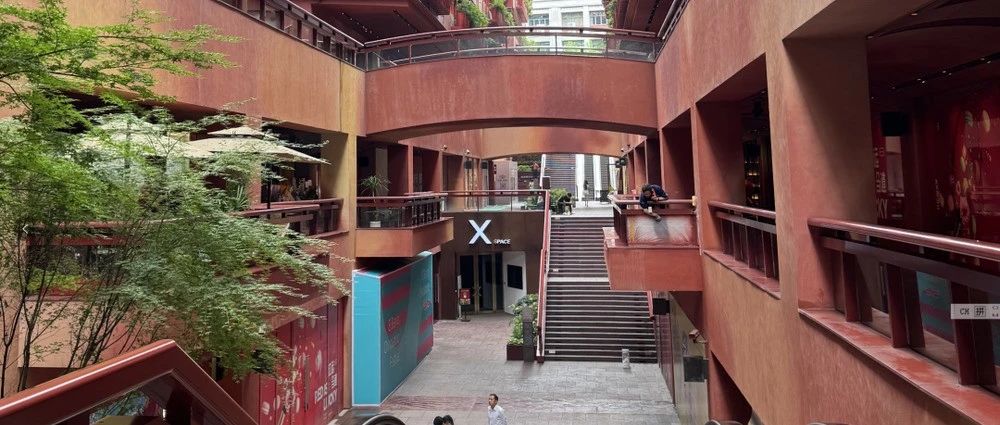
越来越多的商场,开始被抛弃了
虎嗅APP· 2025-06-19 11:55
Core Viewpoint - Shanghai's commercial real estate market is experiencing an oversupply, leading to a significant number of shopping centers becoming underutilized or abandoned, despite the city's high commercial space per capita and ongoing new developments [4][10][12]. Group 1: Current State of Shanghai's Commercial Market - Shanghai has over 400 shopping centers, with a ratio of one large shopping center for every 80,000 people, compared to Tokyo's one for every 200,000 [3]. - The city is expected to open around 60 new commercial spaces this year, totaling over 3 million square meters, with Minhang leading in new openings [6]. - Despite the increase in commercial space, the retail sales growth in Shanghai was negative in the first quarter of this year, indicating a lack of consumer demand [7][9]. Group 2: Trends in Commercial Space Utilization - Many shopping centers are being abandoned or underperforming, with notable closures in prime locations such as Pacific Department Store and Isetan [11][12]. - The rate of commercial space turnover is increasing, particularly for large shopping centers, as evidenced by the decline in foot traffic and rising vacancy rates [15][16]. - The Aegean Shopping Center, which opened in 2017, now has a 90% vacancy rate in its outdoor commercial area, highlighting the rapid decline in consumer interest [23][35]. Group 3: Case Studies of Specific Shopping Centers - The Aegean Shopping Center's outdoor area has become nearly deserted, with many shops either closed or underperforming [25][35]. - The recent transformation of the Qipu Road wholesale market shows a stark contrast, where some shops are now renting for as low as 500 yuan per month, down from peak rents of 70,000 yuan [61][90]. - Successful transformations are occurring in some areas, such as the New Qipu and Shenghe Sheng, which have upgraded their offerings and attracted more customers [66][91]. Group 4: Broader Implications for the Real Estate Industry - The trend of selling off commercial assets is prevalent among real estate companies facing liquidity issues, with Wanda Group leading in asset sales [97][111]. - The shift from expansion to efficiency in the commercial real estate sector reflects a broader industry trend towards focusing on core assets and reducing debt [114][116]. - The commercial landscape is transitioning into a "stock era," where competition is based on existing assets rather than new developments, indicating a significant change in market dynamics [123][129].


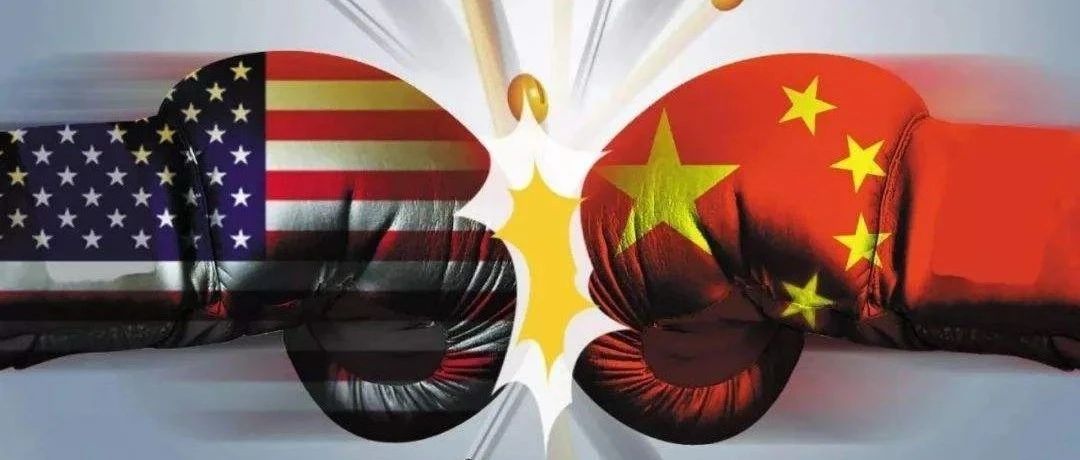
中国楼市VS美国股市,哪个更需要“救”?
混沌学园· 2025-06-13 03:36
Group 1 - The article highlights the dominance of the US and China in the global economy, forming a "G2" that accounts for over 40% of the world's economic output [1][2] - The US GDP for 2024 is projected at 291.678 trillion, showing a nominal growth of 5.2% from 2023, while China's GDP is expected to reach 182.734 trillion with a growth of 2.9% [2] - The real estate market in China and the stock market in the US are identified as crucial assets that underpin the economic stability of their respective countries [3][4] Group 2 - The real estate sector contributes directly 10% to China's GDP, with a comprehensive contribution of 30%, indicating its role as a "leading industry" that stimulates numerous related sectors [7][8] - The construction industry employs approximately 70 million people, accounting for nearly 10% of China's non-farm employment, highlighting the sector's significance in job creation [12] - Real estate is a major component of household wealth in China, with over 70% of family assets tied to property, which influences consumer confidence and spending [14][15] Group 3 - The US stock market is described as a critical pillar of the economy, influencing both domestic and global markets, with over 40% of the global stock market's total value [19] - The stock market serves as a vital funding source for US companies, particularly in the tech sector, fostering a cycle of capital and innovation [20] - Approximately 58% of American households have direct or indirect investments in the stock market, making it a significant source of wealth for the population [21] Group 4 - China's real estate market faces challenges such as insufficient demand and a debt crisis among property developers, prompting government interventions to stabilize the market [25][29] - The US stock market is experiencing volatility due to government policy uncertainties and a looming debt crisis, with predictions of potential declines in stock values [30][32] - The article concludes that the real estate market in China and the stock market in the US represent two distinct economic models, each with its own challenges and implications for global capital dynamics [33]
中国香港四大家族,即将多一个女继承人?
首席商业评论· 2025-06-12 03:53
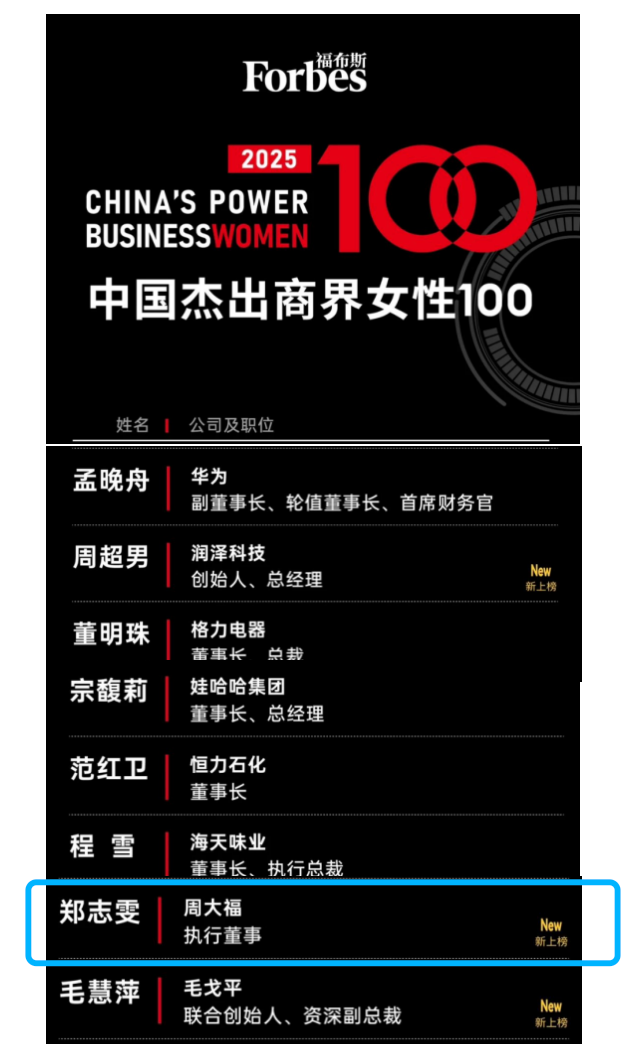
Core Viewpoint - The article discusses the potential rise of Zheng Zhiwen as a key successor in one of Hong Kong's prominent families, highlighting her achievements and the dynamics of family succession amidst recent changes in leadership. Group 1: Succession Dynamics - Zheng Zhiwen is set to join the nomination committee of New World Development, marking her entry into the succession "observation period" [4][5]. - The current leadership transition follows the departure of her brother Zheng Zhigang from core management, raising questions about the future leadership of the family business [5][22]. - Zheng Zhiwen's father, Zheng Jiachun, is the third richest person in Hong Kong, with a net worth of approximately HKD 172.9 billion [22]. Group 2: Zheng Zhiwen's Achievements - Zheng Zhiwen has transformed New World Hotels from a loss-making entity into a leading luxury hotel brand, investing USD 1.1 billion in upgrades and expanding the hotel count from 8 to 40 within five years [16][15]. - She became the CEO of Rosewood Hotel Group after acquiring it for USD 800 million, successfully turning it into a top-tier hotel brand [17][20]. - Zheng Zhiwen has also been recognized as one of Forbes' "100 Most Outstanding Business Women in China" in 2025, alongside notable figures like Meng Wanzhou [6]. Group 3: Family and Business Background - Zheng Zhiwen comes from a prestigious lineage, being the granddaughter of jewelry tycoon Zheng Yutong, and has built a strong professional background with degrees from Harvard and experience in investment banking [12][13]. - Her family includes several male competitors for succession, but her strong public image and business acumen position her favorably [34][25]. - The article notes the increasing prominence of female heirs in business, with Zheng Zhiwen joining the ranks of successful women in high-stakes family businesses [46][52].

郑志雯跻身新世界核心决策层:从“珠宝女王”到家族核心丨女继承者们
2 1 Shi Ji Jing Ji Bao Dao· 2025-06-11 09:04
Group 1 - The core point of the news is the significant personnel change within the Cheng Yu-tong family business, New World Development, indicating a shift towards modern governance and succession planning with the entry of the third-generation member, Zheng Zhiwen, into the nomination committee [1][3][10] - Zheng Zhiwen's appointment to the nomination committee marks a milestone in her career and reflects her rising status within the family business, especially following her brother Zheng Zhigang's exit from management [3][5] - The new nomination committee structure includes family members, professional managers, and independent experts, showcasing a forward-thinking approach to corporate governance [8][10][11] Group 2 - Zheng Zhiwen has a strong background in luxury goods and hospitality, having previously served on the board of Chow Tai Fook Jewelry Group and led the strategic expansion of Rosewood Hotel Group, demonstrating her capability in managing high-end brands [2][3] - The transition in leadership comes after Zheng Zhigang's resignation amid company losses and investment controversies, highlighting the challenges faced by family businesses in succession planning [5][10] - The evolution of the Cheng family governance model reflects a broader trend in family businesses towards modern governance practices, combining family control with professional management to address contemporary business challenges [10][11]

港字号中高端酒店,全速俯冲“特许经营”?
3 6 Ke· 2025-06-10 05:58
Group 1 - The core viewpoint of the article is that the New World Group's brand, Tongpai, is launching a franchise program after seven years of establishment, reflecting the growing potential of the mid-to-high-end hotel market in China [1][4][14] - Tongpai Hotel Management Company, established in 2018, is a member of the Chow Tai Fook Group and aims to develop the Tongpai brand in China, transitioning from the previously underperforming Bellet brand [1][2][3] - The brand emphasizes a community concept and targets the millennial consumer group, focusing on a blend of trendy hotels, shared offices, and serviced apartments [3][8] Group 2 - The article discusses the challenges faced by Hong Kong-based hotel brands in the mid-to-high-end market, highlighting the slow expansion of brands like Shangri-La's Kerry and Jen [5][6][7] - The mid-to-high-end hotel market in China is experiencing rapid growth, driven by the rise of the middle class, but Hong Kong brands have been slow to adapt and expand [11][12] - The article notes that Hong Kong hotel brands are leveraging their real estate assets to enhance their market presence, with a focus on high-quality locations [12][13] Group 3 - Tongpai's strategy includes a partnership with Ctrip's Rezen Group to enhance its digital capabilities and accelerate brand development [9][10] - The brand has opened 10 hotels across various cities, maintaining a growth rate of 1-2 openings per year, indicating a cautious approach to expansion [9][10] - The article highlights the importance of design and local cultural integration for Hong Kong hotel brands to differentiate themselves in a competitive market [13][14]

中资离岸债风控周报:一级市场发行回暖 二级市场多数下跌
Xin Hua Cai Jing· 2025-06-07 03:01
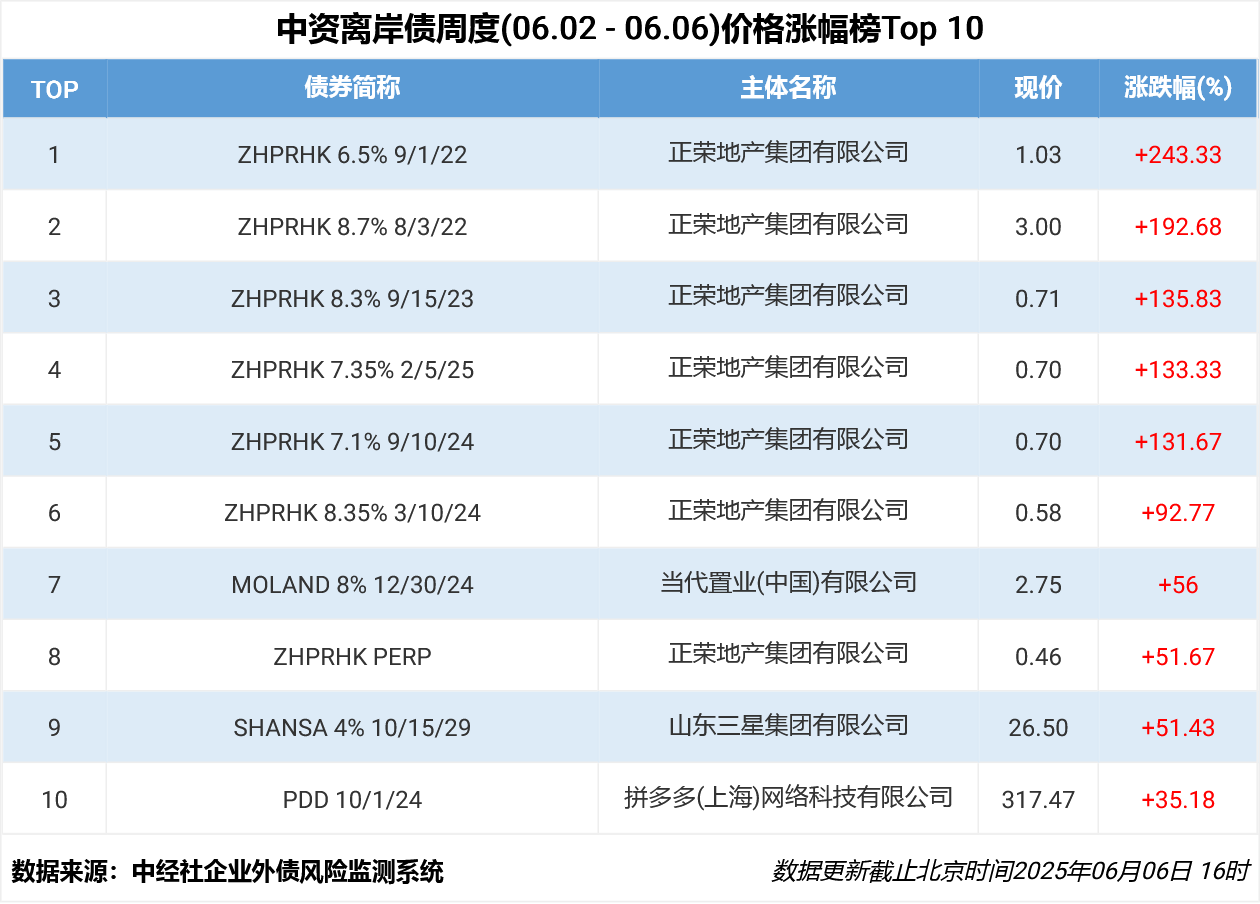
Primary Market - A total of 23 offshore bonds were issued this week (June 2 - June 6, 2025), including 8 offshore RMB bonds, 9 USD bonds, 4 HKD bonds, 1 SGD bond, and 1 EUR bond, with issuance scales of 14.2717 billion RMB, 2.7447 billion USD, 81.587 billion HKD, 800 million SGD, and 1 billion EUR respectively [2] - The largest single issuance in the offshore RMB bond market was 2 billion RMB by State Grid Corporation, while the highest coupon rate was 6.9% issued by Weifang Ocean Investment Group [2] - In the USD bond market, the largest single issuance was 400 million USD by Shanghai Pudong Development Bank's London branch, with the highest coupon rate at 6.4% from Guangxi Chongzuo Urban Construction Investment Development Group [2] Secondary Market - Most yields on Chinese USD bonds fell this week, with the Markit iBoxx Chinese USD bond composite index remaining flat at 242.35, while the investment-grade USD bond index rose by 0.04% to 235.23 [3] - The high-yield USD bond index decreased by 0.26% to 236.3, with the real estate USD bond index down 0.58% to 178.81 [3] - The largest weekly gain in offshore Chinese bonds was seen in the USD bond issued by Zhengrong Real Estate, which surged by 242.33% to 1.03 [3] Credit Ratings - Several credit ratings were adjusted this week, including the withdrawal of long-term credit ratings for Tai'an Taishan Holdings and Sheyang State-owned Assets Investment Group due to commercial reasons [10] - Standard & Poor's confirmed the long-term issuer credit rating of Geely Holding Group and Geely Automobile at "BBB-", changing the outlook from "stable" to "negative" [10] Domestic News - In May 2025, real estate companies raised a total of 28.88 billion RMB in bond financing, a year-on-year increase of 23.5%, with an average financing rate of 2.35%, down 0.43 percentage points year-on-year [12] - The Ministry of Finance issued 12.5 billion RMB of government bonds in Hong Kong, with a subscription rate of 3.96 times [13] - The Hong Kong government successfully priced approximately 27 billion HKD of green and infrastructure bonds, marking the longest maturity for HKD bonds issued by the government [14] Overseas News - Eurozone inflation in May fell to 1.9%, below the European Central Bank's target, leading to a decline in Eurozone bond yields [15] - The U.S. Treasury conducted a record $10 billion bond repurchase, viewed as a "mini QE" to enhance liquidity in older bonds [16] Offshore Debt Alerts - Longguang updated its restructuring plan for 21 domestic debts totaling over 21.9 billion RMB, aiming to secure cash for repayment [17] - Ping An Insurance plans to issue 11.765 billion HKD of zero-coupon convertible bonds due in 2030 [18] - CIFI Holdings' offshore debt restructuring plan received overwhelming support from creditors [20] - Shimao Group reported a contract sales amount of approximately 2.135 billion RMB in May 2025 [21]