
君实生物

Search documents
港股生物医药板块延续走低,药明合联跌超3%
Mei Ri Jing Ji Xin Wen· 2025-12-03 02:19
每经AI快讯,港股生物医药板块延续走低,药明合联跌超3%,百济神州跌近2%,药明康德、君实生物 等跟跌。 ...
2025年度十大医药技术研报,解码产业创新与全球化新机遇
Xin Lang Cai Jing· 2025-12-02 11:59
Core Insights - In 2025, China's pharmaceutical and healthcare industry enters a critical phase driven by "innovation deepening + global breakthrough," with emerging therapies like small nucleic acids, PROTAC, and CGT accelerating from clinical validation to commercialization [2][34] - The reports from the top ten Chinese securities firms provide authoritative insights into technological iterations, industry trends, and globalization strategies, serving as a guide for industry practitioners and investors [2][34] Group 1: Small Nucleic Acids - 2025 is a pivotal year for small nucleic acid drugs, driven by technological breakthroughs and expanding indications from rare diseases to chronic diseases like hyperlipidemia and hypertension [4][36] - The small nucleic acid sector is expected to see a surge in catalysts, including the commercialization of major products like Novartis' Inclisiran and the approval of Alnylam's Vutrisiran and Fitusiran [5][37] - The market for small nucleic acids is projected to reach approximately $30 billion, with significant growth anticipated in CNS diseases [10][42] Group 2: Brain-Computer Interface - The brain-computer interface industry is accelerating innovation with three main technical paths: invasive, semi-invasive, and non-invasive, each with distinct advantages and challenges [7][39] - The global brain-computer interface market is expected to reach approximately $2.6 billion by 2024, with a CAGR of about 13% from 2023 to 2027 [7][39] Group 3: PROTAC - PROTACs are gaining traction as targeted protein degradation drugs, with advantages such as high oral bioavailability and broad target range, making them popular in oncology and autoimmune disease research [19][51] - The first BTK PROTAC has entered Phase III trials, showcasing promising efficacy and safety data [19][51] Group 4: Chinese Innovative Drugs - Chinese innovative drugs are entering a "DeepSeek" moment, with domestic companies increasingly recognized overseas, and the number of license-out projects surpassing license-in projects for the first time in 2023 [16][48] - The market for innovative drugs in China is expected to exceed 2 trillion RMB by 2030, with a CAGR of 24.1% [29][63] Group 5: Peripheral Intervention Industry - The peripheral intervention industry is experiencing rapid growth, with a significant patient base and low treatment penetration compared to international standards [25][57] - The market for peripheral artery interventions is projected to grow at a CAGR of 15.6% from 2021 to 2030, while peripheral venous interventions may see a CAGR of 29.3% [25][57] Group 6: Weight Loss and Diabetes Treatment - The market for GLP-1RA drugs, such as semaglutide and tirzepatide, is expected to exceed $150 billion by 2031, with significant business development opportunities emerging for domestic companies [26][58] - Multi-target drug development is anticipated to overcome the limitations of single-target therapies, enhancing efficacy in weight loss and metabolic health [26][58]


港股生物医药板块持续走低,泰格医药、君实生物跌超3%
Mei Ri Jing Ji Xin Wen· 2025-12-02 03:59
每经AI快讯,12月2日,港股生物医药板块持续走低,泰格医药、君实生物跌超3%,百济神州跌超 2%。 ...

君实生物12月1日获融资买入1297.06万元,融资余额13.67亿元
Xin Lang Cai Jing· 2025-12-02 01:24
Group 1 - The core viewpoint of the news is that Junshi Biosciences experienced a decline in stock price and significant trading activity, indicating high levels of financing and short selling [1] - On December 1, Junshi Biosciences' stock fell by 1.59%, with a trading volume of 209 million yuan, and a net financing outflow of 207.43 million yuan [1] - The total financing and securities balance for Junshi Biosciences reached 1.378 billion yuan, with the financing balance accounting for 4.89% of the circulating market value, indicating a high level compared to the past year [1] Group 2 - Junshi Biosciences, established on December 27, 2012, focuses on the research and commercialization of monoclonal antibody drugs, with 90.67% of its revenue coming from drug sales [2] - For the period from January to September 2025, Junshi Biosciences reported a revenue of 1.806 billion yuan, representing a year-on-year growth of 42.06%, while the net profit attributable to shareholders was -596 million yuan, an increase of 35.72% year-on-year [2] - As of September 30, 2025, the number of shareholders increased by 15.17% to 35,900, while the average circulating shares per person decreased by 12.96% to 21,361 shares [2]
君实生物:从创新突破到全球突围
Shang Hai Zheng Quan Bao· 2025-12-02 00:44
Core Insights - Junshi Bioscience has transformed from a small laboratory in Zhangjiang, Shanghai, to a leading player in the global biopharmaceutical industry, with over 50 innovative drug pipelines in just 13 years [1][2] - The company's core product, the PD-1 monoclonal antibody Toripalimab, has gained global recognition, becoming the first self-developed innovative biopharmaceutical from China to receive FDA approval [1][2] R&D and Innovation - Junshi Bioscience shifted from "single-point breakthroughs" to "platform innovation," focusing on multiple therapeutic areas and developing a robust pipeline of over 50 new drugs [4][5] - The company has successfully developed Toripalimab, which addresses local high-incidence cancers and has broken the monopoly of imported drugs in China [2][4] - The company plans to advance several innovative drugs, including JS212 and JS213, into clinical trials by 2025, aiming for a comprehensive drug pipeline [5][6] Global Expansion and Commercialization - Junshi Bioscience is transitioning from a "R&D-focused company" to a "full-chain operator," with a strong emphasis on internationalization as a key highlight for the next five years [6] - The company has established a commercial network covering over 80 countries through partnerships and self-built teams, aiming to penetrate emerging markets in Southeast Asia [6][7] - The production capabilities at the Shanghai Lingang base support the company's ambition for global commercialization, with a fully autonomous production process [6] Market Position and Future Outlook - The success of Toripalimab marks a significant shift in the landscape of Chinese innovative drugs, moving from "importing" to "exporting" [1][2] - The company aims to redefine treatment boundaries with next-generation therapies, including bispecific antibodies and antibody-drug conjugates, supported by AI-assisted research [5][6] - Junshi Bioscience is committed to pushing more products into late-stage clinical trials and registration phases during the 14th Five-Year Plan period [5][6]
“药”创新 “药”转型 “药”出海——上海生物医药行业面向“十五五”谋新篇布新局
Shang Hai Zheng Quan Bao· 2025-12-01 19:23
Core Viewpoint - Shanghai is emerging as a global hub for biopharmaceutical innovation, with local companies leveraging innovation, transformation, and internationalization to enhance their competitiveness on the world stage [4][6]. Group 1: Innovation - Junshi Bioscience has focused on unmet clinical needs, successfully launching its PD-1 monoclonal antibody, which has reshaped the landscape for domestic innovative drugs in international markets [4][5]. - Fosun Pharma has achieved significant milestones in innovation, including the development of China's first self-developed CAR-T cell therapy product and the first PD-1 monoclonal antibody approved for first-line treatment of small cell lung cancer [8][9]. - The company has established a comprehensive innovation system, with over 12 innovative drugs launched during the 14th Five-Year Plan period, focusing on oncology, immune inflammation, and chronic diseases [11][12]. Group 2: Transformation - First Pharmaceutical has adapted to the challenges posed by e-commerce in the pharmaceutical retail sector by integrating smart healthcare services, revitalizing its traditional pharmacy model [5][30]. - Fosun Pharma's transformation journey aligns with the rapid evolution of China's innovative drug industry, emphasizing a combination of generics and original innovations [5][11]. - Seer Bio has expanded its research into broader biotoxin treatments after mastering snake venom therapies, indicating a strategic shift towards a wider range of biological toxin therapies [5][26]. Group 3: Internationalization - Fosun Pharma has successfully penetrated international markets, with its anti-tumor innovative drug, Slulizumab, approved in approximately 40 countries, showcasing the company's global strategy [12][13]. - Junshi Bioscience has transitioned from a "single-point breakthrough" to "platform innovation," with its core product, Toripalimab, now available in major markets including the US and EU [16][17]. - The company is building a global commercialization network through partnerships and local teams, aiming to enhance its international presence [22][23]. Group 4: Market Challenges and Opportunities - First Pharmaceutical faces significant challenges in the pharmaceutical distribution industry, including regulatory changes, evolving sales models, and increased consumer expectations for professional services [32][33]. - Despite these challenges, First Pharmaceutical has reported substantial revenue growth, with sales increasing from 1.398 billion yuan in 2021 to 1.915 billion yuan in 2024 [32]. - The company is strategically focusing on the silver economy, aiming to develop integrated services for the elderly, aligning with national policies on aging [34][35].

大消费行业 2025 年 12 月金股推荐
Changjiang Securities· 2025-12-01 13:16
Investment Rating - The report maintains a "Buy" rating for the recommended stocks in the consumer sector [10][11][12][13][15][16][19][20]. Core Insights - The report highlights nine advantageous sectors in the consumer industry, including agriculture, retail, social services, automotive, textile and apparel, light industry, food, home appliances, and pharmaceuticals, with key stock recommendations for December 2025 [4][7]. - The report emphasizes the potential for growth and profitability in these sectors, driven by market trends and company-specific strategies [10][11][12][13][15][16][19][20]. Summary by Sector Agriculture - Recommended Stock: Muyuan Foods (牧原股份) - The company has become the world's largest pig farming group, with a focus on efficiency and cost reduction, leading to improved free cash flow and shareholder returns. Projected net profits for 2025-2027 are 154.9 billion, 175.7 billion, and 225.5 billion respectively, with corresponding PE ratios of 18, 16, and 12 [10]. Retail - Recommended Stock: Yiwu Small Commodity City (小商品城) - The company benefits from strong growth in exports and sustainable rental income. Projected EPS for 2025-2027 is 0.82, 1.08, and 1.30, with PE ratios of 20, 15, and 13 [11]. Social Services - Recommended Stock: Gu Ming (古茗) - The company has significant room for expansion and is expected to achieve steady revenue growth. Projected adjusted net profits for 2025-2027 are 22 billion, 25 billion, and 29 billion, with PE ratios of 13, 11, and 10 [12]. Automotive - Recommended Stock: Top Group (拓普集团) - The company is expected to benefit from increased production by major automotive clients. Projected net profits for 2025-2027 are 28.0 billion, 33.3 billion, and 41.3 billion, with PE ratios of 39, 33, and 27 [13]. Textile and Apparel - Recommended Stock: Crystal International (晶苑国际) - The company is positioned to benefit from industry demand and is expected to see profit margin improvements. Projected net profits for 2025-2027 are 2.2 billion, 2.6 billion, and 3.0 billion, with PE ratios of 12.2, 10.5, and 9.3 [15]. Light Industry - Recommended Stock: Pop Mart (泡泡玛特) - The company is expanding its global presence and is expected to see significant revenue growth. Projected net profits for 2025-2027 are 127 billion, 176 billion, and 221 billion, with PE ratios of 22, 16, and 12 [15]. Food - Recommended Stock: Angel Yeast (安琪酵母) - The company is expanding overseas and is expected to benefit from cost reductions. Projected net profits for 2025-2027 are 15.6 billion, 18.8 billion, and 22.1 billion, with PE ratios of 23, 19, and 16 [16]. Home Appliances - Recommended Stock: Anker Innovations (安克创新) - The company has a strong brand and is expected to see continued growth across various product categories. Projected net profits for 2025-2027 are 26.57 billion, 31.98 billion, and 38.95 billion, with PE ratios of 22.3, 18.5, and 15.2 [19]. Pharmaceuticals - Recommended Stock: Junshi Biosciences (君实生物) - The company is experiencing sales growth and has several key products in development. Projected net profits for 2025-2027 are -1.30 billion, -0.87 billion, and -0.30 billion, with a PE ratio of 51.3 [20].


医药生物行业报告(2025.11.24-2025.11.28):流感爆发零售药店板块有望受益,看好26年行业集中度加速提升
China Post Securities· 2025-12-01 08:51
Investment Rating - The industry investment rating is "Outperform the Market" and is maintained [2] Core Views - The retail pharmacy sector is expected to benefit from the recent surge in flu cases, with a significant increase in demand for antiviral medications and symptomatic treatments [5][15] - The retail pharmacy industry is anticipated to undergo accelerated consolidation, with smaller pharmacies exiting the market, leading to increased customer traffic for leading players [6][34] - The implementation of drug traceability codes is expected to enhance industry compliance and further increase market concentration [6][18] Summary by Sections Industry Overview - The closing index for the industry is 8430.03, with a 52-week high of 9323.49 and a low of 6764.34 [2] Recent Market Performance - The A-share pharmaceutical sector rose by 2.67% from November 24 to November 28, 2025, outperforming the CSI 300 index by 1.03 percentage points [19][35] - The Hang Seng Healthcare Index increased by 3.64%, outperforming the Hang Seng Index by 1.1 percentage points [35][36] Industry Insights and Investment Recommendations 1. **Innovative Drugs**: The long-term trend for innovative drugs is positive, with China's capabilities in global competition strengthening [9][21] - Recommended stocks include Innovent Biologics, Kintor Pharmaceutical, and others [10][22] 2. **Medical Devices**: The medical device sector is showing signs of recovery, with leading companies reporting improved performance in Q3 [10][26] - Recommended stocks include Mindray, Aohua Endoscopy, and others [27][28] 3. **Traditional Chinese Medicine**: The sector is under pressure but is expected to benefit from basic drug policies and innovation [31][32] - Recommended stocks include Zhaoke Ophthalmology, Fangsheng Pharmaceutical, and others [31][32] 4. **Retail Pharmacy**: The retail pharmacy sector is expected to see increased concentration, with leading pharmacies benefiting from enhanced service capabilities and supply chain management [6][34] - Recommended stocks include Yifeng Pharmacy and Dazhong Pharmacy [7][34]
ETF日报 | AI需求引爆科技产业链!如何一键布局关键上下游?
Sou Hu Cai Jing· 2025-12-01 07:34
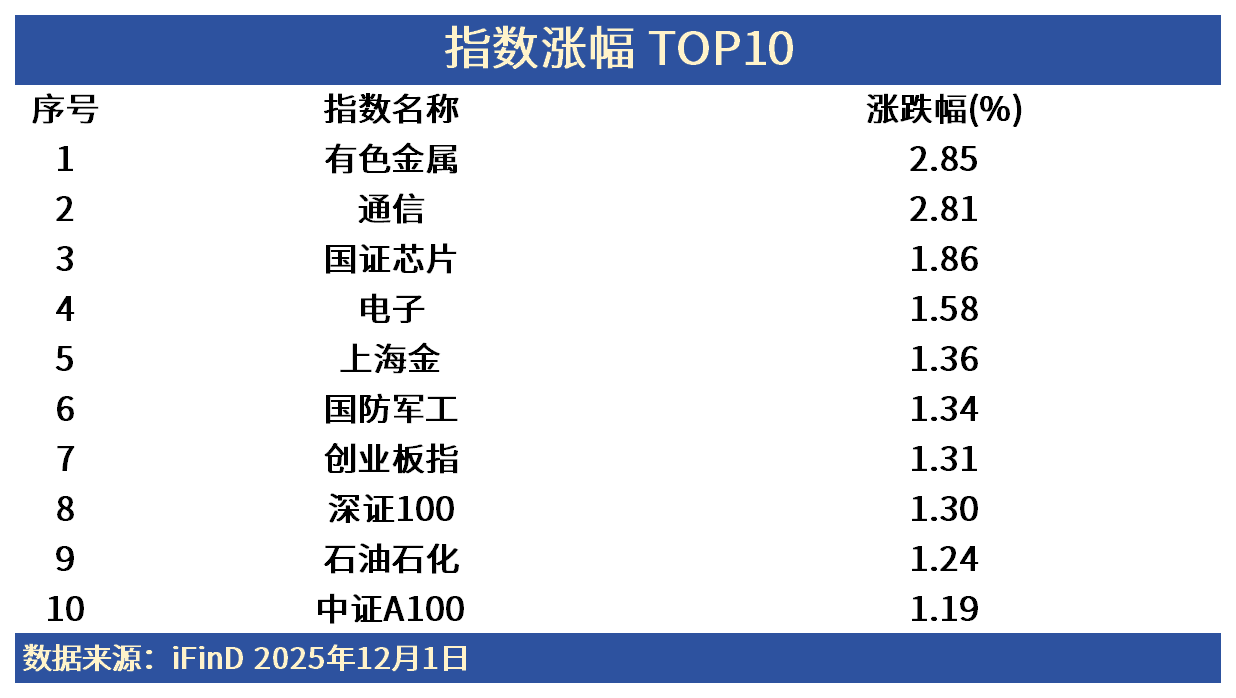
Group 1: Non-ferrous Metals - The non-ferrous metal sector has shown a steady recovery in revenue and profit growth, with midstream smelting and processing profits rebounding [2] - The sector's profitability continues to improve, with a decrease in leverage ratios and cash flow growth maintaining an upward trend [2] - Positive factors for metals such as silver, copper, tin, and rare earths are driving price increases, with continued optimism for metals like gold, silver, copper, aluminum, and lithium [2] Group 2: Communication - The global quantum technology industry is expected to grow at a CAGR of 76.27% from 2024 to 2030, with a projected market size of $908.91 billion by 2035 [3] - The demand for isolators is expected to grow alongside the surge in optical module demand, becoming a significant upstream component [3] - The communication ETF has seen a 3.01% increase, with over 60% growth year-to-date [3] Group 3: Chip Industry - ByteDance's Doubao team has launched a technical preview of the Doubao mobile assistant, which integrates AI capabilities for enhanced user interaction [4] - The semiconductor industry is anticipated to benefit from AI-driven hardware opportunities and domestic substitution processes amid external restrictions [4] - The chip ETF has increased by 1.82%, being the only product in its category to show positive growth year-to-date [4] Group 4: Agriculture, Forestry, Animal Husbandry, and Fishery - The agricultural sector is stabilizing as China continues to promote seed industry revitalization and improve grain yields [6] - Global weather disruptions may lead to a decrease in overall crop yields, potentially improving the agricultural industry's outlook [6] - The grain ETF is gaining attention as it covers the entire grain industry chain [6] Group 5: Hong Kong Innovative Drugs - The innovative drug sector is experiencing a temporary sentiment decline, but the overall trend remains positive with ongoing internationalization [7] - The largest Hong Kong innovative drug ETF has reached a scale of 25.276 billion yuan, indicating significant market interest [7] Group 6: Manufacturing PMI - China's manufacturing PMI for November was reported at 49.2%, showing a slight improvement from October [9] - The production index and new orders index have increased, indicating a recovery in manufacturing activity [9] Group 7: Engineering Machinery - The engineering machinery sector is witnessing a recovery in demand, with sales of excavators and loaders continuing to grow [10] - The industry is expected to benefit from ongoing domestic investment strategies and major project implementations [10] - The largest engineering machinery ETF has seen continuous net inflows over the past three days [10]
EGFRTKI治疗肺癌迭代发展,耐药挑战推动研发升级
Ping An Securities· 2025-12-01 07:27
Investment Rating - The report maintains an "Outperform" rating for the industry [2]. Core Insights - The third-generation EGFR TKI has become the first-line standard therapy for advanced EGFR mutation NSCLC, significantly extending median progression-free survival (mPFS) to 18.9-22.1 months compared to earlier generations [4][24]. - The domestic EGFR TKI market is expected to exceed 20 billion CNY in 2024, with third-generation EGFR TKIs accounting for 88% of the market share [4][30]. - There is an urgent need to address resistance mechanisms following third-generation EGFR TKI treatment, with ongoing exploration of fourth-generation TKIs, bispecific antibodies, and antibody-drug conjugates (ADCs) [5][32]. Summary by Sections 1. High Incidence of Lung Cancer in China - Lung cancer is the most common malignant tumor globally, with approximately 2.6 million new cases expected in 2024, including about 1.15 million in China [8]. - Non-small cell lung cancer (NSCLC) accounts for around 85% of lung cancer cases, with adenocarcinoma and squamous cell carcinoma being the most prevalent subtypes [8]. 2. Third-Generation EGFR TKI as First-Line Therapy - The third-generation EGFR TKI has established itself as the first-line treatment for advanced EGFR mutation NSCLC, with significant improvements in mPFS compared to first and second generations [4][16][24]. - The report highlights the efficacy of third-generation TKIs in overcoming common mutations and their favorable safety profile [4][24]. 3. Exploration of Resistance Mechanisms - The report discusses the complexity of resistance mechanisms to third-generation EGFR TKIs, including both EGFR-dependent and independent pathways [5][32]. - Current research focuses on developing fourth-generation TKIs targeting specific mutations and exploring combination therapies with bispecific antibodies and ADCs [5][32][39]. 4. Investment Recommendations - The report emphasizes the growth potential of third-generation EGFR TKIs and suggests monitoring companies like Hansoh Pharma and Eli Lilly for market penetration and sales growth [51]. - It also highlights the progress of ADCs and bispecific antibodies in clinical trials, indicating a robust pipeline for future treatments [51][52].