比亚迪

Search documents
拓普集团(601689):系列点评十五:2025年收入稳健增长,“车+机器人+AI”协同
Guolian Minsheng Securities· 2026-02-12 05:06
Investment Rating - The report maintains a "Recommended" rating for the company [4]. Core Insights - The company is expected to achieve a revenue of 287.5 to 303.5 billion yuan in 2025, representing a year-on-year growth of 8.1% to 14.1%. The net profit attributable to shareholders is projected to be between 26.0 to 29.0 billion yuan, reflecting a decline of 13.4% to 3.4% year-on-year [1][2]. - The revenue midpoint for 2025 is estimated at 295.5 billion yuan, indicating an 11.1% year-on-year increase. The fourth quarter of 2025 is expected to see revenue between 78.2 to 94.2 billion yuan, with a year-on-year growth of 7.9% to 30.0% [2]. - The company has successfully established a Tier 0.5 collaboration model, gaining recognition from both domestic and international clients, which has led to an increase in the per-vehicle component value [2][9]. - The company is accelerating its international expansion with overseas production bases and is implementing cost-reduction measures through scale procurement and smart manufacturing [2][9]. Financial Projections - For 2025, the company is projected to have total revenue of 29,550 million yuan, with a growth rate of 11.1%. The net profit attributable to shareholders is expected to be 2,764 million yuan, showing a decline of 7.9% [4][10]. - The earnings per share (EPS) for 2025 is estimated at 1.59 yuan, with a price-to-earnings (PE) ratio of 45 [4][10]. - The company anticipates a revenue increase to 35,877 million yuan in 2026 and 42,838 million yuan in 2027, with corresponding net profits of 3,400 million yuan and 4,260 million yuan respectively [4][10].

平安证券(香港)港股晨报-20260212
Ping An Securities Hongkong· 2026-02-12 04:03
Market Overview - The Hong Kong stock market experienced fluctuations, with the Hang Seng Index closing at 23,831 points, down 145 points or 0.61% [1] - The market saw a further decrease in trading volume, with total turnover dropping to 82.799 billion [1] - The net inflow of funds through the Hong Kong Stock Connect was 484 million, with 283 million from the Shanghai Stock Connect and 201 million from the Shenzhen Stock Connect [1] Sector Performance - The local real estate, software, and 5G concept sectors faced significant declines, while gold stocks performed well against the market trend [1] - Notable performers included Chifeng Jilong Gold, which rose nearly 6%, and China National Building Material, which increased by over 11% [1] - The market showed a structural divergence, with resource/building materials strong and financial sectors weak, particularly in light communication and CPO [1] US Market Insights - The US stock market saw slight declines, with the Dow Jones down 0.13% and the Nasdaq down 0.16% [2] - Major tech stocks like IBM and Salesforce led the declines, with IBM dropping over 6% [2] - The Nasdaq Golden Dragon China Index fell by 0.65%, indicating challenges for Chinese tech firms in the US market [2] Future Market Outlook - The report emphasizes the importance of technology self-reliance and AI applications as core themes for future performance in the Hong Kong stock market [3] - The Ministry of Industry and Information Technology's recent policies on national computing power are expected to boost domestic computing and communication sectors [3] - Investment opportunities are highlighted in sectors supported by policies for "technology self-reliance," including AI, semiconductors, and industrial software [3] Key Company Performances - The report notes significant stock performance variations among major companies, with Tencent and Alibaba showing declines of 0.5% and 0.2% respectively [12] - BYD's stock increased by 3.5%, while XPeng Motors saw a rise of 1.9% [12] - In the pharmaceutical sector, companies like WuXi Biologics and CSPC Pharmaceutical reported positive stock movements, with WuXi Biologics up 3.4% [12]
1月美国非农超预期:环球市场动态
citic securities· 2026-02-12 03:21
Economic Indicators - In January, the U.S. non-farm payrolls exceeded expectations, adding 130,000 jobs, with the unemployment rate dropping to 4.3%[4] - The U.S. labor market remains focused on recruitment contraction, with layoff intentions rising but actual layoffs not yet widespread[4] Market Reactions - U.S. stock markets reacted negatively to strong employment data, with the Dow Jones falling 66 points (0.13%) to close at 50,121 points, ending a three-day rally[9] - European markets showed mixed results, with the UK FTSE 100 reaching a new high, while the German DAX and French CAC 40 indices declined[9] Commodity and Currency Movements - Nickel prices rose by 2.23% to $17,880 per ton due to Indonesia's significant reduction in nickel production quotas from 42 million tons to 12 million tons[27] - Crude oil prices increased, with NYMEX crude oil rising 1.05% to $64.63 per barrel amid geopolitical tensions in Iran[27] Investment Insights - T-Mobile reported a 10% year-over-year increase in service revenue for Q4 2025, driven by a strong postpaid customer base, and raised its growth guidance[7] - Xiaomi's January vehicle deliveries fell to 39,000 units, down from over 50,000 in December, as the company prepares for the launch of its new SU7 model in April 2026[13] Bond Market Trends - The U.S. Treasury yields rose following the strong employment report, with the 10-year yield increasing by 3 basis points to 4.17%[30] - Asian investment-grade bond spreads widened by 2-3 basis points, reflecting a sell-off in Australian, Japanese, and Korean bonds[30]
历史性时刻!出口乘用车中,新能源占比首次超一半
第一财经· 2026-02-12 02:07
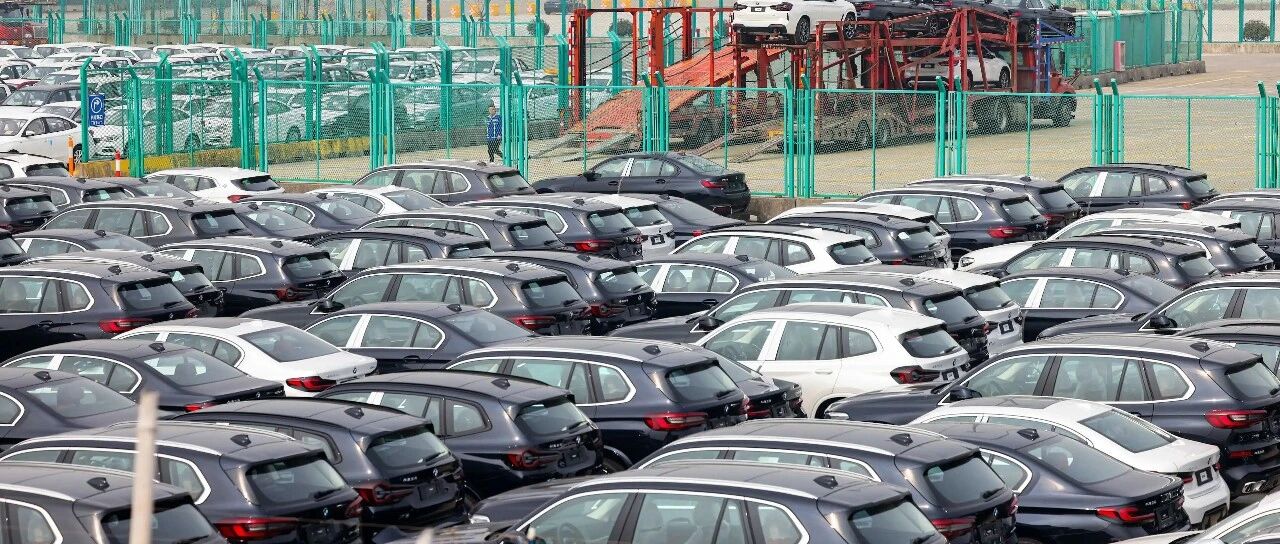
Core Viewpoint - In January 2026, China's automobile exports continued to grow rapidly, with a total of 681,000 vehicles exported, marking a year-on-year increase of 44.9% [3] Group 1: Export Performance - Passenger car exports reached 589,000 units in January, up 48.9% year-on-year [3] - Commercial vehicle exports totaled 93,000 units, reflecting a year-on-year increase of 23.6% [3] - The export of new energy vehicles (NEVs) significantly contributed to this growth, with 302,000 units exported in January, a year-on-year increase of 100% [3] Group 2: New Energy Vehicle Insights - Among the NEVs, 295,000 were passenger vehicles, which accounted for over 50% of total passenger car exports for the first time, representing a year-on-year growth of 110% [3] - The export of pure electric vehicles reached 202,000 units, also doubling year-on-year, while plug-in hybrid vehicle exports were 99,000 units, up 97.3% [4] Group 3: Market Dynamics - The growth in plug-in hybrid vehicle exports has been notable, with these vehicles becoming a new growth point for exports, particularly in the pickup segment [4] - Despite previous challenges due to EU tariffs on electric vehicles, plug-in hybrids remain competitive in the European market due to a lower tariff rate [4] - The overall export performance is expected to remain strong, with a projected total of 8.32 million vehicles exported in 2025, a 30% increase year-on-year [5] Group 4: Leading Companies - In January, the top ten exporting companies included Chery (119,000 units), BYD (100,000 units), SAIC (97,000 units), Geely (77,000 units), and Tesla (51,000 units), all exceeding 50,000 units [5] - Nine out of the top ten companies experienced positive growth in exports, with only Changan showing a decline [5] Group 5: Future Outlook - The export markets are shifting towards regions like the Middle East and developed countries, indicating a trend of high-quality development in exports [4][6] - As long as the international market environment remains stable, there is significant potential for further growth in China's automobile exports [6]

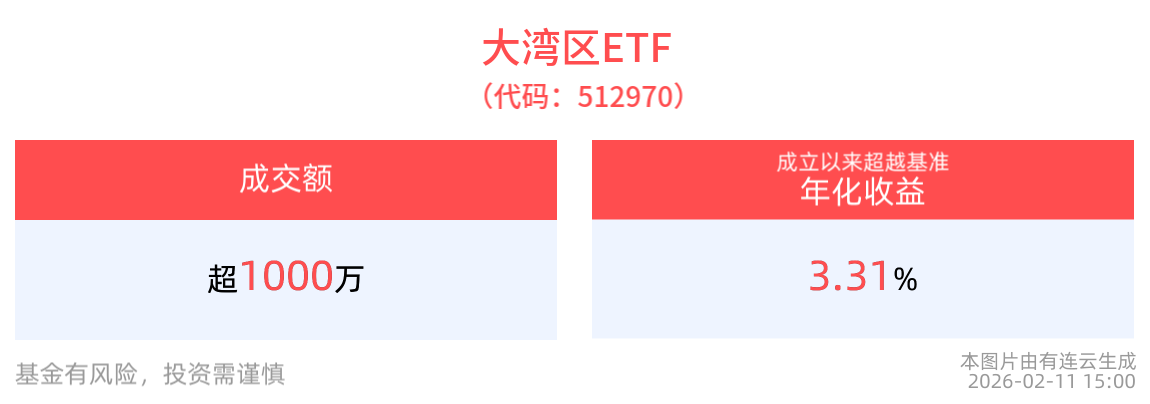
成交额超1000万元,大湾区ETF(512970)成立以来超越基准年化收益达3.31%
Xin Lang Cai Jing· 2026-02-12 01:56
Group 1 - The core index, the CSI Guangdong-Hong Kong-Macao Greater Bay Area Development Theme Index, has seen a decline of 0.63% as of February 11, 2026 [2] - The top-performing stocks include Greenmeadow with a rise of 9.95%, Xinjubang up by 8.16%, and Shengyi Technology increasing by 2.55% [2] - The ETF tracking this index, with a recent price of 1.51 yuan, has decreased by 0.59% [2] Group 2 - The Greater Bay Area ETF has a turnover rate of 16.96% during trading, with a total transaction volume of 11.77 million yuan, indicating active market participation [2] - The ETF has a one-year Sharpe ratio of 1.41 as of February 6, 2026 [2] - The maximum drawdown for the ETF this year is 5.52%, with a relative benchmark drawdown of 0.02% [2] Group 3 - The CSI Guangdong-Hong Kong-Macao Greater Bay Area Development Theme Index reflects the performance of listed companies benefiting from the Greater Bay Area development [3] - The index includes various sub-indices, selecting a maximum of 50 Hong Kong market securities, 300 companies from the Shanghai-Hong Kong-Shenzhen market, and 100 mainland market securities [3] - The top ten weighted stocks in the index account for 44.55% of the total index weight, with notable companies including Ping An Insurance, Luxshare Precision, and BYD [3][4] Group 4 - The top ten stocks by weight in the index show varied performance, with Ping An Insurance down by 1.01% and BYD up by 1.62% [4] - The weight of the top stock, Ping An Insurance, is 8.31%, while the lowest weight among the top ten is 2.63% for Mindray Medical [4]
2026格局与趋势丨(下):汽车制造商痛失定价权
3 6 Ke· 2026-02-12 01:52
Core Insights - Tesla is shifting its production focus from Model S and Model X to the Optimus robot, indicating a broader industry trend towards innovation and transformation amidst profit challenges [1] - The automotive industry is facing a profit crisis, with a projected profit margin of only 4.1% in 2025, significantly lower than the 5.9% margin of downstream industries [4][6] - The price war initiated by Tesla has spread across the entire automotive market, leading to a decline in revenue and profit margins for many manufacturers [6][8] Industry Challenges - The automotive sector is experiencing a "spiral of death" in profits due to five core factors: intense price competition, rising costs, imbalanced profit distribution, overcapacity, and the pains of electrification [3] - In December 2025, the industry's profit margin fell to a historic low of 1.8%, with revenues declining by 0.8% while costs increased by 0.8%, creating a "scissors gap" [6][8] - The overall capacity utilization rate for the automotive industry is projected to be 73.2% in 2025, below the healthy threshold of 75%, with some joint ventures operating at only 40-60% [8][9] Financial Performance - The automotive industry's revenue is expected to reach approximately 11.18 trillion yuan in 2025, reflecting a year-on-year growth of 7.1% [4] - The cost of production is anticipated to rise by 8.1% in 2025, leading to a decrease in per vehicle revenue by 1.6 million yuan and continuous pressure on gross profit margins [8] - The average profit margin for automotive dealers is projected to be around 4.1%, with over 58% of dealers expected to incur losses in 2025 [10][12] Supply Chain Dynamics - The supply chain is experiencing a bifurcation, with suppliers showing moderate improvement while dealers face significant losses [12] - The dominance of battery manufacturers like CATL is evident, as they captured 76.9% of the net profits in the industry, with CATL alone accounting for 68.1% [27][29] - The shift in value from traditional automotive manufacturers to technology and battery suppliers is reshaping the industry's profit landscape [14][27] Future Outlook - The automotive industry is expected to face ongoing challenges from rising costs in chips and materials, with potential cost increases of 4,000 to 7,000 yuan per vehicle due to supply chain pressures [35] - The transition towards electric and smart vehicles is creating a competitive environment where traditional manufacturers are losing pricing power to tech companies and battery suppliers [21][29] - The long-term outlook suggests that while battery suppliers currently hold significant power, this may shift as competition intensifies and manufacturers seek to reduce dependency on external suppliers [33]



中泰国际:美股方面,美国1月非农就业人数增加13.5%
ZHONGTAI INTERNATIONAL SECURITIES· 2026-02-12 01:40
Market Overview - On February 11, Hong Kong stocks opened higher and expanded gains, with the Hang Seng Index closing up 83 points (0.3%) at 27,266 points[1] - The Hang Seng Tech Index rose by 48 points (0.9%) to close at 5,499 points, with total market turnover reaching HKD 217.2 billion[1] - Southbound capital saw a net inflow of HKD 4.82 billion, compared to a previous day's net inflow of HKD 84.66 million[1] Key Stock Movements - Semiconductor company SMIC reported a 61% year-on-year increase in Q4 net profit, but its Q1 gross margin guidance fell short of expectations, leading to a 2.1% drop in its stock price[1] - Precious metal stocks saw gains, with Zijin Mining up 2.8%, Shandong Gold up 4.4%, and Zijin Gold International up 9.1%[1] - Xiaomi's stock rose 4.3% after it invested in a humanoid robot parts supplier, while other automotive stocks like BYD and Geely also saw increases of 2.7% to 3.9%[4] Economic Indicators - In the U.S., January non-farm payrolls increased by 130,000, significantly above the expected 65,000, with the unemployment rate dropping to 4.3% from 4.4% in December[2] - China's January PPI fell by 1.4% year-on-year, slightly better than the expected 1.5% decline, while CPI rose by 0.2% year-on-year, below the expected 0.4%[3] Sector Performance - The healthcare sector saw a 0.7% increase in the Hang Seng Healthcare Index, with WuXi Biologics forecasting a 16.7% revenue growth to HKD 21.79 billion for 2025[4] - The renewable energy and utilities sector generally rose, with Huaneng International and Datang Power increasing by 1.7% to 2.4%[5]
历史性时刻!出口乘用车中,新能源占比首次超一半
Di Yi Cai Jing· 2026-02-12 00:48
Group 1 - In January, China's new energy vehicle (NEV) exports reached 302,000 units, a year-on-year increase of 100%, with new energy passenger car exports at 295,000 units, accounting for over 50% of total passenger car exports, marking a 111% increase year-on-year [1] - The overall automobile exports in January were 681,000 units, representing a year-on-year growth of 44.9%, with passenger car exports at 589,000 units (up 48.9%) and commercial vehicle exports at 93,000 units (up 23.6%) [1] - The export structure of NEVs shows that pure electric vehicle exports were 202,000 units (up 100%), while plug-in hybrid vehicle exports were 99,000 units (up 97.3%) [1] Group 2 - The export growth of plug-in hybrid vehicles has been significant, with expectations for 2025 indicating that plug-in hybrids and hybrids will become new growth points, particularly in the pickup segment [2] - Chinese plug-in hybrid vehicles are rapidly gaining market share due to technological advantages and cost competitiveness, especially in the European market where they face lower tariffs compared to pure electric vehicles [2] - Despite potential trade policy disruptions, the growth of Chinese automobile exports has shown resilience, with a projected total export of 8.32 million vehicles in 2025, reflecting a 30% year-on-year increase [3] Group 3 - In January, among the top ten vehicle exporters, nine companies reported positive growth, with Chery leading at 119,000 units, followed by BYD (100,000 units), SAIC (97,000 units), Geely (77,000 units), and Tesla (51,000 units) [3] - The Chinese automotive industry has seen a significant increase in export volume since 2021, with a strong focus on building overseas channels and brand investments [3] - The export performance has shifted towards regions like Central and South America and Europe, with strong growth expected as long as the international market environment remains stable [4]
早报(02.12)| 又跳票了?苹果突发利空;国家撒钱:超20亿元“新春礼包”即将派送
Ge Long Hui· 2026-02-12 00:13
Group 1 - The U.S. non-farm payrolls increased by 130,000 in January, significantly exceeding market expectations of 70,000, marking the largest increase since April 2025 [25] - The unemployment rate in January fell to 4.3%, the lowest since August 2025, with expectations and previous values both at 4.4% [25] Group 2 - The Chinese CPI for January rose by 0.2% year-on-year, lower than expected, while the core CPI increased by 0.8%, the highest in six months [28] - The PPI decreased by 1.4% year-on-year, slightly better than the expected decline of 1.5% [28] Group 3 - The Indonesian nickel mine is required to cut production by 70% to 12 million tons, impacting global nickel supply [11] - Meta announced an investment of over $10 billion to build a new data center in Lebanon, Indiana, creating over 4,000 construction jobs and 300 operational jobs [12] Group 4 - The OPEC maintained its global oil demand growth forecast for this year and next, despite a decline in overall production due to reduced output from countries like Venezuela and Iran [32] - South Korea's semiconductor exports surged by 137.6% in early February, driven by strong demand [34]

遭遇人才流失!特斯拉多名骨干离职,xAI核心专家吴宇怀也走了
Mei Ri Jing Ji Xin Wen· 2026-02-11 22:31
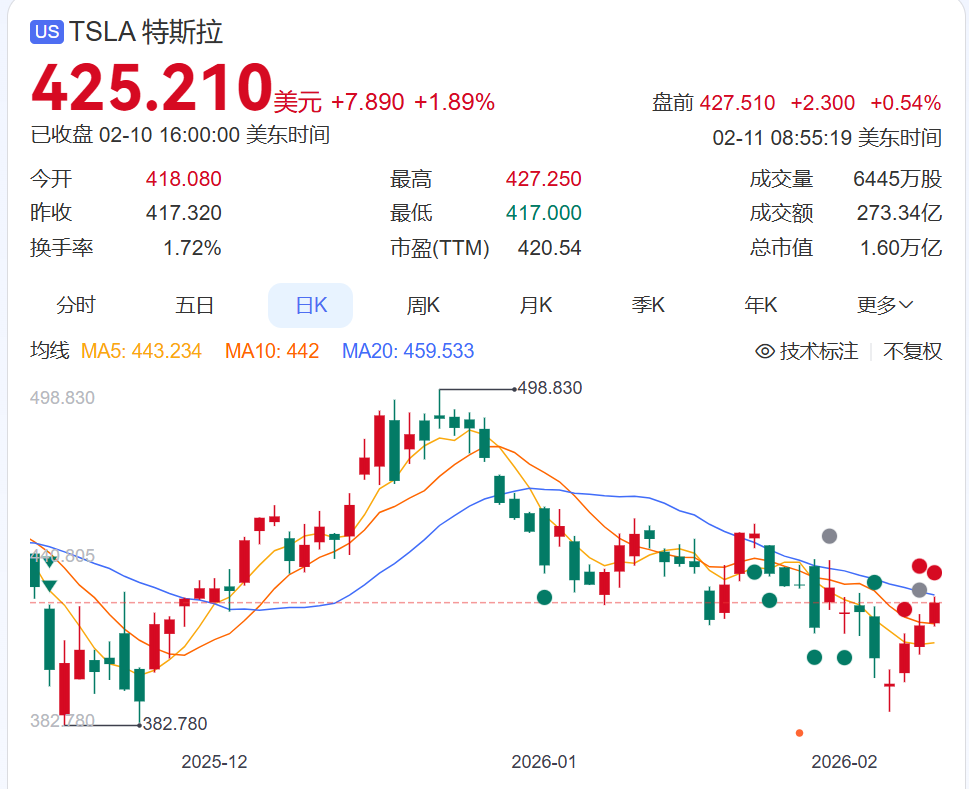
当地时间2月9日,特斯拉副总裁拉吉·杰加纳坦在LinkedIn上宣布离职,结束了13年的特斯拉生涯。这是马斯克麾下公司近期高管离职潮中 的最新一例。在此之前,特斯拉和xAI公司已有多名核心高管、联合创始人先后离开。 在杰加纳坦之前,特斯拉已有多名核心高管离开,包括负责北美和欧洲生产运营的副总裁奥米德·阿夫沙尔、北美人力资源主管詹娜·佩鲁 亚、AI战略负责人米兰·科瓦奇、电池部门负责人维尼特·梅塔以及软件部门负责人大卫·劳。 xAI多名联合创始人离职 包括核心专家 除了特斯拉,马斯克旗下人工智能公司xAI近期也遭遇重大人才流失,联合创始人兼数学推理核心技术专家吴宇怀于2月10日宣布离职。 吴宇怀在社交媒体上宣布从xAI离职,并表示"是时候开启我的下一章了,这是一个充满可能性的时代:一个配备AI的小团队可以移山倒 海,重新定义可能性。" 特斯拉副总裁 及多个要害部门负责人离职 杰加纳坦在社交媒体上写道:"在一篇帖子里概括13年并不容易。我在特斯拉的旅程就像一个不断进化的过程。当我离开时,我怀着感恩 的心和对未来的兴奋。" 去年秋天,由于特斯拉前北美销售主管特洛伊·琼斯和马斯克的高级副手奥米德·阿夫沙尔相继离职,毫 ...