
万华化学

Search documents
金融产品周报20260125:持续看多,关注周期行业的长期机会
Soochow Securities· 2026-01-25 07:50
Investment Rating - The report maintains a bullish outlook, focusing on long-term opportunities in cyclical industries [2][24]. Core Viewpoints - The macro timing model for January 2026 scored 0, indicating a 76.92% probability of an increase in the Wande All A Index over the following month, with an average expected gain of 3.18% [24][31]. - The report emphasizes the strong upward momentum in cyclical industries, particularly in non-ferrous metals and chemicals, driven by global macro events [24][25]. - Short-term investments in thematic sectors such as commercial aerospace, AI applications, and space photovoltaics have shown significant rebounds, although caution is advised due to potential volatility from rapid price increases [25][27]. Fund Size Statistics - In the period from January 19 to January 23, 2026, the top three increasing equity ETF types were: thematic index ETFs (59.135 billion), industry index ETFs (7.975 billion), and cross-border industry index ETFs (5.346 billion) [9][10]. - The top three increasing equity ETF products were: power grid equipment ETF (7.326 billion), chemical ETF (5.717 billion), and sci-tech chip ETF (3.953 billion) [10][14]. - The top three increasing equity ETF tracking indices were: segmented chemical index (9.829 billion), power grid equipment thematic index (7.326 billion), and SSH gold stock index (5.251 billion) [18][20]. Market Outlook - The report suggests a positive outlook for the A-share market in January 2026, with a focus on the micro-cap index and the CSI 500 leading the market [24][25]. - Long-term recommendations include a focus on non-ferrous metals and chemicals, with silver prices surpassing the psychological level of 100, indicating potential for further increases [24][25]. - The report anticipates a market characterized by oscillating upward trends, recommending a growth-oriented ETF allocation [67][68].
基础化工行业周报:金浦钛业子公司徐州钛白停产,汇得科技聚氨酯项目开工-20260125
Huafu Securities· 2026-01-25 07:45
Investment Rating - The report maintains a strong rating for the chemical industry, indicating a positive outlook for the sector [5]. Core Insights - The chemical sector has shown resilience with the CITIC Basic Chemical Index rising by 5.73% and the Shenwan Chemical Index increasing by 7.29% this week [13][16]. - Key sub-industries such as soda ash, chlor-alkali, and dyeing chemicals have experienced significant price increases, with soda ash rising by 13.3% [16]. - The report highlights the competitive strength of domestic tire manufacturers and suggests focusing on companies like Sailun Tire and Linglong Tire as potential growth opportunities [4]. - The polyurethane project by Huide Technology, with an annual production capacity of 600,000 tons, has commenced, indicating strategic growth in the new materials sector [3]. - The report emphasizes the tightening supply-demand dynamics in the phosphate chemical sector due to environmental regulations and increasing demand from the new energy sector [4]. Summary by Sections Market Overview - The Shanghai Composite Index increased by 0.84%, while the ChiNext Index decreased by 0.34% [13]. - The overall performance of the chemical sector is positive, with notable gains in various sub-industries [16]. Key Sub-Industry Developments - **Polyurethane**: The price of pure MDI in East China is reported at 17,600 RMB/ton, showing a week-on-week decline of 1.12% [28]. - **Tires**: The operating load for all-steel tires in Shandong is at 62.70%, reflecting a year-on-year increase of 20.70% [49]. - **Fertilizers**: Urea prices are at 1,757.45 RMB/ton, with a week-on-week decrease of 0.4% [63]. - **Vitamins**: The price of Vitamin A is reported at 61.5 RMB/kg, down 1.6% week-on-week [79]. Investment Themes - **Tire Sector**: Domestic tire companies are positioned strongly, with a focus on growth stocks [4]. - **Consumer Electronics**: Recovery in demand is anticipated, benefiting upstream material companies [4]. - **Phosphate Chemicals**: Supply constraints due to environmental policies are expected to tighten the market [4]. - **Vitamin Supply**: Supply disruptions in Vitamin A and E are noted, creating potential investment opportunities [4].





金融产品周报20260125:持续看多,关注周期行业的长期机会-20260125
Soochow Securities· 2026-01-25 06:28
Fund Size Changes - The top three increasing equity ETF types from January 19 to January 23, 2026, are: Theme Index ETF (¥591.35 billion), Industry Index ETF (¥79.75 billion), and Cross-Border Industry Index ETF (¥53.46 billion) [9] - The top three decreasing equity ETF types during the same period are: Scale Index ETF (-¥3348.87 billion), Cross-Border Strategy Index ETF (-¥7.12 billion), and Style Index ETF (-¥0.19 billion) [9] Market Outlook - The macro timing model's score for January 2026 is 0, indicating a 76.92% probability of the Wande All A Index rising in the following month, with an average increase of 3.18% [24] - The report maintains a bullish outlook, emphasizing long-term opportunities in cyclical industries, particularly in non-ferrous metals and chemicals [24] - The price of London silver surpassed the psychological level of 100 on January 23, 2026, indicating potential for further increases [24] Investment Recommendations - The report suggests a focus on growth-oriented ETF allocations, particularly in sectors like commercial aerospace, AI applications, and space photovoltaics, which have shown short-term rebounds [27] - The recommended ETFs include those focused on chemical, electric grid equipment, and semiconductor sectors, with specific stocks highlighted for each ETF [69] Risk Considerations - The model's predictions are based on historical data, which may not hold in the future, and there are risks associated with macroeconomic performance falling short of expectations [70]
“万亿城市”再扩容 增长密码是什么?
Xin Lang Cai Jing· 2026-01-24 14:30
Core Insights - The number of "trillion-yuan cities" in China has increased to 29, with notable cities like Shanghai, Beijing, and newly added cities such as Wenzhou and Dalian [1][2][3] Group 1: Economic Growth and City Rankings - Dalian has achieved a GDP of 1,000.21 billion yuan in 2025, marking it as the first "trillion-yuan city" in Northeast China [2][13] - Wenzhou's GDP is projected to surpass 1 trillion yuan, making it the third "trillion-yuan city" in Zhejiang province [2][12] - Shanghai's GDP is expected to reach 56,708.71 billion yuan in 2025, while Beijing's GDP is projected at 52,073.4 billion yuan, both showing a growth rate of 5.4% [5][6][7] Group 2: Regional Distribution and Characteristics - The 29 "trillion-yuan cities" include 4 municipalities, 11 provincial capitals, 4 separately planned cities, and 10 prefecture-level cities, with a majority located in southern China [3][4] - Jiangsu and Guangdong are the provinces with the highest number of "trillion-yuan cities," with 5 and 4 cities respectively [3][4] Group 3: Economic Strategies and Innovations - Shanghai is focusing on industrial growth, with significant increases in sectors like transportation equipment and electrical machinery [7][8] - Beijing is emphasizing quality over quantity in its economic development, particularly in the information technology sector [9] - Guangzhou is investing heavily in advanced manufacturing, with industrial investment rising from 103 billion yuan in 2020 to 171.1 billion yuan in 2024 [10][11] Group 4: Future Prospects for Emerging Cities - Cities like Xuzhou, Shenyang, and Shaoxing are nearing the "trillion-yuan" threshold, with Xuzhou's GDP projected to grow by 5.8% and Shenyang's GDP at 9,027.1 billion yuan [18][19] - The transition from 800 billion to 1 trillion yuan requires a focus on innovation and industrial integration, aiming for a comprehensive enhancement of urban competitiveness [20]
持续看好PVC等高能耗产品价值重估
Orient Securities· 2026-01-24 13:14
Investment Rating - The industry investment rating is maintained as "Positive" [5] Core Viewpoints - The PVC industry is expected to undergo continuous revaluation due to its high energy consumption and carbon emissions, particularly as China approaches its carbon peak during the 14th Five-Year Plan. The supply side may face strict controls, leading to potential reductions in production quotas. The demand for PVC in developing regions such as Africa and Latin America is anticipated to drive growth, despite the challenges posed by domestic production constraints [2][7] - The petrochemical industry is experiencing an upward trend in profitability, driven by significant price increases in key products such as butadiene rubber, PX, PTA, styrene, and ethylene glycol. The market's expectations for improved demand in 2026 are contributing to this positive outlook, with potential adjustments in operational strategies by leading companies likely to reshape supply and demand dynamics [7] Summary by Relevant Sections Investment Suggestions and Targets - The report recommends several companies across various sub-sectors, including: - MDI leader: Wanhua Chemical (600309, Buy) - PVC-related companies: Zhongtai Chemical (002092, Not Rated), Xinjiang Tianye (600075, Not Rated), Chlor-alkali Chemical (600618, Not Rated), Tianyuan Co., Ltd. (002386, Not Rated) - Refining sector leaders: Sinopec (600028, Buy), Rongsheng Petrochemical (002493, Buy), Hengli Petrochemical (600346, Buy) - Phosphate chemical companies benefiting from energy storage growth: Chuanheng Co., Ltd. (002895, Not Rated), Yuntianhua (600096, Not Rated) - Oxalic acid sector: Hualu Hengsheng (600426, Buy), Huayi Group (600623, Buy), Wankai New Materials (301216, Buy) [3]



“万亿城市”再扩容,增长密码是什么?
Sou Hu Cai Jing· 2026-01-24 08:50
Core Insights - The number of "trillion-yuan cities" in China has increased to 29, with cities like Shanghai and Beijing leading the way in GDP growth [1][2][4] - The economic scale of these cities enhances their ability to mobilize resources and drive development [1][2] Group 1: Overview of "Trillion-Yuan Cities" - Dalian has officially entered the "trillion-yuan city" category with a GDP of 1,002.1 billion yuan in 2025, marking it as the first in Northeast China [2][12] - Wenzhou has also crossed the trillion-yuan threshold, becoming the third in Zhejiang province after Hangzhou and Ningbo [2] - The list of 29 "trillion-yuan cities" includes 4 municipalities, 11 provincial capitals, 4 sub-provincial cities, and 10 prefecture-level cities, showcasing a diverse geographical distribution [2][3] Group 2: Economic Performance and Growth Rates - Shanghai's GDP is projected to reach 56,708.71 billion yuan in 2025, while Beijing's is expected to be 52,073.4 billion yuan, both growing at a rate of 5.4% [4][5] - The growth rates of Shanghai and Beijing exceed the national GDP growth rate of 5% [5] - Wenzhou's GDP is anticipated to grow by 6.1%, reflecting strong economic resilience [11] Group 3: Sectoral Contributions and Innovations - Shanghai's industrial output is expected to grow by 5.0%, with significant contributions from sectors like transportation equipment manufacturing, which grew by 15.8% [7][8] - Beijing focuses on information technology and digital economy, achieving substantial growth despite a reduction in traditional manufacturing [9] - Shenzhen's GDP is projected to approach 4 trillion yuan by 2025, driven by advanced manufacturing and innovation [10] Group 4: Future Prospects for Emerging Cities - Cities like Xuzhou, Shenyang, and Shaoxing are nearing the trillion-yuan mark, with Xuzhou's GDP growth expected around 5.8% [17][18] - The focus for these cities is on innovation, industrial upgrades, and enhancing overall competitiveness to achieve high-quality development [19]
国泰鑫利一年持有期混合A:2025年第四季度利润25.1万元 净值增长率0.3%
Sou Hu Cai Jing· 2026-01-24 08:45
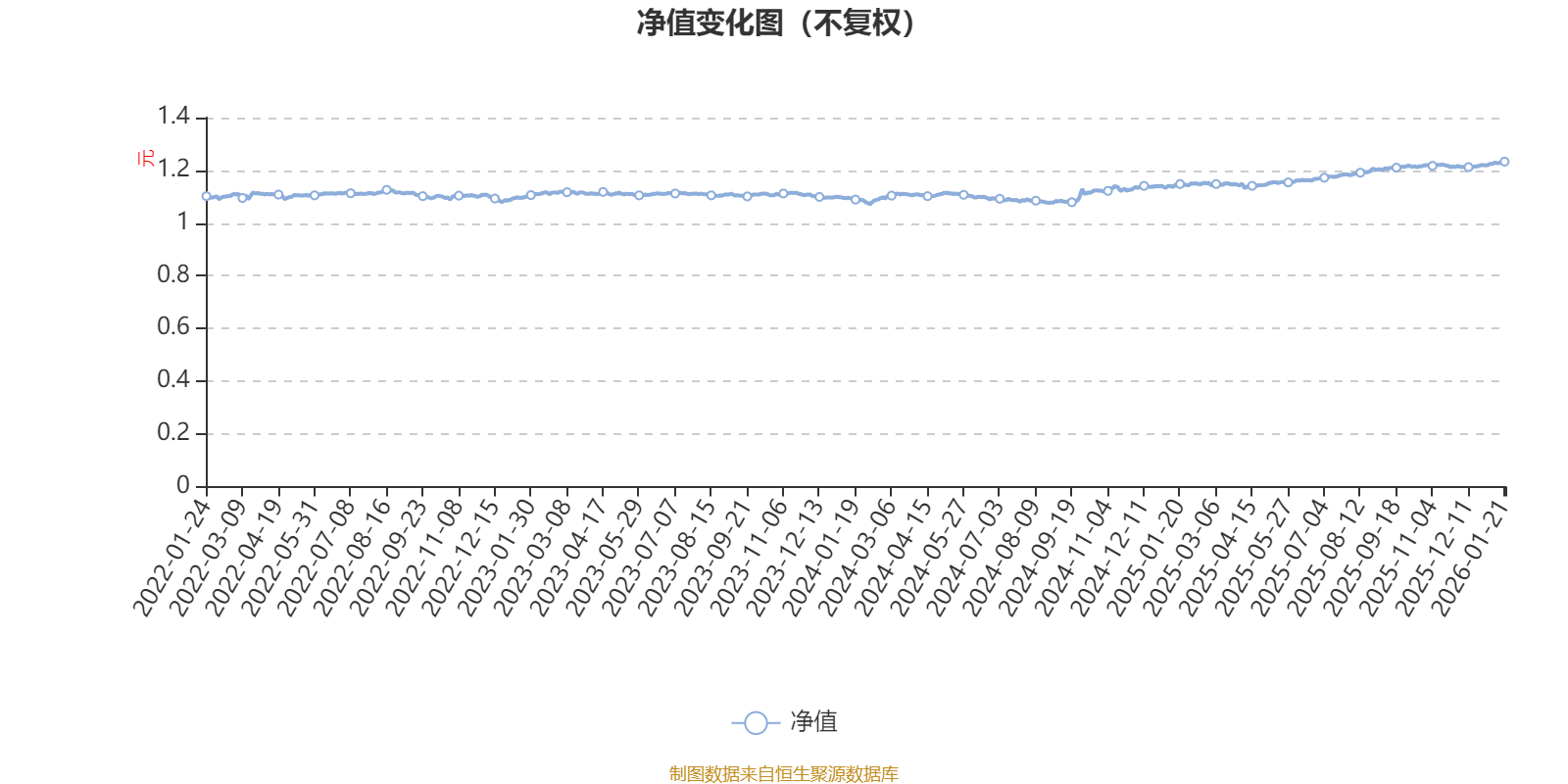
Core Viewpoint - The report highlights the performance and positioning of the Guotai Xinyi One-Year Holding Period Mixed A Fund (008666) for the fourth quarter of 2025, indicating a modest profit and a stable fund size amidst market fluctuations. Fund Performance - The fund reported a profit of 251,000 yuan in the fourth quarter, with a weighted average profit per fund share of 0.0036 yuan [3] - The fund's net value growth rate for the reporting period was 0.3%, with a total fund size of 81.8903 million yuan as of the end of the fourth quarter [3][14] - As of January 21, the unit net value was 1.233 yuan [3] Comparative Performance - Over the past three months, the fund's net value growth rate was 1.51%, ranking 395 out of 629 comparable funds [4] - The fund's six-month growth rate was 4.50%, ranking 295 out of 629 [4] - The one-year growth rate was 7.43%, ranking 319 out of 626 [4] - The three-year growth rate was 11.53%, ranking 288 out of 564 [4] Risk and Return Metrics - The fund's Sharpe ratio over the past three years was 0.7557, ranking 221 out of 542 comparable funds [8] - The maximum drawdown over the past three years was 4.39%, with a ranking of 147 out of 526 [10] - The single-quarter maximum drawdown occurred in Q3 2022, at 2.67% [10] Investment Strategy - The average stock position over the past three years was 13%, compared to the industry average of 19.2% [13] - The fund reached a peak stock position of 22.54% in mid-2020 and a low of 6.95% at the end of 2023 [13] - In Q4, the fund reduced its equity position to manage market volatility, maintaining a balanced allocation in sectors such as power equipment, chemicals, and high-dividend stocks [3] Top Holdings - As of the end of Q4 2025, the fund's top ten holdings included major companies such as Industrial and Commercial Bank of China, Shanghai Pudong Development Bank, and China Mobile [17]

华夏红利价值混合A:2025年第四季度利润415.11万元 净值增长率4.93%
Sou Hu Cai Jing· 2026-01-24 04:29
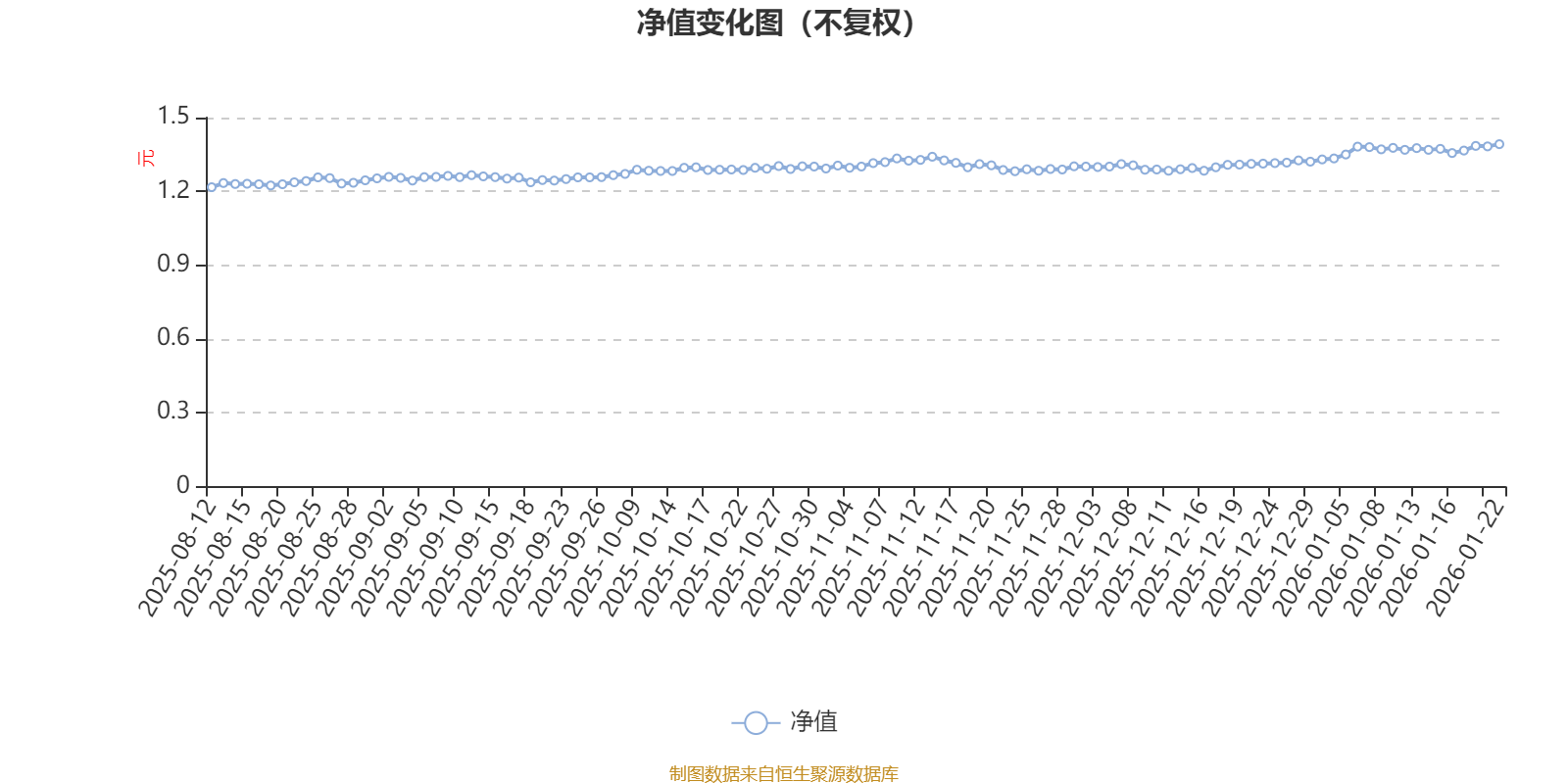
基金管理人在四季报中表示,本基金逐步增加了化工、保险、大众食品、品牌中药等优质红利价值品种,以帮助组合更好地应对未来的市场环境。 截至2025年四季度末,基金十大重仓股分别是紫金矿业、华鲁恒升、中国太保、万华化学、中国石油、中国铝业、陕西煤业、美的集团、中国平安、中国海 油。 核校:王博 AI基金华夏红利价值混合A(024914)披露2025年四季报,第四季度基金利润415.11万元,加权平均基金份额本期利润0.063元。报告期内,基金净值增长率 为4.93%,截至四季度末,基金规模为8478.22万元。 截至1月22日,单位净值为1.392元。基金经理是朱熠,目前管理3只基金。其中,截至1月22日,华夏兴夏价值一年持有混合发起式A近一年复权单位净值增 长率最高,达68%;华夏价值精选混合A最低,为64.13%。 ...
历史第二次!上证50指数,后市怎么走?
Zheng Quan Shi Bao Wang· 2026-01-24 00:35
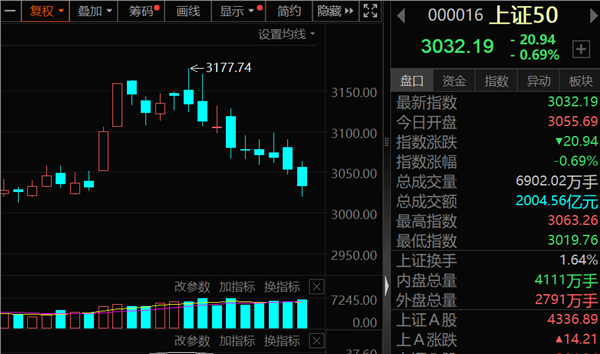
Core Viewpoint - The Shanghai 50 Index has experienced a rare nine consecutive days of decline, marking only the second occurrence in its history, with a total drop of 3.55% during this period [2][8]. Market Performance - As of January 23, the total market capitalization of the Shanghai 50 Index constituents exceeds 27 trillion yuan, accounting for over 20% of the total A-share market capitalization [2]. - The index's previous nine-day decline is compared to a similar event in 2013, which saw a cumulative drop of over 9% [2]. - The recent downturn has led to significant capital outflows from ETFs tracking the Shanghai 50 Index, with net outflows exceeding 41.9 billion yuan from January 13 to 23, primarily from the Huaxia Shanghai 50 ETF [4]. Historical Context - Historically, the Shanghai 50 Index has recorded 33 instances of consecutive declines lasting more than five days, with an average drop of nearly 8% in earlier years [6]. - The average decline during these periods has decreased over time, with the most recent occurrences since 2021 averaging a drop of 4.37% [6]. Future Outlook - Following a series of declines, there is a high probability of a rebound in the A-share market. Historical data indicates that after similar downturns, the Shanghai 50 Index has a greater than 78% chance of experiencing five or more days of gains within ten trading days [8]. - The recent nine-day decline is viewed as a result of style rotation and short-term sentiment release rather than a systemic deterioration of fundamentals [8]. Stock Performance - During the nine-day decline, over 80% of the Shanghai 50 Index constituents experienced at least five days of losses, with notable declines in stocks like Kweichow Moutai and Hengrui Medicine [10]. - Conversely, some stocks, including Langchao Technology and Zijin Mining, have shown resilience, with several companies expected to report positive earnings growth for 2025 [15][18]. - A total of 76 stocks in the electronic, power equipment, and non-ferrous metals sectors are projected to have positive earnings for 2025, with only 11 underperforming relative to the Shanghai Index's 23.4% increase since the beginning of 2025 [15].


全国第三个、北方首个 山东跻身“十万亿俱乐部”
Shang Hai Zheng Quan Bao· 2026-01-23 18:13
Group 1: Economic Milestone - Shandong Province officially announced that its GDP will exceed 10 trillion yuan by 2025, reaching 10.3197 trillion yuan, making it the third province in China and the first in the north to join the "trillion-yuan club" [1] - The province achieved this milestone in just five years, showcasing its commitment to high-quality economic development [1] Group 2: Industrial Transformation - The achievement is attributed to systematic changes in the industrial sector, focusing on the real economy and innovation-driven transformation [2] - Traditional industries have seen significant transformation, with Shandong optimizing the layout of heavy industries like petrochemicals and steel, resulting in a capacity transfer of 23.56 million tons of crude steel and 26.96 million tons of refining capacity [2] - By mid-2025, the output value of new technology industries is expected to account for 55.2% of the industrial output above designated size, with over 35,000 high-tech enterprises and more than 50,000 technology-based SMEs [2] Group 3: Technological Advancements - Key technological breakthroughs include the commissioning of the world's first fourth-generation nuclear power plant and the global debut of 12-inch silicon carbide substrates, which are transitioning from concepts to industrial advantages [3] - The digital economy is becoming a core link between traditional industry transformation and the cultivation of new productive forces, with Shandong establishing itself as a national leader in industrial internet platforms [3] Group 4: Green and Low-Carbon Development - As the first national pilot zone for green and low-carbon high-quality development, Shandong's non-fossil energy power generation capacity reached 134 million kilowatts by Q3 2025, surpassing coal power for the first time [4] - The province has achieved a significant reduction in energy consumption per unit of GDP, creating a virtuous cycle of ecological protection, industrial upgrading, and economic growth [4] Group 5: Market and Government Synergy - The economic leap is a result of the synergy between an effective market and a proactive government, breaking down institutional barriers and aligning with market demands [5] - Shandong has optimized its business environment, with over 90% of government services available online, enhancing efficiency and reducing costs for enterprises [5] Group 6: Capital Market Performance - By the end of 2025, Shandong is expected to have 310 listed companies, a 33% increase from 2020, with 52 companies making it to the "China Top 500 Enterprises" list [6] - The province's import and export scale is projected to reach 3.53 trillion yuan, with exports growing over 60% since 2020, highlighting the importance of foreign trade in economic growth [6] Group 7: Future Industry Focus - Shandong's "14th Five-Year Plan" aims to build a modern industrial system, focusing on high-end transformation of traditional industries and emerging sectors like deep-sea aerospace and quantum technology [7][8] - The province is also committed to deepening market-oriented reforms and enhancing its position in the national value chain [8] Group 8: Challenges Ahead - Despite the achievements, Shandong faces challenges in further stimulating internal innovation and maintaining competitiveness in a dynamic regional landscape [9][10]