
Deepseek

Search documents
消电ETF(561310)盘中涨超3%,消费电子3D打印与AI需求共振
Mei Ri Jing Ji Xin Wen· 2025-10-20 02:47
Core Insights - The consumer electronics ETF (561310) rose over 3% in early trading on October 20, indicating positive market sentiment towards the sector [1] - The successful application of folding machine hinges by Honor and OPPO, along with increased investment from Apple, is accelerating the penetration of 3D printing in the consumer electronics field, suggesting a potential new era for 3D printing applications [1] - AI demand continues to exceed expectations, with TSMC emphasizing tight capacity and expansion plans for Cowos extending to 2026, indicating a significant increase in value across servers, chips, and storage due to the AI wave [1] Industry Trends - Counterpoint Research forecasts a 50% year-on-year increase in global AR smart glasses shipments in the first half of 2025, highlighting the growing importance of edge AI in devices like headphones and glasses [1] - Samsung Electronics is benefiting from a recovery in demand for memory chips, reporting over a 30% increase in operating profit for the third quarter, while upstream sectors such as passive components and testing are also showing signs of recovery [1] ETF and Index Overview - The consumer electronics ETF (561310) tracks the consumer electronics index (931494), which includes publicly traded companies involved in the manufacturing and sales of smartphones, home appliances, and wearable devices, reflecting the overall performance of the tech consumer sector [1] - The index is characterized by high growth potential and volatility, effectively capturing market dynamics within the consumer electronics industry [1]
政策托举之下,创业者为什么还是拿不到钱?
Sou Hu Cai Jing· 2025-10-18 04:28
Core Insights - The "14th Five-Year Plan" emphasizes venture capital as a core tool for breakthroughs in hard technology, with government guidance funds exceeding 6 trillion yuan, focusing on critical areas like integrated circuits and quantum computing [1] - Policy direction provides a clear path for venture capital while reducing investment risks through fiscal subsidies and tax incentives, alongside deepened capital market reforms that offer diversified exit channels for early-stage projects [1] - The current investment landscape shows a presence of various funds, but a lack of willingness to invest in uncertain projects, leading to a preference for projects with clearer short-term returns [2][3] Investment Environment - Public sector funding aims to support long-term innovation but is constrained by the need for compliance and accountability, resulting in a preference for projects that yield immediate, reportable results [2] - The shift in funding dynamics has led to a focus on projects with high certainty and clear policy backing, sidelining longer-term, high-risk innovations [2][3] Risk and Return Dynamics - The structure of equity investment has shifted towards debt-like terms, creating a scenario where venture capital resembles fixed returns, which discourages entrepreneurs from engaging with such funding [3] - This transformation leads to a homogenization of funded projects, favoring those with clear metrics and demonstrable outcomes, while innovative, exploratory projects are increasingly marginalized [3][5] Market Trends - The changing exit environment, characterized by instability in secondary market windows and IPO rhythms, places additional pressure on long-term projects, making them less attractive to investors [5] - In the AI era, projects that demonstrate immediate cash flow and efficiency improvements are favored, while foundational innovations requiring longer development times are often dismissed as overly idealistic [5][6] Conclusion - The current investment climate reflects a preference for certainty and short-term results, which may undermine the exploration of innovative ideas and technologies, raising questions about the future of venture capital's role in fostering true innovation [6]


2000万亿!史无前例的泡沫破裂!
Sou Hu Cai Jing· 2025-10-18 00:26
Core Insights - Paxos, a stablecoin issuer, minted 300 trillion PYUSD stablecoins, which are pegged to the US dollar at a 1:1 ratio, and subsequently destroyed them due to an internal error [2][4] - The issuance of such a large amount of stablecoins raises concerns about the lack of regulation and potential risks in the cryptocurrency market [4][5] - The incident highlights the ease with which stablecoins can be created and the implications for larger stablecoins like USDT and USDC [5][8] Group 1: Stablecoin Issuance and Market Impact - Paxos minted 300 trillion PYUSD, equivalent to approximately 2130 trillion RMB, and later sent all tokens to an inaccessible wallet for destruction [2] - The total value of the minted tokens exceeds twice the GDP of all countries combined, raising questions about the implications of such a large issuance [4] - The incident reflects a broader issue in the stablecoin market, where significant amounts can be created without regulatory oversight [4][5] Group 2: Historical Context and Risks - Similar incidents have occurred in the past, such as OKX sending over 65 million OKB to an inaccessible address and the Bonk project destroying 1.7 trillion BONK tokens [5] - The ease of creating stablecoins without proper checks poses risks, especially for larger stablecoins like USDT and USDC [5][8] - The volatility and lack of stability in the stablecoin market raise concerns about the potential for significant financial losses for investors [7][9] Group 3: Blockchain Technology and Market Dynamics - Blockchain technology significantly reduces transaction costs and time in cross-border trade compared to traditional banking systems [12] - Emerging markets are increasingly adopting stablecoins, with usage rates in countries like Argentina and Turkey reaching 25%-30%, surpassing the global average [14] - The transaction volume of stablecoins in cross-border payments is projected to exceed that of traditional payment systems like Visa and Mastercard by 2024 [14][15]

当我们谈论「AI 搜索」,我们在谈些什么?
雷峰网· 2025-10-15 10:26
Core Viewpoint - The article emphasizes that in the AI era, the essence of "search" has evolved from mere information retrieval to the delivery of actionable insights and solutions, marking a significant shift in user expectations and technology capabilities [3][8][26]. Group 1: Evolution of Search - The concept of "search" has transformed significantly, with AI enabling more efficient and precise information delivery, moving from traditional keyword searches to interactive and generative responses [3][4][10]. - Major players like Google and Baidu are competing fiercely in the AI search space, with Baidu leading in terms of advancements and user engagement [6][21]. - The core of AI search lies in its ability to understand and fulfill user needs, which is becoming the key differentiator among various search tools [12][20]. Group 2: AIGC and Content Creation - AIGC (AI-Generated Content) is identified as a critical factor in the evolution of search, with Baidu's "Wenxin Assistant" showcasing significant advancements in both information retrieval and content delivery [13][14]. - Baidu's new features allow for the generation of personalized, multimedia content, enhancing user experience and engagement [18][19]. - The ability to create rich media outputs, such as videos and music, represents a paradigm shift in how users interact with search engines, moving beyond simple text-based results [19][20]. Group 3: User Engagement and Market Position - Baidu has achieved a remarkable milestone with 365 million monthly active users in AI search, positioning itself as a leader in the domestic market [21]. - The competition is not just about AI capabilities but also about understanding and addressing diverse user needs effectively [12][22]. - The article suggests that Baidu's proactive approach in redefining search through AI innovations sets a benchmark for other players in the industry [22][27].


AIoT行业专题
2025-09-28 14:57
Summary of AIoT Industry Conference Call Industry Overview - The AIoT industry is experiencing significant advancements in edge AI, driven by reduced inference costs, improved model performance, and increased competition among models [2][4][5] - The IoT industry is on an upward trend, with companies like Tuya Smart and Xiaomi reporting substantial growth [8][9] Key Companies and Developments - **NVIDIA**: - Reduced AI inference costs and power consumption through hardware upgrades and architectural optimizations [2][4] - Launched the Robin CPX GPU to enhance efficiency for specific workloads [2][5] - **Deepseek**: - Innovated with sparse MOE architecture and attention mechanism MLA to lower model training and inference costs [2][5] - Released Deepseek R1, which uses distillation technology to reduce computational complexity while maintaining performance [2][5] - **Yuran**: - Launched AR toys like Bubble Popper and Coco Mate, achieving significant market response and sales [2][6] - **Espressif Systems (乐鑫科技)**: - A leading WiFi MCU supplier, with revenue growth exceeding expectations, projecting a 30% increase for the year [2][9] - Maintains a gross margin of approximately 40% and has a robust product matrix including core products like S3 [4][10][11] Market Trends and Insights - Edge AI is primarily being adopted in the AR toy sector due to lower hardware and model performance requirements [6] - The IoT connection landscape is dominated by short-range connections, with WiFi and Bluetooth accounting for over 70% of total connections [7] - The ALT industry, which is crucial for edge AI, shows promising growth potential [8] Financial Performance - Espressif Systems has consistently achieved revenue growth, with traditional smart home business growing at 10%-15% and new products contributing to overall revenue [9][10] - The company’s effective cost management has led to sustained profit margin improvements, with a projected 70% increase in net profit for 2025 [11] Developer Ecosystem - The company employs a to D to B business model, leveraging a developer ecosystem to expand its customer base [12] - Over 150,000 open-source projects have been developed, attracting partnerships with major firms like ByteDance and OpenAI [12][13] - The developer ecosystem is crucial for meeting the needs of emerging applications like AI toys, positioning the company as a key player in the edge AI market [14] Conclusion - The AIoT industry is poised for growth, with significant contributions from key players like NVIDIA, Deepseek, and Espressif Systems. The focus on edge AI applications, particularly in the AR toy market, alongside a strong developer ecosystem, positions these companies favorably for future opportunities.

光刻机巨头,为啥要投AI?
Hu Xiu· 2025-09-27 07:34
Core Insights - The article discusses the recent significant investment in the AI unicorn Mistral AI, highlighting the involvement of ASML as a leading investor, which marks a notable event in the European venture capital landscape [3][5][15]. Investment Landscape - European venture capital has been struggling, with AI investments in Europe totaling $8 billion in 2023, significantly lower than the $68 billion in the U.S. and $15 billion in China [2]. - In 2024, European AI investments increased to $11 billion, but the U.S. still led with $47 billion, indicating a persistent gap [2]. - Mistral AI raised €1.7 billion (approximately ¥14.2 billion) in its Series C funding round, achieving a post-money valuation of €11.7 billion (approximately ¥97.8 billion) [3][5]. ASML's Strategic Move - ASML invested €1.3 billion (approximately ¥10.9 billion) in Mistral AI, acquiring an 11% stake, which signifies a strategic alliance between a leading tech giant and a high-potential AI company [5][15]. - The investment is seen as a move to enhance ASML's capabilities in industrial manufacturing through advanced AI solutions [7][15]. Market Position and Challenges - Despite its high valuation, Mistral AI holds only a 2% market share in the large model AI sector, facing stiff competition from established players like Deepseek and OpenAI [8][10]. - Mistral AI's focus on industrial applications may be hindered by the maturity of existing manufacturing processes and high customer switching costs [10][11]. Political and Economic Context - The investment has been interpreted as politically motivated, reflecting Europe's desire to reduce reliance on U.S. technology and bolster its own tech sovereignty [6][14]. - The article suggests that Mistral AI's valuation may be influenced by its founders' political connections, raising questions about the sustainability of its high valuation [11][14]. Future Outlook - The investment from ASML could provide Mistral AI with the necessary resources to pivot towards industrial applications, potentially enhancing its market position [15][16]. - European venture capitalists are increasingly focusing on vertical AI applications, with healthcare being a particularly attractive sector, indicating a shift in investment strategies [15][16].

长江商学院调查:股民信心改善,但长期牛市需基本面支撑
Sou Hu Cai Jing· 2025-09-23 10:39
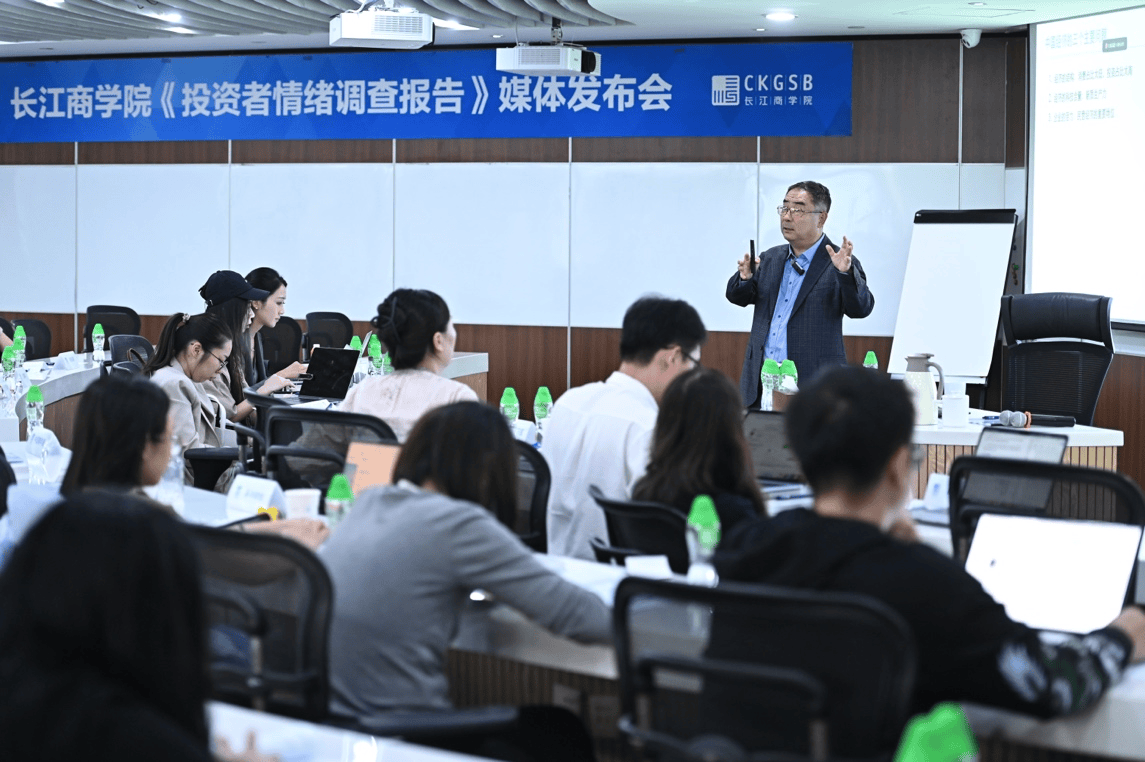
Group 1 - The recent rise in A-shares indicates a recovery in investor confidence, but a long-term bull market requires strong fundamental support [1] - As of September 2025, approximately 63.1% of surveyed investors believe A-shares will rise, an increase of 1.6 percentage points from April 2025 and 15.6 percentage points from July 2024 [1] - The expected return rate for A-shares is around 1.6%, up 1 percentage point from April 2025 and 5.6 percentage points from July 2024 [1] Group 2 - The valuation recovery of A-shares is driven by three main factors: monetary policy, fiscal policy, and technological advancements [1][2] - The central bank has released liquidity through multiple measures, including a total of approximately 2 trillion yuan from two reserve requirement ratio cuts [1] - Public investment in infrastructure, supported by high fiscal deficits, is expected to boost economic growth and improve corporate fundamentals [2] Group 3 - China's technological enterprises have made significant breakthroughs, with companies like Yushun Robotics and DJI gaining international attention, leading to strong performance in related sectors [2] - By August, sectors such as semiconductors and automation equipment saw stock price increases of over 60% year-on-year [2] Group 4 - Strategic responses to US-China trade tensions have bolstered market confidence in China's economic and technological self-reliance [4] - The proportion of China's exports to the US has decreased from 19.3% in 2018 to 11.8% in the first half of 2025 [4] - Efforts to reduce reliance on US high-end AI chips and promote domestic chip development have strengthened China's negotiating position [4] Group 5 - Despite improved market sentiment and strong performance from tech companies, overall earnings growth for non-financial A-share companies remains low [4] - The current rise in A-shares is primarily driven by valuation rather than fundamental improvements, raising concerns about sustainability [4] Group 6 - China's economy grew by 5.3% year-on-year in the first half of the year, aligning with the growth target of around 5% [5] - The inflation rate was nearly zero in the first half, which is unfavorable for corporate profitability [5][6] - Transitioning the economic structure from investment to consumption, along with promoting innovation and upgrading industries, are critical for fundamental development [6]
《麻省理工科技》在上海发布新一届“50家聪明公司”评选结果
Zhong Guo Jing Ji Wang· 2025-09-15 01:41
Group 1 - The EmTech China 2025 Global Emerging Technology Summit and the "50 Smart Companies" (TR50) release ceremony was held in Shanghai, focusing on the theme of "China's Future" [1] - The summit featured numerous global leaders, including Nobel laureates and industry pioneers, discussing the key pathways and future scenarios for the industrialization of cutting-edge technologies [1] - The latest "50 Smart Companies" list includes Deepseek, Yushu Technology, Game Science, and Bilibili, which will serve as important examples for observing technological trends over the next decade [1] Group 2 - The "50 Smart Companies" selection was introduced in China in 2019, with this year's theme being "China's Future," reflecting the dynamic development of emerging technologies [2] - The top four fields represented by this year's selected companies are AI and computing, robotics and intelligent manufacturing, chips, and life sciences [2] - The Shanghai Jing'an District is committed to building an innovative development environment by attracting leading domestic and international companies and high-end talent, supporting the integration of innovation, industry, finance, and talent [2]
曾鸣:下一个10年,人才比拼的是这个能力
3 6 Ke· 2025-09-12 02:11
Core Insights - The emergence of AI technologies, particularly with the rise of companies like OpenAI and DeepSeek, is transforming the business landscape and redefining organizational structures [2][3][4]. Group 1: Development of Intelligent Agents - In the next 5 to 8 years, intelligent agents will evolve from simple task executors to collaborative partners for humans, reflecting advancements in AI capabilities [7][8]. - The development of intelligent agents can be categorized into three stages: reliable agents, capable assistants, and intelligent partners, each representing increasing levels of autonomy and cognitive ability [4][6][7]. - The competitive advantage of intelligent agents will stem from the "black hole effect," where improved AI systems attract more data, enhancing their intelligence and capabilities [9][10][11]. Group 2: Economic Drivers and Organizational Changes - Technological progress is the fundamental driver of economic development, with intelligent agents becoming the core economic unit in the AI era, replacing traditional human roles [16][17]. - The competition in the AI era will shift from traditional knowledge-based barriers to efficiency and adaptability, as intelligent agents redefine industry boundaries [16][17]. - Organizations will need to adapt by fostering a culture of collaboration and innovation, focusing on the collective intelligence of teams rather than hierarchical management structures [46][48]. Group 3: Talent and Workforce Transformation - AI teams are increasingly seeking individuals with strong metacognitive abilities, who can abstract and model complex problems, as well as those who can effectively utilize AI tools [19][23][24]. - The rise of AI tools allows individuals to perform multiple roles, leading to the emergence of one-person companies and a shift in workforce dynamics [27][31]. - Knowledge workers are being replaced by "creative intelligence" talents who can leverage AI for innovative problem-solving, emphasizing the need for organizations to cultivate such skills [33][34][41]. Group 4: Future Organizational Structures - Future organizations will be characterized as "co-creative intelligent organizations," where teams of like-minded individuals collaborate to achieve common goals, driven by shared missions and values [46][50]. - The role of intelligent agents will evolve from mere tools to partners in the creative process, necessitating a new organizational framework that prioritizes collaboration and knowledge sharing [42][45]. - Organizations must focus on enhancing talent density and establishing a culture that promotes collective intelligence to thrive in the AI era [50].

港股异动 | 芯片股延续近期涨势 国产模型绑定国产芯片 机构看好国产芯片行情持续推进
智通财经网· 2025-08-27 02:39
Group 1 - Semiconductor stocks continue their recent upward trend, with notable increases in share prices: SMIC up 5.52% to HKD 59.3, GlobalFoundries up 4% to HKD 0.52, Fudan Microelectronics up 2.66% to HKD 34.7, and Hua Hong Semiconductor up 2.26% to HKD 54.4 [1] - Deepseek officially released the DeepSeek-V3.1 version, which utilizes UE8M0 FP8 Scale parameter precision, indicating advancements in the design of next-generation domestic chips that are expected to see large-scale application [1] - Dongfang Securities highlights that the new generation of domestic chips is beginning to support FP8, including models such as Muxi 690, Chip Origin VIP9000, Cambricon 690, Moore Threads MUSA 3.1 GPU, and Haiguang Deep Computing No. 3 [1] Group 2 - The firm believes that with improvements in domestic AI chip design technology and manufacturing processes, along with the ongoing development of domestic large models and their compatibility with domestic chips, the market share of domestic computing power is expected to continue to rise [1] - The ongoing bullish trend in domestic chips is anticipated to persist, driven by advancements in technology and increasing market demand [1]
