茶百道

Search documents
成都才是真正的奶茶之都
3 6 Ke· 2025-09-12 00:01
Core Insights - Chengdu has emerged as a significant hub for new tea beverage brands, with a competitive landscape where brands vie for dominance in the bustling Chunxi Road commercial area [3][5][6] - The city is characterized by a vibrant consumer market, with a high Engel coefficient of 32.8% for food and beverage spending, indicating a strong preference for dining and leisure activities among its residents [6][8] - Chengdu's tea culture and favorable economic conditions have fostered the growth of numerous local brands, which are now expanding nationally and internationally [11][20][24] Consumer Market Dynamics - Chengdu is one of six cities in China with a retail sales total exceeding 1 trillion yuan, alongside major first-tier cities [6] - The city has over 10,000 new-style shops, including more than 6,000 tea beverage stores, reflecting a diverse and growing market [7][8] - The local population's preference for tea-based drinks has led to a significant demand for new tea beverages, further supported by government initiatives to boost consumption [12][14] Brand Development and Competition - Major brands like ChaBaiDao, Shuyi Shaoxian Cao, and Bawang Chaji have established their headquarters in Chengdu, leveraging the city's resources for expansion [5][8][20] - The competitive landscape is marked by the rapid emergence of local brands such as Li Shanshan Tea and Chen Duoduo, which are gaining traction in the market [24][26] - The supply chain advantages in Chengdu, including lower costs and access to quality raw materials, have enabled brands to establish production bases in the city [19][21] Supply Chain and Logistics - Chengdu's geographical location provides a strategic advantage for supply chain management, facilitating lower costs and efficient distribution networks [15][18] - The city is a key player in the tea supply chain, with significant tea production and processing capabilities, supporting the needs of new tea beverage brands [15][17] - Major brands are investing heavily in local supply chain infrastructure, with ChaBaiDao planning to invest 10 billion yuan in a supply chain headquarters [19] Global Expansion and Future Prospects - Chengdu is positioned as a gateway for brands looking to expand internationally, with established logistics networks supporting global distribution [20][21] - Local brands are not only targeting domestic markets but are also exploring opportunities in international markets, with some already entering countries like South Korea and the United States [21][23] - The ongoing development of Chengdu as a "tea capital" is expected to continue, with local brands aiming to establish a global presence while promoting Chinese tea culture [23][26]

单店月均GMV连降 霸王茶姬探索成长新路径
Xin Lang Cai Jing· 2025-09-11 14:46
Core Viewpoint - Bawang Chaji is transitioning from a strategy of rapid store openings to focusing on improving store quality and operational efficiency, amidst challenges in revenue growth and profitability [3][5][7]. Financial Performance - For the first half of 2025, Bawang Chaji reported revenue of 6.725 billion yuan, a year-on-year increase of 21.61%, while net profit was 755 million yuan, down 38.32% [3][4]. - Adjusted net profit (non-GAAP) was 1.307 billion yuan, up 6.78% year-on-year, but GAAP net profit for Q2 was only 77.238 million yuan, a decrease of 87.7% [3][4]. - The company’s operating expenses increased by 41.5% to 3.224 billion yuan, significantly outpacing revenue growth [5][6]. Market Dynamics - Bawang Chaji's average monthly GMV per store has been declining for six consecutive quarters, with Q2 2025 showing a 20% year-on-year drop to 404,400 yuan [5][6]. - The competitive landscape has intensified due to aggressive price wars among delivery platforms, impacting sales and customer traffic [8][9]. Strategic Focus - The company is shifting its focus towards enhancing store quality and operational efficiency rather than merely expanding the number of stores [7][8]. - Bawang Chaji aims to maintain a high-value brand positioning and avoid price wars, emphasizing product quality and customer experience [9][22]. International Expansion - Bawang Chaji's overseas GMV grew by 77.37% to 235 million yuan in Q2 2025, with a total of 208 international stores, primarily in Southeast Asia [22][26]. - The company is exploring partnerships with local firms to strengthen its supply chain and enhance market penetration in international markets [25][26]. Customer Experience and Brand Loyalty - The company faces challenges related to customer complaints, with 2,827 complaints reported, primarily concerning product quality and service [11][21]. - Maintaining customer loyalty is critical, as price-sensitive customers may easily switch to competitors offering lower prices [9][21].

新消费浪潮下,新式食饮或迎来结构性机遇
2025-09-11 14:33
Summary of Conference Call Records Industry Overview - The new tea beverage industry is experiencing a structural opportunity amidst the new consumption wave, with a projected net decrease of approximately 40,000 stores in 2024, while the average transaction price stabilizes as mid-to-high-end brands cease aggressive price cuts to protect franchisee profitability [1][3] - The Southeast Asian ready-to-drink beverage market shows significant growth potential, with a compound annual growth rate (CAGR) of about 16% from 2018 to 2023, and per capita consumption significantly lower than in China [1][6] Key Insights and Arguments - In the first half of 2025, the tea beverage industry performed well due to improved competition dynamics, a slowdown in price wars, and increased sales driven by delivery platform subsidies [3] - The delivery subsidy war initiated by platforms like JD.com, Meituan, and Ele.me has led to a surge in sales for tea and coffee products, benefiting most tea companies with positive same-store sales growth [3][4] - The performance of tea companies is expected to further diverge as delivery subsidies taper off in 2026, with companies possessing strong supply chains and operational capabilities likely to maintain their competitive edge [4] - Notable brands such as Mixue Ice City and Gu Ming are highlighted as having strong growth potential due to their operational strengths and market positioning [4] Overseas Expansion - Domestic tea brands are actively expanding into overseas markets, particularly in Southeast Asia, where climate and cultural similarities favor the acceptance of tea beverages [5][6] - Mixue Ice City leads in overseas store count with 4,733 locations, while MOMO has over 1,000 stores in Indonesia, indicating substantial growth opportunities in international markets [5] ETF and Investment Opportunities - The Hong Kong Consumption 50 ETF focuses on new consumption sectors, including tea beverages, trendy toys, gold jewelry, and cosmetics, benefiting from anticipated interest rate cuts and inflows from southbound capital [1][7] - The National Index Hong Kong Consumption Index is more diversified compared to traditional A-share indices, focusing on emerging industries and offering higher growth potential [8][12] - The outlook for the new consumption market in the fourth quarter is optimistic, with expected increases in penetration rates for ready-to-drink tea and toys, supported by favorable economic conditions and policy measures [9][13] Future Trends and Recommendations - Future trends in the emerging consumer market will revolve around policy leverage, capital focus, technological integration, and overseas expansion [13] - Investment opportunities in the emerging consumer market are promising, with significant growth potential and favorable valuations for companies in the new consumption space [14]
外卖补贴“散场”,茶饮、咖啡高增长如何“续杯”?
Mei Ri Jing Ji Xin Wen· 2025-09-11 13:33
Core Viewpoint - The recent subsidy wars among food delivery platforms have significantly impacted the ready-to-drink tea and coffee market, leading to unsustainable growth driven by external incentives rather than organic demand [1][5][8]. Group 1: Market Dynamics - The competition among major food delivery platforms like Meituan, Alibaba, and JD has intensified, resulting in substantial subsidies that have disrupted the pricing structure of the ready-to-drink tea and coffee market [2][3]. - In the first half of 2025, major brands such as Luckin Coffee, Gu Ming, and Mi Xue Ice City reported a combined revenue of 55 billion yuan, an increase of 13.5 billion yuan year-on-year, largely attributed to these subsidies [1][3]. Group 2: Financial Performance - Luckin Coffee reported a net income of 21.22 billion yuan in the first half of 2025, a 44.6% increase year-on-year, with a net profit of 1.78 billion yuan, up from 788 million yuan in the previous year [3]. - Gu Ming achieved a revenue of 5.663 billion yuan in the same period, marking a 41.2% year-on-year growth, while Mi Xue Ice City expanded its store count significantly, contributing to its revenue growth [3][4]. Group 3: Sustainability Concerns - Analysts express concerns regarding the sustainability of the growth driven by delivery subsidies, suggesting that the impressive financial results may not be replicable in the absence of such incentives [5][8]. - The reliance on delivery platforms has led to a decline in dine-in orders, which are more profitable for stores, raising questions about the long-term viability of the current business model [9]. Group 4: Future Strategies - The market regulator has indicated a shift towards more sustainable practices, urging platforms to control subsidies and enhance service quality, which may lead to a decline in sales growth for tea and coffee brands [7][10]. - Companies are now focusing on improving in-store efficiency, increasing customer retention, and exploring international markets as part of their long-term strategies [9][10].

抖音团购商家新形态:左手到店、右手到家
Cai Fu Zai Xian· 2025-09-11 06:57
Group 1 - The core concept of the article revolves around the evolving nature of group buying, highlighting that it is not just about saving money but also about meeting diverse consumer needs and preferences [1][3] - Consumers are increasingly holding onto group buying vouchers without using them due to uncertainty in consumption scenarios, indicating a need for businesses to offer more flexible options [3][4] - The introduction of "随心团" (Flexible Group Buying) allows consumers to choose between in-store pickup and home delivery, enhancing the overall experience and reducing decision-making costs [5][6] Group 2 - The "随心团" model has led to significant growth in group buying transactions, with over 90% of products upgraded to this model, resulting in a historical peak of 1 billion yuan in voucher redemptions for certain businesses [6][7] - The model has also improved consumer perception of group buying value, as seen during promotional events like the Qixi Festival, where brands achieved substantial sales growth through attractive pricing and delivery options [7][9] - Businesses are leveraging content-driven strategies to enhance engagement and conversion rates, with successful examples of live-streaming promotions leading to significant sales increases [10][12] Group 3 - The integration of delivery services with group buying has allowed businesses to tap into new market segments and meet immediate consumer demands, particularly during peak seasons [14][15] - Companies are shifting their operational focus from merely driving traffic to nurturing customer relationships throughout their lifecycle, emphasizing the importance of quality content and service [12][15] - The "随心团" initiative serves as a low-cost strategy for businesses to find new growth opportunities, bridging the gap between in-store and online sales [15]
高德高调出炉“扫街榜”,大众点评重启品质外卖对阵
2 1 Shi Ji Jing Ji Bao Dao· 2025-09-10 23:11
Core Viewpoint - The competition strategy of food delivery platforms is shifting towards deeper exploration of "quality" and "value," with differentiation strategies set to reshape the industry landscape [1] Group 1: Market Developments - Meituan announced the relaunch of its quality food delivery service, leveraging AI and real user reviews to enhance decision-making for consumers [1] - JD reported a significant revenue increase of 199% in its new business segment, which includes food delivery, indicating a robust growth trajectory in the market [1] - Taobao Shanguo achieved a peak daily order volume of 120 million, reflecting strong market performance and consumer engagement [1][3] Group 2: Strategic Initiatives - The relaunch of Meituan's quality food delivery service integrates resources from both Meituan and Dazhong Dianping, aiming to meet evolving consumer demands [2] - Dazhong Dianping has curated over one million high-rated restaurants for its quality food delivery service, enhancing consumer choice and decision-making [2] - JD's strategic partnership with Jinjiang Hotels marks a significant move to expand its food delivery business into the hospitality sector [3] Group 3: Competitive Landscape - The competition among platforms is intensifying, with each adopting various subsidy strategies, leading to significant impacts on profitability [6] - High competition has resulted in Meituan experiencing unexpected losses in Q2, raising concerns about its long-term market share [5] - Despite the competitive pressures, Meituan maintains a strong operational foundation, with established barriers in supply chain integration and service systems [5] Group 4: Regulatory Environment - The State Administration for Market Regulation has engaged with major food delivery platforms to ensure compliance with laws and regulations, aiming to promote fair competition and protect consumer interests [7]


茶百道“鲜剥石榴系列”新品首日热销20万杯
Bei Jing Shang Bao· 2025-09-10 14:05
Core Viewpoint - The article highlights the launch of seasonal new products by domestic tea brands, specifically focusing on Tea Baidao's introduction of the "Fresh Pomegranate" series, which includes "Fresh Pomegranate Ice Tea" and "Fresh Pomegranate Guava" [1] Company Summary - Tea Baidao has introduced new products featuring freshly peeled pomegranate seeds and juice, achieving sales of 200,000 cups on the first day of launch [1] - The preparation of "Fresh Pomegranate Ice Tea" requires approximately half a pomegranate per cup, emphasizing the freshness and quality of the ingredients used [1] - The company has established partnerships with various high-quality fruit production areas in China to ensure the quality of its fruit supply chain [1] Product Details - The new products utilize Tunisian soft-seed pomegranates sourced from Sichuan Huairi, known as the "hometown of pomegranates" in China [1] - The selection criteria for the pomegranates include small seeds, red color, and a sugar content of over 14 degrees [1]
外卖补贴“散场”,七大品牌550亿元营收背后,茶饮咖啡高增长如何“续杯”?
Mei Ri Jing Ji Xin Wen· 2025-09-10 11:41
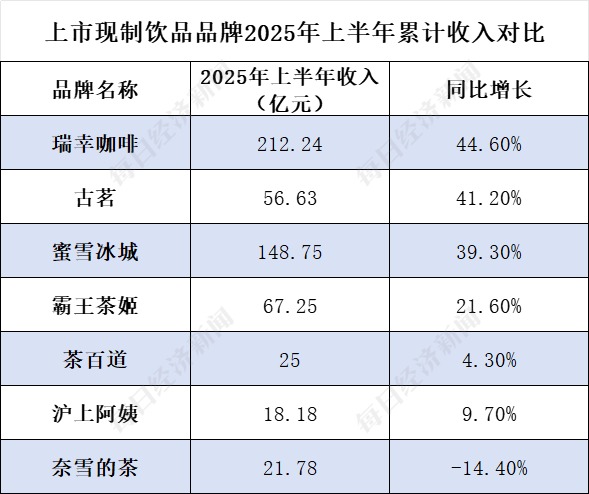
Core Insights - The recent subsidy war among food delivery platforms has significantly impacted the ready-to-drink beverage market, leading to a temporary surge in sales but raising questions about the sustainability of this growth [1][6][9] Industry Overview - The ready-to-drink tea and coffee sector has seen a dramatic price drop, with many brands offering products below 10 yuan due to aggressive subsidies [2][7] - Major brands like Luckin Coffee, Gu Ming, and Mi Xue Bing Cheng reported substantial revenue increases in the first half of 2025, with total revenue reaching 550 billion yuan, a year-on-year increase of 135 billion yuan [1][3][4] Financial Performance - Luckin Coffee reported a net income of 212.24 billion yuan, a 44.6% increase year-on-year, while Gu Ming achieved 56.63 billion yuan in revenue, up 41.2% [3][4] - Other brands also showed growth, with Mi Xue Bing Cheng at 148.75 billion yuan (39.3% increase) and Ba Wang Cha Ji at 67.25 billion yuan (21.6% increase) [4] Market Dynamics - The rapid expansion of store numbers has been a key driver of revenue growth, with Mi Xue Bing Cheng adding over 5,700 stores in the first half of the year [5][8] - The reliance on subsidies has raised concerns about the long-term viability of sales growth, as many brands may struggle to maintain performance without these incentives [5][7] Regulatory Environment - The State Administration for Market Regulation has indicated a focus on monitoring the competitive landscape of the food delivery industry, emphasizing the need for quality service and fair pricing [1][6] - The regulatory body has urged platforms to control subsidies to avoid disrupting the normal pricing structure, which could lead to a decline in consumer demand once subsidies are removed [6][7] Strategic Shifts - Brands are beginning to shift focus towards in-store sales and improving operational efficiency to mitigate the impact of fluctuating delivery orders [8] - There is a growing consensus among leading brands to enhance digital operations and supply chain management to better meet consumer demands and improve profitability [8][9]
产业观察丨外卖补贴“散场”,七大品牌550亿元营收背后,茶饮咖啡高增长如何“续杯”?
Mei Ri Jing Ji Xin Wen· 2025-09-10 11:14
Core Viewpoint - The recent subsidy war among food delivery platforms has significantly impacted the ready-to-drink beverage market, leading to a surge in sales for various brands, but the sustainability of this growth is in question as regulatory scrutiny increases [1][5][9]. Industry Overview - The competition in the ready-to-drink beverage sector intensified during the summer, with major platforms like Meituan, Alibaba, and JD.com engaging in aggressive subsidy strategies, resulting in a chaotic pricing environment where many drinks were sold for as low as a few yuan or even for free [1][5]. - The market regulator has expressed concerns over the impact of these subsidies on the normal pricing system and has called for improved service quality and food safety [1][9]. Financial Performance - In the first half of 2025, seven listed beverage brands reported a combined revenue of 55 billion yuan, an increase of 13.5 billion yuan year-on-year [1]. - Luckin Coffee reported a net income of 21.22 billion yuan, a 44.6% increase year-on-year, while other brands like Gu Ming and Mi Xue Ice City also saw significant revenue growth [6][7]. Growth Drivers - The revenue growth for these brands is attributed not only to subsidies but also to factors such as store expansion and improved single-store efficiency [8]. - Mi Xue Ice City added over 5,700 new stores in the first half of the year, with a significant portion located in lower-tier cities [8][12]. Challenges Ahead - Analysts express skepticism about the sustainability of the sales growth driven by subsidies, suggesting that a return to normal pricing could lead to a sharp decline in order volumes [10][12]. - The heavy reliance on delivery subsidies has raised concerns about the long-term health of franchise operations, as many orders have shifted from dine-in to delivery, impacting profitability [10][12]. Strategic Shifts - In response to the changing landscape, brands are focusing on enhancing in-store dining experiences and optimizing operational efficiency to mitigate the impact of fluctuating delivery volumes [12]. - Companies are also exploring international markets and enhancing digital operations to better understand consumer needs and improve supply chain efficiency [12][13].
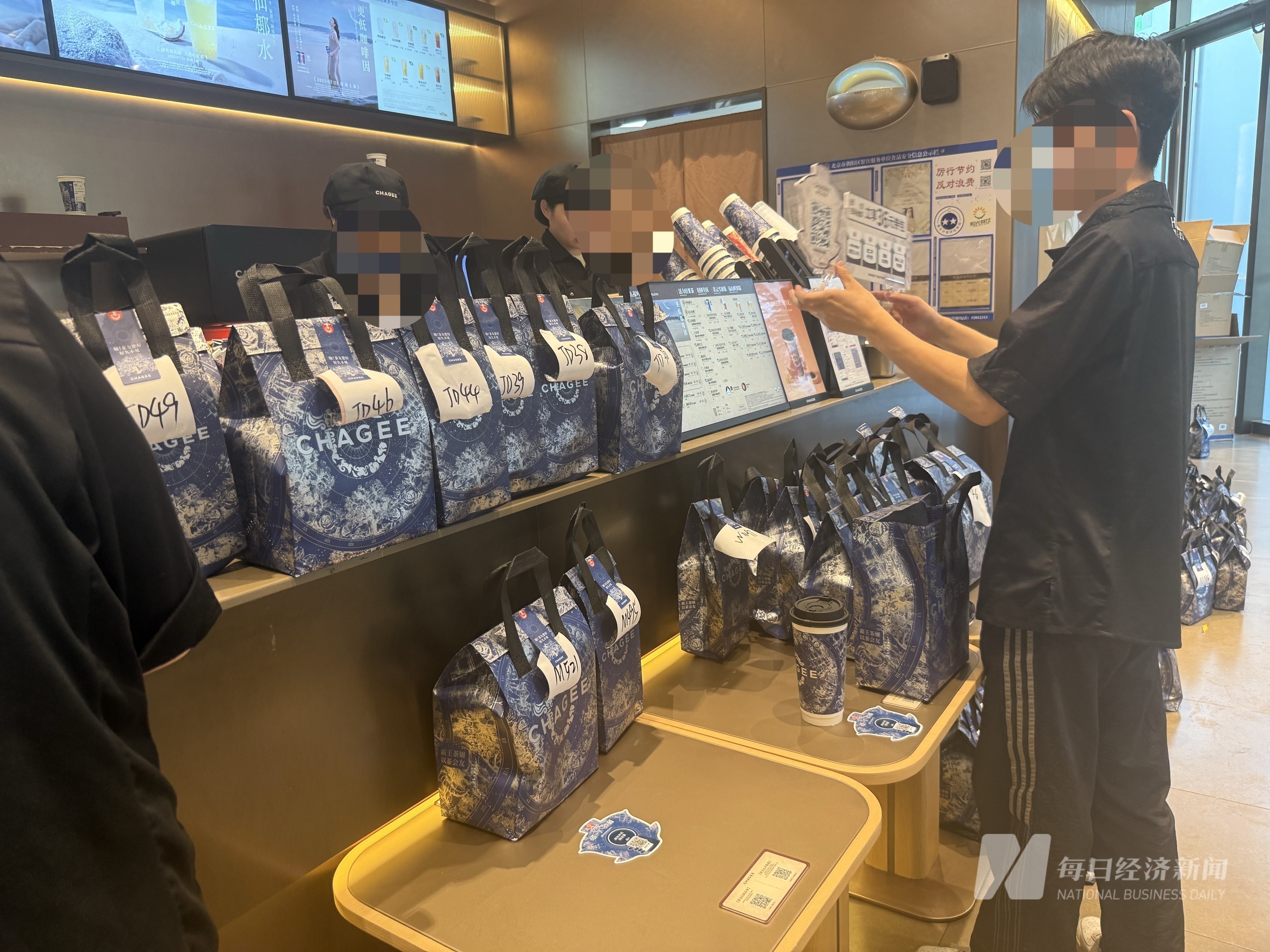
茶饮“五剑客”,半年狂揽316亿
创业邦· 2025-09-10 10:31
Core Viewpoint - The article discusses the significant revenue growth of five major tea beverage brands in China, collectively referred to as the "Five Swordsmen," driven by the ongoing competition in the food delivery market, resulting in increased sales and profits for these companies in the first half of 2025 [5][8]. Revenue Growth - The five tea beverage companies, including Nai Xue's Tea, Mi Xue Ice City, Gu Ming, Ba Wang Tea Ji, and Cha Bai Dao, achieved a total revenue of approximately 316 billion yuan, an increase of 73 billion yuan compared to the previous year, representing a year-on-year growth of 30.12% [5][8]. - Mi Xue Ice City remains the largest player with a revenue of 148.75 billion yuan, growing by 39.3% year-on-year, while Gu Ming experienced the fastest growth at 41.2%, reaching 56.63 billion yuan [8][10]. Profitability - The five brands collectively recorded a net profit of 55.6 billion yuan, an increase of 13.76 billion yuan from the previous year, marking a year-on-year growth of 32.89% [15][18]. - Mi Xue Ice City reported the highest profit of 26.93 billion yuan, with a year-on-year increase of 42.9%, while Gu Ming's profit surged by 121.5% to 16.25 billion yuan [15][18]. Market Dynamics - The article highlights that the tea beverage sector is particularly well-suited for the food delivery model due to stable output and competitive pricing, which encourages impulsive purchases [10][11]. - The growth in revenue is attributed to both increased sales of materials and the opening of new stores, with Mi Xue Ice City and Gu Ming exemplifying this dual approach [11][18]. Future Strategies - As the food delivery competition is expected to normalize, companies are focusing on improving operational efficiency at individual stores and exploring opportunities in both overseas and lower-tier markets [22][26]. - Ba Wang Tea Ji is looking to expand internationally, having recently entered the Philippine market, while Mi Xue Ice City is increasing its presence in lower-tier cities, with 57.6% of its stores located in these areas [23][26].