
问界

Search documents
自主品牌保值率反超合资车
Guang Zhou Ri Bao· 2025-05-21 20:15
Core Insights - The article highlights the increasing market share and value retention of Chinese domestic brands in the automotive sector, particularly in the context of the ongoing vehicle replacement policy in China [1][5]. Group 1: Market Trends - The latest data from the China Automobile Circulation Association indicates that the three-year depreciation rate for leading domestic brands has reached 57%, surpassing luxury brands like BBA (53%) and joint venture brands from the US, France, and South Korea (40%) [1]. - The trading volume of used new energy vehicles has exceeded 10%, becoming a core driver of market growth [1][4]. - The demand for used cars is shifting, with consumers increasingly prioritizing vehicle quality and diverse service experiences over mere pricing [5]. Group 2: Brand Performance - GAC Trumpchi leads the domestic brand retention rate, with top models like the Trumpchi, Tank, and Lynk & Co showing three-year depreciation rates of 57.5%, 56.8%, and 54.3% respectively, outperforming joint venture brands like Volkswagen (52.8%) [2][3]. - In the electric vehicle segment, models such as Xiaomi SU7 and AITO M9 have achieved a one-year retention rate of up to 88.7%, significantly higher than luxury models like Porsche Taycan and Tesla Model 3 [3]. - The used car market is witnessing a "younger" trend, with a notable increase in transactions for vehicles less than two years old, particularly among domestic brands [4]. Group 3: Market Dynamics - The number of used cars available for sale reached over 780,000 units in April, marking a record high for a single month [5]. - The competitive landscape in the used car market is stabilizing after initial price adjustments, with brands finding new market positions [5]. - The article anticipates a moderate increase in used car transaction volumes in May compared to April [5].
TrendForce:一季度全球新能源车合计销量达402万辆 同比增长39%
智通财经网· 2025-05-21 05:54
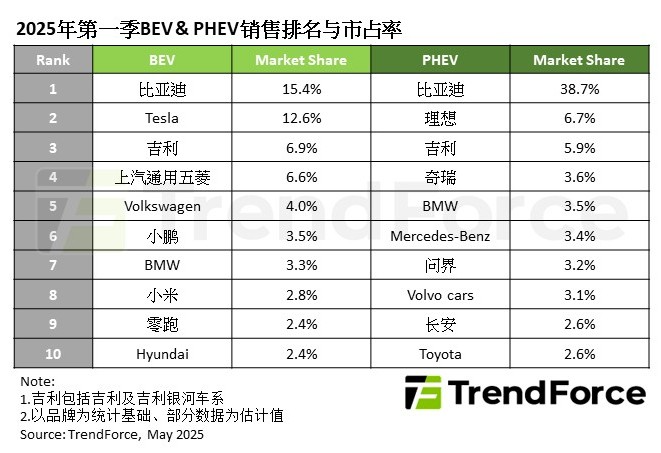
Group 1 - The global sales of new energy vehicles (NEVs), including BEVs, PHEVs, and hydrogen fuel cell vehicles, are projected to reach 4.02 million units in Q1 2025, representing a year-on-year increase of 39%, with NEVs accounting for 18.4% of total global car sales in the same period [1] - The estimated total sales of NEVs for the entire year of 2025 is 19.47 million units, reflecting a year-on-year growth of 19.6% [1] Group 2 - In Q1 2025, the sales of BEVs reached 2.67 million units, marking a year-on-year increase of 45%, with BYD maintaining the top position in sales with a market share of 15.4%, followed by Tesla at 12.6% [3] - Geely's sales saw a significant increase of 443% year-on-year, aided by the launch of new models, while Xiaopeng's sales were largely driven by its affordable model, the Mona M03 [3] - Volkswagen ranked fifth in BEV sales, with a year-on-year growth of 41%, driven by its strategy "In China, For China" to enhance its product offerings in the Chinese market [3] Group 3 - The sales of PHEVs in Q1 2025 totaled 1.35 million units, showing a year-on-year increase of 28%, with BYD leading the market with a share of approximately 38.7% [4] - Geely's PHEV sales benefited from the strong performance of the Galaxy series, achieving a 158% year-on-year increase and securing the third position in the market [4] - Some Chinese brands, such as Aito, experienced a decline in sales, with a 47% drop compared to the same period last year, indicating increased competition in the market [4]



奥迪的中产神车,跌到13万多了
36氪· 2025-05-20 13:25
Core Viewpoint - The article discusses the significant price reductions in the luxury car market, particularly focusing on brands like Audi, BMW, and others, as they struggle to maintain sales amidst the rise of electric vehicles and changing consumer preferences [4][10][22]. Group 1: Price Reductions and Market Dynamics - Luxury car brands are experiencing drastic price cuts, with Audi A3 being advertised at prices as low as 12.49 million yuan, leading to comparisons with lower-end vehicles [7][17]. - The article highlights the emotional impact on existing car owners who purchased vehicles at higher prices, now facing depreciation and feelings of being undervalued [20][24]. - The overall sales figures for Audi show a decline, with global sales expected to drop by 11.8% in 2024, indicating a broader trend of struggling luxury brands [22][30]. Group 2: Consumer Sentiment and Brand Perception - The frequent price changes are likely to damage the brand image of luxury car manufacturers, as consumers may perceive them as lower quality or less prestigious [26][28]. - The article notes that traditional luxury brands are at risk of losing their market position as new consumer preferences shift towards technology and smart features over traditional luxury attributes [31][32]. Group 3: Strategic Responses from Luxury Brands - In response to market pressures, luxury brands are adopting strategies such as partnerships with technology companies like Huawei to enhance their offerings [39][40]. - The article mentions the importance of localization in production and technology to better meet the demands of the Chinese market, with brands like Lexus investing in local manufacturing [44]. - Financial strength is highlighted as a key advantage for traditional luxury brands, with BBA (BMW, Benz, Audi) planning to invest over 350 billion euros in 2024 to support their transition and innovation efforts [47].
揭秘车市 “9” 字辈现象
3 6 Ke· 2025-05-20 09:10
Group 1 - The emergence of "9" models in the automotive market reflects consumer recognition of flagship products across all price segments, from 200,000 to 1,000,000 yuan [1][2][3] - Consumers are increasingly favoring "9" models due to their perception of flagship quality, which is associated with advanced technology and superior safety features [4][5] - The "9" models are designed to provide a comprehensive experience, with manufacturers focusing on high-end configurations and service offerings that enhance customer satisfaction [6][7] Group 2 - The automotive industry is shifting from hardware competition to a focus on the entire lifecycle experience of the vehicle, with flagship models offering specialized service systems [6][7] - The popularity of "9" models indicates a market trend towards genuine flagship recognition, emphasizing the importance of creating high-quality products in the competitive landscape of electric vehicles [8]

汽车之家关注榜月报2025.04期
汽车之家· 2025-05-20 01:20
Investment Rating - The report does not explicitly provide an investment rating for the automotive industry Core Insights - The 2025 Shanghai Auto Show showcased a record 1,366 vehicles and 163 global debuts, with over 70% being new energy vehicles, indicating a significant shift towards electrification in the domestic automotive industry [2] - The report highlights the increasing consumer interest in various vehicle categories, with notable models like the Audi A6L, BMW 3 Series, and Wuling Hongguang Mini EV leading the attention rankings [2][4] - The competitive landscape is evolving, with traditional fuel vehicles facing challenges from both joint ventures and domestic brands adopting advanced technologies and pricing strategies [4][5] Summary by Category Sedan Segment - The top three sedans in consumer attention for April 2025 are Audi A6L, BMW 3 Series, and BMW 5 Series, driven by brand heritage and product innovation [4][5] - The report notes a shift in market dynamics due to aggressive pricing strategies from joint ventures and advancements in autonomous driving technologies from domestic brands [4] SUV Segment - The leading SUVs in consumer attention are Audi Q5L, Wuling M8, and Tesla Model Y, reflecting a competitive environment fueled by technological advancements and consumer demand for smart features [20][21] - The Wuling M8 has gained significant traction, achieving over 44,000 pre-orders within 72 hours of its launch, showcasing the market's acceptance of high-tech offerings [21] MPV Segment - The top three MPVs are Buick GL8, Toyota Sienna, and Buick GL8 New Energy, with the market driven by family-oriented features and smart technology [35][36] - The introduction of the high mountain series by Weipai and the upgraded Ideal MEGA model indicates a trend towards intelligent and versatile family vehicles [36][37] New Energy Vehicles - The leading new energy vehicles are Wuling M8, Tesla Model Y, and Xiaomi SU7, with the market experiencing a surge in interest due to innovative features and competitive pricing [50][51] - The report highlights the launch of the Changan Qiyuan Q07 and Lynk & Co 900, which are positioned to attract consumers with their advanced technology and competitive pricing [51][52]
增程+插混占比超50%,新能源车市“销量与减碳”如何兼得?
3 6 Ke· 2025-05-19 09:50
Core Insights - In 2025, China's new energy vehicle (NEV) market is expected to reach a structural turning point, with range-extended and plug-in hybrid vehicles accounting for over 50% of the market share, driven by models like the Wanjie M8 and Avita 06 [1] - The sales of new energy vehicles in 2024 are projected to reach 11.26 million units, with range-extended and plug-in hybrid vehicles contributing 4.52 million units, showing an impressive year-on-year growth of 85.2% compared to 15% for pure electric vehicles [1] - The market is experiencing a deep competition phase regarding technology routes, raising questions about whether range-extended and plug-in hybrid technologies are practical choices for carbon neutrality or merely transitional solutions [1] User Demand and Technological Benefits - The pursuit of a "no-anxiety experience" is a core driver for consumers, with range-extended vehicles meeting both low-cost urban commuting needs and long-distance travel concerns [3] - For instance, the Li Auto L series boasts a comprehensive range exceeding 1000 km, with a cost of less than 0.1 yuan per kilometer in pure electric mode, appealing to family users [3] - Plug-in hybrid vehicles, like BYD's DM-i, maintain fuel consumption below 3L/100km even in depleted states, balancing performance and economy [3] Technological Breakthroughs - The range-extended structure has lower R&D costs (40% less than plug-in hybrids) and production line transformation costs (one-third of plug-in hybrids), facilitating rapid market entry for new players [5] - Li Auto achieved over 500,000 annual sales in 2024 with a single range-extended model, while the Wanjie M7 surpassed 190,000 units in deliveries, validating the commercial viability of this approach [5] - Plug-in hybrid technology has also seen significant sales, with BYD's DM-i models exceeding one million units, showcasing strong market penetration across various vehicle segments [5] Environmental Concerns and Technological Debate - The rise in sales of hybrid vehicles has intensified debates over technology routes, with range-extended technology facing criticism for higher energy consumption and carbon emissions compared to plug-in hybrids [6] - Critics argue that the two-step energy conversion process of range-extended vehicles is less efficient, while proponents highlight their fuel-saving potential of 30%-50% in less developed areas [6] - The market is navigating a balance between ideal environmental goals and real user needs, as highlighted by industry experts [6] Strategic Choices of Automakers - New entrants like Li Auto and Wanjie are leveraging range-extended technology to establish market recognition, while traditional automakers focus on plug-in hybrid technologies [7] - The differentiation in strategies reflects a broader trend of technological convergence, with companies like Li Auto introducing pure electric models and BYD integrating high-voltage platforms with hybrid technologies [9] Future Outlook - The potential widespread adoption of 800V platforms could mitigate the refueling disadvantages of hybrid vehicles, although it may increase costs due to the need for upgraded components [11] - Solid-state batteries are anticipated to revolutionize pure electric vehicle range by 2027, posing challenges to the transitional status of range-extended and plug-in hybrid technologies [11] - The consensus in the industry suggests that hybrid technologies will remain mainstream from 2025 to 2030, as they address user needs while filling gaps left by pure electric vehicles [12]


换车用户都在选谁?最新数据:比亚迪、特斯拉最受青睐
Zhong Guo Jin Rong Xin Xi Wang· 2025-05-19 03:37
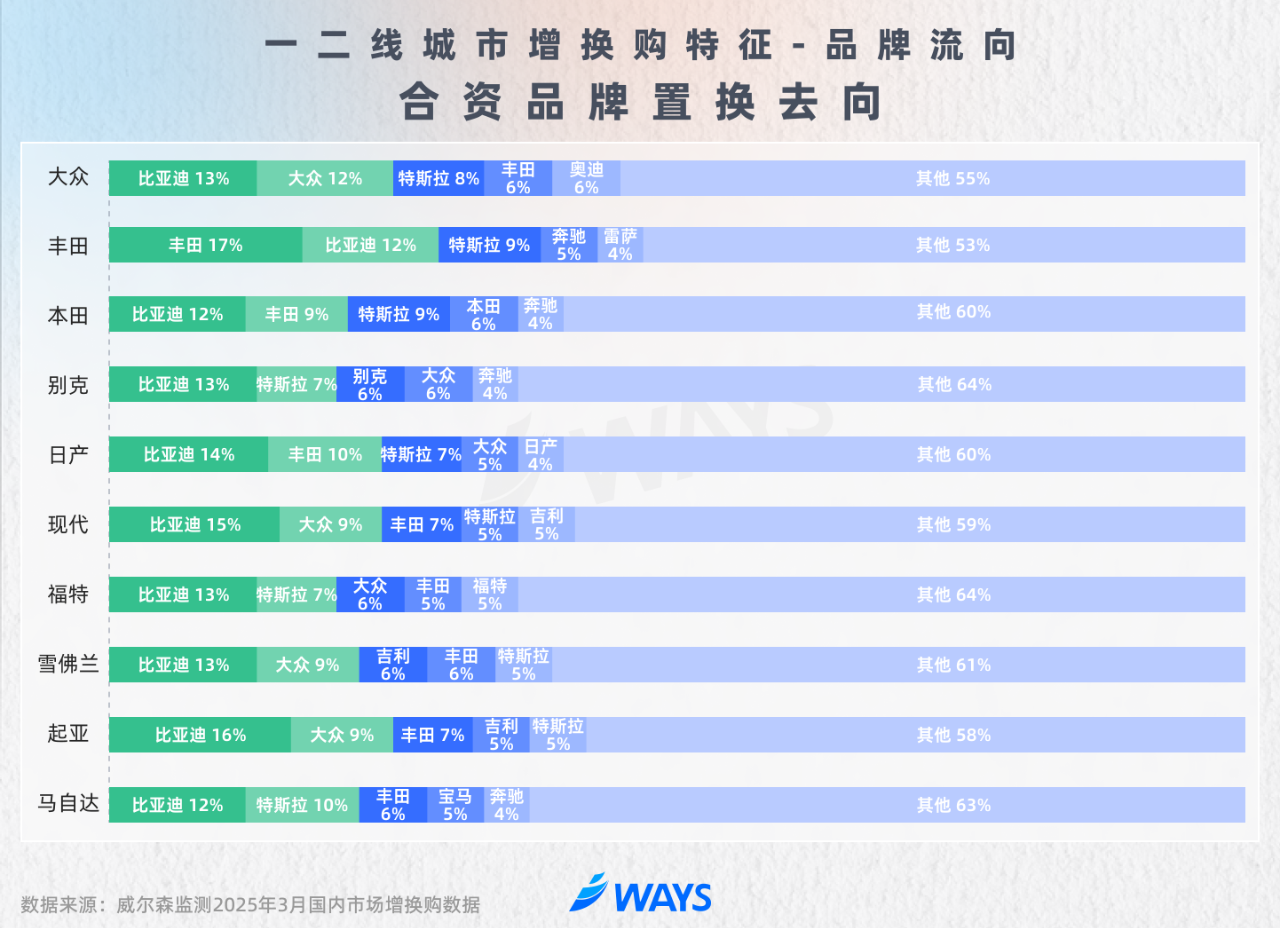
Core Insights - The report by Wilson highlights significant trends in the domestic market for vehicle replacement and purchase in first and second-tier cities, particularly focusing on the age of vehicles and demographics of consumers [1][6] Group 1: Vehicle Age and Demographics - Traditional fuel vehicles have an average age exceeding 10 years, with over 50% of replacement vehicles being older than this threshold, while nearly 70% of electric vehicles are less than 4 years old [1] - The age demographic for traditional fuel vehicle owners is primarily between 30-55 years, whereas electric vehicle owners tend to be younger, mostly aged 25-45 years [1] Group 2: Brand Preferences and Trends - BYD has emerged as the preferred brand for both joint venture and independent brands in the replacement market, while Tesla is favored among luxury brand consumers [1][6] - Major joint venture brands such as Volkswagen, Toyota, and Tesla rank as the second and third choices for consumers looking to replace their vehicles [1] - The report indicates a clear brand differentiation and model preference trend in the replacement market, with a notable presence of new energy vehicles [1][6] Group 3: Market Dynamics and Consumer Behavior - Volkswagen has a significant stock in the market, being the top source for new energy vehicle replacements, benefiting from its long-standing user base in China [6] - Mid-to-high-end new energy brands like Li Auto are attracting consumers from luxury brands such as BMW, Mercedes-Benz, and Cadillac, indicating a shift in consumer preferences towards innovative technology and new luxury experiences [6][8] - Consumers are increasingly looking beyond traditional luxury brands for new energy solutions that align with their lifestyle and values, creating new growth opportunities for mid-to-high-end new energy brands [8]
豪车市场竞争加剧 “BBA”大幅降价销量仍未改善
Cai Jing Wang· 2025-05-18 10:16
Group 1 - The core viewpoint is that the traditional luxury car brands BBA (Benz, BMW, Audi) are facing significant sales pressure due to the rise of domestic new energy vehicle brands in China [1][2][3] - The entry-level sedan prices have dropped below 200,000 yuan, prompting BBA to focus sales efforts on higher-end models like the "56E" series instead of the previously popular "34C" models [1][3] - The competitive landscape has shifted, with domestic brands like NIO, Xpeng, and Li Auto gaining market share in the high-end luxury segment, leading to a decline in sales for BBA [3][8] Group 2 - Despite price reductions, BBA's sales have not improved significantly; for instance, the BMW 3 Series has a current price of approximately 208,000 yuan after discounts, down from a guide price of 319,900 yuan [3][6] - In Q1 2025, BBA reported declines in vehicle deliveries: BMW down 1.4% to 586,100 units, Mercedes down 7% to 529,200 units, and Audi down 3.3% to 388,800 units [7][8] - The net profits for these companies have also decreased, with Mercedes experiencing a 42.8% drop to 1.731 billion euros, BMW down 26.4% to 2.173 billion euros, and Audi down 14.5% to 630 million euros [7] Group 3 - The market share of Chinese brands in the passenger car segment has increased significantly, accounting for 68.1% of total sales in Q1 2025, with a year-on-year growth of 28.8% [9] - The shift in consumer preferences towards domestic brands is evident, as many consumers are opting for models like Li Auto's L9 or AITO's M9 due to their advanced features and appealing designs [10]
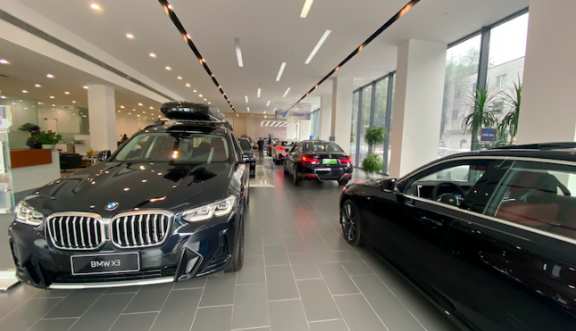
一季度二手车卖了461万辆 新能源车渗透率创新高
Nan Fang Du Shi Bao· 2025-05-17 14:15
Core Insights - The penetration rate of used new energy vehicles (NEVs) reached 8.7% in March 2025, marking the highest level in three years [2] - The total transaction volume of used cars in the first quarter of 2025 was 4.61 million units, with a slight year-on-year increase of 0.2%, while the transaction value was 303.2 billion yuan, down 3.4% [2] - The structure of used NEVs is shifting towards younger vehicles, with 29.4% of used NEVs being less than 2 years old [2] Market Trends - The transaction volume of used NEVs in certain regions has seen a double-digit growth this year, with a notable increase of 15 percentage points in the proportion of used NEVs during the May Day holiday [4] - The overall transaction volume of used cars in the market has increased by 23.6% year-on-year, driven by the rise in used NEVs [4] Pricing Dynamics - There is a significant upward trend in the prices of used NEVs, particularly in the 80,000 to 150,000 yuan range, influenced by policies promoting the replacement of old vehicles [2] - Popular used NEV models include Tesla Model Y and Model 3, with competitive pricing compared to new vehicles [5] Future Outlook - The future potential for the development of used NEVs is substantial, driven by the rapid growth of new energy vehicles and stabilizing prices [6]
千人汽车保有量仅250辆 师建华:中国汽车产业发展仍处于普及期
Zhong Guo Jing Ying Bao· 2025-05-16 18:28
Group 1: Market Overview - By the end of 2024, China's total number of civilian vehicles is expected to reach 353 million, with a per capita vehicle ownership of 250, significantly lower than Europe (567), the US (868), and Japan (624) [1] - The automotive industry in China is transitioning from a high-growth phase to a medium-low growth phase, with production and sales projected to grow by 3.7% and 4.5% year-on-year, reaching 31.28 million and 31.436 million units respectively in 2024 [1] - The market is entering a saturation phase, with a shift towards stock competition, indicating a more mature market environment [1] Group 2: New Energy Vehicles (NEVs) - The NEV market in China is expected to maintain rapid growth, with sales projected to reach 16.5 million units in 2025, reflecting a growth rate of 30% [2] - NEV penetration is anticipated to exceed 55% in 2025 and 70% by 2030, driven by structural changes in consumer demand and increased purchases in lower-tier cities [2] - Sales growth in lower-tier cities (third-tier and below) is projected at 61%, with these markets accounting for 40% of NEV sales in 2024 [2] Group 3: Consumer Trends - The Z generation, comprising approximately 250 million people with a consumption scale of about 5.97 trillion yuan, is becoming a key driver of growth in the automotive market [4] - Z generation consumers prioritize fun and usability, with a strong preference for intelligent driving features, as 89.7% are willing to pay a premium for such functionalities [4][5] - 42% of Z generation consumers prefer brands focused on NEVs, while 24% lean towards traditional automakers' NEV sub-brands, indicating a shift in brand loyalty and consumer preferences [5] Group 4: Market Dynamics - The automotive market is evolving towards larger vehicle models, with B-class NEV sales expected to grow by 90.3% in 2024, making up 40% of total NEV sales [3] - Companies are encouraged to adopt a category-based approach to redefine competition, focusing on differentiated branding and consumer needs [5] - The emergence of unique vehicle categories, such as the "luxury six-seat intelligent electric SUV," highlights the importance of addressing specific consumer pain points and preferences in the evolving market landscape [5]