
三星电子

Search documents
存储紧缺仍被低估?高盛:大幅上调供需缺口预期,涨价对需求冲击有限!
美股IPO· 2026-02-09 12:27
Core Viewpoint - The storage chip market is facing the most severe supply shortage in 15 years, with Goldman Sachs raising expectations for supply-demand tension and warning of a significant gap in DRAM by 2026 [1][3]. DRAM Market Insights - Goldman Sachs predicts that the DRAM supply shortage will reach 4.9% in 2026 and 2.5% in 2027, significantly higher than previous estimates of 3.3% and 1.1% [4]. - The primary driver of this tension is the explosive growth in server demand, with expectations for server DRAM (excluding HBM) to increase by 39% and 22% in 2026 and 2027, respectively [5]. - In contrast, demand for mobile and PC DRAM is expected to slow significantly, with growth rates of only 7% and 5% in 2026 [6]. NAND Market Insights - The NAND market is also experiencing a tightening supply-demand situation, with shortages projected at 4.2% in 2026 and 2.1% in 2027, up from earlier forecasts of 2.5% and 1.2% [8]. - Strong growth in enterprise SSD demand is a key driver, with expectations for enterprise SSD demand to rise by 58% and 23% in 2026 and 2027 [8]. HBM Market Insights - Goldman Sachs has raised the total addressable market (TAM) for HBM to $540 billion in 2026 and $750 billion in 2027, reflecting improved demand from GPUs and ASICs [11]. - ASIC demand is accelerating, with HBM demand from ASICs expected to increase by 27% and 14% in 2026 and 2027, respectively [12]. Investment Recommendations - Goldman Sachs maintains a buy rating on Samsung Electronics and SK Hynix, citing their strong positions in the traditional memory market and expected significant profit margins [15][16]. - Micron's rating has been downgraded to neutral with a target price of $235, as most positive factors have already been priced in [18]. - For equipment stocks, Tokyo Electron is highlighted for its strong market share in leading DRAM manufacturing tools, while Ulvac and Disco are recommended for their roles in capital expenditures related to DRAM and HBM [18].


创纪录!全球半导体销量激增,港股信息技术ETF放量大涨2.8%
Xin Lang Ji Jin· 2026-02-09 11:39
风险提示:港股通信息技术ETF被动跟踪中证港股通信息技术综合指数,该指数基日为2014.11.14,发 布于2017.6.23。材料中指数成份股仅作展示,个股描述不作为任何形式的投资建议,也不代表管理人旗 下任何基金的持仓信息和交易动向。本产品由华宝基金发行与管理,代销机构不承担产品的投资、兑付 和风险管理责任。投资人应当认真阅读《基金合同》、《招募说明书》、《基金产品资料概要》等基金 法律文件,了解基金的风险收益特征,选择与自身风险承受能力相适应的产品。基金过往业绩并不预示 其未来表现,基金管理人管理的其他基金的业绩并不构成基金业绩表现的保证,基金投资须谨慎!基金 银河证券2月8日研报《半导体行业周点评丨半导体板块有所回调,长期发展趋势不改》指出,长期来 看,以AI算力、国产CPU为代表的先进设计领域发展趋势不改,但是竞争或将拓展至编程工具、底层设 计方案等领域。摩尔线程推出的AI Coding Plan智能编程服务,在国产AI算力生态建设上迈出了关键一 步。 直指港股芯片超级周期!可以T+0的港股芯片产业链ETF——全市场首只聚焦"港股芯片"产业链的港股 信息技术ETF(159131),标的指数由"70% ...
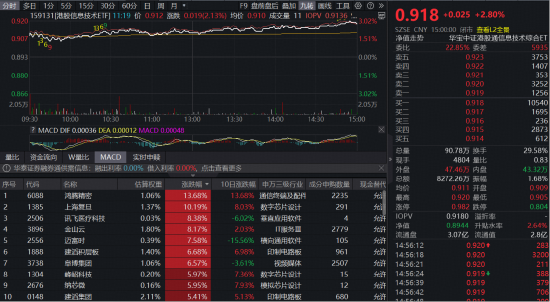
创纪录!全球半导体销量激增,港股信息技术ETF(159131)放量大涨2.8%
Xin Lang Cai Jing· 2026-02-09 11:39
2月9日,芯片半导体产业链卷土重来,港股方面,鸿腾精密、上海复旦涨逾10%,中芯国际涨超4%。 全市场首只聚焦"港股芯片"产业链的港股信息技术ETF(159131)跳空高开后震荡走强,场内价格收涨 2.80%,单日成交额超8272万元。 | | | 分时 $E 1分 5分 15分 30分 60分 日 周 月 * | | | | F9 盘角盘后 品加 光糖 面线 工具 @ 2 > | | | | | | | --- | --- | --- | --- | --- | --- | --- | --- | --- | --- | --- | --- | | 0.920 | | | | 159131 战股信息技术ETF] 11:19 价 0.912 篮数 0.019(2.13%) 均价 0.910 威交量 11 IOPV 0.9136 1... | | | | 3 0236 | | 0.918 +0.025 +2.80% | | | | | monom | | with the promote with and the | - 200 | | | 1.51% | | SZSE CNY 15:00:00 00市 在看L ...

每周投资策略-20260209
citic securities· 2026-02-09 10:57
每周投资策略 产品及投资方案部 |2026年2月9日 | | | | | | 环球主要股票市场表现 | | | | | | | | --- | --- | --- | --- | --- | --- | --- | --- | --- | --- | --- | --- | | 指数 | 收盘价* | 1周变动 | 1个月变动 | 3个月变动 | 1年变动 | 本年变动 | 52周最低 | 52周最高 | 远期红利率 | 远期市盈率 | 远期EPS增长率 | | MSCI ACWI全球指数 | 1,042.82 | (0.1%) | 0.7% | 5.1% | 19.1% | 2.8% | 722.6 | 1,055.0 | 1.8% | 18.6 | 20% | | MSCI WORLD国际资本 | 4,528.99 | 0.0% | 0.5% | 4.7% | 17.2% | 2.2% | 3,155.7 | 4,572.6 | 1.7% | 19.7 | 18% | | MSCI 新兴市场 | 1,506.38 | (1.4%) | 2.7% | 8.1% | 36.7% | 7.3% | 982.6 ...
存储“涨声”再起:一季度NAND闪存涨幅预期超40%
2 1 Shi Ji Jing Ji Bao Dao· 2026-02-09 10:55
Core Viewpoint - The price increase of NAND flash memory is driven by the rising demand from AI applications, particularly in large-scale inference processes, leading to significant upward revisions in price forecasts by market research firms [1][2][3]. Group 1: Price Forecasts and Market Trends - Samsung Electronics raised NAND flash contract prices by over 100% in January, prompting multiple market research firms to revise their price forecasts upward [1]. - TrendForce increased its first-quarter NAND flash price growth forecast from 33-38% to 55-60%, indicating potential for further upward adjustments [1]. - Counterpoint predicts NAND flash prices will rise by over 40% in the current quarter [1]. Group 2: AI Demand and Storage Architecture - The surge in NAND flash demand is primarily attributed to AI applications, particularly in retrieval-augmented generation (RAG) which enhances the accuracy of large language models [1][2]. - The transition from training to large-scale inference in generative AI has led to increased demand for NAND flash, as systems require high-speed access to vast amounts of data [2][3]. - The need for high-frequency access to context data during inference has resulted in a shift towards a storage architecture that includes HBM, DRAM, and NAND [3]. Group 3: Supply Constraints and Future Outlook - The global NAND flash production capacity is concentrated among a few major players, including Samsung, SK Hynix, and Micron, with investments in NAND lagging behind HBM and advanced DRAM [4][5]. - Morgan Stanley forecasts a 40% year-over-year increase in average NAND sales prices by 2026, with only a slight decline expected in 2027 [5]. - The introduction of High Bandwidth Flash (HBF) aims to address the limitations of traditional NAND SSDs, providing higher bandwidth and capacity suitable for AI inference applications [5][6]. Group 4: Technological Advancements - HBF combines 3D NAND flash with high-bandwidth interface technology, offering 8 to 16 times the capacity of traditional HBM, making it a competitive solution for AI applications [5][6]. - The industry is moving towards a multi-layer architecture of "DRAM cache + HBF acceleration + NAND mass storage," which is expected to alleviate supply-demand imbalances and drive growth [6].
群智咨询:2025年全球OLED手机面板整体出货8.9亿片 同比增长5.2%
智通财经网· 2026-02-09 10:51
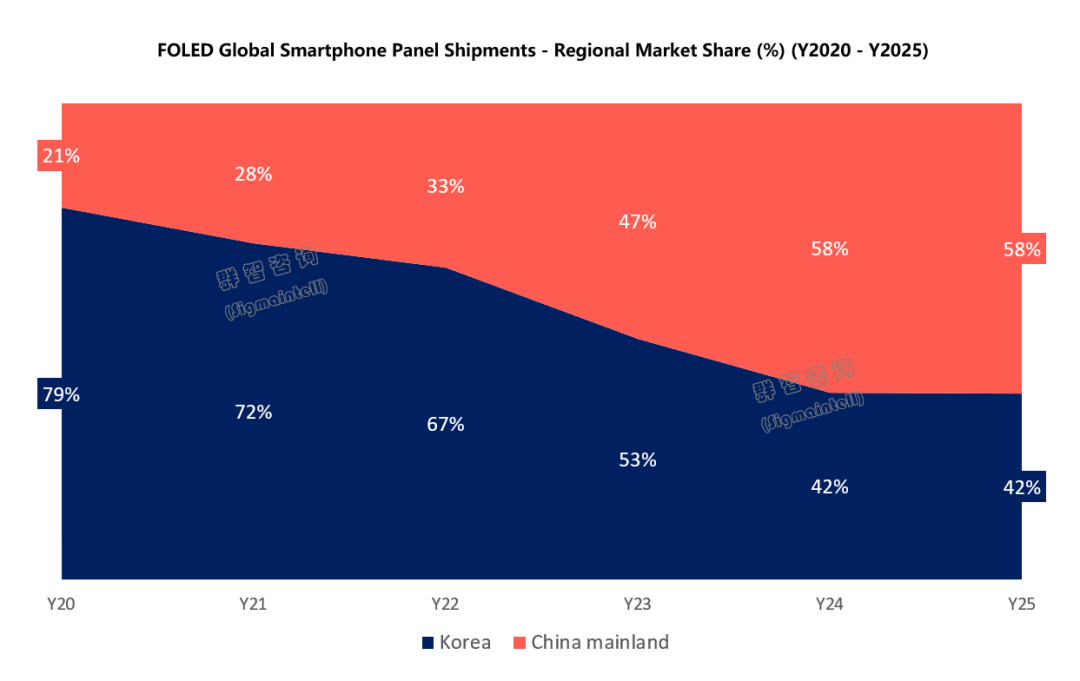
Core Insights - The global OLED smartphone panel shipment is projected to reach approximately 890 million units in 2025, marking a year-on-year growth of 5.2%, driven by product structure upgrades, capacity expansion, cost optimization, domestic policy support, and technological advancements [1] - Flexible OLED shipments are expected to be around 690 million units, with a year-on-year increase of approximately 9.6%, while rigid OLED shipments are forecasted to decline by 7.7% to about 200 million units [1] Market Dynamics - Korean manufacturers, being core suppliers to Apple and Samsung, are expected to maintain over 50% of the OLED market share in 2025, with flexible OLED market share remaining stable at approximately 42.1% [2] - Chinese manufacturers are gaining ground, with a total OLED panel shipment share of 49.3%, an increase of 1 percentage point year-on-year, and a flexible OLED market share of 57.9% in 2025 [2] Company Performance - Samsung Display (SDC) is projected to lead the global OLED panel market with shipments of about 380 million units, a slight increase of 1.5%, while rigid OLED shipments are expected to decline by 6.6% to approximately 160 million units [5] - BOE is anticipated to ship around 150 million units, achieving a market share of 21.1%, driven by penetration in the mid-range market and breakthroughs in the high-end market [5] - Tianma is expected to see the fastest growth among OLED manufacturers, with shipments of approximately 97 million units, a year-on-year increase of 19.4%, elevating its market share to 10.8% [6] Competitive Landscape - The OLED market is characterized by significant competition, with major players focusing on capacity expansion and technological advancements to enhance competitiveness [8] - The industry is facing challenges such as weakened demand in the smartphone market and increased price competition due to rising supply [8] - Long-term strategies are shifting towards collaborative innovation and system-level performance optimization, moving beyond traditional hardware supply roles [8]




HBM 4,拼什么?
半导体芯闻· 2026-02-09 10:10
关于两家公司在HBM供应方面谁领先,各方争论不休,而业界的关注点也转向了谁能率先完成准 备工作。鉴于韩国半导体公司已在HBM4竞争中占据优势,分析认为,重点应该放在长期供应稳定 性和产能上。 如果您希望可以时常见面,欢迎标星收藏哦~ 由于三星电子和 SK 海力士几乎成为英伟达下一代 AI 加速器中高带宽内存 4 (HBM4) 的唯一供应 商,业内人士和业外人士对供应"份额"和"第一"的说法仍然存在分歧。 据业内人士2月9日透露,三星电子和SK海力士正在协调其HBM4的出货计划,以配合英伟达下一 代AI加速器"Vera Rubin"的发布计划。英伟达预计将于下个月的GTC 2026技术大会上首次发布其 下一代AI加速器"Vera Rubin"。 Vera Rubin 将中央处理器 (CPU)"Vera"和图形处理器 (GPU)"Rubin"集成于单一系统中,与现有 的基于 Blackwell 的产品相比,其推理性能显著提升。由于其设计目标是运行大规模 AI 模型,因 此超高带宽内存 HBM4 几乎是必不可少的。 据报道,三星电子计划本月率先向客户交付HBM4显存。该公司强调其技术竞争力,并指出该产品 拥有业界领 ...
韩美半导体,创下历史新高
半导体芯闻· 2026-02-09 10:10
如果您希望可以时常见面,欢迎标星收藏哦~ 韩美半导体9日宣布,公司去年实现了自1980年成立以来最高的销售业绩,年销售额达5767亿韩元 (基于合并财务报表)。 营业利润率达到43.6%,保持了行业领先的盈利能力。 该公司自2024年起连续两年创下销售纪录,据信是其技术竞争力在半导体市场获得认可的结果。 特别是其用于人工智能半导体的关键组件——高带宽存储器(HBM)TC键合机, 以71.2%的市场 份额位居全球第一,推动了销售增长。 事实上,继2024年8月收购台湾友达光电(AUO)的显示屏制造厂后,美光科技(Micron)于2025年在 新加坡兀兰(Woodlands)地区启动了DRAM和NAND先进晶圆制造工厂的建设。美光科技还宣布计 划扩建其位于日本广岛的工厂,并在美国建造一座面积相当于800个足球场的巨型工厂。尤其值得 一提的是,美光科技正将新加坡打造成为人工智能半导体(HBM、HBF)的生产基地,并持续积 极推进其未来五年在人工智能半导体领域的全球领先地位。 美光积极扩张其 HBM 生产设施,预计将对韩美半导体的 TC 键合机的销量增长产生重大影响。韩 美半导体被公认为美光的最佳合作伙伴,并于去年荣 ...
存储紧缺仍被低估?高盛:大幅上调供需缺口预期
Hua Er Jie Jian Wen· 2026-02-09 09:32
Core Viewpoint - Goldman Sachs warns that the market is on the brink of the most severe memory chip supply shortage in the past 15 years, with significant supply-demand gaps expected in DRAM, NAND, and HBM categories from 2026 to 2027 [1] DRAM Market Insights - Goldman Sachs has significantly raised its DRAM supply shortage expectations, predicting a shortfall of 4.9% in 2026 and 2.5% in 2027, surpassing previous forecasts of 3.3% and 1.1% [2] - The core driver of this tight situation is the explosive growth in server demand, with expectations for server DRAM (excluding HBM) demand increased by 6% and 10% for 2026 and 2027, respectively, leading to growth rates of 39% and 22% [3] - In contrast, PC and mobile DRAM demand forecasts have been downgraded, with mobile DRAM growth expected to slow to 7% in 2026 and PC DRAM growth at only 5% [4] NAND Market Dynamics - The NAND market is also experiencing significant tightening, with supply-demand gaps projected at 4.2% and 2.1% for 2026 and 2027, respectively, marking one of the largest shortages in the history of the NAND industry [5] - Strong growth in enterprise SSD demand is a major driving force, with expectations for enterprise SSD demand increased by 14% for both 2026 and 2027, leading to growth rates of 58% and 23% [5] - Mobile and PC NAND demand is expected to weaken, with mobile NAND demand forecasted to see zero growth in 2026, marking a historical low [7] HBM Market Developments - Goldman Sachs has raised its HBM total addressable market (TAM) expectations to $54 billion and $75 billion for 2026 and 2027, respectively, reflecting improved demand from GPUs and ASICs [8] - ASIC demand is accelerating, with HBM demand for ASICs expected to increase by 27% and 14% for 2026 and 2027, respectively, while GPU demand is only expected to rise by 1% and 5% [9] - Despite an increase in HBM capacity expectations, supply-demand gaps are projected to reach 5.1% and 4.0% for 2026 and 2027, respectively, due to higher demand adjustments [9] Cost Analysis and Market Implications - A detailed BOM cost analysis indicates that memory costs are rising, with DRAM and NAND costs expected to account for approximately 23% of the total BOM for iPhones by Q3 2026, the highest level since 2010 [10] - Even under extreme negative scenarios, DRAM demand is still expected to grow by 21% in 2026, indicating persistent supply-demand tightness [11] Investment Recommendations - Goldman Sachs maintains buy ratings for Samsung Electronics and SK Hynix, citing their significant exposure to traditional memory markets and expected profitability improvements [12] - Micron's rating has been downgraded to neutral with a target price of $235, as most positive factors are believed to be priced in [13] - For equipment stocks, Tokyo Electron is highlighted for its strong market share in leading DRAM manufacturing tools, while Ulvac and Disco are recommended for their roles in capital expenditures related to DRAM and HBM [13]


受美国芯片行业利好消息推动,韩国股市涨幅超4%
Xin Lang Cai Jing· 2026-02-09 08:21
受前一交易日美国半导体股因人工智能投资担忧缓解大幅上涨的带动,韩国股市周一涨幅超4%。 韩国综合股价指数(KOSPI)连续两个交易日重挫后,当日收涨208.90点,涨幅4.10%,报5298.04点。 上周五,市场预期英伟达等芯片制造商将从人工智能数据中心的投入增加中获益,相关企业股价大幅飙 升,推动美股大幅收涨。 大信证券分析师Lee Kyoung-min表示:"英伟达首席执行官黄仁勋称人工智能基础设施投资处于合理水 平,这一表态也对市场情绪形成了支撑。" 成分股龙头企业中,芯片制造商三星电子涨幅4.92%,同行海力士涨幅5.72%;电池制造商LG新能源上 涨2.47%。 现代汽车与旗下起亚汽车股价分别上涨2.25%和1.25%;浦项制铁控股涨幅1.11%,生物制药企业三星生 物制剂上涨1.56%。 当日有交易记录的926只个股中,717只收涨,174只下跌。 外资当日净买入4416亿韩元(约合3.023亿美元)韩国股票。 在首尔本地结算平台上,韩元对美元汇率报1460.6韩元兑1美元,较前一交易日收盘价1463.0韩元兑1美 元上涨0.16%。 货币和债券市场方面,韩国3年期国债3月期货合约上涨0.02点 ...