
淘宝

Search documents
【干货】奶酪产业链全景梳理及区域热力地图
Qian Zhan Wang· 2025-07-19 03:11
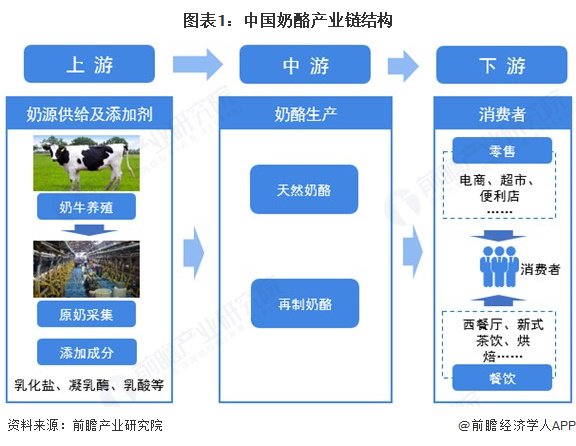
Core Insights - The cheese industry has a long supply chain that spans primary, secondary, and tertiary industries, with upstream focusing on milk supply and added ingredients, midstream on cheese production, and downstream on food service and retail channels [1][2][6] Industry Structure - The upstream segment consists of dairy farms and raw milk suppliers, with major players including YouRan Dairy, Modern Dairy, and others [2] - The midstream includes cheese manufacturers, with domestic participants like Mengniu, Yili, and Miaokelan Duo, and international brands such as Anchor and Kraft Heinz [2] - The downstream retail sector encompasses both online platforms like Taobao and JD.com, and offline supermarkets such as Walmart and Carrefour, as well as food service outlets like KFC and Starbucks [2][6] Regional Distribution - The upstream dairy supply is concentrated in regions like Inner Mongolia, Heilongjiang, and Shandong, while cheese production is primarily located in coastal areas [6] - Consumer demand is stronger in southern and coastal regions, indicating a north-south distribution pattern in the cheese industry [6] Cost Structure - The cost structure for processed cheese, such as cheese sticks, shows that raw material costs can exceed 50%, with packaging and processing costs accounting for approximately 17% and 28% respectively [9] - The cheese content in products often meets or exceeds 50%, impacting the overall cost structure [9] Price Transmission Mechanism - The cheese market price is influenced by supply-side costs, manufacturing costs, and consumer demand elasticity, creating a complex price transmission mechanism [12] - The final consumer price is affected by the cumulative costs from the supply chain, including raw material prices and brand premiums [12] Value Chain Analysis - The upstream segment has a higher profit margin, with companies competing for stable and quality milk supply [13] - Midstream cheese manufacturers like Miaokelan Duo have gross margins around 45%-50%, while downstream distributors have margins of 29%-33% [13]

法拉第未来MPV新车首秀,网友实锤抄袭;抖音否认做外卖;宇树科技开启上市辅导;白象多半袋多半桶方便面仍然在售丨邦早报
创业邦· 2025-07-19 00:59
Regulatory Actions - The State Administration for Market Regulation conducted administrative talks with major food delivery platforms, including Ele.me, Meituan, and JD, urging them to comply with relevant laws and regulations to foster a healthy competitive environment in the food service industry [3]. Automotive Industry Developments - Faraday Future launched its first pure electric MPV, the Super One, which is positioned as a high-end model with a target price below $80,000 (approximately 575,000 RMB) [3]. - Li Auto confirmed the launch event for the Li i8 on July 29, 2023, at the Capital International Conference Center, indicating a competitive spirit with Xiaomi [6][7]. - XPeng Motors' CEO, He Xiaopeng, projected a 100-fold growth in AI vehicles over the next decade, emphasizing the shift towards software and AI in the automotive sector [14]. Food and Beverage Sector - Cloudy Seafood was fined 7,000 Singapore dollars (approximately 39,000 RMB) due to a food poisoning incident at ByteDance's Singapore office, leading to the permanent closure of its corporate catering services [8]. E-commerce and Delivery Services - Taobao Flash Sale denied reports of excessive subsidy amounts, clarifying that their promotional activities are structured and do not involve zero-cost purchases [11]. - Recent reports indicated that Meituan and Taobao Flash Sale engaged in a fierce subsidy war, with Meituan offering 300 to 400 million RMB in subsidies and Taobao exceeding 1.2 billion RMB in a single day [17]. Technology and AI Startups - AI startup Anthropic is reportedly planning a new funding round that could value the company at over $100 billion [20]. - The AI chip company Sunrise announced the completion of nearly 1 billion RMB in financing, with participation from several notable investment firms [20]. Market Trends - The China Automobile Manufacturers Association reported that the top ten automotive companies sold a total of 13.159 million vehicles in the first half of 2023, accounting for 84.1% of total sales [28].




规范促销行为!市场监管总局约谈三大平台,促进行业规范健康持续发展
Xin Hua Cai Jing· 2025-07-18 15:49
Group 1 - The market regulator has summoned Ele.me, Meituan, and JD.com to ensure compliance with relevant laws and regulations, aiming for a healthier and more sustainable development in the food delivery industry [1] - Recent social controversies arose from the "0 yuan purchase" promotions by some delivery platforms, highlighting the need for high-quality and healthy industry development [2] - All three platforms have expressed a desire to reduce irrational competition, with Taobao emphasizing merchant profitability, Meituan advocating for rational competition, and JD.com stating it has never engaged in extreme subsidy behaviors like "0 yuan purchase" [3] Group 2 - JD.com reported a significant increase in daily active users from 120-130 million to 169 million after launching its food delivery service, indicating a positive impact on its overall business [3] - The irrational subsidies from delivery platforms are seen as disruptive to the market order, necessitating timely regulatory intervention to promote orderly and rational industry development [3]


中亚电商热:147亿美元市场里的中国玩家
凤凰网财经· 2025-07-18 11:32
Core Viewpoint - The article discusses the growing opportunities for Chinese businesses in Central Asia, particularly in Uzbekistan and Kazakhstan, as they seek to expand into emerging markets amid geopolitical tensions and saturation in Southeast Asia [2][4][24]. Group 1: Market Growth and Opportunities - The e-commerce market in Kazakhstan is projected to reach 60.13 billion USD in 2024, with a year-on-year growth of 33% [3]. - Uzbekistan's e-commerce market is expected to maintain a compound annual growth rate of 122% from 2021 to 2024, with future growth anticipated to exceed 40% [3][4]. - The number of Chinese nationals in Uzbekistan has increased from over 30,000 in 2018 to approximately 200,000, indicating a significant rise in business activities [2]. Group 2: Economic and Demographic Insights - Kazakhstan's GDP per capita is projected to grow from 11,486 USD in 2023 to 13,117 USD in 2024, reflecting a growth rate of 14.20% [12]. - Uzbekistan's GDP increased from 86.14 billion USD in 2017 to 103.01 billion USD in 2023, with an average annual growth rate of 5.7%-6% [24]. - Uzbekistan has the highest birth rate in Central Asia, contributing to a growing demand for consumer goods, particularly in the mother and baby product categories [29]. Group 3: E-commerce Landscape - The Central Asian e-commerce market is expected to reach 14.7 billion USD in 2024, comparable to Saudi Arabia's e-commerce market size [32]. - Local e-commerce platforms like Kaspi and Uzum dominate the market, with Uzum having over 23 million registered users [29][34]. - Chinese e-commerce platforms such as Taobao and Temu are expanding their presence in Kazakhstan, leveraging local logistics and consumer preferences [14][37]. Group 4: Consumer Behavior and Preferences - Kazakh consumers exhibit a tendency towards forward and installment purchasing, with a notable lack of savings among many [17]. - There is a growing demand for diverse and high-quality products, with local consumers increasingly valuing brand recognition and quality assurance [19][28]. - Social media platforms like Instagram and TikTok are becoming popular for marketing and e-commerce, with innovative sales strategies emerging [19]. Group 5: Challenges and Strategic Considerations - The e-commerce market in Central Asia requires brands to adapt to local consumer needs and cultural differences, emphasizing the importance of product quality and service [32][34]. - The logistics landscape is evolving, with local platforms requiring sellers to establish local companies for smoother operations [34][37]. - The economic structures and payment systems vary significantly between Kazakhstan and Uzbekistan, necessitating tailored approaches for each market [38][39].

中亚电商热:147亿美元市场里的中国玩家
Sou Hu Cai Jing· 2025-07-18 08:44
Core Insights - The increasing presence of Chinese entrepreneurs in Central Asia, particularly in Uzbekistan, has led to a significant rise in local service costs, such as translation and hospitality [1] - The Central Asian e-commerce market is experiencing rapid growth, with Kazakhstan leading the way, while Uzbekistan shows strong potential for future expansion [2][3] - The geopolitical landscape is shifting, with Chinese companies looking towards emerging markets in Central Asia as opportunities arise from tensions in other regions [1][22] Group 1: Market Dynamics - In 2024, Kazakhstan's e-commerce market is projected to exceed 60.13 billion USD, reflecting a 33% year-on-year growth [2] - Uzbekistan's e-commerce market is expected to maintain a compound annual growth rate of 122% from 2021 to 2024, with future growth anticipated to exceed 40% [2] - The total GDP of Uzbekistan increased from 86.138 billion USD in 2017 to 103.012 billion USD in 2023, with an annual growth rate of 5.7%-6% [15] Group 2: Consumer Behavior - Kazakhstani consumers are experiencing a wave of consumption upgrades, with a notable preference for online shopping and installment payments [10] - In Uzbekistan, the average nominal wage as of September 2024 is 817.2 USD, with many locals working multiple jobs to supplement their income [10] - The demand for diverse product categories is high, particularly in e-commerce, where local consumers are seeking quality and brand recognition [13][18] Group 3: E-commerce Infrastructure - Kazakhstan has a well-developed digital payment infrastructure, with platforms like Kaspi QR widely used, while Uzbekistan is still developing its banking and payment systems [27] - Local e-commerce platforms such as Kaspi and Uzum dominate the market, with specific requirements for cross-border sellers to establish local presence [24][26] - The logistics sector in Kazakhstan is rapidly evolving, with a focus on efficient delivery systems to meet the growing e-commerce demand [26] Group 4: Strategic Opportunities - The geographical proximity of Kazakhstan to China positions it as a strategic hub for trade, especially with the implementation of the Eurasian Economic Union [29] - The high birth rate in Uzbekistan creates a strong market for baby products and family-oriented goods, while the cultural context influences purchasing behavior [19][21] - The rise of social media and influencer marketing in Kazakhstan presents new avenues for e-commerce growth, particularly among younger consumers [10][22]

扩内需新招!分众联合支付宝“碰一下”抢红包激发消费新活力
Nan Fang Du Shi Bao· 2025-07-18 07:38
Group 1 - The core idea of the news is the collaboration between Focus Media and Alipay, introducing a new advertising and consumer engagement method in elevators, allowing users to receive cash red envelopes, platform coupons, or brand discount coupons by simply tapping their phones on a designated device [1][3][5] - The initiative targets 400 million urban consumers, aiming to activate consumer spending during idle time while waiting for elevators [1][5] - The process to claim benefits is simplified into three steps: unlocking the phone, tapping it near the blue ring, and receiving the rewards directly into the Alipay wallet [2][4] Group 2 - The types of benefits include cash red envelopes with no usage restrictions, platform coupons for various categories like supermarkets and dining, and brand-specific discount coupons that can be used both online and offline [4] - The project is expected to inject new vitality into the consumer economy, transforming elevator advertising from passive exposure to active participation, aligning with national policies to stimulate consumption [5] - The technology used ensures that personal information remains secure, as the interaction only triggers coupon collection without linking to sensitive data like ID numbers or bank details [5]

估值筑底,外卖大战助推,恒生互联网板块进入配置窗口期
Mei Ri Jing Ji Xin Wen· 2025-07-18 05:35
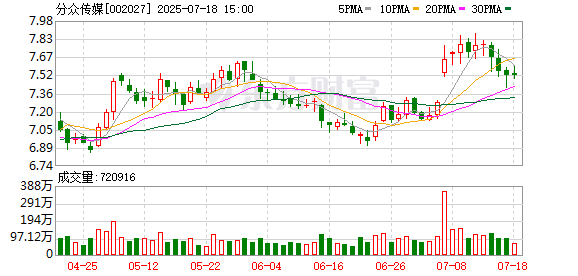
Group 1 - The Hang Seng Index rose by 0.73%, the Hang Seng Tech Index increased by 0.76%, and the Hang Seng China Enterprises Index strengthened by 0.78%, closing at 8922.57 points, with a half-day trading volume of 1360.50 million HKD [1] - Major players in the food delivery sector, including Meituan, JD.com, and Taobao, are engaged in intense competition, investing a total of 25 billion HKD in the second quarter alone [1] - Investor confidence has been affected by this "burning money war," leading to a net sell-off of Tencent, Alibaba, and Xiaomi stocks totaling 46.4 billion HKD in June [1] Group 2 - Despite the unsustainability of high subsidies, private equity firms suggest that the low stock prices of internet tech companies present good odds, with AI expected to drive industry growth [2] - The subsidy battle is viewed as a short-term disturbance, and stock prices have already factored in the "burning money" expectations [2] - The Hong Kong internet sector is entering a configuration window as AI becomes a new growth engine, alongside the return of global sovereign funds [2]
到店团购,京东外卖下一个增长点
Bei Jing Shang Bao· 2025-07-17 14:14
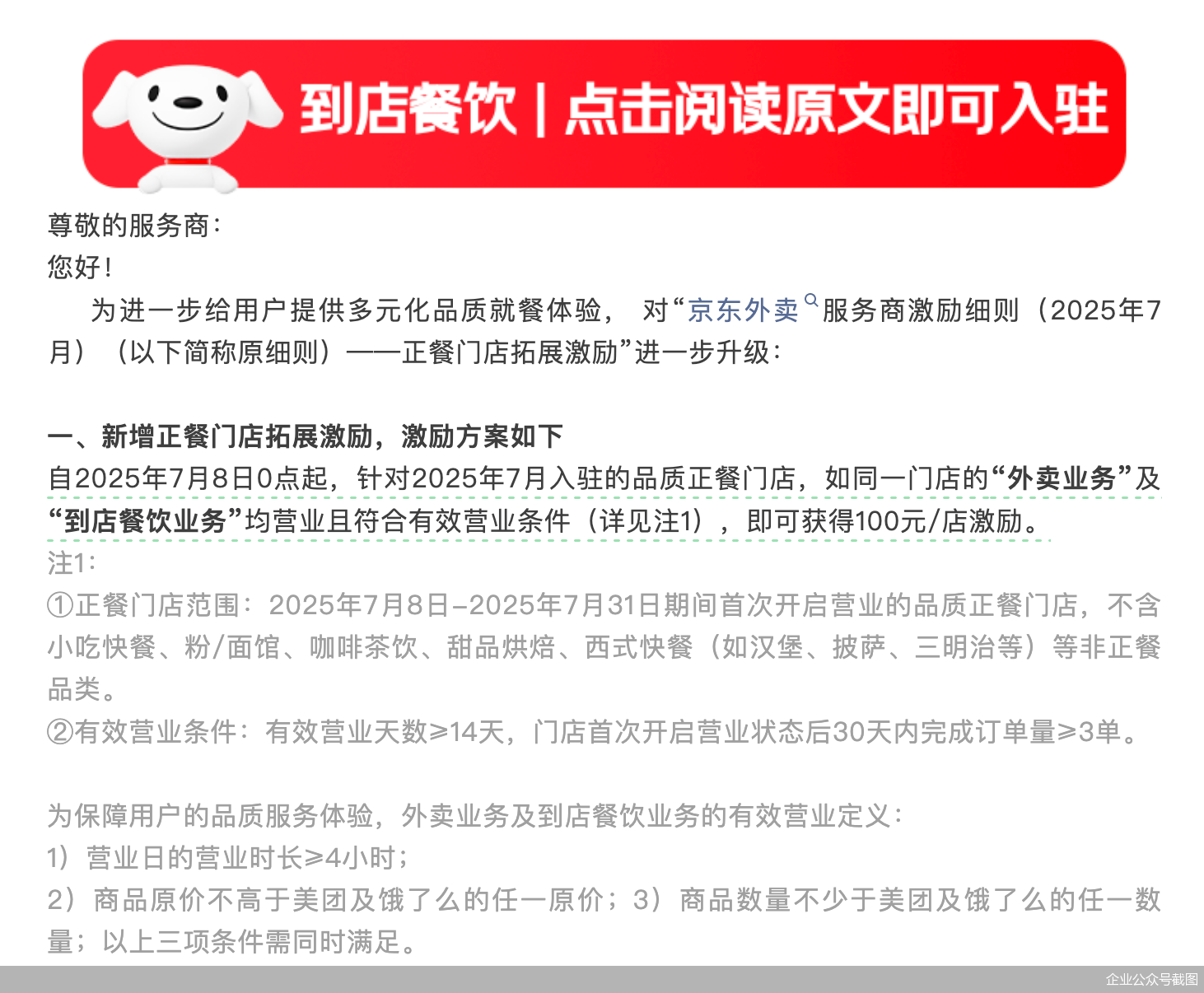
Core Viewpoint - JD.com is expanding its in-store group buying business to compete with Meituan and Douyin in the food delivery market, focusing on quality dining establishments and aiming to diversify its revenue streams [1][3][7]. Group 1: Business Strategy - JD.com is incentivizing service providers to expand in-store group buying, particularly targeting full-service restaurants like hot pot and barbecue [1][3]. - The company is offering a 100 yuan incentive per store for service providers to onboard quality dining establishments that opened before July 31, excluding fast food and dessert categories [3][5]. - JD.com requires that the original prices of in-store dining products do not exceed those on Meituan or Ele.me, and the number of products must also match or exceed those platforms [3][5]. Group 2: Market Competition - Meituan is currently the leading player in the in-store group buying market, with a significant increase in order volume and active users in 2024 [5][7]. - Douyin has also seen substantial growth in its group buying segment, with a 221.17% increase in order redemption rates year-on-year [7]. - The competition is intensifying as JD.com, Meituan, and Douyin vie for market share in the local service sector, which is projected to grow significantly by 2025 [8][9]. Group 3: Revenue Generation - In-store group buying is seen as a lucrative revenue stream for JD.com, allowing the platform to earn advertising fees while driving traffic to dining establishments [1][5]. - The commission for merchants participating in JD.com's in-store group buying is set at 5%, with additional incentives for service providers who successfully onboard new restaurants [5][6]. - The local service market is expected to reach a scale of 35.3 trillion yuan by 2025, highlighting the potential for revenue growth in this sector [8]. Group 4: Operational Focus - JD.com is shifting its subsidy strategy to focus on quality dining options rather than competing in the price war for delivery services [9][10]. - The company is investing over 10 billion yuan to support quality dining merchants and enhancing rider benefits to improve service quality [9][10]. - JD.com aims to differentiate itself by leveraging its supply chain capabilities and expanding its B2B market presence [10][11].
外卖大战里的虚假宣传:堂食不存在,门店照用AI批量生成
2 1 Shi Ji Jing Ji Bao Dao· 2025-07-17 05:20
Core Viewpoint - The article discusses the intense competition among major food delivery platforms in China, particularly focusing on the aggressive subsidy wars and the resurgence of issues related to food safety and false advertising [1][6]. Group 1: Subsidy Wars - JD.com initiated a "100 billion subsidy" campaign, followed by Taobao Flash Sale announcing an additional 50 billion yuan in subsidies [1]. - On a peak day in July, major platforms like JD.com, Meituan, and Taobao Flash Sale launched significant discount coupons, leading to a record high in daily food delivery orders across the nation [1]. Group 2: Food Safety and False Advertising - Despite the surge in orders, longstanding issues such as food safety and misleading advertising have resurfaced [1]. - Investigations revealed that some merchants labeled as "quality dine-in" actually operated as takeout-only outlets, with significant discrepancies between their online representations and actual conditions [2][5]. - Some merchants utilized AI-generated images for storefronts and food items, raising concerns about authenticity and the integrity of marketing practices [3]. Group 3: Regulatory Scrutiny - The article highlights that several food delivery platforms have faced scrutiny from local market regulatory authorities due to inadequate merchant verification processes and instances of false advertising [5][6]. - Recent investigations by regulatory bodies have uncovered that some merchants provided misleading information regarding their dining capabilities, prompting discussions about the platforms' responsibilities in ensuring compliance with food safety regulations [6]. Group 4: Market Dynamics - The competitive landscape has intensified, with platforms potentially compromising on merchant verification to capture market share, which could lead to increased food safety risks [6]. - The article notes that the implementation of the "Online Food Delivery Service Food Safety Supervision and Management Measures" in 2018 mandates platforms to conduct thorough audits of their merchants, yet the pressure to grow may lead to lapses in these responsibilities [6].
没有一个互联网平台是靠补贴打下来的(一)
Hu Xiu· 2025-07-16 06:49
Core Viewpoint - The current competition in the food delivery market is intense, with major players like Meituan and Taobao Shanguo achieving significant order volumes, indicating a resurgence in the sector [1][46]. Group 1: Market Dynamics - The food delivery market is experiencing a surge, with Meituan announcing over 120 million orders in a single day and Taobao Shanguo surpassing 80 million orders [1]. - The situation mirrors the community group buying boom of 2020, with both similarities and differences in operational models and subsidy strategies [2][3]. - The essence of the competition revolves around four key topics: the effectiveness of subsidies, the viability of food delivery business models, the areas of operational efficiency, and the significance of market penetration rates [5]. Group 2: Business Models - The food delivery sector is primarily divided into restaurant delivery and retail delivery, with the former being more established and profitable [6][21]. - Restaurant delivery has a higher gross margin (60%-80%) compared to retail delivery, which struggles with lower margins and higher inventory costs [25][26]. - The challenges faced by retail delivery include the difficulty in controlling product quality and costs, making it less profitable than restaurant delivery [30][31]. Group 3: Competition and Efficiency - The current food delivery competition is fundamentally a battle in restaurant delivery, while retail delivery remains an unresolved question in terms of business model viability [46][71]. - The success of food delivery platforms is not solely dependent on subsidies; rather, it hinges on operational efficiency and the ability to innovate beyond existing frameworks [50][72]. - The market dynamics suggest that achieving a market share of over 30% for competitors is essential for a balanced competitive landscape, with Meituan's share needing to drop below 60% for effective competition [64][69]. Group 4: Future Outlook - The ongoing subsidy wars in the food delivery sector are primarily focused on restaurant delivery, with the potential for retail delivery to disrupt the market remaining uncertain [78][79]. - Companies like Taobao Shanguo and JD's food delivery service must identify structural issues and provide innovative solutions to succeed in the competitive landscape [80][81]. - The future of the food delivery market will depend on whether new entrants can uncover and address these structural challenges effectively [88][99].
