赛力斯

Search documents
鸿蒙智行回应“重庆一台尊界S800起火”
Zheng Quan Shi Bao· 2026-01-19 11:17
Core Insights - The incident involving the Hongmeng Zhixing vehicle was caused by a lighter being compressed under the rear seat, not due to vehicle malfunction [1] - The company is collaborating with customers to address the aftermath of the incident [1] Company Overview - Huawei has established a brand matrix in the smart automotive sector under the "Jie" series, which includes five brands: Wenjie, Zhijie, Xiangjie, Zunjie, and Shangjie, developed in partnership with various automakers [1] - The brands cover a wide range of market segments, with vehicles priced from hundreds of thousands to over a million yuan, including SUVs, sedans, station wagons, and MPVs [1] Industry Position - The Hongmeng Zhixing has completed the foundational layout and initial exploration phase of its automotive business [1] - Major state-owned automakers and companies like BYD are adopting Huawei's Qiankun smart automotive solutions, indicating a growing acceptance of the Hongmeng ecosystem [1] - Industry analysts believe that Hongmeng Zhixing is poised for a phase of scale expansion in the future [1]
鸿蒙智行回应“重庆一台尊界S800起火”
证券时报· 2026-01-19 10:50
Core Viewpoint - The incident involving the Hongmeng Zhixing vehicle was determined to be caused by a lighter being compressed under the rear seat, not due to vehicle malfunction, indicating a focus on safety and customer support in the automotive sector [1]. Group 1: Incident Details - On January 14, a Hongmeng Zhixing vehicle experienced smoke and flames from the rear armrest, which was quickly extinguished by on-site personnel [1]. - The local fire department confirmed that the cause was a lighter under the rear seat, emphasizing that it was not a vehicle-related issue [1]. Group 2: Company Overview - Huawei has established a brand matrix in the smart automotive sector, including five brands under the "Jie" series, collaborating with various automakers such as Seres, Chery, BAIC, Jianghuai, and SAIC [1]. - The brands cover a wide range of market segments, with models priced from tens of thousands to over a million yuan, including SUVs, sedans, station wagons, and MPVs [1]. Group 3: Future Prospects - The automotive business structure of Hongmeng Zhixing has completed its foundational layout and initial exploration phase, with expectations for future scale expansion [1]. - Major state-owned automakers and BYD are increasingly adopting Huawei's intelligent automotive solutions, indicating a growing ecosystem around the Hongmeng platform [1].


亚洲金融论坛下周一开幕 聚焦金融与实体经济融合
Zheng Quan Shi Bao Wang· 2026-01-19 10:48
Group 1 - The 19th Asian Financial Forum will be held on January 26-27 in Hong Kong, featuring executives from companies such as Geely Holdings, LONGi Green Energy, and Tencent [1][2] - The forum aims to strengthen Hong Kong's role as a global financial center and facilitate connections between international and mainland markets [1][4] - A discussion on "gold trading" will take place on the first day, featuring speakers from MKS PAMP and the World Gold Council to explore Hong Kong's position in Asian gold pricing and trading [1][4] Group 2 - The first Global Industry Summit will occur on January 27, focusing on high-growth sectors like AI, robotics, and biomedicine, discussing how financial services can drive innovation and long-term growth [2][3] - Key leaders from various industries will share insights on leveraging Hong Kong as a platform for expanding overseas business and strategies for foreign companies entering the mainland market [2][3] - The summit will include discussions on the latest trends in biomedicine and healthcare, featuring executives from Amgen and Merck, addressing industry challenges and opportunities for innovation [3][4] Group 3 - The forum will have over 140 financial officials, business leaders, and experts as speakers, with participation expected from over 3,600 attendees across 60 countries and regions [4] - Topics covered will include global economic outlook, investment strategies, asset and wealth management, trade financing, and financial technology [4]

「汽车第一城」易主
36氪· 2026-01-19 10:21
Group 1 - Chongqing has regained its title as "China's Automobile Capital" after nine years, with a projected total vehicle production of 2.788 million units in 2025, representing a growth of 9.7% [2][3] - The production of new energy vehicles (NEVs) in Chongqing is expected to reach 1.296 million units, marking a significant increase of 36%, with the industrial cluster scale surpassing 800 billion yuan [2] - Historical data indicates that Chongqing held the title of "China's Automobile Capital" for three consecutive years from 2014 to 2016, but faced competition from Shenzhen, which produced 2.9353 million vehicles in 2024 [4] Group 2 - The automotive industry in Chongqing is supported by traditional brands like Changan and emerging players like Seres, which is aiming to achieve a second million-unit production target within two years [4][6] - In January 2026, the "Wenjie" model reached a milestone of 1 million units produced at the Chongqing Liangjiang New Area super factory, highlighting the growth of local manufacturing capabilities [5] - Excluding direct-controlled municipalities, Hefei is emerging as a strong competitor for the title of "Automobile Capital," with Anhui province surpassing Guangdong in total vehicle production [8]


谁是“中国汽车第一城”?
Jing Ji Guan Cha Bao· 2026-01-19 10:19
Group 1: Automotive Industry Landscape in China - The competition for the title of "China's Automotive Capital" has evolved from mere production volume to a comprehensive contest of development models and industrial ecosystems by 2025 [1][2] - Chongqing has secured the title of "China's Automotive Capital" for 2025 with an annual production of approximately 2.788 million vehicles, marking a 9.7% increase, and a significant growth in new energy vehicle (NEV) production [2][3] - The Chengdu region, while not leading in production, has achieved rapid growth through collaborations with major companies like FAW and Volkswagen, indicating a strategic shift towards leveraging existing industrial bases [2][4] Group 2: Regional Developments in the Automotive Sector - The Yangtze River Delta, particularly Hefei, has emerged as a strong player in the NEV sector, achieving the highest NEV production in the country by November 2025, with a total of 1.246 million units produced [7][8] - Hefei's growth is attributed to its "investment-driven" model, which has attracted significant projects from major automotive players, enhancing its position in the NEV market [8][9] - The Greater Bay Area, particularly Guangzhou and Shenzhen, has seen a shift in automotive production dynamics, with Shenzhen overtaking Guangzhou in 2024, while Guangzhou faces challenges in transitioning from traditional fuel vehicles to electric and smart vehicles [11][12] Group 3: Strategic Collaborations and Innovations - The collaboration between local companies like Seres and tech giants such as Huawei has been pivotal for Chongqing's automotive growth, leading to significant sales and product price increases [3][4] - Chengdu's strategy of forming partnerships with established brands like Volkswagen to create new local brands, such as the New Jetta, reflects a pragmatic approach to industrial development [4][5] - The Long Triangle region has initiated a collaborative framework to enhance the global competitiveness of its NEV sector, indicating a shift towards cooperative strategies among cities [10] Group 4: Challenges and Future Outlook - The automotive industry in China faces challenges such as the sustainability of Seres' high-end market position and the successful transition of the New Jetta brand to electric vehicles [6] - The competitive landscape is evolving, with cities needing to adapt to the changing dynamics of the automotive market, including the need for innovation and collaboration to maintain relevance [9][14] - Guangzhou's automotive sector is under pressure to balance the transition from traditional vehicles to new energy models while addressing the mismatch in its supply chain [12][14]

谁是“中国汽车第一城”?
经济观察报· 2026-01-19 09:37
Core Viewpoint - The article discusses the evolving landscape of China's automotive industry, highlighting the competition among cities and the strategic differentiation of local governments in industrial transformation [2][4]. Group 1: Chengdu-Chongqing Region - Chongqing is set to become "China's Automotive Capital" with an annual production of 2.788 million vehicles in 2025, marking a 9.7% increase, and 1.296 million of these being new energy vehicles (NEVs), which is a 36% growth [4][5]. - The success of Chongqing's automotive industry is attributed to local government support and strategic partnerships, particularly the collaboration between local company Seres and tech giant Huawei [5][6]. - Chengdu's automotive production reached 821,000 vehicles in 2025, a 26.6% increase, with NEV production soaring by 198.3% to 205,000 units [7]. Group 2: Yangtze River Delta - The Yangtze River Delta remains a stronghold for the automotive industry, contributing 28% of national production, with NEVs accounting for 34.6% of the total [11]. - Shanghai's automotive production has declined, with 1.6011 million vehicles produced in 2025, representing about 5% of national output [11]. - Hefei has emerged as a key player in NEVs, producing 1.246 million units in 2025, the highest in the country, driven by government initiatives and partnerships with major manufacturers [12][14]. Group 3: Pearl River Delta - Shenzhen has overtaken Guangzhou as "China's Automotive Capital" in 2024, with BYD producing 4.5374 million NEVs, making it the global leader in this segment [16][17]. - The shift in production statistics from "enterprise location" to "production location" has impacted Guangdong's ranking in automotive output [16]. - Guangzhou's automotive industry faces challenges in transitioning from traditional fuel vehicles to NEVs, with a significant focus on integrating advanced technologies and smart transportation systems [18][19].
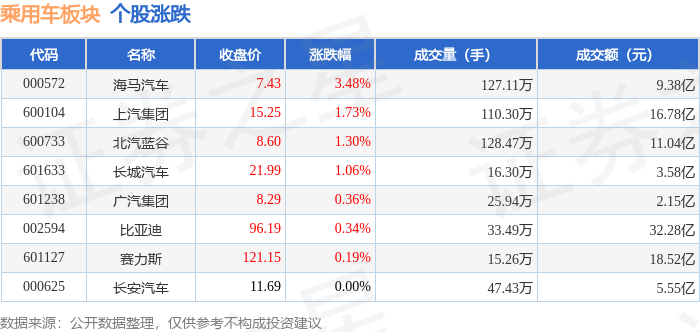
乘用车板块1月19日涨0.68%,海马汽车领涨,主力资金净流入6355.93万元
Zheng Xing Xing Ye Ri Bao· 2026-01-19 08:52
Group 1 - The passenger car sector increased by 0.68% on January 19, with Haima Automobile leading the gains [1] - The Shanghai Composite Index closed at 4114.0, up 0.29%, while the Shenzhen Component Index closed at 14294.05, up 0.09% [1] - Key stocks in the passenger car sector showed varied performance, with notable increases in stocks like Haima Automobile (3.48%) and SAIC Motor (1.73%) [1] Group 2 - The net inflow of main funds in the passenger car sector was 63.56 million yuan, while retail investors experienced a net outflow of 45.99 million yuan [1] - Haima Automobile had a significant main fund net inflow of 73.46 million yuan, while retail investors saw a net outflow of 86.47 million yuan [2] - BYD experienced a net outflow of 88.17 million yuan from main funds, indicating a negative trend in investor sentiment [2]





海南自由贸易港赋能企业全球供应链建设大会在海口举办
Zhong Guo Jing Ji Wang· 2026-01-19 08:29
Group 1 - The conference titled "New Pattern, New Hub - Hainan Free Trade Port Empowering Global Supply Chain Construction" was held in Haikou, focusing on the new global supply chain landscape post the operational closure of Hainan Free Trade Port [1] - The event aimed to interpret the policies and institutional openness of the free trade port and its role in restructuring global industrial and supply chains, fostering consensus among enterprises to expand their global market presence [1] - Key industry representatives shared their experiences on leveraging the advantages of the free trade port to advance globalization and build specialized supply chain systems [1][2] Group 2 - A new platform named "Hainan Free Trade Port High-Quality Service Platform for Enterprises Going Global" was established to integrate resources from government, enterprises, and professional service institutions, providing comprehensive services for domestic and international companies [2] - China Galaxy Securities has positioned itself as one of the most widely deployed Chinese investment banks in the ASEAN region, aligning its advantages with Hainan's strategic role as a hub for ASEAN [2] - The international subsidiary "Galaxy Overseas" of China Galaxy Securities has signed a strategic cooperation agreement with the Hainan International Economic Development Bureau to offer a comprehensive suite of financial services, leveraging tax incentives and financial facilitation measures [2] Group 3 - China Galaxy Securities aims to continue its commitment to the development of Hainan Free Trade Port, leveraging its integrated cross-border service ecosystem to attract industrial resources and provide comprehensive financial services [3] - An afternoon session focused on the opportunities and outlook for the development of new energy vehicles in Hainan, discussing the service needs for industry globalization [3] - Following the conference, representatives conducted field research in key Hainan parks to explore specific paths and cooperation opportunities for enterprises to connect with global supply chains [3]

智能工厂发展报告
中国信通院· 2026-01-19 08:26
Investment Rating - The report does not explicitly provide an investment rating for the industry Core Insights - The report highlights the significant progress in the development of smart factories in China, with over 15 leading smart factories, more than 500 excellent smart factories, and over 35,000 basic smart factories established, indicating a robust growth trend in the sector [9][10] - The evolution of smart factories is characterized by five core directions: expansion of factory construction, innovation in R&D design paradigms, upgrading of production capabilities, optimization of production management, and advancement in operational management [10][41] - The report emphasizes the need for the manufacturing industry to transition from quantity-driven growth to quality-driven improvements, addressing the challenges posed by global economic slowdowns and changing market demands [17][18] Summary by Sections Overall Trends - The report identifies four main drivers for the transformation of smart factories: industrial upgrades, changing market demands, technological advancements, and international cooperation [17][19] - It outlines a future vision for smart factories that includes the integration of AI across all manufacturing processes, leading to autonomous decision-making and enhanced collaboration within the manufacturing ecosystem [20][41] Industry Practices - The report describes a four-tiered system for cultivating smart factories, which includes basic, advanced, excellent, and leading levels, aimed at promoting digital transformation in manufacturing [41][42] - It notes that over 90% of manufacturing sectors are now covered by smart factory initiatives, with a focus on enhancing traditional industries and empowering consumer-driven sectors [50][49] Regional Development - The report discusses the regional disparities in smart factory development, with eastern regions leading and central regions making breakthroughs, highlighting the importance of localized strategies [12][49] Technology and Industry - The report emphasizes the need for a deep integration of technology and manufacturing systems, advocating for a shift towards a more resilient and intelligent industrial foundation [12][53] Future Outlook - The report envisions a next-generation smart manufacturing landscape characterized by autonomous manufacturing, ecological collaboration, and a focus on sustainability [12][41]
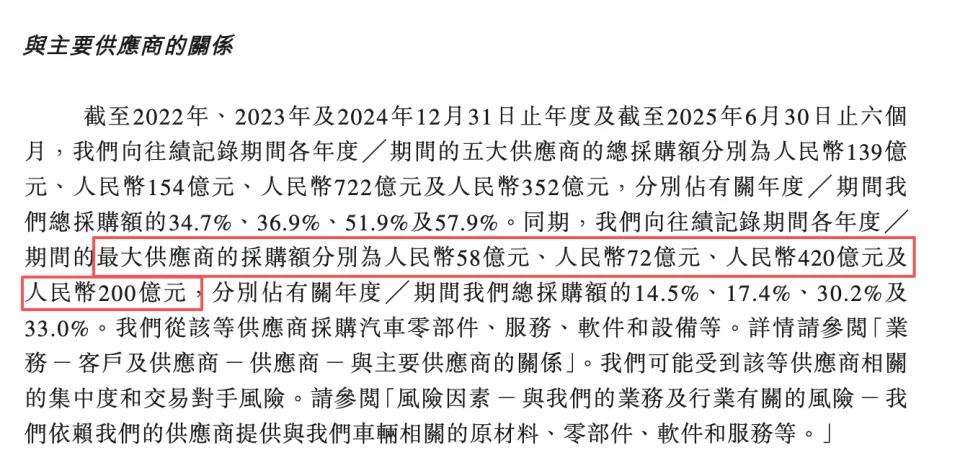
对华为猛交750亿学费,为什么赛力斯不后悔?
3 6 Ke· 2026-01-19 08:22
Core Viewpoint - The partnership between Seres and Huawei has transformed Seres from a struggling manufacturer to a leading luxury electric vehicle brand in China, with significant financial implications for both companies [1][5][12]. Group 1: Financial Transactions - Seres has disclosed that it will pay Huawei a total of 750 billion yuan in procurement fees over the years 2022, 2023, and 2024, with the total expected to exceed 1 trillion yuan by mid-2025 [1]. - On average, Huawei receives approximately 140,000 yuan for each vehicle sold by Seres, reflecting the comprehensive nature of Huawei's supply chain offerings [3]. - In 2024, Seres is projected to achieve a net profit of 5.946 billion yuan, with estimates for 2025 suggesting profits could reach between 8.3 billion and 10 billion yuan [8]. Group 2: Supplier Relationships - Huawei is identified as the primary supplier for Seres, providing critical components such as electric drive systems, smart cockpit systems, and advanced driver assistance systems, among others [3][4]. - The procurement from Huawei constitutes a significant portion of Seres' total procurement expenses, highlighting the dependency on Huawei's technology and services [4]. Group 3: Brand Development and Market Position - The AITO brand, under which Seres operates, has become the best-selling luxury brand in China, surpassing traditional competitors like BMW, Audi, and Mercedes-Benz [4][6]. - Seres' success is attributed not only to Huawei's technology but also to the management systems and manufacturing expertise that Huawei has imparted to Seres [5][6]. Group 4: Strategic Investments - Seres has invested an additional 11.5 billion yuan to acquire a 10% stake in Yingwang Technology, further solidifying its partnership with Huawei and gaining access to additional revenue streams [10]. - This strategic investment positions Seres alongside other major automotive players, enhancing its competitive standing in the industry [12].