
三星

Search documents
国产新型无人机彩虹YH-1000S成功;消息称三星Galaxy S27 Ultra手机搭载Polar ID面部识别技术丨智能制造日报
创业邦· 2026-02-04 06:48
Group 1 - The domestically developed hybrid drone Rainbow YH-1000S successfully completed its maiden flight, showcasing advancements in logistics, emergency rescue, weather modification, and marine monitoring capabilities [2] - Apple plans to use TSMC's 2nm N2 process for its M6 chip, focusing on architecture upgrades and cost control rather than adopting the N2P process [2] - Samsung's upcoming Galaxy S27 Ultra will feature Polar ID facial recognition technology, utilizing polarized light for identification without requiring large cutouts on the screen [2] - Avita Technology announced the naming of its new model Avita 06T, which will be the first to feature Huawei's next-generation lidar for enhanced environmental perception [2]



苹果的“折叠屏矩阵”计划:一场「柔性」形态革命
3 6 Ke· 2026-02-04 03:49
Core Insights - Apple is reportedly preparing to launch its first foldable iPhone, the iPhone Fold, in the second half of 2026, followed by the iPhone Flip in 2027, as part of a broader "foldable matrix" strategy that will encompass its entire product line, including iPads and MacBooks [3][4][5][9]. Group 1: Product Launch Timeline - The first phase involves the iPhone Fold, a book-style device with an internal screen size of approximately 7.9 to 8 inches, aimed at blurring the lines between iPhone and iPad [6][8]. - The second phase will introduce the iPhone Flip in 2027, targeting fashion and portability, aligning with Apple's existing product segmentation [9][11]. Group 2: Technological Innovations - Apple is developing advanced flexible screen technologies, including a self-healing screen that can repair minor scratches and dents through a unique polymer material [15][16][17]. - Another innovation includes a flexible display with integrated heating elements to prevent screen brittleness in cold temperatures, ensuring durability in extreme conditions [21][25]. Group 3: Market Strategy - Apple's foldable strategy is designed to stimulate demand in a market where traditional smartphones are experiencing diminishing returns, particularly among users reluctant to upgrade from older models [37][38]. - The company aims to leverage its control over iOS, iPadOS, and macOS to ensure a seamless software ecosystem that adapts to the new foldable devices, enhancing user experience [38][39]. Group 4: Future Product Integration - The foldable MacBook, expected to be a 20.3-inch device, will merge the functionalities of iPads and MacBooks, potentially transforming the user interaction paradigm [13][30][34]. - This integration reflects Apple's strategy to create a cohesive ecosystem where devices share the same chip architecture and cloud data, ultimately enhancing user engagement within the Apple ecosystem [40][41].
海信视像(600060):投资价值分析报告:专注显示产业,突破高端市场,领跑全球同行
EBSCN· 2026-02-04 03:15
Investment Rating - The report assigns a "Buy" rating to Hisense Visual Technology with a target price of 29.87 CNY, based on its strong market position and growth potential [5][7][15]. Core Insights - Hisense Visual Technology is a leading global provider of display solutions, focusing on high-end markets and technological innovation. The company aims to enhance its global market share through a multi-scenario display strategy, covering home, commercial, and automotive applications [1][3][24]. - The company has achieved significant growth in both domestic and international markets, with a projected revenue of 58.5 billion CNY and a net profit of 2.2 billion CNY for 2024. Its global TV shipment market share is expected to reach 14.9% by mid-2025 [1][3][5]. Summary by Sections Company Overview - Hisense Visual Technology is a top-tier display technology provider, focusing on innovation in LCD, laser display, and LED technologies. The company has a comprehensive product range, including TVs and commercial displays, and is expanding into next-generation technologies like 8K and Mini/Micro LED [24][25]. Competitive Position in China - In the first half of 2025, Hisense's online and offline retail market shares in China reached 24.1% and 29.6%, respectively, showing significant growth since 2019. The launch of the Vidda brand has targeted younger consumers, contributing to a 11% market share in online retail by 2024 [2][3][5]. Global Expansion Strategy - Hisense's international revenue has grown from 5.8 billion CNY in 2013 to 28 billion CNY in 2024, accounting for 48% of total revenue. The company aims to become the world's leading TV brand, with a market share of 14.9% in global shipments by mid-2025 [3][5][24]. Business Model and Governance - The company underwent a mixed-ownership reform in 2020, introducing strategic investors to enhance operational efficiency. The implementation of employee stock ownership plans aims to align employee interests with company performance [4][6][24]. Financial Performance and Projections - Hisense's revenue is projected to grow from 53.6 billion CNY in 2023 to 74.3 billion CNY by 2027, with a compound annual growth rate (CAGR) of 8.43%. The net profit is expected to increase from 2.1 billion CNY in 2023 to 3 billion CNY in 2027 [6][15][5]. Valuation and Investment Thesis - The report concludes that Hisense's strong brand influence and continuous technological advancements justify a target price of 29.87 CNY, supported by both relative and absolute valuation methods [5][15].

电子行业周报:I应用爆点频出,算力链重回主线
Guoxin Securities· 2026-02-04 02:50
证券研究报告 | 2026年02月02日 2026年02月03日 2026年02月04日 电子行业周报 优于大市 AI 应用爆点频出,算力链重回主线 AI 应用爆点频出,海外算力链重回主线。过去一周上证下跌 0.44%,电子下 跌 2.51%,子行业中半导体下跌 0.90%,电子化学品下跌 5.87%。同期恒生科 技、费城半导体、台湾资讯科技下跌 1.38%、上涨 0.51%、上涨 0.55%。过去 一周,由 Clawdbot 所引致的对于"AI 智能体正加速场景落地"的预期成为 市场热点,同时,国内互联网大厂陆续启动"红包大战"争抢大模型流量入 口。在此背景下,算力资源不单单成为军备竞赛的着力点,更是在各类 AI 应用试水过程中逐步成为"卖方型市场",成为 AI 应用的核心预算约束, 算力链有望在强业绩支撑下重回科技投资主线,继续推荐:澜起科技、胜宏 科技、工业富联、蓝特光学、德明利、华勤技术、翱捷科技、芯原股份、寒 武纪、中芯国际、晶丰明源等。 海外原厂业绩保持强劲,建议关注存储产业链相关公司。存储周期持续上行, 原厂业绩保持强劲:AI 驱动企业级 SSD 量价齐升,闪迪 2QFY26 营收环比增 长 3 ...

国内外AI年报分析展望



2026-02-04 02:27
Summary of the Conference Call on AI Annual Report Analysis Industry Overview - The conference focused on the analysis and outlook of AI annual reports, particularly in the TMT (Technology, Media, and Telecommunications) sector, with a specific emphasis on domestic and international AI companies [1][2][4]. Key Points and Arguments General Market Sentiment - The period from October 31 to March is characterized as a performance vacuum, where the focus is on thematic investments rather than immediate earnings results [2][3]. - The spring market is expected to see a resurgence, with significant activity anticipated around March [3][4]. North American Companies - North American companies, particularly those involved in AI and cloud computing, have reported earnings that exceeded expectations, indicating strong capital expenditure in AI [4][6]. - Companies like Microsoft and Meta have shown robust spending on AI infrastructure, reflecting a positive outlook for the sector [4][6]. - Despite some domestic companies underperforming, their stock prices have rebounded, suggesting that market sentiment is more focused on thematic trends rather than immediate earnings [5][6]. Domestic AI Companies - Domestic AI companies are experiencing a supply-demand imbalance, with strong demand for AI-related products and services, despite some companies reporting earnings below expectations [6][7]. - The industry is characterized by a shortage of materials and components, which is driving prices up and creating a favorable environment for growth [6][7][10]. Future Growth Projections - There is a consensus that the growth trajectory for AI companies will continue to be strong, with expectations for significant growth in 2026 and beyond [8][9]. - Many companies are currently undervalued, trading at price-to-earnings (P/E) ratios between 15x to 20x, which presents a potential investment opportunity [8][9]. Specific Company Insights - Companies like Wan, Tianfu Communication, and others are highlighted for their potential despite recent earnings misses, as the overall industry outlook remains positive [4][6][7]. - The demand for GPUs and AI chips is expected to remain high, with domestic companies like Cambrian facing challenges but still showing potential for recovery [9][10]. Application and Innovation - The conference emphasized the importance of AI applications, particularly in gaming and media, with companies like Tencent and ByteDance leading the charge [14][15]. - The emergence of AI-driven applications is seen as a significant growth area, with expectations for increased investment and innovation in this space [14][15]. Regulatory and Market Concerns - There are concerns regarding potential regulatory impacts on the gaming industry, but these are largely viewed as unfounded and not likely to affect the overall market significantly [15][16]. - The market is currently experiencing volatility, but analysts suggest that this presents buying opportunities for fundamentally strong companies [21][22]. Additional Important Insights - The conference highlighted the importance of monitoring capital expenditure trends among major tech companies, as this will influence the demand for AI infrastructure and services [36][37]. - The potential for new technologies, such as diamond-based cooling materials for semiconductors, was discussed as a future growth area [24][25]. - Analysts recommend focusing on companies with strong fundamentals and growth potential, particularly in the AI and semiconductor sectors, as the market continues to evolve [22][23][39].
半导体设备厂商,卖爆了
3 6 Ke· 2026-02-04 02:11
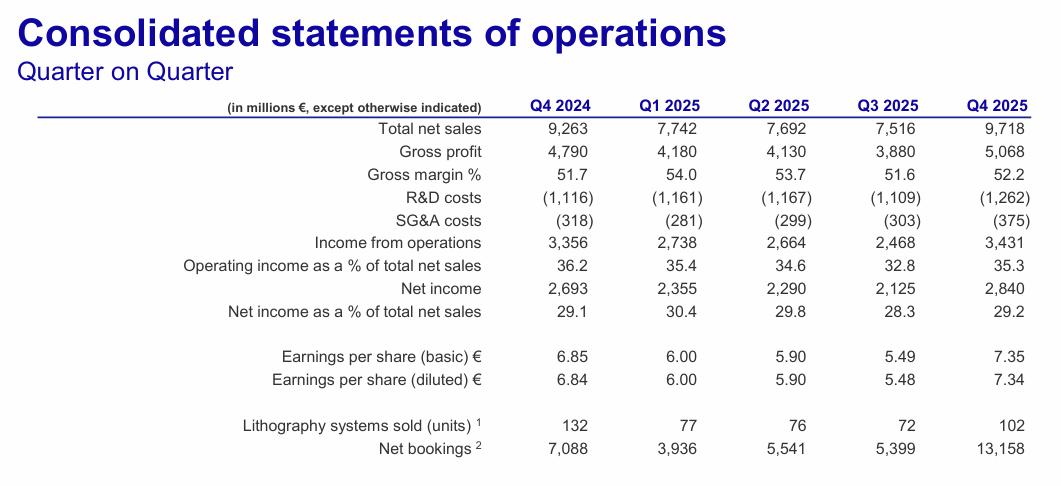
Core Insights - The Japanese semiconductor manufacturing equipment market is projected to grow by 14% to 5.59 trillion yen in 2025, marking the first time sales exceed 5 trillion yen and reflecting a robust growth trend in the global semiconductor equipment industry [1] - The growth is driven by two main factors: the explosion of AI chip demand and the recovery of the storage supercycle [2] Group 1: Semiconductor Equipment Market Growth - Japan's semiconductor equipment market is the second largest globally, with a market share of approximately 30% [1] - The sales forecast for 2025 significantly surpasses the 2024 figure of 4.44 trillion yen, indicating strong momentum in the sector [1] - Major semiconductor equipment manufacturers like ASML, Lam Research, KLA, and DISCO have reported strong financial results, highlighting the industry's growth potential [1] Group 2: AI and Storage Demand - The demand for semiconductor equipment is primarily driven by advancements in AI chips and a resurgence in storage technology [2] - The performance enhancement of chips relies on two main technological paths: advancing process technology (e.g., 3nm, 2nm) and adopting complex packaging techniques [3] - The competition among industry giants like TSMC, Intel, and Samsung for advanced nodes is translating into a rigid demand for high-end semiconductor equipment [3] Group 3: Financial Performance of Key Players - ASML reported a net sales increase of 4.92% year-on-year for Q4 2025, with logic orders reaching 5.8 billion euros, reflecting seasonal demand fluctuations [4] - Lam Research achieved record revenue of $20.6 billion in 2025, a 27% increase year-on-year, driven by strong market demand [6] - KLA's revenue for Q2 FY2026 reached $3.3 billion, exceeding market expectations, supported by robust demand for inspection equipment [13] Group 4: Equipment Demand Dynamics - The demand for advanced semiconductor equipment is expected to continue growing, driven by AI technology and the ongoing evolution of storage technologies [18][19] - The structure of orders is shifting, with storage orders now accounting for 56% of ASML's new orders, surpassing logic orders for the first time [19] - The transition to advanced DRAM architectures and NAND stacking technologies is expected to further increase the demand for high-end equipment [21][22] Group 5: Capital Expenditure Trends - Major semiconductor manufacturers are significantly increasing their capital expenditures, with TSMC planning to invest $52-56 billion in 2026, a 28-37% increase year-on-year [26] - Micron and SK Hynix are also ramping up their capital expenditures, focusing on HBM and advanced DRAM production lines [27] - The overall capital expenditure growth for storage manufacturers is projected to be around 40% in 2026, indicating a strong demand for semiconductor equipment [27] Group 6: Future Outlook - The semiconductor equipment market is expected to maintain high growth rates, with ASML projecting revenues between €34 billion and €39 billion for FY 2026 [29] - The introduction of High-NA EUV technology is anticipated to drive significant growth in the coming years, particularly as the industry moves towards 2nm and below processes [32] - The ongoing AI-driven demand and technological advancements are expected to support a long-term growth cycle in the semiconductor equipment industry [33]


未知机构:海外AICAPEX高景气持续看好洁净室龙头亚翔集成圣晖集成近-20260204
未知机构· 2026-02-04 02:05
Summary of Conference Call Records Industry Overview - The focus is on the cleanroom industry, particularly companies like Yaxing Integration and Shenghui Integration, which are leaders in this sector [1][2]. Key Insights and Arguments - **AI Demand and Capital Expenditure**: Recent financial reports from several overseas leaders have exceeded expectations, confirming the robust demand for AI and indicating that AI capital expenditures are entering an expansion phase. Cleanrooms, as a front-end infrastructure segment, are expected to see a corresponding increase in demand [1]. - **U.S. Semiconductor Investments**: The U.S. has significantly increased investments in the semiconductor manufacturing chain, attracting major companies like TSMC and Samsung to establish factories in the U.S. By the end of 2024, TSMC is expected to have invested $65 billion in the U.S. and announced an additional $100 billion investment in March 2025. Recent "tariff-for-investment" policies have led TSMC and other Taiwanese companies to commit to at least $250 billion in direct investments in the U.S., which is likely to drive rapid growth in regional cleanroom demand [1]. - **Southeast Asia Developments**: - **Singapore**: The RIE2030 initiative plans to invest SGD 37 billion over the next five years in key economic sectors like semiconductors, aiming to double the output of the semiconductor and related manufacturing industries by 2030. This initiative is attracting major players such as UMC, World Advanced, and Micron to establish factories [2]. - **Vietnam and Thailand**: These countries are leveraging labor cost advantages and industrial cluster benefits to accelerate the transfer of precision manufacturing (PCB) and other supply chains, leading to robust regional capital expenditures [2]. Supply Side Dynamics - Cleanroom production capacity is primarily concentrated in mainland China and Taiwan, with the top five companies holding nearly 40% of the market share. Mainland leaders like Shenzhen Sanda A are actively pursuing overseas expansion. However, there are potential restrictions on mainland capacity moving to the U.S., leading to a significant mismatch in supply and demand in the U.S. market. It is anticipated that there will be an accelerated introduction of Taiwanese cleanroom leaders to the U.S. market, with project profit margins expected to exceed expectations, contributing significantly to performance growth. Continuous recommendations are made for Yaxing Integration (a Taiwanese cleanroom leader securing multiple large contracts in Singapore) and Shenghui Integration (which has established a U.S. subsidiary and is expected to benefit from TSMC's orders) [2]. Risk Factors - Potential risks include a downturn in semiconductor capital expenditures, increased competition within the industry, and the possibility that expansion efforts in the U.S. may not meet expectations [3].


未知机构:重大推荐博迁新材下游大客户铜浆产品大规模扩产全部产能转铜浆-20260204
未知机构· 2026-02-04 02:00
Company and Industry Summary Company: 博迁新材 (Bojian New Materials) Key Points - **Industry Context**: The company operates in the battery materials industry, specifically focusing on copper paste products as a substitute for silver paste in battery manufacturing. The rising silver prices and advancements in copper paste technology are driving industry changes [1]. - **Core Catalyst**: The company is set to benefit from a significant expansion of its downstream client's production capacity for pure copper paste batteries, with plans to finalize an expansion of over 65GW. This expansion is a direct response to high silver prices and improved copper paste technology [1]. - **Major Contracts**: A notable contract with Samsung worth 5 billion is expected to contribute to the company's revenue growth. Additionally, the demand for AI computing power is anticipated to further drive sales, leading to a stable revenue base in 2026 [1]. - **Cost Reduction**: The company has achieved a breakthrough in technology, resulting in a cost reduction of over 0.15 yuan/W for copper-based batteries compared to silver-based alternatives. This positions the company favorably in terms of pricing competitiveness [1]. - **Market Expansion**: The client plans to establish over 100GW of battery production lines by 2026, indicating a substantial market opportunity for the company [1]. - **Financial Projections**: The projected net profit attributable to the parent company is estimated to be between 1.2 billion to 1.4 billion yuan in 2026 and between 1.8 billion to 2 billion yuan in 2027. This suggests a significant growth trajectory for the company [1]. - **Valuation Outlook**: The short-term market capitalization is projected at 60 billion yuan, with a long-term outlook suggesting a potential market cap of 120 billion yuan [1].

电子行业周报:AI 应用爆点频出,算力链重回主线-20260204
Guoxin Securities· 2026-02-04 01:56
Investment Rating - The report maintains an "Outperform" rating for the electronic industry [1][11]. Core Insights - AI applications are rapidly emerging, with the computing power chain returning to the main investment focus. The market is witnessing a "seller's market" for computing resources, driven by the increasing demand for AI applications [1]. - The storage cycle is on an upward trend, with strong performance from overseas manufacturers. Companies like SanDisk and Samsung have reported significant revenue growth, driven by AI demand [2]. - Texas Instruments (TI) anticipates a median revenue increase in Q1 2026, supported by a continuous rise in order volume, particularly in the industrial and data center markets [3]. - Apple reported record quarterly performance, with revenues exceeding market expectations, particularly in the iPhone segment, which saw a 23% year-over-year increase [4]. - Global wafer expansion is entering an upward cycle, with ASML and LAM Research exceeding expectations in their quarterly performances, indicating a strong demand driven by AI [5]. Summary by Sections Electronic Industry Overview - The electronic industry experienced a decline of 2.51% in the past week, with semiconductors down 0.90% and electronic chemicals down 5.87% [12]. Semiconductor Sector - Companies such as Zhongxin International, Aojie Technology, and Demingli are recommended for investment due to their strong performance and growth potential in the semiconductor sector [11]. Storage Industry - The storage cycle is strengthening, with companies like Demingli and Jiangbolong showing significant revenue growth, driven by AI and data center demands [2]. Consumer Electronics - Apple’s revenue reached $143.76 billion in Q4 2025, with a 16% year-over-year increase, driven by strong iPhone sales and services [4]. Equipment and Materials - ASML and LAM Research reported strong quarterly results, indicating a robust demand for advanced logic and storage equipment, suggesting a positive outlook for the equipment sector [5].

未知机构:海外持续景气叠加国产替代提速继续看多洁净室260118-20260204
未知机构· 2026-02-04 01:50
Summary of Conference Call Notes Industry and Company Involved - **Industry**: Semiconductor and Construction - **Key Companies**: TSMC (Taiwan Semiconductor Manufacturing Company), Micron, Samsung, Intel, Longxing Technology, SMIC (Semiconductor Manufacturing International Corporation), and others Core Points and Arguments 1. **Impact of AI on Semiconductor Capital Expenditure**: The rise of AI is driving increased capital expenditure in the semiconductor industry, which in turn affects the construction sector, particularly in cleanroom construction and IDC (Internet Data Center) bidding areas. This demand surge is attributed to the global tech industry's growth, especially in AI [1][2] 2. **Significant Capital Expenditure by TSMC**: TSMC's capital expenditure is projected to reach $40.9 billion in 2025 and $56 billion in 2026, marking a historical high. This reflects a broader trend of increased capital spending among major semiconductor firms [4][12] 3. **Global Semiconductor Investment Trends**: The semiconductor industry is experiencing a significant increase in capital expenditure, with major players like TSMC, Samsung, and Intel leading the charge. The U.S. and Taiwan have reached trade agreements that will facilitate a $250 billion investment in the semiconductor supply chain [4][12] 4. **Cleanroom and IDC Construction Opportunities**: Analysts recommend focusing on cleanroom construction and IDC bidding as these areas are expected to see high demand due to the tech industry's growth. Companies like China Energy Construction and Sensen Da A are highlighted for their advantages in IDC construction and cloud computing services [2][19] 5. **Challenges in the Construction Industry**: The construction sector faces challenges such as labor shortages, trade tensions, and the need for overseas subsidiaries. However, the industry is expected to benefit from increased demand driven by global manufacturing trends and resource security capital expenditure [3][11] 6. **Investment in IDC and Cloud Infrastructure**: Major internet companies and telecom operators in China are accelerating investments in IDC and cloud infrastructure, with Alibaba planning to invest 380 billion RMB in AI over the next three years. This trend is expected to continue into 2026 [19][20] 7. **Market Dynamics and Valuation Trends**: The cleanroom industry is viewed as a significant investment opportunity, with a focus on stock price positions, order expectations, and customer bidding forecasts rather than just performance metrics. The current market dynamics suggest a potential for valuation increases driven by industry trends [8][16] 8. **Domestic Semiconductor Companies' Growth**: Domestic semiconductor firms like Longxing Technology and SMIC are in a critical phase of expansion and technological upgrades, with capital expenditures expected to grow. The market is increasingly focusing on these companies due to their growth potential [14][15] Other Important but Possibly Overlooked Content - **Trade Agreements and Tariffs**: The U.S. has reduced tariffs on Taiwanese semiconductor products from 20% to 15% as part of a trade agreement, which is expected to facilitate investment in the semiconductor sector [12] - **Focus on Cleanroom and IDC Construction**: The emphasis on cleanroom and IDC construction reflects a broader trend in the construction industry, where demand is increasingly driven by technological advancements rather than traditional construction metrics [8][10] - **Emerging Companies in the IDC Space**: Companies like China Telecom's subsidiary and Sensen Da A are positioned as key players in the IDC construction and cloud computing sectors, indicating a shift in investment focus towards these emerging firms [17][18]