
小米汽车

Search documents
苏豪天泓与小米汽车强强联手 江宁再添智能出行新地标
Yang Zi Wan Bao Wang· 2025-08-26 09:34
Core Insights - The new energy vehicle industry continues to thrive in 2025, with Suhao Tianhong Group, a leading state-owned enterprise in Jiangsu, intensifying its investment in the sector through collaboration with tech giant Xiaomi to enhance smart mobility in Nanjing [1] Group 1: Company Collaboration - The opening of the Xiaomi Auto sales service center on Dongqi Road marks a significant step in the partnership between Suhao Tianhong Group and Xiaomi, integrating technology, ecology, and service [1][3] - Xiaomi Auto has rapidly gained market traction since the launch of its first model in 2024, with sales doubling year-on-year in the first half of this year and expanding its service network to over 300 locations nationwide [1] Group 2: Service Center Features - The Dongqi Road store spans 5,140 square meters, making it one of the leading comprehensive service centers for Xiaomi Auto in Nanjing, featuring a design that merges technology with user-friendliness [2] - The showroom area is 938 square meters, showcasing popular models like the Xiaomi SU7 and YU7, and includes a customization wall for a one-stop vehicle selection experience [2] - The service center is equipped with 12 high-standard service bays and offers a full range of services, including bodywork, battery diagnostics, and software upgrades, while maintaining Xiaomi's commitment to 24-hour online support and 40-minute rescue response [2] Group 3: Market Impact - The opening of the Dongqi Road store signifies a new beginning for Suhao Tianhong and Xiaomi in the Nanjing market, representing an innovative ecosystem that combines products, services, and lifestyle [3] - The collaboration aims to promote regional green mobility transformation in line with the "dual carbon" goals, showcasing a new development paradigm for the new energy vehicle era [3]
东百集团仓储物流收入增近三成 11个自持项目全部竣工
Zheng Quan Shi Bao Wang· 2025-08-25 05:07
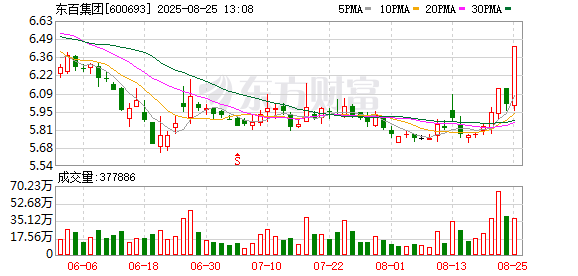
Core Viewpoint - Dongbai Group's logistics segment has shown strong growth, with a main business revenue of 83.48 million yuan, representing a year-on-year increase of 29.52%, becoming a core driver of performance growth [2] Group 1: Business Performance - The company has strategically focused on asset operation efficiency and value release since entering the logistics sector, acquiring 18 logistics projects with a total construction area of approximately 1.8 million square meters [2] - Currently, 11 high-quality logistics projects owned by the company, covering a total area of 1.1 million square meters, have all been completed and are in efficient operation [2] Group 2: Strategic Partnerships and Client Diversification - The company has enhanced its operational efforts by leveraging its synergy with retail business, connecting with over a thousand end commercial clients to meet diverse warehousing needs [2] - Strategic partnerships have been deepened with major players like JD.com, SF Express, SHEIN, and China Post, while also capturing emerging industry opportunities by attracting leading companies in new energy, new retail, and fast-moving consumer goods sectors [2] Group 3: Asset Light Strategy and Future Development - The company has made significant progress in its asset-light strategy, submitting an application for an asset-backed securities plan for its logistics properties, which could enhance asset liquidity and activate existing assets [3] - Dongbai Group aims to continue strengthening its "commercial retail + logistics" strategic synergy, focusing on digital upgrades and innovative consumer scenarios in retail, while promoting full rental operations of existing projects and the establishment of an asset-light platform in logistics [3]


做增程的品牌越来越多,但增程车却有点卖不动了
3 6 Ke· 2025-08-25 03:02
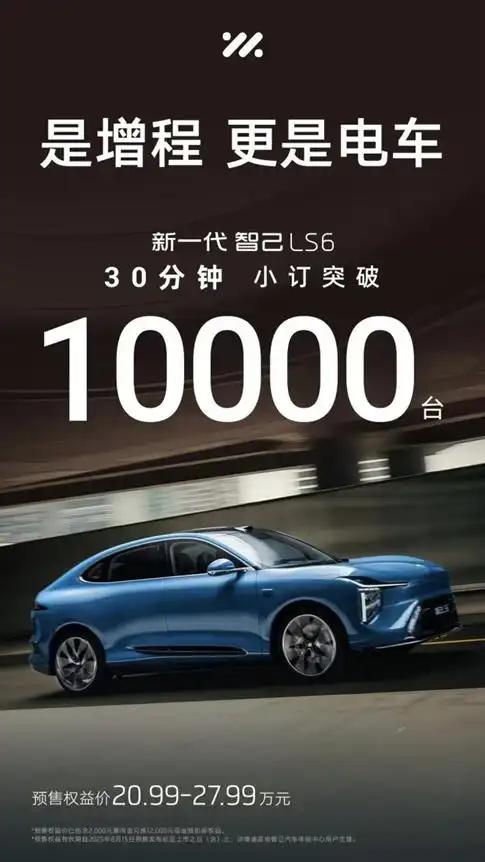
Group 1 - The article discusses the current trend of electric vehicle (EV) manufacturers shifting from pure electric models to range-extended electric vehicles (EREVs), with brands like Zhiji, Haobo, and Xiaopeng launching new EREV models [1][3][6] - Despite the initial excitement around EREVs, sales data indicates a decline in their popularity, with July retail sales of EREVs at 102,000 units, a year-on-year decrease of 11.4%, while pure electric vehicle sales increased by 24.5% [7][8] - The market share of pure electric vehicles has grown significantly, with the ratio of pure electric to EREV sales changing from 43:57 last year to 64:36 this year [7][8] Group 2 - The sales performance of leading EREV brands like Aion and Li Auto has been disappointing, with Li Auto experiencing a 39.7% year-on-year decline in July sales [10][12] - In contrast, brands like Xiaopeng and Leap Motor have seen substantial growth in pure electric sales, with Xiaopeng's sales increasing by 229.4% year-on-year [9][10] - The decline in EREV sales is attributed to the decreasing price of lithium and the resulting drop in battery costs, making pure electric vehicles more affordable and attractive [17][19] Group 3 - The article highlights that the charging infrastructure for pure electric vehicles is rapidly expanding, with an average of 34.3 public charging stations per square kilometer in major cities, alleviating range anxiety for consumers [20][23] - As battery technology improves, the range of pure electric vehicles continues to increase, with models like the Model Y achieving a range of up to 751 km [24][29] - The article concludes that while EREVs will continue to exist, they are returning to their original position as a transitional product rather than a primary choice for consumers [32][33]


激光雷达VS纯视觉 两年后迎来终极对决?
Zhong Guo Qi Che Bao Wang· 2025-08-22 10:32
Core Viewpoint - The debate between pure vision and LiDAR technology for autonomous driving continues, with no clear resolution expected by 2027, as both technologies gain supporters and evolve in capabilities and costs [2][5][10] Group 1: Technology Adoption - Both pure vision and LiDAR technologies have gained significant traction, with various automakers adopting either approach. New entrants and established companies are increasingly choosing sides, with some switching from LiDAR to pure vision [2][3] - Recent models like the Tank 500 and Li Auto i8 have adopted LiDAR, while companies like Xiaomi and Audi are also integrating LiDAR into their vehicles [2][3] - Conversely, companies like Xiaopeng and NIO are firmly committed to pure vision technology, with Xiaopeng's models like the MONA M03 and the new P7 exclusively using this approach [4][5] Group 2: Market Trends - The market for LiDAR-equipped vehicles is expanding, with significant growth in the number of LiDAR units delivered in China, reaching 1.0439 million units in the first half of the year, a year-on-year increase of 83.14% [3] - LiDAR is no longer limited to high-end models, as companies like Leap Motor and Changan are introducing LiDAR-equipped versions in the lower price segments [3] Group 3: Cost and Safety Debate - The ongoing debate between the two technologies centers on cost and safety. Pure vision systems are seen as more cost-effective and easier to scale, while LiDAR is favored for its superior performance in extreme conditions [5][6] - The cost of LiDAR has significantly decreased, with prices for L2-level LiDAR now around $200, down from previous prices of $20,000 to $30,000, representing a reduction of over 99.5% [5][9] Group 4: Future Outlook - Experts suggest that both technologies will likely coexist, with pure vision being sufficient for urban commuting and LiDAR providing safety redundancy in complex scenarios [10] - The advancement of computing power and algorithms is expected to enhance the capabilities of pure vision systems, potentially making them the preferred choice for many automakers [8][9]

蔚来招聘大模型-端到端算法工程师!
自动驾驶之心· 2025-08-20 23:33
Core Viewpoint - The article emphasizes the importance of job opportunities and resources in the fields of autonomous driving and embodied intelligence, highlighting a community platform for job seekers in these sectors. Group 1: Job Opportunities - The platform offers job postings for various positions in algorithm development, product management, and internships related to autonomous driving and robotics [6][24]. - Members of the community include professionals from leading companies in the industry, providing a network for job seekers [4][5]. Group 2: Resources and Support - The community provides a wealth of resources, including interview questions, experience sharing, industry reports, and salary negotiation tips [9][15][19]. - There are specific sections dedicated to various technical topics, such as multi-sensor fusion, trajectory prediction, and occupancy perception, which are crucial for candidates preparing for interviews [10][14]. Group 3: Community Engagement - The platform has nearly 1000 members, facilitating discussions and exchanges among individuals interested in autonomous driving and embodied intelligence [4][5]. - The community encourages collaboration and sharing of experiences, which can help members avoid common pitfalls in the job application process [17][18].


毛利率超过特斯拉,小鹏汽车迎来“小米时刻”
2 1 Shi Ji Jing Ji Bao Dao· 2025-08-20 09:39
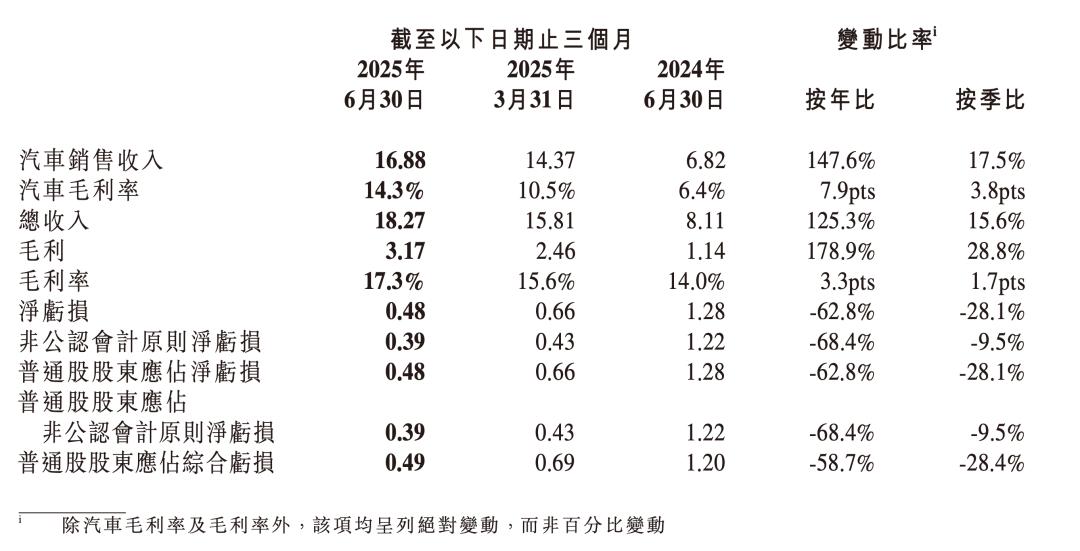
Core Insights - Xiaopeng Motors is approaching self-sufficiency, with Q2 revenue reaching 18.27 billion yuan, a year-on-year increase of 125.3%, and a net loss narrowing to 480 million yuan [1][2] - The company aims to achieve profitability in Q4 2023, focusing on high-end models priced above 300,000 yuan and leveraging technology and brand value for premium pricing [2][3] Financial Performance - For the first half of the year, Xiaopeng's revenue was 34.09 billion yuan, up 132.5% year-on-year, with adjusted net loss of 810 million yuan, significantly reduced from 2.63 billion yuan in the same period last year [2] - Q2 gross profit reached 3.17 billion yuan, a 28.8% increase, with a gross margin of 17.3%, surpassing Tesla's 17.2% for the same period [2][5] - The improvement in gross margin is attributed to a shift in product sales structure and increased technical revenue from partnerships, particularly with Volkswagen [5][8] Cost Management and R&D - R&D expenses rose to 2.21 billion yuan in Q2, a 50.4% increase, while sales and administrative expenses increased by 37.7% to 2.17 billion yuan, indicating a focus on growth despite rising costs [3][9] - The company holds a cash reserve of 47.57 billion yuan, providing a buffer for ongoing investments [4] Market Strategy and Product Development - Xiaopeng plans to launch new models, including the P7 and G7 in August and the X9 in Q4, targeting the mainstream market with a focus on extended-range vehicles [10][11] - The company is enhancing its design capabilities and aims to release multiple new models priced above 300,000 yuan in 2026 and 2027 [11] Technological Advancements - Xiaopeng is investing heavily in AI technology, with plans to deploy self-developed AI chips in future models, aiming for significant advancements in autonomous driving capabilities by 2025 [12][13] - The company is also exploring the commercialization of Robotaxi services, with initial tests planned for 2026 [12][13]
前7个月北京规模以上工业增加值同比增长6.1%
Zhong Guo Xin Wen Wang· 2025-08-20 08:36
记者19日从北京市经济和信息化局获悉,今年以来,北京工业新动能加速汇聚、产业活力竞相迸发。汽 车制造、电子信息、智能装备、新型储能、航空航天等先进制造业持续发力,带动全市工业经济稳健增 长,今年1-7月规模以上工业增加值同比增长6.1%,为推动全市经济社会高质量发展注入强劲动能。 汽车产业作为北京工业首要支柱产业,7月份,全市新能源汽车产量达5.2万辆,同比增长1.4倍,1-7月 累计产量已突破31万辆,超越去年全年总产量。北京市经济和信息化局经济运行处副处长伊喆表示,一 组组攀升的数据,既是小米汽车、理想汽车、北汽新能源等车企协同发力的直观写照,更成为首都新能 源汽车产业加速崛起的鲜活注脚。 作为首都新质生产力培育的另一个重要增长极,电子信息产业持续书写高质量发展的精彩答卷。1-7 月,电子信息产业增加值同比增长24.2%,拉动全市工业增长3.5个百分点。在中芯国际、长鑫集电等龙 头企业引领下,全市集成电路产量达169.9亿块,同比增长17.8%,展现出首都高端制造业的加速度与硬 实力。 1-7月,全市智能装备产业呈现出"复苏向好、稳步增长"的发展态势,实现增加值增速8.6%,持续高于 全市工业经济平均增长 ...
零跑“激进战略”另一面:品控及虚标等问题待解
Zheng Quan Shi Bao Wang· 2025-08-20 03:27
Core Viewpoint - Leap Motor has achieved a significant milestone by reporting a net profit of RMB 0.3 billion for the first half of 2025, marking it as the second new force car company to achieve semi-annual profitability, aligning with the broader trend of new energy vehicle companies moving towards "scale profitability" in 2025 [1] Group 1: Financial Performance - In the first half of 2025, Leap Motor's adjusted net profit (non-IFRS) reached RMB 3.3 billion, indicating a strong financial performance [1] - The overall new energy vehicle market is witnessing a shift towards profitability, with companies like Xiaomi, Xiaopeng, and NIO also outlining their profitability timelines [1] Group 2: Market Position and Strategy - Leap Motor has adjusted its annual sales target upwards and plans to challenge the aggressive goal of 1 million annual sales, reflecting a significant shift in the competitive landscape of new energy vehicle manufacturers [2] - The company has been recognized for its cost-effective strategy, often referred to as "half-price Ideal" or "Redmi of the car circle," which has helped it gain market share [2] Group 3: Challenges and Quality Issues - Despite its growth, Leap Motor faces challenges related to quality, with reports of issues such as noise, system lag, and slow OTA updates, which could impact consumer perception [2] - Discussions on social platforms highlight both the advantages of Leap Motor's high cost-performance ratio and concerns regarding quality stability, range misrepresentation, and inconsistent after-sales service [2] Group 4: Competitive Landscape - Leap Motor is attempting to move towards a higher-end market segment, but this transition is complicated by existing competitors who have already established a presence in the above RMB 300,000 market [3] - The company must navigate the balance between maintaining its low-cost strategy and investing in technology to differentiate itself in a competitive environment [3]
小鹏 Q2 财报「炸裂」:营收暴涨 125%,毛利率反超特斯拉
3 6 Ke· 2025-08-20 00:49
Core Viewpoint - Xiaopeng Motors has shown significant recovery and growth in its second quarter of 2025, achieving record highs in multiple key performance indicators, including sales, revenue, gross margin, and cash reserves [2][3][6]. Group 1: Financial Performance - In Q2 2025, Xiaopeng Motors reported total revenue of 18.27 billion yuan, a year-on-year increase of 125.3% and a quarter-on-quarter increase of 15.6% [5][6]. - The company delivered 10.32 million vehicles in Q2 2025, representing a year-on-year growth of 241.6% [3][5]. - Gross margin for Q2 2025 reached 17.3%, up 3.3 percentage points from the previous year, indicating improved cost control and pricing power [5][6]. - Cash reserves increased by over 22.9 billion yuan to 475.7 billion yuan, providing a strong financial buffer for future operations [2][10]. Group 2: Market Position and Strategy - Xiaopeng Motors delivered a total of 197,200 vehicles in the first half of 2025, nearly 3.8 times the volume from the same period last year, achieving 52% of its annual target of 380,000 vehicles [3][5]. - Despite strong sales, the product mix shows an imbalance, with sedans dominating sales while SUVs lag behind [3][4]. - The company is focusing on enhancing its product offerings and emotional appeal, moving beyond just technical specifications to include design and user experience [11][12][15]. Group 3: Competitive Landscape - The electric vehicle industry in China is entering a new phase of profitability, with competitors like Li Auto and Zeekr also reporting improved financial results [7][8]. - Xiaopeng Motors is positioning itself to achieve profitability by reducing losses significantly, with a net loss of 4.8 billion yuan in Q2 2025, down from 12.8 billion yuan in the same quarter of the previous year [8][10]. - The company aims to establish a strong competitive edge in a rapidly evolving market, emphasizing both technological advancements and emotional engagement with consumers [12][15].
反内卷”显效 国补接续 汽车市场蓄力迎接“金九银十
Zhong Guo Chan Ye Jing Ji Xin Xi Wang· 2025-08-19 22:27
Core Viewpoint - The automotive market in July experienced a seasonal slowdown, but year-on-year growth remained robust due to favorable policies and market conditions [1][2]. Group 1: Market Performance - In July, automotive production and sales reached 2.591 million units each, with month-on-month declines of 7.3% and 10.7%, respectively, while year-on-year growth was 13.3% and 14.7% [2]. - Retail sales of passenger vehicles in July totaled 1.834 million units, showing a year-on-year increase of 6% but a month-on-month decrease of 12% [2]. - The cumulative retail growth rate for the domestic automotive market improved from -12% in January to 11% by June, indicating a "front low, middle high" trend [2]. Group 2: Company Performance - Leap Motor achieved a record delivery of 50,129 units in July, marking a year-on-year increase of over 126% [3]. - Xiaomi's vehicle deliveries exceeded 30,000 units in July, while NIO delivered 21,017 units, a slight year-on-year increase of 2.53% [3]. - Li Auto's deliveries fell nearly 40% year-on-year, highlighting the competitive challenges faced by some brands [3]. Group 3: Industry Dynamics - The automotive industry is undergoing a comprehensive effort to address excessive competition, with positive progress reported in reducing "involution" [5]. - The number of new car price reductions has increased, with 113 models experiencing price cuts from January to July 2023, indicating a trend towards more rational pricing [5]. - The automotive industry's profit margin reached 6.9% in June, reflecting improved market order and reduced pressure [5]. Group 4: Future Outlook - The market is expected to see further growth during the "Golden September and Silver October" sales period, supported by ongoing policies and new model launches [7]. - The government has allocated 69 billion yuan for the third batch of long-term special bonds to support the "old-for-new" consumption policy, which is anticipated to stabilize consumer confidence [7]. - Consumer spending is expected to increase, with savings growing rapidly, enhancing purchasing power and enthusiasm for vehicle purchases [8].