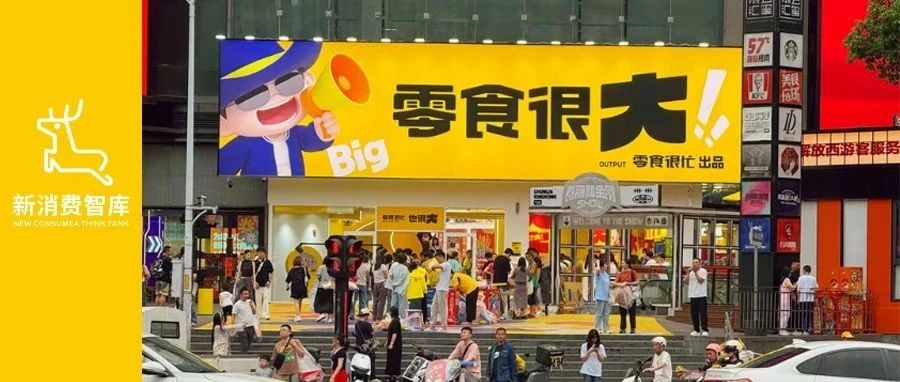
鸣鸣很忙

Search documents
零食界的“蜜雪冰城”,不能只做“薄利生意”
新消费智库· 2025-05-28 12:31
Core Viewpoint - The article discusses the rapid expansion and business model of the snack retail company "Ming Ming Hen Mang," highlighting its impressive growth metrics and the challenges it faces in maintaining profitability while competing in a price-sensitive market [3][4][5]. Group 1: Company Overview - "Ming Ming Hen Mang" achieved a retail sales figure of 55.5 billion RMB and a total revenue of 39.3 billion RMB in 2024, with over 14,394 stores nationwide [3][4]. - The company was formed by the merger of two snack giants, "Snacks Hen Mang" and "Zhao Yi Ming Snacks," which had previously raised significant venture capital [4][5]. - The merger has led to a combined store count of 6,500 before the merger, positioning "Ming Ming Hen Mang" as a dominant player in the snack industry [5][6]. Group 2: Business Model and Strategy - The company operates on a "low-margin, high-volume" model, similar to "Mi Xue Bing Cheng," focusing on rapid store expansion and competitive pricing [5][9]. - "Ming Ming Hen Mang" has a SKU count of at least 1,800 per store, which is double that of average supermarkets, and offers prices approximately 25% lower than similar products in offline supermarkets [6][12]. - The majority of its revenue (99%) comes from selling products to franchise stores, which enhances its bargaining power with suppliers and spreads operational risks [9][12]. Group 3: Financial Performance - From 2022 to 2024, the company's revenue grew from 4.29 billion RMB to 39.34 billion RMB, while its gross margin remained stable at around 7.5%-7.6% [13][12]. - The net profit margin increased slightly from 1.7% to 2.1% during the same period, indicating ongoing profitability challenges in the snack retail sector [12][13]. Group 4: Market Dynamics and Competition - The snack retail market is highly fragmented, with the top five retailers holding only 4.2% of the market share, suggesting significant opportunities for new entrants [16][17]. - The industry is currently experiencing a "price war," with competitors engaging in aggressive discounting strategies to attract consumers [18][16]. - "Ming Ming Hen Mang" is exploring new store formats and product categories to adapt to changing consumer preferences and market conditions [19][20]. Group 5: Future Outlook - The company plans to introduce 30 proprietary products to reduce reliance on wholesale margins and improve gross margins [14][15]. - The expansion into new categories, such as baked goods and frozen products, presents operational challenges and increases supply chain complexity [24][22]. - To succeed, "Ming Ming Hen Mang" must balance its low-price strategy with the need for supply chain efficiency and product innovation [24][15].

新消费企业抢滩港股IPO,能否再造“泡泡玛特式神话”?
Di Yi Cai Jing· 2025-05-28 11:58
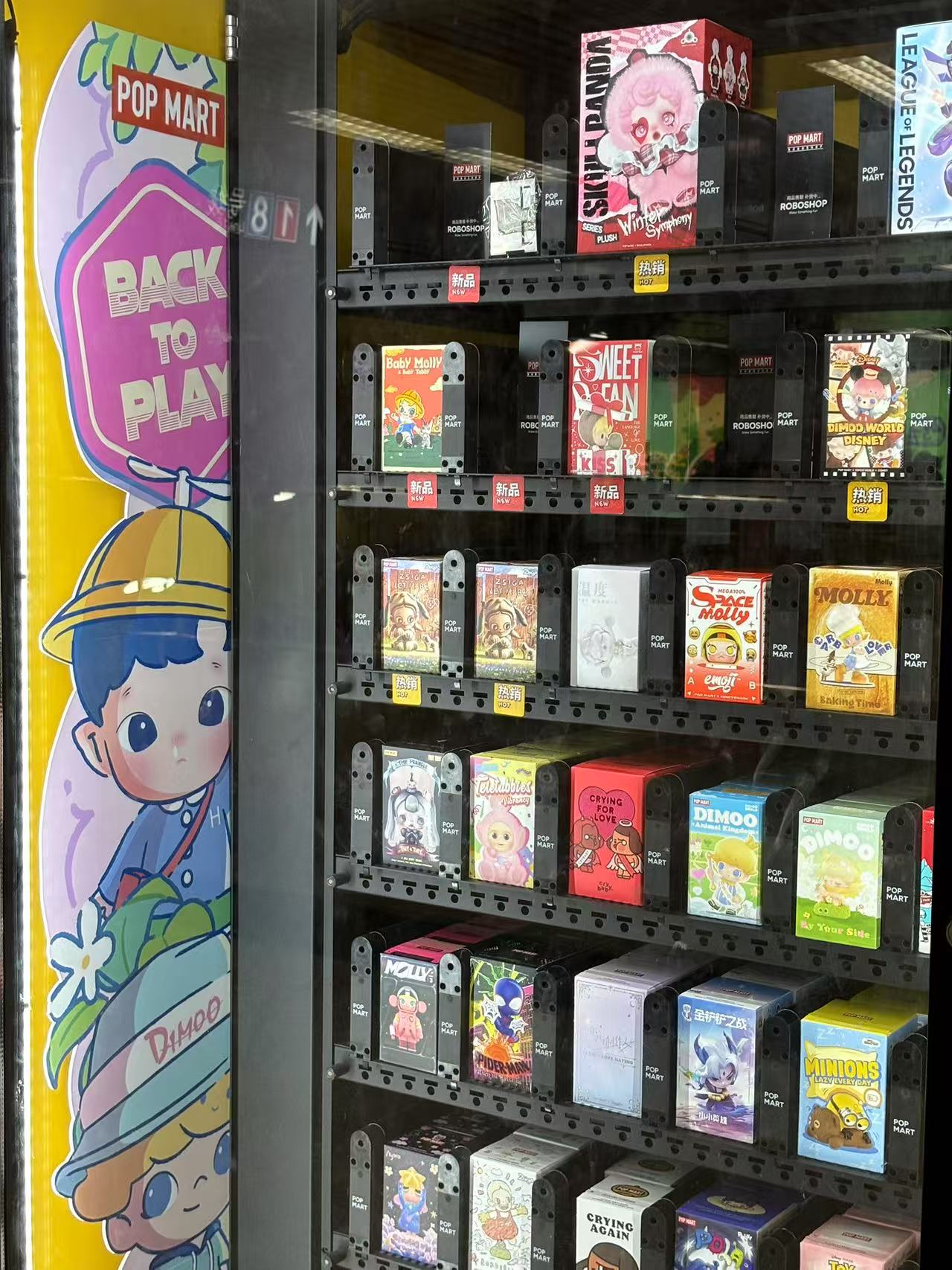
Core Viewpoint - The Hong Kong stock market is experiencing a surge in IPOs from new consumption companies, driven by policy support, improved liquidity, and valuation recovery, with notable performances from companies like Mixue Group and Pop Mart [3][5][10]. Group 1: Market Trends - Since 2025, there has been a wave of new consumption companies going public in Hong Kong, including Mixue Group (02097.HK) and Pop Mart (09992.HK), which have shown strong market performance [1][3]. - As of May 28, 2025, there are 159 companies in the IPO queue for Hong Kong, with 25 in the consumption sector, accounting for approximately 16% [4]. - The consumer theme index in the Hong Kong stock market has seen a year-to-date increase of over 20%, with companies like Pop Mart and Mixue Group reaching historical highs in market capitalization [1][5]. Group 2: Investment Dynamics - The influx of southbound capital has significantly contributed to the liquidity in the Hong Kong market, with a net inflow of 636.91 billion HKD since 2025 [5][6]. - The average price-to-earnings (P/E) ratio for the consumer theme index is 20 times, while new consumption stocks have much higher P/E ratios, indicating a preference for high-growth potential [6][10]. - The Hong Kong stock market has become an attractive venue for new consumption brands due to favorable policies and a more lenient listing environment compared to A-shares [6][10]. Group 3: Company Performance - Pop Mart reported a revenue of 13.04 billion CNY in 2024, a year-on-year increase of 106.9%, with an adjusted net profit of 3.4 billion CNY, up 185.9% [9]. - 52TOYS, a competitor in the toy sector, has shown revenue growth but has faced continuous net losses, indicating challenges in achieving profitability [8][10]. - Companies like Mingming Hen Mang and Baima Tea are also facing profitability challenges despite high gross merchandise volume (GMV) and extensive market presence [9][10]. Group 4: Competitive Landscape - The new consumption sector is characterized by increasing homogenization, leading to questions about how companies can differentiate themselves and find the next breakout brand [3][7]. - Companies are encouraged to innovate in product offerings, improve supply chain efficiency, and build strong brand cultures to overcome competitive pressures [10]. - The potential for valuation bubbles exists as some companies may prioritize meeting venture capital exit demands over maintaining quality profitability [10].

第一批开零食店的人,赚够千万离场了
创业邦· 2025-05-28 09:37
Core Viewpoint - The snack retail industry, particularly the bulk snack stores, continues to thrive despite challenges, with significant growth in revenue and new store openings, indicating a strong market demand and potential investment opportunities [4][5][6]. Group 1: Industry Growth and Trends - The bulk snack industry has seen a compound annual growth rate of nearly 200% from 2022 to 2024, with major players like Mingming Hen Mang and Wancheng Group achieving substantial revenue increases [4]. - In the first quarter of this year, while 1,094 snack stores closed, 1,400 new stores opened, showcasing a net positive growth in the sector [5]. - The average annual revenue for successful snack stores can reach up to 6 million, with some owners reportedly making their first million through this business model [4][11]. Group 2: Business Model and Consumer Behavior - The business model of bulk snack stores relies heavily on low pricing and high SKU variety, with many stores offering private label products that attract price-sensitive consumers [12][13]. - The average transaction volume for major players in the industry is significant, with Mingming Hen Mang recording 1.6 billion transactions in 2024 and a high repurchase rate of 75% [16]. - The strategy of offering mini versions of popular snacks allows consumers to try various flavors without the risk of waste, further driving sales [14]. Group 3: Challenges and Market Dynamics - Despite the apparent profitability, many store owners face challenges such as high operational costs, difficulty in hiring staff, and intense competition leading to price wars [18][20][32]. - The saturation of the market is evident, with reports of multiple stores opening in close proximity, leading to reduced sales for existing stores [28][37]. - The shift in consumer spending patterns, particularly in urban areas, has made it crucial for snack retailers to adapt their strategies to target lower-income regions where demand remains strong [22][25].
零食巨头押宝“微醺经济”,三只松鼠能否在酒类赛道“分一杯羹”?
Mei Ri Jing Ji Xin Wen· 2025-05-28 09:14
Core Insights - The snack giant Three Squirrels has officially entered the alcoholic beverage market, launching three new brands: Sun Wukong (craft beer), Huxi (fruit wine), and Orange Cat (red wine) [2][3] - The company aims for a sales target of approximately 100 million yuan in the alcohol category, with Sun Wukong generating over 6 million yuan in sales within its first month [5][6] - The alcoholic beverage industry in China is currently undergoing a deep adjustment period, with traditional beer sales declining while low-alcohol beverages like craft beer are gaining popularity [3][4] Industry Overview - In 2023, China's brewing industry achieved a sales revenue of 1,080.26 billion yuan, with a year-on-year growth of about 14% [2] - The market size for low-alcohol beverages is projected to grow significantly, with a compound annual growth rate of 30% expected from 2021 to 2025 [2] - The beer industry is experiencing a downturn, with a 0.6% decrease in production and a 5.7% drop in revenue for 2024, making it the only category in the food and beverage sector to see a decline [3] Company Strategy - Three Squirrels plans to expand its alcoholic product matrix to include various categories such as sparkling yellow wine, cocktails, and rice wine [5][6] - The company is focusing on the "young low-alcohol" market, targeting new drinking habits among younger consumers [3][8] - Initially, the company will operate under an OEM model but is considering building its own supply chain in the future [6][8] Competitive Landscape - The alcoholic beverage market is becoming increasingly crowded, with major players like Hema and Pang Donglai also launching their own brands [6][7] - Other snack giants, such as Mingming Hen Mang and Lai Yifen, have also entered the alcohol sector, indicating a trend of diversification among snack companies [7][8] - The shift in consumer preferences towards healthier, more personalized drinking experiences is driving innovation in the industry [8]

食品饮料-零食行业:鸣鸣很忙(02143),招股说明书梳理,零食量贩龙头
Sou Hu Cai Jing· 2025-05-28 07:14
Company Overview - Mingming Hen Mang is a leading player in China's snack retail industry, formed by the merger of "Snack Hen Mang" and "Zhao Yiming Snacks" [1][12] - As of the end of 2024, the company operates 14,394 stores across 28 provinces, with 58% of its stores located in county towns and townships, and has over 120 million members [1][13] - The company achieved a revenue of 39.344 billion yuan in 2024, with a compound annual growth rate (CAGR) of 203% from 2022 to 2024, and a gross merchandise volume (GMV) of 55.5 billion yuan [1][15] Industry Insights - The retail scale of China's leisure food and beverage market has grown from 2.86 trillion yuan in 2019 to 3.74 trillion yuan in 2024, with a CAGR of 5.5% [1][25] - The share of the snack retail channel has increased from 8% in 2019 to 11% in 2024, making it one of the fastest-growing segments [1][29] Competitive Advantages - The company has an efficient store expansion strategy, adding 7,809 new stores in 2024, with an average annual GMV of 5.29 million yuan per store [2][39] - Digital supply chain capabilities have reduced logistics costs to 1.7%, and inventory turnover days have improved to 11.6 days [2][6] - The franchise system is robust, with 794 supervisors covering 14,000 stores, and a low customer concentration risk, with the top five customers accounting for only 2.5% of revenue [2][6] Future Growth Drivers - Market share is expected to increase as the company and its competitor, Wancheng Group, collectively operate over 14,000 stores, capturing nearly 75% of the market [2][6] - Upgrades to the store model, including the introduction of fresh food and daily necessities, are anticipated to enhance revenue per store [2][6] - Continued improvements in supply chain bargaining power and cost optimization are expected to further enhance gross and net profit margins [2][6] Financial Performance - The company reported a net profit of 834 million yuan in 2024, with a CAGR of 241% from 2022 to 2024, outpacing revenue growth [1][15] - The gross margin improved from 7.45% in 2022 to 7.62% in 2024, contributing to an adjusted net margin of 2.32% [1][15]
第一批开零食店的人,赚够千万离场了
虎嗅APP· 2025-05-27 14:09
Core Viewpoint - The snack retail industry, particularly the bulk snack stores, continues to thrive despite a wave of store closures, with significant revenue growth reported by leading companies in the sector [3][5][6]. Group 1: Industry Growth and Trends - The bulk snack industry is experiencing a "violent rise," with major players like Mingming Hen Mang and Wancheng Group achieving nearly 200% compound annual growth rate in revenue from 2022 to 2024 [3][5]. - In 2022, Mingming Hen Mang reported a profit of 800 million, a year-on-year increase of 284% [3]. - Despite a "transfer wave" in the industry, where many snack stores are closing, new openings are outpacing closures, with 1,400 new stores launched compared to 1,094 closures in the first quarter of this year [5]. Group 2: Business Model and Consumer Behavior - The business model of bulk snack stores relies heavily on low pricing and high SKU variety, attracting consumers with competitive pricing compared to convenience stores [11][12]. - The average transaction volume for Mingming Hen Mang is projected to reach 1.6 billion transactions in 2024, with a high repurchase rate of 75% [12]. - The presence of private label products, which make up a significant portion of inventory, allows stores to maintain low prices and adapt quickly to consumer preferences [11][12]. Group 3: Challenges and Market Dynamics - The industry faces challenges such as high employee turnover and difficulties in hiring competent staff, which can impact store operations [14][16]. - The competitive landscape is intensifying, with many new stores opening in close proximity, leading to price wars and reduced profitability for existing stores [28][30]. - Franchisees are experiencing pressure from brand owners to lower prices and increase inventory diversity, which can strain their profitability [29][30]. Group 4: Market Segmentation and Location Strategy - The trend indicates a shift towards rural and lower-tier cities for snack store openings, where operational costs are lower and consumer spending remains robust [20][21]. - Urban locations, while initially attractive, may not yield the expected returns due to higher costs and lower disposable income among consumers [22][23]. - Successful franchisees are increasingly focusing on smaller towns and counties, where consumer behavior and spending patterns favor snack purchases [20][21].
“好想来”母公司万辰集团董事长解除留置,量贩零食“双雄”竞争白热化
Guan Cha Zhe Wang· 2025-05-27 05:59
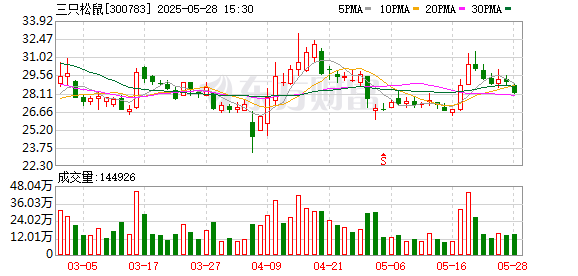
Group 1 - The chairman of Wancheng Group, Wang Jiankun, has had his detention lifted, allowing him to resume his duties, which is expected to stabilize the company's operations [1] - During Wang's detention, Wancheng Group's stock price increased significantly, rising from 94.99 yuan per share to a peak of 156.85 yuan per share, marking a gain of over 65% [1] - Wancheng Group reported a total of over 15,000 signed stores by the end of Q1, with a rapid opening pace, particularly in its "Haoxianglai" brand, which has over 10,000 stores [2][3] Group 2 - Despite the rapid expansion, Wancheng Group's revenue for the last year was 32.3 billion yuan, significantly lower than its main competitor, Mingming Hen Mang, which reported 39.3 billion yuan [2] - Wancheng Group's net profit for the last year was approximately 294 million yuan, while Mingming Hen Mang's adjusted net profit reached 913 million yuan, highlighting a substantial profitability gap [2] - In Q1, Wancheng Group achieved a revenue of 10.82 billion yuan, a year-on-year increase of 124.02%, and a net profit of approximately 215 million yuan, reflecting a staggering growth of 3344.13% [5] Group 3 - The company aims to enhance its supply chain efficiency and profitability through a value chain restructuring mechanism that includes direct procurement and centralized pricing [6] - Wancheng Group plans to continue investing in its supply chain, logistics, brand development, and digital capabilities to improve profit margins and operational efficiency [6] - The company acknowledges the need to maintain growth momentum in the face of a slowing store opening pace and is focused on optimizing its operational strategies [5][6]

从泡泡玛特老铺黄金,到布鲁可鸣鸣很忙,来聊聊本轮“新消费”行情
Sou Hu Cai Jing· 2025-05-27 00:56
Core Insights - The article discusses a significant shift in the Chinese consumer market, emphasizing that traditional beliefs about targeting core consumer groups in first and second-tier cities are being challenged by emerging brands that are gaining traction in lower-tier markets [2][5][15]. Group 1: New Consumption Trends - New retail companies, such as Miming Hen Mang and others, are achieving remarkable growth and performance, indicating a shift in consumer preferences and market dynamics [2][3]. - The success of these new brands, often founded by younger entrepreneurs, highlights a departure from traditional consumer behavior and brand loyalty [2][5]. - The article suggests that the so-called "new consumption" is not truly new but rather a reflection of outdated thinking among traditional brands and investors [6][11]. Group 2: Market Dynamics and Consumer Behavior - The rise of brands like Miming Hen Mang, which plans to submit IPO materials by April 2025, showcases the potential of lower-tier markets, with 58% of its 14,000 stores located in counties and towns [3][5]. - The article notes that consumer behavior is evolving, with younger generations prioritizing emotional value over traditional brand prestige, leading to a decline in loyalty to established brands [9][21]. - The shift in consumer preferences is evident in the growing demand for value-driven products, as consumers increasingly seek quality at lower prices, challenging the traditional brand and channel strategies [22][23]. Group 3: Future Trends in Consumption - The article identifies three key trends that will dominate the consumer market in the next decade: the empowerment of the silent majority, the rise of self-oriented consumption, and the pursuit of value for money [15][21][22]. - The Z generation is becoming a significant consumer force, with their preferences and spending habits diverging from those of previous generations, emphasizing personal interests and experiences [16][18]. - The article predicts that the focus on self-satisfaction and emotional fulfillment will reshape consumption patterns, moving away from social status-driven purchases [21][22].

鸣鸣很忙:量贩零食龙头,年入400亿,难摆脱低毛利困境
贝塔投资智库· 2025-05-26 04:09
Core Viewpoint - The article discusses the strategic merger of "零食很忙" and "赵一鸣零食," forming "鸣鸣很忙," which is positioned as the largest retail player in China's snack and beverage market, with a focus on expanding product categories and market reach [1][3]. Market Overview - The Chinese snack and beverage retail market is projected to grow to RMB 4.9 trillion by 2029, with a compound annual growth rate (CAGR) of 5.8% from 2024 to 2029. The growth in lower-tier markets is expected to outpace higher-tier markets, with a CAGR of 6.8% compared to 4.1% [1]. - The market share in the snack retail sector is fragmented, with "鸣鸣很忙" holding a 1.5% market share, slightly ahead of its closest competitor, 万辰集团, at 1.4% [4][5]. Business Model and Expansion - "鸣鸣很忙" operates primarily through a franchise model, with 99.9% of its stores being franchises, generating approximately 98.8% of its revenue from franchise sales [6][8]. - The company aims to enhance its bargaining power through increased store numbers, which is expected to lower prices by 10% compared to competitors [8]. Financial Performance - The company reported a GMV of RMB 55.5 billion in 2024, with a total of 14,394 stores across 28 provinces, focusing heavily on lower-tier cities [11]. - Despite achieving a significant GMV, the average GMV per transaction has been declining [11]. - The net profit for 2024 reached RMB 8.34 billion, marking a 284% increase year-on-year, indicating strong profitability compared to industry peers [14][15]. Supply Chain and Operational Challenges - The company has established 36 warehouses, allowing for efficient distribution within a 300 km radius, but faced supply chain issues leading to stockouts in 300 stores due to a warehouse system failure [16][17]. - The inventory turnover days are reported at 11.6 days, which is significantly better than competitors, indicating strong supply chain management [16]. Product Strategy - The business model focuses on a mix of branded and private label products, with private label products contributing significantly to profitability due to higher margins [18]. - The company has faced challenges related to product quality control, with complaints about food safety issues [18]. Future Directions - The company plans to expand into discount supermarkets and develop its own brands, aiming to diversify its product offerings beyond snacks [19][20]. - There are concerns regarding the sustainability of its growth model, especially with recent shareholder exits and significant dividend payouts prior to the IPO [20].

【食品饮料】零食量贩龙头企业, 高效周转重塑零售业态——湖南鸣鸣很忙招股说明书解读(叶倩瑜/董博文)
光大证券研究· 2025-05-22 14:29
Core Viewpoint - The company, Mingming Hen Mang, is a leading player in the snack retail industry, focusing on high-quality products and rapid expansion through a franchise model, aiming to reach over 10,000 stores by 2024 [3][4]. Group 1: Business Model and Expansion - The company operates two brands, "零食很忙" and "赵一鸣," and has opened its first store in 2017, achieving over 1,000 stores by 2023 and targeting 14,394 stores by the end of 2024 [3]. - The franchise model allows for rapid expansion, with 7,241 franchisees by the end of 2024, adding 3,950 new franchisees in the year [4]. - The company has a strong presence in lower-tier markets, covering 1,224 counties with a 66% coverage rate in county towns [4]. Group 2: Financial Performance - The average revenue per store in 2024 is projected to be 5.67 million yuan, with an average transaction value of approximately 35 yuan and daily sales volume of 452 transactions [4]. - The company's gross merchandise volume (GMV) reached 55.5 billion yuan in 2024, with a gross margin of about 20% based on a 13% tax rate [5]. Group 3: Supply Chain and Product Offering - The company collaborates directly with suppliers to reduce supply chain costs, offering a wide range of products with 3,380 SKUs, of which 25% are custom-made [6]. - Each store maintains at least 1,800 SKUs, which is double the average for similar-sized supermarkets, enhancing product variety and customer experience [6]. - The company has a low dependency on single suppliers, with over 2,300 collaborating manufacturers, and offers products at prices approximately 25% lower than similar products in offline supermarkets [6]. Group 4: Logistics and Inventory Management - The company operates 36 warehouses, with 25 being self-operated, allowing for efficient logistics within a 300 km radius for timely delivery [7]. - The inventory turnover days are 11.6 days, which is lower than other supermarkets, indicating high efficiency in inventory management [7]. - Logistics costs accounted for 1.7% of revenue in 2024, with expectations of reduction as the company expands its store network [7].