奔驰

Search documents
豪华汽车行业动态:BBA密集发布2026年战略,产业链个股表现活跃
Xin Lang Cai Jing· 2026-02-19 16:52
Recent Events - The luxury automotive industry is focusing on brand strategy adjustments and product dynamics, with BBA (Benz, BMW, Audi) announcing their 2026 market strategies emphasizing new vehicle launches and localized R&D [1] - On February 13, Benz plans to launch over 15 new and updated models in the Chinese market, including the pure electric GLC SUV and the long-wheelbase GLE SUV, while BMW will introduce over 20 new vehicles, including the new generation iX3, leveraging partnerships with Chinese tech companies to enhance smart driving and cockpit technology [1] - Audi's E5 Sportback won the "2025 Car of the Year" award at the 6th Automotive Wind and Cloud Festival on February 15, highlighting its recognition in design and intelligent driving [1] - On February 19, Benz's former chief designer revealed a concept car paying tribute to the classic racing car "Red Pig," blending retro and modern design elements, showcasing the brand's innovation direction [1] - Pan Shiqi Automotive announced a dividend of $1.4 per share on February 19, with an ex-dividend date of February 25, amid significant stock price fluctuations (a drop of 4.50% from February 13 to 18), reflecting market attention on the dividend event [1] Stock Performance - The luxury car industry-related A-share companies have shown active performance recently, although BBA being foreign brands indirectly influences the sentiment of the A-share automotive sector [1] - On February 19, notable stock price increases were observed within the automotive sector, such as Jingjin Electric-UW (688280.SH) rising by 10.68% in a single day, and Zhejiang Shibao (002703.SZ) hitting the daily limit, with capital focusing on smart driving and component sub-sectors [1] - The dividend event from Pan Shiqi Automotive, as a US-listed dealer, may attract short-term capital flows [1]
接替 RS4 的“性能猛兽”抢先看,奥迪全新 RS5 实车外观曝光
Xin Lang Cai Jing· 2026-02-19 05:22
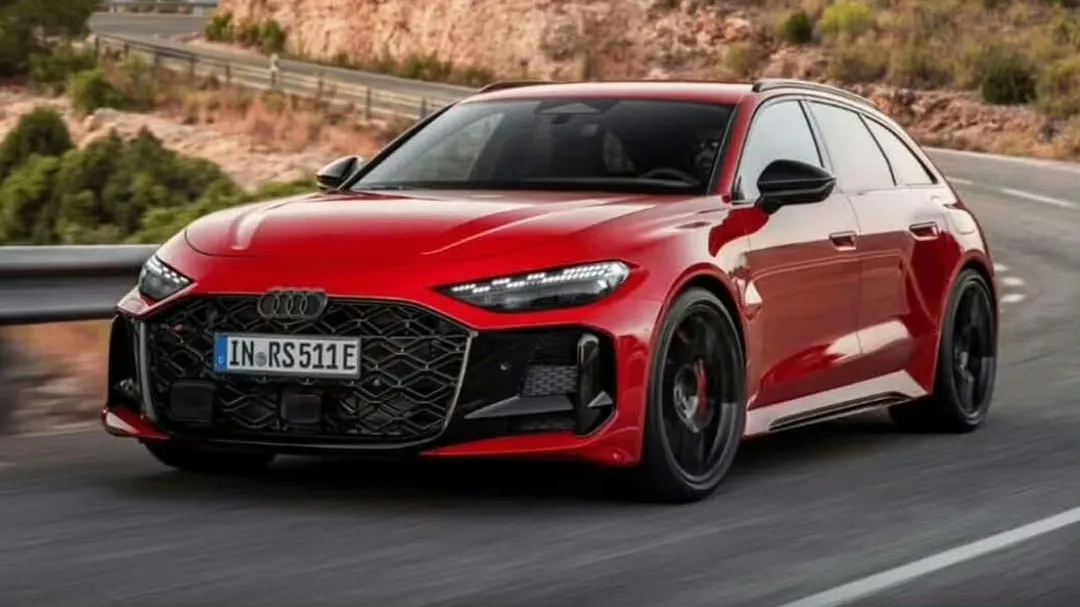
RS5 三厢版和 Avant 旅行版的清晰实车图已在社交平台流出,激进外观设计毫无遮掩地展现在公众面前。 新车基于奥迪 A5 平台打造,RS 专属宽体套件使其整体气场更接近 RS6,甚至更具攻击性。车身相比普通 A5 更长、更宽、更低,轴距保持 2900mm 不 变。 IT之家 2 月 18 日消息,据外媒 Carscoops 当地时间 17 日报道,奥迪即将揭晓全新一代 RS5,新车将取代 RS4,并正面对标宝马 M3。官方曾率先放出一 段光影压暗的预告视频试图制造悬念,但新车已提前在网上曝光,打乱了官方宣发节奏。 0100 SUSEJIJE D A Old C 11 IN RS512E 11:47 内饰延续奥迪运动家族风格,大面积 Alcantara、方向盘红色快捷键以及多处 RS 徽标强化运动氛围。数字 座舱采用专属界面,配备 11.9 英寸仪表盘、14.5 英寸中控屏和 10.9 英寸副驾屏幕。 动力方面,奥迪确认新车将采用插混系统。预计由双涡轮 2.9L V6 发动机与电机组成,综合输出将明显高 于轻混版 S5 的 362 马力。 底盘方面,新车将配备更激进的悬架设定与更大制动系统。平台方面,RS5 ...

兴业证券:2026年值得关注的十大产业趋势
智通财经网· 2026-02-18 03:45
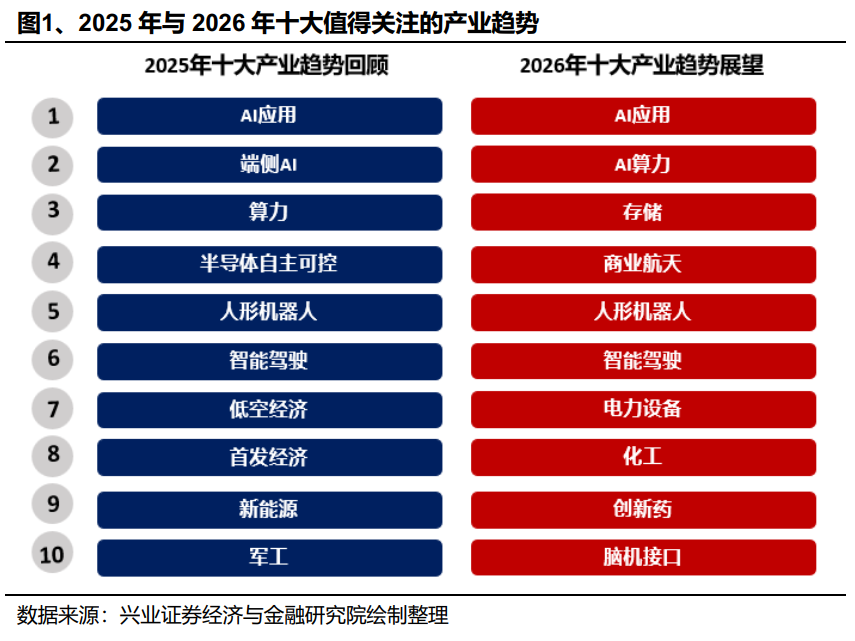
Group 1: AI Applications - The global AI competition is intensifying, with model iterations driving deeper application scenarios, and the focus is on whether significant capital expenditures by tech giants can lead to commercial applications [2][3] - The competitive landscape for AI applications is shifting from dominance by OpenAI to a more multipolar environment, with major players like Google and Meta integrating AI into their ecosystems [3] - In China, AI applications are experiencing a breakthrough, with major tech companies accelerating model iterations and application deployments, leading to a transformation from model landing to scenario monetization [5] Group 2: AI Computing Power - Overseas, major cloud service providers are maintaining high capital expenditures, with a projected increase of 67% in 2026, reflecting a strong demand for AI computing power [7][8] - In China, leading tech companies are increasing capital expenditures and accelerating the iteration of domestic large models, promoting the performance of domestic chips amid tightening supply from foreign sources [9] Group 3: Storage - The demand for storage is entering a new super cycle driven by AI training and inference needs, with AI servers consuming significantly more memory than traditional servers [11][16] - Supply constraints are expected to persist, leading to continued high prices for storage components, as major manufacturers shift production focus to advanced memory types [16] Group 4: Commercial Aerospace - Commercial aerospace is becoming a key battleground in US-China competition, with significant policy support and funding initiatives in both countries to accelerate industry development [19][21] - Domestic companies are achieving breakthroughs in satellite mass production and reusable rocket technologies, transitioning from technical validation to commercialization [22] Group 5: Humanoid Robots - Major overseas companies are ramping up production plans for humanoid robots, benefiting domestic component suppliers, with Tesla aiming for a production capacity of 500,000 units by 2026 [27][30] - Chinese manufacturers are leading in humanoid robot shipments, with significant contracts and production milestones achieved in 2025 [30] Group 6: Intelligent Driving - Domestic policies are expected to facilitate the commercialization of L3 autonomous driving in 2026, with several manufacturers preparing to launch L3 models [32][33] - Tesla's Full Self-Driving (FSD) technology is setting the direction for autonomous driving, with significant advancements in AI capabilities [35] Group 7: Energy Storage - The expansion of AI computing power in North America is driving electricity demand, with domestic power equipment expected to accelerate exports [37][40] - China's "14th Five-Year Plan" includes significant investments in the power grid and energy storage, creating a favorable environment for industry growth [40][43] Group 8: Chemicals - The chemical industry is undergoing a transformation driven by policies aimed at supply-side reform, with a focus on optimizing supply structures and reducing excess capacity [44][47] - New economic sectors are boosting demand for chemical materials, particularly in AI, renewable energy, and robotics, leading to a favorable outlook for new materials [47][48]


【兴证策略】2026年值得关注的十大产业趋势
Xin Lang Cai Jing· 2026-02-18 02:55
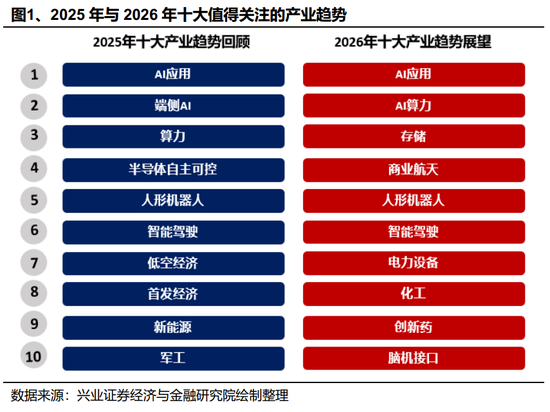
Group 1: AI Applications - The global AI competition is intensifying, with significant capital expenditures from tech giants expected to lead to deeper application scenarios in 2026 [1][2] - The competitive landscape for AI applications is shifting from a dominance of OpenAI to a more multipolar environment, with companies like Google and Meta making significant advancements [2] - Domestic AI applications are reaching a tipping point, with major tech companies accelerating their investments and model iterations, leading to a resonance between model development and application penetration [5] Group 2: AI Computing Power - Major cloud service providers in North America are projected to increase their capital expenditures significantly, with a combined guidance of approximately $598.7 billion for 2026, reflecting a 67% year-on-year growth [7][8] - Domestic companies are also ramping up capital expenditures and accelerating the iteration of local models, driven by the need for domestic chip performance improvements [7][8] Group 3: Storage - The demand for storage is entering a new super cycle driven by AI training and inference needs, with AI servers consuming 8-10 times more DRAM and NAND than traditional servers [12][13] - The supply-demand imbalance in the storage sector is expected to persist, with global storage prices rising over 40% in Q4 2025 [13][17] Group 4: Commercial Aerospace - Commercial aerospace is becoming a key battleground in US-China competition, with significant policy support and funding initiatives in place to accelerate the industry [20][21] - Domestic companies are achieving breakthroughs in satellite mass production and reusable rocket technologies, transitioning from technology validation to commercial scale [23] Group 5: Humanoid Robots - Major overseas companies like Tesla and FigureAI are ramping up production plans for humanoid robots, which is expected to benefit domestic component suppliers [25][28] - Chinese manufacturers are leading in humanoid robot shipments, with significant orders and production milestones achieved in 2025 [29] Group 6: Intelligent Driving - The rollout of policies in China is expected to facilitate the commercialization of L3 autonomous driving in 2026, with several manufacturers already launching L3 models [32][33] - Tesla's Full Self-Driving (FSD) technology continues to lead the market, with ongoing enhancements expected to drive the commercialization of Robotaxi services [32] Group 7: Energy Storage - The aging power grid in North America is creating opportunities for domestic power equipment exports, particularly in gas turbines and high-voltage equipment [36][37] - China's "14th Five-Year Plan" includes significant investments in the power grid and energy storage, with a focus on high-value areas [37] Group 8: Chemicals - The chemical industry is undergoing a transformation driven by supply-side reforms, with a focus on optimizing supply structures and reducing excess capacity [41][43] - New economic sectors are driving demand for chemical materials, particularly in AI, renewable energy, and robotics, which are expected to sustain high demand in 2026 [43][46]
奥迪,只卖10万了
商业洞察· 2026-02-17 09:35
Core Viewpoint - The significant drop in the Audi A3's terminal price below 100,000 yuan reflects a broader crisis in the luxury car market, driven by the rise of electric vehicles and changing consumer preferences [2][5]. Group 1: Price and Sales Trends - The Audi A3's official price was 203,100 yuan in 2023, but it has now fallen to 99,800 yuan in various regions, with some dealers offering "0 down payment + 3 years interest-free" financing options [2][7]. - Audi's sales have been declining since 2020, with projections indicating a drop to 54,700 units in 2024, a significant decrease from over 80,000 units sold annually between 2016 and 2019 [8][10]. - In 2025, Audi's sales in China were 617,500 units, down 5% year-on-year, marking a return to sales levels seen seven to eight years prior [8][12]. Group 2: Market Competition and Consumer Behavior - The decline in Audi A3's price is attributed to competition from electric vehicles like BYD Qin PLUS DM-i and Xpeng MONA, which offer advanced features at similar price points [14][15]. - The traditional brand premium associated with Audi has diminished, as consumers now prioritize technology and features over brand names, leading to a shift in purchasing behavior [16][17]. - The A3's sales increase has come at the expense of its sibling model, the Volkswagen Golf, indicating internal competition within the brand [19]. Group 3: Dealer Challenges and Brand Trust - Over 52% of Audi dealers are operating at a loss, with many closing or switching brands due to unsustainable business conditions [11][22]. - The pressure from the manufacturer to maintain high inventory levels has led to significant financial strain on dealers, further eroding trust in the brand [22][23]. - The collapse of dealer trust poses a more significant challenge than declining sales, as it affects long-term brand loyalty and consumer confidence [24]. Group 4: Strategic Responses and Future Outlook - Audi plans to phase out entry-level fuel vehicles like the A1 and A3 by 2026, focusing on electric vehicle platforms to improve cash flow and adapt to market changes [12][25]. - The introduction of the new Audi A6L, featuring Huawei's advanced driving systems, represents Audi's attempt to regain competitiveness in the smart vehicle market [25][27]. - The launch of a new brand under SAIC Audi aims to combine German engineering with Chinese innovation, reflecting a strategic pivot to meet evolving consumer demands [27]. Group 5: Broader Industry Context - The decline of the Audi A3 is part of a larger trend affecting the luxury car segment, with brands like Mercedes-Benz and BMW also experiencing significant sales drops [33]. - The luxury car market is undergoing structural changes, as electric vehicles eliminate traditional barriers to entry, leading to a reevaluation of brand value and consumer expectations [34][36]. - As product differentiation diminishes, consumers are increasingly focused on value for money rather than brand prestige, indicating a shift in the luxury market landscape [37][38].

春晚张杰《驭风歌》背后的马,是Seedance 2.0做的!
量子位· 2026-02-17 03:58
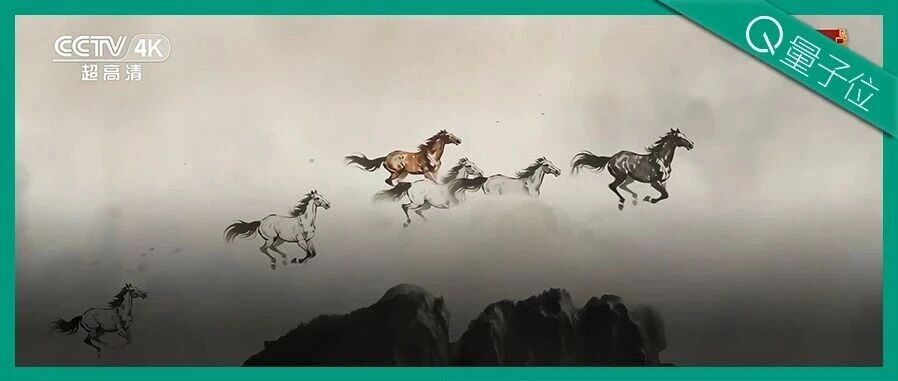
Core Viewpoint - The article highlights the significant advancements in AI technology showcased during the Spring Festival Gala, particularly focusing on the capabilities of the Seedance 2.0 model and its integration with various AI applications in performance and interaction [2][42]. Group 1: AI Technology in Performance - The performance of "Yufeng Song" by Zhang Jie featured a background video created using the Seedance 2.0 model, which successfully interpreted and animated traditional Chinese ink painting styles, a task that many foreign models struggled with [4][5]. - Seedance 2.0 was utilized in multiple performances, including the creative dance show "He Huashen," where it demonstrated micro-control capabilities to create detailed visual effects [7][10]. - The model's ability to follow physical and biomechanical principles allowed for realistic animations of galloping horses, showcasing its advanced command-following and multi-modal material reference capabilities [8][10]. Group 2: Video Quality Enhancement - The collaboration with the Volcano Engine video cloud team enabled the enhancement of video quality to meet the Spring Festival Gala's high standards, utilizing super-resolution algorithms to upscale 720P to 8K and frame interpolation to increase frame rates from 24 to 50 FPS [15][17]. - The integration of 4D Gaussian splashing technology allowed for the creation of immersive visual experiences, where virtual dancers interacted seamlessly with real stage lighting [20][22]. Group 3: AI Interaction and User Engagement - The Spring Festival Gala introduced AI-driven interactive features through the Doubao app, allowing users to generate personalized avatars and greetings, marking a shift from traditional transactional interactions to more complex, computationally intensive engagements [28][30]. - The Ark platform played a crucial role in managing the high traffic during the event, utilizing a federated system to optimize resource allocation and ensure rapid response times for user requests [31][29]. Group 4: Broader Implications and Industry Impact - The article emphasizes the widespread adoption of Doubao's AI models across various industries, including automotive, mobile, and robotics, highlighting its robust partnerships with major companies [40][41]. - The successful implementation of AI technologies during the Spring Festival Gala serves as a demonstration of their practical value and potential for real-world applications, reinforcing the notion that effective AI solutions can deliver tangible benefits [43][44].
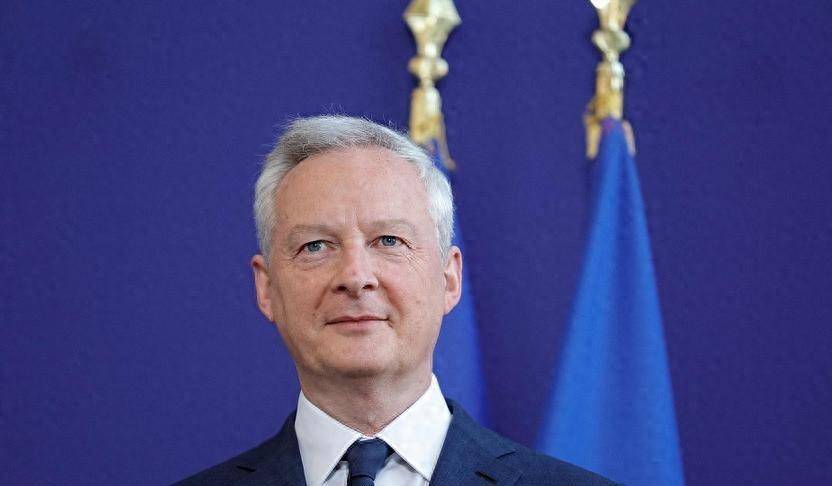
法国不再掩饰!向全球发出通告,27国可能对中国商品加征30%关税,但法财长强调不能搞一刀切
Sou Hu Cai Jing· 2026-02-16 23:33
最近全球经贸圈最炸裂的一幕,不是美国又在太平洋搞军演,也不是日本新首相高市早苗放什么狠话,而是法国突然掀了桌子——直接摊牌。 回过头看,之前闹得满城风雨的电动汽车关税风波,就是它先点的火。 现在它不满足于小打小闹,想拉整个欧盟下水,搞一场全面围堵。 理由?简单粗暴——看着中欧贸易逆差数字涨到眼红。 2024年,欧盟对华逆差3045亿欧元;2025年,这个窟窿又扩大到3200亿欧元左右。 法国人坐不住了,觉得中国货"抢"了他们的市场,必须动手。 但法国人开的方子,实在歪得离谱。 第一招,就是"一刀切"加税。 不管你是卖螺丝钉、纺织品,还是光伏板、家电,统统加30%。 这种懒政式操作,等于把复杂问题简化成蛮力对抗。 第二招更阴,居然想照搬1985年美国对付日本的"广场协议"。 当年美国联合几个盟友,硬生生把日元逼升值,结果日本出口成本飙升,制造业一蹶不振,经济陷入"失去的三十年"。 现在法国人想如法炮制,鼓动欧盟联手施压,让欧元对人民币一次性贬值20%到30%,说白了,就是逼人民币被动升值,削弱中国制造的价格优势。 这算盘打得噼里啪啦响,可刚落地,自家后院就起火了。 2月9号那天,法国政府直属的智库"高等战略与规 ...
法好大口气,叫嚣对华加税30%?不用中国出手,德国第一个不答应
Sou Hu Cai Jing· 2026-02-15 18:04
谁能想到,时间都已经来到了2026年,竟然还有人在做着"逼迫中国低头"的春秋大梦! 就在前几天,法国那边搞出了个大新闻。一家名为"高等战略与规划委员会"的官方智库,煞有介事地抛出了一份火药味十足的报告。 这份报告的核心意思就一个:欧洲的工业快要完蛋了,想要活命,就得拿中国开刀! 怎么开刀呢?这帮法国专家给出了两条路:要么对中国出口到欧洲的所有商品加征30%的关税,要么就逼着中国让人民币大幅升值,复刻1985年美国收割日 本的"广场协议"! 这家智库可不是什么野鸡机构,它是专门给法国政府出谋划策的"高参"。正因为如此,这种危言耸听的论调才更让人觉得荒唐和愤怒。 他们似乎忘了,现在的中国不是当年的日本,而法国,更不是当年的美国! ** x * ★ ★ * * * ★ ★ ★ r 头条 @秦锦书 为什么法国人突然这么急眼了?甚至不惜撕下伪装,喊出这么无赖的口号?原因很简单,他们怕了!是真的怕了! 长久以来,欧洲人看中国制造,总是带着一股傲慢,觉得我们只能造点衣服鞋帽,搞搞低端加工。可现实却狠狠地给了他们一记耳光! 看看现在的汽车、机床、生物医药,这些曾经被欧洲人视为"禁脔"的高端领域,今天的中国制造不仅在质量上追平 ...
27国外援待命,马克龙向全球发话,对我们出手在先,中方坚决奉陪到底
Sou Hu Cai Jing· 2026-02-15 17:24
法国政府下属的一个智库近期抛出了一份石破天惊的报告,其中提出了一系列旨在遏制中国贸易扩张的激进建议。这份报告不仅建议欧盟对所有来自中国的 出口商品统一征收百分之三十的进口关税,更进一步设想了一项与1985年美日"广场协议"如出一辙的国际安排,意图强制人民币对欧元升值百分之三十。这 一系列组合拳的目的显而易见:通过经济手段迫使中国在贸易争端中做出让步。 尽管面临欧盟内部的强大阻力,法国方面并未打算退缩,而是试图将此事国际化,争取更多盟友的支持。他们看中了G7等多边平台,希望将对华贸易施压 升级为西方阵营的集体行动。通过在G7会议上反复强调中欧贸易失衡的"危险性",法国试图说服其他成员国,特别是那些与中国经贸联系不那么紧密的国 家,共同向北京施加压力。这种策略的背后,是法国试图在欧盟乃至整个西方世界扮演对华强硬派领袖角色的野心。 报告的核心逻辑建立在当前中欧贸易失衡的严峻数据之上。报告指出,预计到2024年,欧盟对中国的贸易逆差将飙升至惊人的3045亿欧元,这意味着巨额资 金持续单向流入中国,法国方面认为这种失衡本身就是不公平的体现。特别是在汽车、化工、电池以及精密机床等关键产业领域,中国产品凭借其压倒性的 成本 ...

欧洲工业危机,美法中是三大赢家
Sou Hu Cai Jing· 2026-02-15 06:57
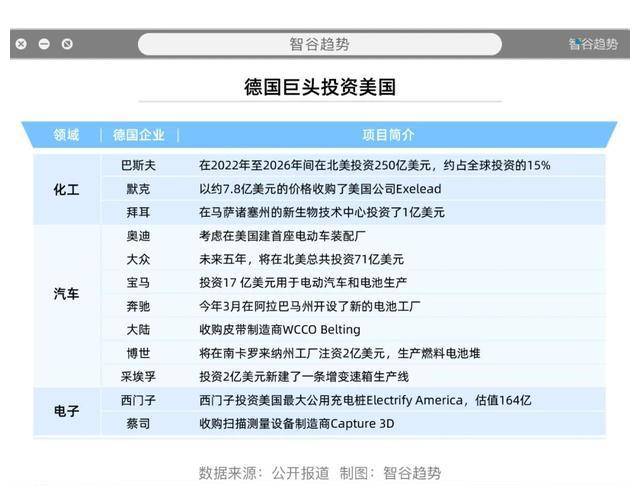
Core Viewpoint - German companies are increasingly investing in the United States due to energy crises and inflation in Germany, leading to a shift in production capacity to regions with more favorable conditions, particularly the U.S. and China [1] Group 1: Investment in the U.S. - BMW Group announced an investment of $1.7 billion (approximately 12.3 billion RMB) in electric vehicle and battery production in the U.S. [1] - Volkswagen plans to invest $7.1 billion (approximately 51.4 billion RMB) in the U.S. over the next five years [1] - BASF will invest $25 billion (approximately 181.1 billion RMB) in North America over four years [1] - Other German companies like Mercedes, Bosch, Siemens, and Bayer are also increasing their investments in the U.S. [1] - The U.S. offers cheap energy, a large consumer market, and attractive business policies, making it an appealing destination for German manufacturers [1] Group 2: Investment in China - BASF plans to invest €10 billion in China, while Audi, Volkswagen, and Merck have significant investment plans in the country [3] - Investments are concentrated in coastal cities, particularly Shanghai, which is favored for its strong infrastructure and business environment [3] - French companies are also looking to benefit from the situation, as Germany's energy crisis creates market opportunities for them [3] Group 3: Industry Trends - The shift of German industries is focused on high-value sectors such as organic chemicals, electronic devices, and automotive components [1] - The historical trend of industrial transfer shows a movement from advanced regions to less developed areas, but current conditions favor the U.S. and China for advanced manufacturing [1][3] - Germany's reliance on natural gas, particularly from Russia, has exacerbated its energy crisis, while France's energy strategy positions it to capitalize on Germany's challenges [3]