宝钢股份

Search documents
2026量产元年,人形机器人机会在哪?
Ge Long Hui· 2025-12-07 07:47
Core Viewpoint - The global capital market is experiencing a surge in humanoid robots, with significant rebounds in stock performance in both A-shares and U.S. markets, driven by policy support, order fulfillment, and technological breakthroughs as the industry approaches a mass production milestone in 2026 [1][3][5]. Group 1: Market Dynamics - The humanoid robot sector in A-shares has seen a rebound, with notable stock performances such as Lixing Co. hitting a 20% limit up, alongside strong performances from Hengli Hydraulic and Haoshi Electromechanical [1]. - In the U.S. market, the government is signaling strong support for the robotics industry, leading to a collective surge in stock prices, with iRobot Corp (IRBT) experiencing a 133% increase over five trading days [3]. - The current market trend is characterized by a shift from speculative trading to performance realization, as the industry prepares for mass production [5]. Group 2: Technological Advancements - Tesla is leading the global mass production wave, with plans to launch the Gen3 production model in Q1 2026 and ramp up production capacity to 1 million units at its Fremont factory by the end of the year [6][7]. - The technological advancements in Tesla's humanoid robots, such as the Optimus Gen2.5, demonstrate significant improvements in speed and hardware design, indicating a maturation of technology [7]. - Key components like reducers and servo motors have seen over 50% domestic market share, breaking the overseas monopoly and supporting mass production [14]. Group 3: Industry Opportunities - The humanoid robot sector is becoming a focal point in the U.S.-China tech competition, with the U.S. increasing support for local enterprises while China implements a three-dimensional policy framework to enhance domestic capabilities [14]. - The demand for humanoid robots is driven by labor shortages in industrial sectors, where a single humanoid robot can replace five skilled workers, highlighting the market's potential [15]. - The global humanoid robot market is projected to reach 6.339 billion yuan by 2025, with a compound annual growth rate of 48% in industrial applications and 52% in medical rehabilitation from 2026 to 2030 [15]. Group 4: Investment Focus - Investment strategies should concentrate on three core areas: critical components and assemblies, technological upgrades, and scene implementation ecosystems [17][18]. - The focus on core components is essential as mass production ramps up, with significant procurement needs expected from manufacturers like Tesla and Xiaopeng [17]. - Long-term growth opportunities lie in technological upgrades and software ecosystems, which are crucial for enhancing robot usability and performance [18]. Group 5: Conclusion - As the industry approaches the mass production phase in 2026, structural growth opportunities are anticipated, making it a critical time for investors to position themselves for long-term development in the humanoid robot sector [20].



钢价震荡偏强运行,继续看多钢铁板块
Xinda Securities· 2025-12-07 07:42
Investment Rating - The investment rating for the steel industry is "Positive" [2] Core Insights - The steel sector has shown a slight increase of 0.54% this week, underperforming compared to the broader market, which rose by 1.28% [10] - The report indicates that while the steel industry faces supply-demand imbalances, the implementation of "stability growth" policies is expected to support steel demand, particularly in real estate and infrastructure sectors [3] - The report suggests that the overall industry structure is likely to improve, with specific companies being undervalued and presenting structural investment opportunities [3] Supply Summary - As of December 5, the capacity utilization rate for blast furnaces among sample steel companies is 87.1%, a decrease of 0.90 percentage points week-on-week [27] - The average daily pig iron production is 2.323 million tons, down 2.38% week-on-week [27] - The total production of five major steel products is 7.187 million tons, a decrease of 3.78% week-on-week [27] Demand Summary - The consumption of five major steel products is 8.642 million tons, down 2.68% week-on-week [35] - The transaction volume of construction steel among mainstream traders is 99,000 tons, a decrease of 5.31% week-on-week [35] Inventory Summary - The social inventory of five major steel products is 9.785 million tons, down 2.86% week-on-week [43] - The factory inventory of five major steel products is 3.871 million tons, down 1.64% week-on-week [43] Price & Profit Summary - The comprehensive index for ordinary steel is 3,473.6 CNY/ton, an increase of 0.60% week-on-week [49] - The profit for rebar produced in blast furnaces is 34 CNY/ton, an increase of 383.33% week-on-week [55] - The profit for electric arc furnace-produced construction steel is -25 CNY/ton, an increase of 59.02% week-on-week [55] Raw Material Summary - The spot price index for Australian iron ore (62% Fe) is 790 CNY/ton, down 0.75% week-on-week [71] - The price of primary metallurgical coke is 1,880 CNY/ton, down 55 CNY/ton week-on-week [71]
2026量产元年,人形机器人机会在哪?
格隆汇APP· 2025-12-07 07:40
Core Viewpoint - The article highlights the significant growth potential in the humanoid robot industry, driven by technological advancements, policy support, and increasing market demand, particularly as the year 2026 approaches, marking a pivotal point for mass production [9][32]. Group 1: Market Dynamics - The humanoid robot sector is experiencing a rebound in the A-share market, with notable performances from companies like Lixing Co., which saw a 20% increase in stock price [5]. - In the U.S. market, the government is actively supporting the robotics industry, leading to a surge in stock prices for related companies, such as iRobot Corp, which saw a 133% increase over five trading days [8]. - The shift in market sentiment is moving from speculative trading to performance realization, as the industry anticipates a transition to tangible results [9]. Group 2: Technological Advancements - Tesla is leading the global mass production wave, with plans to launch its Gen3 humanoid robot model in Q1 2026, aiming for a production capacity of 1 million units by the end of the year [11]. - Continuous technological breakthroughs, such as the Optimus Gen2.5's enhanced capabilities, are laying the groundwork for commercial viability [13]. - The development timeline for Tesla's humanoid robots indicates a clear path from concept to mass production, with significant milestones achieved [17]. Group 3: Competitive Landscape - The humanoid robot industry is a focal point of U.S.-China technological competition, with both countries ramping up support for their domestic industries [22]. - In China, a collaborative ecosystem is emerging, combining complete machines, components, and supportive policies, leading to a surge in orders from domestic companies [18]. - Key components like reducers and servo motors have seen over 50% market share achieved by domestic manufacturers, breaking the overseas monopoly [22]. Group 4: Market Opportunities - The industrial sector is facing a labor shortage, with humanoid robots capable of replacing multiple skilled workers, creating a strong demand for these technologies [22]. - The humanoid robot market is projected to grow significantly, with estimates suggesting a market size of 6.339 billion yuan by 2025 and over 640 billion yuan by 2030 [23]. - Investment focus should be on critical components, technological upgrades, and ecosystem collaboration to capitalize on the upcoming mass production phase [25][29]. Group 5: Strategic Directions - Investment strategies should prioritize key components and assemblies that will benefit from mass production, as well as technological upgrades that enhance performance and reduce costs [26][28]. - The focus should also include vertical applications in industries such as logistics and manufacturing, where robots can provide clear ROI and operational efficiency [30]. - Companies that can offer integrated solutions combining hardware, software, and services will be better positioned to succeed in the evolving market landscape [30].

“国企经验”与“民企活力”互补融合助推苏州钢铁产业智能化转型
Su Zhou Ri Bao· 2025-12-06 00:56
Core Insights - A "Great Craftsman Alliance" focused on key technologies in intelligent manufacturing of steel was established in Suzhou on December 5 [1] - The first joint project, "Research and Development of In-Furnace Visualization Intelligent Recognition System Based on Electric Furnace," was announced to address pain points in the steel production industry [1] Group 1: Alliance Formation - The alliance signifies a collaboration between state-owned and private enterprises, combining "process" and "equipment" expertise [1] - The two innovation studios, led by national labor models, showcased their development history, innovative achievements, and core advantages [1] Group 2: Project Focus - The in-furnace visualization intelligent recognition system aims to enhance precision and safety in the smelting process through intelligent means [1] - The collaboration is expected to drive digital transformation in traditional industries and inject innovative energy into industry collaboration and skill inheritance [1] Group 3: Innovation Studio Development - The labor model innovation studio serves as a key platform for technical breakthroughs and talent cultivation, promoting the spirit of labor and craftsmanship [1] - Suzhou has established 1,525 various innovation studios, creating a robust ecosystem led by municipal-level studios [1][2] Group 4: Future Expectations - The signing of the agreement is seen as an innovative practice to deepen the reform of the industrial workforce and enhance the brand influence of labor model innovation studios [2] - There is an expectation for the joint platform to become an incubator for technological innovation and a training ground for talent [2]
产量占全球一半,利润却被日本制铁吊打,中国钢铁产业的病根在哪
Sou Hu Cai Jing· 2025-12-05 15:11
Core Viewpoint - The Chinese steel industry, despite being the largest producer globally, faces challenges such as low profit margins and worker salaries significantly lower than those in developed countries. The industry is undergoing restructuring to enhance its bargaining power and transition from a manufacturing giant to a strong nation [1]. Group 1: Worker Compensation and Conditions - Steel workers in China earn significantly less than their international counterparts, with average monthly salaries ranging from 8,000 to 12,000 RMB, compared to 35,000 RMB in Germany and 28,000 RMB in Japan [3][5]. - The average steel worker in Hebei works over 400 more hours annually than office workers, with a threefold higher incidence of workplace injuries, highlighting the need for better compensation [5][6]. - The disparity in wages has led to financial strain on workers, with many struggling to cover basic living expenses, indicating a pressing need for wage increases in the industry [6][8]. Group 2: Industry Challenges and Internal Competition - The steel industry is experiencing a "double loss" game due to internal competition, where companies lower prices below cost to secure orders, ultimately harming both workers and businesses [8][10]. - In 2024, major steel companies reported a 30% decline in net profits despite producing 20% of the national steel output, reflecting the adverse effects of price wars [8][10]. - The export data shows a 12% increase in steel exports, but a corresponding 8% decrease in export prices, indicating that the industry is selling more but earning less [10][12]. Group 3: Need for Innovation and Investment - The steel industry's research and development investment is only 1.2%, significantly lower than international competitors like South Korea's POSCO, which invests 3.5% [12][14]. - The lack of innovation and reliance on low-cost production methods hinder the industry's ability to move up the value chain and compete effectively [12][14]. Group 4: Path to Recovery and Value Realignment - A proposed solution to the industry's challenges is to increase worker wages, aligning their compensation with the value of their labor, which could lead to improved productivity and morale [14][15]. - Companies like Shandong Steel have successfully increased wages, resulting in a 15% reduction in waste and an 8% increase in production efficiency, demonstrating the benefits of investing in labor [15][17]. - The industry is encouraged to shift focus from low-price orders to high-end products, as seen with Baosteel's 25% increase in high-end steel sales, which has significantly improved profit margins [17][19].

2025 三季度 A 股消费钢铁赛道业绩情况排名发布!用 iFinD Chat 一键获取数据与解析
Xin Lang Cai Jing· 2025-12-05 12:57
Core Viewpoint - The performance ranking of A-share steel companies for Q3 2025 reveals a landscape characterized by "stability among leaders, pressure on some, and increasing differentiation" in the industry, highlighting the impact of supply-demand dynamics and cost management capabilities on profitability [1][6]. Revenue Ranking - Baosteel Group leads the revenue ranking with 232.436 billion yuan, despite a slight year-on-year decline of 4.29%, maintaining its position due to a comprehensive industry chain and high-end product structure [2][7]. - Hebei Steel and Hualing Steel follow in second and third place with revenues of 96.542 billion yuan and 94.598 billion yuan, respectively, with Hualing Steel experiencing a 14.96% year-on-year decline due to temporary supply-demand adjustments in the steel industry [2][7]. - Other companies like CITIC Special Steel and Shougang Group also maintain significant revenue levels, although some have seen slight declines due to product price fluctuations [2][7]. Net Profit Differentiation - Leading companies exhibit strong profit resilience, with Baosteel reporting a net profit of 8.088 billion yuan, a year-on-year increase of 29.31%, supported by high-end product premiums and effective cost control [3][8]. - Hebei Steel's net profit reached 1.011 billion yuan, reflecting a 57.08% year-on-year increase due to regional demand recovery and cost reduction efforts [3][8]. - Conversely, companies like Ansteel and Taiyuan Iron and Steel faced significant losses, with Ansteel reporting a net loss of 1.985 billion yuan (down 260.76% year-on-year) and Taiyuan Iron and Steel a net profit of 0.586 billion yuan (down 206.99% year-on-year), primarily due to declining steel prices and high costs [3][8]. Industry Landscape - The advantages of leading companies like Baosteel and Hebei Steel are reinforced by their high-end capacity layouts and diverse product structures, allowing them to maintain profitability amid industry fluctuations [4][9]. - Some regional steel companies are under pressure due to localized supply-demand issues and a lack of product diversity, leading to declines in both revenue and net profit [4][9]. - The industry is witnessing a concentration of resources towards leading companies with cost advantages and high-end product offerings, further highlighting the differentiation at the bottom of the cycle [4][9].


侯安贵会见法孚集团董事会主席兼总裁弗雷德里克·桑切斯
Xin Lang Cai Jing· 2025-12-05 12:49
Core Viewpoint - The meeting between Baowu's General Manager Hou Angui and Voestalpine's Chairman and CEO Friedrich Santner focused on collaboration in metallurgy equipment, technological innovation, green low-carbon transformation, and digital development in the steel industry [1][7]. Group 1: Company Developments - Baowu and Voestalpine shared updates on their respective business developments and reviewed their past cooperation [4][10]. - Both companies expressed their commitment to deepen strategic cooperation based on long-term friendly relations [4][10]. Group 2: Strategic Initiatives - The two companies aim to expand cooperation areas and innovate collaboration models [4][10]. - There is a focus on strengthening metallurgy equipment and technological innovation to promote green low-carbon transformation and digital development in the steel industry [4][10].

胡望明调研马钢有限并召开协同支撑推进会:树立“整合协同,价值创造”标杆
Xin Lang Cai Jing· 2025-12-05 12:49
(来源:中国宝武) 邂逅 · 3449 期 · 11744 篇 胡望明指出,今年以来,马钢有限通过自身努力,在宝钢股份全体系协同支撑下,在思想理念转变上发生了可喜变化,在经营绩效改善、信息化推动算账 经营方面实现了巨大进步,主要体现在三方面:一是经营绩效持续向好;二是管理变革激发活力;三是树立了集团内"整合协同,创造价值"的榜样案例。 12月5日,宝武党委书记、董事长胡望明到马钢有限调研,并召开协同支撑推进会。 胡望明强调,成绩巨大、来之不易,但潜力更大、需继续努力。潜力来源于"弯弓搭箭"钢铁主业格局下协同发展的强大动能,来源于马钢有限独特的自身 优势。释放潜力要在"补短板、强弱项"方面下更大功夫:一是进一步释放协同效应;二是进一步提升产品经营能力;三是进一步深化管理融合;四是持续 加快改革创新。 胡望明要求,马钢有限要认清形势任务,坚定发展战略,以战略为引领,持续推动高质量发展。要时刻牢记习近平总书记的殷殷嘱托,坚持做强做优做 大,着力将马钢有限打造成钢铁行业由大变强的标志性项目。锚定新要求,成为具备持续竞争优势的市场化主体。在技术创新、产品经营、效率提升、产 业链控制等方面持续发力,不断锻造差异化竞争优势 ...
股息收益率仅为3.32%,浦发银行被剔除中证红利指数
Guan Cha Zhe Wang· 2025-12-05 07:47
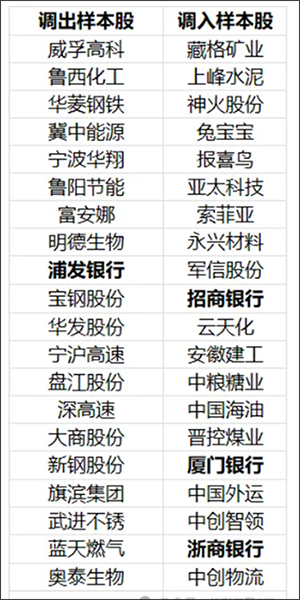
Core Viewpoint - The annual review of the CSI Dividend Index has resulted in the removal of 20 constituent stocks, including Shanghai Pudong Development Bank and Baosteel, while adding 20 new stocks such as China National Offshore Oil Corporation and China Merchants Bank. The adjustments will take effect after the market closes on December 12 [1][2]. Group 1: Index Adjustments - The CSI Dividend Index has replaced exactly 20 constituent stocks, adhering to the rule that sample changes generally do not exceed 20% [2][3]. - In comparison, the CSI Low Volatility Dividend Index replaced 29 stocks, indicating a higher turnover rate than the CSI Dividend Index [3]. Group 2: Market Capitalization and Dividend Yield - The newly added stocks, including China Merchants Bank, Xiamen Bank, and Zheshang Bank, have a total market capitalization of approximately CNY 1.08 trillion, CNY 189.75 billion, and CNY 837.67 billion, respectively. In contrast, the removed Shanghai Pudong Development Bank has a market capitalization of about CNY 372 billion [3]. - The dividend yields for the newly added banks are notably higher, with China Merchants Bank at 4.63%, Xiamen Bank at 4.04%, and Zheshang Bank at 5.40%, compared to Shanghai Pudong Development Bank's yield of only 3.32% [3][4]. Group 3: Dividend Payment Trends - Shanghai Pudong Development Bank's dividend payout ratios for 2022-2024 are 18.4%, 25.7%, and 27.4%, respectively, which remain below the common industry benchmark of 30%, indicating a conservative dividend policy [4]. - The CSI Dividend Index has implemented three quarterly dividends this year and has a total of 14 dividends since its inception, with a cumulative dividend amount of CNY 3.65 per ten shares. The annual dividend ratios over the past five years have been consistently high, averaging around 4.5% [4]. Group 4: Financial Performance of Shanghai Pudong Development Bank - As of the end of September, Shanghai Pudong Development Bank's total assets reached CNY 9.892 trillion, reflecting a year-on-year growth of 4.55% [5]. - The bank reported a net profit attributable to shareholders of CNY 38.82 billion for the first three quarters, marking a 10.2% increase compared to the previous year [5][6]. - However, the bank's revenue growth has been weak, with a total operating income of CNY 132.28 billion, showing only a 1.9% increase year-on-year, which is significantly lower than the industry average [6].

长期跑赢红利、聚焦大中市值、月月评估分红,现金流ETF(159399)优势解析
Mei Ri Jing Ji Xin Wen· 2025-12-05 04:24
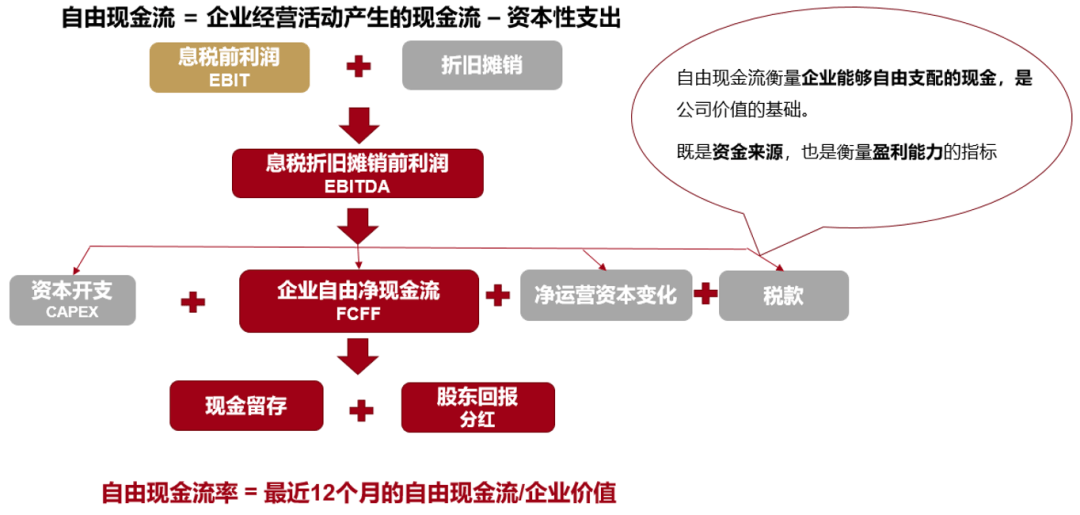
我们认为现阶段市场关注度较高、资金增持较多的方向当属现金流策略。以自由现金流收益率为核心选股标准的这一策略,于今年上半年在A股市场 逐步落地,当时市场对其存在不少质疑,且存在不同看法。总结下来,无论是现金流策略还是现金流ETF(159399)都属于偏价值型的范畴,今年以来, 该策略的相关指数已跑赢红利低波指数及其他一些红利策略类指数,作为价值类指数,其推出后的第一年表现相对较好。 在今年二、三季度市场风格整体偏成长的背景下,现金流策略与红利策略确实均明显跑输成长风格指数,同时也跑输了部分宽基指数。但从现阶段对 未来展望,从中长期配置视角出发,我们认为明年整个市场的风格有望更加均衡。现金流策略近期已受到不少资金关注,现金流ETF(159399)近期持续 获得资金净增持。 首先,从现金流策略来讲,其核心关注的是上市公司的自由现金流率,即企业最近四个季度财报中披露的自由现金流除以企业价值,这一指标构成了 指数的核心选股因子。 而红利策略是以上市公司的分红金额除以总市值,也就是股息率来选股,由此可见,两个策略在计算指标的分子与分母上均存在差异。对于自由现金 流率指标,分子对应的是自由现金流,相比于净利润等盈利指标,自 ...