
广汇能源

Search documents
2025年1-7月新疆维吾尔自治区能源生产情况:新疆维吾尔自治区发电量3163.6亿千瓦时,同比增长0.7%
Chan Ye Xin Xi Wang· 2025-09-11 03:50
Core Insights - The report highlights the growth and changes in electricity generation in the Xinjiang Uygur Autonomous Region, with a total generation of 507.8 billion kWh in July 2025, marking a year-on-year increase of 6.5% [1] - The report provides a detailed breakdown of electricity generation by type, indicating a decline in thermal and wind power generation, while solar power generation has seen significant growth [1] Electricity Generation Overview - From January to July 2025, Xinjiang's total electricity generation reached 3,163.6 billion kWh, reflecting a modest year-on-year increase of 0.7% [1] - Thermal power generation accounted for 2,178.6 billion kWh, representing 68.9% of the total, with a year-on-year decrease of 2.6% [1] - Hydropower generation was 208.5 billion kWh, making up 6.6% of the total, with a year-on-year increase of 3.6% [1] - Wind power generation totaled 459 billion kWh, constituting 14.5% of the total, with a slight year-on-year decline of 0.1% [1] - Solar power generation reached 317.51 billion kWh, accounting for 10% of the total, and experienced a significant year-on-year growth of 30.1% [1] Statistical Data and Methodology - The report's data is based on large-scale industrial enterprises with annual main business revenues of 20 million yuan or more, ensuring comparability of data across years [2] - The statistical scope may change annually, which could lead to discrepancies in year-on-year comparisons [2]


煤价触底反弹,广汇能源作为红利股获券商关注
Zheng Quan Shi Bao· 2025-09-10 03:01
Core Viewpoint - The coal industry has faced significant profit declines in the first half of the year, but certain companies, particularly Guanghui Energy, are expected to recover due to rising coal prices and strong cash flow supporting high dividend payouts [1][2]. Group 1: Industry Performance - The total profit of the coal mining and washing industry in the first half of the year was 149.16 billion yuan, a year-on-year decrease of 52.9% [1]. - Guanghui Energy, along with 14 other companies, outperformed the industry average in terms of profit [1]. - The report from Guosheng Securities indicates that coal prices have likely reached a low point in June, suggesting a potential recovery in profitability for coal companies [1]. Group 2: Guanghui Energy's Financials - Guanghui Energy's dividend yield (TTM) stands at 12.12%, the highest in the SW coal industry, significantly above the second-ranked Jizhong Energy at 10.08% [1]. - The company reported a net cash flow from operating activities of 2.823 billion yuan in the first half of 2025, a year-on-year increase of 7.59% [2]. - As of June 30, 2025, Guanghui Energy's undistributed profits reached 14.634 billion yuan, providing a solid foundation for future dividends [2]. Group 3: Shareholder Returns - In the first half of the year, Guanghui Energy repurchased 844,200 shares, spending over 5 million yuan, and has cumulatively repurchased 69.6995 million shares for a total of 505 million yuan [3]. - The company distributed cash dividends of 3.976 billion yuan for the 2024 fiscal year, with an actual cash distribution of 0.70022 yuan per share [3]. - Guanghui Energy has committed to distributing at least 90% of the average distributable profits over the next three years (2025-2027) [3]. Group 4: Business Expansion - In the first half of 2025, Guanghui Energy's coal production reached 26.8694 million tons, a year-on-year increase of 175.11%, with total coal sales of 27.6444 million tons, up 75.97% [4]. - The company is advancing its coal mining projects, including the Ma Lang No. 1 coal mine, which is progressing smoothly with necessary approvals obtained [4]. - Analysts from various brokerages have expressed optimism about Guanghui Energy's coal, coal chemical, and oil and gas businesses, highlighting the company's growth potential [5][6].

非电煤和电煤接力换棒,秋季煤炭布局稳扎稳打行业周报 | 投研报告
Zhong Guo Neng Yuan Wang· 2025-09-08 01:55
Core Viewpoint - The coal market is experiencing a slight price decline, but there are positive factors that may support a rebound in coal prices, particularly in the non-electric coal sector during the upcoming demand season [1][2]. Group 1: Coal Price Trends - As of September 5, the Qinhuangdao Q5500 thermal coal price is 679 RMB/ton, down 11 RMB/ton or 1.59% from the previous period [2]. - The current price is below 700 RMB/ton, following a rebound above this level [2]. - The market is transitioning from summer to autumn, with expectations for increased non-electric coal demand in September and October [1][2]. Group 2: Supply and Demand Factors - The operating rate of coal mines in Shanxi, Shaanxi, and Inner Mongolia is at a low level of 79.5%, down 0.4 percentage points as of August 31 [2]. - Port inventories are decreasing, with the inventory in the Bohai Rim at 22.66 million tons, down 1.48% as of September 5, and Guangzhou Port inventory declining by over 7% [2]. - Non-electric coal demand, particularly from the coal chemical sector, is expected to increase, with methanol operating rates at 83.72%, up 1.41 percentage points [2]. Group 3: Coking Coal Market - As of September 5, the price of coking coal at Jingtang Port is 1540 RMB/ton, rebounding from a low of 1230 RMB/ton in early July [2]. - Coking coal futures have seen a significant increase, rising from 719 RMB in early June to 1159 RMB, a cumulative increase of 61.2% [2]. - The coking coal market is characterized by strong expectations but weak realities, with supply tightening due to regulatory measures [2]. Group 4: Investment Logic - The price of thermal coal is expected to rebound to long-term contract prices, currently above 700 RMB, with a target of around 750 RMB by 2025 [3]. - The breakeven point for power plants is estimated at around 860 RMB, which could serve as a price ceiling [3]. - The price ratio of coking coal to thermal coal is 2.4, with target prices for coking coal set at 1608 RMB, 1680 RMB, 1800 RMB, and 2064 RMB corresponding to thermal coal price targets [4]. Group 5: Investment Recommendations - The coal sector is seen as having both cyclical and dividend attributes, making it a favorable time for investment [5]. - Four main investment lines are identified: - Cyclical logic: Jin控煤业, 兖矿能源 - Metallurgical coal: 平煤股份, 淮北矿业, 潞安环能 - Dividend potential: 中国神华, 中煤能源, 陕西煤业 - Diversified growth: 神火股份, 电投能源, 新集能源, 广汇能源 [5].
非电煤和电煤接力换棒,秋季煤炭布局稳扎稳打
KAIYUAN SECURITIES· 2025-09-07 13:50
Investment Rating - The investment rating for the coal industry is "Positive" (maintained) [1] Core Viewpoints - The transition from thermal coal to non-thermal coal is expected to support coal prices, with a stable layout in the coal sector [12] - The current dynamics in the coal market indicate that both thermal coal and coking coal prices have reached a turning point, suggesting potential price recovery [12] - The report highlights that the demand for non-thermal coal, particularly from the coal chemical sector, is anticipated to be a key driver for future price increases [4][12] Summary by Sections Investment Logic - Thermal coal prices are expected to rebound to long-term contract prices, currently above the second target price of around 700 CNY per ton [4][12] - The forecast for thermal coal prices suggests a potential rise to 750 CNY per ton, which is seen as a profit-sharing point for coal and power generation companies [4][12] - Coking coal prices are more influenced by supply and demand fundamentals, with target prices set at 1608 CNY, 1680 CNY, 1800 CNY, and 2064 CNY corresponding to thermal coal price targets [4][12] Investment Recommendations - The report identifies four main investment lines in the coal sector: 1. Cycle logic: Companies like Jinko Coal and Yanzhou Coal Mining 2. Dividend logic: China Shenhua and China Coal Energy 3. Diversified aluminum elasticity: Shenhua Holdings and Electric Power Investment 4. Growth logic: New Energy and Guanghui Energy [5][13] Key Market Indicators - The coal index increased by 0.31%, outperforming the CSI 300 index by 1.12 percentage points [7][9] - The average PE ratio for the coal sector is 13.2, and the PB ratio is 1.23, ranking low among all A-share industries [27][32] - As of September 5, 2025, the price of Qinhuangdao Q5500 thermal coal is 679 CNY per ton, reflecting a slight decrease of 1.59% [19][31] Coking Coal Market - The price of main coking coal at Jingtang Port is currently 1540 CNY per ton, down from 1610 CNY [20][22] - The report notes a significant rebound in coking coal futures prices, which have increased by 61.2% since June [4][12] Non-Thermal Coal Sector - The methanol operating rate is currently at 83.72%, indicating a slight increase, while the urea operating rate has decreased significantly [11][19] - The report emphasizes the importance of non-thermal coal demand, particularly from the coal chemical industry, as a stabilizing factor for coal prices [4][12]
气温下降导致需求走弱,煤价略有下行
Soochow Securities· 2025-09-07 08:26
Investment Rating - The report maintains an "Accumulate" rating for the coal mining industry [1] Core Viewpoints - The coal price has slightly declined due to weakening demand as temperatures drop, with the current port price for thermal coal at 679 RMB/ton, down 11 RMB/ton week-on-week [1] - Supply remains stable, with an average daily inflow of 1.8214 million tons to the four ports in the Bohai Rim, a decrease of 0.0084 million tons or 0.46% from the previous week [1] - Daily outflow from the same ports is 1.8393 million tons, down 0.0574 million tons or 3.03% week-on-week, indicating a slight reduction in demand [1] - The total inventory at the Bohai Rim ports is 22.71 million tons, down 0.37 million tons or 1.60% from the previous week, reflecting a slight decrease in overall inventory levels [1] - The report suggests that as the peak season for coal approaches its end, the combination of strong supply and weak demand may put pressure on inventory depletion in the short term, with coal prices expected to remain volatile [1] Summary by Sections 1. Weekly Market Review - The Shanghai Composite Index closed at 3,812.51 points, down 63.02 points or 1.63% week-on-week, with the coal sector index at 2,634.16 points, down 9.33 points or 0.35% [10] 2. Domestic Coal Prices - Domestic thermal coal prices have shown mixed trends, with some regions experiencing price increases while port prices have decreased [16][18] 3. International Prices - International thermal coal prices have shown a slight decline, with the Newcastle coal price index down 0.87 USD/ton to 109.30 USD/ton [18] 4. Inventory and Shipping - The average daily inflow and outflow of coal at the Bohai Rim ports have both decreased, indicating a slowdown in coal movement [27][30] - The average shipping cost on domestic routes has decreased by 3.9 RMB/ton to 29.81 RMB/ton, a drop of 11.57% [32] 5. Recommendations - The report emphasizes the importance of monitoring insurance capital inflows and suggests focusing on resource stocks, particularly recommending companies like Haohua Energy and Guanghui Energy as elastic targets in the thermal coal sector [35]

旺季尾声日耗见顶,供给收缩托底煤价
Huafu Securities· 2025-09-07 07:58
Investment Rating - The coal industry is rated as "stronger than the market" [6] Core Viewpoints - The report emphasizes that the fundamental goal is to reverse the Producer Price Index (PPI), which has been declining, with July's PPI showing a year-on-year decrease of 3.6%. The stability of coal prices is closely linked to PPI, and the lowest coal prices in 2025 may represent a policy bottom, with expectations for more supply-side policies to be introduced [5][6] - The coal industry is currently undergoing a significant transformation, with strict capacity controls and increasing operational difficulties leading to a tighter supply. The report suggests that coal will remain a key energy source in the short term, despite macroeconomic weaknesses affecting demand [5][6] - The report identifies several investment opportunities in the coal sector, focusing on companies with strong resource endowments, stable operating performance, and high or potentially increasing dividend ratios [6] Summary by Sections 1. Market Overview - The coal index increased by 0.31% this week, outperforming the Shanghai and Shenzhen 300 index, which decreased by 0.81%. Year-to-date, the coal index has dropped by 9.32%, while the Shanghai and Shenzhen 300 index has risen by 13.35% [11][12] 2. Thermal Coal 2.1 Key Indicators - As of September 5, 2025, the Qinhuangdao 5500K thermal coal price was 679 CNY/ton, down 1.6% week-on-week. The average daily production from 462 sample mines was 5.379 million tons, a year-on-year decrease of 6.5% [3][21] 2.2 Annual Long-term Contract Price - The long-term contract price for Qinhuangdao thermal coal (Q5500) was 674 CNY/ton, with a month-on-month increase of 0.9% and a year-on-year decrease of 3.3% [23] 2.3 Spot Prices - The report details various spot prices for thermal coal across different regions, indicating slight fluctuations in prices [27][28] 2.4 Supply and Demand - The report notes a slight decrease in daily consumption by major power plants, with a total inventory of 13.388 million tons, reflecting a minor decline [37][48] 3. Coking Coal 3.1 Key Indicators - The report highlights the price changes for coking coal, with the main coking coal price at Jing Tang Port dropping to 1540 CNY/ton, a decrease of 4.3% week-on-week [62][63] 3.2 Spot Prices - Various spot prices for coking coal are provided, showing both increases and decreases across different regions [66][68]
煤炭行业周报(9月第1周):9月长协价格上调,板块左侧布局-20250907
ZHESHANG SECURITIES· 2025-09-07 06:19
Investment Rating - The industry investment rating is "Positive" [1] Core Viewpoints - The coal sector has shown resilience, with a slight increase in prices and a positive outlook for the second half of the year, suggesting a potential balance between supply and demand [6][23] - The report highlights the importance of positioning in high-dividend coal companies and those undergoing turnaround in coking coal and coke sectors [6][23] Summary by Sections Market Performance - As of September 5, 2025, the CITIC coal industry index rose by 0.1%, outperforming the CSI 300 index, which fell by 0.81%, resulting in a 0.91 percentage point advantage [2] - The highest weekly stock price increase was seen in Yunmei Energy, with a rise of 4.03% [2] Supply and Demand Data - Average daily coal sales for monitored enterprises were 6.67 million tons, a week-on-week increase of 0.9% but a year-on-year decrease of 1.9% [2] - The average daily coal production was 6.64 million tons, showing a week-on-week decrease of 0.1% and a year-on-year decrease of 1.7% [2] - Total coal inventory (including port storage) was 25.85 million tons, down 0.7% week-on-week and down 9.1% year-on-year [2] Price Trends - The price index for thermal coal (Q5500K) was 676 CNY/ton, reflecting a week-on-week increase of 0.75% [3] - The average price for coking coal at Jing Tang Port was 1550 CNY/ton, down 4.9% week-on-week [4] - The report notes fluctuations in prices across various coal types, with some showing declines while others have remained stable [4][5] Investment Recommendations - The report suggests that coal prices are expected to rebound in September, with long-term contract prices for different grades of coal being 674, 613, and 551 CNY/ton respectively [6][23] - Recommended companies for investment include major thermal coal firms such as China Shenhua, Shaanxi Coal, and others, as well as coking coal companies like Huabei Mining and Shanxi Coking Coal [6][23]



中期分红常态化影响深远
Zheng Quan Shi Bao· 2025-09-05 18:49
Group 1 - The core point of the article highlights that A-share listed companies have shown overall satisfactory operating conditions in their 2025 interim reports, with a notable increase in mid-year dividend proposals exceeding 640 billion yuan compared to the previous year [1] - A trend of normalizing mid-year dividends is emerging, with many companies, especially in the banking sector, leading the way in implementing these distributions [1] - Significant dividend amounts have been reported from companies in the energy and telecommunications sectors, with China Mobile proposing a dividend of 54.08 billion yuan and China Petroleum planning a distribution of 40.2 billion yuan, comparable to major banks [1] Group 2 - A considerable number of companies are offering dividend yields above 7%, with Rong'an Real Estate at 13.11%, Guanghui Energy at 9.47%, Yutong Bus at 11.32%, and China Shenhua at 7.21%, indicating a shift where many non-bank entities are providing substantial returns to investors [2] - The overall number of companies engaging in mid-year distributions remains low, and those with annual dividend yields exceeding 2% are still a minority, suggesting that the investment value in the A-share market needs further enhancement [3] - The increasing focus on cash returns to investors and the normalization of mid-year dividends reflect a significant improvement in the operational philosophy of listed companies, moving away from previous criticisms of "money-grabbing" practices [3]

光大保德信一带一路混合A:2025年上半年利润245.95万元 净值增长率2.86%
Sou Hu Cai Jing· 2025-09-05 10:52
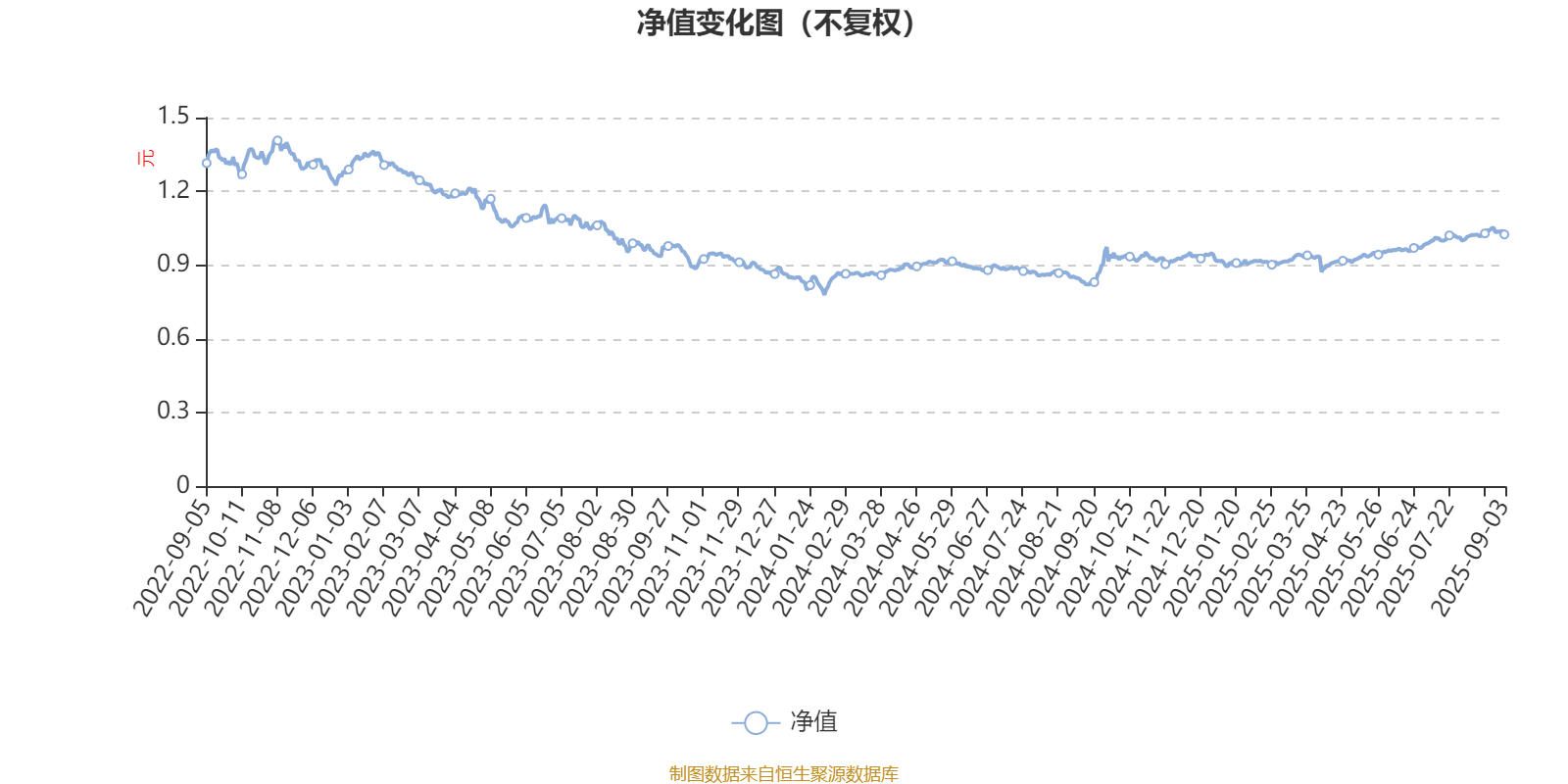
Core Viewpoint - The AI Fund, Everbright Prudential Belt and Road Mixed A, reported a profit of 2.4595 million yuan for the first half of 2025, with a net asset value growth rate of 2.86% during the same period, indicating a focus on sectors like AI, military, and robotics driven by technological advancements [3][12]. Fund Performance - As of September 3, 2025, the fund's unit net value was 1.025 yuan, with a recent three-month growth rate of 7.11%, a six-month growth rate of 12.88%, and a one-year growth rate of 20.45% [6][35]. - The fund's three-year Sharpe ratio was -0.3285, ranking 258 out of 319 comparable funds, while the maximum drawdown over three years was 44.75%, ranking 84 out of 332 [28][30]. Valuation Metrics - As of June 30, 2025, the fund's weighted average price-to-earnings (P/E) ratio was approximately 12.58, significantly lower than the industry average of 25.34. The weighted price-to-book (P/B) ratio was about 0.93, compared to the average of 2.34, and the weighted price-to-sales (P/S) ratio was around 0.71, against an average of 2.09 [12][20]. Growth Metrics - For the first half of 2025, the weighted revenue growth rate of the fund's stock holdings was -0.03%, and the weighted net profit growth rate was -0.04%, with a weighted annualized return on equity of 0.07% [20][21]. Fund Composition - As of June 30, 2025, the fund had a total of 10,600 holders, with personal investors holding 100% of the shares. The fund's top ten holdings included major banks and energy companies [38][44]. - The fund's average stock position over the past three years was 86.79%, with a peak of 93.07% at the end of 2024 [33].
研判2025!中国连续油管行业发展历程、产业链、市场规模、竞争格局及发展趋势分析:油气勘探力度加大,连续油管行业规模达到43.42亿元[图]
Chan Ye Xin Xi Wang· 2025-09-04 01:16
Core Insights - The global energy demand is rising, particularly in developing countries, leading to increased reliance on oil and gas [1][10] - Continuous tubing is increasingly applied in oil and gas field development due to its efficiency and flexibility, especially in unconventional resource extraction [1][10] - The continuous tubing industry is evolving with advancements in technology, resulting in higher strength, better corrosion resistance, and longer service life [1][10] - The market size of China's continuous tubing industry is projected to reach 4.342 billion yuan in 2024, reflecting a year-on-year increase of 3.1% [1][10] Industry Overview - Continuous tubing, also known as coiled tubing, is made from low-carbon alloy steel and is characterized by its flexibility and continuous length, which can reach several kilometers [3][8] - The tubing must withstand high pressures (up to 70 MPa) and harsh downhole conditions, necessitating high strength and excellent plasticity [3][8] Industry Chain - The upstream of the continuous tubing industry involves the production of raw materials, primarily high-strength low-alloy steel and special alloy materials [8] - The midstream focuses on the manufacturing of continuous tubing, while the downstream encompasses its application in oil and gas field operations such as workover, drilling, completion, and logging [8] Market Dynamics - China's crude oil production is expected to rise from 191.506 million tons in 2017 to 212.823 million tons in 2024, with a 1.3% year-on-year increase in the first half of 2025 [9][10] - The growth in production is supported by both mature oil fields and new fields, contributing to a stable increase in demand for continuous tubing [9][10] Competitive Landscape - The global continuous tubing service market is highly concentrated, with major players like Schlumberger, Halliburton, and Baker Hughes holding about 60% of the market share [10] - Domestic companies are increasing R&D investments to enhance their product offerings and achieve domestic substitution for high-end products [10] Development Trends - The future of the continuous tubing industry is expected to focus on high-strength tubing to meet the demands of deeper wells [13] - There is a push towards the intelligent and automated development of the industry, incorporating fiber optics for remote monitoring and real-time decision-making [14] - The application of continuous tubing is expanding beyond traditional oil and gas sectors into geothermal energy development, driven by the need for corrosion-resistant and high-insulation materials [15]






