艾力斯

Search documents
培育本土MNC、50亿级大单品,上海浦东发力全球创新药械首发地
Di Yi Cai Jing Zi Xun· 2025-07-26 01:58
Core Viewpoint - The Pudong New Area aims to become a global hub for innovative biopharmaceuticals, targeting significant growth in the industry by 2027, with specific goals for new drug approvals and market expansion [1][2]. Group 1: Industry Growth and Innovation - The biopharmaceutical industry in China is rapidly developing, with Pudong's innovative drug pipeline ranking second globally, surpassing Europe and Japan combined [2]. - Pudong's biopharmaceutical industry scale is projected to grow from 240.8 billion yuan in 2020 to 410 billion yuan by 2024, with an annual compound growth rate of 14% [2]. - The area has received approvals for 24 new drugs and 29 innovative medical devices since 2020, with a notable increase in the number of "First-in-class" and "First-in-China" products [2][3]. Group 2: Regulatory and Institutional Innovations - Pudong is implementing reforms to reduce institutional transaction costs and expedite the approval process for clinical trials and product launches [5]. - The area has established a unified ethical review process for clinical trials, enhancing efficiency in medical ethics reviews [5]. - In 2023, Pudong has introduced 75 innovative products into its medical institutions, with a 63% year-on-year increase in the usage of innovative medical products [5]. Group 3: Entrepreneurial Ecosystem - Pudong is positioning itself as a preferred location for scientists and entrepreneurs by creating low-cost innovation incubation zones and fostering collaboration with universities and research institutions [7]. - The area has seen a significant increase in overseas transactions, with 30% of national trade volume in biopharmaceuticals occurring in Pudong [7]. - The establishment of high-quality incubators and innovation centers in the Zhangjiang area has led to the creation of over 100 new biopharmaceutical startups annually [8][10]. Group 4: Future Development Plans - The Pudong New Area plans to develop a "1+1+X" model for biopharmaceutical functions, focusing on innovation hubs and industry clusters [7][10]. - The area aims to support the growth of large enterprises and significant products through tailored policies and service packages [10].
2025系列研究框架培训 - 创新药行业框架
2025-07-25 00:52
Summary of Conference Call on the Innovative Drug Industry Industry Overview - The conference call focuses on the **innovative drug industry** in China, highlighting its growth potential and market dynamics [1][3][4]. Key Points and Arguments 1. **Market Sentiment and Stock Performance**: The market's anticipation of domestic innovative drug data has increased, with stock price corrections observed during the ASCO conference, indicating a demand for exceeding expectations [1][4]. 2. **Valuation Influences**: The macroeconomic environment significantly impacts the valuation of the innovative drug sector. High interest rates restrict valuations, while low rates enhance performance. Government policies in China support the sector, but overseas markets are crucial for growth [1][5][6]. 3. **Company Classification**: Innovative companies are categorized into **Big Pharma/Hybrid** and **Biopharma/Biotech**. Big Pharma has stable income and lower risk, while Biopharma/Biotech focuses on innovation and faces higher initial risks but has improved success rates in later clinical stages [1][7]. 4. **Impact of Policy Changes**: The collection policy in China has prompted traditional pharmaceutical companies to transform, with firms like HengRui and Hansoh achieving success in innovation, leading to valuation increases [1][8]. 5. **Investment Focus**: Investors should prioritize "differentiated innovation" and "true innovation" that significantly address unmet needs and open future market opportunities, rather than merely seeking first-in-class products [3][19]. 6. **Clinical Development Stages**: The drug development process involves five critical stages, each capable of significantly enhancing company valuation as products progress from preliminary data validation to market sales [3][10][11]. 7. **Macroeconomic Trends**: Historical data shows that the performance of innovative drug indices correlates with macroeconomic conditions, with a notable trend of increasing valuations during low-interest periods [5][6]. 8. **Emerging Technologies**: Future directions in tumor treatment include **dual antibodies** and **ADC (antibody-drug conjugates)**, with China holding a significant share of global R&D pipelines in these areas [25][41]. Additional Important Insights 1. **International Market Potential**: The potential for innovative products to enter international markets is a key driver for valuation increases, particularly as companies achieve clinical trial success abroad [9][39]. 2. **R&D Efficiency**: Chinese pharmaceutical companies exhibit higher R&D efficiency and lower costs, allowing them to attract multinational companies for pipeline acquisitions [24]. 3. **Commercialization Factors**: Despite a current focus on R&D, commercialization remains critical, with companies needing to differentiate their products to capture market share effectively [26][27]. 4. **Investment Considerations**: When selecting emerging pharmaceutical companies for investment, factors such as product capability, speed of advancement, competitive landscape, and international collaboration should be evaluated [20][21]. 5. **Profitability Trends**: Chinese innovative companies are beginning to show improved profitability, with some achieving net profit margins exceeding 40%, indicating a maturation of their business models [31]. This summary encapsulates the essential insights from the conference call regarding the innovative drug industry, emphasizing its growth potential, market dynamics, and investment considerations.

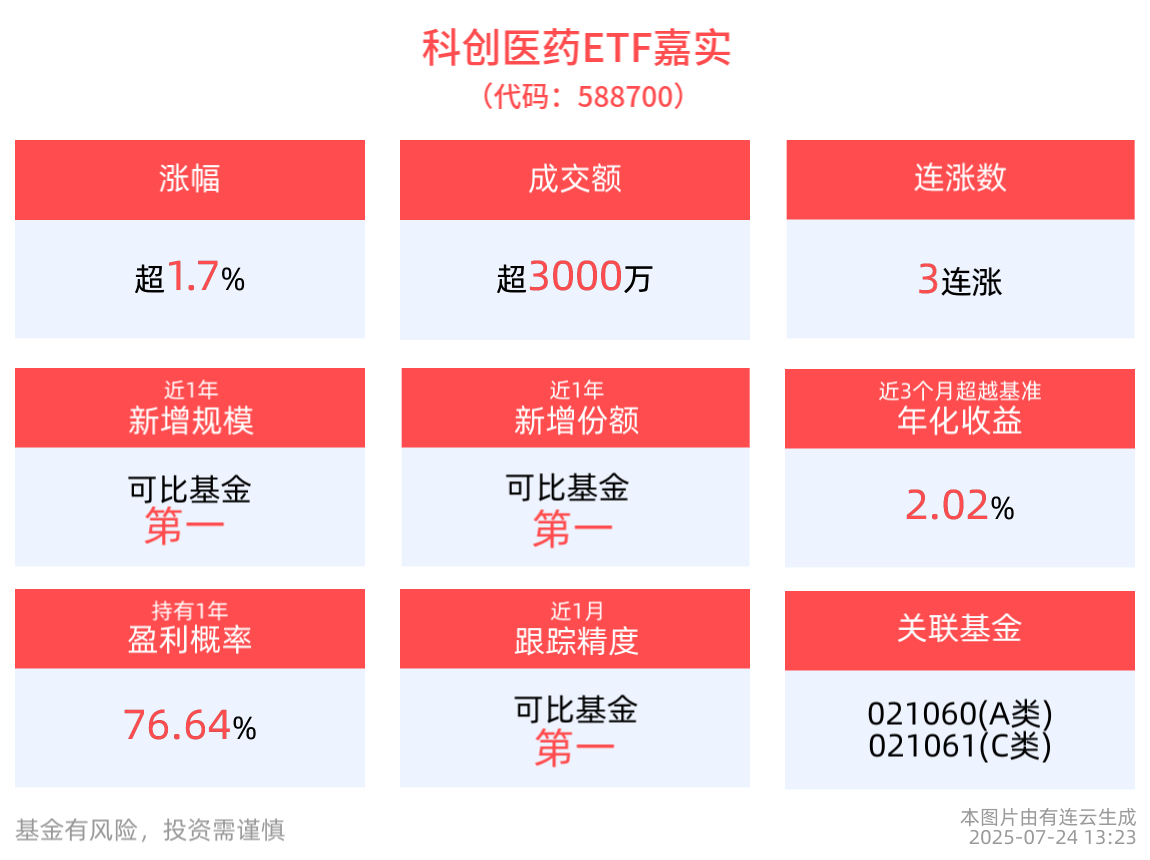
创新药企再签大单!科创医药ETF嘉实(588700)午后涨近2%,冲击3连涨
Sou Hu Cai Jing· 2025-07-24 06:05
Group 1: ETF Performance - The liquidity of the Kexin Pharmaceutical ETF managed by Jiashi showed a turnover rate of 16.97% with a transaction volume of 33.88 million yuan, indicating active market trading [2] - Over the past year, the Kexin Pharmaceutical ETF has seen a significant growth in scale, increasing by 119 million yuan, ranking first among comparable funds [2] - The net asset value of the Kexin Pharmaceutical ETF has risen by 48.37% over the past year, placing it in the top 15.05% among index equity funds [2] Group 2: Stock Performance - The top ten weighted stocks in the Shanghai Stock Exchange Science and Technology Innovation Board Biopharmaceutical Index account for 50.3% of the index, with leading stocks including United Imaging Healthcare and BeiGene [2] - Recent stock performance includes United Imaging Healthcare with a rise of 2.04% and BeiGene with a slight increase of 0.21%, while Huatai Medical saw a decline of 2.71% [4] Group 3: Industry Trends - The biopharmaceutical industry is entering a dual-driven phase of policy and technology, with innovation drug support policies advancing to phase 2.0 [5] - The medical device sector is experiencing a core trend of replacement and technology export, with regulatory upgrades promoting innovation and industry breakthroughs [5] - State-owned capital entering the biopharmaceutical sector is injecting financial vitality, accelerating R&D investment and industry chain integration [5] Group 4: Licensing Agreements - Chinese innovative pharmaceutical companies are reporting significant "Licence Out" transactions, with Kexin Pharmaceuticals announcing a deal with ERIGEN for an exclusive overseas licensing agreement worth up to 1.32 billion USD [4]




【高端访谈】不只是“BD之王” 和铂医药“新基建”模式打造中国Biotech全球化“新样本”
Zhong Guo Jin Rong Xin Xi Wang· 2025-07-23 09:05
Core Insights - The Chinese biotech sector is experiencing a structural revaluation, with the Hong Kong innovative drug sector showing a year-to-date increase of over 60% as of June 2025, driven by significant global collaborations in innovative drugs [1] - Hengrui Medicine has become a key player in the internationalization of Chinese innovative drugs, achieving over $10 billion in overseas transactions, including a $45.75 billion deal with AstraZeneca and a $6.7 billion partnership with Otsuka Pharmaceutical [1][2] - The company has seen its stock price rise over 300% in the first half of 2025 and is one of the few Hong Kong-listed companies that have achieved profitability for two consecutive years, indicating a sustainable business model [1][2] Group 1: Industry Trends - The Chinese innovative drug sector is transitioning from a focus on the quantity of pipelines to the value of technology, with companies like BeiGene and Ilyas successfully selling products overseas, where international sales now account for over half of their revenue [2] - The industry faces challenges, including the uncertainty of future product launches and the sustainability of business development (BD) transactions, which can lead to significant revenue fluctuations [2] - The high-risk nature of innovative drug development necessitates that companies find sustainable paths to navigate the "valley of death" in the industry [2] Group 2: Hengrui Medicine's Strategy - Hengrui Medicine has been labeled the "King of BD" due to its frequent license-out transactions, which are strategically aligned with its core technology platform [2][3] - The company has established a strong global collaboration network, with over 300 projects in partnership with leading firms like AstraZeneca and Pfizer, focusing on providing comprehensive preclinical solutions [4] - Hengrui Medicine aims to become a "new infrastructure" for global antibody drugs, leveraging its technology platform to enhance its role in the global pharmaceutical supply chain [5][6] Group 3: Technological Advancements - The integration of AI and big data is transforming drug development, with Hengrui Medicine utilizing AI to optimize antibody efficacy and explore new therapeutic targets [7] - The company has partnered with Insilico Medicine to advance AI-driven antibody discovery, enhancing its capabilities in treating complex diseases [7] - Hengrui Medicine is also focusing on expanding its self-developed pipeline, particularly in the inflammation and immunology sectors, with several candidates nearing clinical trials [8] Group 4: Market Challenges and Opportunities - The Chinese innovative drug industry is thriving but faces issues such as homogenization and intense competition, necessitating diverse business models for sustainable growth [8] - The company emphasizes the importance of recognizing the long and complex nature of the innovative drug industry, advocating for a coexistence of various development models to create a sustainable innovation matrix [8]

科创医药ETF嘉实(588700)红盘蓄势,成分股益诺思领涨,机构:创新药及其产业链加速价值重塑
Sou Hu Cai Jing· 2025-07-23 03:12
Group 1: ETF Performance - The liquidity of the Kexin Pharmaceutical ETF managed by Jiashi showed a turnover rate of 10.3% with a transaction volume of 21.45 million yuan, indicating active market trading [3] - Over the past week, the average daily transaction volume reached 39.89 million yuan, ranking first among comparable funds [3] - In terms of scale, the Kexin Pharmaceutical ETF saw an increase of 3.11 million yuan in the past month, also ranking first among comparable funds [3] - The fund's net asset value increased by 42.32% over the past year, placing it in the top 18.42% among 2,931 index equity funds [3] Group 2: Top Holdings - As of June 30, 2025, the top ten weighted stocks in the Shanghai Stock Exchange Science and Technology Innovation Board Biopharmaceutical Index accounted for 50.3% of the index [3] - The top stocks include: - United Imaging Healthcare (9.73%) - BeiGene (6.04%) - Huatai Medical (5.69%) - Baillie Gifford (5.35%) - Ailis (4.76%) - Zai Lab (4.53%) - Junshi Biosciences (4.15%) - Borui Pharmaceutical (3.60%) - BGI Genomics (3.07%) - Yifang Biotechnology (3.03%) [5] Group 3: Market Outlook - CITIC Construction Investment Securities remains optimistic about innovative drugs and high-barrier generic drugs, highlighting the National Medical Insurance Administration's ongoing efforts in centralized procurement and negotiation [6] - Southwest Securities emphasizes the acceleration of value reconstruction in innovative drugs and their industrial chain, driven by overseas business development, research and commercialization progress, and policy support [6]
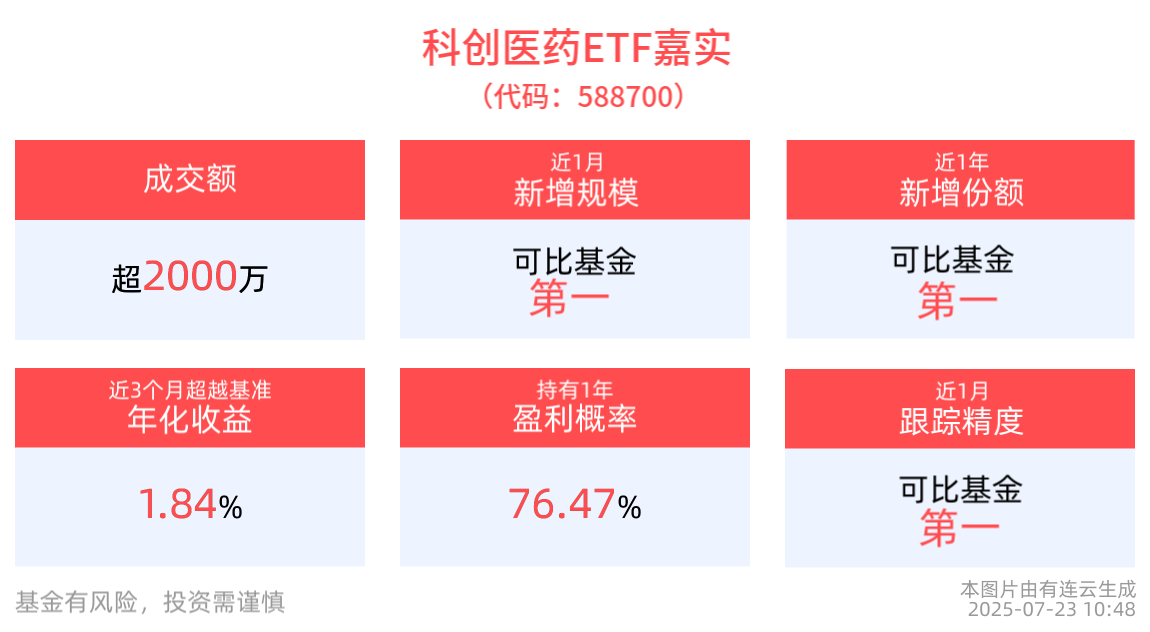
科创第五套上市公司市值表现如何?解构标准重启隐含的价值导向
Tai Mei Ti A P P· 2025-07-22 12:16
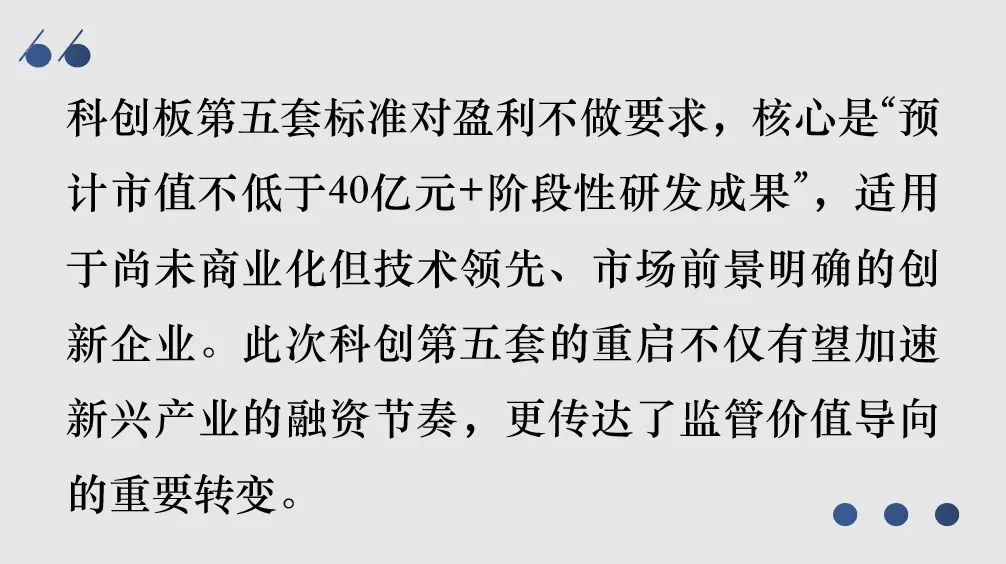
Core Insights - The reactivation of the fifth listing standard on the Sci-Tech Innovation Board (STAR Market) aims to support high-growth technology companies, particularly in the biopharmaceutical sector, by allowing companies without profits to list based on expected market capitalization and R&D achievements [1][19] - The biopharmaceutical industry, especially innovative drug companies, faces longer investment periods and higher uncertainty due to strict regulatory requirements for product approval, making them highly reliant on capital [1][19] - Since the reactivation in June 2025, companies like He Yuan Bio and Bei Xin Life have made significant progress, signaling a positive outlook for other biopharmaceutical firms still in clinical stages [2] Market Performance - The innovative drug sector has seen a remarkable stock performance in 2025, driven by favorable policy changes, relaxed procurement policies, and the growth of commercial health insurance, which enhances market expectations for innovative drugs [3] - The 20 companies that successfully listed under the fifth standard have achieved a total market capitalization of 364.12 billion, with an average increase of 79.10% since the beginning of 2025 [3][7] Financial Performance - In 2024, the 20 companies reported a combined revenue exceeding 14.3 billion, a year-on-year growth of 45%, with 16 companies generating over 1 billion in revenue [12][16] - The total R&D expenses for these companies accounted for 67% of their total revenue, indicating a high dependency on external financing for continued innovation [16][18] R&D and Innovation - The 20 companies listed under the fifth standard have collectively developed 45 drug varieties, with 22 classified as first-class new drugs or innovative biological products, covering various advanced therapeutic areas [8][10] - The number of candidate products in the R&D pipeline for these companies has exceeded 200, showcasing their commitment to innovation and market expansion [8] Regulatory Environment - The reactivation of the fifth standard reflects a shift in regulatory focus towards recognizing the inherent risks and long timelines associated with technology innovation, moving away from traditional financial metrics [19][20] - The introduction of a "Sci-Tech Growth Tier" aims to enhance information disclosure and regulatory oversight for companies listed under the fifth standard, ensuring a balance between support and supervision [22]


科创板开市六周年:589家上市!1.1万亿融资!总市值破7万亿!
Guo Ji Jin Rong Bao· 2025-07-22 10:48
Core Insights - The establishment of the Sci-Tech Innovation Board (STAR Market) and the pilot registration system marks a significant institutional innovation aimed at supporting technological innovation in the capital market [2][7] - Over the past six years, the STAR Market has facilitated the listing of high-quality technology companies, raising over 1.1 trillion yuan through IPOs and refinancing [7] - The STAR Market has become the preferred venue for "hard technology" companies, with over 80% of listed firms in strategic emerging industries [8] Group 1: Market Performance - As of July 22, 2024, the STAR Market has supported 589 companies to go public, raising 9,257 billion yuan through IPOs and 1,867 billion yuan through refinancing, with a total market capitalization exceeding 70 trillion yuan [7] - The market has seen the emergence of 8 companies with a market value exceeding 100 billion yuan, including SMIC and BeiGene, and 192 companies with a market value over 10 billion yuan [7] Group 2: Investor Returns - In 2024, over 60% of companies on the STAR Market introduced cash dividend plans totaling 38.8 billion yuan, with 290 companies having a dividend payout ratio exceeding 30% [7] - 509 companies have disclosed plans for share buybacks or increases, with a total amount nearing 38 billion yuan, indicating strong confidence in long-term value [7] Group 3: Industry Focus - The STAR Market primarily focuses on six strategic emerging industries, with the electronics and biomedicine sectors being the largest, accounting for 146 and 109 companies respectively [8] - The integrated circuit sector has 120 companies along the value chain, with 35 companies holding the global number one position in their respective sub-segments [8] Group 4: R&D Investment - The total R&D expenditure for the STAR Market in 2024 is projected to be 168 billion yuan, with a median R&D revenue ratio of 12.6%, significantly higher than the A-share main board [8] - 107 companies have maintained an R&D intensity exceeding 20% for three consecutive years, leading to over 120,000 invention patents filed [8] Group 5: Talent Pool - Nearly 30% of the workforce in STAR Market companies are R&D personnel, with over 60% of founding teams comprising scientists or engineers [9] Group 6: Inclusivity and Policy Reforms - The STAR Market has established a set of inclusive listing standards that break traditional profitability thresholds, with 54 unprofitable companies and various special share structures already listed [10][11] - Recent reforms include the introduction of a growth tier and measures to support unprofitable companies, enhancing the market's inclusivity and encouraging more technology firms to pursue listings [13][14]


科创板开市六周年:589家上市!1.1万亿融资!总市值破7万亿!
IPO日报· 2025-07-22 10:39
Core Viewpoint - The establishment of the Sci-Tech Innovation Board (STAR Market) has significantly advanced the capital market's support for technological innovation in China, marking a major institutional innovation with the implementation of the registration system [1][2][3]. Group 1: Development and Achievements - Over the past six years, the STAR Market has raised over 1.1 trillion yuan through IPOs and refinancing, supporting 589 companies with a total market capitalization exceeding 7 trillion yuan [5][6]. - The board has seen the emergence of 8 companies with a market value exceeding 100 billion yuan, including SMIC and BeiGene, and 192 companies with a market value over 10 billion yuan [7]. - In 2024, more than 60% of companies on the board have introduced cash dividend plans totaling 38.8 billion yuan, with 290 companies having a dividend payout ratio exceeding 30% [9]. Group 2: Focus on Hard Technology - The STAR Market has become the preferred venue for "hard technology" companies, with over 80% of listed firms in strategic emerging industries such as information technology and biomedicine [11]. - The semiconductor sector has 120 companies along the industry chain, with SMIC as the leading player, while the biopharmaceutical sector has seen companies like Elysium and Zhenhua Cell grow significantly post-listing [11]. - The total R&D expenditure for the board in 2024 is projected to be 168 billion yuan, with a median R&D intensity of 12.6%, significantly higher than that of the main A-share market [11][12]. Group 3: Inclusivity and Policy Enhancements - The STAR Market has established a flexible listing standard that accommodates the unique development patterns of technology companies, allowing for 54 unprofitable companies and various special share structures [15][16]. - Recent reforms introduced by the CSRC aim to enhance inclusivity, including the establishment of a growth tier and the introduction of new measures to support unprofitable tech companies [18][19]. - Notable companies such as Changxin Storage and Yushu Technology are now seeking to initiate their listing processes, reflecting increased confidence among domestic tech firms [19].

科创板开市6周年丨科创板第五套标准赋能生物医药企业加速成长:近半数公司“摘U” 步入研发成果兑现、商业化阶段
Zhong Guo Jing Ying Bao· 2025-07-22 09:29
Core Insights - The article highlights the rapid growth and commercialization of biopharmaceutical companies listed under the fifth set of standards on the STAR Market, with 90% of their drugs approved for market release [1][2]. Group 1: Market Overview - As of mid-July 2025, 20 biopharmaceutical companies have raised a total of 42.871 billion yuan through IPOs, contributing to a total A-share market capitalization exceeding 320 billion yuan [1]. - The STAR Market's fifth set of listing standards has facilitated the entry of high-growth, unprofitable tech companies, particularly in the biopharmaceutical sector, which has become a cornerstone of China's pharmaceutical innovation [1][2]. Group 2: Company Performance - Among the 20 companies, 19 have successfully launched 45 self-developed drugs/vaccines, with one company's product application currently under review [2]. - In 2024, these companies collectively achieved a revenue of 14.339 billion yuan, marking a 45% year-on-year increase and a compound annual growth rate of 61.33% since 2019 [4]. - Notably, 16 of these companies reported revenues exceeding 100 million yuan, with four surpassing 1 billion yuan, indicating a significant shift from pre-IPO zero revenue to substantial sales figures [4]. Group 3: Innovation and Product Development - The companies have introduced 20 first-class innovative drugs that have not been marketed domestically or internationally, with nine new additions since 2024 [2]. - An example of innovation is the drug Shuwotini by Dizhe Pharmaceutical, which is the first Chinese innovative drug to receive breakthrough therapy designation in both China and the U.S. for lung cancer treatment [3].
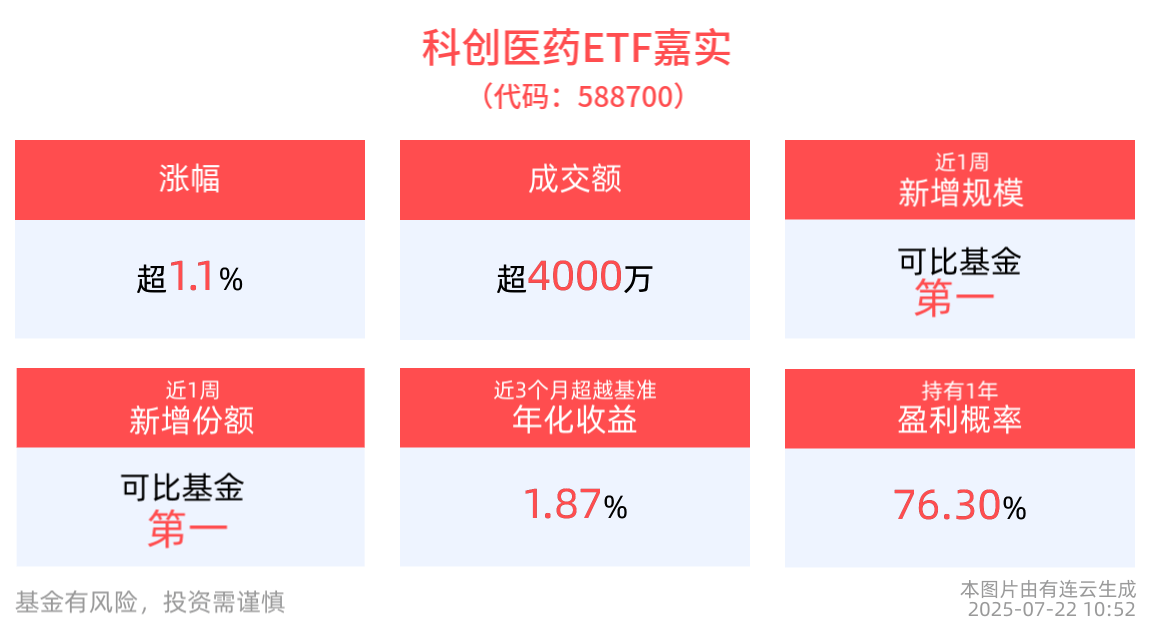
第十一批国采启动,科创医药ETF嘉实(588700)盘中上涨1.14%,近1周新增规模同类居首!
Sou Hu Cai Jing· 2025-07-22 03:33
Group 1: ETF Performance - The liquidity of the Kexin Pharmaceutical ETF (嘉实) showed an intraday turnover of 18.19%, with a transaction volume of 40.9491 million yuan, indicating active market trading [3] - Over the past week, the Kexin Pharmaceutical ETF (嘉实) experienced a scale increase of 16.9597 million yuan, ranking first among comparable funds [3] - The Kexin Pharmaceutical ETF (嘉实) saw a share increase of 7.5 million shares over the past week, also ranking first among comparable funds [3] - As of July 21, the Kexin Pharmaceutical ETF (嘉实) has achieved a net value increase of 43.45% over the past year, placing it in the top 16.56% among 2,929 index equity funds [3] Group 2: Stock Performance - The top ten weighted stocks in the Shanghai Stock Exchange Science and Technology Innovation Board Biopharmaceutical Index account for 50.3% of the index, with leading stocks including 联影医疗 (9.73%), 百济神州 (6.04%), and 惠泰医疗 (5.69%) [5][3] - The highest monthly return since inception for the Kexin Pharmaceutical ETF (嘉实) was 23.29%, with the longest consecutive monthly increase being 5 months and an average monthly return of 7.43% [3] Group 3: Market Trends - Huazhong Securities maintains a bottom-up view of the pharmaceutical sector, emphasizing the importance of hard technology innovations, particularly in innovative drugs and devices, which are becoming market hotspots [6] - The recent announcement from the Shanghai Sunshine Pharmaceutical Procurement Network regarding the 11th batch of national centralized procurement includes 55 drug varieties, with key principles focusing on stability, quality assurance, and anti-competitive practices [5]