vivo

Search documents
以开源破局,以赛事聚能,vivo蓝河掀起「Rust风暴」
36氪· 2025-12-26 13:08
Core Viewpoint - vivo is establishing a "full-stack self-research + open-source kernel + industry-academia-research competition" three-in-one technology layout to enhance the security and performance of operating systems in the AI era [2][6][28]. Group 1: AI and Operating System Transformation - The rise of AI is transforming operating systems from mere resource managers to intelligent service gatekeepers, necessitating a shift towards more secure foundational systems [3][8]. - Traditional C/C++ based systems are facing significant memory safety challenges, prompting a shift towards Rust, which offers a systematic solution to these issues [10][11]. Group 2: Rust Language and Security - Over 70% of severe security issues are linked to memory safety, highlighting the urgent need for more secure operating systems as AI technologies become more prevalent [10]. - Rust's strict ownership and lifecycle management mechanisms provide a proactive approach to memory safety, significantly reducing risks associated with traditional programming languages [11][12]. Group 3: C2Rust Project and Innovation Competition - The C2Rust project aims to automate the translation of C code to Rust, addressing the challenge of migrating legacy code to a more secure language [13][15]. - The recent competition showcased significant advancements, with the winning team successfully translating 54 files and approximately 11,000 lines of code, achieving a 100% test pass rate and over 97.8% syntax safety [6][16]. Group 4: BlueKernel and Open Source Strategy - vivo has initiated the BlueKernel project, which is a lightweight, secure, and general-purpose kernel developed in Rust, aimed at reducing the technical barriers for industry-wide adoption of Rust [24][25]. - The open-sourcing of BlueKernel is intended to foster collaboration and innovation in the Rust ecosystem, providing a sustainable platform for developers [23][24]. Group 5: Industry Impact and Talent Development - The Blue River Operating System Innovation Competition has attracted over 150 teams from more than 50 top universities, enhancing the industry's influence and fostering talent in Rust system development [27]. - By linking real industry challenges to academic research, vivo accelerates the validation and accumulation of cutting-edge technologies, contributing to the cultivation of skilled professionals in the field [27][28]. Group 6: Strategic Positioning - vivo's comprehensive strategy of self-research, open-source collaboration, and competitive innovation positions it as a leader in the Rust technology domain, enhancing the technological barriers of the Blue River Operating System [28][29]. - This strategic approach not only strengthens vivo's market position but also supports the broader development of China's foundational software industry in the global landscape [28][29].


涨价潮,来了?
大胡子说房· 2025-12-26 09:33
Core Viewpoint - A new wave of price increases is anticipated across various industries, driven by factors such as supply reduction, wage increases, and government policies aimed at stimulating domestic demand [1][5][30]. Group 1: Price Increases in Various Industries - McDonald's will raise prices on several menu items by 0.5-1 yuan starting December 15, 2025 [2]. - Moutai's wholesale prices for all products have increased, with the 25-year Flying Moutai rising by 40 yuan to 1600 yuan per bottle, and the Zodiac Snake variant surging by 230 yuan to 2000 yuan per bottle [3]. - SMIC has implemented a price increase of approximately 10% on certain production capacities, particularly focusing on the 8-inch BCD process platform [4]. - Major global shipping companies, including MSC, CMA CGM, Maersk, and Hapag-Lloyd, have announced plans to adjust freight rates starting January 1, 2026, including seasonal surcharges [4]. - Smartphone manufacturers like Xiaomi, OPPO, vivo, and Honor have raised prices on new models by 100 to 600 yuan compared to previous generations since October [5]. Group 2: Reasons Behind Price Increases - Price increases are partly a response to policies aimed at reducing overcapacity and promoting quality over quantity in production, as seen in industries like Moutai and SMIC [5][6]. - The price of lithium carbonate has risen from 92,800 yuan per ton to 104,900 yuan per ton, reflecting a monthly increase of over 13%, driven by production cuts from leading companies [6]. - The government has emphasized the need to stimulate domestic demand by increasing residents' income, which may lead to higher wages and consequently higher prices [6][7]. Group 3: Economic Outlook and Market Trends - The expectation is that inflation will become the main theme moving forward, with CPI gradually rising as the economy recovers from deflation [28][45]. - Monetary policies, including potential interest rate cuts, are anticipated to continue, providing a basis for inflation as liquidity increases in the market [34][40]. - The A-share market is expected to experience a slow bull market due to improved regulations, increased long-term capital inflows, and enhanced liquidity [41][43]. - As capital markets stabilize and residents' financial conditions improve, consumer spending is likely to increase, further driving price rises across various sectors [42][44].

雷军没有上台,小米17 Ultra起售价涨500元
3 6 Ke· 2025-12-26 06:14
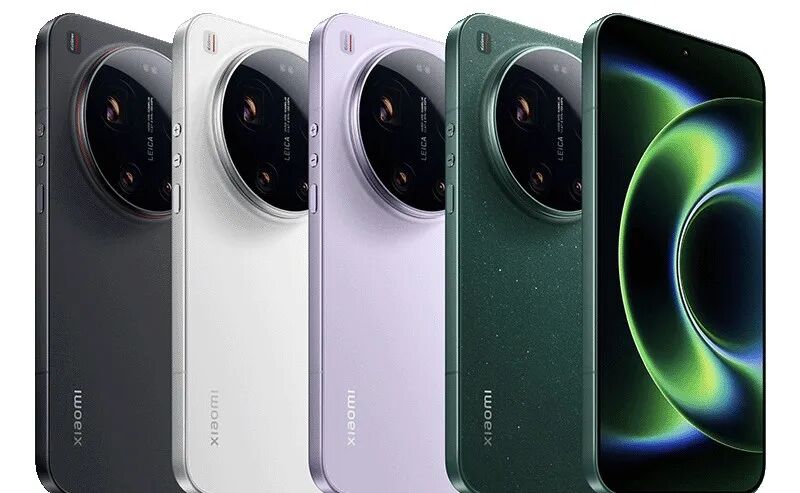
Core Viewpoint - Xiaomi's recent launch of the Xiaomi 17 Ultra smartphone marks a strategic shift towards the high-end market, with a price increase reflecting rising production costs and a focus on enhancing brand value through premium offerings [4][7]. Product Launch - The Xiaomi 17 Ultra was introduced on December 25, featuring a 2D flat screen, the thinnest Ultra model at 8.29mm, and powered by the fifth-generation Snapdragon 8 processor [1]. - The device includes advanced camera features such as a 14mm ultra-wide-angle lens, a 23mm one-inch main camera, and a 75-100mm 200MP periscope telephoto lens [1]. Pricing Strategy - The starting price for the Xiaomi 17 Ultra is set at 6,999 yuan, an increase of 500 yuan from the previous model, the Xiaomi 15 Ultra [4][5]. - The device's memory configuration has been upgraded, starting with 12GB+512GB, compared to the previous model's 12GB+256GB [5]. - Additional pricing tiers include 7,499 yuan for 16GB+512GB and 8,499 yuan for 16GB+1TB, with the Leica edition priced at 7,999 yuan for 16GB+512GB [5][6]. Market Positioning - The Xiaomi 17 Ultra aims to compete directly with high-end models from Huawei and Apple, with the latter's iPhone 17 starting at 5,999 yuan and the Pro models priced higher [7]. - The strategic intent behind the pricing is to establish a foothold in the premium market while balancing concerns about sales volume [7]. Strategic Partnerships - Xiaomi has upgraded its global imaging strategic partnership with Leica, introducing the "strategic co-creation model" with the Xiaomi 17 Ultra by Leica [2]. - This collaboration is expected to enhance the product's appeal to photography enthusiasts and core users, rather than focusing solely on high sales volumes [7]. Market Context - According to IDC, as of Q3 2025, Xiaomi holds a 14.7% market share in China, ranking fourth behind Vivo, Apple, and Huawei [8][9]. - The overall smartphone market has shown signs of stabilization, with Xiaomi's recent performance reflecting a slight decline in shipment volume compared to the previous year [8].

小米卢伟冰:一万多的手机放到下一代
Guan Cha Zhe Wang· 2025-12-26 03:35
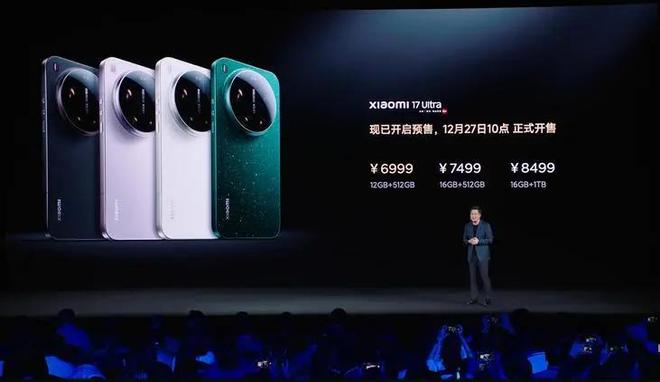
Group 1 - Xiaomi launched its flagship smartphone, the Xiaomi 17 Ultra, with a price range of 6,999 to 8,499 yuan, and a Leica version priced between 7,999 and 8,999 yuan [1] - The price increase for the Xiaomi 17 Ultra was anticipated, with a 500 yuan increase compared to the previous generation, the Xiaomi 15 Ultra [1][3] - Xiaomi's president, Lu Weibing, indicated plans to target the high-end smartphone market with models priced above 6,000 yuan in the future [1] Group 2 - The Xiaomi 17 Ultra features significant imaging capabilities, including a 1-inch main camera and a 200-megapixel telephoto lens, with advanced hardware and technology for enhanced dynamic range and optical zoom [3] - Other specifications include a 6.9-inch display, Snapdragon 8 Gen 2 processor, 6,800 mAh battery, and fast charging capabilities, making it the lightest Ultra model at 8.29 mm thick [3] - The Leica version of the Xiaomi 17 Ultra includes upgrades in lens zoom, UI interaction, and ergonomic design [3] Group 3 - Xiaomi and Leica have upgraded their strategic partnership, focusing on integrating Leica's optical expertise and design aesthetics into their products [5] - In the third quarter, Xiaomi ranked fourth in the Chinese smartphone market with a shipment of 10 million units, while Vivo, Apple, and Huawei led the market [5]
小米17Ultra起售价上调500元,卢伟冰:一万多放到下一代
Guan Cha Zhe Wang· 2025-12-26 03:33
Group 1 - Xiaomi launched its flagship smartphone, Xiaomi 17 Ultra, with a price range of 6,999 to 8,499 yuan, and a Leica version priced between 7,999 and 8,999 yuan [1] - The price increase for the Xiaomi 17 Ultra was anticipated, with a 500 yuan increase compared to the previous generation, Xiaomi 15 Ultra [1] - The company aims to target the high-end smartphone market with plans for a 6,000+ yuan segment in the future [1] Group 2 - The Xiaomi 17 Ultra features a 6.9-inch screen, Snapdragon 8 Gen 2 processor, 6,800 mAh battery, and 90W wired charging, making it the lightest Ultra model at 8.29 mm thick [2] - The collaboration with Leica has been upgraded to a strategic co-creation model, enhancing the camera's optical and design features [2] - Xiaomi also introduced several other products, including smart home devices and accessories, expanding its ecosystem [2] Group 3 - The Xiaomi 17 series saw price adjustments, with the standard version remaining at 4,499 yuan, while the Pro Max series increased to 5,999 yuan, reflecting a 500 yuan rise compared to the previous generation [3] - In Q3, Xiaomi ranked fourth in the Chinese smartphone market with a shipment of 10 million units, while Vivo led with 11.8 million units [3]
寻求更多手机厂商合作,豆包准备隔山打牛
3 6 Ke· 2025-12-25 23:37
Core Viewpoint - The article discusses the recent challenges faced by Doubao, a mobile phone assistant developed by ByteDance, which has been blocked by major apps like WeChat, Taobao, and Alipay. In response, ByteDance is seeking partnerships with hardware manufacturers to pre-install AIGC plugins on mid-range devices priced above 2000 yuan [1][3]. Group 1: Partnerships and Collaborations - ByteDance is actively pursuing collaborations with smartphone manufacturers such as Vivo, Lenovo, and Transsion to pre-install AIGC plugins on their devices [3]. - Reports indicate that Vivo employees have confirmed a partnership agreement with ByteDance, and Lenovo is also in close communication regarding potential collaborations in the smart terminal sector [3]. - The strategy of partnering with hardware manufacturers is seen as a clever move by ByteDance to address the challenges posed by major app blockages [3]. Group 2: Industry Dynamics - The relationship between internet companies and smartphone manufacturers is characterized by significant conflicts of interest, particularly regarding app store revenue sharing [4]. - Internet giants like Tencent and ByteDance have developed "mini-programs" to circumvent the revenue-sharing model imposed by hardware manufacturers [4]. - Smartphone manufacturers have historically relied on software for profitability, leading to a competitive landscape where they must depend on internet companies for revenue [6]. Group 3: AI Integration and Cost Management - Without Doubao, many second and third-tier smartphone manufacturers would struggle to develop their own AI assistants due to resource limitations [7]. - ByteDance is not only providing technology but also creating a new revenue-sharing model that allows smartphone manufacturers to participate in traffic distribution and subscription services [7]. - By absorbing the costs associated with AI token usage, ByteDance makes it financially attractive for smartphone manufacturers to adopt its AI services [8]. Group 4: Market Implications - The success of the Doubao mobile assistant with ZTE sets a precedent, encouraging more smartphone manufacturers to explore similar collaborations with ByteDance [9].
【限时优惠】FINE展报名火热!产业终端+半导体+热管理+先进电池+轻量化与可持续+科技创新成果.....
DT新材料· 2025-12-25 16:05
2026未来产业新材料博览会 中国未来产业崛起引领全球新材料创新发展 2026年6月10-12日 上海新国际博览中心 新材料是未来高新技术产业发展的基石和先导,新材料的突破将加速未来产业变革! 2026未来产业新材料博览会(上海) (Future Industries New Materials Expo 2026,简称" FINE 2026 "),由 「 DT新材料 」 主办的 第十届国际碳材料产业博览 会 (Carbontech 2026)、 第七届热管理产业博览会 (iTherM 2026)和 新材料科技创新博览会 (AMTE 2026)三大展重磅升级而来,旨在打造一个以未来产业终端为 引领、立足国际视野的新材料领域标杆展会。 FINE 2026 , 以 50,000平 展区 与 超过 300场 战 略与前沿科技报告,全景呈现应用于人工智能、智算/数据中心、具身智能、低空经济、航空航天、智能汽车、 AI消费电子、量子科技、6G、脑机接口、新能源、生物制造等产业的热门创新成果, 并重点聚焦 未来产业五大共性需求(先进半导体、先进电池、轻量化、 低碳可持续、热管理) , 呈现从终端、部件、材料、技术装备到前 ...

AI浪潮转向硬科技 专家:2026年大概率成为AI手机元年
Mei Ri Jing Ji Xin Wen· 2025-12-25 14:57
Core Insights - In 2025, DeepSeek emerged, significantly lowering the application cost and threshold of AI technology, leading to a boom in vertical applications and a shift in industry competition from single model comparisons to full-stack ecosystem battles [1] - The AI landscape is transitioning from a dominance of OpenAI to a multi-polar competition, with applications expanding from software to intelligent hardware [1][2] - The "Hundred Mirrors War" in AI hardware is intensifying, with major tech companies investing heavily in AI glasses and smartphones, marking a significant shift in human-computer interaction [6] Group 1: AI Application Market Dynamics - The introduction of DeepSeek in February 2025 has drastically reduced AI inference costs, spurring growth in vertical applications such as AI in health, education, and office settings, leading to a reshuffling of the AI application market [2] - User data shows a concentration effect, with DeepSeek achieving an average monthly download of 34.72 million and ByteDance's Doubao at 31.44 million, dominating the general AI assistant market [2] - Vertical scenarios are becoming crucial for AI applications, evolving from language Q&A and content generation to multi-task intelligent agents across various industries [2][3] Group 2: Hardware Developments and Market Trends - McKinsey predicts a surge in vertical AI intelligent agents by 2025, with over 70% of AI value potential expected to come from these applications [3] - The global smart glasses market saw a shipment of 4.065 million units in the first half of 2025, a 64.2% year-on-year increase, with China accounting for 26.6% of the market share [6] - The global smart glasses market is projected to reach $42 billion by 2030 and $117 billion by 2040, despite facing challenges in technology maturity and privacy compliance [6] Group 3: Future Growth Areas - Key growth points in the AI field for 2026 include large models with continuous learning capabilities, real-time interactive 3D models, and seamless intelligent agents that integrate tools, data, and workflows [4] - The AI smartphone market is expected to see a shipment of 147 million units in China in 2026, a 31.6% year-on-year growth, capturing 53% of the overall market [8] - The "Doubao phone" model is gaining attention, with a focus on a multi-to-multi intelligent connection ecosystem, avoiding a zero-sum game in the internet ecosystem [9]
在鸟巢开过发布会的陈凯峰,决定不再做手机品牌|我们的四分之一世纪
Xin Lang Cai Jing· 2025-12-25 12:41
Core Insights - The article chronicles the journey of Chen Kaifeng, the chairman of KUSAI Intelligent, from a young salesman in 1997 to a leader in the smartphone industry, selling over 6 million phones globally by 2025, highlighting the evolution of China's mobile communication industry [1][42][43] Industry Evolution - In the early 2000s, domestic mobile phone manufacturers primarily acted as intermediaries, lacking core technology, which was held by overseas brands [5][45] - By 2004, the long lead time for orders from overseas revealed the weaknesses of this model, as market dynamics could change drastically within the 12-week production cycle [6][46] - The introduction of MediaTek's "Turnkey Solution" in 2005 significantly lowered the technical and financial barriers for manufacturers, allowing them to produce market-ready phones without extensive R&D [7][46] Product Innovation - In 2006, Chen's team capitalized on a MediaTek chip that lacked a camera by focusing on audio capabilities, creating a product tailored for laborers in noisy environments, which became known as a "shanzhai" phone [10][52] - The design included features like powerful speakers and long battery life, catering to the needs of low-income workers, thus democratizing mobile phone access [12][52] Brand Development - In 2009, Chen launched the "Koobee" brand, influenced by the "smile curve" theory, which posits that value is highest at the ends of the production chain [15][54] - Initially successful, the brand faced challenges as the market shifted towards major players like Xiaomi and OPPO, leading to a significant contraction for smaller brands [20][59] Strategic Shift - By 2017, recognizing the entrenched market dynamics, Chen pivoted KUSAI's focus from domestic branding to international markets, seeking opportunities in niches overlooked by larger competitors [23][61] - The company began to serve as an "invisible factory" for U.S. carriers, adapting products to meet specific local needs, which allowed KUSAI to thrive in a competitive landscape [71][72] Technological Capability - KUSAI established three R&D centers in China, employing nearly a thousand engineers to support diverse customization needs, which became a competitive advantage [73][76] - The company is now exploring applications beyond smartphones, such as smart screens for fitness equipment and automotive technology, indicating a broader strategic vision [77][78]
华为折叠屏引领行业七年进化,重塑折叠主力机心智标杆
Xin Lang Cai Jing· 2025-12-25 11:11
Core Insights - The folding screen smartphone market is transitioning from a niche curiosity to a mainstream practical choice, driven by technological maturity and price reductions [1][5][20] - The user base is expanding, with 17.9% of users aged 18-24, and over 90% of consumers considering a folding screen for their next phone [1][8] Market Trends - In 2024, China's folding screen smartphone shipments are expected to reach 9.69 million units, with 7.62 million units shipped in the first three quarters of 2025 [3] - Huawei leads the market with nearly 70% share and has surpassed 15 million cumulative shipments of folding screen devices [3][7] Technological Advancements - The transition is fueled by advancements in hardware technology, particularly in hinge and screen design, moving from basic functionality to comprehensive user experience [5][20] - Huawei has pioneered key technologies such as the water-drop hinge and the Tian Gong hinge system, which significantly enhance the design and functionality of folding screens [7][13] Consumer Demographics - Young users are increasingly attracted to folding screen smartphones for their technological appeal and entertainment capabilities, with a higher percentage citing these reasons compared to the overall consumer base [8][10] - Among young users, women represent a higher proportion, with 34% being regular employees, followed by general management and students [10] Brand Preference - Huawei is the preferred brand for 67.4% of consumers considering a folding screen smartphone, highlighting its strong market position [10] - The company offers a complete range of folding screen designs, differentiating itself from competitors [13] Software and Ecosystem - Huawei's Mate XTs integrates PC-level applications, enhancing productivity across various scenarios, and supports multi-window interactions [15] - The integration of AI capabilities is expected to redefine user interactions with folding screens, making them more efficient and versatile [17][19] Future Outlook - The combination of AI and folding screens is anticipated to drive a new wave of growth, transforming smartphones into intelligent hubs capable of handling complex tasks [22][23] - As folding screens gain mainstream acceptance, they are expected to become a dominant choice in the consumer market, with Huawei continuing to lead the way in innovation and user experience [20][23]