
国信证券

Search documents
金翼基金万成水:锚定“颠覆性创新” 做中国资本出海“导航员”
Zhong Guo Zheng Quan Bao· 2025-12-29 00:33
Core Insights - The article highlights the career trajectory of Wan Chengshui, a seasoned investment professional with over 20 years of experience in domestic and international securities markets, emphasizing his role in the evolution of China's asset management industry from "bringing in" to "going out" [1][4][5] Group 1: Company Overview - Wan Chengshui is the founder of Jinyi Fund and Global Value Chain Investment, recognized as one of the early fund managers in China to systematically engage in cross-border investments [1][3] - The company has developed a unique investment methodology centered on "disruptive innovation" and a disciplined approach of relatively concentrated and long-term holdings [1][5] - As of now, Jinyi Fund manages nearly 2 billion RMB in domestic fund products and has a total asset management scale between 5 billion to 10 billion RMB [6] Group 2: Investment Philosophy - The investment philosophy is rooted in four pillars: first principles, disruptive innovation theory, comparative advantage theory, and a strategy of relatively concentrated long-term holdings [8][9] - The company emphasizes that investing in stocks equates to investing in businesses, focusing on companies with strong competitive advantages and clear growth trends [8][9] - The team has successfully identified and invested in high-growth technology stocks, demonstrating the effectiveness of their investment strategies through significant returns [9][10] Group 3: Future Outlook - The company aims to evolve its research and investment framework from version 1.0 to 2.0, incorporating macroeconomic research and risk management tools like options and futures [10] - Looking ahead to 2026, the company anticipates that the main themes in the US and Chinese stock markets will revolve around artificial intelligence, which is expected to drive significant investment opportunities [10]


十大券商看后市|A股中线看多,“跨年+春季”行情有望持续
Xin Lang Cai Jing· 2025-12-29 00:33
Group 1 - The core viewpoint is that the A-share market is expected to experience a "cross-year + spring" rally, supported by favorable conditions such as liquidity and risk appetite [1][7][13] - Spring market conditions remain favorable due to loose liquidity, with private equity actively purchasing on dips and the appreciation of the RMB benefiting market liquidity [1][6] - Historical trends indicate that the A-share market typically experiences a "spring rally," and policy support is expected to continue, bolstering market confidence and attracting various funds [1][14] Group 2 - The market is anticipated to see a "systematic slow bull" trend, with a high level of confidence in the medium-term outlook, although short-term movements may require cautious observation [2][11] - The A500 ETF has shown significant net inflows, indicating stable incremental funds entering the market, despite potential seasonal outflows in the following quarter [12][7] - The appreciation of the RMB is expected to resonate with the capital market, enhancing industry configurations and attracting foreign investment [10][9] Group 3 - The focus on structural opportunities in a volatile market suggests that sectors with low attention but high long-term ROE potential, such as chemicals and engineering machinery, should be prioritized [3][15] - The "transformation bull" market is characterized by economic structural changes and capital market reforms, indicating a shift in investment focus towards emerging technologies and large financial institutions [5][4] - The market is likely to experience fluctuations, especially as the year-end approaches and companies begin to disclose annual performance forecasts, which may lead to a preference for large-cap value stocks [8][11]
国信证券:餐饮布局正当时 掘金茶饮黄金赛道
智通财经网· 2025-12-28 22:47
Core Viewpoint - The report from Guosen Securities indicates a slow recovery in the restaurant industry, with a cumulative year-on-year growth of 3.3% in national dining revenue from January to November 2025, lagging behind the 4.1% growth in retail sales [1][2] Group 1: Restaurant Industry Overview - The restaurant sector is experiencing a weak recovery, with major players employing diverse strategies to seek growth amid supply-side adjustments [2] - The online channel is seeing structural growth, particularly benefiting coffee and fast food segments, although brands are becoming more cautious in their approach to delivery services [2] - Brand building strategies are shifting from creating single-hit products to enhancing supply chain efficiency and focusing on member value [2] Group 2: Market Performance - Year-to-date, leading coffee and tea brands have seen significant stock price increases, with Gu Ming, Mi Xue Group, and Luckin Coffee rising by 185.8%, 45.4%, and 39.2% respectively, driven by increased consumer frequency and enthusiasm from franchisees [2] - Restaurant leaders show varied stock performance, with strong same-store sales and rapid expansion for brands like Guoquan, which increased by 98%, while others like Guangzhou Restaurant and Yum China saw more moderate gains [2] Group 3: Sub-industry Analysis - The ready-to-drink tea segment has benefited from the current delivery subsidy war, with seven listed tea brands reporting a 32.5% increase in revenue and a 58.0% increase in adjusted net profit for H1 2025, further accelerating from 2024 [3] - The restaurant sector's revenue growth has been stable due to various factors, including price reductions and policy disruptions, but net profit for H1 2025 increased by 7.5%, indicating improved operational efficiency [3] Group 4: Investment Framework - The valuation of leading tea and restaurant brands is shifting due to changes in performance expectations, with same-store revenue growth serving as a key valuation anchor [4] - Store expansion rates can amplify valuations, with aggressive expansion during growth periods potentially leading to valuation and performance boosts [4] - New product development is essential for providing fresh momentum, requiring supportive incentive structures to balance interests between new and existing brand teams [4]
锚定“颠覆性创新” 做中国资本出海“导航员”
Zhong Guo Zheng Quan Bao· 2025-12-28 21:08
Core Insights - The article highlights the career journey of Wan Chengshui, a seasoned investment manager with over 20 years of experience in domestic and international securities markets, reflecting the evolution of China's asset management industry from "bringing in" to "going out" [1][4] - The company, Jin Yi Fund, has established a unique investment methodology centered on "disruptive innovation" and a disciplined approach to relatively concentrated and long-term holdings [1][5] Company Development - Jin Yi Fund was founded in 2014, focusing initially on the Hong Kong stock market and later expanding to the U.S. tech sector, aiming to serve ultra-high-net-worth individuals in China [2][3] - As of now, Jin Yi Fund manages nearly 2 billion RMB in domestic fund products and has a total asset management scale between 5 billion to 10 billion RMB [3] Investment Philosophy - The investment methodology is based on four pillars: first principles, disruptive innovation theory, comparative advantage theory, and a strategy of relatively concentrated long-term holdings [5][6] - The company emphasizes that investing in stocks equates to investing in businesses, with a focus on companies at the forefront of disruptive innovation and possessing significant competitive advantages [6] Future Outlook - The company plans to evolve its research and investment system from version 1.0 to 2.0, incorporating macroeconomic research and risk management tools like options and futures [7] - The anticipated investment theme for 2026 revolves around artificial intelligence (AI), which is expected to drive market trends in both Chinese and U.S. stock markets [7]
2025证券业校准航向 并购、AI、出海驱动高质量发展
Zheng Quan Shi Bao· 2025-12-28 18:05
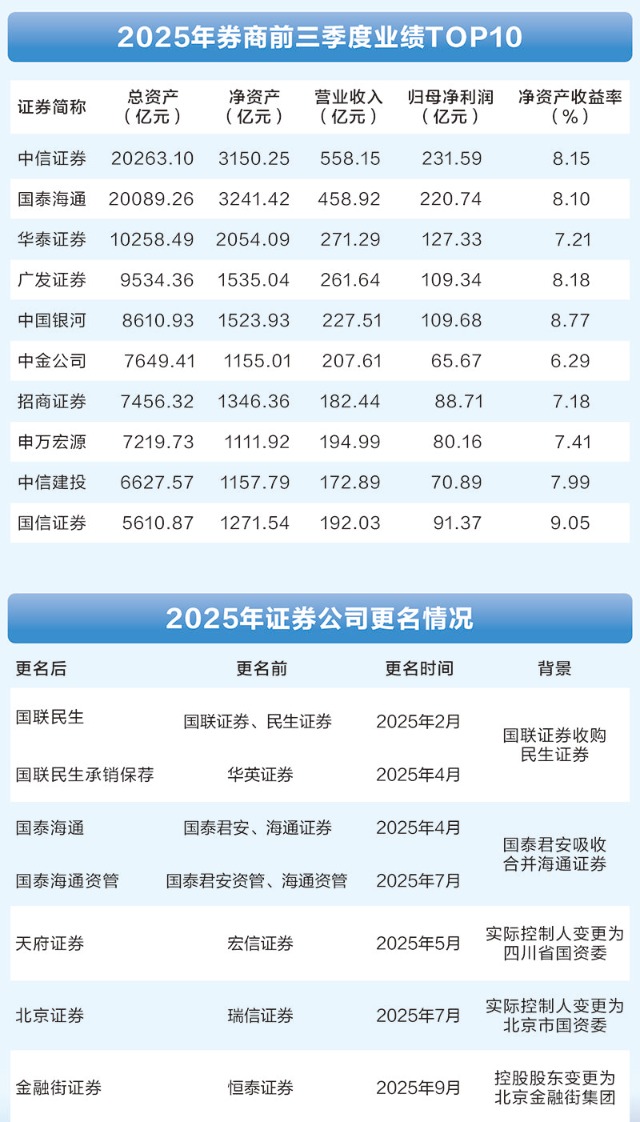
Core Viewpoint - The Chinese securities industry is undergoing significant transformation in 2025, focusing on mergers and acquisitions, high-quality development, and the integration of AI technology to enhance operational efficiency and service models [4][5][10]. Group 1: Industry Performance and Financial Metrics - Major securities firms like CITIC Securities and Guotai Junan have reported substantial total assets and net profits, with CITIC Securities leading at total assets of 2026.31 billion yuan and a net profit of 231.59 billion yuan [1]. - The net asset return rates for leading firms range from 7.21% to 9.05%, indicating competitive performance among top players [1]. Group 2: Mergers and Acquisitions - 2025 marks a pivotal year for mergers in the securities industry, with significant consolidations such as Guotai Junan merging with Haitong Securities and Guolian Securities merging with Minsheng Securities [5]. - The merger activities have reshaped the competitive landscape, with Guotai Haitong now leading in net profit rankings, and Guolian Minsheng's profit ranking improving significantly [5]. Group 3: Regulatory Changes - The classification evaluation for securities firms is undergoing a critical revision aimed at promoting high-quality development, emphasizing professional capabilities over mere revenue growth [6]. - New regulations will encourage firms to enhance their service capabilities and focus on long-term investment strategies [6]. Group 4: Market Trends and Innovations - The margin trading market has seen explosive growth, with a 36.6% increase in financing balance, reaching 2.54 trillion yuan by December 2025 [7]. - Firms are competing aggressively in this space, with some lowering financing rates to attract clients, indicating a shift towards long-term client retention strategies [7][8]. Group 5: Technological Advancements - The integration of AI technologies is transforming the securities industry, with firms adopting AI for wealth management, trading, and operational efficiency, leading to significant improvements in service delivery [10]. - The industry is moving towards an "AI-native" model, enhancing productivity and redefining business ecosystems [10]. Group 6: Internationalization Efforts - Chinese securities firms are deepening their international presence, expanding services beyond traditional offerings to include cross-border wealth management and derivatives trading [12]. - This internationalization is driven by increasing demand for comprehensive financial services from Chinese enterprises and global investors [12]. Group 7: Asset Management Trends - The public offering process for asset management is experiencing a slowdown, with firms reassessing their strategies in the context of regulatory changes and market conditions [13]. - The focus is shifting towards private equity and specialized asset management products as firms adapt to the evolving landscape [13]. Group 8: Fee Structure Reforms - The ongoing reforms in public fund fee structures are prompting securities firms to enhance their research and wealth management capabilities, shifting towards a more service-oriented model [14]. - Firms are increasingly focusing on providing tailored investment solutions rather than merely selling products [14]. Group 9: Capital Regulation Changes - Regulatory bodies are signaling a shift towards more flexible capital management for high-quality firms, aiming to improve capital efficiency while maintaining overall industry stability [15][16]. - This change is expected to enhance the return on equity (ROE) for securities firms, aligning them more closely with international standards [16]. Group 10: Rebranding Trends - A wave of rebranding among securities firms reflects strategic realignments following mergers and changes in ownership, indicating a shift in focus and resource allocation [17]. - These name changes are seen as signals of deeper strategic transformations within the firms, aimed at enhancing their market positioning [17].
银行理财2025年度盘点:规模破33万亿 固收占比七成 权益投研能力待提升
智通财经网· 2025-12-28 03:29
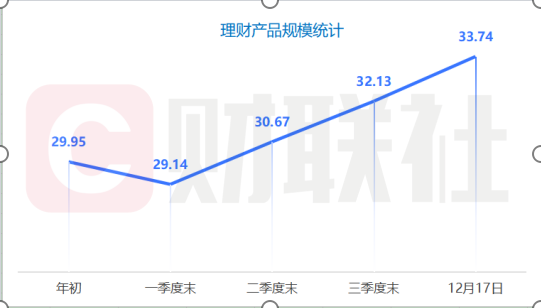
Core Viewpoint - The bank wealth management market in 2025 experienced a "V-shaped" recovery, with a total scale increase of approximately 15.76% from 29.14 trillion yuan to 33.74 trillion yuan, demonstrating resilience amid declining interest rates and market volatility [2][3]. Group 1: Market Scale and Growth - The bank wealth management scale rose from 29.14 trillion yuan at the end of Q1 to 30.67 trillion yuan at the end of Q2, and further to 32.13 trillion yuan in Q3, with a total scale of about 33.74 trillion yuan by December 19 [1][2]. - The overall trend for 2025 was characterized by a "low at the beginning and high at the end," with significant growth driven by factors such as interest rate cuts, changes in residents' wealth management concepts, and adjustments within the industry [2][3]. Group 2: Product Structure - Fixed income products accounted for over 74% of the total wealth management scale, with a total size of 24.22 trillion yuan, indicating a dominant presence in the market [5]. - Cash management products remained stable at around 6.5 to 6.6 trillion yuan, representing about 20% of the total, while other product types like mixed, equity, and commodity derivatives accounted for less than 3% [5]. Group 3: Yield and Risk Distribution - The overall average annualized yield for bank wealth management products was above 2.4%, with significant yield differentiation among product categories [8]. - Over 96% of wealth management funds were concentrated in low-risk products (R1/R2), reflecting a strong preference for capital preservation among investors [8][9]. Group 4: Future Outlook - In 2026, the bank wealth management sector is expected to continue exploring the balance between yield and risk in a low-interest-rate environment, with "fixed income +" and multi-asset strategies becoming key growth drivers [9]. - It is anticipated that wealth management funds will increasingly enter equity markets through diversified strategies, potentially bringing in an incremental 150 to 250 billion yuan [9].
剧变之年!券商首席经济学家“大换牌”,高善文、付鹏、何海峰纷纷隐退
券商中国· 2025-12-27 09:59
Core Viewpoint - The restructuring of chief economists in Chinese securities firms in 2025 reflects a significant talent shift driven by industry consolidation, re-evaluation of research value, and evolving competitive dynamics [1]. Group 1: Industry Consolidation - The primary driver of the recent changes in chief economists is the merger and restructuring within the industry, leading to a reshuffling of key research leadership positions [2]. - The merger of Guotai Junan and Haitong Securities has drawn attention to the personnel arrangements of their former chief economists, with notable departures and transitions impacting the new entity [3]. Group 2: Talent Acquisition by Smaller Firms - As major firms focus on consolidation, many smaller securities firms are actively recruiting top research talent to enhance their market influence and achieve competitive advantages [4]. - Notable movements include the return of Yan Xiang to Founder Securities and the recruitment of Sun Binbin and Song Xuetao from Tianfeng Securities to other firms, indicating a strategy to build strong research brands [4]. Group 3: Internal Promotions - Some firms are focusing on internal talent development, as seen with Yuan Chuang and Long Hongliang being promoted within their respective companies, reflecting a commitment to maintaining research continuity and culture [5]. Group 4: Departure of Iconic Figures - The departure of prominent figures like Gao Shanwen and Fu Peng from the securities industry highlights a trend of established economists exploring new career paths, prompting discussions on the value of traditional research models [6][7]. - Gao Rui Dong's transition from a chief economist role to managing a fund exemplifies the shift from sell-side research to buy-side management [7]. Group 5: Impact on Market Competitiveness - The role of chief economists is crucial for securities firms, serving as leaders in research and key figures in building research brands, which can significantly influence market competitiveness [9].


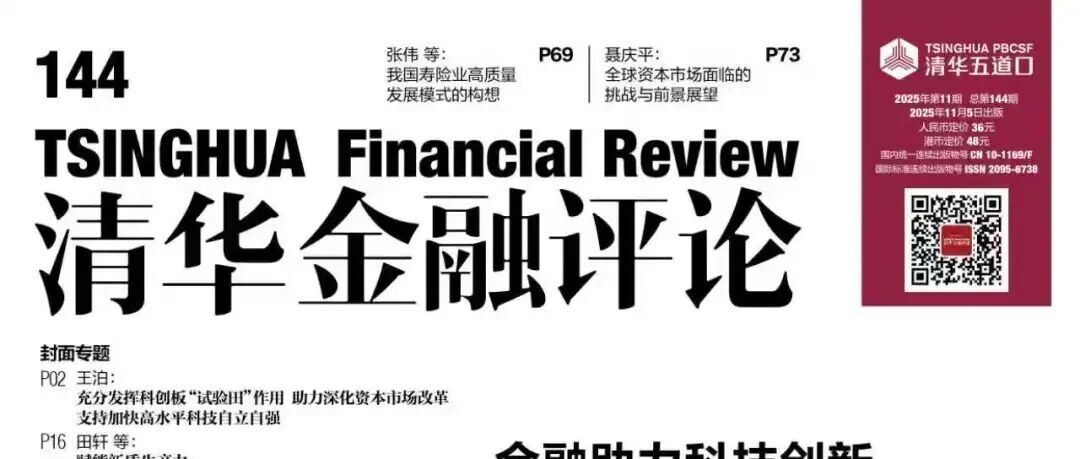
金融助力科技创新和产业创新深度融合|新刊亮相
清华金融评论· 2025-12-27 09:25
Core Viewpoint - The article emphasizes the role of the Science and Technology Innovation Board (STIB) as a "testbed" for capital market reforms, aiming to support high-level technological self-reliance and the integration of technological and industrial innovation in China [4][9]. Group 1: Role of the Science and Technology Innovation Board - The STIB has been established to serve as a platform for supporting technological innovation and deepening reforms in the capital market, aligning with national strategies for high-quality development [4][9]. - Since its inception, the STIB has facilitated the IPO and refinancing of 592 technology enterprises, raising over 1.1 trillion yuan (approximately 160 billion USD) to support their growth [5]. Group 2: Institutional Innovations and Measures - The introduction of the "Eight Measures for Deepening STIB Reforms" aims to enhance institutional inclusiveness and adaptability, with 35 specific initiatives designed to stimulate market vitality [5]. - The STIB has seen a significant increase in merger and acquisition activities, with over 140 new disclosures and more than 90 completed transactions since the implementation of the new measures [5]. Group 3: Focus on Key Industries - The STIB is concentrating on critical industries such as integrated circuits, biomedicine, and renewable energy, fostering a robust industrial chain that supports the digital economy [6]. - It has attracted over 120 integrated circuit companies and more than 110 biomedicine firms, positioning itself as a major listing venue for innovative drug companies outside the US and Hong Kong [6]. Group 4: Building a High-Quality Development Ecosystem - The STIB promotes a collaborative ecosystem that encourages long-term R&D investment, with a median R&D intensity of over 12% among its listed companies [7]. - The board has introduced mechanisms to incentivize talent retention and has seen significant participation in share buybacks and dividends, indicating a commitment to enhancing shareholder value [7]. Group 5: Future Directions and Strategic Goals - Moving forward, the STIB aims to deepen reforms, enhance market competitiveness, and better serve emerging industries and national strategic needs [8]. - The STIB will continue to focus on supporting "hard technology" enterprises and improving the regulatory environment to protect investor rights and promote quality growth among listed companies [8].
主动量化策略周报:创板块领涨,四大主动量化组合本周均战胜股基指数-20251227
Guoxin Securities· 2025-12-27 07:49
Core Insights - The report highlights that the four active quantitative strategies have outperformed the stock-based index this week, with the technology innovation sector leading the gains [1][12] - The report tracks the performance of various active quantitative strategies, including the Excellent Fund Performance Enhancement Portfolio, the Exceeding Expectations Selected Portfolio, the Broker's Golden Stock Performance Enhancement Portfolio, and the Growth Stability Portfolio [12][13] Excellent Fund Performance Enhancement Portfolio - This portfolio achieved an absolute return of 3.01% this week and a year-to-date return of 32.05, ranking in the 48.34 percentile among active stock funds [1][23] - The strategy aims to outperform the median return of active stock funds by utilizing a quantitative approach based on the holdings of top-performing funds [3][19] Exceeding Expectations Selected Portfolio - The portfolio recorded an absolute return of 2.92% this week and 44.40% year-to-date, ranking in the 28.39 percentile among active stock funds [1][31] - It selects stocks based on exceeding expectations events and combines fundamental and technical analysis to identify stocks with strong support [4][24] Broker's Golden Stock Performance Enhancement Portfolio - This portfolio achieved an absolute return of 4.59% this week and 41.60% year-to-date, ranking in the 32.69 percentile among active stock funds [1][38] - The strategy focuses on optimizing a selection of stocks from the broker's golden stock pool to ensure alignment with the performance of active stock funds [5][59] Growth Stability Portfolio - The portfolio achieved an absolute return of 3.07% this week and 55.51% year-to-date, ranking in the 15.80 percentile among active stock funds [2][43] - It employs a two-dimensional evaluation system for growth stocks, prioritizing those closer to their earnings report dates to capture potential excess returns [6][39] Market Performance Overview - The median return for stocks this week was 0.97%, with 63% of stocks rising and 37% falling; for active stock funds, the median return was 2.78%, with 86% rising and 14% falling [2][44] - Year-to-date, the median return for stocks was 23.42%, with 80% rising and 20% falling; for active stock funds, the median return was 31.65%, with 97% rising and 3% falling [2][44]
国信证券:践行行业文化理念 以专业精神赋能科技创新发展
Zhong Guo Zheng Quan Bao· 2025-12-26 21:06
Core Insights - The company emphasizes the integration of cultural values with business development, focusing on compliance, integrity, professionalism, and stability in the securities industry [1][6] - The successful issuance of technology innovation bonds reflects the company's commitment to supporting innovative enterprises and enhancing financing efficiency in the bond market [2][3] Group 1: Cultural Values and Business Integration - The company has deeply integrated the "守正创新" (Upholding Integrity and Innovation) culture into its technology financial services, making culture a driving force for business innovation [1] - The company aims to enhance its service capabilities to support the national strategy of innovation-driven development and supply-side structural reform [1][3] Group 2: Technology Financial Bonds Issuance - The company acted as the lead underwriter for the issuance of two technology innovation bonds, with "25同创伟业PPN001" at a scale of 300 million yuan and a subscription multiple of 3.37, and "25盛景嘉成PPN001" at 200 million yuan with a subscription multiple of 2.85 [2] - Both bonds received support from the People's Bank of China's risk-sharing tools, improving their credit quality and market recognition [2] Group 3: Regional Economic Development - The company is committed to enhancing its service capabilities to support regional economic development, aligning its growth with local industrial upgrades [3][4] - The establishment of the "芜湖弘盛基金" (Wuhu Hongsheng Fund) aims to invest in strategic emerging industries, focusing on technology-driven enterprises with high growth potential [4] Group 4: Professional Development and Cultural Activities - The company prioritizes professional development as a core competitive advantage, conducting systematic cultural activities to enhance employee skills and cultural alignment [5] - The recent financial technology cultural festival engaged over 1,500 participants and included various activities aimed at fostering professional growth and innovation [5]