蜜雪冰城

Search documents
新茶饮如何走出价格战
Jing Ji Ri Bao· 2025-10-22 22:03
Core Insights - The new tea beverage industry in China is experiencing a shift from rapid expansion to a more rational restructuring phase, with a focus on profitability, supply chain efficiency, brand differentiation, and digital operations [2][4][5] Industry Development - As of now, there are over 301,000 new tea beverage-related enterprises in China, with a compound annual growth rate of 31.6% from 2015 to 2020. However, the growth rate has declined since 2021, indicating a period of industry consolidation and increased competition [2] - Major provinces with a high number of new tea beverage companies include Guangdong, Jiangsu, and Zhejiang, reflecting a strategic expansion into lower-tier markets [2] Company Performance - In the first half of this year, major companies like Mixue Group reported revenues of 14.875 billion yuan, a year-on-year increase of 39.3%. Bawang Chaji achieved net income of 3.332 billion yuan, up 10.2%, while Nayuki's Tea reported revenues of 2.178 billion yuan, showing significant improvement in core metrics [3] - Companies are increasingly focusing on health-oriented products, with initiatives like "Caffeine Red and Green Light" labels to help consumers manage caffeine intake [3][4] Market Trends - The industry is witnessing a trend towards health-focused products, with Nayuki's Tea launching initiatives to promote natural nutrition and reduce sugar content [4] - Companies are rejecting price wars and blind expansion, opting instead for differentiated competition strategies that enhance brand loyalty and customer experience [5][6] International Expansion - Bawang Chaji's overseas market transactions reached 235.2 million yuan, a year-on-year increase of 77.4%, with significant growth in the U.S. and Philippines [7][8] - Nayuki's Tea opened its first U.S. store, achieving sales of nearly 87,000 USD in just three days, indicating strong international demand [7] - Companies like Mixue Ice City are building a global supply chain, with plans to invest at least 4 billion yuan in Brazil over the next 3 to 5 years [8]
奶茶的“寒冬”:补贴退潮后,谁还能笑着开店?
3 6 Ke· 2025-10-22 13:01
Core Insights - The tea beverage industry is experiencing a shift from aggressive subsidy-driven growth to a more rational and sustainable business model as consumer price sensitivity increases due to reduced subsidies [1][3][4] - The number of tea shops in China is declining, with a net decrease of 39,200 stores in the past year, indicating a challenging market environment [1][3] - Companies are now focusing on profitability per store rather than just expansion, marking a transition from rapid growth to quality and operational efficiency [4][5] Industry Trends - The withdrawal of subsidies has led to a decrease in consumer demand, with many users opting for more rational consumption patterns [1][3] - The competitive landscape is shifting from a focus on scale to a focus on quality, with companies needing to demonstrate their operational efficiency and profitability [4][5][7] - The tea beverage market is facing increased cost pressures due to rising raw material prices and seasonal demand fluctuations [3][4] Company Strategies - Companies like Mixue Ice City are diversifying their product offerings, such as entering the fresh beer market, to find new growth avenues [7][8] - Brands are exploring international markets, with companies like Tea Baidao and Heytea expanding their presence in countries like South Korea, Malaysia, and the United States [10][11] - Enhanced marketing strategies, including celebrity endorsements, are being employed to leverage high traffic and brand visibility [11]

新消费龙头三季度业绩亮眼,港股消费ETF易方达(513070)助力把握消费升级投资机遇
Mei Ri Jing Ji Xin Wen· 2025-10-22 03:50
Core Viewpoint - The Hong Kong new consumption sector is experiencing localized activity, with significant gains in stocks like Pop Mart and Xiu Li, reflecting strong consumer demand and robust earnings growth in the sector [1] Group 1: Market Performance - As of 11:05 AM, Pop Mart's stock rose over 4%, while Xiu Li and Mi Xue Bing Cheng increased by more than 2% [1] - The CSI Hong Kong Stock Connect Consumption Theme Index showed narrow fluctuations, indicating a stable market environment [1] Group 2: Earnings Growth - Pop Mart's latest earnings report indicates a year-on-year revenue growth rate of 245%-250% for Q3, accelerating from 204.4% in the first half of the year [1] - The overseas market has become a key growth driver, with strong performance also observed in the domestic market, highlighting sustained new consumption demand [1] Group 3: Investment Sentiment - Analysts suggest that there is a "high cut low" allocation demand in the market, with the consumption sector attracting new capital due to its valuation appeal [1] - The earnings growth momentum in the Hong Kong new consumption sector is strong, and after previous adjustments, valuations have returned to a reasonable range, enhancing their investment value [1] Group 4: Index and ETF Information - The CSI Hong Kong Stock Connect Consumption Theme Index includes leading companies across various new consumption fields such as trendy toys, tea drinks, e-commerce, consumer electronics, and medical beauty [1] - As of yesterday, the index's rolling price-to-earnings ratio was 22 times, positioned at the 21st percentile since its launch in 2020 [1] - The E Fund Hong Kong Consumption ETF (513070) is the largest ETF tracking this index, featuring a low management fee of 0.15% per year and supporting T+0 trading, providing investors with a convenient tool for exposure to Hong Kong's new consumption leaders [1]
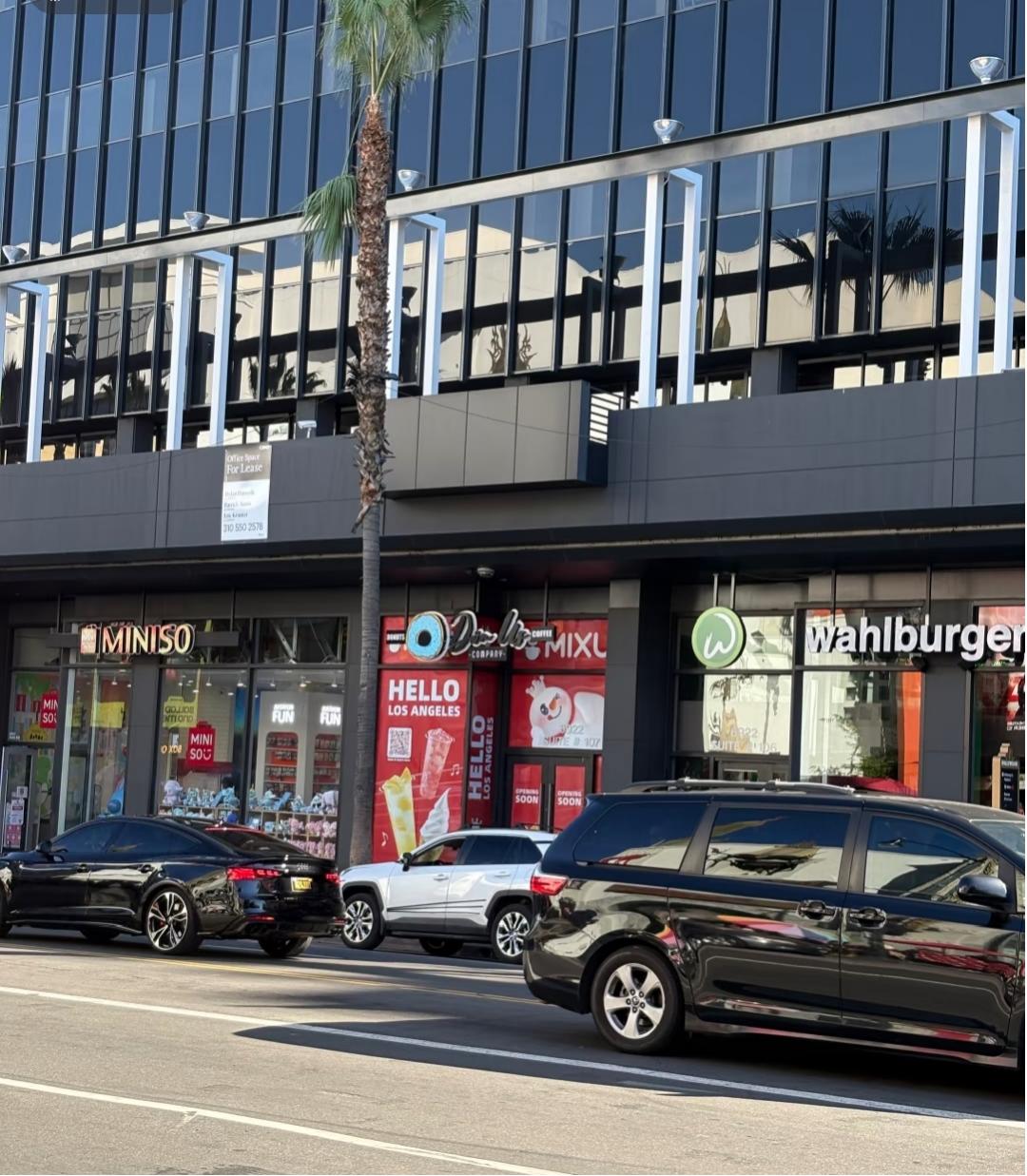
蜜雪冰城美国第二家店即将开业,选址好莱坞C位
3 6 Ke· 2025-10-22 02:21
Core Insights - The company, Mixue Ice City, is set to open its second store in North America on the Hollywood Walk of Fame in Los Angeles, following its first store in Manhattan, New York [1][5]. Store Details - The new store will occupy 752 square feet (approximately 69.86 square meters) and is currently under renovation, with an expected opening by the end of this year or early next year [1]. - The location at 6922 Hollywood Boulevard is strategically positioned across from major tourist attractions, including the TCL Chinese Theatre and Madame Tussauds, attracting approximately 10 million visitors annually, translating to an estimated daily foot traffic of about 27,400 [3]. Market Context - The Hollywood retail sector is experiencing a recovery, with the retail vacancy rate decreasing from 9% to 8% over the past year, indicating a resurgence in commercial activity [6]. - In contrast, other areas of Los Angeles have seen a significant increase in retail vacancies, with 1.7 million square feet of space being vacated during the same period [6]. Expansion Plans - Mixue plans to open an additional 5 to 10 stores in Los Angeles next year, targeting high streets, shopping centers, complexes, and airports [7]. - The company is also considering franchise opportunities, with store sizes ranging from 500 to 3,000 square feet, and has shown interest in locations previously occupied by Starbucks [7]. Financial Performance - The latest financial report indicates that Mixue achieved revenue of 14.875 billion yuan and a net profit of 2.718 billion yuan in the first half of the year, representing year-on-year growth of 39.3% and 44.1%, respectively [7]. - As of June 30, Mixue's global store network surpassed 53,000 locations across 12 countries, with 4,733 stores located overseas, marking an increase of 128 stores compared to the previous year [7]. Global Strategy - Mixue has made significant strides in international expansion, with recent openings in Kazakhstan and Brazil, and plans to establish a global business support center by 2025 to enhance operational efficiency [8][14]. - The U.S. market is seen as a critical battleground for Chinese tea brands, with over 45 brands having opened nearly 15,000 stores overseas, particularly in key urban areas [8][14]. Competitive Landscape - The U.S. tea beverage market is projected to grow at an annual rate of 9.1%, with potential for 5 to 10 times the current store count, expected to exceed $8 billion by 2030 [14]. - The absence of a dominant national player in the tea beverage sector presents an opportunity for Chinese brands to establish a foothold in the market [14].
中泰国际每日晨讯-20251022
ZHONGTAI INTERNATIONAL SECURITIES· 2025-10-22 01:34
Market Overview - The Hang Seng Index closed at 26,028 points, up 0.7%, while the Hang Seng China Enterprises Index rose 0.8% to 9,303 points[1] - Total trading volume in Hong Kong stocks was HKD 264.7 billion, an increase from HKD 239.2 billion on Monday, indicating investor contention[1] - Key sectors: Industrial (+1.4%), Consumer Discretionary (+1.2%), Financials (+1.1%); Consumer Staples (-0.1%), Telecoms (-1.0%), Utilities (-0.1%)[1] Stock Performance - China Life (2628 HK) and BYD Electronics (285 HK) led gains, rising 6.0% and 3.8% respectively[1] - Pop Mart (9992 HK) and China Resources Mixc Lifestyle (1209 HK) were the biggest losers, falling 8.1% and 1.9% respectively[1] Gold Price Trends - Gold prices peaked above USD 4,300 before retreating to around USD 4,100, with expectations of continued consolidation due to already priced-in U.S. rate cut factors[1] Global Economic Factors - U.S. Treasury Secretary may hold trade talks with China's Vice Premier, potentially easing U.S.-China tensions[1] - European leaders expressed support for Trump's stance on a ceasefire in Ukraine, indicating a stabilization of geopolitical risks[1] U.S. Market Update - The Dow Jones Industrial Average closed at 46,925 points, up 0.5%, while the Hang Seng Index futures settled at 25,919 points, down 109 points[2] Japanese Economic Update - The Japanese yen depreciated to approximately 151.8 against the USD, down from 149.5 the previous week following the election of new Prime Minister[3] Industry Insights - Pop Mart reported Q3 revenue growth of 245%-250%, with domestic revenue up 185%-190% and overseas revenue up 365%-370%, despite a stock price drop of 8.1%[4] - The healthcare sector saw a slight increase of 0.3%, with major companies showing minimal volatility[4] - New energy and utilities stocks experienced fluctuations, with notable gains in nuclear and thermal power sectors[4]
雪王“入冬”, 罪在“天宫”?
3 6 Ke· 2025-10-21 23:45
Core Viewpoint - The article discusses the contrasting performance of the tea beverage brand Mixue Ice City, highlighting its strong financial results amidst challenges posed by rising lemon prices and competitive pressures in the market [3][4][11]. Financial Performance - Mixue Ice City reported a revenue of 14.87 billion yuan and a net profit of 2.72 billion yuan for the first half of 2025, outperforming competitors like Bawang Tea and Guming [3]. - Forecasts suggest that Mixue's revenue could reach 29.7 billion yuan in 2025, reflecting a steady growth of 20% year-on-year [3]. Supply Chain and Raw Material Challenges - The brand's success is attributed to its robust supply chain and competitive pricing, particularly for its lemon-based products, which account for 15%-20% of its revenue [4][7]. - Extreme weather conditions have severely impacted lemon production, with some regions experiencing a yield reduction of 30%-60%, leading to a surge in wholesale lemon prices to 15 yuan per kilogram, nearly doubling year-on-year [7][9]. Competitive Landscape - Mixue Ice City faces significant pressure from competitors who primarily use a different variety of lemon (fragrant lemon), which has not seen the same price increases as the yellow lemon used by Mixue [9][10]. - The ongoing "takeout war" has eroded Mixue's price advantage, as competitors offer substantial discounts, making it challenging for Mixue to maintain its market position [12]. Strategic Responses - In response to the lemon crisis, Mixue has diversified its product offerings by incorporating fragrant lemons into new products, thereby alleviating some supply chain pressures [10][11]. - The brand is leveraging its IP, "Snow King," to enhance customer engagement and loyalty through innovative marketing strategies, including blind box promotions and emotional branding [13][15]. Expansion into New Markets - Mixue is expanding into new product categories, including coffee and fresh beer, to capture a broader consumer base and diversify its revenue streams [18][21]. - The launch of its coffee brand, "Lucky Coffee," has seen rapid expansion, with over 8,200 locations globally, and aims to penetrate first-tier cities [19][21]. Conclusion - The challenges posed by rising lemon prices and competitive dynamics have prompted Mixue Ice City to adapt its strategies, focusing on emotional branding, product diversification, and market expansion to sustain its growth trajectory [21].

南京“秋糖季”,千万流量激活百亿经济
Xin Hua Ri Bao· 2025-10-21 23:02
Core Insights - The 113th National Sugar and Wine Products Trade Fair took place from September 20 to October 20, featuring 20 million square meters of exhibition space and participation from 4,027 domestic and international companies, showcasing over 300,000 innovative products, including 30,000 first-time releases [1][2] - The event generated direct economic benefits amounting to 10.6816 billion yuan, with over 10 million participants attending more than 260 activities throughout the month [1][4] - The fair highlighted the transformation of Nanjing into a partner city, emphasizing its cultural richness and economic vitality, which attracted significant participation from various sectors [2][3] Industry Highlights - The fair served as a platform for the launch of new products and industry innovations, with a focus on health foods and specialty agricultural products, showcasing the latest technological advancements across the food production and consumption chain [1][2] - Nanjing's strategic location and vibrant consumer atmosphere positioned it as a prime venue for trade fairs, with 25% of exhibitors coming from the Yangtze River Delta region [3] - The event included a unique "exhibition province linkage" initiative, creating a 5,000 square meter investment promotion area to facilitate trade discussions and promote domestic products abroad [3] Event Activities - The "Autumn Sugar Season" was launched alongside the trade fair, featuring a series of 7 key thematic activities, over 70 well-known dining brands, and more than 700 consumer engagement points across the city [4][5] - The city organized various cultural and promotional activities to enhance consumer engagement, including interactive campaigns that attracted over 600 million participants to local businesses [5]
蜜雪冰城开卖啤酒!平价精酿补位“晚A”消费
Nan Fang Nong Cun Bao· 2025-10-21 15:05
Core Viewpoint - Mixue Ice City has expanded its business into the alcoholic beverage sector by acquiring a 53% stake in Fresh Beer Fulu Family for a total price of 297 million yuan, marking its entry into the beer market and establishing a full-day consumption strategy with offerings for both coffee and alcohol [2][3][4]. Group 1: Business Expansion - The acquisition of Fresh Beer Fulu Family allows Mixue Ice City to extend its product offerings from tea and coffee to include alcoholic beverages, specifically targeting the evening consumption market [3][4]. - Fresh Beer Fulu Family, founded in 2021, has rapidly expanded its presence with 872 stores across 28 provinces, including 40 in Guangdong, and operates during peak evening hours to capture the nightlife market [14][18][20]. Group 2: Market Strategy - Mixue Ice City continues its "affordable" strategy, with products priced competitively, such as fresh beer starting at 5.9 yuan, aligning with its established brand positioning [10][11]. - The company aims to leverage its supply chain and nationwide distribution network to drive down prices in the craft beer market, potentially reshaping the competitive landscape [49][50]. Group 3: Industry Insights - The craft beer market in China is projected to grow from 6.8 billion yuan in 2023 to 11 billion yuan by 2028, indicating a significant opportunity for Mixue Ice City to capitalize on this trend [46]. - The shift towards affordable craft beer could lower entry barriers for consumers, contrasting with the traditionally high pricing of independent brands and bars [48].

食品饮料2025年三季报前瞻:白酒逐渐筑底,大众品茶咖连锁、量贩零食景气度延续,乳制品、餐饮供应链景气度改善
2025-10-21 15:00
Summary of Key Points from the Conference Call Industry Overview - The food and beverage sector is experiencing mixed performance, with the liquor segment under pressure due to regulatory impacts and overall market conditions [2][8] - The overall performance of the food and beverage sector has been below market expectations, particularly in the liquor category, which is still in a phase of pressure release [2][8] Key Insights on Specific Companies and Segments General Food and Beverage - The dining supply chain has shown improvement compared to Q2, with companies like Anjuke Food expecting single-digit revenue growth and profit growth outpacing revenue [1][3] - Q3 performance for Qianwei Central Kitchen remains stable, but profit pressures are significant due to high channel costs [3] Bakery Supply Chain - Angel Yeast is projected to achieve double-digit revenue growth in Q3, benefiting from reduced shipping costs that enhance profit margins [4] - Lihigh Food is expected to maintain double-digit growth despite a slowdown in the second half of the year [4] Snack Industry - Wancheng Group is experiencing increased same-store sales and store openings, with expectations for high revenue and profit growth [5] - Yanjin Pouch continues to grow steadily, with Q3 revenue expected to show double-digit growth and profit growth exceeding revenue growth [6] Pet Sector - Zhongchong reported strong Q3 results, with significant expectations for its self-owned brand during the upcoming Double Eleven shopping festival [7] - Peidi's export business remains stable, with plans for increased product launches in Q4 [7] Liquor Industry - The liquor industry is facing challenges due to a ban on alcohol sales, with sales declining in September but showing signs of recovery during the National Day holiday [8] - High-end and mid-low price segments are stable, while the sub-high-end segment is under pressure, with Moutai's price below 1,800 yuan and other brands like Wuliangye and Guojiao around 850 yuan [8][9] - Most liquor companies are expected to report declines in Q3 performance, with Moutai and Fenjiu being exceptions with slight revenue increases [8][9] Beer Industry - Qingdao Beer reported slight volume growth in Q3, benefiting from a low base last year, while Yanjing Beer faced revenue pressure but maintained good profit growth [10] Dairy Industry - Yili's ambient liquid milk continues to face pressure, while milk powder and cold drinks show growth [11] - Miaokelando is performing well in both B-end and C-end markets, with expectations for a 30% profit growth due to cost advantages [11] Beverage Industry - Dongpeng energy drinks continue to grow steadily, with overall revenue expected to increase by about 30% [12] Recent Investments - Yeyuan Holdings has made significant investments in the pet food and veterinary sectors, indicating a strategic move towards diversifying its business [13] - Mixue Ice City plans to acquire a majority stake in Fulujia, leveraging synergies to enhance brand value and operational efficiency [14][15] Additional Insights - The overall sentiment in the food and beverage sector suggests cautious optimism, with certain segments showing resilience and potential for growth despite broader market challenges [2][8]
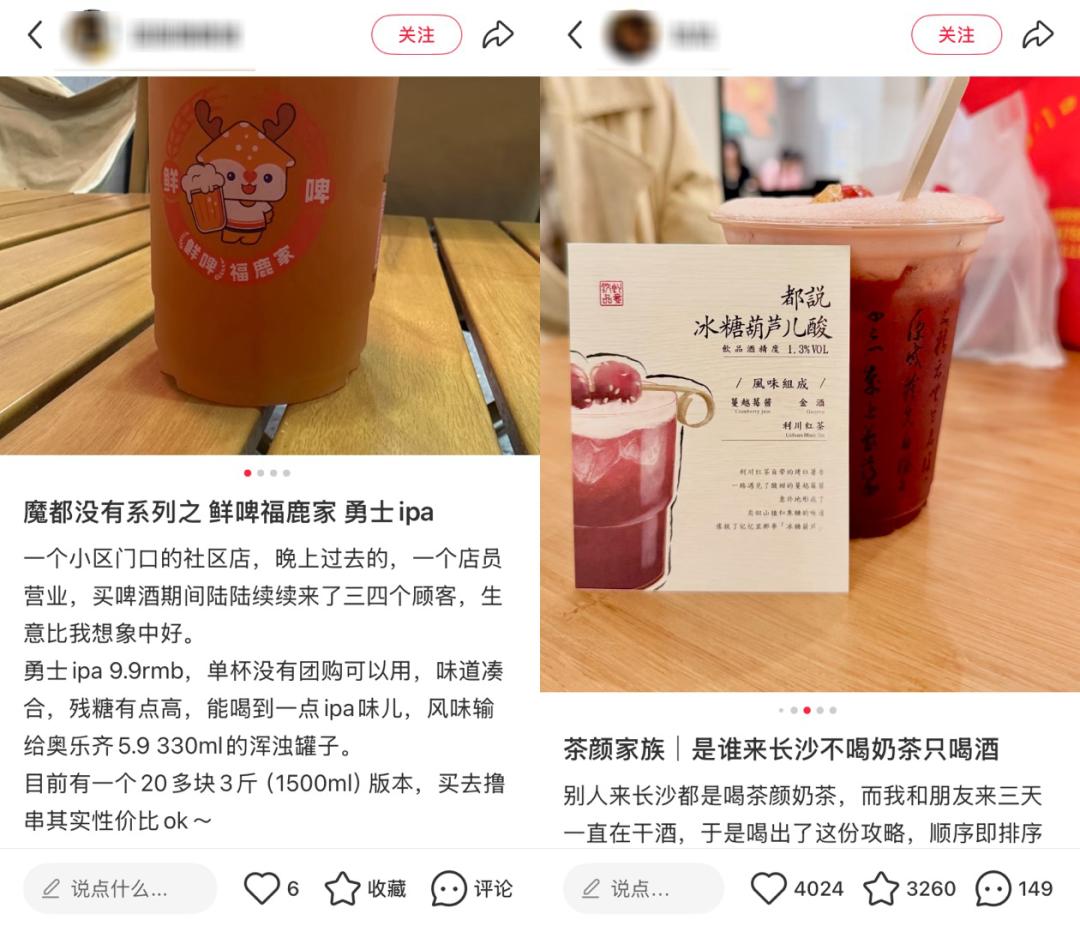
05后的第一杯酒,可能是奶茶店里买的
3 6 Ke· 2025-10-21 11:25
Core Insights - The rise of "tipsy" drinking culture among young people is leading to innovative business strategies in the beverage industry, particularly with brands like "Mixue Ice City" and "Chayan Yuese" expanding into alcoholic beverages [1][3][4] Group 1: Business Strategies - Mixue Ice City has invested nearly 300 million to acquire a 53% stake in the fresh beer brand "Fulu Family," expanding its business from tea and coffee to affordable beer [1] - Chayan Yuese launched an alcoholic tea series through its sub-brand "Yuan Yang Coffee" in 2022 and plans to establish a separate brand for alcoholic beverages in 2024 [1][3] - Both companies aim to capture the "tipsy" consumption trend, with Mixue focusing on efficiency and scale, while Chayan emphasizes cultural branding and deep customer engagement [6][14] Group 2: Market Dynamics - The "tipsy" business is fundamentally about providing emotional satisfaction, catering to the social and psychological needs of young consumers [3][4] - Traditional drinking culture, which emphasizes heavy drinking and social obligations, is being challenged by younger consumers who prefer a more relaxed and enjoyable drinking experience [5][6] - The growth of brands like Rio and Helen's Tavern indicates that "tipsy" drinking has become an essential lifestyle choice for young people [5] Group 3: Performance Metrics - Mixue Ice City's revenue for the first nine months of 2024 was 14.875 billion, with 97.4% coming from sales to franchisees [8] - However, the company faces challenges, including a decline in average store sales by 4.63% year-on-year, and an increase in store closures from 557 in 2021 to 1,609 in 2024 [10][9] - Chayan Yuese reported a revenue of 1.59 billion for the first half of 2024, with a growth rate of 29.1%, and 78.9% of its revenue coming from member purchases, indicating strong customer loyalty [15][16] Group 4: Competitive Landscape - The beer market presents higher barriers to entry compared to the tea and coffee markets, with lower consumption frequency and more intense competition from established brands like Budweiser and Tsingtao [11][13] - Chayan Yuese's strategy involves leveraging its cultural branding to differentiate itself in the crowded beverage market, while Mixue aims to replicate its tea business model in the beer sector [6][14][12] - Both companies are exploring ways to adapt their business models to meet the evolving preferences of young consumers, with Mixue focusing on rapid expansion and Chayan on maintaining quality and cultural relevance [20][21]