
中国金茂

Search documents
中国金茂(00817) - 本公司全资附属公司截至2025年9月30日止九个月未经审核主要财务数据
2025-10-30 09:00
香港交易及結算所有限公司及香港聯合交易所有限公司對本公告的內容概不負責,對其準確性 或完整性亦不發表任何聲明,並明確表示,概不對因本公告全部或任何部份內容而產生或因倚 賴該等內容而引致的任何損失承擔任何責任。 China Jinmao Holdings Group Limited 中國金茂控股集團有限公 司 (於香港註冊成立的有限公司) | | | | 於2025年 | 於2024年 | | --- | --- | --- | --- | --- | | 項目 | | | 9月30日 | 12月31日 | | 資產總額 | (人民幣億元) | | 3,983.92 | 3,634.42 | | 負債總額 | (人民幣億元) | | 2,965.79 | 2,694.20 | | 所有者權益 | (人民幣億元) | | 1,018.13 | 940.22 | | 期末現金及現金等價物 | | (人民幣億元) | 223.08 | 274.87 | 1 | | | | 截至9月30日止九個月 | | | --- | --- | --- | --- | --- | | 項目 | | | 2025年 | 2024年 ...
研报掘金丨中金:再次覆盖中国金茂 予其“跑赢行业”评级及目标价1.86港元
Ge Long Hui A P P· 2025-10-30 08:01
Core Viewpoint - CICC has initiated coverage on China Jinmao with an "outperform" rating and a target price of HKD 1.86, reflecting a 10% discount to the projected net asset value (NAV) per share for 2025 [1] Group 1: Company Management and Strategy - The company has shown significant positive changes in management and strategy, which provide a foundation for value reconstruction [1] - Historical burdens are manageable, and there is potential for incremental sales flexibility [1] Group 2: Financial Projections - CICC estimates the company's NAV to reach RMB 25.6 billion by the end of 2025, with substantial growth potential if the company maintains a steady land acquisition strategy from 2026 onwards [1] - Projected earnings per share for 2025 and 2026 are RMB 0.10 and RMB 0.11, respectively, with a compound annual growth rate (CAGR) of 6.5% from 2024 to 2026 [1] - The target price of HKD 1.86 is based on a 10% discount to the 2025 NAV, corresponding to a price-to-book ratio of 0.6 times for 2025 [1]
策略快评:2025年11月各行业金股推荐汇总
Guoxin Securities· 2025-10-30 05:12
Core Insights - The report provides a summary of recommended stocks across various industries for November 2025, highlighting potential investment opportunities based on performance and market conditions [2]. Banking Sector - Ningbo Bank (002142.SZ) shows an improving trend in Q3 performance with a continuous decline in non-performing loan generation rate and a positive shift in net interest margin, indicating a solid bottom line [2]. Non-Banking Financials - Dongfang Securities (600958.SH) is recommended due to its strong stock characteristics and reasonable valuation, with expectations of outperforming the index as Q3 earnings season approaches [2]. Real Estate - China Jinmao (0817.HK) is positioned favorably due to stable sales and proactive expansion, with a better risk release compared to other major real estate firms, amidst a challenging sales environment [2]. Electronics - Industrial Fulian (601138.SH) benefits from the growing demand for AI server products, leading to significant increases in GB series server shipments and a steady rise in market share among major clients [2]. Telecommunications - Zhongji Xuchuang (300308.SZ) is a leading company in optical modules, expected to benefit from the rising global demand for data center optical modules driven by AI development in 2026-2027 [2]. Power Equipment and New Energy - Sungrow Power Supply (300274.SZ) is recognized for its comprehensive solutions in photovoltaic power generation and energy storage, with steady growth driven by expanding market demand [2]. - Dongsheng Technology (300073.SZ) is noted for its leading position in ternary cathode materials, with anticipated growth from the recovery of European new energy vehicle demand and advancements in solid-state battery technology [2]. Metals and Materials - Zijin Mining (601899.SH) is highlighted for its strong earnings potential and high valuation appeal, with significant growth prospects in gold, copper, and lithium mining [2]. Internet - Tencent Holdings (0700.HK) is seen as a key player in the AI era, leveraging its ecosystem advantages to capture market opportunities, particularly in e-commerce and AI agent services [2]. Public Utilities and Environmental Protection - China General Nuclear Power (003816.SZ) is expected to rebound as new nuclear units are set to be commissioned, with market prices for nuclear power projected to increase [2].






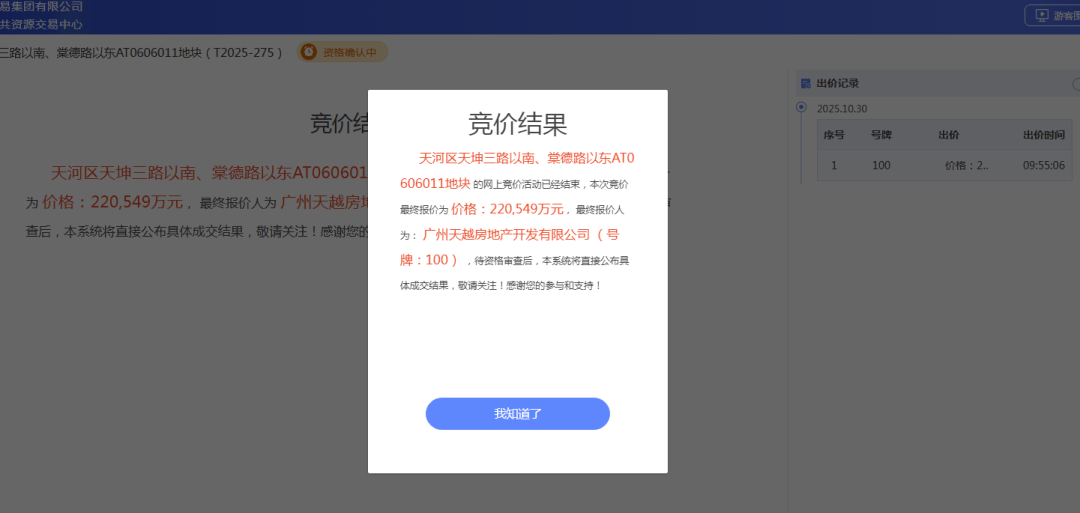
3.1万/㎡!天河广棠双地块名花有主,又是越秀!
Sou Hu Cai Jing· 2025-10-30 03:50
Core Insights - Guangzhou Tianhe has sold two prime land parcels, which are strategically located near the planned Metro Line 19 and approximately 1 kilometer from the existing Metro Line 21 [1][3]. Group 1: Location and Connectivity - The land parcels are well-connected by major roads such as Keyun Road, Daguan Road, and Guangyuan Expressway, allowing for quick access to the Financial City in 5 minutes and Zhujiang New Town in 15 minutes [5]. - Future road constructions, including Tiankun Third Road and Tangde Road, will further enhance the accessibility of the land parcels [5]. Group 2: Development Potential - The land is situated in the Guangtang area of the Tianhe district, which has seen land acquisition agreements for approximately 1,043 acres completed earlier this year [8]. - The Tianhe Zhigu Guangtang area is planned for diverse uses including research, commercial, and medical facilities, along with ecological amenities like the Chebi Wetland Park, aiming to create a model for integrated urban development [8][10]. Group 3: Market Context - The Tianhe Zhigu area has become a hotspot in the land market, with recent transactions of residential land parcels in the nearby World Grand View area, which is about 3 kilometers away [10]. - Recent sales in the World Grand View area included two residential plots with floor prices of 47,317 CNY/m² and 30,519 CNY/m², indicating strong market interest [10].


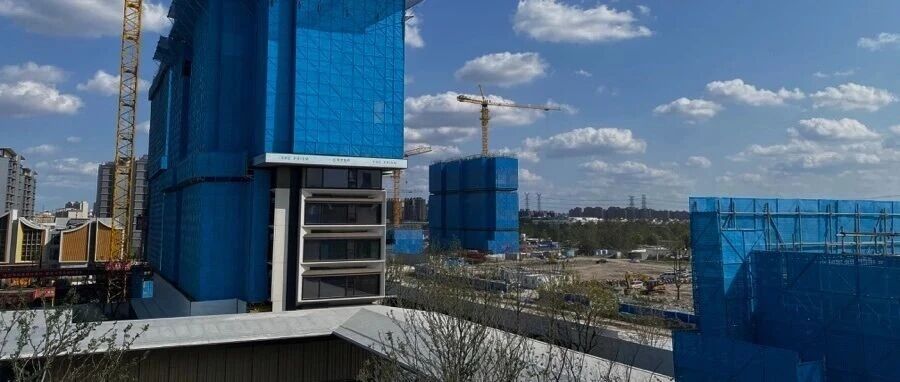
上海豪宅市场日光盘,消失了
21世纪经济报道· 2025-10-29 13:59
Core Viewpoint - The luxury real estate market in Shanghai is experiencing a cooling trend, with a significant slowdown in sales and changing consumer behavior due to various factors including demand exhaustion, increased supply, and a shift in investment focus towards the stock market [3][5][9]. Group 1: Market Performance - The luxury project Feiyun Yufu launched 32 units at a starting price of 17.27 million, with an average price exceeding 110,000 per square meter, but only half of the units were sold in the latest release [1]. - Another luxury project, Jinmao Puyuan, had a subscription rate of approximately 102% for its second batch, with over 80 units sold, contrasting with its first batch that sold out in 26 minutes [3]. - Many luxury projects in Shanghai are seeing sales rates below 100%, with some popular developments achieving a maximum sales rate of around 80% and a minimum of 50% [5]. Group 2: Supply and Demand Dynamics - The luxury market is facing a supply influx, with numerous projects being launched simultaneously, leading to a broader selection for buyers and extended decision-making periods [3][5]. - The high transaction volume in the previous year has led to demand exhaustion, reducing current market momentum [3][5]. - The shift of high-net-worth individuals' investment from real estate to the stock market is contributing to the observed market slowdown [3][5]. Group 3: Competitive Landscape - State-owned enterprises are increasingly dominating the luxury market in Shanghai, with 80% of land transactions in 2025 being acquired by these entities [5][7]. - The competitive strategies among luxury developers are intensifying, with price wars emerging as companies like Jinmao and China Resources engage in competitive pricing to attract buyers [9][11]. - The focus on product differentiation is becoming crucial, as buyers are now more concerned with the actual presentation of properties, leading to increased investment in product quality by developers [13][15]. Group 4: Consumer Behavior - The luxury buyer demographic is exhibiting a trend towards slower decision-making, influenced by the variety of options available and the current market conditions [9][16]. - The presence of ample second-hand housing options is affecting the purchasing decisions of potential buyers, leading to a cautious approach in the luxury segment [16]. - The market for suburban new developments remains robust, indicating that demand for well-positioned properties still exists despite the overall slowdown in the luxury segment [16].
32套大户型只卖了一半?上海豪宅市场消失的“日光盘”
2 1 Shi Ji Jing Ji Bao Dao· 2025-10-29 13:09
Core Viewpoint - The luxury real estate market in Shanghai is experiencing a slowdown, with a significant increase in supply and changing consumer behavior impacting sales performance [3][4][14]. Group 1: Market Performance - The luxury project Feiyun Yuefu launched 32 units with a starting price of 17.27 million, averaging over 110,000 per square meter [1]. - The project Jinmao Puyuan had a subscription rate of approximately 102% during its recent launch, but only about 80 units were sold out of 111 [2]. - Sales absorption rates for various luxury projects in Shanghai are below 100%, with some popular developments achieving rates between 50% and 80% [3]. Group 2: Supply and Demand Dynamics - The luxury market is facing a demand pullback due to previous high transaction volumes that exhausted potential buyers [3]. - A surge in luxury project launches has diversified buyer options, leading to longer decision-making periods [3][14]. - High-net-worth individuals are reallocating funds from the luxury real estate market to the stock market, further dampening demand [3][14]. Group 3: Competitive Landscape - State-owned enterprises are increasingly dominating the Shanghai real estate market, acquiring 80% of land parcels sold in 2025, with significant investments in urban renewal projects [5][6]. - The competitive strategies among luxury developers are intensifying, with price wars emerging between projects like Jinmao Puyuan and Huayun Wai Tan [9]. - Developers are focusing on product differentiation to attract buyers, leading to a trend of increased investment in property features [11][13]. Group 4: Consumer Behavior - Buyers are exhibiting a "slow decision-making" trend due to the abundance of choices and the current market conditions [7][14]. - The second-hand housing market's price adjustments are causing potential buyers to hesitate, impacting the luxury segment's sales [14][15]. - Despite the slowdown in the luxury segment, suburban projects are still attracting interest, indicating a shift in buyer preferences [15].
潮平两岸阔,风正一帆悬
Haitong Securities International· 2025-10-29 08:10
Group 1: 2025 Real Estate Market Changes - The proportion of core cities in total sales has significantly increased, with 22 key cities accounting for 18% of national sales area and 40% of sales amount in the first three quarters of 2025 [9][13][21] - New and second-hand housing prices are diverging, with new home prices rising by 1.63% in 1-3Q2025, while second-hand home prices fell by 5.79% [18][21] - In 1-3Q2025, second-hand home sales in 27 key cities increased by approximately 9% compared to the same period in 2024, while new home sales decreased by 9% [21][33] Group 2: Long-term and 2026 Total Volume Judgments - The real estate development investment is expected to decline to 8.50 trillion yuan in 2025, a 15.3% decrease year-on-year, while commodity housing sales are projected to be 8.53 trillion yuan, down 11.8% [48][57] - The industry is in a state of significant contraction, with cumulative declines of 42.4% in development investment and 53.1% in commodity housing sales since 2021 [48][57] - The overall housing demand is expected to stabilize, with commodity housing sales area projected between 8-9 billion square meters in 2025, indicating a gradual bottoming process [57][72] Group 3: Marginal Improvements from the Bottom Up - The market concentration in the real estate sector remains low, with the top five developers accounting for only 6% of total sales area in 1-3Q2025 [87] - The net profit margin of major developers has shown signs of stabilization, with a decrease in asset impairment losses expected to clear by 2026 [99][100] - The competitive landscape is anticipated to improve, with major developers increasing their market share through strategic land acquisitions [105][113]
多行业联合解读十五五规划建议稿
2025-10-28 15:31
Summary of Key Points from Conference Call Records Industry or Company Involved - The records primarily discuss the **Fifteenth Five-Year Plan** (十五五规划) and its implications across various industries, including technology, energy, manufacturing, and real estate. Core Points and Arguments 1. **Economic Growth Targets**: The plan sets a GDP growth target of 4.7% to double the GDP by 2035, with a short-term goal of maintaining a 5% growth rate in the initial years [1][3][4] 2. **Focus on Manufacturing and Innovation**: The plan emphasizes transforming innovation into manufacturing power, placing industry as the top priority followed by innovation [1][3] 3. **Consumer Spending and Domestic Demand**: There is a strong push to increase consumer spending and enhance domestic demand as a primary driver of economic growth, with specific targets for consumer rates [1][4] 4. **Digital Transformation Support**: The government will provide subsidies and tax reductions to support the digital transformation of manufacturing and basic software sectors, creating opportunities for companies in these fields [1][6] 5. **New Energy Development**: The plan highlights the development of a new energy system focusing on hydrogen, electric energy, and solid-state batteries, indicating investment opportunities in these areas [1][7][8] 6. **Metal Industry Outlook**: The copper and aluminum sectors are expected to benefit from increased demand for energy storage and efficient power utilization materials, with a positive outlook for these metals [2][10] 7. **Investment in High-End Manufacturing**: Key areas include integrated circuits, high-end instruments, and industrial mother machines, with recommendations to focus on leading domestic manufacturers [15] 8. **Real Estate Market Dynamics**: The real estate market shows complexity, with core cities performing better than others. The plan emphasizes tailored policies for different cities and improving housing quality [24] Other Important but Possibly Overlooked Content 1. **Artificial Intelligence Integration**: The plan includes a significant focus on AI, aiming to integrate it across various sectors, indicating a shift towards smart transformation rather than traditional digitalization [5][6] 2. **Energy Security**: The importance of energy security is reiterated, especially in light of geopolitical risks, with a long-term positive outlook for oil and gas sectors [13] 3. **Emerging Technologies**: The plan identifies brain-computer interfaces as a key area for development, with significant market growth expected and a focus on clinical applications [22] 4. **Financial Sector Opportunities**: The banking sector is highlighted for its potential growth, driven by increased credit demand in green loans and technology sectors [23] This summary encapsulates the essential insights from the conference call records, providing a comprehensive overview of the Fifteenth Five-Year Plan's implications across various industries and investment opportunities.
聚焦十五五——总量创辩第114期:资产配置快评
Huachuang Securities· 2025-10-28 04:33
Macro Insights - The "14th Five-Year Plan" emphasized structural adjustments over absolute growth, while the "15th Five-Year Plan" is expected to focus more on clear and positive growth expectations[16] - The emphasis on economic construction, technological self-reliance, and enhancing national security capabilities is highlighted in the recent policy discussions[11] Investment Strategy - The stability of the "15th Five-Year Plan" suggests a shift in equity asset investment from short-term to long-term perspectives, aligning with a 5-10 year investment horizon[16] - The expected EPS growth for equity assets is anticipated to stabilize, driven by a stronger demand for economic growth during the "15th Five-Year Plan" period[16] Sector Focus - The focus on technology is shifting from hardware to software, aiming to seize strategic advantages in the new technological revolution[16] - Consumer demand is expected to lead supply, marking a shift from "supply creates demand" to "demand leads supply" in economic dynamics[16] Market Performance - The total position of equity funds increased to 98.46%, up by 100 bps from the previous week, indicating a bullish sentiment among institutional investors[24] - The average return for equity mixed funds was 3.8%, while stock ETFs averaged a return of 3.73% this week[31] Real Estate Insights - High rental yields may slow the decline in housing prices, but they do not necessarily indicate a price bottom, as seen in lower-tier cities where rental yields are high but prices continue to fall[39] - The relationship between rental income and housing prices is crucial, with rental income being a more significant indicator than rental yield in determining price trends[39]
周专题:地产开发投资何去何从?
Guotou Securities· 2025-10-28 03:37
Investment Rating - The report maintains a "Buy-A" rating for selected stocks including Xincheng Holdings, Greentown China, and China Jinmao [6] Core Views - The real estate industry shows signs of bottoming out in September 2025, with structural differentiation evident. Key indicators such as new construction, completion, sales area, and sales revenue have improved on a month-over-month basis compared to the average levels from 2020 to 2024, despite a year-on-year decline in real estate development investment [1][12][15] - The downward pressure on real estate development investment is attributed to three main factors: a continuous reduction in construction scale, a sluggish land market, and a tight financing environment [2][19][30] - Future real estate development investment is expected to stabilize gradually, with a structural recovery process. The recovery will be led by third and fourth-tier cities due to lower land cost ratios and stable price differentials, while first and second-tier cities will lag behind [3][32] Summary by Sections 1. September Real Estate Data Performance - The overall data for the real estate industry in September 2025 indicates a continued decline, but with some month-over-month improvements. Key metrics such as new construction and completion areas have shown less severe year-on-year declines compared to previous months [1][12][15] 2. Increased Downward Pressure on Real Estate Investment - The report identifies that the primary reasons for the increased downward pressure on real estate development investment include a shrinking construction scale, a depressed land market, and a constrained financing environment. The total funding sources for real estate development decreased by 13.4% year-on-year [2][19][30] 3. Future of Real Estate Development Investment - The outlook for real estate development investment suggests a gradual stabilization, with a focus on structural characteristics. The report highlights that the recovery will be more pronounced in lower-tier cities, while state-owned enterprises are expected to maintain their land acquisition strength due to better financing capabilities [3][30][32]
