海信视像

Search documents
东方证券:“两新”政策优化、延续 有望激活家电行业更大消费潜能
智通财经网· 2025-12-15 03:38
智通财经APP获悉,东方证券发布研报称,内销方面,国补拉动效应虽边际放缓,但"两新"政策优化、 延续,有望激活家电更大消费潜能,白电龙头公司的一级能效产品占比更高,以旧换新内控管理流程更 成熟,受益更明显;出海仍为长期主线,多元化产能布局公司占优,看好家电龙头的稳健经营能力。 主线三:主业业绩稳健,有望开拓第二成长曲线,相关标的:安孚科技。 东方证券主要观点如下: 两新"政策优化、延续,有望激活家电更大消费潜能 2025年12月11日,中央经济工作会议闭幕,会议明确定调:强调"内需主导、建设强大国内市场",优 化"新一轮大规模设备更新和以旧换新"政策实施,提出深化拓展"人工智能+";对外开放方面,推进免 税与外贸、数字/绿色贸易、完善海外服务体系与自贸试验区布局,利好出口链与跨境渠道持续改善。 根据商务部统计,2025年1-11月,家电以旧换新超12844万台,带动相关商品销售额超2.5万亿元,惠及 3.6亿多人次。该行认为,"两新"政策延续已明确,后续在商品消费(如国补/以旧换新延续)与服务消 费(消费券)层面有望形成需求端的持续刺激,同时"AI+消费硬件"(如清洁电器、家庭服务机器人、 AI眼镜、运动相机 ...

“打通全国统一大市场堵点卡点”热点问题探析:破局“内卷” 开拓蓝海
Jing Ji Ri Bao· 2025-12-15 03:27
Core Viewpoint - The article discusses the challenges of "involution" in various industries, highlighting the detrimental effects of irrational competition and price wars on quality, innovation, and market stability. It emphasizes the need for a unified national market to promote high-quality development and break free from this cycle of competition [1][2][3]. Group 1: Industry Challenges - The washing powder industry is facing severe issues due to low-quality products with less than 5% active ingredient content capturing market share through low prices, putting quality products at a disadvantage [1]. - Industries from steel to solar energy are experiencing intensified price wars, leading to compressed profit margins and reduced innovation investments, which in turn increases quality and safety risks [1][2]. - Over 20 national and local industry associations have publicly called for a "反内卷" (anti-involution) movement, indicating a widespread recognition of the problem across sectors such as steel, automotive, solar, catering, finance, and logistics [3]. Group 2: Solutions and Strategies - To address the structural issues of involution, a collaborative approach between government and market forces is necessary, focusing on supply-side structural reforms [3]. - Companies like China Resources Beer have closed 40 factories and reduced over 5 million tons of redundant capacity, demonstrating a shift from a "scale-first" mentality to prioritizing quality and brand development [3]. - Innovation is crucial for traditional manufacturing to break free from path dependence and scale limitations, with companies encouraged to collaborate with research institutions and invest in new technologies [4][5]. Group 3: Brand and Market Positioning - The article highlights the importance of rebuilding trust in quality and value, as low-quality products often mislead consumers in an information-asymmetric market [6]. - Companies are urged to focus on user experience and brand value, shifting from a transactional approach to one that emphasizes emotional and meaningful connections with consumers [6]. - The narrative of "Chinese manufacturing" is evolving, with domestic brands gaining recognition and demand both locally and internationally, reflecting a shift in consumer perception [6]. Group 4: Global Expansion - The construction of a unified national market is seen as a means to create a fairer and more efficient competitive environment, encouraging companies to expand globally to alleviate domestic competition pressures [7]. - Companies like Jack Technology are establishing production bases in various regions to cater to local markets, while Miniso emphasizes cultural integration in its global strategy [7]. - The article concludes that companies must focus on innovation, brand strength, and global outreach to escape internal competition and contribute to high-quality economic development [8].
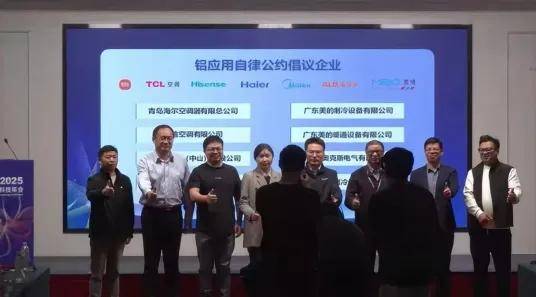
小米等19家巨头铝代铜被指合谋减配!董明珠放话:坚决不用……
Sou Hu Cai Jing· 2025-12-15 03:01
Core Viewpoint - The air conditioning industry has reached a rare consensus on the "aluminum instead of copper" self-discipline convention, with 19 companies including Haier, Midea, Hisense, and Xiaomi participating in promoting this technological transformation [1][3]. Group 1: Industry Consensus and Reactions - The self-discipline convention emphasizes the prohibition of malicious attacks and encourages scientific promotion of aluminum heat exchanger air conditioners [3]. - Gree, although involved in the revision of national standards for aluminum instead of copper, did not join the self-discipline convention, stating that it currently has no plans to adopt aluminum due to concerns over performance and reliability [3][4]. - Gree's Vice President previously indicated that the company would not pursue aluminum until performance and quality could be guaranteed [4]. Group 2: Technical and Economic Considerations - The technical feasibility of aluminum replacing copper has significantly improved through structural optimization and process improvements, despite aluminum's thermal conductivity being only 60% that of copper [6]. - The cost advantage of aluminum is substantial, with copper prices reaching 92,000 yuan per ton compared to aluminum at 22,000 yuan per ton, making aluminum four times cheaper [7][8]. - The use of aluminum could reduce the cost of materials for a single air conditioner from approximately 600 yuan (copper) to 140 yuan (aluminum), potentially enhancing price competitiveness for manufacturers [8]. Group 3: Environmental and Strategic Implications - The shift towards aluminum is supported by national strategies, as the Ministry of Industry and Information Technology has expressed support for aluminum instead of copper, aligning with resource security and carbon reduction goals [7]. - Aluminum's production has a lower carbon footprint, with a 50% reduction in direct carbon emissions and a recycling rate of over 95% [6][7]. - The air conditioning industry consumed 1.723 million tons of copper in 2023, accounting for 10.7% of the national copper consumption, highlighting the industry's reliance on imported copper resources [7].


跨越山海送温情 海信冰箱·雨辰助学助力乡村教育
Huan Qiu Wang· 2025-12-15 02:24
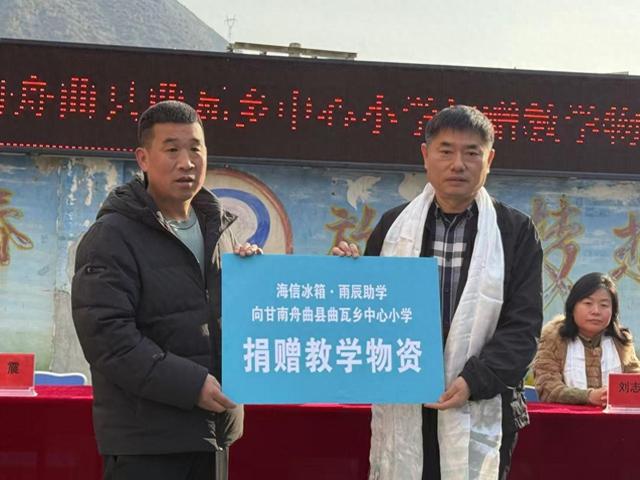
来源:环球网 【环球网公益综合报道】近日,在距离黄海之滨两千余公里的甘南高原上,一场温暖的交接仪式悄然举 行。海信冰箱·雨辰助学捐赠的爱心物资,跨越山海,送达甘南藏族自治州舟曲县曲瓦乡中心小学师生 手中,为这所大山深处的小学带来了温暖与改变。 曲瓦乡中心小学始建于1958年,位于舟曲县西南部,距县城55公里。该校教育覆盖曲瓦乡7个行政村、 25个自然村。由于距离学校远,孩子们从小学三年级开始就入校住宿。而资金不足,缺乏合适的取暖设 备,这成为每年严冬学校面临的严峻考验。海信冰箱·雨辰助学调研得知学校情况后,专门在严冬来临 前为学校配置了足够的空调。目前,宿舍空调已安装完毕,它们将成为孩子们抵御高原严寒的"守护 者",让孩子们每个夜晚都能温暖舒适地入眠。 同时,在校园办公区,海信冰箱·雨辰助学还为学校新添置了彩色打印机。未来,课本中斑斓的世界、 孩子们笔下的奇思妙想,都能通过它变成触手可及的彩色图像。 当然,公益的意义远不止于物质的抵达。如果说物资是抵御风寒的铠甲,那么与此同时抵达的关怀,则 旨在点亮教育者内心的灯火。针对学校偏远、留守儿童居多的现状,海信冰箱·雨辰助学还特别邀请了 心理学专家刘志燕老师,为学校 ...

经济工作会议解读开局年的新思路
2025-12-15 01:55
Summary of Key Points from the Conference Call Industry Overview - The focus of the 2026 economic work is on "qualitative effective improvement" through optimizing fiscal expenditure and income structure, deepening industrial policy, and enhancing monetary policy coordination, laying the foundation for the 14th Five-Year Plan [1][2] - The capital market is expected to benefit from qualitative improvements, with profit growth driving market development, particularly in the midstream manufacturing sector [1][6] - Key sectors to watch include chemicals, new energy chains, real estate chains, and healthcare chains, as well as the potential for service consumption growth [1][6] Core Insights and Arguments - The economic policy for 2026 emphasizes a combination of cross-cycle and counter-cyclical measures, focusing on qualitative improvements rather than quantitative growth, differing significantly from the 2024 approach [2][3] - The real estate market is expected to stabilize through risk mitigation measures, encouraging the acquisition of existing properties for affordable housing construction [4][14] - The automotive industry anticipates a flat or slightly positive growth in domestic insurance demand for 2026, supported by trade-in and scrappage policies [11][12] - The metal sector is projected to benefit from domestic demand-driven economic models, with a focus on aluminum, copper, and gold prices due to supportive macro policies [9][10] Additional Important Insights - The manufacturing sector is expected to see significant AI integration, enhancing production efficiency and driving industrial upgrades [17][18] - The semiconductor equipment, liquid cooling equipment, and power facility sectors are anticipated to enter a phase of order and revenue realization in 2026 [18] - The AI application landscape is set for substantial growth, particularly in robotics and smart hardware, with major companies planning product launches [19] - The real estate market's inventory is expected to decrease significantly, improving fundamentals and benefiting companies focused on improving housing supply [16] - The non-banking financial sector is encouraged to enhance capital market reforms, with a focus on improving the quality of small financial institutions [27][28] Recommendations for Investment - In the automotive sector, companies with high overseas exposure and strong positions in AI and robotics, such as Geely, Xpeng, and BYD, are recommended [13] - For the metal sector, companies like China Aluminum, China Nonferrous Mining, and Wugang Resources are highlighted due to their potential in aluminum and copper markets [9][10] - In the real estate sector, firms focusing on improving housing supply in core cities are expected to benefit from supportive policies [14][16] - In the semiconductor and equipment sectors, companies involved in AI infrastructure and related technologies are recommended for investment [17][18]
家电行业:“两新”政策优化、延续,有望激活更大消费潜能
Orient Securities· 2025-12-15 01:46
Investment Rating - The report maintains a "Positive" investment rating for the home appliance industry, indicating an expectation of returns that outperform the market benchmark by over 5% [5][13]. Core Insights - The optimization and continuation of the "Two New" policies are expected to activate greater consumer potential in the home appliance sector. The policies aim to stimulate demand through measures such as large-scale equipment updates and trade-in programs [8]. - The domestic sales driven by government subsidies are showing marginal slowdown, but the ongoing policies are anticipated to provide sustained demand stimulation in both product and service consumption [8]. - The report highlights that the impact of Mexico's proposed tariffs on Chinese home appliance companies is limited, as the revenue contribution from this market is relatively small [8]. - The market share of Miniled TVs is on the rise, with RGB-Miniled technology expected to lead the next generation of display technology upgrades, enhancing the competitive edge of Chinese brands in the global market [8]. Summary by Sections Investment Recommendations and Targets - Domestic sales are expected to benefit from the "Two New" policy, with leading white goods companies likely to gain more from trade-in programs due to their higher efficiency and mature management processes [3]. - Key investment themes include: - Leading companies with higher operational efficiency and mature overseas production layouts, such as Midea Group, Haier Smart Home, and Hisense Visual, are recommended for stable allocation [3]. - The long-term focus on overseas expansion is emphasized, with Stone Technology highlighted as a potential beneficiary [3]. - Companies with stable core business performance and potential for a second growth curve, such as Anfu Technology, are also noted [3].




【“打通全国统一大市场堵点卡点”热点问题探析⑦】破局“内卷” 开拓蓝海
Jing Ji Ri Bao· 2025-12-14 22:51
Core Viewpoint - The article highlights the detrimental effects of "involution" competition across various industries, leading to price wars, reduced profit margins, and increased quality and safety risks. It emphasizes the need for a unified national market to promote high-quality development in enterprises and industries [1][3][7]. Group 1: Industry Challenges - The washing detergent industry is facing severe competition from low-quality products with less than 5% active ingredient content, which are capturing market share through low pricing, putting quality products at a disadvantage [1]. - "Involution" competition is characterized by irrational competition due to market mechanism failures, where companies resort to price wars instead of leveraging differentiation or technological advantages, resulting in "increased production without increased revenue" [2]. - Various industries, including steel, photovoltaics, automotive, and catering, are experiencing similar challenges due to intense price competition, leading to a consensus among over 20 industry associations to advocate for "anti-involution" measures [3]. Group 2: Solutions and Strategies - To enhance market efficiency, it is essential to eliminate barriers to fair competition, which is a key aspect of building a unified national market. This will help stabilize the commercial ecosystem and address supply-demand imbalances [3]. - Companies are encouraged to abandon the outdated "scale-first" mentality and focus on creating value through quality products and strong brands. For instance, China Resources Beer closed 40 factories and reduced over 5 million tons of redundant capacity to focus on value creation [3]. - Innovation is crucial for traditional manufacturing to break free from path dependence and scale bottlenecks. Companies like Weiqiao Venture Group are collaborating with research institutions and adopting new technologies to transform their business models [4]. Group 3: Brand and Market Positioning - In a market characterized by information asymmetry, low-quality products often mislead consumers, necessitating a shift towards rebuilding trust in "quality for price" mechanisms and enhancing user experience and brand value [5]. - The home appliance industry has maintained a relatively rational approach due to years of system development, with a shift in market power from companies to consumers, who now seek personalized and emotionally resonant experiences [5]. - Companies like Hisense are witnessing a reversal in consumer behavior, with domestic brands gaining recognition for quality, indicating a shift towards "Chinese manufacturing" being associated with technological premium [5]. Group 4: Global Expansion - The construction of a unified national market is not a closed "internal cycle" but an open market that encourages both domestic and international engagement. Companies are urged to expand globally to alleviate domestic competition pressures and enhance competitiveness [6]. - Jack Technology has entered a global leadership phase, establishing production bases tailored to regional markets, while Miniso emphasizes cultural integration in its global strategy, showcasing the importance of local insights in international expansion [6]. Group 5: Future Outlook - Building a unified national market aims to create fairer, more efficient, and more valuable competition. Companies must focus on innovation, brand strength, and global presence to escape internal strife and contribute to China's high-quality economic development [7].


焕新便利遇上品质升级:山东打通消费链,激活万亿市场
Sou Hu Cai Jing· 2025-12-14 10:46
Group 1 - The core viewpoint of the articles highlights the active consumption market in Shandong, driven by the "old-for-new" policy and the dual focus on upgrading both community services and urban commercial quality [1][2][5] - The "old-for-new" policy has generated a consumption increment worth hundreds of billions, with over 200 billion yuan allocated for subsidies, leading to sales exceeding 1.7 trillion yuan by October 2025 [2][4] - The automotive and home appliance sectors are particularly thriving, with applications for vehicle scrapping and replacement reaching 478,000 and 431,000 respectively, and over 10 million home appliances replaced [4][5] Group 2 - The "old-for-new" policy is transitioning Shandong's consumption industry from a "single category" to a "full-chain upgrade," expanding subsidy categories from 8 to 12, covering a wide range of products [5][6] - The retail sales of social consumer goods in Shandong reached 30,386.1 billion yuan in the first three quarters, with a year-on-year growth of 5.6%, surpassing the national average by 1.1 percentage points [7] - The growth of the service industry is notable, with sectors such as entertainment and public facilities management experiencing revenue growth rates of 19.4% and 18.9% respectively, contributing to job creation [9] Group 3 - Local brands like Haier and Qingdao Beer are thriving, with Qingdao Beer Museum generating over 250 million yuan in revenue since its opening, while foreign investments are also increasing in Shandong [10] - The transformation of Shandong's economy is shifting from "scale expansion" to a focus on "quality and efficiency," with digital upgrades and industry integration becoming core drivers [10] - The establishment of a national-level digital transformation promotion center for SMEs in Shandong indicates a strong push towards digitalization, with the province leading in the number of national-level industrial internet platforms [10]

小米美的等抱团「铝代铜」,格力「缺席」:没把握,不跟!
Xin Lang Cai Jing· 2025-12-14 09:43
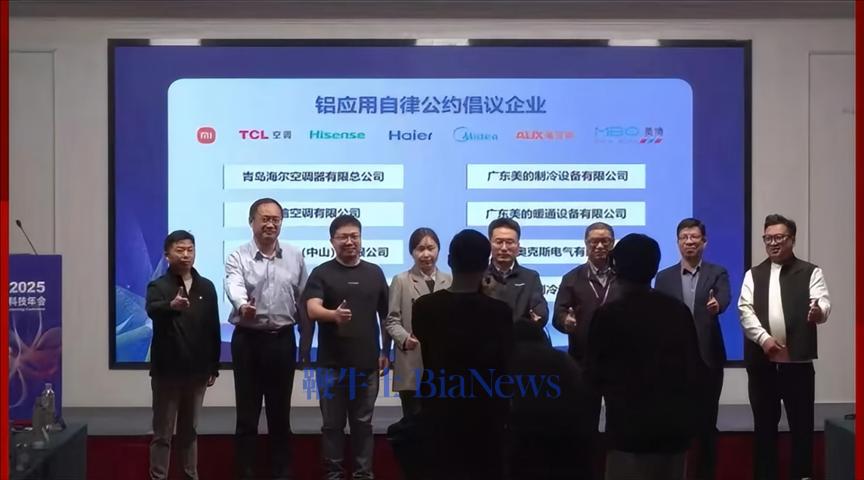
Core Viewpoint - Major companies in the air conditioning industry, including Haier, Midea, Xiaomi, and TCL, have committed to adhering to the "Self-Discipline Convention for Aluminum Reinforcement Application Research Working Group" to promote the "aluminum instead of copper" technology and enhance industry competitiveness. However, Gree Electric Appliances has notably not joined this initiative, expressing skepticism about the reliability of aluminum as a substitute for copper [1][3][5]. Group 1: Industry Developments - The air conditioning sector is focusing on the innovation and standardization of "aluminum instead of copper" technology, with new group standards being published for aluminum tube heat exchangers [3]. - Gree Electric Appliances has participated in the revision of national standards related to "aluminum instead of copper" but has not engaged in the self-discipline convention, highlighting its cautious stance on the technology [3][5]. - The ongoing debate over "aluminum instead of copper" has persisted for over a decade, often reignited by fluctuations in copper prices, which can account for 20% of the cost of an air conditioner [6]. Group 2: Technical and Economic Considerations - The cost of aluminum is significantly lower than that of copper, with aluminum costing about one-tenth of copper, which could lead to substantial price reductions for air conditioners if the transition is successful [6]. - Despite the potential cost benefits, copper's superior thermal conductivity, corrosion resistance, and long-term reliability present challenges for manufacturers considering the switch to aluminum [6]. - Experts suggest that the technology for a complete transition to aluminum has existed for two years, but progress has been slow due to public perception and varying technical capabilities among manufacturers [6][7]. Group 3: Strategic Implications - The push for "aluminum instead of copper" aligns with national strategies to reduce reliance on imported copper, as over 95% of copper used in China is imported, raising concerns about supply chain stability [7]. - The Ministry of Industry and Information Technology has proposed expanding aluminum consumption in various applications, including air conditioning, as part of a broader initiative for high-quality development in the aluminum industry [7]. Group 4: Gree's Position - Gree Electric Appliances maintains a conservative approach towards adopting "aluminum instead of copper," emphasizing the importance of product quality and consumer trust [9]. - The company has stated that it will not pursue aluminum until it can guarantee the quality and reliability of its products, reflecting a commitment to maintaining its brand reputation [9][10]. - With rising international copper prices exceeding $10,000 per ton, Gree's reluctance to adopt aluminum may lead to challenges in maintaining competitive pricing and managing supply chain risks [10].
小米美的等抱团“铝代铜”,格力“缺席”:没把握,不跟!
新浪财经· 2025-12-14 09:25
Core Viewpoint - Major air conditioning companies, including Haier, Midea, Xiaomi, and TCL, have committed to adhering to the "Self-Discipline Convention for Aluminum Reinforcement Application Research Working Group" to promote the "aluminum replacing copper" technology, while Gree Electric Appliances has notably opted out of this commitment [2][4][6]. Group 1: Industry Developments - The "aluminum replacing copper" initiative has gained traction among leading air conditioning manufacturers, with a collective push for industry standards and guidelines [4][9]. - Gree Electric Appliances has consistently stated that it does not have plans to adopt aluminum in its products until it can ensure 100% reliability, highlighting its cautious approach to product quality [6][11]. - The air conditioning industry is experiencing a significant shift towards aluminum, driven by the high costs of copper, which can account for 20% of the cost of a single air conditioner, while aluminum costs only about one-tenth of copper [8][9]. Group 2: Strategic Implications - The push for "aluminum replacing copper" is not only a technological evolution but also a strategic necessity for the domestic appliance industry, as over 95% of copper is imported, making the industry vulnerable to supply chain disruptions [9]. - The Ministry of Industry and Information Technology has proposed expanding aluminum consumption in various applications, including air conditioning, as part of a broader strategy for high-quality aluminum industry development from 2025 to 2027 [9]. - Gree's reluctance to adopt aluminum may lead to higher product costs, especially as international copper prices continue to rise, potentially pushing Gree's products out of competitive price ranges [11].