瑞幸咖啡

Search documents
超百家企业捐赠总额超12亿港元,企业驰援香港大埔火灾救援


第一财经· 2025-11-29 07:06
Core Points - A significant fire occurred in Hong Kong's Tai Po district, resulting in major casualties and prompting over 100 companies and foundations to donate for emergency relief and community recovery efforts, with total donations exceeding HKD 1.2 billion [2][4]. Donation Summary - Major companies such as Yuexiu Group donated HKD 10 million, while China Overseas and China State Construction contributed HKD 20 million [3]. - Tencent donated HKD 30 million, and Alibaba made an initial donation of HKD 20 million [3]. - Other notable contributions include HKD 30 million from the Li Ka Shing Foundation and HKD 12 million from the Chaozhou Association [4]. - The total amount of donations has surpassed HKD 1.2 billion as of the latest reports [4].


阿里、美团、瑞幸、霸王茶姬……财报里的外卖大战?
3 6 Ke· 2025-11-29 05:12
Core Insights - The fierce competition in the food delivery sector between Alibaba and Meituan has led to significant financial losses, with Alibaba burning approximately 350 to 360 billion RMB and Meituan between 150 to 200 billion RMB in the third quarter [1][2][6]. - Both companies have shifted their strategies from aggressive subsidies to a more defensive posture, focusing on optimizing unit economics and reducing losses [1][5][11]. Financial Performance - Alibaba's adjusted EBITDA for its China e-commerce group was 105 billion RMB, with a significant loss of 110 billion RMB in its instant retail business since its inception, totaling over 460 billion RMB burned [2][4]. - Meituan's core local business costs rose by 48.78% year-on-year, with sales and marketing expenses increasing by 90% to 343 billion RMB, reflecting the competitive landscape [5][6]. Market Dynamics - Analysts from major financial institutions have downgraded Alibaba's stock price targets due to the ongoing losses in instant retail and the unclear synergy with its main platform [3]. - The market share dynamics are expected to stabilize in the long term, with projections suggesting a 5:4:1 market share distribution among Meituan, Alibaba, and JD.com [6]. Strategic Adjustments - Alibaba is focusing on integrating its various business segments to achieve better synergy, while Meituan is concentrating on high-value customer segments and optimizing its operational efficiency [11][12]. - Both companies are adapting their strategies in response to the competitive environment, with Alibaba planning to reduce its involvement in certain areas and Meituan enhancing its partnerships with brands for tailored inventory solutions [12][14]. Impact on Brands - The competition has led to a reshuffling among beverage brands, with companies like Luckin Coffee experiencing both growth in same-store sales and increased pressure on profit margins due to rising delivery and marketing costs [7][8][9]. - Brands like Bawang Tea have opted for a more cautious approach, while others like Cha Bai Dao have capitalized on the competitive landscape to achieve healthy growth despite the subsidy reductions [10][11].


Labubu首现美国感恩节游行
第一财经· 2025-11-29 04:07
Group 1 - The article highlights the increasing popularity of the Chinese toy brand Pop Mart in the U.S. market, particularly through its character Labubu, which gained significant attention during the Macy's Thanksgiving Day Parade [3][4] - The global collectible toy market is projected to grow from 8.7 billion yuan in 2015 to 44.8 billion yuan by 2024, with a compound annual growth rate of nearly 23% [4] - North America, Europe, and China are identified as the top three markets for collectible toys, with emerging markets in Southeast Asia and Eastern Europe also experiencing rapid growth [4] Group 2 - Many Chinese consumer brands, including Pop Mart, are expanding into overseas markets to seek higher profit margins, with brands like Miniso and Luckin Coffee also making strides [6] - The COO of Pop Mart, Si De, emphasizes the vast potential of the U.S. market, noting strong consumer demand for IP design and related products, as well as the maturity of the retail landscape [7] - The development of U.S. operations offers additional benefits for Chinese consumer brands, such as enhancing brand reputation globally and leveraging the rich talent pool in the U.S. entertainment industry for better growth [7]


3年来首部!《疯狂动物城2》贺岁档首日总票房破10亿元
Zhong Guo Jing Ying Bao· 2025-11-29 03:01
11月28日晚,在2025年电影市场贺岁档(11月28日至12月31日)开启首日,《疯狂动物城2》总票房突 破(含预售)10亿元,成为3年来首部票房过10亿元的引进片。 一位影院管理公司的人士坦言:"我们之前就感觉《疯狂动物城2》的票房一定会过10亿元,但之前以为 会是在下周初,也是12月份刚开始的那一两天,但现实比我们预计的早了两天。" 若《疯狂动物城2》的总票房如灯塔AI预测达到27亿元,这就意味着,该片将成为中国内地电影市场引 进片的影史亚军,仅次于《复仇者联盟4》的42.5亿元。 为何《疯狂动物城2》会成为近年来首部票房破10亿元的引进片?该人士认为,一是该片的前作此前收 获的高口碑打好了基础;二是动画电影在IP建设、衍生开发、传播等方面较真人电影往往具备优势,特 别是对于擅长衍生开发的迪士尼而言,能够在两部影片上映的间隔期,很好地维持甚至提升影片的热 度。 据媒体报道,自2023年12月以来,"疯狂动物城"IP在大中华区的授权业务已实现3倍增长。在上映前, 已有60多个品牌提前押宝联名合作,提前抢占这一IP红利,其中就包括星巴克、优衣库、瑞幸、名创优 品、周大福等。预计到2025年年底将推出超200 ...
Labubu首现美国感恩节游行 北美成中国潮玩IP出海新热门
Di Yi Cai Jing· 2025-11-29 02:20
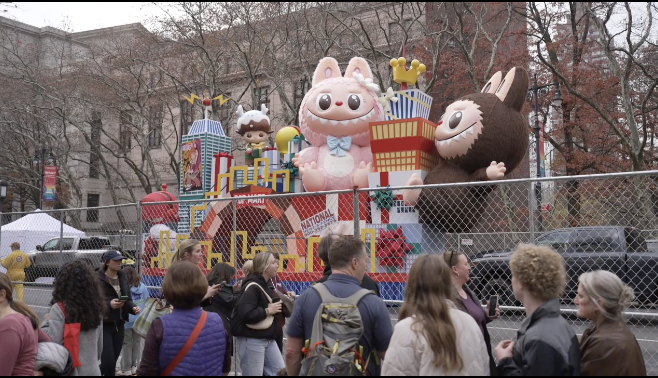
Core Insights - The annual Macy's Thanksgiving Day Parade showcased the presence of Pop Mart's float featuring popular characters like Labubu, marking the brand's debut in New York [2] - The global collectible toy market is projected to grow from 8.7 billion to 44.8 billion from 2015 to 2024, with a compound annual growth rate of nearly 23% [2] - North America, Europe, and China are the top three markets for collectible toys, with emerging markets in Southeast Asia and Eastern Europe also experiencing rapid growth [2] Company Insights - Chinese new consumer brands, including Miniso and Luckin Coffee, are expanding into overseas markets to seek higher profit margins, with Pop Mart's TOP TOY accelerating its international store openings [3] - The success of collectible IP companies in international markets is attributed to their creativity, global influence, and marketing capabilities, which could attract investor interest if valuations adjust to reasonable levels [3] - The future growth of Chinese new consumer brands in the U.S. market is expected to be significant, driven by strong consumer demand for IP design and related products [4] Market Dynamics - The U.S. market is characterized by high purchasing power and a mature retail environment, which presents opportunities for Chinese brands [4] - The rapid growth of the U.S. market can enhance the global reputation and brand effect of Chinese companies, as the U.S. often sets trends for other countries [4] - The entertainment industry in the U.S. is well-developed, providing access to talent that can facilitate global growth for companies [4]
Labubu首现美国感恩节游行,北美成中国潮玩IP出海新热门
Di Yi Cai Jing· 2025-11-29 02:19
Core Viewpoint - The future potential of China's new consumption sector relies on the ability to create new IPs, continuously resonate with consumers, and expand internationally [1][4]. Group 1: Market Overview - The global toy market is projected to grow from 8.7 billion yuan in 2015 to 44.8 billion yuan by 2024, with a compound annual growth rate (CAGR) of nearly 23% [3]. - North America, Europe, and China are currently the top three markets for toys, with emerging markets in Southeast Asia and Eastern Europe also experiencing rapid growth [3]. Group 2: International Expansion - Numerous Chinese new consumption companies, including Miniso, Luckin Coffee, and Heytea, are entering overseas markets to seek higher profit margins [3]. - Pop Mart's toy brand TOP TOY is accelerating its overseas store openings [3]. Group 3: Insights from Industry Experts - Keywise's fund manager Xu Tao noted that successful toy IP companies can stand out in international markets due to their creativity, global influence, penetration, and marketing capabilities [4]. - Xu emphasized that the future growth of China's new consumption sector will depend on the ability to create new IPs and resonate with consumers, with North America being a key focus for expansion [4]. Group 4: U.S. Market Potential - Pop Mart's COO, Si De, highlighted the large and strong purchasing power of the U.S. market, along with a high demand for IP design and related products [5]. - The U.S. retail environment is mature, providing a solid foundation for retail talent and shopping center systems, although the pace of product updates and creative design may not match China's efficiency [5]. - Si De mentioned that the company has spent two years building a capable team to navigate the U.S. retail landscape, leading to rapid growth since last year [5].
全域融合:SaaS分账如何打通O2O商业的“任督二脉”?
Sou Hu Cai Jing· 2025-11-28 21:16
Group 1 - The explosive growth of instant retail demands seamless integration of online stores, in-store pickup, and same-city delivery, with SaaS revenue-sharing services becoming key to addressing O2O business challenges [2] - In the first five months of 2025, China's online retail sales reached 6.04 trillion yuan, a year-on-year increase of 8.5%, driven by revenue-sharing services supporting complex transaction models [2] Group 2 - O2O revenue-sharing faces unique challenges, including fragmented channels, dynamic fulfillment, and diverse roles, with "three-in-one" (order, logistics, settlement) being a critical breakthrough [3] - The system used by Luckin Coffee requires simultaneous processing of product costs, delivery fees, and platform commissions, with potential fulfillment costs increasing by 8%-12% if not managed properly [3] - Xiaoguo Technology's O2O mall system supports real-time inventory synchronization, enabling Tongrentang to achieve 35% of its sales from O2O off-store sales [3] Group 3 - Private domain e-commerce revenue-sharing focuses on real-time incentives and flexible rules, with Xiaoguo Technology's virtual store model allowing zero-cost store openings and automatic profit distribution calculations [4] - Zhu Fei Workshop utilized this feature to achieve a 31% increase in distributors and a 28% rise in sales [4] - Integration of WeChat SCRM with revenue-sharing systems optimizes private domain conversion, with Xiaoguo Technology's design leading to over 300 new channels and a 39% increase in membership [4] Group 4 - Data-driven revenue-sharing decisions are enhanced by AIoT hardware, with Xiaoguo Technology's AI badge analyzing staff-customer interactions to optimize service commission ratios, resulting in a 90% increase in customer satisfaction [5] - The AI risk control module monitors abnormal transactions, triggering revenue-sharing suspension mechanisms to prevent financial losses [5] - In cross-border scenarios, AI supports multi-currency revenue-sharing, with the Creem platform's AI assistant facilitating automatic settlements across 80+ currencies and 100+ countries [5] Group 5 - Industry-specific solutions highlight significant differences in revenue-sharing needs across various sectors, requiring standardized foundations and customer-centric capabilities [7] - Rui Rong Tianxia's revenue-sharing cloud offers "batch revenue-sharing + automatic loss deduction" modules for fresh produce companies, while designing "price shielding" features for pharmaceutical retail to protect franchisee privacy [7] - Zhengda Group integrated AIoT store systems with electronic price tags and unified cash registers, achieving a 90% cost reduction and a 35% increase in customer retention [7] Group 6 - The essence of omnichannel integration is the collaboration of capital flow, information flow, and logistics, with SaaS revenue-sharing services transforming discrete transactions into structured fund allocation [8] - The rise of RaaS (Results as a Service) may evolve revenue-sharing systems into performance tools tied to business value [8]

生意越做越穷?问题不在用户,聪明人押“供给侧”,不砸广告躺赚
Sou Hu Cai Jing· 2025-11-28 13:14
Core Insights - The current business environment has shifted from a growth phase to a contraction phase, making it increasingly difficult for companies to sustain growth [2][4] - Traditional methods of customer acquisition and retention are no longer effective, as evidenced by declining revenues and increasing closure rates in various sectors, including the restaurant industry [4][6] - Successful businesses are rethinking their entire value chain rather than just focusing on customer conversion rates [6][10] Industry Trends - The restaurant industry is experiencing a significant decline, with the number of restaurants in China projected to drop from 9 million to 7.7 million by 2024, and a 5.1% revenue decrease in Beijing [4] - E-commerce is facing rising costs for customer acquisition, indicating a need for businesses to adapt their strategies to maintain long-term growth [4][19] Business Models - Companies like Sam's Club and Costco have successfully implemented a membership model that filters out price-sensitive customers, allowing them to focus on high-value consumers and streamline their product offerings [8][10] - The domestic brand Zhihui has redefined the value of everyday products, such as tissue paper, by emphasizing quality and aesthetics, leading to significant sales growth [12] - Luckin Coffee has established a highly digitalized supply chain that allows it to maintain a competitive edge despite market challenges [14] Strategic Focus - Businesses are increasingly prioritizing customer loyalty and long-term value over short-term sales, as seen in the restaurant industry where operators focus on deepening relationships with existing customers [15][19] - Retailers like Pang Donglai are restructuring their supply chains to connect directly with manufacturers, enhancing transparency and customer decision-making [17] - The shift in e-commerce from focusing on gross merchandise volume (GMV) to customer lifetime value (LTV) reflects a broader trend towards sustainable business practices [19][21]

多家新茶饮企业驰援香港救灾,总额超4000万港元
Nan Fang Nong Cun Bao· 2025-11-28 11:30
Core Viewpoint - Multiple new tea beverage companies have pledged significant donations to support disaster relief efforts in Hong Kong following a devastating fire in Tai Po, with total contributions exceeding 40 million Hong Kong dollars [3][6]. Group 1: Company Contributions - Mixue Ice City has initiated a donation of 20 million Hong Kong dollars for medical assistance, emergency housing, and living support for affected residents [7][10]. - Heytea and Cha Bai Dao each donated 5 million Hong Kong dollars to aid in resident relief, subsequent housing security, and reconstruction efforts [12][16]. - Luckin Coffee announced an emergency donation of 10 million yuan (approximately 1.4 million Hong Kong dollars) for urgent rescue, humanitarian aid, and post-disaster recovery [20][23]. - Bawang Tea Ji collaborated with the Hong Kong Tung Wah Group of Hospitals to launch disaster relief funds promptly to assist affected residents [18][19]. Group 2: Context of the Disaster - A major fire occurred on November 26 in Tai Po, Hong Kong, resulting in significant casualties and property damage, prompting a nationwide response to the rescue efforts [10][23].



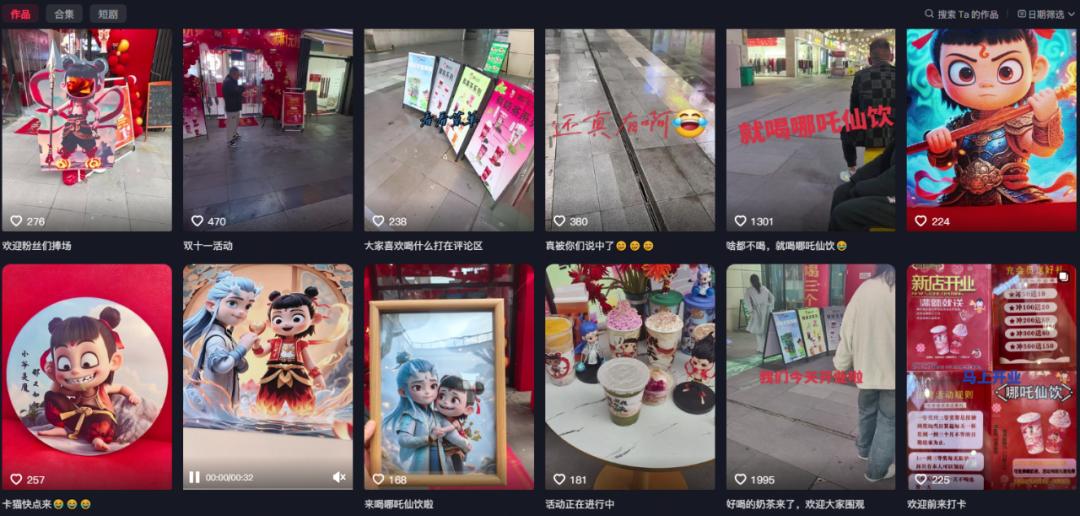
一杯哪吒仙饮,踹碎多少县城老板创业梦?
3 6 Ke· 2025-11-28 10:48
Core Viewpoint - The rise of "Nezha Xianyin" as a trending beverage brand highlights the market's inherent flaws, including spontaneity, blindness, and lag, which can lead to misguided entrepreneurial ventures [1][5]. Group 1: Market Dynamics - The concept of "Nezha Xianyin" reflects the impulsive nature of market behavior, where individual decision-making is often influenced by short-term trends and misleading signals [5]. - Entrepreneurs misjudged the commercial potential of the "Nezha" IP, leading to blind investments in the brand without adequate market analysis [5][11]. - The market's adjustment to consumer demand is often delayed, resulting in a mismatch between supply and demand, as seen with the fluctuating interest in "Nezha" merchandise [5][11]. Group 2: Entrepreneurial Challenges - The owner of "Nezha Xianyin" faced significant public scrutiny and skepticism regarding the viability of the business, which was exacerbated by the online community's reactions [4][8]. - Despite the challenges, the owner maintained a defiant stance, emphasizing product quality and resilience against criticism [4][5]. - The brand's trajectory has become a symbol of impulsive entrepreneurship, attracting both ridicule and support from the online community [4][8]. Group 3: Franchise and Investment Issues - The company "Nezha Xianyin (Shandong) Beverage Group Co., Ltd." was dissolved in December 2024, raising concerns about the legitimacy of its franchise operations [7]. - The current franchise operator, "Hangzhou Fenghuolun Catering Management Co., Ltd.," has reported zero employees in 2024, indicating potential operational issues [7]. - The franchise model has been linked to broader issues in the tea beverage industry, where misleading recruitment practices have been identified [9][11]. Group 4: Consumer Behavior - The brand has gained traction among younger consumers, who view it as a social experience, contributing to its popularity despite underlying business challenges [11][13]. - The phenomenon of "Nezha Xianyin" illustrates how social media can drive consumer interest and foot traffic, even for brands with questionable business models [11][13].