小米汽车

Search documents
手搓第一个AI程序后,这位95后决定“反共识”创业
虎嗅APP· 2025-07-16 10:41
Core Viewpoint - The article discusses the emergence of AI-driven startups, particularly focusing on the journey of Yuhua Technology, which aims to redefine business processes in the manufacturing sector through AI solutions. The founder emphasizes the shift from traditional SaaS models to a results-based payment system, highlighting the unique opportunities presented by AI technology in addressing core business pain points [6][8][44]. Group 1: Company Overview - Yuhua Technology, founded by Zhai Xingji and his partner Chi Guangyao, represents a new generation of AI startups with a young founding team primarily composed of post-95s and post-00s [8][7]. - The company secured seed funding from Qiji Chuangtan, a notable incubator in China, which has a rigorous selection process with a success rate of about 1% [6][8]. - Yuhua Technology's first client saw a sales conversion rate increase from 5% to 7% after implementing their AI solutions, leading to a 20% revenue boost [10][29]. Group 2: Business Model and Strategy - The company focuses on the manufacturing sector, which is seen as a field where product value is prioritized over resource competition. This choice is considered a "反共识" (anti-consensus) move, as many believe sales in manufacturing are challenging [8][30]. - Yuhua Technology's approach involves discussing three key aspects with clients: core business processes, pain points, and willingness to pay for solutions, marking a shift from tool-based to results-based payment models [8][44]. - The company aims to automate the pre-sales process, addressing two main pain points: the technical knowledge gap among sales personnel and the burden of repetitive tasks [46]. Group 3: Market Trends and Future Outlook - By 2025, AI is expected to penetrate more specialized fields, making it difficult for new entrants to compete with established companies that have already secured funding and market presence [11]. - The article highlights the importance of rapid iteration and user acquisition in the current AI application market, where speed is crucial for capturing user mindshare [11][12]. - Yuhua Technology plans to expand into international markets, particularly in Japan and Southeast Asia, where there is a strong demand for AI solutions in manufacturing and retail [60][64].


都市车界|172亿“鲸吞”极氪! “一个吉利”对车主有何影响?
Qi Lu Wan Bao· 2025-07-16 07:16
Core Viewpoint - The merger between Geely Automobile and Zeekr marks a significant consolidation in the Chinese automotive industry, aimed at enhancing competitiveness and operational efficiency in the face of industry challenges [1][4][11] Strategic Transformation - The merger is a strategic response to the challenges posed by the rapidly changing automotive landscape, with Geely's CEO emphasizing the need for quick integration to improve competitiveness [6][11] - Geely's "One Geely" strategy aims to eliminate internal resource waste and streamline operations across its various brands [4][6] Financial Aspects - Geely acquired the remaining 37.2% of Zeekr for approximately 17.2 billion RMB, with cash and stock options providing a premium over previous trading prices [3][4] - Since its listing in early 2024, Zeekr's market value has dropped from $11 billion to $5.7 billion, a decline of 48% [6] Synergy and Efficiency - The merger is expected to create synergies that will reduce R&D costs by 10%-20% and supply chain costs by 5%-8%, while improving production capacity utilization by 3%-5% [7][8] - The integration of Zeekr's technology with Geely's existing resources is anticipated to enhance the overall technological capabilities and accelerate product development [7][8] Market Positioning - Post-merger, the brand structure will be clearer, with Zeekr focusing on the luxury electric vehicle market, Lynk & Co on the mid-range hybrid sector, and Geely on the mainstream market [7][8] - The merger will expand Zeekr's market reach from 50 to 200 cities, significantly increasing its penetration in lower-tier markets [8][10] Customer Impact - Existing Zeekr customers are assured that their ownership experience will remain unchanged, with potential enhancements in service and technology offerings [9][10] - The merger is expected to lead to more competitive pricing and better configurations for new models, benefiting consumers [9][10] Industry Implications - This merger is seen as a shift from chaotic competition to a more systematic approach within the electric vehicle sector, setting a precedent for resource consolidation [10][11] - Analysts view the merger as a positive signal for Geely, with several investment firms raising their target prices for the company [10][11]
二手车消费新能源化趋势显著,纯电车占比最多
Zhong Guo Qi Che Bao Wang· 2025-07-16 01:21
Core Insights - The automotive consumption potential, particularly in the used car market, has been significantly released since 2025 due to consumption-boosting policies and the impact of "new energy" vehicle consumption trends [1][3] Group 1: Market Trends - The retail sales of new energy vehicles (NEVs) reached 5.468 million units in the first half of 2025, marking a year-on-year growth of 33.3%, with the penetration rate of NEVs in the domestic passenger car market exceeding 53.3% for four consecutive months [1] - The used car market is experiencing a "dumbbell" consumption structure, with passenger cars dominating transactions; in the first half of 2025, sedans, SUVs, and MPVs accounted for 58%, 39%, and 2% of NEV transactions, respectively [4] - The average retail price of NEVs in the used car market was approximately 96,000 yuan, with significant demand for models priced between 80,000 and 150,000 yuan [4] Group 2: Consumer Preferences - The top three provinces for NEV used car purchases are Guangdong, Jiangsu, and Zhejiang, indicating that economically developed regions are leading in used car consumption [3] - The most popular models in the NEV used car market include Hongguang MINIEV, Model 3, and Model Y, with average transaction prices of over 20,000 yuan, 130,000 yuan, and 170,000 yuan, respectively [4][5] Group 3: Challenges and Solutions - The used NEV market faces challenges such as price transparency and battery condition assessment; Guazi used car platform is addressing these issues by offering extensive vehicle sources and a transparent pricing model [2][8] - Guazi has introduced a "100-day battery buyback guarantee" for NEVs sold on its platform, ensuring that if battery degradation exceeds 10% within 100 days or 5,000 kilometers, the vehicle will be repurchased at the original price [9] Group 4: Brand Performance - Domestic brands dominate the NEV market, with 8 out of the top 10 high resale value models being from Chinese manufacturers; Xiaomi Auto leads with a resale rate exceeding 90% [11] - The resale value of NEVs aged 2-3 years remains above 50%, with Porsche leading at 63% [11] Group 5: Industry Recommendations - The industry is urged to enhance product competitiveness and brand resale value through improvements in quality, technology, and after-sales service, which will foster consumer confidence and promote healthy market development [12]


宜信好望角:传统车企反攻!25年汽车市场格局重塑
Jin Tou Wang· 2025-07-15 01:37
2025年上半年中国汽车市场呈现差异化发展态势,头部企业持续领跑,新兴品牌加速追赶,市场竞争在 技术升级与消费需求变化中不断深化。各大厂商的半年业绩既反映出行业格局的稳定性,也揭示了转型 期的挑战与机遇。 比亚迪上半年销量表现突出,以超过200万辆的交付量保持行业领先,同比增长33%,其全产业链布局 与技术迭代能力成为核心竞争力。吉利汽车则通过新能源业务的突破实现快速增长,上半年销量达141 万辆,同比增幅47%,其中新能源车型销量同比增长126%,并据此上调全年目标至300万辆,显示出对 市场趋势的积极响应。传统车企凭借供应链掌控力与渠道优势,在巩固传统燃油车市场的同时,加速向 新能源领域渗透,形成多元产品矩阵。 在行业转型的关键期,汽车厂商的战略选择与执行效率将直接影响市场地位。面对复杂的竞争环境,唯 有持续优化产品结构、提升技术实力、精准把握消费趋势,才能在分化加剧的市场中占据主动,实现可 持续发展。 新兴品牌竞争呈现明显分层。零跑汽车以22.17万辆的交付量成为上半年新势力销量冠军,其以高配 置、性价比为核心的产品策略在10万元级市场获得认可。小鹏汽车实现阶段性复苏,半年销量超过去年 全年水平,成为新 ...


汽车业提质逐新拓增量
Jing Ji Ri Bao· 2025-07-14 21:59
Core Insights - In the first half of this year, China's automobile production and sales reached 15.62 million and 15.65 million units respectively, marking a year-on-year increase of 12.5% and 11.4%, achieving a historical milestone of exceeding 15 million units for the first time in the same period [1] - The growth of the automotive market is primarily driven by new energy vehicles (NEVs), which saw production and sales of 6.968 million and 6.937 million units, representing year-on-year growth of 41.4% and 40.3% respectively, with NEVs accounting for 44.3% of total new car sales [1][2] - The Chinese automotive industry is expected to maintain stable growth throughout the year, with NEV sales projected to reach 16 million units, potentially exceeding 50% of total new car sales [3] Industry Performance - Geely Auto reported a total sales volume of 1.4092 million units in the first half of the year, a 47% increase year-on-year, with NEVs accounting for 725,200 units, a 126% increase, marking a significant milestone in its transition to electric vehicles [2] - The overall sales of Chinese brand passenger cars reached 9.27 million units, a 25% increase, maintaining a market share of 68.5% [2] - Exports of automobiles reached 3.083 million units, a 10.4% increase, with NEV exports at 1.06 million units, a 75.2% increase, indicating strong resilience in the export market [2] Technological and Policy Drivers - The dual drive of technology and policy is evident, with the implementation of the "two new" policies significantly supporting the growth of the automotive market [5] - NIO's announcement of its self-developed intelligent driving chip marks a significant technological advancement, enhancing vehicle safety and user experience [4] - The "two new" policies, including vehicle trade-in subsidies, have led to a notable increase in retail sales, with applications for trade-in subsidies reaching 4.12 million by the end of May [5] Industry Dynamics - The automotive industry is witnessing a shift towards a more sustainable competitive environment, with major manufacturers committing to shorten payment cycles to suppliers, enhancing supply chain stability [6][7] - The industry is moving away from price wars towards value-driven competition, emphasizing the importance of innovation, quality, and user experience [8] - The initial effects of reducing internal competition are becoming apparent, with improved production rhythms and inventory management among manufacturers [7]
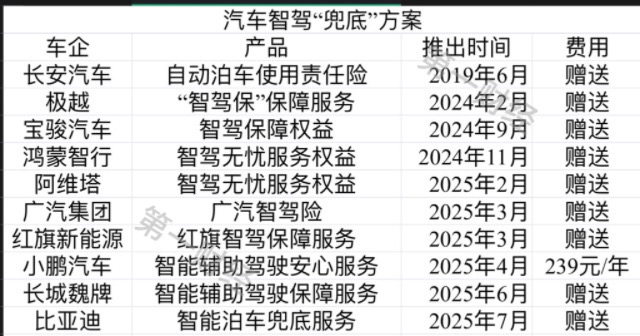
智驾兜底承诺辨析:责任怎么认定?风险如何定价?
第一财经· 2025-07-14 11:34
Core Viewpoint - BYD's commitment to fully cover safety and losses for all users of its "Heavenly Eye" vehicles in smart parking scenarios has sparked widespread discussion in the industry [1][5]. Group 1: Industry Trends - At least 10 car manufacturers have adopted smart driving insurance to cover smart assisted driving, with defined coverage limits and usage conditions, while BYD has opted for direct after-sales support instead of insurance [1][2]. - The rise of smart driving insurance is driven by the increasing penetration of smart assisted driving in the automotive market, alongside consumer concerns regarding safety and accident liability [2][3]. Group 2: Insurance Offerings - Various car manufacturers have introduced smart driving insurance services, often provided for free, with coverage amounts ranging from 1 million to 5 million yuan [4][6]. - BYD's smart parking coverage is unique as it does not set a cap on compensation and is available to all first-time vehicle owners without affecting future premiums [5][6]. Group 3: Challenges and Considerations - The current smart driving insurance landscape faces challenges such as the complexity of accident liability determination and the authenticity of system data for consumers, as well as cost management for manufacturers and risk assessment for insurance companies [2][10]. - The insurance industry is still developing clear guidelines for smart driving insurance, with a need for detailed industry compensation standards to address the different costs associated with smart parking and driving scenarios [10][11]. Group 4: Future Outlook - As the penetration of smart assisted driving vehicles increases, clearer regulations and standards for smart driving insurance are anticipated, with insurance companies beginning to establish relevant application laboratories and technical standards for accident compensation [8][12].

汽车行业车企车系跟踪报告:4-5月自主份额升6PP至70%,高端品牌提升显著
Huachuang Securities· 2025-07-14 10:41
Investment Rating - The report maintains a recommendation for the automotive industry [4]. Core Insights - The market share of domestic brands in the automotive sector has increased significantly, reaching 70% in April-May 2025, up by 6.1 percentage points year-on-year [7][11]. - Domestic brands have shown stable growth across various price segments, particularly in the high-end market, where they are gaining ground against joint ventures and foreign brands [11]. - The report anticipates that the overall market share of domestic brands will continue to rise, potentially exceeding 70% in 2025, driven by new model launches and competitive pricing strategies [11]. Summary by Sections Industry Overview - The total market value of the automotive industry is approximately 50,730.05 billion, with a circulating market value of 32,553.74 billion [4]. - The industry comprises 232 listed companies [4]. Sales Performance - In the 0-15 million yuan price segment, domestic brands accounted for 79% of sales, with a year-on-year increase of 1.4 percentage points [3]. - In the 10-15 million yuan segment, domestic brands' market share rose by 2.0% to 73%, significantly impacting Japanese and German brands [3]. - The overall sales volume for the automotive industry in the first five months of 2025 reached 3.7 million units, representing a 29% increase year-on-year [3]. Price Segment Analysis - In the 15-20 million yuan segment, domestic brands accelerated their market share growth to 58%, with a notable increase of 5.8 percentage points year-on-year [3]. - The 20-25 million yuan segment saw domestic brands' share rise to 60%, up by 16.5 percentage points year-on-year, driven by new model releases [3]. - In the 30-40 million yuan segment, domestic brands captured 56% of the market, reflecting a 21 percentage point increase year-on-year [9]. Competitive Landscape - BYD leads the market with a 15% share, followed by Chery and Geely with 9% and 8% respectively [16]. - The report highlights that domestic electric vehicles are increasingly dominating sales across various price segments, with several models ranking as bestsellers [11][35]. Future Outlook - The report suggests that domestic brands are expected to continue their upward trajectory in market share, particularly in the mid to high-end segments, as they enhance their product offerings and competitive pricing [11].



近六成车企完成年度销量目标40%以上:小鹏最高、比亚迪“降速”
Feng Huang Wang· 2025-07-14 09:52
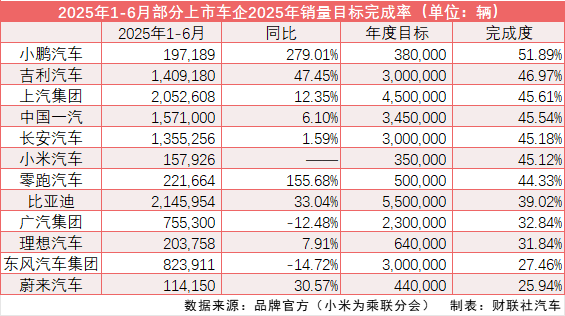
Core Insights - The sales data from major automotive companies for the first half of the year reflects current market performance and indicates the trajectory for achieving annual targets [1] - There is a significant disparity in the performance of different companies, with some achieving over 40% of their annual sales targets, while others lag behind [1] Group 1: Company Performance - Xiaopeng Motors achieved the highest completion rate at 51.89%, delivering 197,189 vehicles, a year-on-year increase of 279.01% [2][4] - Geely's sales reached 1,409,180 units, with a completion rate of 46.97%, and a notable growth in its new energy vehicle segment [2][5] - SAIC Motor Corporation reported a total of 2,052,608 units sold, achieving a completion rate of 45.61% [2][5] - BYD's sales reached 2,145,954 units, but its completion rate was only 39.02%, with a notable decline in domestic sales in May and June [2][9] - NIO delivered 114,150 vehicles, achieving a completion rate of 25.94%, indicating significant pressure on its annual targets [2][10] Group 2: Market Trends - The automotive market is expected to maintain healthy and stable growth, driven by new policies and a rich supply of new products [11] - The China Association of Automobile Manufacturers predicts that new energy vehicle sales could reach 16 million units, with new cars accounting for over 50% of total sales [11]


智驾兜底承诺辨析:责任怎么认定?风险如何定价?
Di Yi Cai Jing· 2025-07-14 09:50
Core Viewpoint - Multiple automotive companies are providing safety guarantees for intelligent driving through direct after-sales services or insurance, with BYD recently committing to comprehensive coverage for its "Heavenly Eye" vehicles in smart parking scenarios, sparking industry discussions [1][3]. Group 1: Companies Offering Intelligent Driving Guarantees - At least 10 automotive companies have adopted intelligent driving insurance to cover smart assisted driving, specifying coverage limits and usage conditions [1][2]. - BYD's guarantee for smart parking does not have a coverage limit and does not affect future insurance premiums, unlike other companies that have set maximum compensation amounts [4][5]. - Companies like Changan, Xiaopeng, and Hongmeng have also introduced various forms of intelligent driving insurance, often provided for free in the first year [2][5]. Group 2: Market Context and Consumer Concerns - The rise of intelligent driving insurance is driven by the increasing penetration of smart assisted driving in the automotive market, alongside consumer concerns regarding safety and accident liability [2][3]. - Current intelligent driving insurance is often viewed as a value-added service rather than a standalone insurance product, with companies covering repair and compensation costs [6][7]. - There are significant challenges in defining liability and compensation standards for intelligent driving incidents, particularly in complex driving scenarios compared to simpler parking scenarios [7][8]. Group 3: Future Developments and Regulatory Needs - The insurance industry is expected to evolve with clearer guidelines as the penetration of intelligent driving vehicles increases, necessitating a comprehensive study of the long-term impacts on insurance operations [6][8]. - There is a need for improved legal frameworks to address liability issues in intelligent driving accidents, including data ownership and responsibility [8][9]. - Third-party involvement in intelligent driving insurance is being considered to enhance consumer confidence and clarify liability among manufacturers, insurers, and consumers [9].
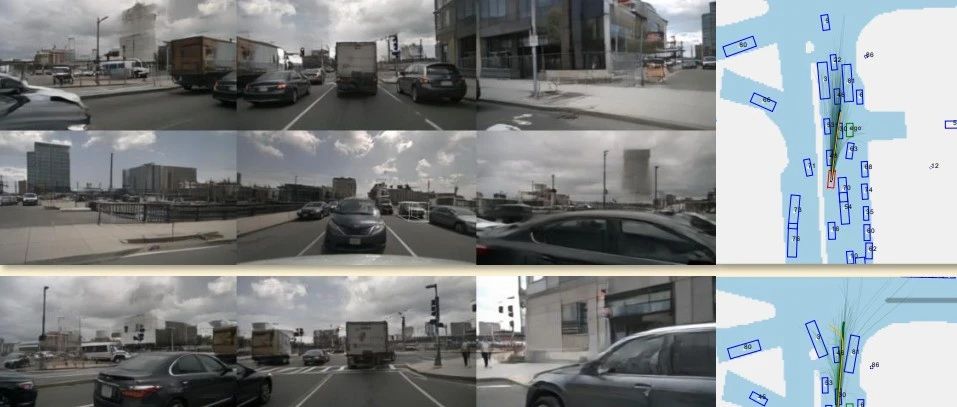
推荐几个PNC和端到端岗位(待遇丰厚)
自动驾驶之心· 2025-07-14 06:20
Group 1 - The article discusses job opportunities in the autonomous driving sector, specifically for positions related to end-to-end and traditional control algorithms at a leading self-driving supplier [1] - Positions mentioned include Autonomous Driving Control Algorithm Engineer/PNC Expert with a salary range of 40k-100k/month and End-to-End/VLA Engineer with a salary range of 30k-80k/month [2][4] - The article highlights the responsibilities and requirements for various roles, emphasizing the need for advanced degrees and proficiency in programming languages such as C++ and Python, as well as familiarity with control algorithms and machine learning techniques [5][10] Group 2 - The article mentions a community called AutoRobo Knowledge Planet, which serves as a platform for job seekers in autonomous driving and embodied intelligence, currently hosting nearly 1000 members from various companies [11] - It outlines the internal resources available to members, including interview questions, industry reports, salary negotiation tips, and job referrals [13][14] - The community also provides insights into the autonomous driving industry, including trends, market opportunities, and research reports on embodied intelligence [23][24]