中国进出口银行

Search documents
科大讯飞:2025年12月16日科大讯飞与中国进出口银行签署战略合作协议
Zheng Quan Ri Bao Wang· 2026-01-06 14:11
证券日报网讯1月6日,科大讯飞(002230)在互动平台回答投资者提问时表示,2025年12月16日,科大 讯飞与中国进出口银行签署战略合作协议,未来双方将在技术攻关、海外布局、新型政策性金融工具运 用等方面进一步深化合作,实现互利共赢,共同助力推进落实《全球发展倡议数字普惠行动倡议》和 《人工智能全球治理行动计划》;12月19日,科大讯飞与中国银联签署创新业务合作协议,未来双方将 围绕"人工智能+金融支付",重点推进国家人工智能应用中试基地共建、金融支付垂域大模型研发、场 景示范应用开发等联合创新,为支付产业发展注入新动力。 ...

是机遇还是深坑?普京突然对中国掏出家底:边境划五大特区,10年免税
Sou Hu Cai Jing· 2026-01-06 07:51
Core Viewpoint - Russia aims to attract Chinese capital, technology, and enterprises to develop its vast but underpopulated Far East regions through significant tax incentives and policy stability [1][3]. Group 1: Policy and Economic Environment - Five regions in Russia have been designated as "International Advanced Development Zones," offering up to 10 years of tax exemptions and a 15-year policy stability guarantee [1]. - The Russian government is eager to exchange its natural resources for Chinese investments and infrastructure capabilities, reflecting a "resources for development" strategy [3]. - The rapid implementation of this policy has been described as "shock-style investment promotion" [3]. Group 2: Challenges and Risks - The Russian economy is currently under severe Western sanctions, leading to the exit of over 1,000 foreign companies since the escalation of the Ukraine conflict in 2022 [3]. - Legal and business environments in Russia are fraught with uncertainty, with laws allowing for the nationalization of foreign assets and the ambiguity of contract sanctity under "force majeure" claims [4]. - Chinese companies have faced payment delays and issues with fund repatriation, complicating their operations in Russia [6][7]. Group 3: Local Requirements and Constraints - The new special zone policies include localization requirements, mandating companies to register locally, hire local employees, and source materials locally, which can create a "soft lock-in" effect for businesses [7]. - Currency risk is significant, with the ruble experiencing extreme volatility, impacting the profitability of investments when converting revenues back to dollars or yuan [9]. - Infrastructure deficiencies in the Far East, such as sparse transportation networks and unstable power supply, hinder project execution and development [10]. Group 4: Historical Context and Trust Issues - Russia's attempts to develop the Far East are not new, with previous initiatives yielding limited success, as evidenced by a declining population and underutilized land [12]. - There exists a "trust deficit" in Sino-Russian relations, with Russian policymakers expressing caution about over-reliance on Chinese investments, leading to potential investment barriers [14]. Group 5: Strategic Recommendations for Chinese Enterprises - Chinese companies are advised to adopt light-asset, quick-turnaround investment models, focusing on cross-border trade and logistics rather than heavy manufacturing [16]. - Utilizing policy financial tools from Chinese banks can help mitigate risks associated with investments in Russia [16]. - Building reliable local partnerships and alliances is essential for navigating the complex regulatory landscape and reducing risks [18]. - Clear exit strategies must be included in investment agreements to address potential legal and political uncertainties [20].

市场避险情绪未见明显增强
工银国际· 2026-01-05 13:46
Report Summary 1. Investment Rating The report does not mention the investment rating of the industry. 2. Core Views - The market's risk - aversion sentiment has not significantly increased. The new issuance of Chinese offshore bonds was sluggish last week due to the holiday, with basically no new issuance. The yields of US Treasury bonds showed differentiation, with the 10 - year and 2 - year US Treasury bond yields rising by 6 and falling by 1 basis point respectively last week to 4.19% and 3.47% [1][2]. - The minutes of the December FOMC meeting showed that most participants supported the December rate cut. Most participants believed that if inflation declines gradually as expected, further rate cuts might be appropriate. Although inflation is still above the Fed's policy target, in the absence of a further upward trend, most Fed officials tend to cut rates to support the job market [2]. - The situation in Venezuela over the weekend did not significantly boost the market's risk - aversion sentiment. The oil price remained generally stable, and the US Treasury bond yields in the Asian session on Monday did not change much. The Bloomberg Barclays China US - dollar bond total return index remained flat last week [1][3]. - After the New Year's Day holiday, funds flowed back to the banking system, and inter - bank funding rates dropped significantly. The yields of 3 - year and 10 - year Chinese government bonds remained unchanged and fell by 1 basis point respectively to 1.38% and 1.85%. The long - term Chinese interest rates have basically entered a volatile market since the end of August 2025, and their subsequent trends may depend on the implementation of further loose monetary policies [1][4]. 3. Summary by Related Catalogs Offshore Market - **New Issuance**: Affected by the holiday, the new issuance of Chinese offshore bonds was sluggish last week, with basically no new issuance [1][2]. - **US Treasury Bond Yields**: The 10 - year and 2 - year US Treasury bond yields showed differentiation, rising by 6 and falling by 1 basis point respectively last week to 4.19% and 3.47% [1][2]. - **Market Sentiment and Bond Index**: The situation in Venezuela over the weekend did not significantly push up the market's risk - aversion sentiment. The oil price was generally stable. The US Treasury bond yields in the Asian session on Monday did not change much. The Bloomberg Barclays China US - dollar bond total return index remained flat, with the high - rating index falling slightly by 0.1% and the high - yield index rising slightly by 0.1% [1][3]. Onshore Market - **Funding Rates**: After the New Year's Day holiday, funds flowed back to the banking system, and inter - bank funding rates dropped significantly. The 7 - day deposit - type institutional pledged - repo weighted - average rate and the 7 - day inter - bank pledged - repo weighted - average rate dropped by 17 and 48 basis points respectively to 1.43% and 1.45% [4]. - **Government Bond Yields**: The yields of 3 - year and 10 - year Chinese government bonds remained unchanged and fell by 1 basis point respectively to 1.38% and 1.85%. The long - term Chinese interest rates have basically entered a volatile market since the end of August 2025, and their subsequent trends may depend on the implementation of further loose monetary policies [1][4]. Appendix: List of Chinese US - dollar Bonds The appendix lists a large number of Chinese US - dollar bonds, including information such as the issuer, guarantor, coupon rate, issuance amount, maturity date, and ratings from Moody's, S&P, and Fitch [19][20][21].
太原重工提前解除3.6亿元回购担保责任 对老虎岗公司担保余额清零
Xin Lang Zheng Quan· 2026-01-05 12:31
Core Viewpoint - Taiyuan Heavy Industry Co., Ltd. has announced the early termination of a 360 million yuan repurchase guarantee for the Tiger Mountain Wind Farm, resulting in a zero balance for guarantees to the company [1][2][4]. Group 1: Announcement Details - The guarantee being terminated was originally for a bank loan provided to Tiger Mountain Company, with a total amount of 360 million yuan and a term from January 9, 2015, to January 9, 2031 [2][3]. - The repurchase guarantee contract will officially be terminated on December 26, 2025, after an agreement was reached among the three parties involved [4]. Group 2: Background of the Guarantee - The guarantee was established as part of a business collaboration between Taiyuan Heavy Industry and Tiger Mountain Company, which involved a total contracting project for the Andah Guangyuan Tiger Mountain Wind Farm [3]. - The loan was secured to facilitate the purchase of wind power equipment and related project costs, with the guarantee being approved by the company's board in January 2015 [3]. Group 3: Current Guarantee Status - As of the announcement date, Taiyuan Heavy Industry's total external guarantees amount to 557.1254 million yuan, representing 11.17% of the company's most recent audited net assets [5]. - The company has stated that there are no overdue guarantee matters and that all external guarantees are currently in normal performance status [5].

2025,银行大罚单明显变多了
Xin Lang Cai Jing· 2026-01-04 12:48
Core Insights - A significant trend observed in 2025 is the increase in large fines imposed on banks, reflecting compliance shortcomings and risk points during the transition to high-quality development in the banking industry [2][16] - In 2025, regulatory authorities issued a total of 454 fines exceeding one million yuan to banking institutions and personnel, an increase of 58 from the previous year, with the total amount of fines nearly doubling [2][16] - The main areas of violations in 2025 were concentrated in credit business, anti-money laundering, and internal control systems, with anti-money laundering violations seeing the most notable increase, reaching 894 fines, a rise of 185.09% compared to the previous year [2][16] Summary of Fines Over 20 Million Yuan - In 2025, there were 12 fines disclosed with amounts exceeding 20 million yuan, primarily related to compliance management issues in traditional business areas such as loans and bills, indicating deficiencies in basic business risk control and regulatory cooperation [4][17] - Common violations included issues with account management and anti-money laundering, highlighting flaws in customer identity verification and transaction monitoring processes [3][17] Summary of Fines Between 10 Million and 20 Million Yuan - This category of fines predominantly involved joint-stock banks, reflecting a conflict between business innovation and compliance management [6] - Violations were mainly related to compliance operations (account and anti-money laundering) and business management (internet loans and agency sales), with cross-border foreign exchange violations being a secondary concern [7] Summary of Fines Between 5 Million and 10 Million Yuan - Fines in this range were primarily concentrated among city commercial banks, joint-stock banks, and rural commercial banks [10] - The most common violations included anti-money laundering and customer identity verification issues, alongside traditional problems related to credit "three checks" failures [10]




近30笔千万级罚单!2025年银行业罚单大盘点
证券时报· 2026-01-03 05:27
Core Viewpoint - In 2025, the Chinese banking industry is undergoing significant regulatory scrutiny characterized by "strict regulation, strong accountability, and zero tolerance," leading to a notable increase in both the quantity and severity of penalties imposed on banks [1]. Group 1: Regulatory Environment - The number of penalties exceeding 10 million yuan in the banking sector reached nearly 30, affecting various types of institutions including state-owned banks, policy banks, joint-stock banks, city commercial banks, private banks, and bank-affiliated wealth management subsidiaries [2]. - Regulatory focus has expanded beyond traditional areas like credit management to include corporate governance, related party transactions, anti-money laundering, data security, and wealth management business oversight [2][4]. Group 2: Major Penalties - Major state-owned banks such as Bank of China, Industrial and Commercial Bank of China, and Agricultural Bank of China received substantial fines, with Bank of China facing a fine of 97.9 million yuan for issues related to corporate governance and asset quality management [4]. - In December 2025, China Communications Bank was fined 68.07 million yuan for violating multiple regulations, including account management and anti-money laundering obligations [4][5]. Group 3: Compliance and Risk Management - The penalties highlight a trend of inadequate compliance and risk management across various banking operations, including loan management, interbank transactions, and wealth management [7][10]. - The regulatory environment has intensified scrutiny on compliance with anti-money laundering regulations, with significant fines imposed for failures in customer identity verification and transaction reporting [8][9]. Group 4: Emerging Business Areas - New banking business models, such as wealth management subsidiaries and direct banks, are also facing strict regulatory penalties, indicating that the regulatory environment is not limited to traditional banking practices [13]. - For instance, Jiaoyun Wealth Management was fined 17.5 million yuan for non-compliance in product information disclosure and post-investment management [13]. Group 5: Double Penalty System - The implementation of a "double penalty system" has become prevalent, where not only institutions are fined but also individual responsible parties face penalties, enhancing accountability within financial institutions [15]. - This system links the career prospects of involved personnel directly to the compliance performance of their institutions, thereby increasing regulatory pressure [15]. Group 6: Future Outlook - The ongoing trend of strict regulation and accountability is expected to continue, prompting banks to improve their internal governance structures and compliance management systems [16]. - The adjustments in business processes and increased technological investments are anticipated to have a profound impact on the operational models and competitive landscape of the banking industry [16].




重拳出击!近30笔千万级罚单!2025年银行业罚单大盘点
券商中国· 2026-01-03 03:33
Core Viewpoint - In 2025, the Chinese banking industry is undergoing significant regulatory scrutiny characterized by "strict regulation, strong accountability, and zero tolerance," leading to a notable increase in both the quantity and amount of penalties imposed on various banking institutions [1]. Regulatory Penalties Overview - The number of penalties exceeding ten million yuan has reached nearly 30, affecting a wide range of institutions including state-owned banks, policy banks, joint-stock banks, city commercial banks, private banks, and bank-affiliated wealth management subsidiaries [1]. - Penalties are not limited to traditional areas like credit management but also extend to corporate governance, related party transactions, anti-money laundering, data security, and wealth management [2]. Corporate Governance and Compliance - Major state-owned banks such as Bank of China, Industrial and Commercial Bank of China, and Agricultural Bank of China have received substantial fines for issues related to corporate governance and business management [3]. - The largest penalty of the year was imposed on Bank of China, amounting to 97.9 million yuan for various management issues [3]. - Regulatory focus has shifted to deeper issues such as the effectiveness of board responsibilities and the integrity of internal control processes [3]. Compliance and Anti-Money Laundering - There has been an intensified crackdown on compliance, particularly in the anti-money laundering sector, with significant fines imposed on banks for failing to adhere to basic financial management regulations [4]. - For instance, China Merchants Bank was fined 68.07 million yuan for violating 11 regulations related to account management and anti-money laundering [4]. Business Management Issues - The primary reasons for penalties in the banking sector include: - Inadequate management across various business areas such as loans, interbank transactions, and wealth management [6]. - Non-compliance with anti-money laundering responsibilities, including failure to identify customers and report suspicious transactions [7]. - Violations in foreign exchange and investment operations, including illegal currency transactions and improper investment disclosures [8]. - Insufficient implementation of regulatory requirements, leading to non-compliance in data reporting and employee management [9]. Emerging Business Areas - New banking business models, including wealth management subsidiaries and direct banks, have also faced penalties, indicating strict regulatory oversight in these emerging sectors [11]. - For example, a wealth management subsidiary was fined 17.5 million yuan for non-compliance in product information disclosure and post-investment management [12]. Double Penalty System - The implementation of a "double penalty system" has become a significant aspect of regulatory actions, where both institutions and responsible individuals face penalties [13]. - This system aims to link the career prospects of involved personnel directly to the compliance performance of their institutions, thereby enhancing accountability [14]. Summary of Penalties - A detailed overview of penalties reveals that various banks have faced significant fines for a range of compliance failures, with amounts often exceeding ten million yuan [15][16].


中国内部审计协会举办“2025内部审计助力中国式现代化”论坛
Xin Hua Wang· 2025-12-31 06:44
Core Insights - The forum "2025 Internal Audit Supporting Chinese Modernization" was held in Beijing, focusing on the role of internal audit in promoting modernization in China, gathering over 600 attendees from various sectors [2][5][8] - The event featured a diverse lineup of speakers, including leaders from multiple government departments and industry experts, aiming to create a multi-level communication platform for internal audit [2][5][10] Group 1: Forum Overview - The forum was the second edition, building on the first forum's foundation with enriched content and format, including keynote speeches, roundtable discussions, and parallel sub-forums [2][6] - Keynote speeches highlighted the achievements of internal audit during the 14th Five-Year Plan and outlined strategies for the upcoming 15th Five-Year Plan, emphasizing the importance of leadership and technological integration [8][10] Group 2: Keynote Highlights - Huang Zheng emphasized the need for internal audit to align with the 15th Five-Year Plan, focusing on enhancing the effectiveness of audit results and integrating technology and talent into the audit process [8][10] - Xu He discussed the internal audit practices within state-owned enterprises, advocating for a framework that matches the new missions of these enterprises and promotes value creation [10][12] Group 3: Research and Development - The establishment of the Digital Audit Sub-Committee and the release of three significant reports, including the "National Internal Audit Digital Transformation Development Research Report (2025)," were key outcomes of the forum [14][18] - The reports aim to provide a theoretical and practical foundation for the development of internal audit, injecting new momentum into the field [14][18] Group 4: Thematic Discussions - The roundtable discussions addressed the understanding of scientific and standardized auditing, challenges faced in research and practice, and strategies for advancing internal audit in the context of the 15th Five-Year Plan [19][21] - Parallel sub-forums focused on specific themes such as financial risk prevention, energy transition under carbon neutrality goals, and the integration of digital technology in internal audit practices [21][23][25][27]

进出口银行副行长王康与中信咨询总经理薄伟康举行会谈
Xin Lang Cai Jing· 2025-12-30 10:12
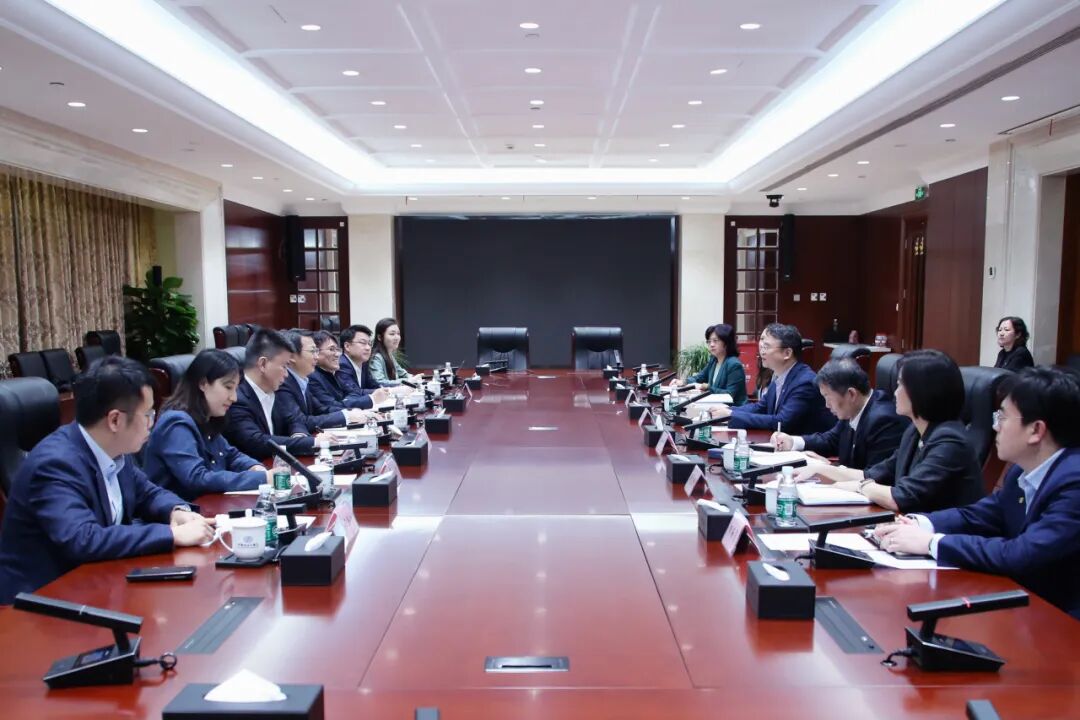
Group 1 - The meeting between Wang Kang, Vice President of the Export-Import Bank, and Bo Weikang, General Manager of China International Economic Consulting Co., highlighted the importance of deepening cooperation between the two organizations [1][3][5] - Wang emphasized the strong foundation and broad space for collaboration, particularly in joint research, consulting evaluation, and project financing, aiming to provide diversified financial service solutions for Chinese enterprises going global [3][5] - Bo introduced the business development of China International Economic Consulting, focusing on strategic planning consulting and overseas project risk assessment, and expressed the desire to enhance cooperation on major issues and regional studies to support the internationalization of Chinese enterprises and the high-quality development of the Belt and Road Initiative [3][5]
“退而不休”“家风不正”!国寿前总裁退休14年仍难逃追责
Nan Fang Du Shi Bao· 2025-12-30 08:29
Core Viewpoint - The recent disciplinary actions against Yang Chao, former president of China Life Insurance Group, highlight ongoing efforts to combat corruption within the financial sector, emphasizing that retirement does not equate to immunity from accountability [2][8]. Group 1: Disciplinary Actions - Yang Chao was expelled from the Party and his criminal activities have been referred to the prosecution, indicating serious violations related to personal gain and corruption [2][5]. - The Central Commission for Discipline Inspection (CCDI) reported that over 45 financial officials have been investigated this year, with a notable number being senior officials [4][8]. Group 2: Background of Yang Chao - Yang Chao, born in 1950, has a long history in the insurance industry, having held significant positions since 1996, including chairman of China Insurance (Europe) and later as the general manager of China Life Insurance [5][7]. - Under his leadership, China Life implemented a strategy of strong core business and moderate diversification, leading to substantial investments that yielded significant financial returns [7]. Group 3: Financial Sector Corruption - The term "investment sector corruption" is highlighted in the context of Yang Chao's case, suggesting that major investment decisions may have been influenced by personal interests and corruption [7][9]. - The CCDI's focus on "retirement not being a safe harbor" reflects a broader strategy to address corruption in the financial sector, with a significant number of retired officials being investigated [8][10]. Group 4: Family Influence and Corruption - The issue of "family influence" and "family-style corruption" is increasingly recognized, with cases of officials allowing relatives to exploit their positions for personal gain [11][12]. - The CCDI emphasizes the importance of family integrity in preventing corruption, advocating for stricter supervision of officials' family members engaging in business activities [12][13].