九识智能

Search documents
未知机构:九识智能无人车获广州首批市级道路许可1月18日九识智能获得广州首-20260120
未知机构· 2026-01-20 02:20
Summary of Conference Call Notes Industry Overview - The document discusses the autonomous vehicle industry, specifically focusing on the advancements in delivery robots, particularly the L4 level Robovan technology. Key Points - **Regulatory Milestone**: On January 18, the company Jiushi Intelligent received the first batch of municipal road permits in Guangzhou for its L4 level Robovan, marking a significant breakthrough in complex urban environments [1] - **Commercialization Acceleration**: This development is viewed as a substantial acceleration in the commercialization process of unmanned delivery, validating a faster monetization path in the trillion-dollar urban distribution market compared to Robotaxi services [1] - **Market Players**: Key players in the Robovan sector include Jiushi Intelligent, New Stone Technology, and White Rhino, all of which are core participants in the Robovan market with accelerated commercialization processes [1] - **Potential Competitors**: Other companies mentioned that are entering the Robovan sector include Desay SV and Jingwei Hengrun, which are focusing on either complete Robovan vehicles or core components [1] Additional Insights - The document emphasizes the strategic importance of regulatory approvals in advancing the deployment of autonomous delivery solutions in urban settings, highlighting the competitive edge that Jiushi Intelligent may gain in the market [1]
人形机器人周报20260119:广州首批无人物流车开测,星动纪元与顺丰达成深度合作-20260119
CMS· 2026-01-19 14:35
Investment Rating - The industry is rated as "Recommended," indicating a positive outlook for the sector with expectations that the industry index will outperform the benchmark index [30]. Core Insights - The report highlights significant advancements in the logistics sector, particularly with the testing of autonomous delivery vehicles in Guangzhou, marking a crucial step in the integration of unmanned logistics vehicles into mainstream logistics scenarios [3][16]. - A partnership between Star Motion Era and SF Express aims to enhance the application of embodied intelligent robots in logistics, focusing on areas such as sorting and warehousing [17]. - The report notes a strong performance in the humanoid robot sector, with a 1.6% increase in the humanoid robot index over the past week, outperforming the broader market indices [9][10]. Industry Overview - The industry comprises 474 listed companies with a total market capitalization of 5,377.3 billion and a circulating market value of 4,648.9 billion [4]. - The humanoid robot sector has shown robust liquidity, with trading volume reaching 15.18% of total A-share trading on January 12, 2026, and remaining high at 11.80% on January 16, 2026 [10][12]. Key Events - The first batch of 20 autonomous delivery vehicles has begun road testing in Guangzhou, a significant milestone for the city's smart logistics initiatives [16]. - Xino Future has secured over 10,000 orders for high-freedom dexterous hands and is establishing a production line with an annual capacity of 200,000 micro electric cylinders [18]. - Mytra, a U.S. industrial robotics company, completed a $120 million Series C financing round, indicating strong investor interest in robotics technology [24]. Performance Metrics - The humanoid robot sector has shown a strong relative performance, with a 36.9% increase over six months and a 61.7% increase over twelve months [6]. - Key stocks in the humanoid robot sector have experienced significant weekly gains, with New Spring Co. leading at 16.24% [15].
恒者蓬勃!第18届创业邦年会暨创业邦100未来独角兽大会圆满举办
Sou Hu Cai Jing· 2026-01-19 10:37
Group 1: Event Overview - The 18th Entrepreneurial Conference and the Future Unicorn Conference were successfully held in Beijing, focusing on the theme "Only the Timeless Thrive" [1] - The conference released the "2025 Global Unicorn Enterprises Observation Report" and the "2025 China Corporate Venture Capital Development Report" [1] - The "2025 Entrepreneurial 100 Future Unicorn" list was unveiled, highlighting 100 high-potential tech companies valued between $100 million and $1 billion [1] Group 2: Unicorn Growth Insights - It is projected that 120 new unicorns will emerge globally in 2025, a 9.1% increase year-on-year, with the U.S. contributing 73 and China 22 [2] - By the end of 2025, there will be 1,949 existing unicorns globally, with 903 in the U.S. and 509 in China [2] - The AI sector continues to lead in new unicorn development, with 53 AI unicorns globally, accounting for 44.2% of the total [2] Group 3: Investment Trends and Predictions - The investment environment is shifting from U.S.-led to state-owned capital dominance, but opportunities for innovation will continue to attract capital [5] - The Chinese capital market is expected to experience a significant influx of funds in 2026, with a shift in investment logic towards hard technology and scientific entrepreneurs [5] - The Hong Kong stock market is anticipated to become a primary financing avenue for startups, supported by recent regulatory innovations [11] Group 4: Industry Challenges and Strategies - Companies are encouraged to focus on customer value and sustainable growth rather than merely chasing valuations [7] - The semiconductor industry is characterized by high investment and long cycles, requiring investors to have a strong belief in the industry [9] - The medical sector emphasizes a long-term mindset, focusing on core technologies and clinical value to drive innovation [24] Group 5: Global Expansion and Localization - Chinese tech companies are transitioning from exporting goods to expanding production tools and manufacturing overseas, facing challenges such as compliance and talent shortages [22] - Companies should leverage domestic advantages and pursue localized operations to navigate global markets effectively [22] Group 6: Future Unicorn Evaluation - The "2025 Entrepreneurial 100 Future Unicorn" list evaluates companies based on long-term growth potential across five dimensions, revealing a significant increase in AI companies [16] - The average valuation of listed companies reached 2.57 billion, with 61% having completed five or more funding rounds [16] Group 7: Capital and Innovation Dynamics - The report indicates a significant drop in new CVC fund registrations, with a concentration of investment activities in major cities [28] - CVCs participated in 40% of large investment events, with a notable success rate in IPO exits [28] - The focus on hard technology and robust cash flow management is essential for navigating the evolving investment landscape [28]



无人小车爆发,宁德时代与蜂巢们在抢什么
高工锂电· 2026-01-16 12:58
摘要 宁德时代、蜂巢能源、固态新势力已经入局。 2025年被不少从业者称为无人小车元年。 2025年我国L4级无人车进入全国300多个城市,年采购量达2.8万台。 把它换算成电池需求,故事立刻从自动驾驶叙事切到锂电叙事。 无人物流车主流电量集中在10–50kWh区间,按这个口径粗算,2.8万台对应约0.28–1.4GWh;若以30kWh做中位数,接近0.84GWh。 对动力电池巨头而言这还不算"大盘",但它足够"像一门生意": 订单更贴近现金流、迭代快、可复制,且能把乘用车时代沉淀下来的平台化电芯、Pack与供应链能力,直接搬到一个正在规模化的增量场景里。 更关键的是, 2026年无人小车的产业逻辑进一步生变 :从路权与试点驱动,转向价格战、服务战与主机厂入场的体系战。 无人物流车裸车价下探到2万元以下已被记录,甚至出现"车价更像获客工具,订阅服务才是利润池"的销售结构;行业里对"过度卷价格、牺牲质 量、抬高全生命周期成本"的担忧,也已被头部企业与第三方反复提示。 在这条线上,电池企业不再只是"提供电芯",而会被迫参与定义寿命、可靠性、补能效率与TCO(全生命周期成本)—— 在一组更硬核的数字面前,这句话不再 ...


从烧钱拓荒到算账淘汰赛 新能源重卡赛道融资换挡
Zhong Guo Qi Che Bao Wang· 2026-01-16 09:29
Core Insights - The financing heat in the new energy heavy truck sector is rising, with companies like Kaven New Energy and Supao Technology securing billions in funding, indicating ongoing capital interest in the electrification of commercial vehicles [1] - The investment logic has shifted from early-stage technology concepts to a focus on commercial viability, requiring companies to demonstrate cost control, scalable delivery, and ecosystem integration capabilities [1] Financing Trends - In 2025, the total financing in the new energy heavy truck sector reached approximately 8 billion, with the top five companies capturing over 70% of this amount [2] - Kaven New Energy completed over 1.2 billion in Pre-A financing in June 2025, while Supao Technology secured over 1 billion in strategic financing, focusing on core technology development and global expansion [2] - Other notable financing includes Berai Technology's record-breaking 1 billion in the autonomous driving sector and Jiushi Intelligent's 100 million in B4 financing, highlighting the capital's recognition of technology implementation [2][3] Market Dynamics - A stark contrast exists between the financing fortunes of leading and trailing companies, with the latter facing unprecedented survival pressures and financing costs exceeding 10%, compared to 3.5%-5% for leading firms [3] - Many trailing companies are experiencing issues such as unpaid wages and team departures, indicating a rapid industry reshuffle [3] Shift in Investment Focus - The era of financing based solely on technology concepts has ended, with capital now favoring companies that have validated their business models and can demonstrate delivery capabilities [4] - Successful companies have clear paths to market and verifiable delivery results, with DeepWay and Proton Automotive exemplifying this trend through significant sales and operational achievements [4][5] Ecosystem and Global Expansion - The future of competition in the new energy heavy truck sector will hinge on technology differentiation, ecosystem building, and global market strategies [6] - Companies are expected to develop dual technology routes, such as pure electric and hydrogen, while also exploring alternative fuels like methanol [6] - Building an operational ecosystem that integrates vehicles, energy, and services will be crucial for companies to differentiate themselves in a crowded market [7] International Market Opportunities - Expanding into international markets is becoming essential for leading companies to enhance market share and brand influence, with several firms already making strides in Europe and North America [8] - However, challenges such as regulatory compliance and geopolitical factors will require companies to possess robust technology and localized operational capabilities to succeed globally [8]
一个普通自动驾驶算法工程师的2025年
自动驾驶之心· 2026-01-15 12:28
Core Viewpoint - The article discusses the significant advancements in the autonomous driving industry in 2025, focusing on the evolution of L2, L3, and L4 levels of autonomous driving technology, highlighting both the opportunities and challenges faced by the industry [3][11]. Group 1: L2 Level Developments - In 2025, L3 autonomous driving technology began to gain regulatory approval, leading to a decline in the previously popular "L2++" concept, with all consumer-facing smart driving functions now categorized as L2 [6][8]. - BYD initiated the "smart driving equality" movement by integrating its self-developed "Tian Shen Zhi Yan" system into lower-priced models, making advanced features accessible to more consumers [8]. - Traditional automakers like Geely and Chery followed suit, expanding mid-level assisted driving features to a broader market, contributing to a wave of widespread smart driving adoption [8][10]. - The market saw an increase in domestic smart driving suppliers like Momenta expanding into overseas markets, securing contracts with established automakers [8][10]. Group 2: L3 Level Developments - The end of 2025 marked a turning point for L3 autonomous driving, with the Ministry of Industry and Information Technology granting approval for the first L3 conditional autonomous driving models, including the BAIC Arcfox Alpha S and Changan Deep Blue SL03 [12][14]. - These models can operate under specific conditions, with the Arcfox capable of speeds up to 80 km/h on designated roads, marking a significant shift in responsibility from drivers to manufacturers and system suppliers [14][15]. - The approval of L3 technology is expected to reshape the industry landscape, potentially becoming a benchmark for measuring the leading players in the autonomous driving sector in 2026 [15]. Group 3: L4 Level Developments - 2025 was a pivotal year for L4 autonomous driving, witnessing a resurgence in capital investment and the beginning of commercial viability, with companies like Pony.ai and WeRide going public and raising significant funds [16][17]. - L4 technology demonstrated its commercial potential in specific applications, such as autonomous mining trucks and urban delivery vehicles, achieving operational efficiencies and cost reductions [19][23]. - The industry consensus shifted from a focus on technological idealism to practical commercial applications, emphasizing the importance of production capabilities and operational efficiency [23]. Group 4: Industry Insights and Future Outlook - The article emphasizes the need for continuous learning and adaptation within the autonomous driving sector, as technological advancements and market dynamics evolve rapidly [24][29]. - The growing application of autonomous driving technology across various urban and logistical scenarios in China reflects the country's leadership in the global autonomous driving landscape [29].

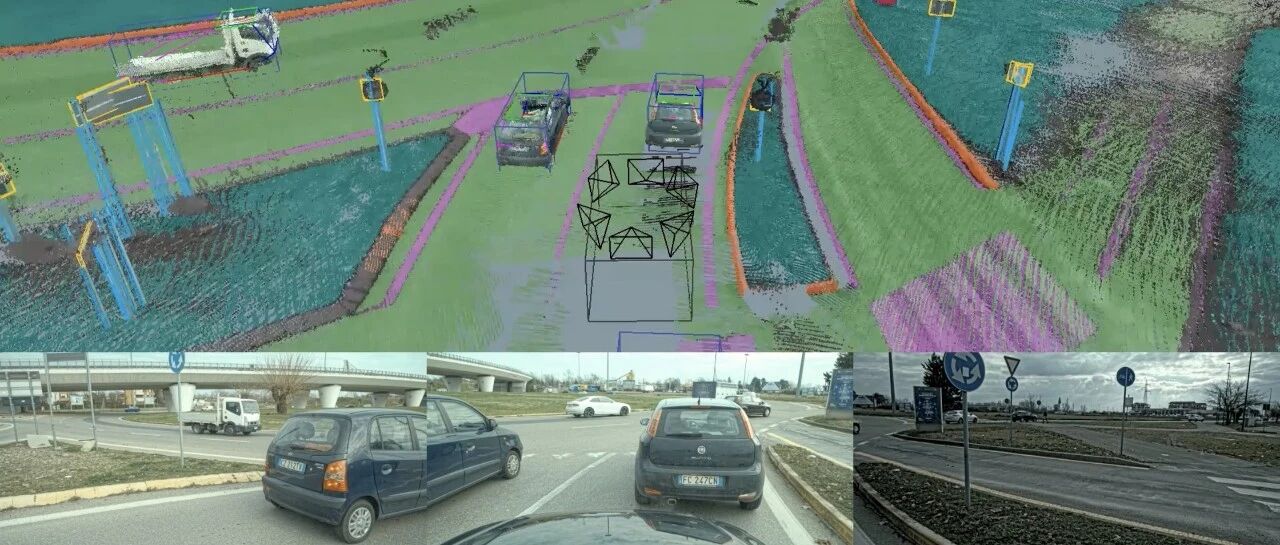
广州首批无人驾驶装备获市级道路测试许可
Zhong Guo Xin Wen Wang· 2026-01-15 01:41
Group 1 - The first batch of 20 autonomous delivery vehicles in Guangzhou has received municipal road testing permits, marking a significant milestone for the company involved [1] - The autonomous vehicles are expected to enhance delivery efficiency by over 40% once implemented in real-world applications [1] - The testing will take place on four designated roads in Huadu District, covering a total distance between 2.8 kilometers and 4.8 kilometers, and will adhere to relevant road safety laws and regulations [1] Group 2 - The vehicles, provided by Jiushi Intelligent, are designed for various delivery scenarios, including urban roads, residential areas, and industrial parks, featuring a modular design to accommodate different types of mail [1] - This testing initiative is a result of the implementation of the "Guangzhou Intelligent Connected Vehicle Innovation Development Regulations," contributing to the accumulation of policy and market experience for the large-scale application of autonomous technology in the postal delivery sector [1] - The project aims to accelerate the integration of autonomous driving technology with modern logistics [1]
配件成本下行推动规模化商用 无人物流车价格竞争日趋激烈
Nan Fang Du Shi Bao· 2026-01-14 23:15
Core Insights - The year 2025 is anticipated to be a pivotal year for the explosive growth and large-scale commercial application of unmanned logistics vehicles, driven by advancements in technology, cost reductions, and supportive policies [1][2][12] - The market for unmanned delivery vehicles is projected to exceed hundreds of billions globally by 2027, with China expected to capture over 40% of the market share [2] Market Dynamics - The investment in unmanned logistics vehicles is expected to continue in 2026, with significant interest from capital markets and major internet companies participating in funding rounds for key players in the industry [3][4] - Major logistics companies, including JD Logistics and China Post, are initiating large-scale procurement of unmanned vehicles to enhance efficiency and reduce costs [5][8] Competitive Landscape - The supply of unmanned logistics vehicles is increasing, with new entrants in the market and a decline in the cost of core components, leading to intensified price competition [6][7] - As of September 2025, the price of unmanned vehicles has dropped below 20,000 yuan, prompting various manufacturers to adopt diverse sales strategies to capture market share [6][7] Industry Trends - The demand for unmanned logistics vehicles is shifting from the express delivery sector to broader applications in urban logistics and instant delivery, indicating a significant growth opportunity [9][10] - Companies are expanding their operations internationally, with several securing licenses for unmanned vehicles in markets such as the UAE and Singapore [9][10] Challenges and Considerations - The industry faces challenges related to safety, regulatory compliance, and the need for a robust service infrastructure as unmanned vehicles become more prevalent [10][11] - Experts emphasize the importance of balancing market growth with sustainable practices to avoid excessive competition and ensure the reliability of unmanned logistics vehicles [12]

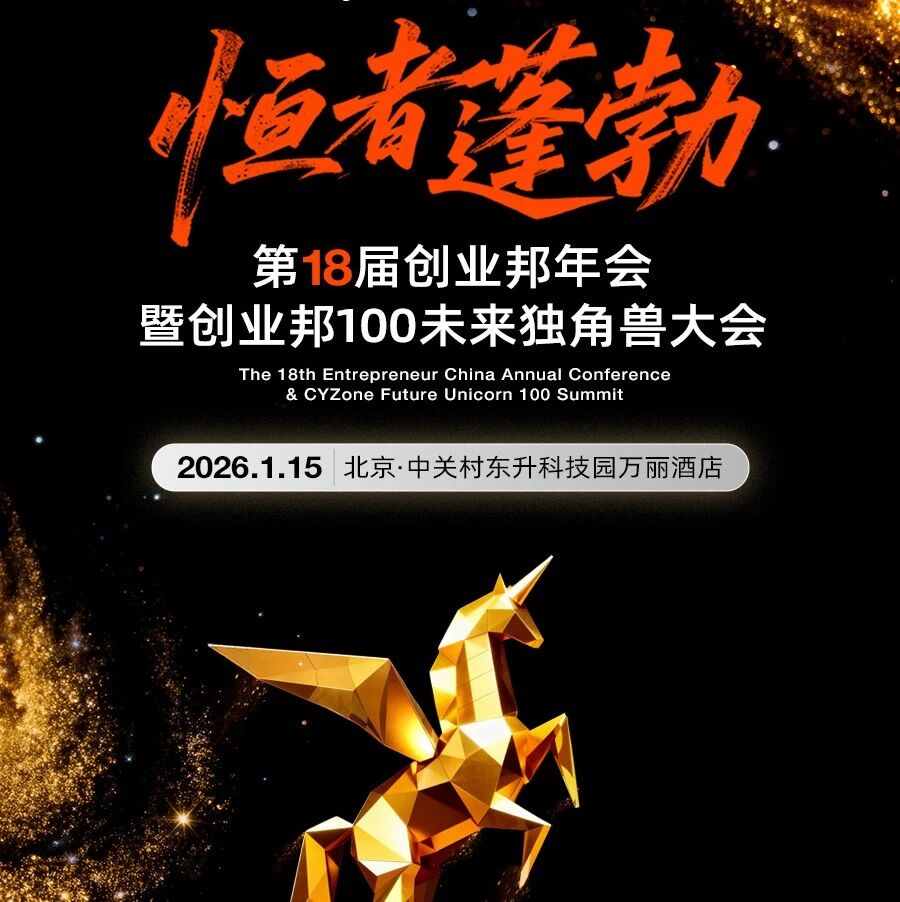
中国最有潜力的科技公司都在这里了…第18届创业邦年会完整议程公布!
创业邦· 2026-01-13 10:35
Core Insights - The article discusses the upcoming 18th Entrepreneur China Annual Conference and the CYZone Future Unicorn 100 Summit, highlighting the significance of identifying future unicorn companies and investment trends for 2026 [2][5][11]. Event Highlights - The conference will feature discussions on the latest trends in technology investment and the characteristics of successful unicorns, including insights from top investors [10][11]. - Key topics include the impact of AI on entrepreneurship and investment strategies, as well as the resilience of the Hong Kong stock market [22][23]. Agenda Overview - The event is structured into several chapters, focusing on themes such as enduring success in a competitive landscape and the future of unicorns in the market [17][19]. - Notable sessions include keynote speeches from industry leaders and panel discussions on global expansion and financial empowerment in technology [19][22]. Data Insights - The article mentions the 2025 Global Unicorn Company Observation Report, which will provide insights into record financing and emerging investment opportunities [6][11]. - It highlights the number of companies that have successfully gone public and those that have secured new financing after being recognized as unicorns [13][14][15].
从零起步引进培育新产业,用时不到五个月 研究定位,图谱导航 自贡精准招商出新招
Si Chuan Ri Bao· 2026-01-13 07:19
Core Insights - The establishment of the Advanced Medical Device Industrial Park in Zigong marks a significant breakthrough for the city, which previously lacked a related industrial foundation. The project has progressed from concept to initiation in less than five months, covering an area of over 60 hectares [3][4]. Group 1: Industry Focus and Strategy - Zigong has chosen to enter the advanced medical device sector due to its manageable investment cycle and higher success rate compared to the biopharmaceutical industry. The city has nine tertiary hospitals that can provide valuable clinical trial and application scenarios for enterprises [5][6]. - The city’s industrial research institute has developed a detailed industrial chain map, identifying key enterprises and potential partners, which serves as a "research map" for attracting investment [4][7]. Group 2: Investment Attraction and Implementation - The research institute has established four selection criteria for attracting advanced medical device projects, focusing on those that address real clinical problems and possess significant technological barriers [7][8]. - A comprehensive strategy has been implemented, including the establishment of a 1 billion yuan medical device special fund and supportive policies covering the entire product lifecycle, to facilitate the attraction of key enterprises [8][9]. Group 3: New Model Development - Zigong is developing a replicable new model for investment attraction that emphasizes external expertise and internal collaboration, successfully attracting quality projects like Wolant and Jiushi Intelligent [9][10]. - The model is lightweight, focusing on research capabilities and resource integration rather than asset investment, making it suitable for small to medium-sized cities [10].