
力拓

Search documents
澳大利亚矿业股上涨,必和必拓涨2%
Mei Ri Jing Ji Xin Wen· 2025-12-11 23:33
Core Viewpoint - Australian mining stocks experienced a notable increase, with Emerald Resources rising by 6.7%, Newmont by 5.3%, BHP by 2%, and Rio Tinto by 1.4% [1] Company Summaries - Emerald Resources saw a significant rise of 6.7% in its stock price [1] - Newmont's stock increased by 5.3%, indicating positive market sentiment [1] - BHP's shares rose by 2%, reflecting a stable performance in the mining sector [1] - Rio Tinto experienced a 1.4% increase in its stock value, contributing to the overall positive trend in Australian mining stocks [1]
亚洲股市基本面线索变化的机会:环球市场动态2025年12月6日
citic securities· 2025-12-05 02:26
Market Overview - A-shares showed mixed performance with the Shanghai Composite Index down 0.06% at 3,875 points, while the Shenzhen Component rose 0.4% and the ChiNext Index increased by 1.01%[15] - Hong Kong's Hang Seng Index rose 0.68% to 25,935 points, driven by strong performance in large tech stocks[11] - European markets saw gains, with the Euro Stoxx 600 index up 0.5%, supported by expectations of a Federal Reserve rate cut[9] Economic Indicators - Initial jobless claims in the U.S. fell to a three-year low of 191,000, below the expected 218,000, indicating a tightening labor market[29] - The U.S. dollar index decreased by 0.1% to 98.99, ending an eight-day losing streak[24] - Oil prices increased, with WTI crude rising 1.22% to $59.67 per barrel amid escalating geopolitical tensions[25] Sector Performance - In the U.S. market, the technology sector showed mixed results, with notable declines in cloud service company Snowflake's stock by 11.41% due to disappointing guidance[9] - The healthcare sector in the U.S. saw a significant drop of 0.73%, while the industrial sector rose by 0.51%[9] - In Hong Kong, the technology sector surged by 3.1%, with major players like DeepSeek and Xiaomi seeing substantial gains[11] Investment Recommendations - For A-shares, focus on sectors with strong fundamentals, particularly in resource and traditional manufacturing industries, while considering dividend stocks[6] - In the Hong Kong market, prioritize investments in technology, healthcare, and resource sectors, anticipating a "Davis Double" effect from internal and external catalysts[6] - The Indian market is recommended for investments in interest-sensitive companies and consumer sectors, given the backdrop of loose monetary policy[6]
利好突袭!超级巨头,直线拉升;寒武纪,严正声明;摩尔线程上市!
Sou Hu Cai Jing· 2025-12-05 00:41
Market Overview - US stock indices showed mixed performance, with the Dow Jones down 0.07%, Nasdaq up 0.22%, and S&P 500 up 0.11%. The Russell 2000 index, representing small-cap stocks, rose 0.76%, surpassing its previous high from October 27 [1] - Meta's stock surged nearly 6% at one point, closing up 3.43%, following news of a potential 30% cut in its metaverse project spending [1] - Initial jobless claims in the US were reported at 191,000, lower than expected, while non-farm payrolls decreased by 9,000 in November, leading to increased expectations for a Federal Reserve rate cut [1] Commodity Market - LME copper prices fell by $38 to $11,450 per ton, influenced by reports of Glencore extracting over 40,000 tons of copper from LME's Asian warehouses [2] - WTI crude oil futures rose by 1.22% to $59.67 per barrel, while Brent crude increased by 0.94% to $63.26 per barrel [2] - Gold futures slightly increased by 0.13% to $4,237.9 per ounce, while silver futures dropped by 1.86% to $57.53 per ounce [2] Company Developments - Moore Threads (code 688795) is set to debut on the STAR Market on December 5, with an issue price of 114.28 yuan per share, marking the highest for new A-share listings in the past year [2] - Cambrian Technology denied rumors of significantly increasing production capacity to fill the gap left by NVIDIA's exit from the Chinese market, labeling the information as misleading [3] - Vanke's bonds experienced significant declines, with "23 Vanke 01" dropping over 31% [6] - Country Garden's bond restructuring plan was approved by creditors, covering 9 bonds with a total balance of 13.85828 billion yuan [6] Industry Insights - The People's Daily published an article emphasizing the need for a more attractive capital market environment, aiming to foster high-quality development and expand the capital market's openness [4] - The Hong Kong Stock Exchange welcomed 91 new listings in the first 11 months of the year, raising a total of 259.889 billion HKD, a 228% increase compared to the same period last year [4] - Meta plans to significantly cut its metaverse budget, potentially by up to 30%, and may lay off employees in January, shifting focus to AI projects [13] - OpenAI announced the acquisition of Neptune, a startup focused on AI model training tracking tools, indicating a strategic move to enhance its AI capabilities [13] Economic Indicators - China's new foreign investment enterprises reached 54,000 in 2025, a 14.7% year-on-year increase, highlighting the country's attractiveness to foreign investors [10] - The State Council expressed willingness to strengthen cooperation with France in various sectors, including aerospace and green development [10] - The People's Bank of China announced a 10 trillion yuan reverse repurchase operation scheduled for December 5 [11]

新能源、有色组铝产业年报:“十五五”开年给铝消费带来新希望
Hua Tai Qi Huo· 2025-11-30 07:53
1. Report Industry Investment Rating No relevant content provided. 2. Core Viewpoints of the Report - Alumina supply surplus logic and expectations remain unchanged, mainly due to variables in Guinean bauxite. For electrolytic aluminum, the domestic supply is relatively certain with limited growth; Southeast Asian new - capacity and European复产 expectations may fall short due to policy and power - cost issues. Global supply pressure is not significant as the supply growth rate of scrap aluminum will decline. In terms of consumption, the domestic alloying process continues, with a higher proportion of molten aluminum and lower ingot production, keeping inventory at a low level and not pressuring absolute prices. For terminal consumption, there are good expectations at the start of the 15th Five - Year Plan, with domestic consumption structural reform continuing and overseas investment driving overseas infrastructure consumption. Due to the increasing proportion of scrap aluminum in the supply, the actual consumption is underestimated. Macroscopically, although the interest - rate cut rhythm is uncertain, the long - term interest - rate cut cycle remains, and the aluminum price is still undervalued [4]. 3. Summary by Relevant Catalogs 3.1 Alumina - **1.1 Domestic Ore Supply Falls Short of Expectations, and Prices Are Firm**: In 2025, from January to October, domestic ore production was 5051000 tons, a year - on - year increase of 5.2%, but monthly production declined year - on - year from August. Rainfall in northern regions affected mining, and policy tightening led to a decrease in illegal production. It is expected that domestic bauxite will hardly grow in 2026 [13]. - **1.2 Imported Ore Has Policy Risks, but the Current Expectation Is Still in Surplus**: From January to October 2025, China imported 170.96 million tons of bauxite, a year - on - year increase of 30%, with 127.116 million tons from Guinea, a year - on - year increase of 38.4%. The annual import is expected to reach 200 - 210 million tons. Even without an increase in 2026, there will be no shortage. However, there are political uncertainties in Guinea. The price of imported bauxite has been falling, with a cost support of about 65 US dollars per ton [5][23]. - **1.3 Supply Will Continue to Be in Surplus Without Accidents**: In 2025, from January to October, China's metallurgical - grade alumina production was 74.458 million tons, a year - on - year increase of 8.1%. In 2026, alumina is expected to add 860000 tons of new capacity, and the production is expected to reach 97 million tons, a year - on - year increase of 8.1%. The supply surplus will exceed 1 million tons. The actual situation may see new capacity and production cuts coexisting, but the surplus pattern is likely to continue. China is expected to remain a net exporter of alumina in 2026 [29][30]. 3.2 Electrolytic Aluminum - **2.1 Supply Growth Depends on Overseas, and the Supply Increment May Be Lower Than Expected**: In 2025, overseas electrolytic aluminum production was expected to be 30.235 million tons, a year - on - year increase of 1.9%. In 2026, it is expected to be 31.825 million tons, an increase of 1.59 million tons. However, due to power - supply and cost issues, the actual output may be lower. Without considering Mozambique's production cut, the overseas output increment in 2026 is expected to be 1.2 million tons; with the cut, it may be reduced to 800000 - 900000 tons. New capacity is mainly concentrated in Southeast Asia, with a planned total of 1.75 million tons in 2026, but there are risks of delayed production [42]. - **2.2 Domestic Supply Has Small Growth, and There Is No Supply Pressure**: From January to October 2025, China's electrolytic aluminum production was 36.506 million tons, a year - on - year increase of 675000 tons. The annual production in 2025 is expected to be 43.98 million tons, a year - on - year increase of 1.4%. In 2026, the net new capacity is 620000 tons, and the new capacity is expected to contribute about 450000 tons to the production, with an annual output of 44.5 million tons, a year - on - year increase of 520000 tons and a growth rate of 1.2%. The import of Russian and Indonesian aluminum ingots is increasing, and the import in 2026 is expected to reach 2.7 million tons, an increase of about 250000 tons [50][53]. - **2.3 Scrap Aluminum Increases the Supply of Aluminum Elements, Leading to an Underestimation of Actual Consumption**: From January to October 2025, China's net import of aluminum scrap was 1.65 million tons, a year - on - year increase of 11.5%, and the net import of aluminum alloy was 612000 tons, a year - on - year decrease of 23.9%. The domestic scrap aluminum production was 6.925 million tons, a year - on - year increase of 12.3%. It is estimated that the supply of scrap aluminum elements in 2025 will be 9.81 million tons, a year - on - year increase of 12.6%, accounting for 17.5% of the total aluminum element supply. The increase in the proportion of scrap aluminum in the supply has led to a long - term low growth rate of apparent primary aluminum consumption [59]. - **2.4 Two Perspectives on Aluminum Price Valuation**: From the perspective of electrolytic aluminum production cost, the weighted profit of the electrolytic aluminum industry is at a 15 - year high, indicating that the aluminum price is overvalued. However, from the perspective of the copper - to - aluminum ratio, which is currently above 4 and at a historical high, the aluminum price is undervalued. Historically, a high copper - to - aluminum ratio is often due to macro - factors, and the current high ratio is due to the Fed's interest - rate cut cycle and the end of balance - sheet reduction. Therefore, the aluminum price is expected to rise with copper [65]. - **2.5 Aluminum Ingot Inventory Performance Is Disappointing**: During the traditional peak consumption season in 2025, the electrolytic aluminum social inventory did not decline as expected. The reasons include the progress of the aluminum - water ratio, the seasonal casting demand of northwest electrolytic aluminum plants, and the flattening of seasonal peaks and troughs due to the decline in real - estate and traditional infrastructure consumption. The current social inventory of electrolytic aluminum is about 600000 tons, and the aluminum rod social inventory is about 110000 tons, with relatively low absolute values and little negative impact on prices [67]. 3.3 Downstream Consumption - **3.1 The Continuous Expansion of Intermediate Processing Enterprises Does Not Mean High Negative - Feedback Pressure**: As of November 20, 2025, China's aluminum rod production was about 15.92 million tons, a year - on - year increase of 3.4%, but the operating rate was less than 60% and at a low level. From January to October, the production of aluminum sheets, strips, and foils was 2.03 million tons, a year - on - year decrease of 20000 tons, and the operating rate was about 70%, at a three - year low. The expansion of intermediate processing capacity and the continuation of integrated electrolytic aluminum production have led to the shutdown of some small and old factories. The increase in intermediate processing products is in line with actual consumption growth [75]. - **3.2 Aluminum Product Exports Compensate for Aluminum Material Exports, and Next Year's Export Expectations Are Good**: From January to October 2025, the cumulative net export of aluminum materials was 4.272 million tons, a year - on - year decrease of 12%, while the cumulative export of aluminum products was 2.66 million tons, a year - on - year increase of 11.9%. The combined export of aluminum materials and products decreased by only 3.1%, and the decline is narrowing. In 2026, without additional export - policy disturbances, aluminum material exports are expected to turn positive year - on - year, and the combined export of aluminum materials and products is expected to contribute an increment of 630000 tons, with an estimated net increment of 450000 tons considering alloying and scrap aluminum [82]. - **3.3 With the Halving of Domestic Vehicle Purchase Tax, the Increment of the Automobile Industry Depends on Exports**: From January to October 2025, China's cumulative automobile production was 27.692 million vehicles, a year - on - year increase of 13.2%, with new - energy vehicle production increasing by 33.1% year - on - year and traditional vehicle production decreasing by 0.1% year - on - year. The annual production is expected to be 33.5 million vehicles, a year - on - year increase of 10.3%. The export of automobiles has made a significant contribution to production. In 2026, although the halving of the vehicle purchase tax may put pressure on production, with the current high export growth rate, the automobile production is expected to reach 37.2 million vehicles, a year - on - year increase of 7.8%, and the new - energy vehicle production is expected to grow by 20%, driving an increase in aluminum consumption of about 1 million tons, with an estimated increment in primary aluminum element supply of about 850000 tons [91]. - **3.4 The Weakening of Photovoltaic Is Compensated by Energy Storage and Power Grid Investment**: From January to October 2025, China's component production was 477.6GW, a year - on - year increase of only 0.5%. The photovoltaic installation from January to September was 240.4GW, a year - on - year increase of 49.4%, but the full - year installation is expected to be 280 - 290GW, with a year - on - year growth rate of 3 - 5%. In 2026, the component production is expected to be about 575GW, similar to 2025, and the installation is expected to be about 250GW, a year - on - year decrease of about 10%, dragging down aluminum consumption by about 600000 tons. In 2026, the power grid is expected to have an average annual compound growth rate of 8%, and power grid investment is expected to drive an increase in aluminum consumption of 370000 tons. The energy - storage shipment is expected to reach about 850GW, a year - on - year increase of about 50%, driving an increase in aluminum consumption of 200000 tons [98][105]. - **3.5 Terminal Consumption Structural Reform**: Real estate remains a drag on consumption, but its impact is weakening. In 2026, it is expected to drag down aluminum consumption by 5%, equivalent to 550000 tons of primary aluminum elements. The decline in real - estate consumption and the slowdown in traditional infrastructure growth do not affect overall consumption resilience. In 2026, exports are expected to maintain high - speed growth in commodity consumption, driven by China's investment in third - world countries [109]. 3.4 Summary - Alumina supply surplus is expected to continue, mainly due to variables in Guinean bauxite. For electrolytic aluminum, the domestic supply is relatively certain with limited growth, and overseas supply may fall short of expectations. The global supply pressure is not significant. The domestic alloying process continues, keeping inventory at a low level. Terminal consumption has good prospects at the start of the 15th Five - Year Plan, with domestic consumption structural reform and overseas investment driving consumption. The increasing proportion of scrap aluminum in the supply has led to an underestimation of actual consumption. Macroscopically, the aluminum price is still undervalued [114].
价格创纪录新高,“金属之王”进入超级周期
Xin Lang Cai Jing· 2025-11-29 02:01
Core Viewpoint - Copper is experiencing unprecedented demand and price increases, driven by its essential role in the transition to clean energy and AI infrastructure, leading to a global "copper rush" [1][4][10]. Group 1: Price Trends and Market Dynamics - The A-share copper sector has risen over 73% this year, with LME copper prices reaching a record high of $11,210 per ton [1]. - Domestic copper futures have surpassed 87,000 yuan per ton, indicating strong market sentiment and price resilience [1]. - Analysts predict that copper prices will continue to rise due to fundamental support and market dynamics [1][9]. Group 2: Demand Drivers - Over 65% of global copper is used in electrical applications, making it irreplaceable in various sectors, particularly in the electrical industry [1]. - The shift towards clean energy and AI is creating a "demand triangle" focused on AI infrastructure, green energy transition, and grid upgrades, significantly increasing copper consumption [4][6]. - IEA forecasts that copper usage in data centers could reach between 250,000 to 550,000 tons by 2030, representing 1%-2% of global copper demand [4]. Group 3: Supply Constraints - IEA warns of a potential global copper supply gap exceeding 30% by 2035, with current mining reserves only sufficient for 40 more years [6]. - The discovery rate of new copper resources has sharply declined, with only 14 new deposits found in the last decade [7]. - Major copper mines are facing production cuts due to various disruptions, leading to a projected supply shortfall of 150,000 tons by 2025 [7][8]. Group 4: Global Competition and Strategic Moves - Countries are implementing strategies to secure copper resources, with the US including copper in its critical minerals list for the first time [10]. - Japan is preparing to invest in copper mining projects in Pakistan due to concerns over supply shortages [10]. - Indian government aims to increase copper demand fivefold by 2047, indicating a long-term strategic focus on self-sufficiency [10]. Group 5: Corporate Strategies - Major mining companies like BHP, Rio Tinto, and Vale are expanding their copper operations to capitalize on the growing demand [12][15]. - Zijin Mining has become the fourth-largest copper producer globally, with plans to increase production significantly by 2028 [16][17]. - China Molybdenum is also focusing on copper production in the Democratic Republic of Congo, with ambitious growth targets [17]. Group 6: Industry Challenges - China's copper industry faces high import dependence, with over 80% of copper ore sourced from abroad [18]. - The rising copper prices are squeezing profit margins for downstream copper processing companies, leading to operational challenges [20]. - Companies are exploring financial instruments and alternative materials, such as aluminum, to mitigate the impact of rising copper prices [21].


AI时代“新石油”价格高位震荡 铜行业下游经营承压
Zheng Quan Shi Bao· 2025-11-24 21:49
Core Insights - The prices of precious metals, particularly copper, have surged significantly, attracting global attention, with LME three-month copper and Shanghai copper contracts reaching historical highs [1] - The rising costs of copper raw materials have led to substantial pressure on downstream industries, with a reported 18% reduction in production among small and medium enterprises in the copper supply chain [2] - The copper industry is experiencing a shift in supply and demand dynamics, influenced by factors such as geopolitical events and currency fluctuations, alongside traditional demand stagnation [5][6] Group 1: Price Trends and Market Dynamics - Copper prices have shown a strong upward trend, reaching historical highs, with significant volatility impacting different segments of the industry [3] - The supply side is under pressure, with global copper mine supply growth at only 1.6%, while smelting capacity is expanding rapidly, leading to a potential supply shortage [6] - The demand for copper is being driven by new applications in AI and renewable energy sectors, which are expected to offset declines in traditional demand from construction and manufacturing [5][7] Group 2: Industry Challenges - Many copper smelting plants are facing operational challenges due to depleting raw material inventories and declining by-product prices, leading to increased production cuts [2][4] - The high volatility in copper prices is causing significant operational risks for midstream companies, with many opting to reduce inventory levels and even halt production temporarily [4] - The transition towards aluminum as a substitute for copper in various applications is accelerating due to rising copper costs, which may impact long-term copper demand [2][8] Group 3: Future Outlook - The market sentiment remains bullish on copper prices in the medium to long term, driven by structural supply constraints and increasing demand from emerging technologies [7][8] - The copper market is expected to experience a short-term balance but may face a structural shortage by 2026, with prices potentially exceeding 90,000 yuan per ton [7] - The copper industry is transitioning towards higher quality production and efficiency, moving away from previous expansion strategies, which may lead to increased competitiveness and innovation [8]
西部证券晨会纪要-20251120
Western Securities· 2025-11-20 02:33
Group 1 - The report highlights the recovery of free cash flow in the manufacturing sector due to the "anti-involution" policy and the Federal Reserve's interest rate cuts, leading to a 37.2% increase in the free cash flow investment portfolio this year, with an excess return of 8.6% [1][7][10] - The report identifies specific industries where free cash flow (FCFF) is actively or passively improving, emphasizing the importance of EBIT and CAPEX in this recovery [7][10] - The analysis indicates that sectors such as resources, consumption, and light asset technology experience significant excess returns when free cash flow improves, while heavy asset technology and pre-involution manufacturing sectors show excess returns despite deteriorating cash flow [8][9] Group 2 - The advanced manufacturing sector is characterized by high differentiation among sub-sectors, with automotive valuations currently at relatively low levels, suggesting potential investment opportunities [2][14] - The report recommends focusing on funds tracking indices related to new productivity in areas such as new energy, power equipment, military industry, and automotive sectors, listing specific ETFs for investment [2][15] - Historical performance of the advanced manufacturing index shows a 120.56% increase since 2019, with power equipment performing the best among sub-sectors [14] Group 3 - The vehicle power supply industry is projected to grow significantly, with an expected market size of 64.8 billion yuan by 2027, driven by the rise of new energy vehicles and the increasing penetration of 800V systems [17][18] - Leading manufacturers in the vehicle power supply sector are well-positioned to expand into the AIDC server power supply market, with recommendations to focus on companies like Weimais and Fute Technology [17][19] - The competitive landscape is dominated by top-tier manufacturers with strong cost advantages and customer loyalty, indicating a trend of "the strong getting stronger" in this industry [19] Group 4 - The banking sector has seen a cumulative increase of 10.80% since early 2025, with significant performance variations among banks, driven by macroeconomic conditions and regulatory changes [22][24] - Historical analysis reveals that the banking sector's performance is closely tied to economic stability and liquidity conditions, with past bull markets often linked to favorable economic indicators [24][25] - The report emphasizes the importance of bank fundamentals, such as profitability and asset quality, in supporting stock performance, particularly during earnings disclosure periods [24][25]
英国富时100指数突破万点大关在望 伦敦矿业股全线攀升
Ge Long Hui A P P· 2025-11-12 09:03
Core Viewpoint - The rise in gold prices and positive market sentiment have led to an increase in mining stocks in London, with the FTSE 100 index approaching the significant 10,000-point mark for the first time [1] Group 1: Market Performance - Gold prices have reached record highs due to investors seeking safe-haven assets, which has also boosted other metals and the mining sector [1] - Fresnillo, a gold and silver miner, saw its stock rise by 2.4% [1] - Endeavour Mining's stock increased by nearly 1.5% [1] - Hochschild Mining experienced a slight increase of 1.2% [1] - Rio Tinto's stock in London rose by 1.4% [1] - BHP's stock in the UK increased by over 1% [1] - Glencore and Anglo American both saw their stocks rise by over 0.5% [1] - Copper miner Antofagasta's stock rose by nearly 1% [1]
中国宏桥股价再创新高,中国铝企电力成本优势明显,美银上调公司盈测及目标价
Zhi Tong Cai Jing· 2025-11-12 04:10
Core Viewpoint - The rapid development of AI globally is driving a surge in electricity demand, creating strong investment value in the Chinese aluminum sector due to significant electricity cost advantages, multiple growth drivers on the demand side, and tightening supply conditions [3][4]. Group 1: Investment Outlook - Bank of America has raised its profit forecasts for China Hongqiao for 2026-2030 by 5-14%, increasing the target price from HKD 35 to HKD 38 while maintaining a "Buy" rating [3]. - The investment rationale includes a dividend yield of 6%-7%, the expected production start of the Ximangdu project by the end of 2025, share buybacks, and a valuation advantage with a 9x price-to-earnings ratio for 2026 [3]. Group 2: Demand and Supply Dynamics - On the demand side, while the baseline scenario anticipates a 2% growth in aluminum demand by 2026, significant growth elasticity is expected from AI data centers, energy storage systems, and ultra-high voltage sectors [4]. - On the supply side, major international producers like Century Aluminum, South32, and Rio Tinto are facing production cuts or shutdown pressures due to various electricity issues, leading to a tightening supply situation [4]. - Based on the assessment of supply-demand balance and expanding cost advantages, Bank of America believes that the cyclicality of low-cost integrated producers will weaken, leading to potential revaluation [4].

中国宏桥涨超5%再创新高 中国铝企电力成本优势明显 美银上调公司盈测及目标价
Zhi Tong Cai Jing· 2025-11-12 02:28
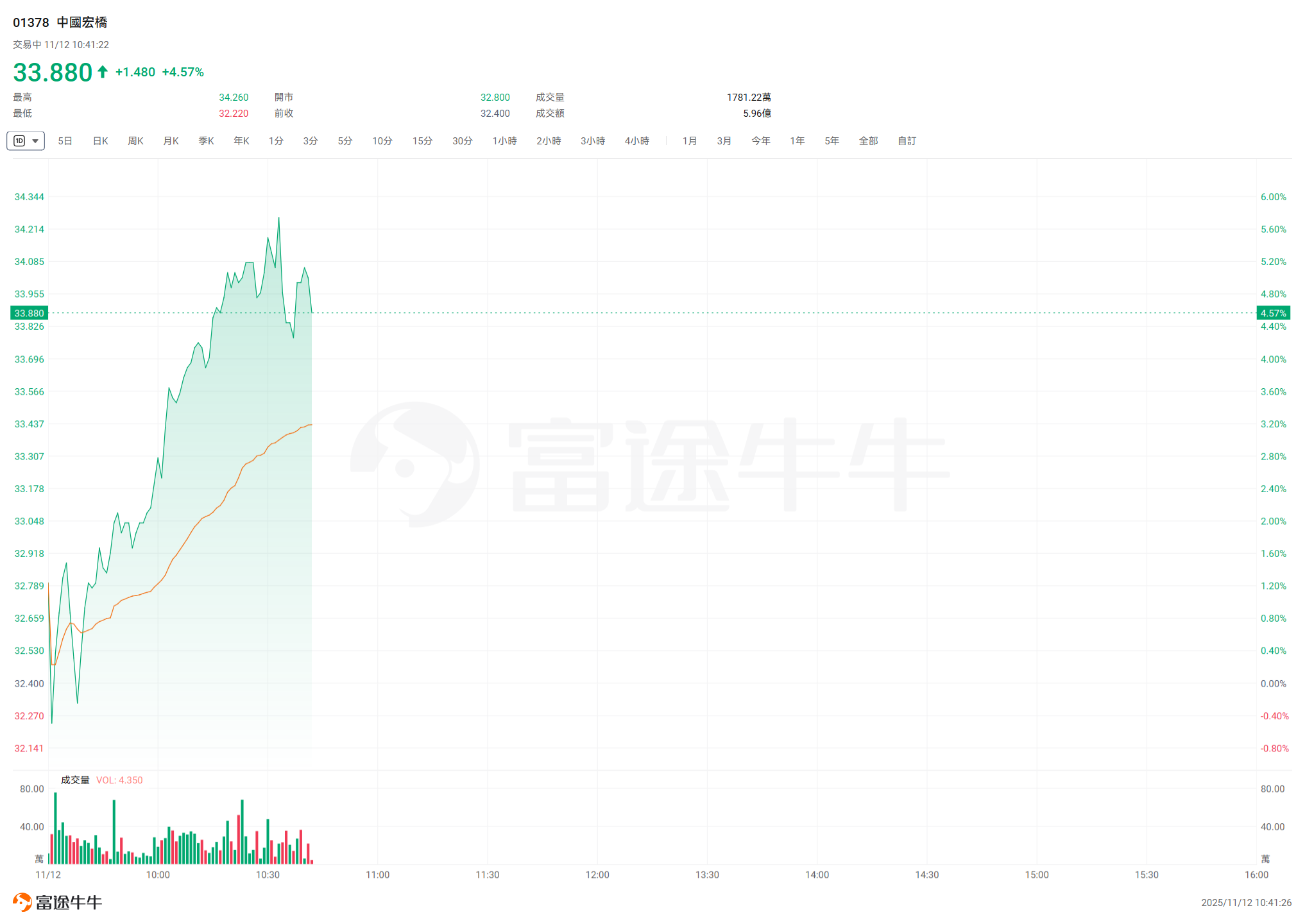
Core Viewpoint - China Hongqiao (01378) has seen a significant increase in stock price, reaching a new historical high, driven by strong demand in the aluminum sector due to the rapid development of AI and related power needs [1] Company Summary - China Hongqiao's stock rose over 5%, peaking at 34.08 HKD, and is currently trading at 33.94 HKD with a transaction volume of 4.51 billion HKD [1] - Bank of America has raised its profit forecasts for China Hongqiao for 2026-2030 by 5-14%, increasing the target price from 35 HKD to 38 HKD while maintaining a "Buy" rating [1] - The investment rationale includes a projected dividend yield of 6-7%, the upcoming production of the Ximangdu project by the end of 2025, share buybacks, and a valuation advantage with a 9x price-to-earnings ratio for 2026 [1] Industry Summary - The aluminum sector is expected to benefit from a significant increase in demand driven by AI data centers, energy storage systems, and ultra-high voltage fields, despite a baseline forecast of a 2% growth in aluminum demand by 2026 [1] - Supply constraints are anticipated as international producers like Century Aluminum, South32, and Rio Tinto face production cuts or shutdowns due to various power issues [1] - Given the tight supply-demand balance and expanding cost advantages, Bank of America believes that the cyclical nature of low-cost integrated producers like China Hongqiao will diminish, leading to a potential revaluation of their stock [1]