腾讯云

Search documents
广交会遇上AI新叙事:中企出海抢抓技术普惠化新风口
2 1 Shi Ji Jing Ji Bao Dao· 2025-10-20 08:30
Core Insights - The 138th Canton Fair AI Trade Ecological Development Forum was held, focusing on the theme of "New Outbound, New Ecology, New Momentum - AI Trade Ecological Builders" [1] - The forum highlighted the integration of AI technology in global trade, emphasizing its role in enhancing efficiency and creating new business models in foreign trade [2] Group 1: AI Integration in Trade - AI technology is increasingly being adopted by foreign trade enterprises in China, with a significant focus on improving operational efficiency [2] - The forum discussed the three major trends in AI and trade: deeper technological integration, closer ecological collaboration, and more inclusive value creation [2] - A report titled "Artificial Intelligence International Trade Application Guide" was released, showcasing the latest practices in AI technology reshaping international trade rules [1][2] Group 2: Industry Growth and Trends - The number and scale of AI enterprises in China have been growing, with domestic models leading in global open-source community downloads [2] - AI is enhancing productivity and product capabilities in cross-border e-commerce, with a mature ecosystem of AI service providers emerging across the entire supply chain [2][3] - The integration of AI in cross-border e-commerce is accelerating, impacting various aspects such as marketing, customer service, and supply chain management [3] Group 3: Collaborative Ecosystem - There is a consensus on the need to build a competitive new ecosystem that integrates technology, quality, and service, emphasizing the importance of collaboration among government, enterprises, academia, and research [4] - The integration of supply chain resources and e-commerce platform advantages is seen as a key breakthrough for the development of AI in international trade [4] - The forum aims to continue exploring the application of AI technology across the entire international trade chain to enhance global competitiveness for Chinese enterprises [4]
2025年中国基础云服务行业数据报告
艾瑞咨询· 2025-10-20 00:06
Core Insights - The overall cloud service market in China is projected to reach 544.54 billion yuan in 2024, with a growth rate of 15%. The rapid development of artificial intelligence (AI) is a key driver for the growth of cloud infrastructure and capability platforms [1][8][19]. Market Overview - The IaaS market is expected to grow to 371.86 billion yuan in 2024, with a growth rate of 19.1%. The PaaS market is projected to reach 101.86 billion yuan, growing at 35.8% [11]. - The public cloud service market is anticipated to reach 387.87 billion yuan in 2024, with an 18% growth rate [13]. - The non-public cloud service market is expected to grow to 163.58 billion yuan, with an 11.2% growth rate [16]. Market Characteristics - AI has become a focal point for the construction and business layout of the cloud service industry. Participants are expanding investments in intelligent computing infrastructure and improving AI development tools [8][11]. - The public cloud service market is experiencing new opportunities due to the rapid development of AI, particularly in sectors like government, finance, manufacturing, and energy [19]. Competitive Landscape - In the public cloud IaaS market, Alibaba Cloud, Huawei Cloud, and Tianyi Cloud rank as the top three providers, with Tencent Cloud and Mobile Cloud tied for fourth place, followed by Amazon Web Services [19]. - Operator-backed cloud vendors are enhancing their market competitiveness by improving infrastructure and increasing investments in AI, while internet-based cloud vendors are focusing on business streamlining and capability concentration to alleviate competitive pressure [19]. Development Trends - The cloud computing sector is expected to continue supporting the development of the AI industry by providing foundational resources and platform tools. There will be a deepening integration of cloud and intelligence, leading to upgrades in intelligent computing [8][11]. - In the short term, the market competition will be characterized by price wars, while in the long term, the rapid iteration of technology capabilities will expand business scenarios and drive demand for cloud services [13][16].


云计算的“第一”之争:榜单之外的云端真相
Sou Hu Cai Jing· 2025-10-14 16:31
Core Insights - The cloud computing market is characterized by multiple companies claiming to be "number one" based on different metrics and conditions, leading to confusion among users and stakeholders [6][7][8] - The competition among cloud service providers has shifted from traditional metrics to a narrative-driven approach, where the concept of "first" has become a strategic asset in public relations and market positioning [8][9][23] Market Share Claims - Volcano Engine holds a 46.4% share of the Chinese public cloud large model market, leading in model invocation volume with a 49.2% share [3][12] - Alibaba Cloud claims to lead the AI cloud market in China with a 35.8% share, surpassing the combined share of the second to fourth players [4][10] - Huawei Cloud is noted for its rapid growth in the public cloud sector, particularly in the Middle East and Central Asia, achieving a tenfold revenue increase compared to 2023 [14] - Baidu Smart Cloud emphasizes AI capabilities in various sectors, focusing on "AI model as a service" to drive growth [16] Importance of "First" - The designation of "first" in the cloud computing industry signifies trust, capital, and competitive advantage, influencing investor confidence and customer choices [9][10] - Companies that maintain a "first" position can secure budget allocations and strategic priorities, while falling out of rankings may lead to organizational changes [9][10] Shift to AI-Driven Cloud - The competition has evolved to focus on "AI + Cloud," where cloud services are expected to integrate AI capabilities, transforming traditional cloud infrastructure into intelligent systems [17][18] - Alibaba Cloud is positioning itself as a "full-stack AI service provider," planning to invest 380 billion yuan in AI infrastructure over the next three years [18][19] - The integration of AI into cloud services is seen as a critical trend, with companies like Huawei and Baidu also adapting their strategies to emphasize AI capabilities [22][23] Future of Cloud Competition - The traditional metrics of market share may become less relevant as the industry shifts towards providing smarter, more adaptable cloud solutions [23] - The definition of "first" may evolve, focusing on the ability to deliver intelligent, open, and continuously evolving cloud services rather than just numerical rankings [23]


共建规则 织链成网 中国—东盟合作为区域经济提供稳定性
Xin Hua She· 2025-10-11 07:23
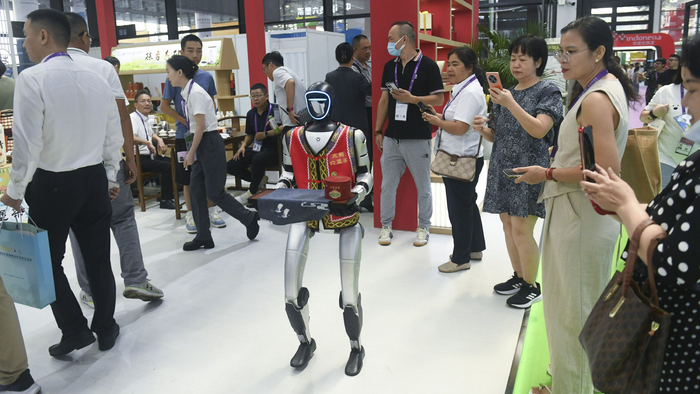
Core Insights - The article emphasizes the significance of the China-ASEAN Expo and Business and Investment Summit in enhancing regional cooperation and economic stability, highlighting the successful participation of over 3,200 enterprises from 60 countries [1][4]. Trade and Economic Cooperation - The China-ASEAN Free Trade Area (CAFTA) was officially launched in 2002, fully established in 2010, and upgraded to version 2.0 in 2019, with negotiations for version 3.0 completed and set to be signed within the year [2]. - The 3.0 version represents a shift from tariff reduction to rule-building, marking a significant milestone in regional economic integration [2]. Investment and Trade Statistics - China has maintained its position as ASEAN's largest trading partner for 16 consecutive years, with ASEAN being China's largest trading partner for five years [4]. - In 2024, bilateral trade with five ASEAN countries is expected to exceed $100 billion, with trade with Vietnam and Malaysia surpassing $200 billion [4]. - In the first eight months of this year, bilateral trade reached 4.93 trillion yuan, a year-on-year increase of 9.7% [4]. - By July 2025, cumulative bilateral investment between China and ASEAN is projected to exceed $450 billion, with Chinese companies completing engineering contracts worth $480 billion in ASEAN [4]. Infrastructure and Industry Collaboration - Chinese enterprises are actively involved in infrastructure projects across ASEAN countries, contributing to sectors such as green energy and digital economy [5]. - The 3.0 version of CAFTA includes nine new chapters focusing on digital economy, green economy, and supply chain connectivity, enhancing cooperation in emerging fields [5]. Automotive Industry Developments - Chinese electric vehicles are gaining popularity in Southeast Asia, with companies like SAIC-GM-Wuling and BYD establishing local production and supply chains [6][8]. - The shift from "product export" to "cross-border chain building" reflects a strategic transition in the automotive industry, enhancing local market responsiveness and technological collaboration [6][8]. Artificial Intelligence and High-Tech Cooperation - The integration of artificial intelligence (AI) is reshaping global supply chains and creating new opportunities for China-ASEAN economic collaboration [10][12]. - The expo featured a dedicated AI pavilion, showcasing over 200 high-tech companies and highlighting the shift from traditional trade to high-tech cooperation [12]. - Initiatives like the AI Empowerment Super League and the establishment of the China-ASEAN AI Innovation Cooperation Center are fostering collaborative projects across various sectors [14][16].
2025年中国基础云服务行业数据报告
艾瑞咨询· 2025-10-04 00:06
Core Insights - The overall cloud service market in China is projected to reach 544.54 billion yuan in 2024, with a growth rate of 15%. The rapid development of artificial intelligence is driving upgrades in cloud infrastructure and capability platforms, which are key factors for market growth [1][8]. Market Overview - The IaaS market in China is expected to grow to 371.86 billion yuan in 2024, with a growth rate of 19.1%. The PaaS market is projected to reach 101.86 billion yuan, growing at 35.8% [11]. - The public cloud service market is anticipated to reach 387.87 billion yuan in 2024, with an 18% growth rate. The non-public cloud service market is expected to be 163.58 billion yuan, growing at 11.2% [13][16]. Market Characteristics - AI has become a focal point for cloud service industry construction and business layout. Participants are expanding investments in intelligent computing infrastructure and improving AI development tools [8]. - The public cloud service market is experiencing new opportunities due to the rapid development of AI, with comprehensive cloud vendors focusing on "intelligence" to build intelligent computing infrastructure [13]. Competitive Landscape - In the public cloud IaaS market, Alibaba Cloud, Huawei Cloud, and Tianyi Cloud rank as the top three, with Tencent Cloud and Mobile Cloud tied for fourth place, and Amazon Web Services in fifth [19]. - Operator-backed cloud vendors are enhancing their competitiveness by improving infrastructure and investing in AI, while internet-based cloud vendors are focusing on business streamlining and capability concentration to alleviate competitive pressure [19]. Development Trends - The cloud computing sector is expected to continue providing foundational resources and platform tools to support AI industry development, while also deepening the integration of cloud and intelligence [8]. - The PaaS market is entering a critical technological transition period, with AI reshaping technical architecture and development processes [11]. Industry Implications - The integration of AI into traditional industries is creating potential opportunities in the non-public cloud market, as businesses seek cost-effective and adaptable deployment methods [16]. - The current AI applications are primarily concentrated in the internet sector, but there is potential for traditional enterprise clients to upgrade their cloud capabilities through AI [21].

OpenAI和英伟达,正在把GPU玩成“金融产品”
3 6 Ke· 2025-09-30 03:25
Core Insights - The potential investment of up to $100 billion by Nvidia in collaboration with OpenAI to build a 10 GW AI data center highlights the financialization of computing power [1] - In 2024, global generative AI financing reached $56 billion, accounting for over half of the total AI industry financing, with major companies like Microsoft and Google significantly increasing their capital expenditures [1] - The shift from traditional GPU purchasing to a rental model is emerging as a solution to the challenges faced by AI companies, allowing for more flexible financial management [2][4] Financialization of GPUs - Traditional GPU procurement involves significant upfront costs and depreciation, which has become unsustainable due to rapid technological advancements [2] - The rental model transforms GPUs into financial products that can be leased, financed, and traded, mitigating the risks associated with ownership [4][5] - Companies like CoreWeave and Lambda Labs are leading the way in GPU rental services, with CoreWeave securing $1.7 billion in funding and Lambda Labs offering hourly rental services [5] Capital Logic of Computing Power - The financialization of computing power may disrupt the AI industry more profoundly than innovations like ChatGPT, as it introduces new investment opportunities and risks [6][8] - Future developments may include the securitization of GPU rental contracts, allowing for trading in capital markets and creating a new asset class [7] - The concentration of capital, computing power, and energy resources in the U.S. is likened to an oligopoly, where larger companies can leverage financing to maintain a competitive edge [9][11] Challenges for China - China's hardware and financial systems lag behind the U.S., with export controls limiting access to advanced GPUs and a lack of a mature financial infrastructure for computing power [12] - Chinese companies are exploring algorithm optimization and efficiency improvements, but without a robust GPU rental market and credit rating system, they risk being marginalized [12] - The need for China to develop its own GPU leasing market and financial infrastructure is critical to avoid being sidelined in the global computing power landscape [12] Conclusion - The rumored collaboration between OpenAI and Nvidia signifies a shift in industry logic, where the financialization of GPUs could accelerate AI development while potentially exacerbating inequalities in access to computing resources [13][14]


海南西部国际数据一站通服务中心揭牌成立
Zhong Guo Xin Wen Wang· 2025-09-29 13:55
Group 1 - The Hainan Western International Data One-Stop Service Center was inaugurated to provide comprehensive services for enterprises, marking a significant step in building a "data economy ecosystem" in Danzhou [1] - Danzhou has a solid foundation for digital economy development, with the Yangpu Digital Free Trade Zone being the first of its kind in the country, and the leading enterprise Aiheng Shuchan playing a crucial role in the construction of the data factor market system [1] - By April 2025, Danzhou has signed 24 projects with a total investment of 314.33 billion yuan, of which 7 digital economy projects account for 74.85% of the total investment [1] Group 2 - The Runze Free Trade Port International Information Port project in Danzhou is set to be completed by 2026, providing high-performance computing resources for complex model training [2] - Danzhou's industrial foundation supports the development of cross-border data flow and green computing industries, with clean energy projects providing stable power for computing infrastructure [2] - The establishment of an international internet data dedicated channel in Yangpu enhances cross-border data transmission efficiency [2] Group 3 - Danzhou has signed strategic cooperation agreements with multiple enterprises to promote digital economy development and infrastructure upgrades, with total investments exceeding 5 billion yuan [3] - The "Hainan Digital Nomad Hub" and "Yangpu Bay Digital Nomad Community Demonstration Point" were officially launched to provide one-stop solutions for global digital nomads [3]
云栖行至2025:阿里云不只是“云”
Bei Jing Shang Bao· 2025-09-24 16:37
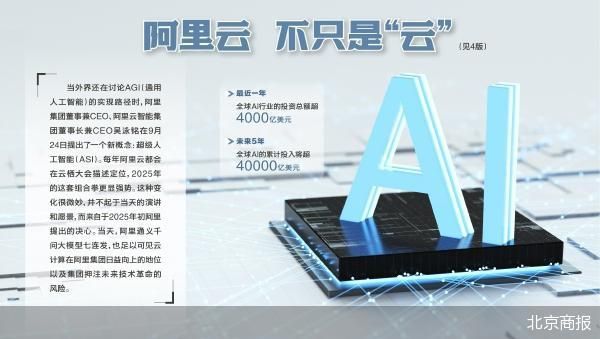
Core Viewpoint - Alibaba Group's CEO Wu Yongming introduced the concept of Super Artificial Intelligence (ASI) during the Cloud Summit, emphasizing a significant investment in AI infrastructure and a vision that extends beyond General Artificial Intelligence (AGI) [1][3]. Investment and Infrastructure - Alibaba plans to invest 380 billion yuan (approximately 53.5 billion USD) over three years to build AI infrastructure, indicating a strong commitment to advancing AI technology [3][4]. - The global AI industry has seen over 400 billion USD in investments in the past year, with projections of cumulative investments exceeding 4 trillion USD over the next five years [3]. AI Development Stages - Wu outlined a three-stage roadmap to achieve ASI: intelligent emergence, autonomous action, and self-iteration, currently positioned in the second stage where AI assists humans [3][4]. - The company aims to create an AI ecosystem akin to Android, focusing on open-source development and building a next-generation AI cloud for global smart computing [4]. Market Position and Competition - Alibaba Cloud holds the leading market share in China and is recognized as one of the few companies capable of vertical integration in AI infrastructure and cloud computing [6][8]. - The company emphasizes its international strategy, aiming to compete globally while downplaying domestic rivals [6][7]. Technological Advancements - Alibaba Cloud released seven new AI models, including the Qwen3-Max, which boasts a pre-training data volume of 36 trillion tokens and over a trillion parameters, showcasing advanced coding and tool-calling capabilities [8][9]. - The performance of these models positions Alibaba among the top tier globally, with significant scores in various AI benchmarks [8][9]. Future Outlook - The industry is experiencing rapid investment and innovation, with no visible limits to the capabilities of AI models, indicating a competitive landscape where Alibaba is positioned to benefit significantly from AI advancements [9].

不止3800亿元,阿里计划追加AI基建投入,股价涨超9%
Nan Fang Du Shi Bao· 2025-09-24 11:13
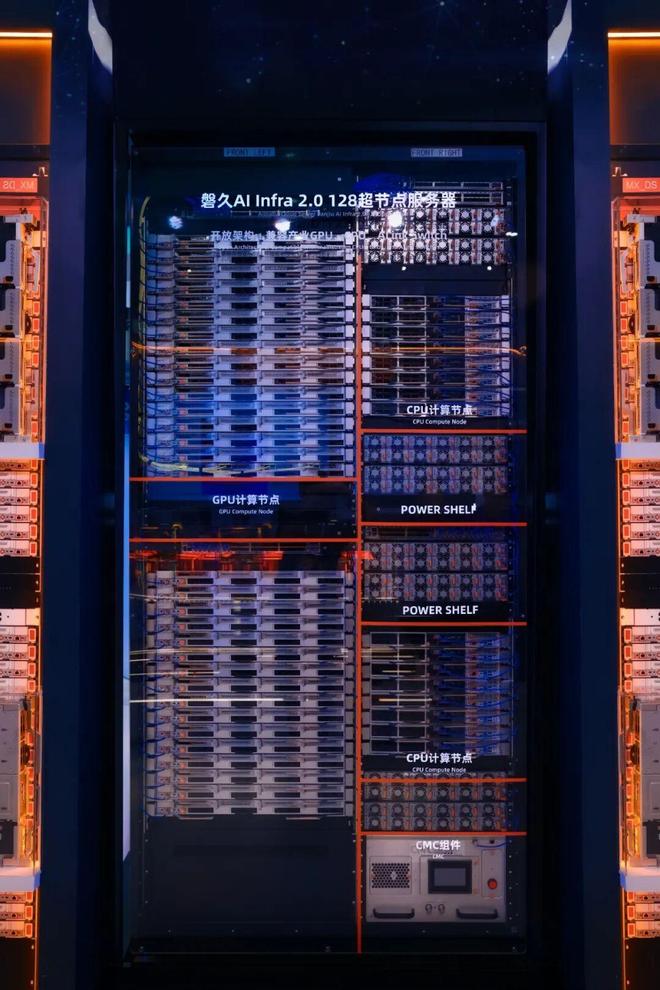
云栖大会上,吴泳铭预测,未来五年全球AI累计投入金额将超过4万亿美元,"这是人类历史上最大的算 力和研发投入"。对比2022年生成式AI元年,2032年阿里云全球数据中心的能耗规模将提升10倍。 吴泳铭说,阿里云是少数能做到软硬件垂直整合的AI云计算平台。在硬件和网络层面,阿里云自研核 心存储系统、网络架构、计算芯片等;阿里云同时拥有业内领先的通义模型,从而实现基础设施架构设 计与模型架构设计的协同创新。 云栖大会上,阿里云智能集团首席技术官周靖人发布了7款通义大模型,以及全新升级的阿里云多款AI Infra产品和服务。 "行业对AI基础设施的需求远超我们的预期。"9月24日的2025云栖大会上,阿里巴巴集团董事兼首席执 行官吴泳铭透露,阿里正在推进3800亿元的AI基础设施建设,并计划追加更大的投入。 受此消息影响,截至9月24日港股收盘,阿里巴巴(09988.HK)股价大涨9.16%,报174.0港元/股,创下 近四年来新高。 此前2月,吴泳铭曾宣布,阿里将在未来三年投入超过3800亿元,用于建设云和AI硬件基础设施,投资 总额超过去十年的总和。 AI基建(AI Infra)之于AI,如同电⽹之于电⼒。云 ...
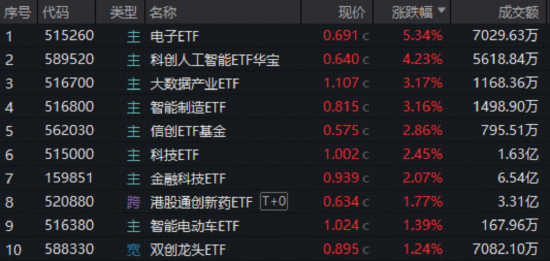
硬科技燃爆!消费电子+芯片大爆发,电子ETF(515260)涨超5%创新高!大金融尾盘异动,与重磅发布会有关?
Xin Lang Ji Jin· 2025-09-22 11:58
Group 1: Market Overview - A-shares experienced a strong rally on September 22, with all three major indices closing higher and a total trading volume of 2.12 trillion yuan [1] - The "hard technology" sectors, particularly consumer electronics and domestic chips, saw significant gains, with multiple leading stocks reaching new highs [1][3] - The electronic ETF (515260) surged by 5.34%, reaching a historical high, indicating strong market interest and potential large-scale investments [1][4] Group 2: Sector Performance - The consumer electronics sector saw major stocks like Luxshare Precision and Industrial Fulian hitting their upper limits, with Luxshare Precision nearing its previous high [1][3] - In the domestic chip sector, stocks such as Haiguang Information and SMIC also achieved new highs, with Haiguang Information rising over 10% [1][4] - The semiconductor and consumer electronics sectors are viewed as prime investment opportunities due to recent positive developments and market demand [6][7] Group 3: Institutional Insights - Goldman Sachs predicts a "liquidity feast" for the Chinese stock market, maintaining an "overweight" rating for A-shares and H-shares, with expected price increases of 8% and 3% respectively over the next 12 months [3] - Analysts suggest that the current "slow bull" market in A-shares is becoming more stable, driven by improved valuations and liquidity [3][10] - The electronic ETF is highlighted as a key investment vehicle, focusing on leading companies in AI chips, automotive electronics, and 5G technology [8][21] Group 4: Future Outlook - The consumer electronics sector is expected to benefit from new AI device developments, with OpenAI collaborating with Luxshare Precision for future products [6][7] - The semiconductor industry is projected to see a significant increase in domestic production rates, potentially reaching 25%-30% by 2025 or 2027 [7] - Analysts recommend focusing on electronic ETFs and related funds as the market prepares for a potential upward cycle driven by seasonal demand and technological advancements [8][10]