
雷鸟

Search documents
瑞声科技(02018.HK)收购芬兰Dispelix:瞄准META/苹果/谷歌XR供应链?
Ge Long Hui· 2025-11-24 08:54
Core Insights - The acquisition of Dispelix by AAC Technologies marks a significant move to enhance its XR capabilities, focusing on transparent waveguide technology for AR devices [1][4] - The deal has garnered positive attention from industry leaders, indicating strong interest and support for the transaction [3] Group 1: Strategic Implications - The acquisition is a key step for AAC Technologies in the XR field, as it collaborates with top mobile ecosystem builders to develop next-generation XR reference design hardware platforms [4][5] - The announcement hints at potential partnerships with major players like Meta, Apple, and Google, which are pivotal in the XR ecosystem [4][5] Group 2: Business Synergies - Prior to the acquisition, AAC Technologies had established capabilities in acoustic, haptic, and optical modules, and the addition of Dispelix fills a critical gap in AR waveguide technology [6] - The integration of XR capabilities is expected to synergize with AAC's existing business, leveraging its supply chain resources and manufacturing expertise to accelerate XR commercialization [6][7] Group 3: Growth Strategy - The acquisition aligns with AAC Technologies' strategic focus on building core technology platforms and achieving cross-domain technology reuse, which has been a consistent theme in its growth strategy [7] - Previous acquisitions have successfully expanded AAC's capabilities across various sectors, indicating a replicable growth model for future ventures into emerging fields [7] Group 4: Market Potential - The global XR investment is projected to grow from $15.22 billion in 2024 to $39.7 billion by 2029, with a compound annual growth rate of 21.1%, highlighting significant growth potential in the industry [8]


电子行业2026年度投资策略:人工智能产业变革持续推进,半导体周期继续上行
Zhongyuan Securities· 2025-11-21 07:38
Group 1 - The report highlights the ongoing transformation in the artificial intelligence (AI) industry, with significant advancements in AI models and increasing capital expenditures from cloud service providers, driving demand for AI computing hardware infrastructure [8][20][39] - The semiconductor industry is expected to continue its upward trend, with AI driving a potential super cycle in the memory sector, as domestic manufacturers enhance their competitive advantages in technology and supply chains [11][18][19] - The electronic industry has significantly outperformed the CSI 300 index, with a year-to-date increase of 38.35% compared to the CSI 300's 16.85% [18][19] Group 2 - Major cloud companies are increasing their capital expenditures, with North American cloud providers collectively spending $96.4 billion in Q3 2025, a 67% year-on-year increase, to support AI infrastructure [39][40] - The report emphasizes the rapid growth of AI server demand, with the global AI server market projected to reach $158.7 billion in 2025, reflecting a compound annual growth rate of 15.5% from 2024 to 2028 [51][53] - The report identifies key investment opportunities in sectors such as AI computing chips, AI PCBs, and memory modules, recommending specific companies for investment based on their market positions and growth potential [11][12][52]


李彦宏,杀入新战场
Sou Hu Cai Jing· 2025-11-14 06:45
Core Insights - Baidu has officially launched its "Xiao Du AI Glasses Pro" priced at 2299 yuan, marking its return to the competitive smart glasses market after 11 years [2][3] - The product focuses on leveraging Baidu's AI ecosystem capabilities rather than hardware specifications, as it does not feature a display [2][3] Product Features - The Xiao Du AI Glasses Pro weighs 39 grams and includes a 12-megapixel wide-angle camera capable of recording 1440p video at 30fps, along with a five-microphone array and open-type speakers [5] - It has a built-in 173mAh battery, allowing for 30 minutes of recording, 3.7 hours of continuous listening, and a standby time of up to 24 hours; with the included charging case, total usage can extend to 68 hours [5] - The glasses integrate multimodal AI capabilities, offering features such as AI translation, object recognition, note-taking, and recording [5] Strategic Focus - Baidu's CEO, Robin Li, has emphasized the importance of strategic focus, reflecting on past failures to capitalize on early opportunities due to a lack of concentration on key areas [7][8] - The company has committed over 20% of its revenue to research and development, aiming to transform cutting-edge technologies into marketable products [8] Competitive Landscape - The smart glasses market is becoming increasingly competitive, with major players like Xiaomi, Huawei, and Alibaba entering the fray, initiating what is referred to as the "Hundred Glasses War" [12] - IDC forecasts that China's smart glasses market will see a shipment volume of 2.907 million units by 2025, representing a year-on-year growth of 121.1% [12] Market Challenges - The Xiao Du AI Glasses Pro lacks unique features compared to competitors and does not include a display, which may limit its appeal [12] - Baidu needs to address distribution challenges, including partnerships with traditional eyewear brands and enhancing online service experiences to improve market penetration [12]


双11痛失“最低价”?当理性消费成主流,AI正重塑电商
Bei Ke Cai Jing· 2025-11-13 04:05
Core Insights - The 17th Double 11 event marks a shift from "traffic frenzy" to "value competition" in the e-commerce landscape [1] Group 1: Consumer Behavior - Rational consumption is increasingly evident, with consumers focusing on practical needs rather than lowest prices, leading to a 30% decrease in individual spending for some [4][5] - The average consumer engaged in purchases across 3.7 platforms, with daily necessities and food remaining top categories, while luxury goods and apparel saw a decline [4][5] - The trend of "demand-based purchasing" and "rational bundling" has become mainstream, with consumers planning their shopping lists in advance [5] Group 2: E-commerce Platforms and Strategies - Major platforms reported record high transaction volumes during Double 11, with JD seeing a 40% increase in users and nearly 60% in order volume [2] - The focus of live-streaming sales has shifted from price wars to value propositions, with top influencers maintaining significant traffic [6][8] - Instant retail emerged as a new battleground, with platforms like Taobao and JD integrating local services into their Double 11 promotions [15][16] Group 3: AI Integration - AI technology has penetrated all aspects of the shopping experience, enhancing product recommendations, customer service, and logistics [11][12] - The sale of AI consumer products surged, with smart glasses and robots seeing significant growth in transaction volumes [9][10] - AI is now a standard tool for platforms and merchants, optimizing costs and improving user experience across the entire shopping process [11][12] Group 4: Market Trends and Future Outlook - The e-commerce industry is transitioning from "high-speed growth" to "high-quality development," emphasizing value over sheer volume [19] - Domestic brands are leveraging Double 11 to expand internationally, with cross-border e-commerce seeing substantial growth [18] - The integration of traditional e-commerce with local services is reshaping the competitive landscape, creating a new norm of "national coverage plus local immediacy" [17]

Q3’25国内消费级XR市场销量环比增长17%,AR表现亮眼
CINNO Research· 2025-11-12 23:32
Market Overview - In Q3 2025, the sales volume of China's consumer-grade AR/VR glasses reached 169,000 units, with a quarter-on-quarter growth of 17% and a year-on-year growth of 57% [2][5] - The growth is primarily driven by the continuous launch of new AR devices, optimization of upstream supply chain costs, and deep integration of AI technology [2][5] Sales Performance - The overall XR market in China reached 169,000 units in Q3 2025, with consumer-grade AR devices being the main growth driver, achieving sales of 130,000 units, a year-on-year increase of 109% [5] - Consumer-grade VR device sales were 40,000 units, with a quarter-on-quarter growth of 8%, supported by Meta's low-price strategy [5] Technological Innovations - Continuous breakthroughs in display and optical technologies are leading the transformation in the AR/VR industry [6] Brand Performance - The AR brand Thunderbird continues to lead the market, while Rokid's new products have emerged strongly, with VR market competition intensifying and leading brands narrowing the gap [7] Investment and Financing Trends - In Q3 2025, there were 33 financing deals in the AR/VR industry globally, totaling approximately 5.5 billion yuan, with 18 deals occurring in China [8] - Upstream hardware and terminal manufacturers are becoming the focus of capital investment, with companies like JBD and Yanshan Technology actively investing in Micro LED display technology [8] - The integration of AI with hardware and software ecosystems is a significant trend, indicating capital's keen insight into the future of AR/VR technology [8] Market Dynamics - Fast LCD screens have captured 91% of the low-end VR market, with BOE holding a 43% market share [8] - Micro OLED technology faces challenges but remains a strong contender in the high-end market, with a 73% share in AR devices [8] - The Pancake optical solution maintains a leading position with a 49% market share, despite a slight contraction [8] Key Product Launches - Thunderbird launched AIR 4 and AIR 4 PRO, introducing HDR display technology and AI 3D video capabilities, significantly enhancing visual experience [8] - Rokid's new product launch has propelled it to the second position in sales, marking a significant highlight for the quarter [8] - Meta's Quest 3S has seen increased sales due to its low-price strategy, further narrowing the gap with the leading brand in the VR market [8]


智能眼镜行业“吹牛”成风
Jing Ji Guan Cha Bao· 2025-11-09 05:04
Core Insights - The smart glasses industry is experiencing a surge of optimism, with many companies claiming significant order volumes and potential for growth, but there is a disconnect between what is promised and what is delivered [1][2][3] - The competition is intensifying, with various startups and established tech companies vying for market share, leading to inflated claims about sales and orders [2][4] - The actual sales figures and order fulfillment rates are often much lower than reported, raising concerns about the sustainability of the market [5][6] Group 1: Market Dynamics - Companies like Rokid, VITURE, and others are entering the smart glasses market, with expectations of high demand and significant orders from major tech players [2][4] - The industry is characterized by a high rate of return for smart glasses, with some manufacturers reporting return rates as high as 40% to 50% [6][8] - The gap between projected sales and actual performance is evident, with many companies unable to meet their own ambitious targets [3][5] Group 2: Investment Sentiment - Investors are cautious about the smart glasses sector, with some choosing to focus on upstream supply chain opportunities rather than direct investments in smart glasses manufacturers [13][14] - The trend of over-reporting sales figures and order volumes is prevalent, leading to skepticism among investors regarding the true health of the market [5][6] - The potential for a bubble exists, as many companies are competing to secure funding without delivering on their promises [14][15] Group 3: Product Development Challenges - Smart glasses are still considered "half-finished" products, with many companies struggling to balance performance, weight, and battery life [9][10] - The integration of advanced technologies into smart glasses has led to increased complexity, making it difficult for manufacturers to deliver a viable product [9][10] - The industry is facing significant hurdles in achieving the necessary functionality and user experience that consumers expect [10][14]
智能眼镜行业“吹牛”成风
经济观察报· 2025-11-09 04:19
Core Insights - The article discusses the disparity between the promises made by companies in the AI and AR glasses industry and their actual capabilities, highlighting a potential bubble in the market driven by inflated claims and unfulfilled orders [2][3][5] Group 1: Market Dynamics - A Shenzhen-based AI glasses company announced significant funding and projected order growth, but faced delivery delays and customer dissatisfaction, indicating a disconnect between claims and reality [2][3] - The "hundred glasses war" is characterized by numerous players claiming large orders, but the actual sales figures are often much lower, leading to skepticism among investors [5][6] - The industry is seeing a surge of interest from major tech companies like Huawei and Xiaomi, as well as platforms like Alibaba and Tencent, all seeking new entry points into the consumer electronics market [2] Group 2: Order and Sales Discrepancies - Reports indicate that actual shipments of smart glasses are significantly lower than claimed, with one company stating a shipment of only 20,000 units despite claiming much higher figures [6][10] - Suppliers reveal that many companies are inflating their order numbers, with some using framework contracts to misrepresent sales figures, leading to a lack of trust in reported data [7][10] - High return rates in the smart glasses market, often exceeding 40%, further complicate the reliability of sales data, as many products fail to meet consumer expectations [10][19] Group 3: Investment Sentiment - Investors are becoming increasingly cautious about the smart glasses sector, with some opting to invest in upstream suppliers rather than direct competitors in the hardware space [9][17] - The article highlights a trend where investors prefer to back niche markets within the smart glasses industry, such as gaming or outdoor sports, rather than general-purpose devices that face stiff competition from larger tech firms [17][18] - The overall sentiment in the investment community is one of skepticism, with many believing that the current excitement around smart glasses may not be sustainable [18][19] Group 4: Product Development Challenges - The integration of multiple components in smart glasses, such as chips and sensors, poses significant challenges in terms of weight, power consumption, and user comfort, leading to products that are often seen as "half-finished" [13][14] - Many companies are struggling to achieve the necessary balance between functionality and user experience, with current products often falling short of consumer expectations [14][19] - The article emphasizes that the technology behind smart glasses is still evolving, and many products are not yet ready for mass adoption due to performance and usability issues [12][14]

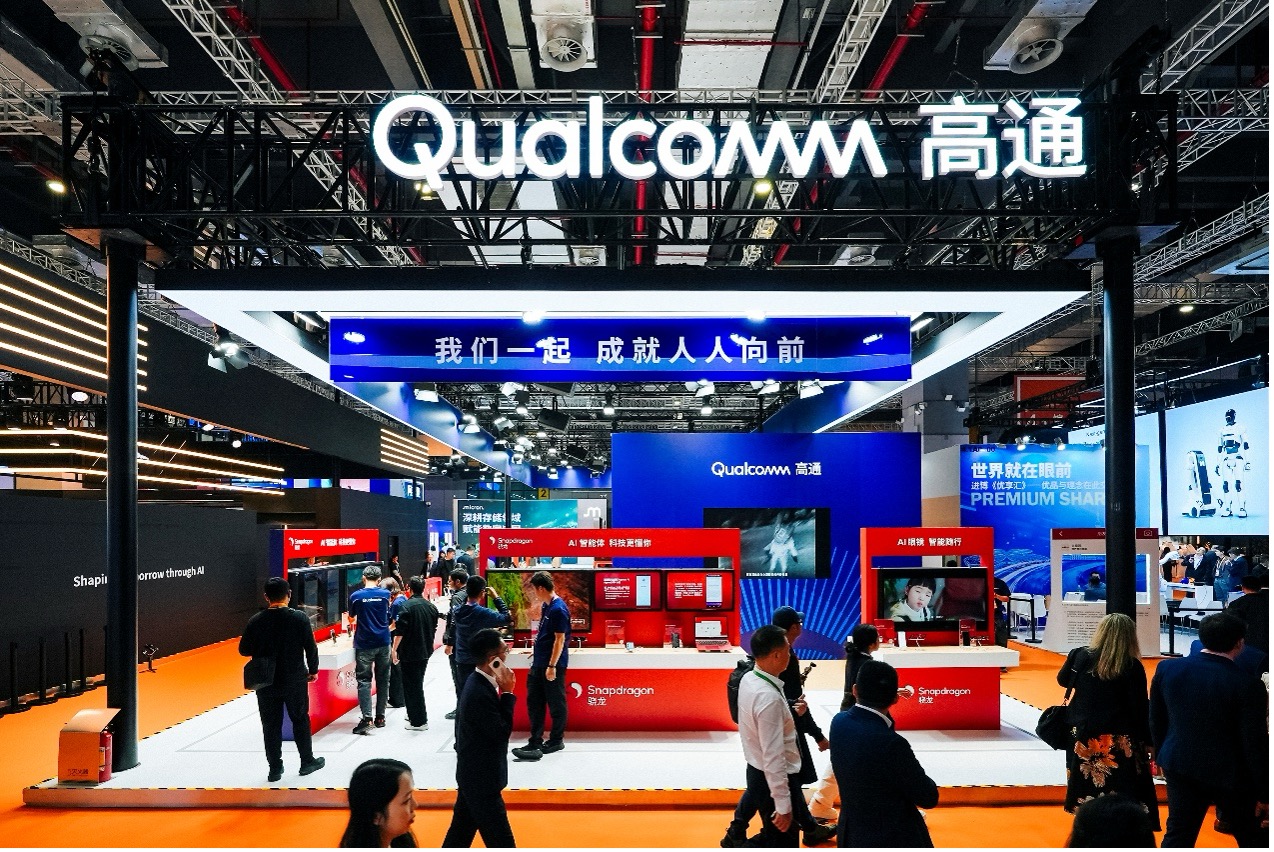
高通连续八年参展进博会,携手生态伙伴共建智能未来
Jing Ji Wang· 2025-11-06 09:06
Core Insights - Qualcomm has participated in the China International Import Expo for eight consecutive years, showcasing its continuous innovation in technology and collaboration with Chinese industry partners [3][9] - The theme of Qualcomm's exhibition this year is "Together, We Achieve Progress for Everyone," highlighting its commitment to enhancing China's innovation ecosystem through technological advancements and partnerships [1][3] Group 1: Product Innovations - At the expo, Qualcomm displayed 12 flagship smartphones from Chinese manufacturers powered by the fifth-generation Snapdragon 8 Gen 2 mobile platform, marking the first large-scale offline exhibition of these products [3][5] - The rapid introduction of new products reflects Qualcomm's deep collaboration with leading Chinese smartphone brands such as Xiaomi, Honor, and OnePlus, showcasing breakthroughs in AI, imaging, gaming, and connectivity [3][5] Group 2: Expansion into New Markets - Qualcomm's collaboration with Chinese smart industries extends beyond smartphones to include AI PCs and tablets, with nearly 150 designs powered by the Snapdragon X series platform [5] - In the automotive sector, Qualcomm partnered with Chery to develop the Zongheng G700 model, integrating smart technologies and supporting over 210 models from Chinese automotive brands since 2023 [5] Group 3: AI and IoT Applications - Qualcomm introduced its new brand "Qualcomm Leap," focusing on industrial IoT and cellular infrastructure solutions, complementing its well-known Snapdragon brand [7] - The expo featured various applications of Qualcomm Leap, including humanoid robots and retail terminals, demonstrating the company's commitment to digital transformation in collaboration with over 90 Chinese partners [7] Group 4: Vision for the Future - Qualcomm emphasizes the importance of open collaboration and continuous innovation as core drivers for future development, aiming to unlock new opportunities for high-quality industrial growth [9] - The company is dedicated to promoting the deep integration of technology and industry, from edge intelligence to the future of 6G, and from personal AI to industrial intelligence [9]

从扫街榜到Robotaxi,空间智能彻底打开了高德的想象空间
机器之心· 2025-11-06 05:28
Core Viewpoint - Gaode is transitioning from traditional map navigation to a broader application of spatial intelligence, aiming to integrate its capabilities into various scenarios, with a focus on the automotive sector and Robotaxi services [3][4][5]. Group 1: Gaode's Strategic Shift - Gaode has announced a partnership with Xiaopeng Motors to provide Robotaxi services globally, marking a significant step in integrating spatial intelligence with transportation services [5][7]. - The collaboration represents a key move for Gaode to transform the concept of spatial intelligence into a practical reality, enhancing its service offerings [7][12]. Group 2: Spatial Intelligence Capabilities - Gaode's spatial intelligence emphasizes critical capabilities such as spatial positioning, time prediction, and physical interaction, which are essential for understanding and navigating the real world [9][10]. - The system creates a closed loop of "prediction - action - verification," allowing real-time data feedback to refine its understanding of spatial contexts, a feature that language models struggle to achieve [12][23]. Group 3: Impact on Robotaxi Industry - The introduction of spatial intelligence into the Robotaxi sector offers new possibilities, particularly in enhancing vehicle perception and response to complex traffic situations [14][15]. - Gaode's "super-distance" capability allows for early detection of traffic incidents, enabling proactive alerts to vehicles before they reach congested areas, thus improving safety and efficiency [15][17]. Group 4: Broader Applications of Spatial Intelligence - Beyond Robotaxi, Gaode's spatial intelligence is being integrated into various applications, such as personalized travel planning and real-time navigation assistance, demonstrating its versatility [22][21]. - The technology is also being applied in B2B contexts, such as smart glasses and low-altitude economic platforms, indicating its potential to redefine interactions with the physical world across multiple industries [22][21].

“新技术正在改变生活”
Ren Min Ri Bao· 2025-11-05 22:11
Core Insights - Qualcomm showcased a variety of new terminals at the China International Import Expo, featuring 12 flagship smartphones equipped with the fifth-generation Snapdragon 8 Gen 2 chip, marking their first large-scale offline exhibition in China [1] - The exhibition highlighted innovative technologies across different platforms, including advanced automotive interfaces and AI-powered devices, demonstrating the integration of technology into daily life [1] - The immersive experience zone attracted significant attention, featuring augmented reality projects that provided interactive experiences, showcasing the potential of AR and XR technologies [1] - The display also included a vision for 6G technology, emphasizing Qualcomm's commitment to advancing connectivity and collaboration with operators and ecosystem partners [1] Group 1 - Qualcomm's booth featured 12 flagship smartphones with Snapdragon 8 Gen 2 chips, marking their debut at a major offline event in China [1] - The exhibition included various innovative technologies such as multi-screen operations in vehicles and AI glasses for payment and communication [1] - Immersive experiences were provided through AR projects, allowing attendees to engage with virtual environments [1] Group 2 - The 6G technology vision was presented, highlighting Qualcomm's efforts to transform connectivity and work with partners in the ecosystem [1] - The overall showcase illustrated a comprehensive smart technology landscape, from mobile devices to automotive applications and AI solutions [1]