吉利汽车

Search documents
全球十大车企揭晓,中企稳中有升
Zhong Guo Qi Che Bao Wang· 2026-02-26 09:23
Group 1: Global Automotive Sales Overview - Toyota remains the world's largest automaker with global sales of approximately 11.32 million units in 2025, a 4.6% increase year-on-year, marking its sixth consecutive year at the top [3][4] - Volkswagen Group's global sales reached about 8.98 million units in 2025, a slight decline of 0.5%, primarily due to a 4.9% drop in Q4 deliveries [5] - Hyundai Motor Group sold 7.27 million vehicles globally in 2025, a marginal increase from 2024, maintaining its position as the third-largest automaker [7] - BYD and Geely entered the top ten global automakers in 2024, with BYD ranking sixth and Geely eighth in 2025, driven by strong performance in the electric vehicle sector [2][21] Group 2: Performance of Major Automakers - Toyota's sales in North America reached 2.93 million units, a 7.3% increase, with hybrid vehicles accounting for nearly half of its sales [3][4] - Volkswagen's sales in China fell to 2.69 million units, an 8% decline, marking the second consecutive year of sales drop in this market [5] - Hyundai's U.S. sales increased by 8% to 901,700 units, supported by strong hybrid vehicle performance [7] - BYD's global sales reached 4.60 million units, a 7.7% increase, with pure electric vehicle sales surpassing Tesla for the first time [14][15] Group 3: Electric Vehicle Trends - Volkswagen's electric vehicle deliveries increased by 32% to 983,100 units in 2025, accounting for 10.9% of its total sales [5] - BYD's pure electric vehicle sales reached 2.26 million units, leading the global market and ending Tesla's long-standing dominance [15] - Geely's electric vehicle sales grew by 58% to 2.29 million units, making up 56% of its total sales [21] Group 4: Challenges and Strategic Adjustments - General Motors reported a 1.3% decline in total revenue to $185 billion in 2025, with a significant drop in net profit due to one-time restructuring costs [9] - Ford's electric vehicle division continued to incur losses, with a projected loss of $4.8 billion in 2025, leading to a strategic shift back towards fuel vehicles [18] - Stellantis announced a comprehensive restructuring of its electric vehicle strategy, with an estimated €22 billion in related expenses [13] Group 5: Regional Market Insights - In 2025, Honda's global sales fell by 7.5% to 3.52 million units, with significant declines in the Chinese market [23] - Suzuki's global sales reached 3.30 million units, a 1.4% increase, with India being its largest market [25][26] - Ford's U.S. sales increased by 6% to 2.20 million units, driven by strong demand for its F-series trucks [19]





吉利汽车(00175)2月26日斥资6311.8万港元回购384.1万股
Zhi Tong Cai Jing· 2026-02-26 09:15
智通财经APP讯,吉利汽车(00175)发布公告,于2026年2月26日斥资6311.8万港元回购384.1万股。 该信 息由智通财经网提供 ...
吉利汽车(00175.HK)2月26日耗资6311.8万港元回购384.1万股
Ge Long Hui· 2026-02-26 08:55
格隆汇2月26日丨吉利汽车(00175.HK)发布公告,2026年2月26日耗资6311.8万港元回购384.1万股,回购 价格每股16.31-16.66港元。 ...
吉利汽车(00175) - 翌日披露报表
2026-02-26 08:39
FF305 翌日披露報表 (股份發行人 ── 已發行股份或庫存股份變動、股份購回及/或在場内出售庫存股份) 公司名稱: 吉利汽車控股有限公司 呈交日期: 2026年2月26日 如上市發行人的已發行股份或庫存股份出現變動而須根據《香港聯合交易所有限公司(「香港聯交所」)證券上市規則》(「《主板上市規則》」)第13.25A條 / 《香港聯合交易所有限公司GEM證券 上市規則》(「《GEM上市規則》」)第17.27A條作出披露,必須填妥第一章節 。 | 第一章節 | | | | | | | | | --- | --- | --- | --- | --- | --- | --- | --- | | 1. 股份分類 | 普通股 | 股份類別 | 不適用 | | 於香港聯交所上市 | 是 | | | 證券代號 (如上市) | 00175 | 說明 | | | | | | | 多櫃檯證券代號 | 80175 | RMB 說明 | | | | | | | A. 已發行股份或庫存股份變動 | | | | | | | | | | | | 已發行股份(不包括庫存股份)變動 | | 庫存股份變動 | | | | 事件 | | 已發行 ...
【深度分析】2026年1月份全国新能源市场深度分析报告
乘联分会· 2026-02-26 08:36
点 击 蓝 字 关 注 我 们 本文为中国汽车流通协会乘用车市场信息联席分会发布的权威深度市场分析报告,涵盖了: 一、整体总市场 二、 细分总市场 三、 出口市场 四、 厂商表现 五、 车型大类细分市场 六、 品牌定位细分市场 七、 国别定位细分市场 八、 价格定位细分市场 Contents 说明: 总市场 (轿车、MPV、SUV) : ICE+BEV+PHEV 新能源市场(轿车、MPV、SUV): BEV+PHEV 出口:整车+CKD NEV: 新能源 BEV: 纯电动 PHEV: 插电混动 ICE: 燃油车 NEV= BEV (含FCV) +PHEV (含EREV) 产销数据来源 ,能力的领 中国汽车流通协会乘用车市场信息联席分会月报表(零售表,狭义汇总) -终稿 未计入份额低于2%的细分市场 登录品牌 奔驰、宝马、奥迪 凯迪拉克、捷豹、路虎、沃尔沃、英菲尼迪、讴歌 特斯拉、仰望、尊界 价格: 以起步市场指导价划分 10-20 分为10万以下、10-20万、20-30万、30-40万、40万以上五档 3、出口市场 4、厂商表现 型 本点 | | | | 整体总市场产销情况 | | | | --- | -- ...



八大车企内部全员信曝光
Di Yi Cai Jing· 2026-02-26 05:52
Core Insights - The Chinese automotive market is facing a significant divide between ambitious growth targets set by leading companies and conservative forecasts from institutions, indicating a challenging environment for the industry in 2026 [2][3] Group 1: Growth Targets and Market Dynamics - Major automakers in China are targeting a total sales growth of at least 12% for 2026, despite a projected overall market growth of only 1% [3] - Companies like Leap Motor aim for a sales target of 1 million units in 2026, representing a 67.5% increase from 2025, while NIO targets a stable growth rate of 40% to 50% annually [4][5] - Changan Automobile has set a sales goal of 3.3 million units for 2026, reflecting a 13.3% increase, but faced a significant decline of over 50% in January sales [5] Group 2: International Expansion Strategies - The urgency for overseas market expansion is increasing, with Changan emphasizing the need for resource investment in international markets [8] - Geely is transitioning from "international trade" to "product-oriented" strategies, focusing on local market adaptation and establishing a global brand presence [8][9] - Leap Motor aims to shift from "selling cars" to "building cars" overseas, integrating deeply with local industries [9] Group 3: AI Integration and Technological Advancements - AI is becoming a core focus for many automakers, with predictions that 2026 will be a pivotal year for companies aiming to lead in AI technology [10][11] - Xiaopeng Motors plans to be the first company to mass-produce robots, flying cars, and Robotaxis in 2026, showcasing its commitment to AI innovation [12] - Changan has adopted the motto "No AI, No Changan," indicating a fundamental shift in its operational strategy towards AI integration [13] Group 4: Competitive Landscape and Future Outlook - The automotive industry is entering a phase of intense competition, with a predicted market structure featuring a few leading companies, several mid-tier firms, and numerous smaller players [14] - The strategies of leading companies reflect a commitment to efficiency, product innovation, and international expansion as they navigate the challenges of the evolving market landscape [14]
多家车企公布2026年销量目标 传统车企稳增长 “新势力”整体较激进
Zhong Guo Zhi Liang Xin Wen Wang· 2026-02-26 05:17
Group 1 - In 2025, China's automobile production and sales are expected to exceed 34 million units, setting a historical record [1] - Different automotive companies are adopting varied growth strategies for 2026, with some targeting around 10% growth while others aim for nearly 70% [1] - China FAW has set a conservative sales target of 3.546 million units for 2026, representing a 7.39% increase from 2025 [1] - Changan, Geely, and Chery have set growth targets in the range of 13% to 14%, focusing on structural upgrades [1] Group 2 - BAIC Group, Dongfeng Motor, Great Wall Motors, and new energy vehicle companies have set sales growth targets around 30% [2] - BAIC Group's sales target is 2.2 million units, a 25.6% increase from 2025 [2] - Dongfeng Motor aims for 3.25 million units, with over 30% growth, including 1.7 million units in new energy vehicles [2] - Great Wall Motors targets 1.8 million units, a 36% increase, supported by its new vehicle platform [2] Group 3 - New energy vehicle companies have set aggressive sales targets, with Li Auto aiming for a 40% increase to 550,000 units [3] - NIO plans for annual sales growth of 40% to 50%, targeting 456,000 to 489,000 units in 2026 [3] - XPeng Motors aims for a growth of approximately 28% to 39.7%, setting a target of 550,000 to 600,000 units [3] - Leap Motor has set a target of 1.05 million units, while Xiaomi Auto aims for 550,000 units with a 34% growth rate [3] Group 4 - GAC Group and BYD have not disclosed specific sales targets, but GAC reported a significant increase in sales in Q4 2025 [4] - BYD achieved global leadership in new energy vehicle sales, surpassing Tesla in pure electric vehicle sales [4] - The differences in growth rates reflect the varying strategies of companies as the automotive market undergoes structural transformation [4] - Some companies are shifting focus towards new energy vehicles, with Dongfeng setting a target of 1.7 million units in this segment [4]
零跑汽车(09863.HK)深度研究报告:从零跑到领跑
Ge Long Hui· 2026-02-26 05:06
Core Viewpoint - Leapmotor has emerged as a leading player in the domestic new energy vehicle market, achieving significant sales growth and recognition from both peers and investors [1] Domestic Market - Leapmotor's sales projections for 2023-2025 are 140,000, 290,000, and 600,000 vehicles, respectively, with a goal to become the sales champion among new forces by 2025 [1] - The company's competitive advantage is driven by extreme cost control, which is supported by three main strategies: 1. Collaboration with Dahua to enhance electronic and intelligent capabilities [1] 2. Efficient vertical integration of the supply chain, allowing for in-house development of key components [1] 3. A platform strategy that leverages scale effects to reduce R&D and procurement costs [1] - Leapmotor plans to launch the A+D series models in 2026 to expand its product matrix, with expected sales of 600,000, 1,010,000, and 1,280,000 vehicles from 2025 to 2027, representing year-on-year growth of 105%, 69%, and 28% [1] International Expansion - Leapmotor has partnered with Stellantis, which invested €1.5 billion for approximately 20% equity, to establish a joint venture "Leapmotor International" for overseas operations and sales [2] - Stellantis, as the fourth largest global automotive manufacturer, will aid Leapmotor in rapidly expanding its overseas market presence [2] - The company aims to export 100,000 to 150,000 vehicles by 2026, positioning itself as a leading new force in international markets [2] Profitability Outlook - Leapmotor is expected to reach a profitability turning point this year, with high cost-performance strategies driving significant sales success [2] - Compared to traditional automakers like BYD and Geely, Leapmotor has established three major cost advantages, particularly in product definition and supply chain systems [2] - Projections for single vehicle gross profit are estimated at ¥16,000, ¥17,000, and ¥19,000 for 2026-2027, with total net profits expected to reach ¥630 million, ¥5.17 billion, and ¥8.7 billion [2] Investment Recommendations - Leapmotor's domestic sales advantages are recognized, with expectations for continued growth this year [3] - The collaboration with Stellantis is anticipated to boost both export and credit income [3] - Revenue projections for 2025-2027 are ¥65.3 billion, ¥114.8 billion, and ¥151.7 billion, with net profits expected to grow significantly [3] - A relative valuation method suggests a target price of HKD 61.44 for 2026, indicating a potential upside of 37% [3]

平安证券(香港)港股晨报-20260226
Ping An Securities Hongkong· 2026-02-26 02:51
Market Overview - The Hong Kong stock market experienced fluctuations, with the Hang Seng Index closing at 23,831 points, down 145 points or 0.61% [1] - The market turnover decreased to 82.799 billion HKD, with net inflows of 484 million HKD recorded in the Hong Kong Stock Connect [1] - The US stock market saw all three major indices rise, with the Dow Jones up 0.63%, S&P 500 up 0.81%, and Nasdaq up 1.26%, driven by Nvidia's strong earnings report [2] Sector Performance - In Hong Kong, local real estate, software, and 5G concept sectors faced significant declines, while gold stocks performed well [1] - The technology sector showed mixed results, with the Hang Seng Technology Index slightly down by 0.19% [1] - In the US, major tech stocks like Microsoft and Facebook saw gains, while the Nasdaq China Golden Dragon Index fell by 0.47% [2] Investment Opportunities - The report emphasizes the importance of "self-reliance in technology" and AI applications as key themes for future growth in the Hong Kong stock market, suggesting that leading companies in these sectors may see long-term development opportunities [3] - The recent policies from the Ministry of Industry and Information Technology regarding national computing power and communication infrastructure are expected to boost domestic computing and communication sectors [3] - Investors are advised to focus on sectors supported by policies aimed at expanding domestic consumption, such as sports apparel and non-essential services, as well as undervalued central state-owned enterprises with high dividends [3] Key Company Highlights - Haidilao (6862.HK) led the Hang Seng Index component stocks with a gain of 6.2%, while HSBC Holdings (0005.HK) and Longfor Group (0960.HK) rose by 5.5% and 4.6%, respectively [1] - The report notes that the recent adjustments in Shanghai's real estate policies are expected to release pent-up demand, benefiting core area property companies and their supply chains, such as Longfor Group and China Resources Land [10] - The Hong Kong government announced plans to issue licenses for stablecoin issuers and establish a committee focused on AI and industry development, which could benefit sectors related to digital assets and fintech [11]
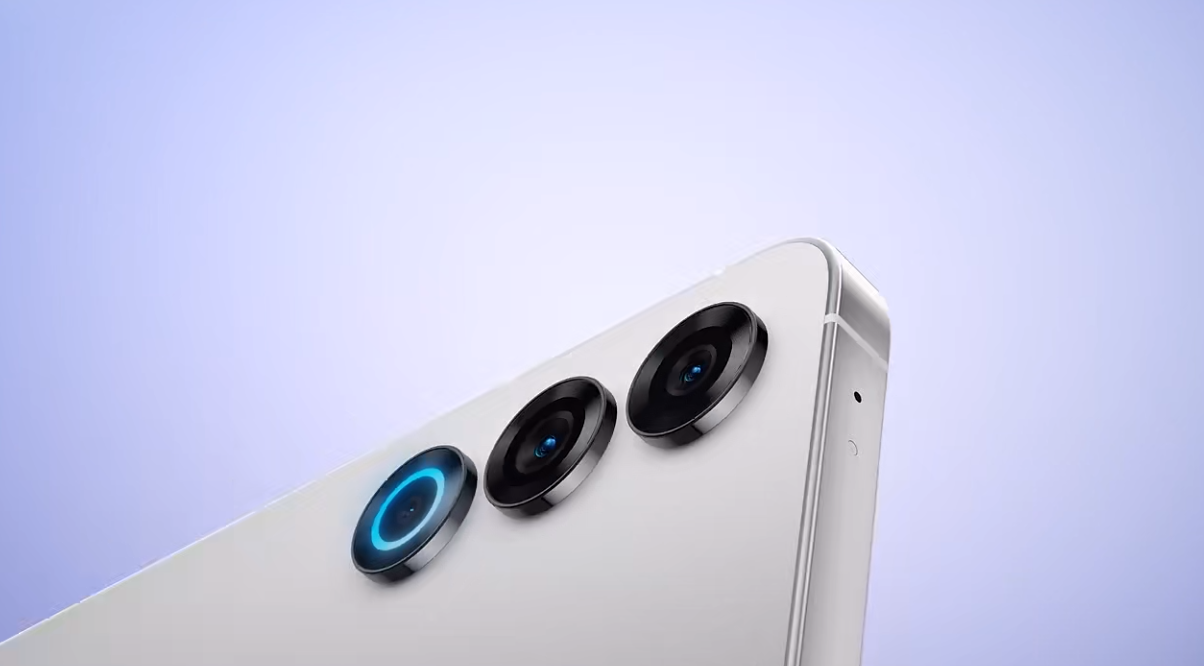
传魅族手机业务实质性停摆 将于3月退市
Ju Chao Zi Xun· 2026-02-26 02:48
Core Viewpoint - Meizu's mobile business is effectively ceasing operations and is set to officially delist by March 2026, marking the end of a once-prominent consumer electronics brand that was founded in 2003 [1] Group 1: Business Operations and Financial Status - The significant rise in memory prices has severely impacted Meizu's business plans, leading to the cancellation of the Meizu 22 Air launch, although the Meizu 23 is still expected to be released in 2026 [3] - Meizu has faced substantial financial difficulties, with many suppliers unable to receive payments since April of the previous year, resulting in a large amount of bad debt [4] - The company has seen a decline in employee retention, with many staff members leaving or transferring to Geely's Zeekr automotive division [4] Group 2: Corporate Changes and Leadership - After Geely's acquisition in July 2022, Meizu was expected to leverage its Flyme OS for integration with automotive technology, but the anticipated synergies did not materialize [4] - The departure of key executives, including former CEO Su Jing, marked a turning point in 2025, leading to increased layoffs and a lack of strategic direction [5] Group 3: Historical Context and Market Position - Meizu began as an MP3 player manufacturer and gained recognition with its first smartphone, the M8, in 2007, achieving significant sales growth in 2015 [6] - Despite initial success, Meizu struggled to maintain its market position against competitors like Apple and the "Huawei, Xiaomi, OPPO, Vivo" (HMOV) group, ultimately becoming a marginal player in the smartphone market [6] - The acquisition by Geely was seen as a potential turning point, but it ultimately represented a final flicker of hope before the company's decline [6]