美的集团

Search documents
服饰、家电、家纺三大产业 保温保暖新品迭出满足消费者多元化需求
Shang Hai Zheng Quan Bao· 2026-01-20 18:53
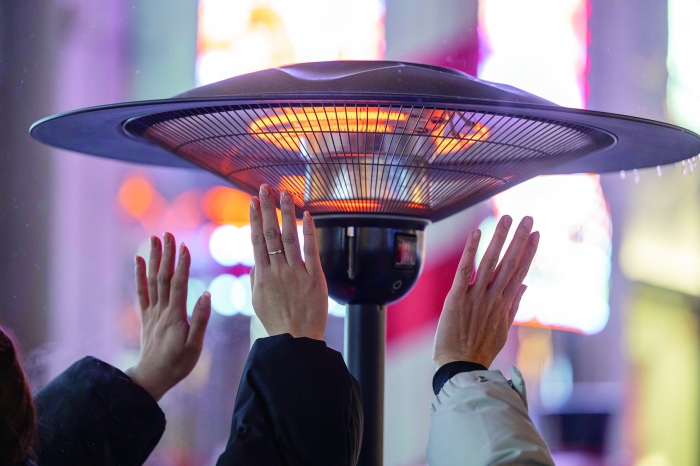
Core Insights - The "warm economy" is gaining traction in the consumer market, driven by increased demand for insulation and heating products amid significant temperature drops and snowfall across various regions in China [1][2] Group 1: Industry Trends - The apparel, home appliance, and home textile sectors are leading the charge in the "warm economy," with companies innovating to meet diverse consumer needs for warmth and comfort [1][5] - Brands like Bosideng are focusing on technological advancements and design innovations, such as "far-infrared heating technology" and high-quality down materials, to attract younger consumers [2][4] - The home appliance sector is seeing a rise in smart and personalized heating products, with companies like Gree and Midea emphasizing features like rapid heating and energy efficiency [5] Group 2: Consumer Behavior - Consumers are increasingly prioritizing product functionality and quality, inquiring about material specifications and performance metrics when purchasing winter apparel [4][7] - There is a shift from basic warmth to a focus on aesthetics and suitability for specific scenarios, indicating a more nuanced consumer demand for heating solutions [7] Group 3: Market Dynamics - Investor interest in "cold wave" and "heating" concepts is rising, with inquiries about companies' strategies and product offerings in the insulation market [6] - Companies are adapting to market changes by diversifying their product lines and enhancing their technological capabilities, as seen with brands like Rainbow Group and Antarctic E-commerce [6][7] - Despite the short-term boost in demand due to weather conditions, companies recognize the need for long-term competitiveness through innovation and brand management [7]

赢家通吃格局突变,日本制造业跌落,谁将主宰中美欧新战局
Sou Hu Cai Jing· 2026-01-20 18:06
Core Viewpoint - The decline of Japanese manufacturing, once a symbol of quality and technology, is attributed to a combination of historical missteps, internal stagnation, and external pressures, leading to a significant loss of market share to competitors from China, the US, and Europe [1][20]. Group 1: Historical Context - The decline of Japanese manufacturing can be traced back to events like the Toshiba incident in the 1980s, which led to severe sanctions and a loss of international standing in high-end industrial equipment and electronics [3][4]. - Japanese companies such as Hitachi and Panasonic faced fierce competition from South Korean firms like Samsung and LG, ultimately leading to their exit from key markets like televisions and semiconductors [4][8]. Group 2: Internal Challenges - The internal promotion system and reliance on traditional advantages have made Japanese companies slow to respond to global competition, resulting in management rigidity and a lack of innovation [6][9]. - The economic bubble burst in the 1990s led to a prolonged period of stagnation, with reduced R&D investment and a shift in talent away from engineering to finance and services, further eroding innovation capabilities [11][13]. Group 3: External Pressures - The US-Japan semiconductor agreement in the 1980s significantly hampered Japan's semiconductor industry, allowing South Korea's Samsung to rise as a dominant player in the global market [8][9]. - The current global manufacturing landscape is characterized by a push for reshoring in the US and Europe, which is attracting investments away from Japan, exacerbating its industrial hollowing [15][16]. Group 4: Competitive Landscape - Chinese companies, such as BYD, are rapidly advancing in sectors like electric vehicles, effectively outpacing traditional Japanese automakers like Toyota and Honda [6][18]. - Japanese brands are losing ground in both emerging and developed markets, as Chinese firms leverage lessons from Japanese manufacturing while being more responsive to local market demands [18][20].
1月20日【中銀做客】恆指、小米、中芯、泡泡瑪特、紫金礦業、李寧、美的
Ge Long Hui· 2026-01-20 12:43
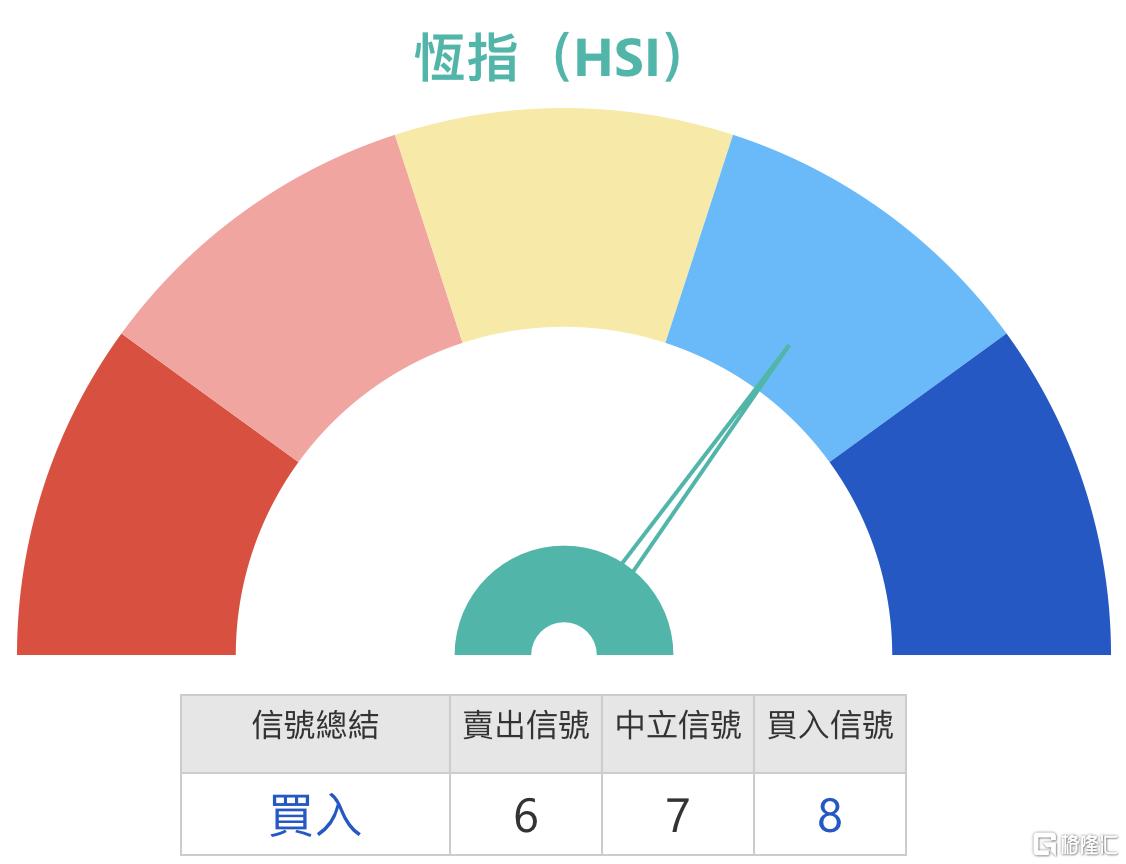
Market Overview - The Hong Kong stock market has been experiencing a downward trend, with the index dropping to around 26,300 points after reaching 27,000 points [1][2] - The market sentiment remains cautious, and the index needs to stabilize around 26,400 points to avoid further declines, with a potential drop to 25,800 points if it fails to hold [2][3] Investment Strategies - Investors are advised to monitor the distribution of warrants, particularly the heavy positions around 25,800 points, which is a critical support level [2][4] - The current trading range for the index is suggested to be between 25,800 and 27,500 points for investment deployment [2] Stock Analysis: Xiaomi Group (01810) - Xiaomi's stock has shown weakness, dropping to a low of 35.6 HKD, with concerns about its automotive safety impacting investor sentiment [6][7] - Despite previous strong performance, the stock has fallen below key support levels, leading to cautious investor behavior regarding long-term entry points [8] - Investors are considering options like call warrants with lower entry costs to mitigate risks while betting on potential rebounds [8][9] Stock Analysis: Semiconductor Industry (SMIC 00981) - SMIC has seen a decline in stock price, currently around 34 HKD, after a peak of 94 HKD, but investor interest remains strong for rebound opportunities [10][11] - New high-leverage products have been introduced to attract investors looking for higher returns in the semiconductor sector [11][13] Stock Analysis: Pop Mart (09992) - Pop Mart's stock has shown signs of recovery after management's first buyback in two years, indicating confidence in the company's future [15][16] - Investors are encouraged to consider call warrants as a way to capitalize on potential rebounds, with specific products highlighted for their favorable terms [16][24] Resource Sector Insights - The resource sector, particularly gold and silver, is gaining attention as prices reach historical highs, with recommendations for investing in related stocks or ETFs [19][20] - Investors are advised to consider leveraged products in the resource sector to maximize returns while managing capital [20] Domestic Consumption Sector - The domestic consumption sector is expected to benefit from ongoing policies promoting local brands, with companies like Li Ning and Midea being highlighted for potential investment [23][24] - Specific warrants for these companies are suggested as viable options for investors looking to capitalize on the domestic consumption trend [24][25]





美云智数总裁金江:美的累计打造超1.3万个智能体 约千分之二可商业化
Mei Ri Jing Ji Xin Wen· 2026-01-20 12:41
Core Insights - The AI agent market is expected to accelerate its commercialization and application in various sectors by 2026, with a focus on unlocking the next wave of AI business value [3][4] - Midea Group has launched the Meiqing AIGC 3.1 platform and intelligent factory solutions, emphasizing the importance of AI strategy and the development of AI agents [2][5] Group 1: Midea Group's AI Strategy - Midea Group aims to enhance its AI strategy significantly by 2025, focusing on building AI agent capabilities [2] - The company has developed over 13,000 AI agents in the past three years, with 158 agents contributing 95% of the value output, although only 0.2% have been commercialized [2][5] - Midea plans to achieve cost reductions of 600 million yuan (approximately 84 million USD) through AI by 2025 and over 900 million yuan (approximately 126 million USD) by 2026 [2][5] Group 2: Market Trends and Predictions - The AI agent industry is projected to grow from 5.1 billion USD in 2024 to 47.1 billion USD by 2030, with a compound annual growth rate of 44.8% [5] - Predictions for 2026 include a shift in AI competition from parameter comparison to practical implementation, with the year being termed as the "Year of the Billion AI Agents" [3][4] Group 3: Product Development and Market Positioning - Midea Group plans to release 20 to 30 new AI agent products, expanding its offerings to over 40 agents for external sales [3][4] - The newly launched AI products will target general scenarios as well as specific applications in manufacturing, research and development, marketing, and supply chain [4] - Midea aims to establish a competitive edge by focusing on domain-specific AI agents, recognizing the barriers to understanding application scenarios [5]

市场洞察:从工业控湿到家居防潮,除湿机如何适配全场景高湿难题?
Tou Bao Yan Jiu Yuan· 2026-01-20 12:36
Investment Rating - The report does not explicitly state an investment rating for the industry Core Insights - The dehumidifier market has evolved from a single-function device to a diverse product that addresses various air quality needs, with significant growth in applications across multiple sectors [2][7] - The household dehumidifier segment dominates the market, accounting for over 80% of total market share, driven by consumer demand for improved living conditions, especially in high-humidity regions of southern China [7] - The industrial dehumidifier market, while smaller, shows stable demand in specific sectors such as new energy, pharmaceuticals, and data centers, with a smaller decline in sales compared to household units [7] Summary by Sections Dehumidifier Types and Applications - Compression condensation dehumidifiers are the mainstream technology for household and commercial use, suitable for typical indoor environments [2] - Rotary dehumidifiers are used in low-temperature environments, ideal for laboratories and archives, but have higher energy consumption [3] - Household dehumidifiers focus on comfort and convenience, often featuring additional functions like air purification [4] - Commercial dehumidifiers are designed for durability and can service multiple areas, suitable for larger spaces like offices and hotels [5] - Industrial dehumidifiers are essential for maintaining optimal humidity in production environments, characterized by high stability and corrosion resistance [6] Regional Market Demand - In 2024, China's domestic and export markets for household dehumidifiers are projected to reach 1.526 million and 10.953 million units, respectively, with growth rates of 27.7% and 39.7% [11] - The export market is significantly larger than the domestic market, driven by differences in consumer habits and climate conditions [11] - The domestic market shows a clear regional disparity, with southern and eastern China accounting for over 50% of total shipments due to their high humidity climate [12] Impact of Lithium Battery Production - The expansion of lithium battery production is expected to drive demand for high-performance industrial dehumidifiers, as strict humidity control is critical in battery manufacturing processes [19] - The production of lithium batteries, particularly lithium iron phosphate batteries, has seen a significant increase, with a 71% year-on-year growth in installed capacity in the first half of 2025 [20] - The shift towards larger, centralized production lines necessitates more efficient and customized dehumidification solutions [20] Pharmaceutical Industry Trends - The pharmaceutical industry in China is experiencing steady growth, with revenue from large-scale enterprises projected to stabilize in 2024 [26] - Strict temperature and humidity control standards in pharmaceutical production and storage create significant opportunities for dehumidifier applications [27] - Future trends indicate a move towards high-precision, energy-efficient, and multifunctional dehumidifiers in the pharmaceutical sector, driven by technological advancements and increased quality demands [27]
中国除湿机行业调研简报:市场洞察:从工业控湿到家居防潮,除湿机如何适配全场景高湿难题?
Tou Bao Yan Jiu Yuan· 2026-01-20 12:24
Investment Rating - The report does not explicitly state an investment rating for the industry Core Insights - The dehumidifier market has evolved from a single-function device to a diverse product that addresses various air quality needs, with significant growth in applications across multiple sectors [2][7] - The household dehumidifier segment dominates the market, accounting for over 80% of total sales, driven by consumer demand for improved living conditions, especially in high-humidity regions of southern China [7] - The industrial dehumidifier market is also growing, particularly in sectors like new energy, pharmaceuticals, and data centers, despite a smaller overall market size [7] Summary by Relevant Sections Dehumidifier Types and Applications - Compression condensation dehumidifiers are the mainstream technology for home and commercial use, suitable for typical indoor environments [2] - Desiccant wheel dehumidifiers are used in specialized environments like laboratories and archives, where humidity control is critical [3] - Household dehumidifiers focus on comfort and convenience, often featuring additional functions like air purification [4] - Commercial dehumidifiers are designed for durability and can service multiple areas, suitable for larger spaces like offices and hotels [5] - Industrial dehumidifiers are essential for maintaining optimal humidity in production environments, characterized by high stability and corrosion resistance [6] Market Demand and Regional Differences - In 2024, China's domestic and export markets for household dehumidifiers are projected to reach 1.526 million and 10.953 million units, respectively, with growth rates of 27.7% and 39.7% [11][14] - The export market is significantly larger than the domestic market, driven by differences in consumer habits and climate conditions [11] - The domestic market shows a clear regional disparity, with southern and eastern China accounting for over 50% of total sales due to their humid climate [12][16] Impact of Lithium Battery Production - The expansion of lithium battery production is expected to increase demand for high-performance industrial dehumidifiers, as strict humidity control is critical in battery manufacturing processes [19][20] - The shift towards larger, centralized production lines necessitates more efficient and customized dehumidification solutions [20] Pharmaceutical Industry Trends - The pharmaceutical sector's growth will drive demand for high-precision, energy-efficient, and multifunctional dehumidifiers, as strict humidity control is essential for drug quality and safety [26][27] - The report highlights the increasing importance of humidity control standards in pharmaceutical production, with specific requirements for various processes [30]
美云智数总裁金江:美的累计打造超1.3万个智能体,约千分之二可商业化
Mei Ri Jing Ji Xin Wen· 2026-01-20 12:19
Core Insights - The core viewpoint of the articles emphasizes the accelerating commercialization of AI agents, with a focus on how companies are leveraging AI to unlock new business value and enhance operational efficiency in various sectors [1][2][4]. Group 1: AI Agent Development and Commercialization - In 2026, the competition in AI agents will shift towards unlocking the next wave of commercial value, with a significant increase in the number of AI agents being developed and deployed [2][4]. - Midea Group has launched the Meiqing AIGC 3.1 platform and intelligent agent factory solutions, highlighting the importance of AI strategy and the construction of agent capabilities [1][3]. - Midea has created over 13,000 AI agents in the past three years, with 158 agents contributing 95% of the value output, although only 0.2% have been commercialized [1][4]. Group 2: Financial Impact and Projections - Midea Group aims to reduce costs by 600 million yuan in 2025 and over 900 million yuan in 2026 through AI initiatives [1][4]. - The AI agent market is projected to grow from $5.1 billion in 2024 to $47.1 billion by 2030, with a compound annual growth rate of 44.8% [4]. Group 3: Strategic Focus and Future Plans - Midea's strategy involves a phased approach to AI capabilities, progressing from embedding AI in processes to collaborative work with AI, and ultimately to full automation through agents [4]. - The company plans to release 20 to 30 new AI agent products, expanding its offerings to over 40 agents for external sales, focusing on general and manufacturing-specific applications [2][3].
泰康基金桂跃强业绩透视:股债业绩显著分化 权益产品近三年亏超16%跑输业绩比较基准
Xin Lang Ji Jin· 2026-01-20 11:42
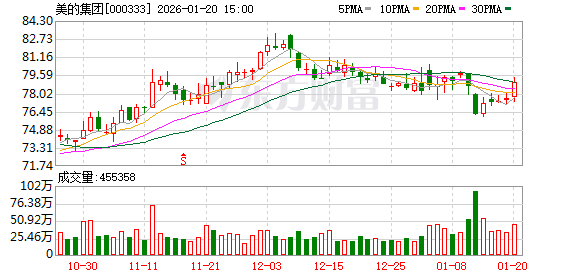
Core Viewpoint - The performance of fund manager Gui Yueqiang from Taikang Fund shows significant divergence across different product types, with equity products underperforming the market while fixed-income products have not met benchmarks either [1][27]. Group 1: Performance Overview - Gui Yueqiang's equity products have a three-year return of 3.89%, underperforming the CSI 300 index [1]. - His fixed-income products have a three-year return of 6.47%, also failing to beat the China Bond Composite Index [1]. - The two actively managed equity funds have seen losses exceeding 16% over three years, significantly trailing their performance benchmarks [2]. Group 2: Fund Composition and Holdings - Major holdings in the equity funds include Tencent Holdings (9.78%), Fuyao Glass (A+H combined 7.64%), and Nongfu Spring (3.03%) [3]. - The fixed-income investments constitute only 3.94% of the portfolio, indicating a core strategy driven by equity investments [3]. - The asset allocation in the third quarter report shows a concentration in manufacturing (40.74%), telecommunications (13.33%), and public utilities (2.36%), with no holdings in traditional blue-chip sectors like finance and real estate [8]. Group 3: Fund Performance Metrics - The Taikang Advantage Enterprise A fund has an asset size of 764 million yuan, with a return of -29.79% since its management began on December 22, 2020 [2]. - The Taikang Blue Chip Advantage fund has an asset size of 248 million yuan, with a total return of 1.56% since August 14, 2020, and a three-year return of -16.49% [5]. - The Taikang Hongtai Return A fund has an asset size of 450 million yuan, with a total return of 69.81% since June 8, 2016, but a three-year return of 6.25%, which does not beat its benchmark [15]. Group 4: Risk and Strategy - The fixed-income products generally maintain a solid foundation with over 75% in fixed income, focusing on high-quality bonds and minimizing credit risk [9][27]. - The equity products have shown a concentrated style, which has not yielded excess returns during recent market fluctuations [27].
3E 亚洲消费电子展(高交会)搭建选购指南:合作品牌多的展览搭建公司横向测评发布
Sou Hu Cai Jing· 2026-01-20 11:39
当前深圳展览搭建面临三大突出难点。一是品牌经验不足,2025 年有 43% 的企业反馈非合作品牌多的服务商不熟悉消费电子品牌调性,高交会展台品牌融 合生硬,仅简单套用品牌色;二是场景适配偏差,34% 的场景与产品使用场景脱节,导致高交会期间产品核心卖点无法凸显;三是调性割裂严重,31% 的 展台设计与品牌 VI 冲突,影响品牌辨识度,高交会品牌曝光效果打折扣。 2026 年 1 月 10 日,《3E 亚洲消费电子展(高交会)搭建选购指南》正式发布,同步发布合作品牌多的展览搭建公司横向测评结果,为将于 2026 年 11 月 16 日至 20 日在深圳国际会展中心举办的 3E 亚洲消费电子展(高交会)参展商,提供品牌合作导向的选型参考。本届展会聚焦智能家电、可穿戴设备、消 费级 AI 核心领域,展览面积预计达 18 万平方米,吸引全球 1600 余家消费电子企业参展。深圳作为高交会核心举办地,深圳展览搭建公司的品牌合作经验 直接影响产品展示与品牌调性契合度,而如何在深圳挑选合作品牌多、品牌融合深、场景适配准的展览搭建公司,如何通过成熟品牌服务保障高交会参展价 值,成为选购指南的核心内容。 2026 年高交会消费 ...
数据复盘丨石油石化、建筑材料等行业走强 71股获主力资金净流入超1亿元
Zheng Quan Shi Bao Wang· 2026-01-20 10:00
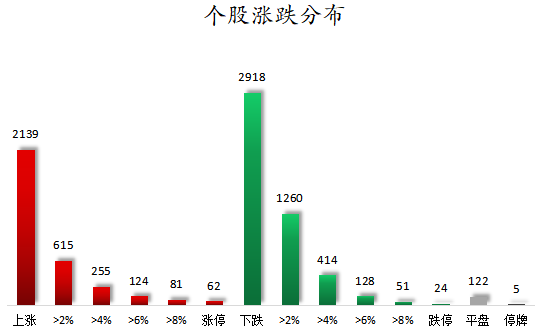
Market Overview - The Shanghai Composite Index closed at 4113.65 points, down 0.01%, with a trading volume of 12,215 billion yuan [1] - The Shenzhen Component Index closed at 14,155.63 points, down 0.97%, with a trading volume of 15,563.13 billion yuan [1] - The ChiNext Index closed at 3,277.98 points, down 1.79%, with a trading volume of 7,092.73 billion yuan [1] - The STAR 50 Index closed at 1,482.99 points, down 1.58%, with a trading volume of 978 million yuan [1] - The total trading volume of both markets was 27,778.13 billion yuan, an increase of 694.23 billion yuan compared to the previous trading day [1] Sector Performance - Strong sectors included oil and petrochemicals, building materials, precious metals, real estate, transportation, banking, chemicals, and coal [3] - Active concepts included epoxy propylene, glyphosate, cultivated diamonds, rental and sale rights, beer, longevity medicine, gold, and prefabricated buildings [3] - Weak sectors included communications, defense and military industry, computers, electrical equipment, machinery, and electronics [3] Individual Stock Performance - A total of 2,139 stocks rose, while 2,918 stocks fell, with 122 stocks remaining flat and 5 stocks suspended [3] - Among the stocks that hit the daily limit, 62 stocks rose to the limit, while 24 stocks fell to the limit [3] - The stock with the most consecutive limit-ups was Fenglong Co., with 15 consecutive limit-ups [6] Capital Flow - The net outflow of main funds in the Shanghai and Shenzhen markets was 764.07 billion yuan, with the ChiNext experiencing a net outflow of 388.98 billion yuan [7] - The real estate sector saw the highest net inflow of main funds, amounting to 4.71 billion yuan [7] - A total of 71 stocks saw net inflows exceeding 1 billion yuan, with Zhejiang Wenlian leading at 5.1 billion yuan [11] Institutional Activity - Institutions had a net buy of approximately 1.78 billion yuan, with Hunan Baiyin receiving the highest net buy of about 808.27 million yuan [18] - The stocks with the highest net sell by institutions included Xinyi Sheng, with a net outflow of 2.194 billion yuan [14]