洋河股份

Search documents
进货920元 零售860元 专卖店:五粮液“普五”卖一瓶亏一瓶
Shen Zhen Shang Bao· 2025-12-10 00:48
Group 1 - The core product "Pu Wu" of Wuliangye has seen a continuous price drop this year, with retail prices falling to 949 yuan per bottle, and a wholesale price of 860 yuan per bottle, indicating a significant margin loss for retailers [1] - Wuliangye's stock price has been on a downward trend, closing at 110.88 yuan per share on December 9, with a total market value of 430.39 billion yuan, down approximately 67.9% from its peak market value of 1.34 trillion yuan in February 2021 [2] - The overall performance of the liquor sector has been weak, with the Wande liquor index down 15.09%, and most leading liquor companies experiencing stock price pressure, with Wuliangye down 17.44% year-to-date [2] Group 2 - The white liquor industry is facing a significant decline, with production in the first ten months of 2025 down 11.50% year-on-year, and Wuliangye's revenue and net profit also declining by 10.26% and 14.38% respectively [3] - The demand for high-end liquor is under pressure due to weak consumption in core scenarios such as business banquets and government consumption, leading to a decline in sales [3] - The average inventory turnover days for the liquor industry reached 900 days in the first half of 2025, with over 58.1% of distributors reporting increased inventory, indicating severe inventory issues and price inversion [4] - In Q3 2025, Wuliangye's quarterly revenue and net profit saw drastic declines of 52.66% and 65.62% respectively, reflecting a broader trend of underperformance in the liquor sector [4]

五粮液突然降价!记者探店:“卖一瓶亏一瓶”
Shen Zhen Shang Bao· 2025-12-09 12:29
Group 1: Company Pricing and Sales - Wuliangye's "Pu Wu" retail price has dropped to 949 yuan per bottle, with a wholesale price of 860 yuan per bottle for bulk purchases, indicating a significant price reduction throughout the year [1] - The company is rumored to adjust the "Pu Wu" price to 900 yuan per bottle, but the official stance is that the factory price of 1019 yuan per bottle remains unchanged, with the price drop attributed to subsidy policies [1] - This marks the first price reduction for "Pu Wu" in nearly a decade, with the last decrease occurring during the industry adjustment period in 2014 [1] Group 2: Stock Market Performance - Wuliangye's stock price has been declining, closing at 110.88 yuan per share on December 9, down 2.11% [2] - The company's market capitalization has decreased from a historical peak of 1.34 trillion yuan in February 2021 to approximately 430.39 billion yuan, representing a loss of about 909.6 billion yuan or 67.9% [2] Group 3: Industry Trends - The overall performance of the liquor sector has been weak, with the liquor index down 15.09% this year, and only a few companies, such as Jin Hui Jiu and Lu Zhou Lao Jiao, showing positive growth [3] - Major liquor companies are experiencing significant stock price pressure, with Wuliangye's stock down 17.44% year-to-date [3] - The white liquor production in China has decreased by 11.5% year-on-year, with retail sales of tobacco and liquor products showing slower growth [4] Group 4: Financial Performance - Wuliangye's revenue has declined by 10.26% year-on-year, and net profit has decreased by 14.38% [4] - The third quarter of 2025 saw a sharp decline in Wuliangye's quarterly revenue by 52.66% and net profit by 65.62% [5] - The average inventory turnover days for the liquor industry reached 900 days, with over half of the distributors facing increased inventory issues [5]
19只白酒股下跌 贵州茅台1401.01元/股收盘
Bei Jing Shang Bao· 2025-12-09 11:44
Core Viewpoint - The white liquor sector is experiencing a decline, with major stocks showing negative performance, but there is optimism regarding the sector's long-term value due to improving sales dynamics and favorable policy conditions [1]. Market Performance - On December 9, the Shanghai Composite Index closed at 3909.52 points, down 0.37% - The white liquor sector index closed at 2211.04 points, down 0.69%, with 19 stocks in the sector declining [1]. Individual Stock Performance - Kweichow Moutai closed at 1401.01 CNY per share, down 1.21% - Wuliangye closed at 110.88 CNY per share, down 2.11% - Shanxi Fenjiu closed at 179.28 CNY per share, down 0.48% - Luzhou Laojiao closed at 122.12 CNY per share, down 2.60% - Yanghe Brewery closed at 62.09 CNY per share, down 1.05% [1]. Analyst Insights - Guojin Securities reports that the current sales cycle is stabilizing, with performance pressures being released - There is a strong certainty of improving sales feedback on a month-on-month basis - The sector is viewed positively for its allocation value, with short-term negative impacts from price declines being relatively low, as the market is focusing on the long-term bottom value of the sector [1].




骂白酒是智商税?茅台300亿分红,老酒60倍涨幅,真相打谁的脸?
Sou Hu Cai Jing· 2025-12-09 09:18
Core Viewpoint - The Chinese liquor industry in 2025 is experiencing a significant divide, with distributors struggling to sell inventory while leading companies like Moutai are thriving and distributing substantial dividends, indicating a resilience that is not reflected in short-term sales figures [1][3]. Industry Overview - The liquor industry has faced continuous bad news in 2025, with production among large-scale liquor manufacturers dropping by 11.5% from January to October, and the A-share liquor sector reporting its worst quarterly results in a decade [3]. - The implementation of strict alcohol regulations has severely impacted business dining and wedding markets, leading to a notable decline in demand for liquor among younger consumers [3][4]. Distributor Challenges - Distributors are under immense pressure, with some forced to increase their purchase volumes or risk losing their agency, leading to significant financial strain as they struggle to sell excess inventory [7]. - A distributor in Zhengzhou reported holding inventory worth 3 million, with slow turnover leading to mounting interest costs, highlighting the financial burden on distributors [4]. Head Company Resilience - Leading liquor companies have effectively locked in profits early in the year by requiring distributors to pay upfront for inventory, allowing them to maintain financial stability despite market fluctuations [4][7]. - Moutai reported a cash reserve of 159.5 billion and announced a dividend of 30 billion, showcasing its strong financial position independent of short-term sales [4]. Market Dynamics - The market is characterized by a "survival of the fittest" dynamic, where top companies capture 86% of industry profits, while smaller firms struggle with inventory issues or face closure [12]. - The total social inventory in the industry reached 12 million kiloliters, indicating significant pressure on the market, yet leading companies continue to maintain profitability [12]. Investment Considerations - Defensive assets in the liquor sector are characterized by high margins, stable cash flow, and substantial dividends, rather than short-term growth potential [14]. - Investors should be prepared for a longer holding period to realize the value of these defensive assets, as the current inventory represents future wealth for leading companies [16][18]. Conclusion - The liquor industry's current challenges should not be mistaken for the failure of leading companies, which possess the ability to increase the value of aged liquor and benefit from a more concentrated market [20]. - The resilience of top companies during this downturn highlights the importance of evaluating long-term value rather than short-term market noise [20].

1399的飞天茅台和1430的贵州茅台
新财富· 2025-12-09 08:05
Core Viewpoint - The white liquor industry is experiencing increased market attention following the release of Q3 reports, with notable investors like Duan Yongping and Zhang Kun re-accumulating shares in Moutai. The market sentiment is shifting towards a belief in the industry's recovery, particularly for Moutai, as it approaches its factory price of 1499 yuan per bottle, indicating a potential price floor [2][3]. Group 1: Market Dynamics - Moutai's batch price is nearing 1499 yuan, leading to a perception of a solid price support level as the stock price rises despite a decline in batch prices [3]. - Wuliangye's quarterly performance has seen a 50% decline, suggesting a significant industry clearing, with expectations for a recovery phase starting in 2026 [3]. - The impact of the 25-year alcohol ban is expected to diminish gradually, contributing to a more favorable outlook for the industry [3]. Group 2: Company Performance and Strategy - Moutai's revenue from series products is increasing, indicating that relying solely on the Flying Moutai price for profit calculations may be misleading. Key indicators for observing the industry include sales dynamics, pricing, inventory, and distributor profits [3]. - The recent appointment of Chen Hua as Moutai's chairman is seen as a strategic move to enhance the company's management and adaptability to new challenges, with a focus on quality over short-term metrics [6][7]. Group 3: Pricing and Sales Trends - The price of 530 ml 53° VOL Flying Moutai has reached 1399 yuan per bottle, which is below the official suggested retail price, indicating a shift in pricing strategies [8]. - Online sales of liquor are experiencing lower prices compared to offline distributors due to various factors, including inventory clearance strategies by distributors and competitive pricing tactics to attract consumers [10][11][12]. Group 4: Brand Integrity and Consumer Trust - Moutai has introduced an app for appointment-based product authentication, reflecting its commitment to combating counterfeit products and enhancing brand integrity. However, the current authentication process is limited and costly for consumers [16].

知名酒厂入主?A股“更名王”盘中涨停,*ST岩石紧急澄清:不实
2 1 Shi Ji Jing Ji Bao Dao· 2025-12-09 06:01
Core Viewpoint - Recent rumors regarding *ST Rock's potential equity transfer to a well-known liquor company have led to significant stock price fluctuations, prompting the company to issue a clarification statement denying any major undisclosed matters [1][2]. Group 1: Stock Performance - On December 9, *ST Rock's stock opened high and reached a peak, hitting a limit up, with a midday price of 4.56 CNY per share, reflecting a 3.64% increase [1]. - The stock had already reached its limit up on December 8, indicating heightened market activity [1]. Group 2: Company Clarification - *ST Rock issued a statement on December 9 clarifying that there are no major undisclosed matters, including equity transfers or significant asset restructuring [1]. - The company confirmed that its controlling shareholder, Shanghai Gui Jiu Enterprise Development Co., Ltd., has all of its 217 million shares frozen, which constitutes 64.80% of the total share capital [1]. Group 3: Financial Risks - The company faces a high risk of financial delisting, having been under risk warning since April 23, 2025, due to underperformance [2]. - For the first three quarters of 2025, *ST Rock reported a revenue of only 34.76 million CNY and a net loss of 112 million CNY, with a risk of triggering delisting if annual revenue falls below 300 million CNY and profits remain negative [2]. Group 4: Historical Context - *ST Rock, originally listed in 1993, has undergone multiple business changes and name changes, previously known as "Fujian Haosheng," "Lijia Shares," and "Pitu Pi," earning the nickname "King of Name Changes" in A-shares [2]. - After entering the liquor sector in 2018, the company changed its name to "Shanghai Gui Jiu," which led to trademark disputes with the established liquor brand "Guizhou Gui Jiu" under Yanghe Co. [2]. - A final ruling by the Jiangsu Provincial High Court in October 2025 ordered *ST Rock to cease using the name "Gui Jiu" and to compensate 4.18847 million CNY for economic losses and reasonable expenses [2].


五粮液价格防线松动,十年首度主动调整,市场风向释放什么信号
Sou Hu Cai Jing· 2025-12-09 05:17
Core Viewpoint - The recent price reduction by Wuliangye, known as the "King of Strong Aroma," marks its first substantial price cut in ten years, indicating significant pressure within the industry [1] Group 1: Price Reduction Mechanism - Wuliangye's official stance is that they are increasing channel support rather than reducing prices, with the actual cost to distributors dropping from 1019 yuan to approximately 900 yuan per bottle due to a 119 yuan discount per bottle [3][5] - This method of "visible support" while maintaining the official price helps preserve the brand's image while alleviating the financial burden on distributors [5] Group 2: Market Conditions - The term "price inversion" describes a situation where distributors' purchase prices exceed market selling prices, leading to losses for distributors [6] - In 2025, the market price for the eighth generation of Wuliangye dropped to as low as 810 yuan per bottle, resulting in a loss of 169 yuan per sale for distributors [6] Group 3: Industry Impact - Wuliangye's performance has significantly declined, with a 10.26% drop in revenue to 609.45 billion yuan and a 13.72% decrease in net profit to 215.11 billion yuan in the first three quarters of 2025, marking the first negative revenue growth since 2015 [8][10] - The price reduction is seen as a necessary response to both distributor losses and the company's declining performance, indicating a shift in the entire liquor industry [10] Group 4: Industry Trends - The liquor industry is transitioning from a seller's market to a buyer's market, with consumers becoming more rational and less willing to pay inflated prices [11][13] - In the first half of 2025, over 100 large-scale liquor companies exited the market, with total production down by 5.8% and profits down by 4.93% [13] - Wuliangye's price cut may prompt competitors like Luzhou Laojiao and Yanghe to follow suit to maintain market share [13] Group 5: Future Outlook - Wuliangye's shift from inventory pressure to channel support may set a new trend in the industry, focusing on real consumer demand rather than inflated pricing [15] - The current market challenges are viewed as a necessary cleansing process, where only companies that prioritize quality and consumer needs will thrive [16] - The long-term health of the liquor industry depends on moving away from price inflation and focusing on quality and service [16]
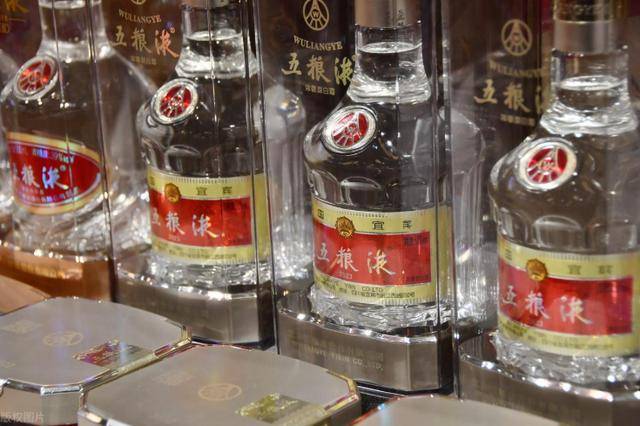
十年首次降价!五粮液渠道补贴落地,白酒市场起波澜,经销商成本直降
Sou Hu Cai Jing· 2025-12-09 05:17
Core Viewpoint - Wuliangye will implement a "de facto price reduction" for its core product, the eighth generation Wuliangye, starting in 2026, marking the first price adjustment since 2014, amidst a challenging market environment [1][3][11] Pricing Strategy - The price adjustment maintains the payment price at 1019 yuan/bottle, while offering a discount of 119 yuan/bottle to distributors, lowering the actual invoicing price to 900 yuan/bottle, with potential costs dropping below 800 yuan with additional subsidies [3][5] - This "structural discount" approach aims to alleviate distributor cost pressures without directly impacting brand image, as the factory price remains unchanged [5][9] Market Conditions - The decision to lower prices stems from a significant price inversion issue, with the wholesale price of the eighth generation Wuliangye dropping from 950 yuan/bottle at the beginning of the year to 855 yuan/bottle by November, leading to increased inventory pressure for distributors [7][9] - The overall performance of Wuliangye has declined, with a 10.26% drop in revenue and a 13.72% decrease in net profit year-on-year for the first three quarters of 2025, marking the first dual decline since 2015 [9][11] Industry Trends - The price inversion problem is widespread across the industry, with 20 A-share listed liquor companies reporting a combined revenue decline of 5.90% and a net profit drop of 6.93% in the first three quarters of 2025 [11][13] - Major brands like Kweichow Moutai are also experiencing significant slowdowns, with Moutai's revenue growth at a near ten-year low of 0.56% in the third quarter [11][13] Strategic Responses - Wuliangye is exploring new market segments, launching a low-alcohol product aimed at younger consumers, which achieved over 100 million yuan in sales within 60 days of its release [15] - The company is also expanding its international presence, with a 23% increase in exports covering 59 countries, although these efforts have yet to significantly alter the overall market dynamics [15]
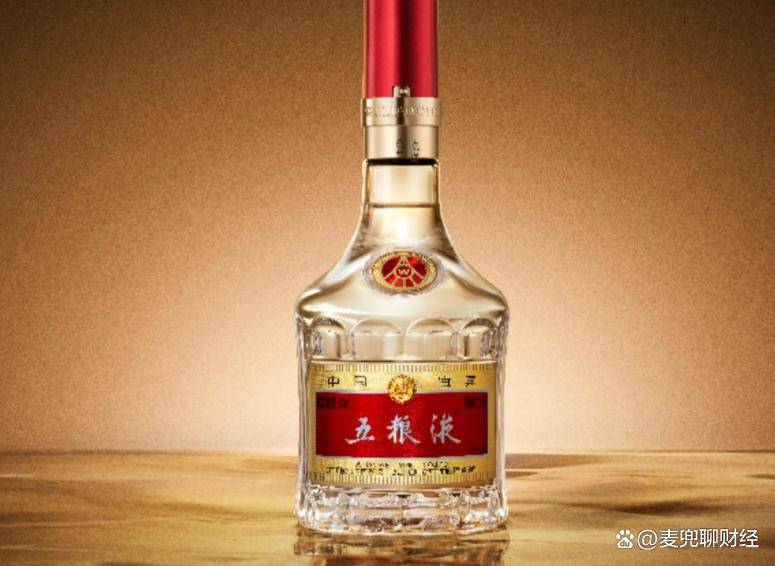
口感低度化 龙头酒企加速“年轻化”战略转型
Zhong Guo Jing Ji Wang· 2025-12-09 05:00
Core Insights - The Chinese liquor industry is undergoing a profound transformation driven by generational shifts in consumption, with a focus on engaging younger consumers through "youth-oriented" strategies [1][2][3] Group 1: Industry Trends - The rise of the younger consumer demographic, particularly those born between 1985 and 1994, is reshaping the consumption structure of the liquor market, prompting companies to explore niche markets [2][3] - The China Alcoholic Drinks Association predicts that the low-alcohol market will exceed 740 billion yuan by 2025, with a compound annual growth rate of 25% [3][4] Group 2: Product Innovation - Many liquor companies are adopting "low-alcohol" products as a key strategy to attract younger consumers, with 62% of consumers under 35 perceiving traditional liquor as "spicy and stimulating" [4][5] - Major brands like Wuliangye and Moutai are launching low-alcohol products, such as Wuliangye's 29-degree liquor, which achieved over 100 million yuan in sales within two months of launch [4][5][6] Group 3: Marketing Strategies - Digital marketing is becoming a crucial avenue for liquor brands to connect with younger consumers, with social media being the primary channel for 49.57% of consumers to learn about liquor [7][8] - Innovative marketing campaigns, such as short dramas and interactive social media challenges, are being employed to engage younger audiences and redefine drinking culture [8][9] Group 4: Cultural Engagement - Companies are recognizing the importance of emotional connections and cultural resonance with younger consumers, moving beyond just product innovation to include storytelling and brand heritage in their marketing [7][10] - The shift towards a more interactive and consumer-driven marketing approach is evident, as brands encourage user-generated content and new drinking methods [8][9]
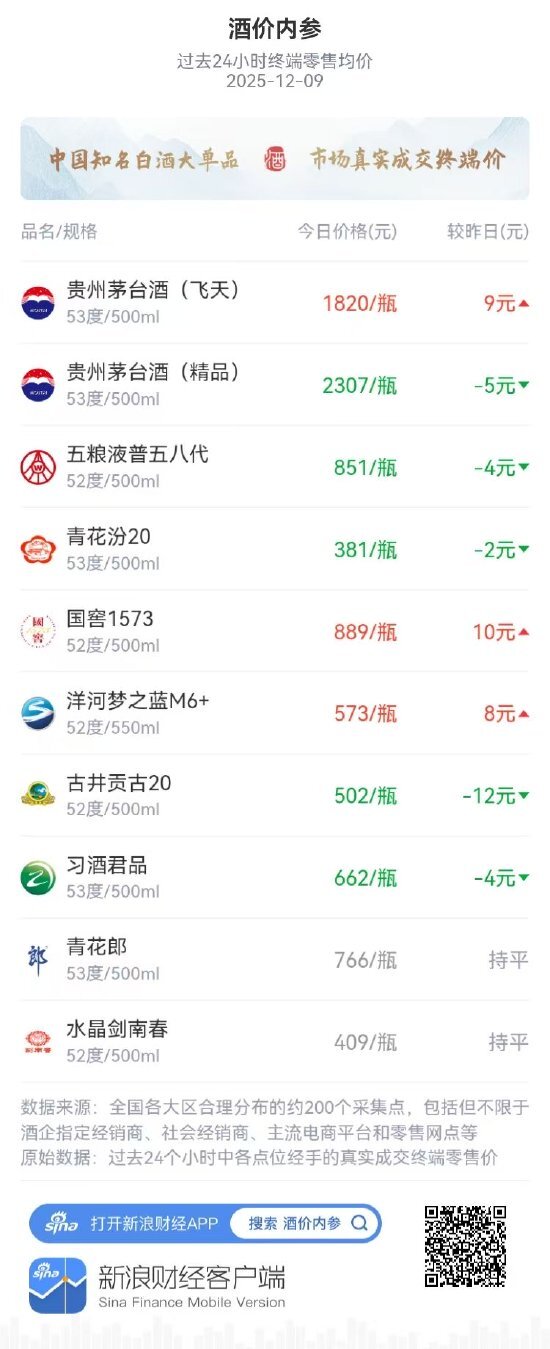
酒价内参12月9日价格发布,青花汾20微跌2元
Xin Lang Cai Jing· 2025-12-09 01:48
Core Insights - The Chinese baijiu market shows signs of stabilization with the average retail price of the top ten products remaining at 9160 yuan, indicating a halt in the recent price decline [1] - The market exhibits significant structural differentiation, with varying price movements among high-end products [1] Price Trends - The price of Guojiao 1573 increased by 10 yuan per bottle, leading the price rise among products [1][4] - Moutai's Feitian saw a price recovery of 9 yuan per bottle, demonstrating strong resilience [1][4] - Yanghe Dream Blue M6+ rose by 8 yuan per bottle, while other products like Qinghua Lang and Shuijing Jian Nan Chun remained stable [1] - On the downside, Guqingong Gu 20 dropped by 12 yuan per bottle, marking a significant adjustment [1][4] - The price of Moutai's boutique variant fell by 5 yuan, and both Xijiu Junpin and Wuliangye Pu 58th generation decreased by 4 yuan per bottle [1][5] Product Launch and Marketing Strategy - In August, the 29° Wuliangye "Yijian Qingxin" was launched, with singer G.E.M. appointed as the global ambassador [2] - This product represents a strategic shift towards younger consumers, focusing on "self-reward" and "quality socializing" to align with contemporary consumption trends [2]