
宝马

Search documents
交警通报陈震劳斯莱斯事故!车辆或报废,维修费堪比车价?
新浪财经· 2025-10-04 07:10
Core Viewpoint - The article discusses a traffic accident involving a luxury Rolls-Royce vehicle owned by a well-known automotive influencer, Chen Zhen, highlighting the implications for the brand and its market performance amid ongoing controversies and declining sales in the Greater China region [3][4][9]. Group 1: Accident Details - The accident occurred on October 3 in Beijing, with initial investigations indicating that Chen Zhen was fully responsible for the incident [3]. - The vehicle involved is a Rolls-Royce Spectre, which has an official guide price of 5.75 million yuan, and even as a second-hand car, its market price starts at 4 million yuan [3][8]. - There are allegations from netizens suggesting that the vehicle may have been driving in the wrong direction [5][6]. Group 2: Insurance and Repair Costs - Chen Zhen's public statement about only purchasing mandatory traffic insurance has raised concerns, as this type of insurance has a compensation limit of only 2,000 yuan for property damage [8]. - An industry expert noted that if Chen had purchased comprehensive insurance, the vehicle could be declared a total loss, but without it, repair costs could approach the price of a new car, potentially leading to the vehicle being scrapped [8][9]. Group 3: Brand Performance and Market Trends - Rolls-Royce has seen a decline in sales in the Greater China region, with a reported 23% decrease in sales in the first five months of the year compared to the previous year [9]. - In 2023, Rolls-Royce delivered 6,032 vehicles globally, but this number dropped by 5.3% to 5,712 vehicles in 2024, ending a three-year growth streak [9]. - The brand has faced multiple controversies in recent years, which have affected its image and sales performance [12].


海峡一隔,车价翻倍?
Guan Cha Zhe Wang· 2025-10-04 00:53
Core Viewpoint - The significant price disparity between electric vehicles in Taiwan and mainland China highlights structural issues within Taiwan's automotive market, particularly in the new energy sector [1][4][22]. Price Disparity - The price of vehicles in Taiwan can be significantly higher than in mainland China, with examples showing that the same model can cost up to double in Taiwan compared to the mainland [1][3][9]. - For instance, the Tesla Model 3 is priced at approximately 169.99 million TWD (about 37.8 million RMB) in Taiwan, while in mainland China, it starts at around 23-24 million RMB [8][9]. Consumer Sentiment - Taiwanese consumers express frustration over high vehicle prices, with some describing the experience of purchasing a car in Taiwan as akin to being "robbed" [4][5]. - The perception of high prices is supported by data showing that the average price of new cars in Taiwan is among the highest globally, despite lower average wages compared to other high-price countries [25]. Market Dynamics - The Taiwanese automotive market is heavily influenced by government policies that create barriers to entry for mainland Chinese vehicles, which are seen as a threat to local manufacturers [12][15][26]. - The local automotive industry faces challenges from the increasing presence of affordable electric vehicles from mainland China, which could disrupt the market and profit margins of Taiwanese manufacturers [14][22]. Electric Vehicle Market Growth - The share of electric vehicles in Taiwan is growing, with projections indicating that by 2030, electric vehicles could account for 60% of total vehicle sales [20][21]. - Despite this growth, the electric vehicle market in Taiwan is still heavily reliant on imports, with Tesla being the leading brand [17][20]. Structural Issues - The high prices of vehicles in Taiwan are attributed not only to taxes but also to a lack of local manufacturing capabilities and reliance on imported components, which increases costs [25][26]. - The Taiwanese government's protective measures have not effectively resolved the underlying issues within the automotive industry, leading to a "structural dilemma" that hinders the proliferation of affordable electric vehicles [22][25].

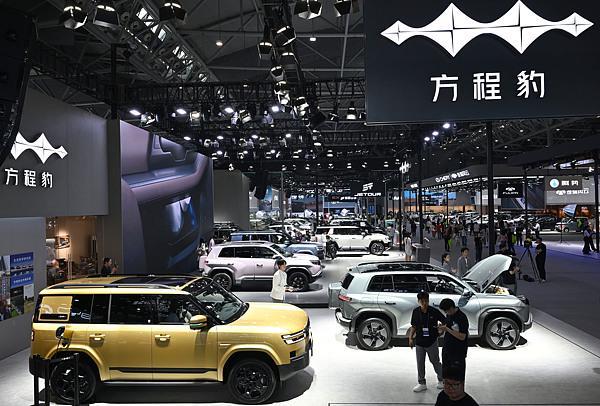
一道海峡,缘何划就两岸“车市鸿沟”?
Guan Cha Zhe Wang· 2025-10-04 00:51
Core Viewpoint - The significant price disparity between electric vehicles in Taiwan and mainland China highlights structural issues within Taiwan's automotive market, particularly in the new energy sector [2][11][24]. Price Disparity - The price of vehicles in Taiwan can be nearly double that in mainland China, with examples such as the Tesla Model 3 priced at approximately 169 million TWD (about 37.8 million RMB) in Taiwan compared to around 23-24 million RMB in mainland China [1][8][17]. - Taiwanese consumers face high vehicle prices regardless of whether they are purchasing imported or local cars, with local prices often exceeding those in mainland China by significant margins [4][5][6]. Market Structure Issues - The high prices in Taiwan are attributed to a combination of high taxes, limited local production capabilities, and a lack of competitive pricing due to protective policies that restrict mainland Chinese vehicles from entering the market [23][24]. - The Taiwanese automotive market is characterized by a reliance on imported components, which increases production costs and ultimately leads to higher consumer prices [23][21]. Consumer Sentiment - Taiwanese consumers express frustration over the high prices, with some likening the experience of buying a car in Taiwan to being "robbed" [5][6]. - There is a growing sentiment among consumers that they are missing out on the benefits of lower-priced vehicles available in mainland China due to political barriers [11][24]. Policy and Regulatory Environment - The Taiwanese government has implemented regulations that limit the import of mainland Chinese vehicles, which are seen as a threat to local manufacturers [12][16]. - Recent policies require a certain percentage of local content in vehicles, further complicating the market dynamics and contributing to higher prices [14][23]. Market Trends - Despite the high prices, the market for electric vehicles in Taiwan is growing, with a notable increase in the share of electric vehicles in new car registrations [17][19]. - The market is expected to continue evolving, with projections indicating that electric vehicles could account for 60% of total car sales by 2030 [19][20].

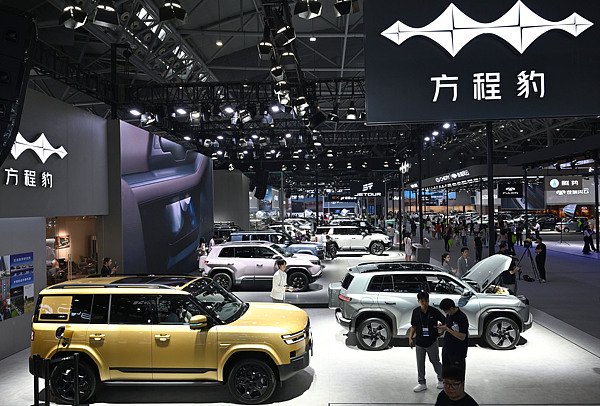
特朗普考虑对美国汽车生产提供大幅关税减免 多家车企股价走高
智通财经网· 2025-10-03 23:40
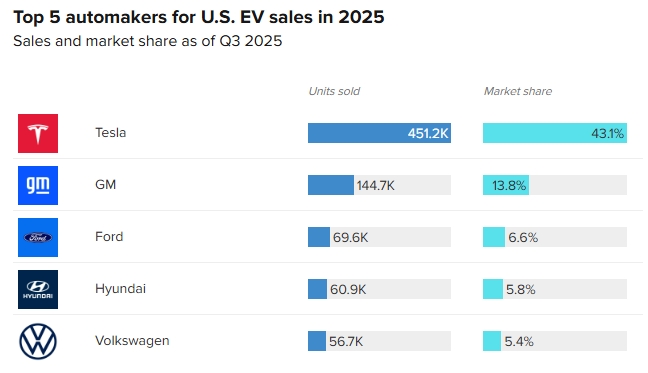
Core Viewpoint - The Trump administration is considering significant tariff reductions for automakers producing vehicles in the U.S., which could substantially lower their current tariff costs [1][2]. Group 1: Tariff Reduction Plan - The proposed plan would benefit major automakers with domestic production in the U.S., including Ford, Toyota, Honda, Tesla, and General Motors, potentially exempting them from import tariffs [1]. - Current tariff relief under a previous plan allows for a deduction of 3.75% of the manufacturer's suggested retail price, set to decrease to 2.5% after April 2026; the Trump administration is contemplating maintaining the 3.75% level for an additional five years and expanding the deduction to include domestic engine production [1]. Group 2: Cost Pressures on Automakers - The U.S. automotive industry is facing high cost pressures due to tariffs, with General Motors estimating a $5 billion cost impact and Ford projecting an additional $3 billion in expenses [2]. - Since May, the Trump administration has imposed a 25% tariff on over $460 billion worth of automotive and parts imports, further increasing the financial burden on automakers [2]. Group 3: Electric Vehicle Market Trends - The U.S. electric vehicle market has seen a significant surge, with over 1 million pure electric vehicles sold in the first three quarters of the year, and a record 438,000 units sold in Q3 alone, raising the market share to 10.5% [2]. - Tesla remains the market leader with a 43.1% share, although it has decreased from 49% at the end of last year; General Motors has increased its market share from 8.7% to 13.8%, ranking second [2]. Group 4: Future Concerns for Electric Vehicle Market - The termination of the federal $7,500 purchase subsidy at the end of September raises concerns about a potential decline in the electric vehicle market, with forecasts suggesting a possible drop in market share from 10%-12% to 5% in the short term [5]. - Comparatively, the U.S. lags behind in zero-emission vehicle adoption, with China and Europe having significantly higher sales figures [5].


人民币狂飙2.46%!美元却“崩了”,全球资本正悄悄转向中国
Sou Hu Cai Jing· 2025-10-03 06:25
Core Viewpoint - The offshore RMB has surpassed the 7.0 mark against the USD, marking a 16-month high and a year-to-date appreciation of 2.46%, while the USD index has seen a decline of over 10% this year, the largest annual drop since 1973. This shift reflects a deep reassessment of international capital towards Chinese assets amid a new phase of US-China competition and a quiet "capital migration revolution" [2]. Exchange Rate Fluctuations: RMB vs. USD - RMB appreciation driven by three engines: - Collapse of USD credibility with US debt exceeding $36 trillion and a fiscal deficit rate of 6.8%, leading to a downgrade of US debt ratings and a sell-off [3]. - Resilience of the Chinese economy with a GDP growth rate of 5.3% in the first half of 2025, significant increases in exports of new energy vehicles and photovoltaic equipment, and a trade surplus of $420 billion [3]. - Precise policy adjustments by the central bank, including dynamic adjustments to foreign exchange reserve requirements and a 120% year-on-year increase in offshore central bank bill issuance [3]. - Four major factors contributing to the USD decline: - Uncontrolled interest rate cuts by the Federal Reserve, with a cumulative reduction of 150 basis points in 2025, leading to a federal funds rate of 3.75% and a decline in the attractiveness of USD assets [3]. - Geopolitical backlash from US tariffs deemed illegal by the WTO, undermining the foundation of USD hegemony [4]. - Impact of digital currencies, with the digital RMB's cross-border payment pilot expanding to 47 countries, resulting in a decrease in the USD's settlement share [5]. - Concerns over "fiscal deficit monetization" as US Treasury bond issuance exceeds $1.2 trillion per month, raising fears of severe inflation [6]. Capital Shift: Global Funds Moving East - Equity markets favoring China: - Northbound capital inflow exceeding 280 billion RMB, with significant investments in AI, robotics, and innovative pharmaceuticals [7]. - The Hang Seng Tech Index rising by 28% this year, with substantial daily net purchases from southbound funds [7]. - Bond market stability: - Continuous six-month increase in foreign holdings of RMB bonds, surpassing 4.8 trillion RMB, with policy financial bond yields reaching 3.2%, widening the yield spread over US bonds to 180 basis points [8]. - Cross-border investment restructuring: - Foreign companies establishing R&D centers in China, with foreign R&D investment share rising to 27% [9]. - Ant Group collaborating with Southeast Asian digital banks to launch a "RMB stablecoin," with daily transaction volumes exceeding 10 billion RMB [9]. Underlying Logic: Paradigm Shift in Global Monetary Order - Shift in credit anchors from "gold-USD" to "industrial chain-RMB," with China's manufacturing value added accounting for 31% of the global total [10]. - Intensifying competition in digital currencies, with the digital RMB cross-border payment system covering 107 countries and processing over 1.2 trillion RMB daily [10]. Future Outlook: From "Currency Wars" to "Civilizational Competition" - Scenarios for 2026-2030: - RMB becoming the third-largest currency in the SDR with a cross-border payment share exceeding 15% [11]. - Potential for a "digital currency swap agreement" between China and the US, enhancing global payment efficiency by 40% [11]. - Risk of a "digital currency cold war," leading to increased trade friction costs by 30% [11].
历史首人!特斯拉市值一夜增加490亿美元,马斯克个人财富达5000亿美元【附全球新能源汽车行业发展趋势】
Qian Zhan Wang· 2025-10-02 06:32
周三,全球首富马斯克的个人财富突破5000亿美元,成为史上第一个身价跨过这一门槛的人,这主要是得益 于特斯拉股价反弹以及这位科技企业家旗下其它初创公司估值飙升。 根据福布斯富豪榜,截至美国东部时间下午4:15,马斯克的净资产达到了5001亿美元,但目前回落至5000亿 美元下方。 不过,特斯拉正面临车企的激烈竞争。美国福特汽车首席执行官吉姆·法利在当地一档播客节目中发表了中 美车企实力对比的观点。他直言不讳地指出:"在电动车行业的竞争格局中,中国堪称'700磅重大猩猩'。" 法利进一步解释称,无论是特斯拉、通用汽车还是福特汽车公司,都无法与中国车企进行真正的竞争。在他 看来,中国车企在全球电动汽车领域完全占据主导地位,而且这种领先优势在中国以外的地区也越来越大。 自2014年起,中国新能源汽车市场开始快速发展,产销量大幅上升。2023年,中国新能源汽车产量达到 958.7万辆,同比增长35.8%;2024年1-11月累计产量更是高达1134.5万辆,同比增长34.6%。 在经历了年初的动荡之后,随着马斯克将重心重新转向旗下公司,投资者信心改善,特斯拉股价一路走高。 特斯拉董事会主席Robyn Denholm上 ...
从豪门到杂牌:绿牌BBA在中国市场大溃败
芯世相· 2025-10-02 01:05
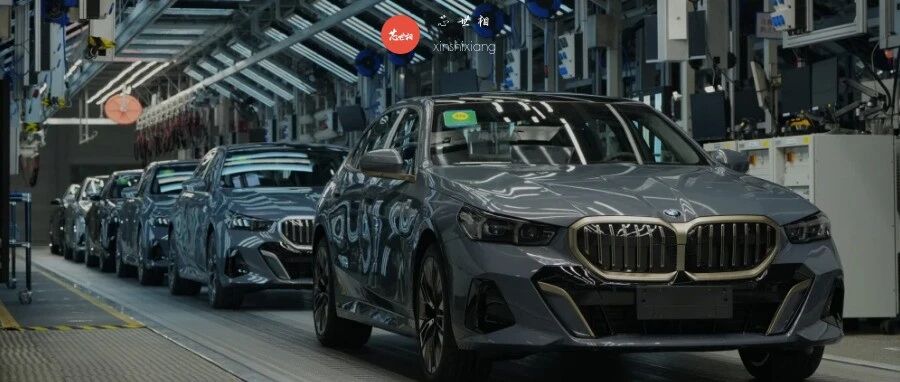
Core Viewpoint - The article discusses the decline of traditional luxury car brands BBA (BMW, Benz, Audi) in the Chinese market, particularly in the context of the rising competition from domestic electric vehicle manufacturers. It highlights the challenges BBA faces in adapting to the new energy vehicle (NEV) landscape and the perception of these brands as "second-rate" or "杂牌" (杂牌) among consumers [7][28]. Group 1: Market Performance and Competition - BBA's market share in the 500,000+ vehicle segment has dropped to approximately 50% due to the emergence of popular Chinese models like the AITO M9 [10]. - In 2022, BBA's global sales totaled 6.1054 million units, a decrease of nearly 1 million units compared to 2021 [10]. - BBA's green plate vehicles sold less than 70,000 units in 2019, and despite a brief sales peak in 2023, their profitability has been severely impacted by price wars [10][14]. Group 2: Product Development and Technology - BBA's approach to NEVs has been criticized for relying on "oil-to-electric" conversions, which do not meet consumer expectations for performance and efficiency [18][22]. - The BMW i3, for example, uses a fuel vehicle chassis, compromising passenger space and battery performance, with real-world range significantly lower than advertised [19][24]. - In contrast, Chinese manufacturers like Li Auto and NIO are utilizing advanced technologies, with NIO's ET5 achieving a total computing power of 1000 TOPS compared to BMW's i3 at only 2 TOPS [18][19]. Group 3: Strategic Challenges and Future Outlook - BBA's reluctance to fully commit to NEV development is partly due to their established supply chain relationships and the desire to maximize profits from traditional fuel vehicles [33][36]. - The article suggests that BBA's slow transition to electric vehicles is a tactical retreat to maintain their existing market share while facing pressure from the rapidly growing Chinese EV sector [29][33]. - The perception of BBA as "杂牌" reflects a broader concern that these brands are failing to innovate and meet the evolving demands of Chinese consumers [28][41].
美国政府“关门”,美股三大期指齐跌,明星科技股多数走低;美政府宣布入股,美洲锂业暴涨超30%【美股盘前】
Mei Ri Jing Ji Xin Wen· 2025-10-01 13:25
Market Overview - Major U.S. stock index futures are down, with Dow futures falling by 0.57%, S&P 500 futures down by 0.63%, and Nasdaq futures decreasing by 0.73% [1] Technology Sector - Most star tech stocks are declining in pre-market trading, including Nvidia and AMD [2] Lithium Industry - Lithium Americas shares surged over 32% after the U.S. government announced it will acquire a 5% stake in the company [2] Consumer Goods - Nike's quarterly revenue exceeded expectations, leading to a 3% increase in pre-market trading [4] Precious Metals - COMEX gold futures surpassed $3900 per ounce, reaching a new record high, driven by increased risk aversion due to the U.S. government shutdown [4] - Spot gold rose to $3880 per ounce, with gold stocks also gaining in pre-market trading, including Kinross Gold up by 1.4%, and AngloGold up by 3.4% [4] Energy Sector - WTI crude oil futures fell by 0.72%, dropping below $62 per barrel, while Brent crude oil decreased by 0.69% to $65.577 per barrel [4] Automotive Industry - NIO delivered 34,749 new vehicles in September, marking a 64% year-over-year increase, with the stock rising by 2.23% [4] Cryptocurrency - Bitcoin rose above $115,000, increasing by 0.98% in the past 24 hours [5] Automotive Recall - BMW is recalling over 145,000 vehicles in the U.S. due to a potential fire risk from engine starter issues affecting certain 2020 models [5]

中年人最爱的豪车,也扛不住了!
商业洞察· 2025-10-01 09:24
Core Viewpoint - The article discusses the significant strategic shift of Porsche from electric vehicles back to internal combustion engine models due to declining sales and financial pressures, reflecting broader challenges faced by luxury car brands in the evolving automotive market [4][5][15][16]. Group 1: Porsche's Strategic Shift - Porsche has announced a major shift in strategy, pausing its electric vehicle plans and refocusing on internal combustion engine models, including hybrids, in response to declining sales and profitability pressures [15][16]. - The company faced its most severe challenges since its IPO in 2022, including a continuous drop in stock prices, removal from the DAX index, and poor performance in key markets like China and the U.S. [16][17]. - Porsche's net profit for the first half of 2025 plummeted by 66.6%, with a sales return rate dropping to 5.5%, prompting a reevaluation of its earlier commitment to electric vehicle dominance [16][21]. Group 2: Market Context and Challenges - The luxury car market is undergoing a significant transformation, with traditional brands like Mercedes, Volvo, and Ford also retreating from their electric vehicle ambitions and increasing investments in hybrid and efficient internal combustion engines [23][24]. - The article highlights the competitive landscape, noting that domestic Chinese automakers are better aligned with consumer preferences, offering more value and features compared to traditional luxury brands [26][28]. - The overall automotive market is experiencing a shift, with China's new energy vehicle sales reaching 12.87 million units in 2022, marking a 35.5% increase, while traditional luxury brands struggle to maintain their market positions [31][32]. Group 3: Future Implications - The article suggests that the transition to electric vehicles is more complex and challenging than anticipated, as evidenced by Porsche's retreat from its electric ambitions [17][28]. - The future automotive market will not simply be a battle between fuel and electric vehicles but will involve a multifaceted competition based on technology, brand, and customer experience [38]. - The traditional automotive giants are at risk of losing their competitive edge as they face the reality of a rapidly evolving market dominated by new energy vehicles and changing consumer expectations [36][37].

消息称尊界S800上周订单520辆 Q4单周峰值或超过“BBA”
Feng Huang Wang· 2025-09-30 11:59
Core Insights - The article highlights the strong demand for the ZunJie S800, with 520 orders placed last week and nearly 600 units delivered, indicating a potential peak in Q4 that could surpass the combined sales of BBA (Benz S-Class, Maybach, BMW 7 Series, and Audi A8) [1] Group 1: ZunJie S800 Performance - ZunJie S800 is expected to achieve a single-week peak in Q4 that exceeds the total sales of BBA [1] - Last week's orders for ZunJie S800 reached 520, with actual deliveries close to 600 [1] Group 2: Market Trends and Competitors - The article mentions significant order data for other brands, with Hongmeng Zhixing receiving over 75,000 new orders last week, driven by the launch of the new Wanjie M7 [1] - The Wanjie M7 was officially launched on September 23, offering both range-extended and pure electric powertrains across 12 configurations, starting at a price of 279,800 yuan [1] Group 3: Wanjie M7 Specifications - The Wanjie M7 has dimensions of 5080mm in length, 1999mm in width, and 1780mm in height, with a wheelbase of 3030mm, showing significant increases compared to the previous model [1] - The wheelbase has been extended by 210mm, providing more spacious seating [1]