
快手

Search documents
港股1月行情收官,南向资金净流入近690亿港元
Huan Qiu Wang· 2026-02-01 03:00
Core Viewpoint - The Hong Kong stock market demonstrated strong resilience in January 2026, with significant net inflows from southbound funds driving the Hang Seng Index up by 6.85% to 27,387.11 points, marking a nearly 7% monthly increase [1][2]. Fund Flow Analysis - In January, southbound fund flows exhibited clear phase characteristics, with net inflows exceeding 50 billion HKD on multiple days in early January due to favorable domestic policies, RMB appreciation, and AI industry valuation recovery expectations [2]. - Mid-January saw a temporary decline in fund accumulation due to rising geopolitical risks and valuation corrections in certain sectors, leading to net sell-offs in cyclical stocks like China Mobile and Zijin Mining [2]. - By late January, the Hang Seng Index successfully broke through the 27,000-point mark, supported by surging AI computing demand and better-than-expected earnings from leading consumer companies, with daily net inflows from southbound funds exceeding 30 billion HKD [2]. Industry Performance - The Hong Kong stock market in January reflected a "high prosperity track and policy dividend sector resonance" pattern, with the technology sector leading the gains [3]. - Notable performers in the technology sector included Longi Green Energy, which surged by 61.90% due to increased global AI data center demand, and Zhiyuan AI, which saw a 94.66% increase post-listing [3]. - In the consumer sector, new consumption leader Mingming Hen Mang rose by 73.71%, supported by store expansion and improved profitability, while Pop Mart benefited from a surge in demand for IP derivatives, increasing by 19.13% [3]. - In the financial and real estate sectors, China Life surged by 27.39% due to governance optimization and improved capital expectations, while China Jinmao and New World Development rose by 42.98% and 56.53%, respectively, benefiting from policy optimizations [3]. Fund Outflow Insights - The materials and telecommunications sectors faced significant pressure, with Zijin Mining experiencing a net sell-off of 4.565 billion HKD and China Mobile declining by 2.33% due to intensified industry competition, leading to a total southbound fund reduction of over 16.9 billion HKD [5]. Institutional Perspectives - Multiple institutions noted that the performance of the Hong Kong stock market in January validated the logic of "fundamental recovery + liquidity resonance," with expectations for continued structural rebounds in February [6]. - Everbright Securities highlighted that the current market is in an "earnings vacuum period," with high growth expectations in new economy sectors supported by policy catalysts [6]. - CITIC Securities advised monitoring the potential impact of a peak in lock-up expirations on liquidity in February, while emphasizing the allocation value of quality leaders like Tencent and Alibaba [6]. - Huatai Securities pointed out that Hong Kong stock valuations remain low globally, with a risk premium rate of 3.99% for the Hang Seng Index, significantly higher than the S&P 500, suggesting a dual drive of "profit growth + valuation enhancement" as southbound and foreign fund inflows become more balanced [6]. IPO Market Activity - The IPO market in Hong Kong remained active in January, with 12 companies listed by January 26, raising a total of 34.747 billion HKD, a year-on-year increase of 480.87% [7]. - Notable listings included domestic GPU company Birun Technology and AI model company Zhiyuan, attracting long-term investments from international funds [7]. - The market anticipates that the IPO fundraising scale in 2026 could exceed 300 billion HKD, with hard technology enterprises continuing to dominate the listing trend [7].



摩根大通:中国AI交易,不确定“谁是最终赢家”,押注“AI应用大战”的受益者
美股IPO· 2026-01-31 16:03
Core Viewpoint - Morgan Stanley defines 2026 as the "activation year" for consumer AI, suggesting investors should focus on secondary beneficiaries rather than single application winners due to the lack of a solid moat in the application layer [1][2]. Group 1: Market Dynamics - The report emphasizes that it is premature to determine "AI application winners and losers" in the Chinese chatbot market, as the market is still developing and short-term share changes reflect distribution and product iteration rather than a solid competitive advantage [3][10]. - Morgan Stanley believes that 2026 will mark a significant shift in consumer AI, with chatbots transitioning from novelty to habitual use, fundamentally changing how users discover information and make decisions [3][4]. Group 2: Investment Strategy - The report advises avoiding bets on single application winners and instead focusing on secondary beneficiaries that are likely to see earlier returns and higher visibility [4]. - The investment logic is anchored on secondary exposures, including AI infrastructure and cloud providers that can capture the rising demand for reasoning workloads, and advertising platforms that will benefit from increased sales and marketing intensity [6]. Group 3: Sector Insights - In the enterprise AI sector, the turning point is when the value proposition becomes measurable in high-stakes workflows, with examples such as Google generating over 25% of new code through AI [6]. - The report highlights that the growth of daily multi-turn chatbot conversations will directly benefit reasoning demand and token throughput, with a compound growth in token consumption as agents expand from conversation to execution [6]. Group 4: Company Comparisons - The report notes that despite recent rebounds, leading Chinese internet companies still trade at significant discounts compared to global peers, with Alibaba's expected PE for 2026 at 20 times compared to Google's 29 times and Amazon's 26 times [11][12]. - The valuation comparison indicates that as AI narratives converge, it is feasible to narrow valuation gaps for companies that achieve execution milestones, benefiting long-term narratives with high credibility [12].


AI:正在复刻2006年房地产的“黄金十年”
格隆汇APP· 2026-01-31 09:06
Core Viewpoint - The AI industry is experiencing a significant growth phase, comparable to the real estate boom of 2006, driven by technological advancements and supportive policies, with a projected market size increase from $244 billion in 2025 to $827 billion by 2030, reflecting a compound annual growth rate of 24% [5][9]. Group 1: Industry Growth and Drivers - The AI market is set to expand rapidly across various sectors, including industrial manufacturing, enterprise operations, and consumer services, showcasing its potential as a core driver of economic growth [5]. - The rapid development of AI is supported by technological breakthroughs and policy initiatives, with a notable increase in the usage of AI models, which reached 3.41 trillion tokens by July 2025, a nearly tenfold increase from the beginning of the year [6][9]. - The Chinese government has outlined a clear path for AI development through a series of milestones set for 2027, 2030, and 2035, focusing on aspects such as computing power, data innovation, and talent development [9]. Group 2: Application and Market Penetration - AI technology is being applied across various fields, including content creation, marketing, software development, and gaming, leading to new business models and significant efficiency improvements [14][19]. - In the content creation sector, AI has dramatically lowered production barriers, with global downloads of generative AI applications nearing 1.7 billion and in-app purchases reaching $1.9 billion in the first half of 2025 [14]. - The domestic market is also thriving, with AI-driven comic production in China experiencing a 900% revenue growth from Q4 2024 to Q3 2025, alongside significant increases in new series production [16]. Group 3: Commercialization and Business Models - The growth of the AI industry is propelled by a dual-driven model involving platform companies and vertical industry leaders, clarifying the commercialization pathways [20][21]. - Major platforms like Douyin and Kuaishou are integrating AI technologies into their content production processes, with Douyin's AI-driven initiatives supporting creators and Kuaishou achieving over 45 million global users [22][23]. - Successful case studies, such as Meitu and Duolingo, demonstrate the commercial potential of AI, with Duolingo's revenue growing by 41% year-on-year in Q2 2025, and Meitu surpassing 10 million global VIP members [25][26]. Group 4: Investment Opportunities - The explosive growth of the AI industry presents numerous investment opportunities, particularly in three key areas: content and traffic platform companies, AI marketing leaders, and vertical AI application pioneers in sectors like gaming and education [29].

年度AI产品十大赛道TOP 3|量子位智库AI 100
量子位· 2026-01-31 07:30
Core Insights - The article discusses the significant evolution of AI products in 2025, highlighting a shift from merely "talking" to "doing" [3][4] - The focus is on the transformation of interaction paradigms and the integration of AI into both digital and physical realms [5][6] - The article introduces the "AI 100" product list, categorizing AI products into flagship and innovative segments, along with five major application categories [6][9] Group 1: AI Product Development - AI products have shown differentiated growth across various sectors, with strong demand in general scenarios and AI efficiency, while AI life products are exploring better user experiences [14] - The common goal across all sectors is moving towards end-to-end delivery of productivity, shifting the value measurement from "how well it answers" to "how completely it delivers" [14][15] Group 2: Flagship AI Products - The "Flagship AI 100" and "Innovative AI 100" categories represent the strongest and most promising AI products, respectively [7][13] - The article outlines ten core tracks for AI applications, including AI smart assistants, AI agents, AI browsers, AI workstations, Vibe Coding, AI education, AI entertainment, AI health, multimodal creation, and AI consumer hardware [9][10] Group 3: AI Smart Assistants - AI smart assistants are the most traffic-intensive and revenue-near segment, evolving from answering questions to solving problems [16] - Top products in this category include: - Doubao from ByteDance, with over 57 million daily active users [18] - DeepSeek, known for its innovative interaction method that showcases AI reasoning [20] - Tencent Yuanbao, integrating various social networks for enhanced user experience [22] Group 4: AI Agents - AI agents have transitioned from mere conversational tools to executing tasks [23] - Notable products include: - Nano AI from 360 Group, which integrates over 80 large models for task execution [24] - Kouzi, a one-stop AI office space from ByteDance, automating complex workflows [26] - Xingliu, a new generation AI creation tool from Singularity Star, facilitating end-to-end creative processes [30] Group 5: AI Browsers - AI browsers are evolving from passive information displays to active task executors [32] - Key products include: - QQ Browser from Tencent, which integrates AI capabilities to understand user intent [33] - Quark from Alibaba, combining search, reading, and creation functionalities [36] - Fellou, focusing on a unified search and task experience [40] Group 6: AI Workstations - The competition in AI workstations has shifted from the number of features to complete workflow integration [41] - Leading products include: - Baidu Wenku, transforming from a document tool to a knowledge productivity platform [42] - Feishu, integrating AI capabilities into team workflows [46] - Tiangong, focusing on enhancing office and creative efficiency [50] Group 7: AI Education - AI education products are evolving to provide personalized tutoring and enhance learning experiences [61] - Top products include: - KuaiDui AI from Zuoyebang, focusing on personalized tutoring [62] - XiaoYuan AI from Yuanfudao, assisting parents and teachers in managing homework [65] - CapWords, an innovative language learning tool [69] Group 8: AI Entertainment - AI entertainment products are exploring how to provide unique value beyond traditional non-AI products [70] - Notable products include: - Kapi Camera, which enhances user photography experiences [73] - Xingye, a platform for emotional companionship and content creation [76] - DouDou Game Partner, focusing on gaming companionship [79] Group 9: AI Health - The AI health sector is cautiously exploring compliance and user experience [80] - Key products include: - Antifufu, a health management assistant from Ant Group [81] - XiaoHe AI Doctor, providing health consultations based on authoritative medical data [85] - OtterLife, a gamified health management product [88] Group 10: Multimodal Creation - AI creation tools are becoming integral to daily workflows for content creators [90] - Leading products include: - Jidream AI, focusing on video creation processes [91] - Liblib AI, a comprehensive AI creation platform [95] - Keling AI, a creative productivity platform leveraging short video and advertising [97] Group 11: AI Consumer Hardware - The AI consumer hardware sector is characterized by rapid innovation and high turnover [98] - Notable products include: - Plaud Note, an AI note-taking tool [99] - Thunderbird V3 AI glasses, integrating various functionalities [102] - CocoMate, an emotional companion toy [107]
涉及7项违法行为!快手旗下成都快购科技被罚没超2699万元
Xin Lang Cai Jing· 2026-01-31 07:07
Group 1 - The core viewpoint of the article highlights the regulatory actions taken by the State Administration for Market Regulation (SAMR) against Kuaishou's e-commerce platform, specifically targeting Chengdu Kuaigou Technology Co., Ltd. for multiple violations, resulting in a fine of 26.6929 million yuan [1][3] - The violations include failure to fulfill information disclosure obligations, charging unreasonable fees to platform operators, neglecting consumer safety responsibilities, and facilitating illegal sales of wildlife and related products [1][3] - The case is presented as a significant example of SAMR's commitment to enhancing regulatory oversight in the platform economy, aiming to create a safe consumer environment and maintain fair market competition [3] Group 2 - SAMR's approach to this case reflects a "zero tolerance" policy towards issues such as false marketing and counterfeit products in the live e-commerce sector [3] - The investigation focused on key aspects such as the verification of merchant qualifications, protection of small and medium-sized enterprises' rights, and effective measures against consumer rights violations [3] - The regulatory actions are intended to promote compliance among platform enterprises, protect the legitimate rights of operators and consumers, and encourage healthy innovation in the live e-commerce industry [3]

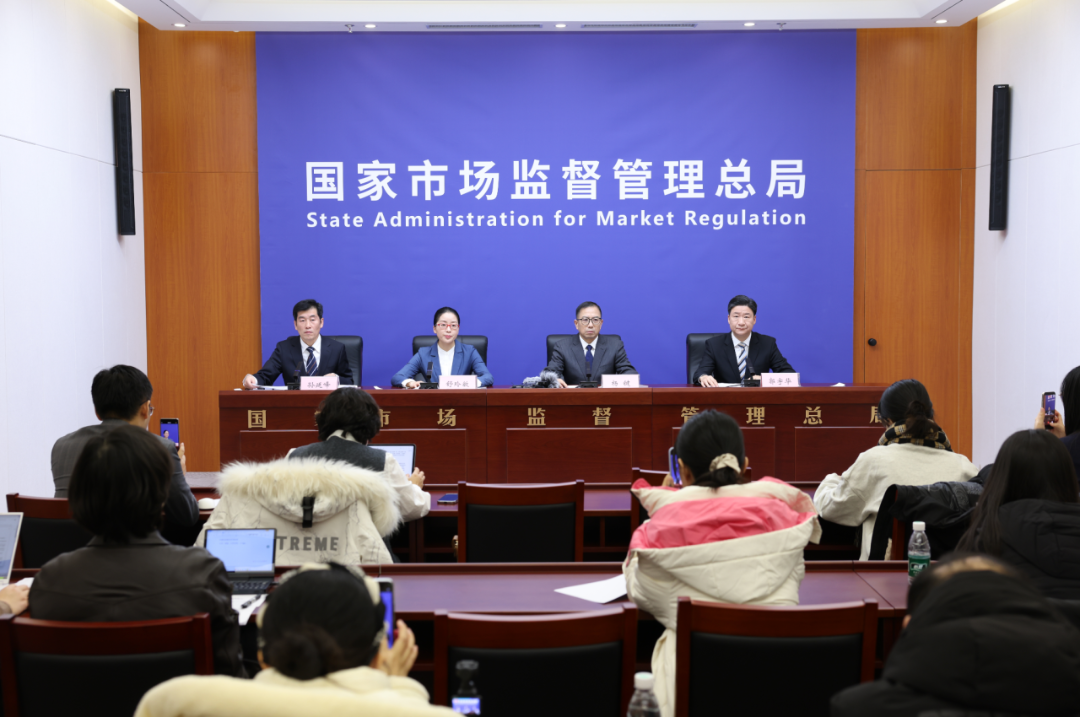
成都快购被罚2669余万元
Xin Lang Cai Jing· 2026-01-31 02:58
Core Viewpoint - The State Administration for Market Regulation (SAMR) has officially announced the administrative penalty against Chengdu Kuai Gou Technology Co., Ltd. for various violations in the live e-commerce sector, imposing a fine of approximately 26.69 million yuan [2][4]. Group 1: Violations and Penalties - Chengdu Kuai Gou was found to have failed to fulfill information disclosure obligations, charge unreasonable fees to platform operators, and neglect consumer safety guarantees [2][7]. - The company was penalized for not taking necessary actions against intellectual property infringement and for publishing illegal advertisements [2][7]. - The total fine imposed on Chengdu Kuai Gou amounts to 26,692,904.62 yuan [2]. Group 2: Legal Basis - The penalties were based on multiple laws, including the E-commerce Law, Advertising Law, Anti-Unfair Competition Law, and Wildlife Protection Law [3]. Group 3: Regulatory Approach - The case exemplifies a "zero tolerance" enforcement signal from market regulators, emphasizing the need for compliance in the live e-commerce sector [4][5]. - The regulatory approach includes a "full-chain" enforcement direction, ensuring comprehensive oversight of business operations and internal management processes [5]. - A "penetrating" regulatory model was applied, utilizing extensive data analysis to strengthen evidence collection and support the identification of violations [5][6]. Group 4: Future Regulatory Expectations - The case reflects a commitment to "normalizing" regulatory expectations, with ongoing monitoring and compliance guidance for platform enterprises [6]. - The SAMR aims to enhance the regulatory framework for live e-commerce through the development of specific management measures [6].

官方通报快手旗下成都快购违法案:罚没款2669.29万元
Zhong Guo Xin Wen Wang· 2026-01-30 14:03
舒玲敏指出,此次查处成都快购科技有限公司违法案件,释放了"零容忍"的执法信号。"本次案件查 处,通过重点核查当事人是否履行对商家的资质核验义务、是否侵害中小微商家合法权益、是否对侵害 消费者权益行为采取有效处置措施等关键环节,依法认定当事人的违法事实,并作出处罚决定,释放了 以监管促发展的强烈信号。" 四川省市场监管局二级巡视员杨键表示,作为属地监管部门,四川省市场监管局将严格督促成都快购科 技有限公司对照市场监管总局处罚决定深刻反思,对查处的违法行为及暴露的风险隐患立行立改,并以 此为契机,举一反三,加强四川省平台经济常态化监管,提升网络交易平台合规监管水平,促进平台经 济创新和健康发展。 针对此次案件查处中反映出的平台信息公示、费用收取、消费者安全保障、知识产权保护、广告审核、 商业宣传和禁限售商品管控等系列问题,四川省市场监管局将组织对快手电商等属地重点平台开展"体 检式"合规评价,采取"资料核查+现场访谈+系统监测"方式,逐项评估平台合规水平,同步开具"合规整 改清单",明确问题、时限、责任主体,以问题为导向倒逼整改,切实将监管压力转化为平台合规动 力。 舒玲敏表示,经过一年的直播电商专项治理,直播电 ...
港股风向标|恒指连续上攻后获利盘兑现 高位热点剧烈回调释放风险
Sou Hu Cai Jing· 2026-01-30 13:57
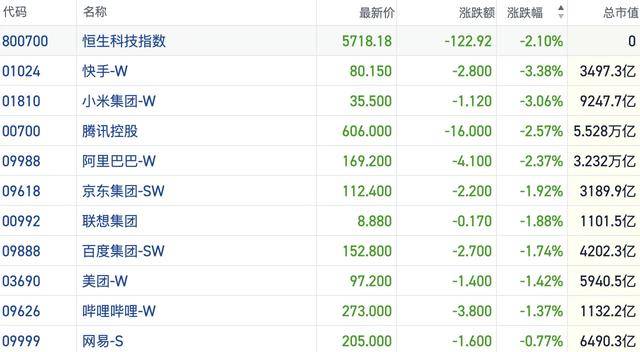
Market Overview - The Hong Kong stock market experienced a high-level adjustment, with the Hang Seng Index falling by 2.08% to 27,387.11 points, the Hang Seng China Enterprises Index down by 2.47%, and the Hang Seng Tech Index decreasing by 2.1% [1][2]. Performance of Major Tech Stocks - Major tech stocks led the market decline, with Kuaishou and Xiaomi dropping over 3%, while Alibaba and Tencent fell by more than 2%. Other companies like Baidu, Meituan, and NetEase also followed suit [2][3]. Sector Performance - The market saw a broad decline across various sectors, particularly in precious metals and non-ferrous metals, which experienced significant pullbacks. Key sectors such as AI applications and finance also weakened, alongside consumer electronics, automotive, and pharmaceuticals [4][5][6]. Short Selling Activity - The total short selling amount reached 29.507 billion HKD, accounting for 9.78% of the Hang Seng Index's trading volume. The top three companies with the highest short selling amounts were CSPC Pharmaceutical, Zijin Mining, and Xiaomi Group, with short selling amounts of 1.268 billion HKD, 1.031 billion HKD, and 1.014 billion HKD respectively [4]. Precious Metals Market - The precious metals sector faced severe adjustments, with gold and silver prices experiencing significant declines. Spot gold dropped by 7.95% to 4,949.62 USD per ounce, while spot silver fell by 16.93% to 95.86 USD per ounce, reaching a low of 95 USD [8]. Future Market Outlook - The market sentiment remains cautious due to fluctuating expectations regarding the Federal Reserve's interest rate decisions and regulatory policies in mainland China. The volatility in the Hong Kong market is expected to persist in the short term, with a focus on stocks that possess core competitiveness and long-term value [9].
Kuaishou's e-commerce unit fined $3.8 million by Chinese regulator
Reuters· 2026-01-30 13:42
Core Viewpoint - The Chinese regulator has imposed a fine of 26.7 million yuan ($3.84 million) on Kuaigou, an e-commerce unit of Kuaishou Technology, for several illegal acts [1] Group 1 - The fine reflects the regulatory scrutiny faced by e-commerce platforms in China [1] - Kuaigou is part of Kuaishou Technology, which is known for its live-streaming services [1] - The amount of the fine indicates the seriousness of the violations identified by the regulator [1]


快手电商全资子公司被罚没26692904.62元 涉及七项违法行为
Feng Huang Wang· 2026-01-30 13:36
Core Viewpoint - The recent administrative penalty imposed on Chengdu Kuaigou Technology Co., Ltd., a subsidiary of Kuaishou Technology, highlights significant regulatory scrutiny in the live e-commerce sector, aiming to enforce compliance and protect consumer rights [1][2]. Group 1: Regulatory Actions - The State Administration for Market Regulation has announced an administrative penalty of 26,692,904.62 yuan against Chengdu Kuaigou Technology for multiple violations of laws and regulations [1]. - The company failed to fulfill its obligation to publicly disclose information and did not take necessary actions against intellectual property infringements [1]. - The penalty reflects the regulatory body's assessment of the nature of the violations and their social harm, indicating a push for better governance in the live e-commerce industry [2]. Group 2: Company Background - Chengdu Kuaigou Technology was established on October 31, 2019, and is headquartered in Chengdu, Sichuan, with Yang Yuanxi as its legal representative [2]. - As a wholly-owned subsidiary of Kuaishou Technology, the company operates the e-commerce platform "Kuaishou Xiaodian," providing services for suppliers, service providers, and live broadcast bases [2]. Group 3: Violations and Issues - The company was found to have charged unreasonable fees to platform operators and failed to meet consumer safety obligations [1]. - It was also confirmed that the company published illegal advertisements and assisted other operators in conducting false or misleading commercial promotions [1]. - Additionally, the regulatory investigation revealed that the company provided services for the illegal sale and purchase of wild animals and their products, as well as prohibited hunting tools [1].