分众传媒

Search documents
南极电商扣非最高预亏3.6亿转型受挫 支柱品牌收入下滑3.26亿
Chang Jiang Shang Bao· 2026-02-02 03:36
Core Viewpoint - Nanji E-commerce (002127.SZ) is expected to report significant losses in 2025, with projected net profit losses ranging from 250 million to 320 million yuan, primarily due to goodwill impairment and intensified industry competition [1][3] Financial Performance - The company anticipates a net profit loss of 250 million to 320 million yuan for 2025, with a non-recurring net profit loss estimated between 290 million and 360 million yuan [1][3] - As of the end of Q3 2025, the company's goodwill stood at 326 million yuan, which may be fully impaired [2][4] - In 2024, Nanji E-commerce reported revenue of 3.358 billion yuan, a year-on-year increase of 24.75%, but incurred a net profit loss of 237 million yuan, a 312.04% decline [8] - For the first three quarters of 2025, the company achieved revenue of 1.991 billion yuan, a year-on-year decrease of 17.29%, with a net profit of 42.79 million yuan, down 21.09% [8][9] Business Challenges - The decline in profitability is attributed to strategic business adjustments, increased competition, and significant legal disputes affecting the "Cartier Crocodile" brand's revenue [1][3][4] - The company is facing a lawsuit from Shanghai Xinhongzhao, which has increased its claim from 95.25 million yuan to 560 million yuan, citing multiple breaches of contract [4][5] - The goodwill impairment is primarily linked to the underperformance of its subsidiary, Beijing Time Internet Technology Co., due to business transformation and competitive pressures [3][4] Strategic Outlook - The company has a diverse brand portfolio, including the national brand "Nanji Ren" and international brands like "Cartier Crocodile" and "Baijiahao" [7] - The controlling shareholder, Zhang Yuxiang, indicated that sales expenses would significantly decrease in 2025, with expectations of improved business models yielding results in the coming years [9][10]

南极电商扣非最高预亏3.6亿转型受挫 支柱品牌收入下滑3.26亿商誉或“归零”
Chang Jiang Shang Bao· 2026-02-02 00:50
Core Viewpoint - Nanji E-commerce (002127.SZ) is expected to report significant losses in 2025, with projected net losses ranging from 250 million to 320 million yuan, primarily due to goodwill impairment and declining revenues from its "Cartier Crocodile" brand [1][3]. Financial Performance - The company anticipates a net profit loss of 250 million to 320 million yuan for 2025, with a non-recurring net profit loss estimated between 290 million and 360 million yuan [1][3]. - As of the end of Q3 2025, the company's goodwill stood at 326 million yuan, which may be reduced to zero following impairment provisions of 280 million to 326 million yuan [2][4]. Brand and Market Impact - The "Cartier Crocodile" brand, a key asset for Nanji E-commerce, has faced revenue declines due to significant legal disputes and competition, leading to potential goodwill impairment [1][4]. - The company has been involved in legal disputes with its authorized partner, Shanghai Xinhongzhao, which has escalated the claimed damages from 95.25 million yuan to 560 million yuan [4][5]. Strategic Challenges - Nanji E-commerce's performance has been adversely affected by strategic transformation costs and intensified market competition, resulting in a reported revenue of 3.358 billion yuan in 2024, a 24.75% increase year-on-year, but with a net loss of 237 million yuan, a 312.04% decline [8]. - The company expects its total revenue for 2025 to fall below 3 billion yuan, with a significant reduction in sales expenses anticipated in the coming years [9]. Management Changes - There are indications that Zhang Yuxiang, the controlling shareholder, may gradually step back from active management, as evidenced by a recent internal share transfer to his daughter, Zhang Yun [10].
公募基金规模9个月连升逼近38万亿 股基一年大增35.93%债基规模破10万亿
Chang Jiang Shang Bao· 2026-02-02 00:45
Group 1 - The public fund industry in China reached a record high of 37.71 trillion yuan by the end of 2025, marking a significant increase from 32.83 trillion yuan at the end of 2024, with a growth rate of 14.88% [3] - The number of public fund management institutions in China totaled 165 by the end of 2025, including 150 fund management companies and 15 asset management institutions with public qualifications [1] - The stock fund sector was a major driver of growth, with the total assets of stock funds increasing from 4.45 trillion yuan at the end of 2024 to 6.05 trillion yuan at the end of 2025, representing a substantial increase of 1.6 trillion yuan and a growth rate of 35.93% [3][4] Group 2 - Bond funds also saw significant growth, with total assets rising from 6.84 trillion yuan at the end of 2024 to 10.94 trillion yuan at the end of 2025, reflecting a growth rate of 59.79% [2] - Money market funds maintained their position as the largest fund category, increasing from 13.61 trillion yuan to 15.03 trillion yuan, continuing to serve as a core liquidity management tool for public funds [4] - The total dividend distribution of public funds in 2025 approached 250 billion yuan, with notable large dividends concentrated in leading ETF products [4][5] Group 3 - The technology and high-end manufacturing sectors were favored by public funds, with manufacturing consistently holding the largest share of the portfolio at 53.17% [6] - Zhongji Xuchuang became the largest holding in active equity funds by the end of 2025, with a market value of 78.42 billion yuan, surpassing Ningde Times [7] - The overall market saw active trading, with the Shanghai Composite Index rising from 3,351.76 points at the beginning of the year to 3,968.84 points by the end of 2025, an increase of 18.41% [8]


互联网传媒行业AI周度跟踪:Clawdbot现象级热度强化Agent产业趋势,谷歌推出世界模型Genie3-20260201
GF SECURITIES· 2026-02-01 10:11
Core Insights - The report emphasizes the strong potential of the AI industry and high-growth segments such as gaming, recommending continued investment in these areas [2][13][16]. Group 1: Internet Sector - E-commerce: Alibaba is catalyzing AI-related developments, introducing the "Tongyun Ge" concept, which integrates large models, cloud computing, and chips as a key support for its technology strategy [2][16]. - Social Entertainment Media: Bilibili and Tencent are expected to see strong advertising momentum, with Tencent's gaming fundamentals improving and Bilibili preparing to release new games [2][17]. - Internet Healthcare: JD Health and Alibaba Health are leveraging their platform advantages to deepen collaborations with upstream pharmaceutical manufacturers, leading to sustained revenue and profit growth [2][17]. - Short Video: Kuaishou is maintaining a stable core business, with AI technology enhancing user engagement and commercial conversion [2][18]. - Trendy Toys + IP: Pop Mart announced the establishment of its European headquarters in London, aiming to expand its market presence [2][19]. - Long Video: Multiple platforms are releasing quality series, suggesting investment opportunities in iQIYI and Mango TV [2][20]. - Music Streaming: Tencent Music and NetEase Cloud Music show stable performance, although concerns about competition have led to valuation adjustments [2][20]. Group 2: Media Sector - Gaming: The report maintains a positive outlook on the gaming sector, with expectations of continued industry prosperity into 2026. Key recommendations include Tencent, NetEase, and companies with strong product pipelines like Century Huatong and Giant Network [2][21]. - Advertising: Adjustments in the advertising landscape are not expected to impact the operational trends of Focus Media, with increased investment from internet advertisers anticipated [2][22]. - Publishing: Some publishing companies are facing challenges due to educational reforms, but firms with strong fundamentals and high dividend yields are recommended [2][22]. - Film and Television: Attention is drawn to companies with robust project pipelines, such as Huace Film & TV and Mango TV, as well as cinema chains like Wanda Film and Hengdian Film [2][22]. - IP Derivatives: Companies involved in IP derivatives are highlighted for potential investment, including Huayi Brothers and Shanghai Film Group [2][22]. Group 3: AI Developments - The report notes the rapid advancement of AI applications, particularly with the emergence of Clawdbot, which has gained significant attention in the industry [2][23]. - Recommendations include major cloud players like Google and Amazon, as well as domestic giants like Alibaba and Tencent, focusing on their self-developed models and ecosystems [2][23]. - Specific applications in AI across various sectors are suggested for investment, including AI in gaming, marketing, and healthcare [2][23].




互联网传媒周报20260126-20260130:全球AI应用催化密集-20260201
Shenwan Hongyuan Securities· 2026-02-01 07:44
Investment Rating - The industry investment rating is "Overweight" indicating that the industry is expected to outperform the overall market [12]. Core Insights - The report highlights the rapid advancement of AI applications globally, with significant developments in both overseas and domestic markets. Key examples include the emergence of self-hosted AI assistants and interactive virtual worlds [4]. - There is a growing competition for AI entry points in China, with companies like Tencent and Kuaishou launching new AI-driven products aimed at enhancing user engagement and collaboration [4]. - The report identifies several investment opportunities within the AI application landscape, emphasizing the importance of high-quality data and specialized knowledge for leveraging AI in various sectors [4]. Summary by Sections AI Application Developments - Global AI applications are catalyzing rapid advancements, with notable progress in intelligent agents and world models. For instance, Clawdbot and Google's Project Genie are leading innovations in the AI space [4]. - In China, companies are competing for AI entry points, with Tencent's Yuanbao and Kuaishou's Keling 3.0 showcasing new AI capabilities in gaming and video production [4]. Investment Opportunities - The report suggests that the AI landscape is creating new investment opportunities, particularly for companies that provide foundational technologies and services (e.g., Alibaba, Tencent, Baidu) [4]. - Specific opportunities include companies that dominate key entry points (e.g., Tencent, Alibaba) and those in fast-commercializing sectors like advertising and e-commerce [4]. Market Trends - The report notes that the upcoming Spring Festival is a peak season for gaming, with several games achieving significant daily active user (DAU) milestones, indicating a robust market for gaming content [4]. - Companies like Tencent and Giant Network are launching new games that incorporate AI features, enhancing user engagement and competitive positioning [4].
传媒:政策边际改善,AI 赋能生产
Changjiang Securities· 2026-01-30 05:07
Investment Rating - The report indicates a positive outlook for the media industry, highlighting potential growth driven by policy improvements and AI advancements [4][7][17]. Core Insights - The media industry is characterized by a "supply determines demand" dynamic, with recent policy changes since 2022, particularly in the gaming sector, leading to a gradual recovery in supply and overall industry fundamentals [4][7][17]. - The introduction of the "Broadcasting 21 Measures" in August 2025 is expected to further enhance the supply side of the film and television industry, potentially marking a turning point in industry prosperity [7][25]. - AI technology is increasingly empowering production across various media sectors, significantly reducing costs and improving efficiency, which may lead to a new phase of growth in the industry [8][34][44]. Summary by Sections Policy Environment - The policy environment has shown marginal improvements, effectively addressing supply shortages in the media industry. Since 2022, the number of gaming licenses has been steadily increasing, and the "Broadcasting 21 Measures" aims to optimize the supply side of the film and television industry [7][25][27]. AI Empowerment - AI technology is being integrated into various media sectors, enhancing production efficiency and reducing costs. In gaming, AI is transitioning from a cost-cutting tool to a core element of gameplay innovation, while in advertising, AI has been validated by companies like Meta for improving return on investment [8][34][44]. Industry Performance - The media industry is expected to see significant performance improvements, with revenue and net profit showing positive growth starting in 2025. The gaming sector, in particular, has experienced accelerated growth, with Q3 2025 revenue reaching approximately 27.06 billion yuan, reflecting a year-on-year increase of about 35.23% [48][49]. Index Analysis - The CSI Media Index focuses on marketing, advertising, cultural entertainment, and digital media, with a significant portion of its constituents in the gaming and advertising sectors. The index is expected to benefit from the ongoing integration of AI technology and favorable policy changes [9][58][61]. ETF Overview - The CSI Media ETF (512980), managed by GF Fund Management, is the largest in its category, providing a liquid investment vehicle for exposure to the media sector. As of January 16, 2026, the ETF's scale is approximately 9.96 billion yuan [10][94].






盛景嘉成:以耐心资本赋能 护航新经济创新远航
Jing Ji Guan Cha Wang· 2026-01-30 04:31
Group 1 - The core viewpoint of the articles highlights the innovative investment strategies and strong industry presence of the company, 盛景嘉成, which focuses on technology innovation and has established a diverse investment matrix globally [1][2][3] - 盛景嘉成 has invested in numerous successful companies, including国联股份, 康龙化成, and 德方纳米, with a total asset management scale exceeding 14 billion yuan and 274 portfolio companies successfully listed [1] - The company has developed a unique empowerment system that integrates large enterprises' resources with innovative teams, particularly in fields like gene cell drugs and semiconductor equipment [2] Group 2 - 盛景嘉成 has successfully issued technology innovation bonds in the interbank bond market, reflecting high trust from the capital market and recognition of its investment performance [3] - The company aims to focus on core sectors such as AI, embodied intelligence, semiconductors, life sciences, and low-altitude economy, linking global innovation resources to drive China's technological progress and industrial upgrading [3] - Through initiatives like the GIA Global Innovation and Entrepreneurship Awards and industry forums, the company enhances communication between entrepreneurs and investors, amplifying the effects of innovation empowerment [2]
整个社会都在喊没钱了,为什么这些公司反而年赚百亿?
创业家· 2026-01-29 10:34
Core Viewpoint - The article emphasizes that despite the prevailing narrative of economic hardship, certain industries are thriving and generating significant profits, particularly in the context of Japan's "lost 30 years" and the evolving consumer behavior in China [3][4]. Group 1: Economic Shifts and Opportunities - The concept of a "low-desire society" does not equate to a lack of opportunities, as consumer demand is shifting towards different sectors [4]. - The article identifies eight key industries that are capitalizing on changing consumer preferences, highlighting that demand migration presents substantial business opportunities [5]. Group 2: Key Industries and Trends - **Second-Hand Economy**: The second-hand luxury market in Japan, exemplified by companies like Daikokuya, has seen a significant revenue increase. In China, platforms like Hongbulin and Panghu are experiencing similar growth [6][7]. - **Pet Economy**: With declining birth rates, spending on pets is rising, as seen with brands like Inaba in Japan and Guobao in China, indicating a robust market for pet products and services [12][13][14]. - **Adult Care**: The adult diaper market in Japan has surpassed $10 billion, showcasing the potential of the aging population as a lucrative economic segment [17][18]. - **Health Food and Beverages**: The rise in health consciousness has led to increased demand for products like sugar-free tea and functional beverages in both Japan and China [21]. - **Beauty and Aesthetics**: The beauty industry continues to thrive, with products like collagen supplements and home beauty devices gaining popularity, indicating a strong consumer focus on personal care [23][24][26]. - **Outdoor Recreation**: Companies in the outdoor equipment sector, such as Snow Peak in Japan, are profiting from the growing interest in outdoor activities, reflecting a shift in consumer spending priorities [29][31]. - **Convenience Economy**: The demand for convenience products, such as frozen foods and smart home appliances, is increasing as younger generations seek to save time in their daily routines [39][40]. - **Leisure and Experience Economy**: Consumers are willing to spend on experiences and small pleasures, indicating a dual trend of frugality and indulgence in spending [36][44].


春节AI大战,提前打响
格隆汇APP· 2026-01-29 10:08
Core Viewpoint - The article highlights the recent surge in precious metal prices and the emergence of new concepts in commercial aerospace, space photovoltaics, and AI applications, particularly in the media sector, which has attracted significant investment [2][9]. Group 1: Market Trends - In January 2026, the media ETF (512980) received approximately 8.566 billion yuan in net inflows, bringing its total size to over 11 billion yuan, making it the first media-themed index fund to reach this milestone [2][16]. - The cultural media sector experienced a resurgence, with multiple stocks hitting the daily limit up, driven by the popularity of AI applications like ClawdBot and updates to domestic large models [5][9]. - The price of Feitian Moutai has been rising, attributed to pre-holiday stocking by retailers and Moutai's volume control strategy, despite no significant increase in market demand [9]. Group 2: AI Applications and Developments - The AI application sector is witnessing rapid growth, with the launch of various new models, including ClawdBot and MiniMax 2.1, which have sparked investor interest [12][19]. - OpenAI plans to introduce advertising in ChatGPT, with a pricing model significantly higher than that of Meta platforms, indicating a potential for revenue growth in AI applications [13][14]. - The competition for AI traffic entry points is intensifying among major internet companies, with significant investments aimed at expanding user engagement and application scenarios [20][22]. Group 3: Investment Opportunities - The article suggests that the media sector is poised for growth due to the integration of AI technologies, with new investment opportunities emerging in advertising, short videos, music, and gaming [28][30]. - The media ETF (512980) tracks the CSI Media Index, which includes stocks like Focus Media and BlueFocus, with a significant weight in GEO concept stocks [29]. - The rapid increase in the number of animated short dramas (漫剧) and their market performance indicates a strong growth potential in the media sector, driven by AI capabilities [24][25].





聚焦AI应用,这只特色ETF火了!
Sou Hu Cai Jing· 2026-01-29 07:52
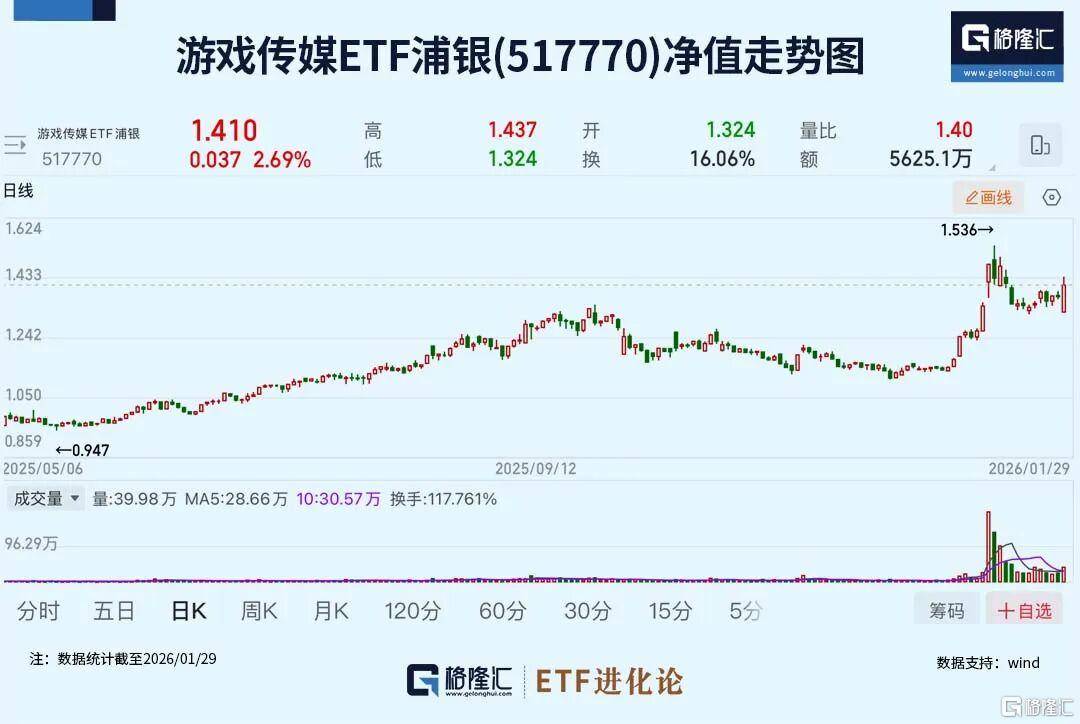
Group 1 - The market is experiencing unusual signals driven by the "application end," particularly in the AI application sector, with companies like 易点天下, 中文在线, and 天龙集团 frequently appearing on the gainers list [1] - The game media ETF浦银 (517770) has seen a 26.75% increase over the last 30 trading days and over 55% since 2025 [2] - The current market dynamics indicate a shift from "upstream capabilities" to "downstream applications," prompting investors to question how AI can be integrated into specific industries and create verifiable business paths [5][6] Group 2 - The emergence of GEO is linked to a significant change in how AI is reshaping information access, making content, gaming, and media focal points for market reassessment [6][10] - The discussion around GEO highlights a fundamental shift in user information acquisition from "search-click-read" to "ask-generate-decide," indicating a change in content's role [12][13] - The gaming and media sectors are being re-evaluated as they are user attention-centric industries with diverse monetization paths, making them prime candidates for AI application [19][21] Group 3 - The game media ETF浦银 (517770) tracks the 中证沪港深游戏及文化传媒指数, covering multiple sectors including gaming, film, advertising, and content platforms, with a notable presence of Hong Kong stocks [25][26] - Recent funding behavior indicates a structural reassessment of AI-related assets in the Hong Kong market, which had previously been affected by negative market sentiment [30][31] - The ETF浦银 (517770) has seen over 257 million yuan in net inflows over the past 20 days, reflecting its growing significance in the market [33] Group 4 -浦银安盛 is advancing its index business brand "指数家," focusing on a systematic approach to index investment that emphasizes transparency and long-term sustainability [35] - The game media ETF浦银 (517770) is not an isolated product but a manifestation of the "指数家" methodology applied to a specific industry direction [35]