卡游

Search documents
过去10年,顶级富豪们都怎么赚钱?
商业洞察· 2025-12-10 09:51
Core Insights - The article discusses the evolution of wealth in China over the past decade, highlighting the shift from real estate tycoons to new wealthy individuals in sectors driven by "emotional value" such as Pop Mart, Laopu Gold, and Card Game [4][6][9]. Group 1: New Wealth Creation - The top new entrants in the wealth rankings for 2025 include Xu Gaoming and Xu Dongbo from Laopu Gold with a wealth of 69.5 billion yuan, and Li Qibin and Qi Yan from Card Game with 60 billion yuan [7]. - Pop Mart's revenue and net profit have both increased by over 200% year-on-year, while Card Game's revenue is projected to exceed 10 billion yuan in 2024 with a net profit margin over 40% [7][9]. - The rise of milk tea brands has also contributed to the creation of new wealthy individuals, with brands like Guming and Bawang Tea entering the wealth rankings [9]. Group 2: Historical Context - The article contrasts the current wealth landscape with that of 2015, when high-tech internet and manufacturing sectors were the primary sources of new wealth, exemplified by DJI's founder Wang Tao and Didi's Cheng Wei [9][10]. - Many of today's successful companies were initially underestimated by major investors, who missed opportunities to invest in them before they became billion-dollar enterprises [10][12]. Group 3: Female Entrepreneurs - The article notes a significant increase in female entrepreneurs on the wealth list, with women making up 22.4% of the total, and over 70% being first-generation wealth creators [13][16]. - Notable female figures include Zong Fuli, who became the first female billionaire in 2024, and Zhong Huijuan, who, along with her daughter, became the first female billionaire from the pharmaceutical industry [16][17]. Group 4: Wealth Stability and Changes - The article outlines that five individuals have held the title of China's richest over the past decade, including Wang Jianlin, Xu Jiayin, Jack Ma, Zhang Yiming, and Zhong Shanshan [19]. - Zhong Shanshan's wealth, primarily from his companies Nongfu Spring and Wantai Biological Pharmacy, reached 530 billion yuan, making him the richest for the fourth consecutive year [19][20]. Group 5: Decline of Real Estate Tycoons - The article highlights a significant decline in the representation of real estate tycoons on the wealth list, dropping from 30% to just 10% over the past decade [28]. - Wang Jianlin and Xu Jiayin, once at the top, have faced severe financial difficulties, with Wang's company facing economic disputes and Xu's assets being frozen due to debt issues [30][31][32].





名创优品也想进步
远川研究所· 2025-12-09 13:12
Core Viewpoint - Miniso's third-quarter report shows a significant revenue milestone, with quarterly income surpassing 5 billion and a year-on-year growth of 28.2%, exceeding expectations. The founder's comments about transforming the company into a cultural and creative entity by closing and reopening 80% of stores have drawn considerable attention, overshadowing the actual performance of the company [5][7]. Group 1: Financial Performance - Miniso's revenue has fluctuated around 9 billion from 2019 to 2021, with a nearly halved adjusted net profit margin of 5.3% in the 2021 fiscal year [9][11]. - The company aims to achieve a global brand recognition comparable to Nike and Starbucks, focusing on opening larger stores and increasing premium product offerings [14][19]. Group 2: Strategic Shift - The company is transitioning from a low-cost, high-volume model to a high-value, premium pricing strategy, with plans to upgrade smaller stores to larger formats and increase the proportion of IP products [19][25]. - Miniso's flagship store in Shanghai has a sales structure where nearly 80% of revenue comes from IP products, reflecting a shift towards interest-driven consumption [21][18]. Group 3: Market Positioning - The average selling price in overseas markets is reported to be twice that of domestic prices, with a gross margin exceeding 50% [16]. - The company is facing competition from other brands like Pop Mart, which has a higher revenue per store despite having fewer locations [17][30]. Group 4: IP Strategy - Miniso's revenue is primarily derived from various popular IPs, with a significant increase in IP product sales, which accounted for over 30% of total sales in the first half of the year [18][28]. - The company has signed contracts with multiple IP artists, aiming for half of its store offerings to consist of proprietary IPs in the future [32][33].


过去10年,顶级富豪们都怎么赚钱?
首席商业评论· 2025-12-05 04:14
Core Viewpoint - The article discusses the shifting landscape of wealth in China over the past decade, highlighting the rise of new wealthy individuals in the "emotional" economy, contrasting with the decline of traditional real estate tycoons [4][6]. Group 1: New Wealth Creation - The top new wealthy individuals in 2025 include Xu Gaoming and Xu Dongbo from Laopu Gold, with a wealth of 69.5 billion yuan, and Li Qibin and Qi Yan from Card Game, with 60 billion yuan [6]. - Companies like Pop Mart and Laopu Gold reported revenue and net profit growth exceeding 200% year-on-year in their latest financial reports [6][9]. - Card Game's revenue is projected to surpass 10 billion yuan in 2024, with a net profit margin exceeding 40%, outperforming Pop Mart [6]. Group 2: Emotional Economy - The rise of brands like milk tea chains has created a new class of wealthy individuals, emphasizing emotional connection and cultural identity over mere product functionality [9]. - The article notes a significant shift from high-tech internet and manufacturing wealth creation in 2015 to emotional-driven businesses in 2025 [9][10]. Group 3: Investment Challenges - Many of the new wealthy individuals faced initial skepticism from major investment firms, which underestimated their potential before they achieved significant financial success [10][11]. - For instance, Pop Mart's founder struggled to secure funding until a key investor provided crucial support, leading to the brand's eventual success [10]. Group 4: Female Entrepreneurs - The article highlights the increasing presence of female entrepreneurs on the wealth list, with 22.4% of the total being women, many of whom are first-generation wealth creators [12][15]. - Notable female figures include Zong Fuli, who became the first female billionaire in the beverage industry, and Zhong Huijuan, who emerged as a new female billionaire in the pharmaceutical sector [15][16]. Group 5: Decline of Real Estate Tycoons - The article notes a significant decline in the representation of real estate tycoons on the wealth list, dropping from 30% to just 10% over the past decade [25][28]. - High-profile figures like Wang Jianlin and Xu Jiayin have fallen from grace due to financial struggles and legal issues, reflecting the broader challenges facing the real estate sector [28][29]. Group 6: Market Dynamics - The article discusses the changing dynamics in the market, with traditional brands in the apparel sector facing difficulties adapting to new consumer preferences and competition from emerging brands [30][32]. - Companies like Meisibangwei and others have struggled with financial losses and are attempting to pivot their business models to survive in a competitive landscape [30].

万联晨会-20251204
Wanlian Securities· 2025-12-04 01:37
Core Insights - The A-share market experienced a decline across all major indices, with the Shanghai Composite Index falling by 0.51% to 3,878.00 points, and the Shenzhen Component Index down by 0.78% to 12,955.25 points. The total trading volume in the A-share market reached 1.67 trillion RMB, with net inflows from southbound funds amounting to 2.279 billion HKD [2][8] - The transportation, non-ferrous metals, and coal industries showed the highest gains, while the media and computer sectors faced the largest declines. Notably, the cultivated diamond and hyperbaric oxygen chamber concept indices saw significant increases, whereas the Kuaishou concept and MLOps concept indices experienced notable declines [2][8] Industry Overview - The report highlights the successful maiden flight of China's reusable carrier rocket, Zhuque-3, marking a significant milestone in the commercial space sector. The Chinese commercial space industry is projected to reach a scale of 7-10 trillion RMB by 2030, with capabilities for in-orbit maintenance and construction of spacecraft becoming a reality [3][9] - The State-owned Assets Supervision and Administration Commission (SASAC) held a meeting to discuss the "14th Five-Year Plan" for central enterprises, emphasizing the importance of strategic planning and industry layout for major state-owned enterprises [3][9] Investment Highlights - The trading card game (TCG) market is evolving into a comprehensive cultural consumption product, driven by IP ecosystems. The core logic revolves around "collecting-exchanging-value accumulation," with emotional connections between IP and consumers being crucial for long-term engagement [10][11] - The TCG industry has established a complete industrial chain covering IP authorization, content creation, product manufacturing, channel distribution, and community operation. The upstream sector relies heavily on IP as the fundamental driver of user engagement and retention [11][12] - The design aspect is critical for product differentiation and targeting specific consumer segments, enhancing brand value and maximizing user lifecycle value [12][13] - The distribution channels are characterized by a dual approach of "offline foundation and online expansion," with offline channels focusing on high accessibility and experience, while online channels provide flexibility and broad coverage [13][14] Industry Development - The integration of TCG with diverse business models is highlighted, with examples such as Pokémon's multi-ecosystem approach that combines online digital empowerment with offline experiences and global competitions [14] - Companies like Huali Technology are exploring new avenues by merging gaming equipment with TCG, aiming to enhance consumer experiences through innovative integrations [14] Investment Recommendations - The report suggests focusing on companies with rich upstream IP resources and original IP development capabilities, leading companies in TCG design and manufacturing, and those with significant advantages in sales channels [15]
奇梦岛核心经营指标全面向好
Zheng Quan Ri Bao· 2025-12-03 16:13
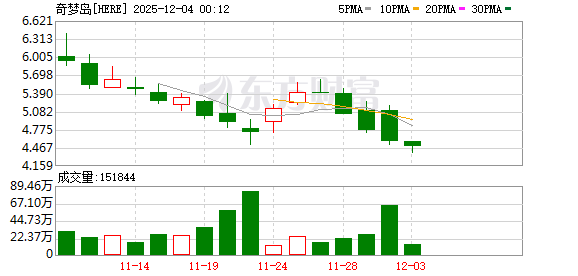
Core Insights - Qimengdao Group reported a significant revenue increase of 93.3% in its潮玩 (trendy toy) business, achieving 127.1 million yuan in Q1 of FY2026 [2][3] - The company has successfully transformed its focus to the潮玩 sector, capitalizing on the current market dynamics characterized by demand upgrades and ecosystem expansion [2][3] Financial Performance - For the quarter ending September 30, Qimengdao's revenue from its key IPs included 89.73 million yuan from WAKUKU and 20.76 million yuan from ZIYULI, contributing to overall performance [3] - The company anticipates further revenue growth, projecting Q2 revenues between 150 million and 160 million yuan [4] Market Position and Strategy - Qimengdao has established a diverse IP portfolio, including 11 proprietary IPs and several exclusive and non-exclusive licensed IPs, enhancing its market presence [3] - The company is leveraging its supply chain efficiency, with a significant increase in production capacity, achieving over 1 million plush blind boxes in August alone, a 20-fold increase from earlier in the year [3] Industry Context - The潮玩 market is evolving into a phase of strong IP operation and comprehensive ecosystem competition, presenting both opportunities and challenges for new entrants [4][5] - Competitors like Pop Mart and Kayo are setting high revenue benchmarks, with Pop Mart projected to reach 13.04 billion yuan in 2024, indicating a competitive landscape [6] Future Outlook - Qimengdao's chairman emphasized the company's strategic focus on潮玩 and its dual-engine growth strategy of IP development and multi-channel expansion, which is expected to solidify its competitive edge [7] - The company possesses over 1 billion yuan in cash reserves, providing a strong foundation for supply chain expansion and strategic investments [6][7]
IP行业系列深度报告(二):IP为核,生态融合,成长可期
Wanlian Securities· 2025-12-03 10:39
Investment Rating - The report maintains a "stronger than the market" rating for the trading card game (TCG) industry, indicating a positive outlook for growth and investment opportunities [3]. Core Insights - The trading card game market is evolving into a comprehensive industry chain that encompasses IP licensing, content creation, product manufacturing, channel distribution, and community operation, with IP as the core engine driving user engagement and long-term retention [3][4]. - The industry is characterized by a dual-channel strategy of "offline foundation and online expansion," which enhances consumer experience and broadens market reach [4][50]. - The integration of trading cards with various business models, such as digital platforms and gaming devices, is driving innovation and expanding the market [8][66]. Summary by Sections 1. Trading Card Game Overview - Trading card games (TCGs) combine themes, collection, exchange, and competitive play, often based on popular IPs from films, anime, or original designs, providing rich cultural experiences [2][12]. - TCGs can be categorized into competitive and collectible types, each with distinct value propositions and target audiences [13][14]. 2. Industry Chain - The TCG industry has established a complete industry chain driven by content, with upstream IP providers, midstream design and production companies, and downstream sales channels [35]. - Upstream, IP is the fundamental driver of user recognition and purchase conversion, with emotional resonance being a key factor in consumer decisions [38][39]. - Midstream, design differentiates products and targets specific consumer segments, enhancing brand value and user engagement [44]. - Downstream, the dual-channel strategy combines offline experiences with online sales, creating a comprehensive consumer engagement ecosystem [50][51]. 3. Market Development - The TCG market in China is projected to grow significantly, reaching a market size of 263 billion RMB by 2024, with a compound annual growth rate (CAGR) of 56.6% from 2019 to 2024 [20][21]. - The competitive landscape is concentrated, with the top five companies holding 82.4% of the market share, highlighting the dominance of key players like 卡游 (Kawoo) [26][27]. 4. Investment Recommendations - The report suggests focusing on companies with rich IP resources, strong design and manufacturing capabilities, and significant sales channel advantages [8].

金添动漫赴港上市:渠道、IP依赖症难解 与奥特曼授权方分道?
Xin Lang Zheng Quan· 2025-11-21 10:26
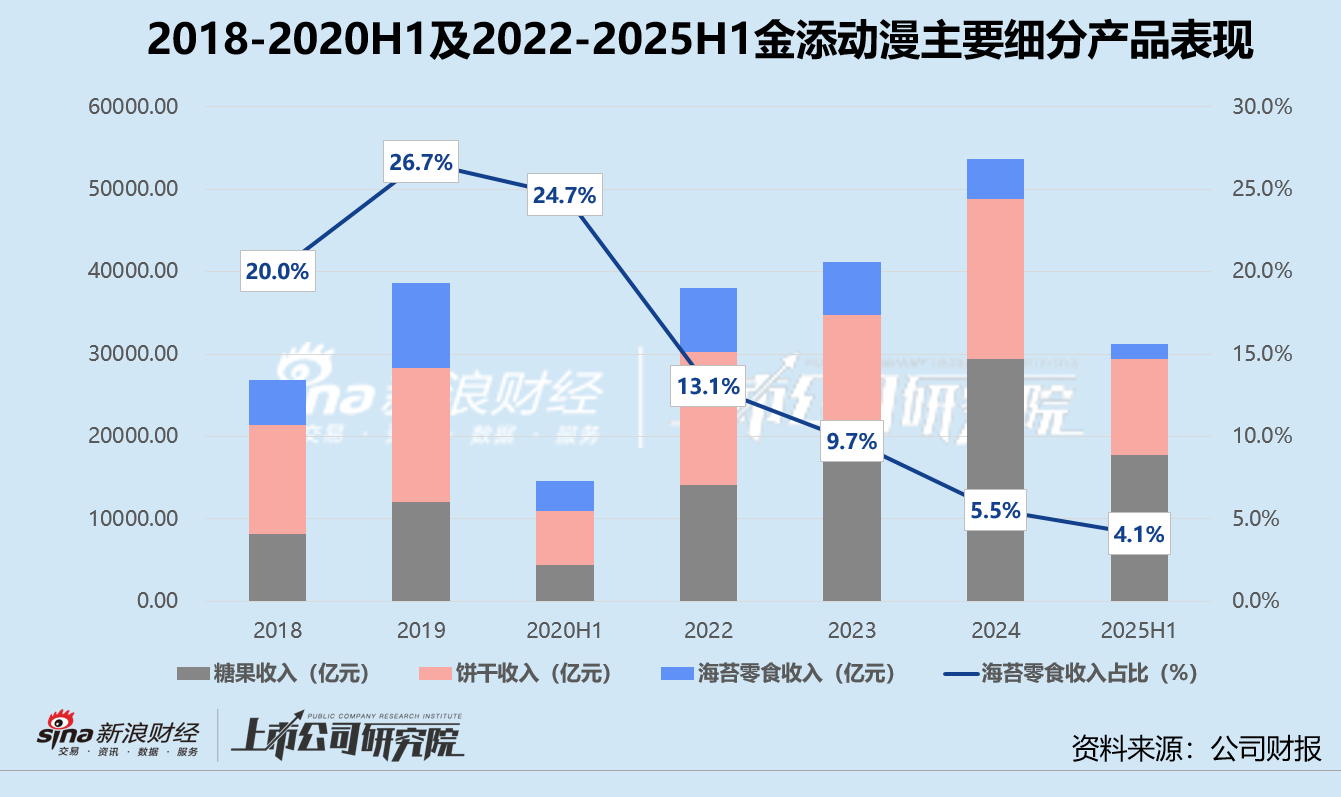
Core Viewpoint - The company Guangdong Jintian Animation Co., Ltd. (Jintian Animation) is preparing for an IPO on the Hong Kong Stock Exchange, aiming to capitalize on the growing market for IP-based consumer products, despite facing challenges in sales growth and reliance on key IPs like Ultraman [1][10]. Financial Performance - Jintian Animation's revenue is projected to grow from 5.96 billion RMB in 2022 to 8.77 billion RMB in 2024, with a compound annual growth rate (CAGR) of approximately 20.9% [1]. - Adjusted net profit is expected to rise from 36.86 million RMB in 2022 to 131 million RMB in 2024, reflecting a CAGR of 52.6% [1]. Sales and Inventory Challenges - The company has experienced a slowdown in growth, with revenue and adjusted net profit for the first half of 2025 increasing by only 9.8% and 13.4%, respectively [2]. - Sales of key product categories, including puffed snacks, chocolate, and seaweed snacks, have declined significantly, with year-on-year decreases of 25.0%, 31.8%, and 30.0% respectively in the first half of 2025 [3]. - Inventory levels have been rising, with total inventory reaching 76.18 million RMB in the first half of 2025, which is 93.6% of the total inventory for 2024 [5]. Customer Concentration and Sales Model Shift - The company has shifted its sales strategy from relying on distributors to direct sales to retail chains, with direct sales revenue increasing from 3.5% in 2022 to 43.2% in the first half of 2025 [6]. - This shift has led to increased customer concentration, with the top five customers accounting for 39.5% of total revenue by mid-2025, compared to only 4.1% in 2022 [7]. IP Dependency and Market Trends - Jintian Animation holds 26 licensed IPs, with Ultraman being the primary revenue driver, contributing 62.6% of total revenue in 2022, but its share has declined to 43.9% in the first half of 2025 [10]. - The company faces risks related to the expiration of IP licenses, with approximately 57.1% of its agreements set to expire within two years [11]. Management and Ownership Changes - Key management figures, including the actual controller of the Ultraman IP, have divested their stakes in the company, raising concerns about the future of the company's IP agreements and overall stability [14].
《鬼灭》撤档疑云,或将重创联名潮玩
3 6 Ke· 2025-11-19 04:10
Core Insights - The film "Demon Slayer: Infinity Castle Chapter 1 Akaza Strikes Again" has achieved a box office of over 400 million yuan and over 1.12 million viewers in mainland China, amidst rumors of its imminent withdrawal from theaters [1] - Despite the uncertainty surrounding its screening schedule, various brands have launched collaborative products with the "Demon Slayer" IP, indicating strong market interest and potential economic impact [4][5] Group 1: Brand Collaborations - Luckin Coffee has launched a series of collaborative products with "Demon Slayer," including a high-priced coffee set that has seen significant consumer interest, demonstrating the effectiveness of IP-driven marketing [3][4] - Other brands, such as Nestlé, Uniqlo, and Pizza Hut, have also engaged in collaborations, offering themed products that have resonated well with consumers, showcasing the broad appeal of the IP [3][4] - The collaboration has extended to the collectible market, with brands like Pop Mart releasing themed blind boxes, indicating a robust demand for merchandise associated with the IP [4][5] Group 2: Market Dynamics - The "Demon Slayer" phenomenon reflects a broader trend in the Chinese market where classic IPs are leveraged for consumer engagement, particularly in the rapidly growing "collaboration economy" [5][6] - The East Asian market has established a complementary relationship where Japan excels in IP creation while China focuses on consumerization, leading to mutual benefits [6][9] - The current market dynamics present an opportunity for Chinese IPs to emerge, as the reliance on foreign IPs poses risks related to high licensing costs and market volatility [10][11] Group 3: Future Directions - Industry experts suggest that Chinese IPs should focus on creating unique content that resonates with local cultural values, moving away from the perception that "two-dimensional" content is solely Japanese [11][12] - There is a call for a shift from merely importing and monetizing foreign IPs to developing and globally operating homegrown IPs, which could enhance the sustainability of the industry [13][14] - Companies like Tencent and Yu Wen Group are already exploring this direction by expanding their IP portfolios and engaging in international markets, indicating a shift towards a more integrated and self-sufficient industry structure [14][15]


万联证券:潮玩市场近年来快速扩容 建议关注龙头企业
智通财经网· 2025-11-14 03:05
Core Insights - The Chinese潮玩 market is rapidly expanding due to factors such as rising disposable income, the emergence of emotional consumption, the rise of domestic潮流 culture, and quality IPs [1][4] - The competitive landscape of the潮玩 market in China is relatively fragmented, with significant room for improvement compared to Japan [1][5] 潮玩 Industry Overview -潮玩 is defined as toys that integrate elements of潮流 culture, art, design, and various other concepts, characterized by high visual recognition, limited releases, and cross-industry collaborations [1] - The潮玩 industry includes various forms such as blind boxes, figurines, plush toys, gashapon, cards, dolls, art toys, assembly toys, and building sets [1] 潮玩 Industry Chain - The upstream segment consists of IP suppliers and operators, where high-quality IP suppliers hold strong bargaining power based on the scarcity and market popularity of their IPs [2] - The midstream includes潮玩 product manufacturers, who generally have weaker bargaining power; manufacturers with large-scale production capabilities are more likely to succeed [2] - The downstream segment involves retailers and consumers, where retailers' bargaining power depends on the quantity and quality of their IP reserves [2] Comparison with Japanese Toy Industry - The Japanese toy industry has matured and offers valuable lessons for China; despite challenges like declining birth rates, the industry has thrived due to the rise of gaming and anime [3] - In China, rising disposable income and a shift towards emotional consumption are driving demand for潮玩 and related products, despite demographic challenges [3] Market Growth and Projections - The Chinese潮玩 market is projected to grow from 22.9 billion yuan in 2020 to 76.3 billion yuan by 2024, with a CAGR of 35.11% [4] Market Concentration and Competition - The Chinese潮玩 market is currently fragmented, with the top five companies holding a combined market share of only 23.7% [5] - New domestic companies are rapidly expanding, with significant growth rates compared to international giants [5] - The quality and quantity of domestic IPs are increasing, with notable examples including《原神》,《黑神话:悟空》, and characters from泡泡玛特 [5]

从卫浴跨界到铜艺龙头,雷军“粉丝”携铜质文创冲刺港交所IPO
Sou Hu Cai Jing· 2025-11-13 22:14
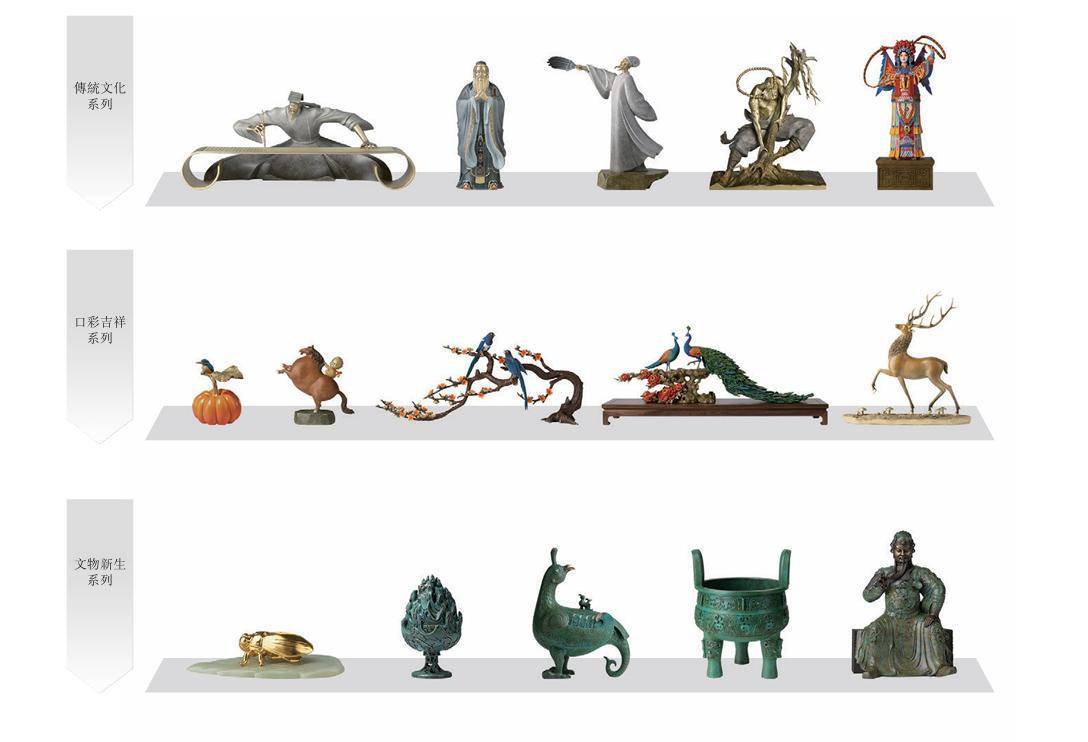
Core Viewpoint - Hangzhou Tongshifu Cultural Creative (Group) Co., Ltd. has officially submitted its listing application on the Hong Kong Stock Exchange, with CMB International as the sole sponsor, highlighting its leading position in the copper cultural product market with a 35% market share and backing from notable investors like Xiaomi and Shunwei Capital [1][4] Company Overview - Founded in 2013, Tongshifu focuses on copper cultural products while also expanding into plastic trendy toys, silver, and gold cultural products, leveraging the artistic background of its founders [1] - The company has established a product matrix centered on copper cultural products, differentiating itself from traditional gold and silver craft enterprises by lowering consumer barriers [1] IP Strategy - Tongshifu employs a dual strategy of "original + licensed" IP operations, introducing a significant number of self-developed IP products from 2022 to mid-2025, while collaborating with international IPs like "Kung Fu Panda" and "Avengers" [2] - Revenue increased from 503 million yuan in 2022 to 571 million yuan in 2024, with a gross margin improvement from 32.2% to 35.4% [2] Financial Performance - The company reported a net profit rebound to 78.98 million yuan in 2024, despite facing challenges such as a decline in average transaction value from 958 yuan in 2022 to 556 yuan in the first half of 2025 [2] - Over 75% of Tongshifu's revenue is generated from online channels, which helps reduce operational costs but also presents challenges in maintaining customer spending [2] Market Position and Challenges - Despite being a market leader, Tongshifu faces a ceiling in the copper cultural product market, projected to grow from 1.576 billion yuan in 2024 to 2.282 billion yuan by 2029, with a compound annual growth rate of 7.7% [4] - The company’s revenue from copper products has consistently exceeded 94%, while new categories like plastic trendy toys contribute minimally [4] Cost Pressures - Rising copper prices and increasing labor costs, projected to reach 158,000 yuan per year by 2029, pose significant challenges to profit margins, especially given the labor-intensive nature of copper craftsmanship [5] - To address these issues, Tongshifu plans to enhance IP value development through collaborations with museums and non-heritage institutions, as well as expanding international IP partnerships [5] Listing Strategy - The decision to list on the Hong Kong Stock Exchange follows a strategic shift from an earlier plan to list on the Shenzhen Stock Exchange, as the Hong Kong market offers greater inclusivity for cultural enterprises and a broader international investor base [5] - If successful, the funds raised will be allocated to technology development, IP reserves, and market expansion, aiming to overcome the limitations of a niche market [5]