洋河股份

Search documents
一天吃透一条产业链:白酒行业(风光不再)
Sou Hu Cai Jing· 2025-11-29 15:06
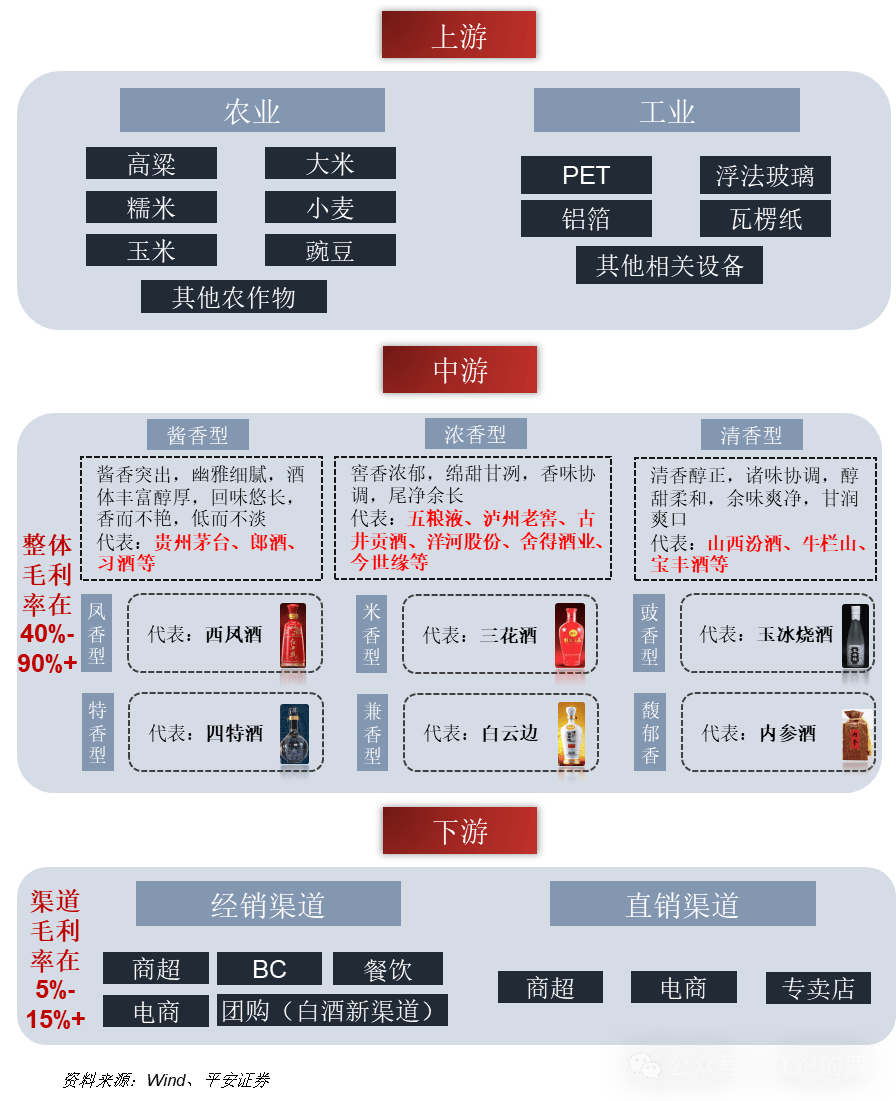
Core Insights - The article discusses the evolution and current state of the Chinese liquor industry, particularly focusing on the baijiu market, which is characterized by various flavor profiles and a significant shift in consumer behavior towards online purchasing and younger demographics [3][5][41]. Industry Overview - Baijiu is a unique traditional distilled liquor in China, primarily made from sorghum, with three main flavor types: strong aroma, sauce aroma, and light aroma [8][10]. - The baijiu market has seen a transformation driven by consumer preferences, particularly among the younger generation, leading to a more integrated approach in sales channels [5][41]. Market Dynamics - The baijiu industry is undergoing supply-side structural reforms, with a focus on reducing production capacity while enhancing efficiency and profitability [19]. - The market size for baijiu is projected to reach 861.8 billion yuan in 2024, reflecting a year-on-year growth of 10.23% [19]. Consumer Trends - The Z generation is becoming the main consumer force, with a notable shift towards rational and personalized consumption, and a decrease in traditional business drinking [5][45]. - Online sales of baijiu are expected to grow, with 2023 seeing approximately 900 billion yuan in online sales, although the online penetration rate remains relatively low at 11.9% [41][45]. Pricing and Competition - The pricing structure of baijiu is evolving, with a noticeable shift towards mid-range products, indicating a change in consumer demand [26][30]. - The industry is experiencing increased concentration, with the top 10 brands' market share rising from 18.8% in 2015 to an expected 57.1% by 2024 [33]. Production and Supply Chain - The production process of baijiu is highly standardized, ensuring consistent quality across products, with major brands like Moutai employing complex manufacturing processes [17]. - Sorghum, the primary raw material for baijiu, has seen a rebound in planting area, increasing from 425,000 hectares in 2015 to 630,000 hectares in 2023 due to rising demand [10][12]. Regional Competition - The regional competition in the baijiu market is characterized by strong local brands in provinces like Shanxi and Jiangsu, while national brands dominate in other areas [39][36].






11月28日深证国企股东回报R(470064)指数涨0.51%,成份股中钢国际(000928)领涨
Sou Hu Cai Jing· 2025-11-28 10:40
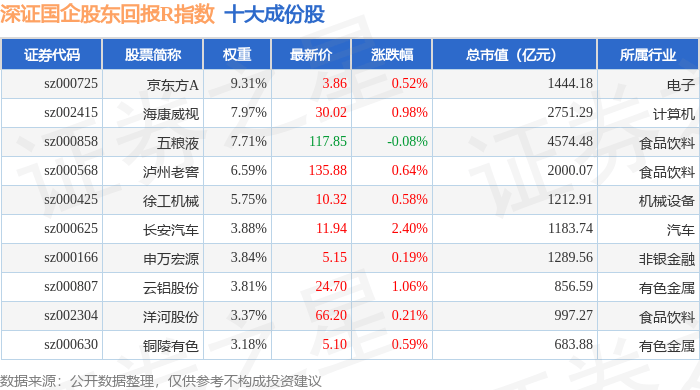
Core Points - The Shenzhen State-Owned Enterprises Shareholder Return Index (470064) closed at 2212.99 points, up 0.51% with a trading volume of 16.404 billion yuan and a turnover rate of 0.67% [1] - Among the index constituents, 36 stocks rose while 12 fell, with China Steel International leading the gainers at 2.67% and China Merchants Shekou leading the decliners at 2.63% [1] Index Constituents Summary - The top ten constituents of the Shenzhen State-Owned Enterprises Shareholder Return Index include: - BOE Technology Group (9.31% weight, latest price 3.86, market cap 144.418 billion yuan) in the electronics sector - Hikvision (7.97% weight, latest price 30.02, market cap 275.129 billion yuan) in the computer sector - Wuliangye Yibin (7.71% weight, latest price 117.85, market cap 457.448 billion yuan) in the food and beverage sector - Luzhou Laojiao (6.59% weight, latest price 135.88, market cap 200.007 billion yuan) in the food and beverage sector - XCMG Machinery (5.75% weight, latest price 10.32, market cap 121.291 billion yuan) in the machinery sector - Changan Automobile (3.88% weight, latest price 11.94, market cap 118.374 billion yuan) in the automotive sector - Shenwan Hongyuan (3.84% weight, latest price 5.15, market cap 128.956 billion yuan) in the non-banking financial sector - Yunnan Aluminum (3.81% weight, latest price 24.70, market cap 85.659 billion yuan) in the non-ferrous metals sector - Yanghe Brewery (3.37% weight, latest price 66.20, market cap 99.727 billion yuan) in the food and beverage sector - Tongling Nonferrous Metals (3.18% weight, latest price 5.10, market cap 68.388 billion yuan) in the non-ferrous metals sector [1] Capital Flow Analysis - The net inflow of main funds into the index constituents totaled 56.5973 million yuan, while speculative funds saw a net outflow of 69.8164 million yuan, and retail investors had a net inflow of 13.2191 million yuan [3] - Notable capital flows include: - Changan Automobile experienced a main fund net outflow of 54.1716 million yuan - China Steel International had a main fund net inflow of 31.1027 million yuan - Hikvision saw a main fund net inflow of 27.5848 million yuan [3]





成都5亿元国资合资企业落地,国资产区平台成白酒第三极,与巨头共舞?|行业风向标
Tai Mei Ti A P P· 2025-11-28 10:32
(图片系AI生成) 近日,注册资本5亿元的成都蓉酒酒业有限公司(下称"蓉酒酒业")成立,其股东名单清一色为国资企业——成都产业投资集团有限公司持股51%、成都酒 业集团有限公司持股34%,成都市大邑县邑岭仁安建设发展有限公司、成都蒲江产业投资集团有限公司、成都天府粮仓农旅投资发展集团有限公司各持股 5%,实际控制人为成都市国资委。 复盘来看,由国资联合推动的酒业布局,在白酒行业并非孤立事件。过去数年时间,仁怀酱酒集团、川酒集团、遵义酒业集团等区域性国资产区平台公司相 继落地。实践证明,当白酒行业从"增量狂欢"进入"存量内卷","政府+国资"的组合拳不再只是"扶小扶弱"的过渡手段,而是成长为一股有望与名酒巨头平 起平坐的结构性力量。 作为控股股东,成都产业投资集团是成都市政府设立的大型国有资本投资运营平台,注册资本100亿元,已组建150余只产业基金、总规模超1900亿元,其资 本运作与产业链整合能力,将为蓉酒酒业提供资金与资源支撑。 第二大股东成都酒业集团则是邛崃市专为白酒产区服务的国有独资企业,手握北纬三十度酒业等子公司,具备白酒行业专业运营经验。此外,成都市大邑 县、蒲江县等地的国资企业入股,进一步强化了 ...
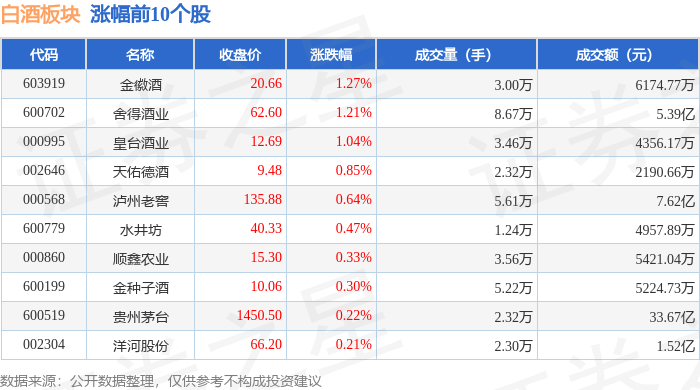
白酒板块11月28日涨0.13%,金徽酒领涨,主力资金净流入1.22亿元
Zheng Xing Xing Ye Ri Bao· 2025-11-28 09:08
Market Overview - The liquor sector experienced a slight increase of 0.13% on November 28, with Jinhuijiu leading the gains [1] - The Shanghai Composite Index closed at 3888.6, up 0.34%, while the Shenzhen Component Index closed at 12984.08, up 0.85% [1] Liquor Stocks Performance - Jinhuijiu (code: 616809) closed at 20.66, with a rise of 1.27% and a trading volume of 30,000 shares, amounting to 61.75 million yuan [1] - Other notable performers included Shede Liquor (code: 600702) with a 1.21% increase, and Qingdao Wenzhou (code: 000995) with a 1.04% increase [1] - Conversely, stocks like ST Yanshi (code: 600696) and Yingjia Gongjiu (code: 603198) saw declines of 1.01% and 0.71% respectively [2] Capital Flow Analysis - The liquor sector saw a net inflow of 122 million yuan from institutional investors, while retail investors contributed a net inflow of 103 million yuan [2] - However, there was a net outflow of 224 million yuan from speculative funds [2] Individual Stock Capital Flow - Kweichow Moutai (code: 600519) had a significant net inflow of 2.43 billion yuan from institutional investors, but a net outflow of 2.43 billion yuan from speculative funds [3] - Gujing Gongjiu (code: 000596) experienced a net inflow of 12.6 million yuan from institutional investors, while also facing a net outflow from speculative funds [3] - Other stocks like Shede Liquor and Tianyoude Liquor also showed mixed capital flows, with varying degrees of net inflows and outflows from different investor types [3]


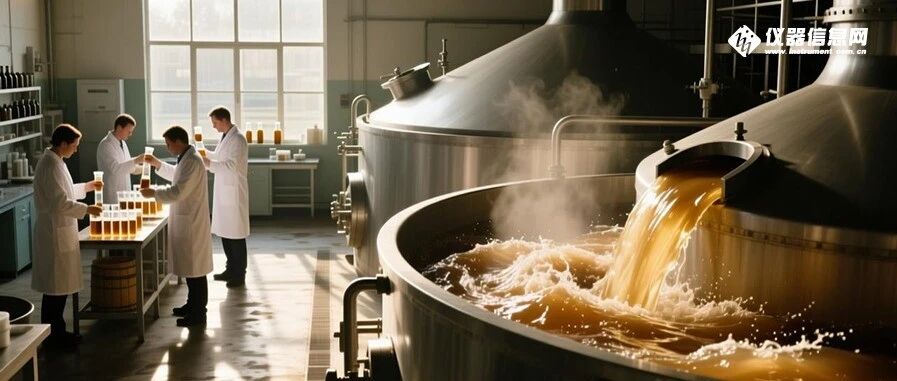
酒厂实验室仪器配置清单
仪器信息网· 2025-11-28 09:07
Core Viewpoint - The article discusses the importance of laboratory facilities in the wine industry, highlighting various laboratories associated with major Chinese liquor brands and their roles in quality control and research [2][3][4]. Group 1: Laboratory Introductions - The Yanghe Laboratory, established on June 28, 2022, provides comprehensive testing services for over 130 liquor companies in the Yanghe New District, having issued a total of 1,142 inspection reports [2]. - The Moutai Brewery Laboratory is the first national key laboratory approved by the State Administration for Market Regulation in Guizhou Province, focusing on the quality and safety of sauce-flavored liquor [3]. - The Wuliangye Group collaborates with Jiangnan University to create a laboratory that studies brewing microorganisms and flavor genomics, revealing the impact of climate factors on the geographical distribution of fungi and regional flavor [4]. Group 2: Functions of Laboratories - Laboratories are responsible for sampling finished products and raw materials, conducting timely and accurate quality inspections, and improving analysis methods to support production processes [5]. - They utilize specialized microbiological testing techniques to analyze mash, raw liquor, and finished liquor, providing scientific guidance for optimizing fermentation processes [5]. Group 3: Laboratory Types and Equipment - Various types of laboratories are mentioned, including raw material laboratories, yeast culture laboratories, fermentation laboratories, and testing analysis laboratories, each equipped with specific instruments for their functions [6][7]. - A comprehensive list of laboratory equipment includes turbidity meters, refractometers, spectrophotometers, and gas chromatographs, which are essential for quality control and analysis in the liquor production process [10].
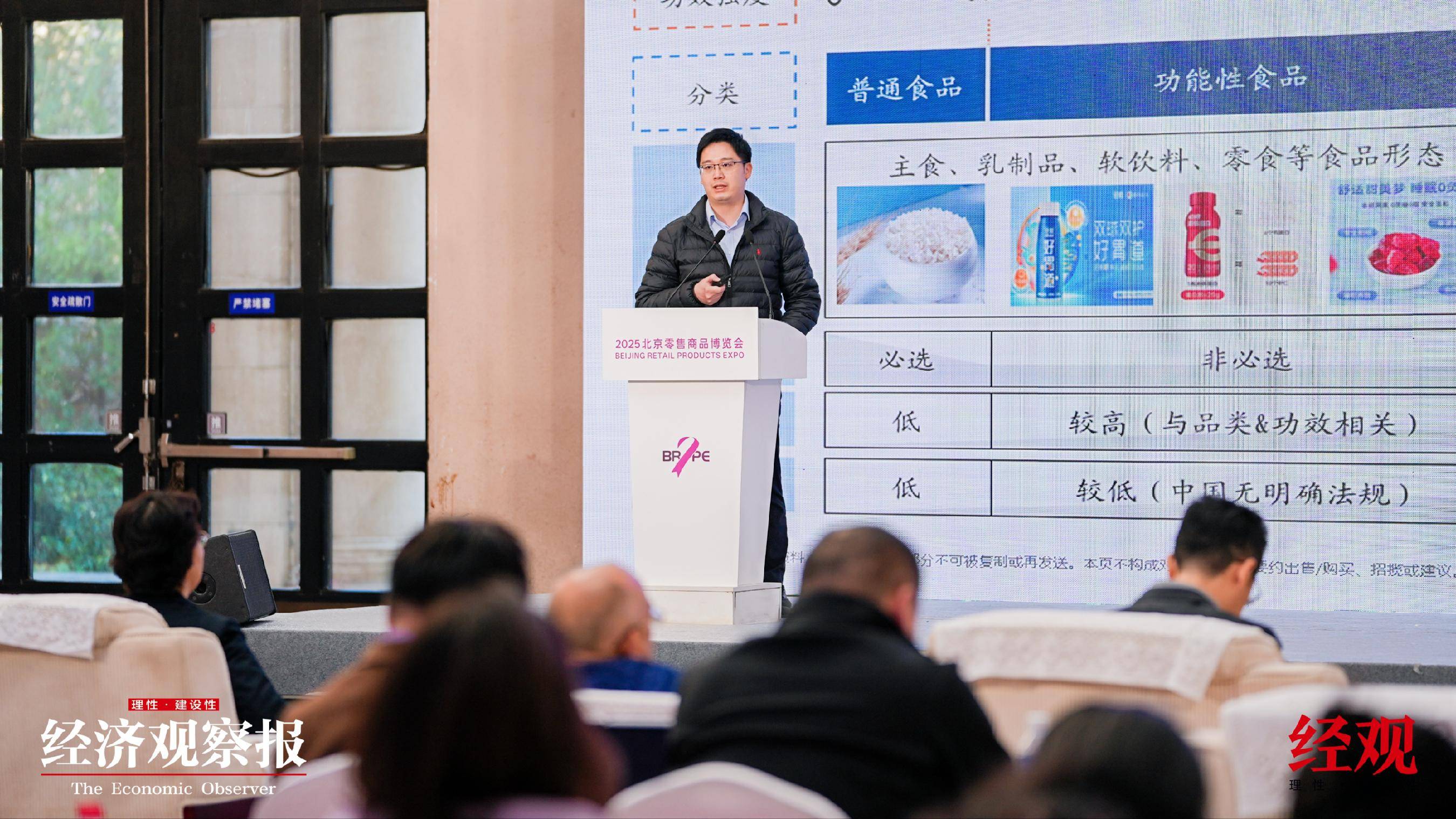
【2025美好生活高峰论坛】华创证券食品饮料首席分析师欧阳予:解码新消费浪潮下的食品饮料行业变革与机遇
Sou Hu Cai Jing· 2025-11-28 07:11
Group 1 - The forum focused on high-quality and upgraded consumption in the Chinese market, aiming for a healthier and more sustainable future [2] - The chief analyst from Huachuang Securities provided insights into the evolution of the Chinese consumer market and structural opportunities in the food and beverage industry [3][8] - New consumption trends are reshaping market dynamics, with a focus on personalized and emotional consumption, as seen in the rise of trendy toys and pet-related products [8] Group 2 - The food and beverage industry is experiencing three major trends: the rise of functional foods driven by economic development and aging population, diversification in alcoholic beverages, and the standardization of restaurant supply chains [10][11] - Functional foods are becoming increasingly popular, with innovations in product forms such as functional gummies and drinks, indicating a growing market for health-oriented products [10] - The alcoholic beverage market is shifting towards lighter drinks, with whiskey and yellow wine gaining traction, reflecting changing consumer preferences [10][11] Group 3 - The evolution of the Chinese consumer goods market over the past 40 years can be divided into four stages, highlighting the transition from basic consumption to quality demands and the current era of personalized and functional consumption [9] - The restaurant industry is undergoing a transformation, with a focus on chain standardization and the survival of efficient restaurant chains following a period of volatility [11] - The insights shared at the forum indicate that the food and beverage industry is on the brink of a golden development period, driven by continuous consumption upgrades and industry innovations [11]
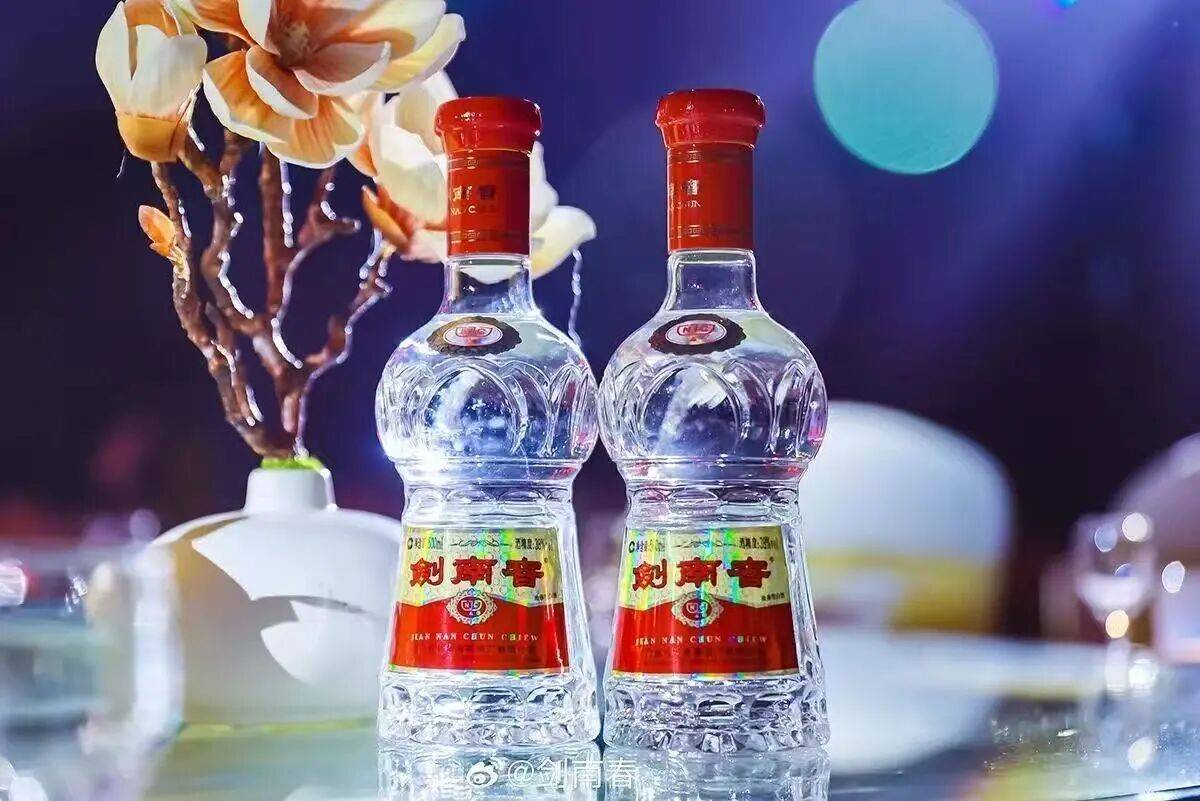
水晶剑,乔愚在剑南春的滑铁卢?
Sou Hu Cai Jing· 2025-11-28 06:21
Core Viewpoint - During this year's Double Eleven shopping festival, the online prices of premium liquor brands, such as Moutai and Wuliangye, experienced significant drops, raising concerns in offline channels about market stability and pricing strategies [2][10]. Group 1: Price Dynamics and Market Reactions - The "Billion Subsidy" initiative on e-commerce platforms led to unprecedented price reductions for liquor, particularly affecting the well-known product "Crystal Sword" from Jian Nan Chun, which saw its price drop to 341 yuan per bottle on Pinduoduo, breaking the 350 yuan threshold [2][8]. - The online price of 350 yuan per bottle for "Crystal Sword" has disrupted the long-standing stability in pricing, distribution, and profitability, indicating a potential market "short-selling" signal [10][19]. - Jian Nan Chun's sales performance during Double Eleven remained strong, with its official Tmall store ranking first in liquor sales, and significant sales increases on platforms like Meituan [8][10]. Group 2: Sales Targets and Challenges - Jian Nan Chun's current sales target of 30 billion yuan by 2025, set by the new general manager Qiao Yu, is under scrutiny as the company reported only 16.94 billion yuan in revenue for 2024, with a mere 3.74% growth rate [12][13]. - Achieving the ambitious 30 billion yuan target would require a staggering 77.1% year-on-year growth, which appears increasingly unattainable given the current market conditions [13][15]. - The overall liquor industry is facing a slowdown, with over 90% of companies reporting declining performance, making it particularly challenging for Jian Nan Chun to achieve high growth [15]. Group 3: Competitive Landscape and Future Outlook - The competitive landscape has expanded, with new entrants like Guojiao 1573 and others challenging Jian Nan Chun's market position, making it difficult for "Crystal Sword" to maintain its status as a leading product [17]. - The significant drop in online pricing and emerging sales volume signals for "Crystal Sword" suggest potential difficulties ahead for Jian Nan Chun, raising questions about how the company will navigate market fluctuations [17][19]. - The reliance on "Crystal Sword" as a key revenue driver poses risks for Jian Nan Chun, as any substantial decline in its market performance could lead to significant challenges for the new management under Qiao Yu [19].
“低度酒收藏十年,一分没涨!” 酒仙董事长断言:它不是未来 | 酒业内参
Xin Lang Cai Jing· 2025-11-28 03:21
Core Viewpoint - The chairman of JiuXian Group, Hao Hongfeng, asserts that while low-alcohol beverages are currently a trend, they do not represent the future of Chinese liquor, particularly due to their high pricing which lacks sincerity towards younger consumers [3][4][5]. Industry Insights - The trend towards low-alcohol and youth-oriented products is seen as a temporary hotspot rather than a sustainable future direction for Chinese liquor [4]. - Young consumers are currently less inclined to purchase traditional Chinese liquor due to its high price, which is often beyond their budget [4][5]. - The pricing strategy for low-alcohol products is criticized, as prices above 100 yuan are considered too high for young consumers entering the workforce [4][5]. - The storage value of low-alcohol beverages is questioned, with historical data showing that prices have not appreciated over the past decade, unlike high-alcohol products [7]. - The current adjustment period in the liquor industry is viewed as an opportunity for channel development, despite short-term challenges faced by distributors and retail outlets [7][8]. - The phenomenon of price inversion in the liquor market is highlighted, with excess production leading to price competition and a need for rationalization over the next 3 to 5 years [11]. Company Developments - JiuXian Group has been expanding its offline retail presence, aiming to open 10,000 stores in the next three years, leveraging the removal of upstream production constraints [15][16]. - The company has experienced significant revenue growth, with a 20% year-on-year increase in the third quarter, indicating a strong operational performance [15]. - The strategy of focusing on high-quality, cost-effective products is emphasized, with the company aiming to cater to consumers seeking value without compromising on quality [21]. - The chairman notes that the relationship between manufacturers and distributors needs to evolve towards a model that prioritizes consumer sales over inventory pressure on distributors [10].

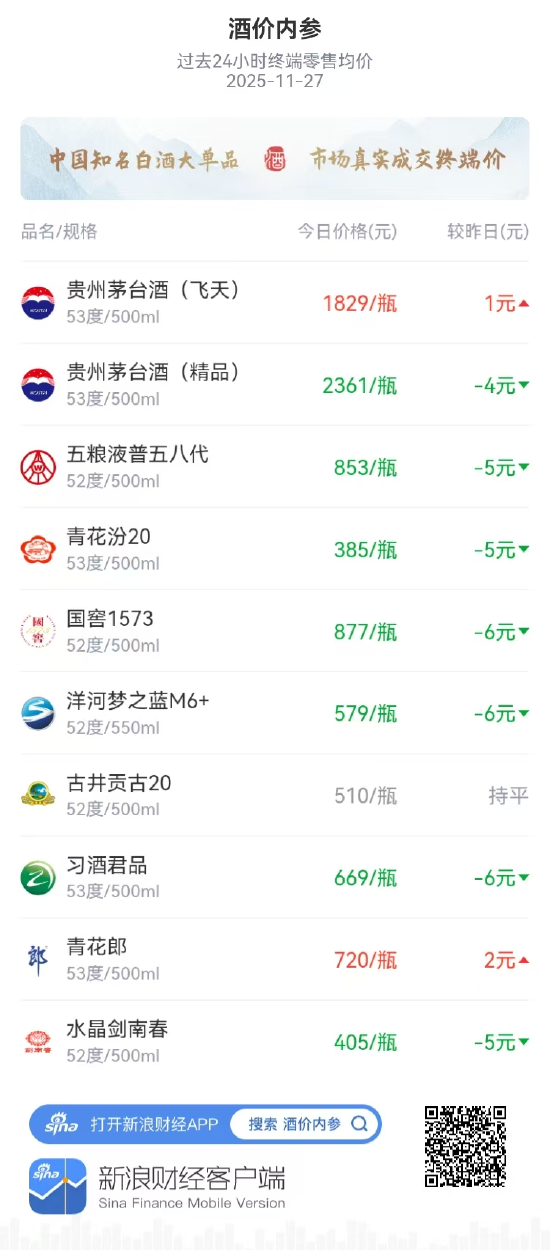
酒价内参11月27日价格发布:青花汾20价格下跌5元/瓶
Xin Lang Cai Jing· 2025-11-27 01:44
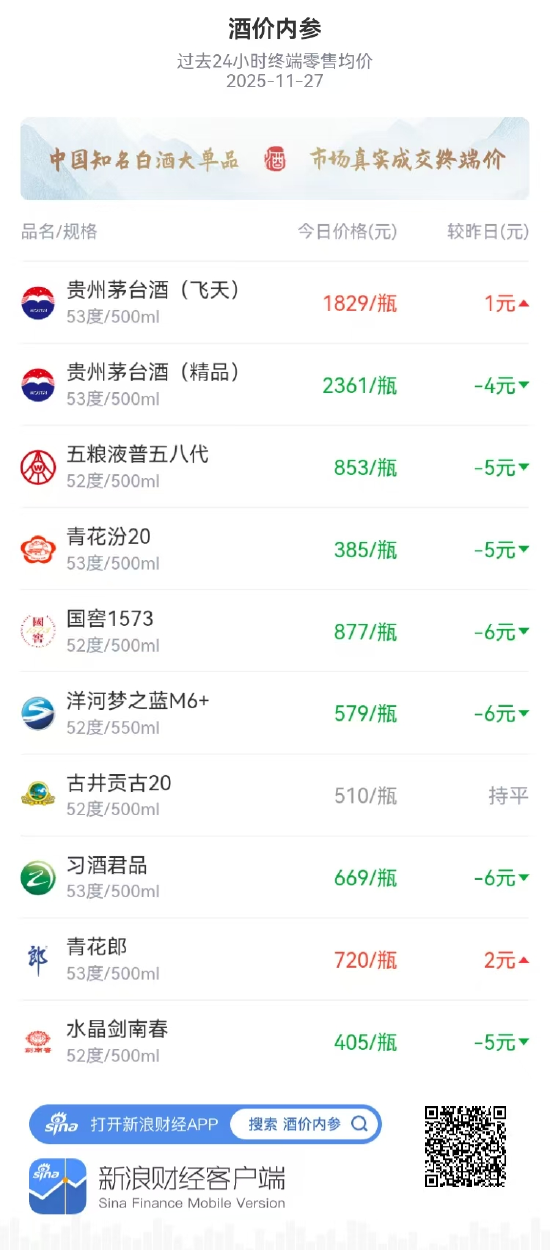
Core Insights - The white liquor market is experiencing a price adjustment, with the average retail price of the top ten products decreasing for the second consecutive day, currently priced at 9188 yuan, down 34 yuan from the previous day [1] - A notable increase in prices was observed for Qinghua Lang, which rose by 2 yuan per bottle, while Feitian Moutai saw a slight increase of 1 yuan per bottle [1] - The chairman of Jinshiyuan expressed optimism about a gradual recovery in the white liquor market next year, despite current challenges such as weak demand and intense competition [1] Price Trends - The average retail price of the top ten white liquor products has decreased, with specific products showing varied price movements: - Feitian Moutai: 1829 yuan, up 1 yuan - Premium Moutai: 2361 yuan, down 4 yuan - Wuliangye: 853 yuan, down 5 yuan - Guojiao 1573: 877 yuan, down 6 yuan - Yanghe Dream Blue M6+: 579 yuan, down 6 yuan - Xijiu Junpin: 669 yuan, down 6 yuan - Qinghua Lang: 720 yuan, up 2 yuan [3][4] Market Outlook - Jinshiyuan's chairman indicated that the company is seeing progress in expanding its market outside the province, which provides some resilience despite a decline in performance in the first three quarters [1] - The industry is believed to be at the bottom of its cycle, with a cautious optimism about future recovery as inventory levels among distributors have peaked [1]

酒价内参11月27日价格发布:国窖1573价格环比下跌6元/瓶
Xin Lang Cai Jing· 2025-11-27 01:30
Core Insights - The white liquor market is experiencing a price adjustment, with the average retail price of the top ten products decreasing for the second consecutive day, currently at 9188 yuan, down 34 yuan from the previous day [1] - A notable increase in prices was observed for Qinghua Lang, which rose by 2 yuan per bottle, while Feitian Moutai saw a slight increase of 1 yuan per bottle [1] - The chairman of Jinshiyuan expressed optimism about a gradual recovery in the white liquor market next year, despite current challenges such as weak demand and intense competition [1] Price Trends - The average retail price of the top ten white liquor products is currently 9188 yuan, reflecting a decrease of 34 yuan from the previous day [1] - Specific price changes include: - Feitian Moutai: 1829 yuan (+1 yuan) - Premium Moutai: 2361 yuan (-4 yuan) - Wuliangye: 853 yuan (-5 yuan) - Guojiao 1573: 877 yuan (-6 yuan) - Yanghe Dream Blue M6+: 579 yuan (-6 yuan) - Xijiu Junpin: 669 yuan (-6 yuan) - Qinghua Lang: 720 yuan (+2 yuan) [3][4] Market Outlook - Jinshiyuan's chairman indicated that the company is cautiously optimistic about the market's recovery, noting that the peak inventory levels among distributors have passed, suggesting the industry is at a cyclical low [1] - This sentiment aligns with analyses from some brokerage firms, providing a boost of confidence to the white liquor industry, which is currently undergoing significant adjustments [1]