
奇瑞汽车

Search documents
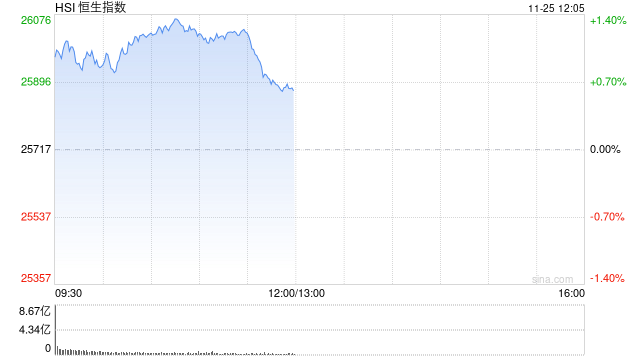
港股午评:恒指涨0.61%科指涨1.15%!科网股活跃汽车股走强,小米集团涨超4%,阿里巴巴涨超2%,洛阳钼业涨2%
Sou Hu Cai Jing· 2025-11-25 04:21
Core Points - The Hang Seng Index and its sub-indices experienced collective gains, with the Hang Seng Index rising by 0.61% to 25,873.27 points, the Hang Seng Tech Index increasing by 1.15%, and the National Enterprises Index up by 0.75% [5] - Xiaomi Group's stock surged over 4% following an announcement that its founder and CEO Lei Jun purchased 2.6 million shares at an average price of approximately 38.58 HKD per share, totaling over 100 million HKD [2][5] - New consumption concept stocks, particularly Gu Ming, saw significant gains, with Gu Ming's stock rising over 5% after launching new products priced at 16 HKD and 18 HKD [4][5] Group 1: Stock Performance - Xiaomi Group's stock closed at 40.440 HKD, reflecting a 4.60% increase [3][6] - Other notable performers included Bilibili, which rose over 5%, and Baidu, which increased by over 3% [5] - The automotive sector also showed strength, with companies like Li Auto and BYD experiencing gains [3][5] Group 2: Market Trends - The new consumption sector is expanding, as evidenced by Gu Ming's introduction of new products aimed at diversifying its offerings [4] - The non-ferrous metals sector is gaining momentum, with companies like Luoyang Molybdenum rising over 2% amid increased expectations of a Federal Reserve rate cut in December [7][8] - The probability of a 25 basis point rate cut by the Federal Reserve in December has risen to 82.9%, which is expected to positively impact the non-ferrous metals sector [7]



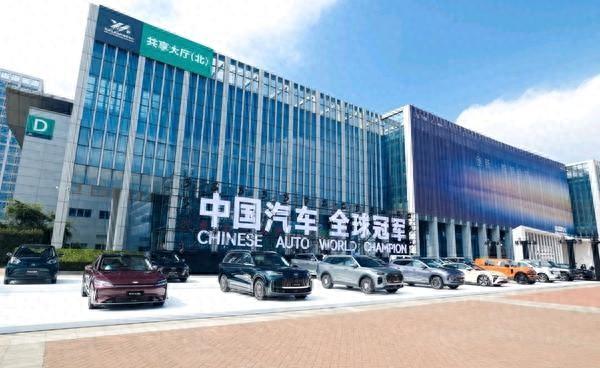
从规模到价值的华丽蝶变 ——记2025广州车展
Zhong Guo Qi Che Bao Wang· 2025-11-25 01:40
Core Insights - The article highlights the significant transformation of China's automotive industry from "catching up" to "leading" during the 14th Five-Year Plan, showcasing advancements in technology and market restructuring [2][4][6]. Industry Performance - In 2025, China's automotive production and sales reached 27.69 million and 27.68 million units respectively from January to October, marking year-on-year growth of 13.2% and 12.4% [3]. - The penetration rate of new energy vehicles (NEVs) in China has reached 50%, surpassing the 2025 target set in the New Energy Vehicle Industry Development Plan [4]. Market Dynamics - The competition among automotive companies has shifted from market share to technological sovereignty, with a focus on advanced technologies such as smart manufacturing, AI, and battery technology [2][7]. - Domestic brands have achieved a market share of 72.5% in passenger vehicles, indicating a strong presence in both domestic and international markets [4][5]. Technological Advancements - The article emphasizes the rapid development of electric, intelligent, and connected vehicles, with solid-state battery technology expected to enter mass production during the 15th Five-Year Plan [12]. - New models showcased at the Guangzhou Auto Show demonstrate significant advancements in battery efficiency and autonomous driving capabilities, with expectations for widespread adoption of Level 2 and above autonomous driving features [12][13]. Future Trends - The automotive market is expected to see a continued rise in the prominence of domestic brands, which are leveraging their strengths in electrification and intelligence to capture market share [14]. - The focus on niche markets, such as large family SUVs and personalized vehicles, is anticipated to shape the competitive landscape in the coming year [14].

汽车早餐 | 深蓝汽车称有计划接手北京现代重庆工厂;我国牵头制定的联合国全球技术法规《电动重型车辆车载电池耐久性》获表决通过
Zhong Guo Qi Che Bao Wang· 2025-11-25 01:24
Domestic News - The Ministry of Industry and Information Technology announced the creation of national emerging industry development demonstration bases, focusing on key areas such as intelligent connected new energy vehicles, new materials, and high-end equipment, aiming to establish around 100 park-type and 1,000 enterprise-type bases by 2035 [2] - Hebei Province plans to implement an industrial innovation project to accelerate the cultivation of industries like intelligent connected vehicles, biomedicine, and new energy, aiming for integrated cluster development and boosting consumption [4] International News - The UK government announced an additional £1.3 billion (approximately 121.09 billion RMB) in electric vehicle subsidies and £200 million (approximately 18.62 billion RMB) for charging infrastructure, further promoting the transition to zero-emission vehicles [5] Company News - VinFast reported a significant increase in Q3 electric vehicle deliveries, but its net loss expanded to approximately 240 trillion VND (about 68.4 billion RMB), a year-on-year increase of 81%, despite a 47% rise in total revenue [6] - Tesla launched its Full Self-Driving (FSD) software in South Korea, marking the software's availability in seven countries/regions [7] - BYD and Midea reached a strategic cooperation agreement to create a "people-vehicle-home" smart living paradigm, allowing users to control home appliances from their vehicles [9] - Deep Blue Automotive plans to take over Beijing Hyundai's Chongqing factory, although specific production timelines and models remain undisclosed [10] - Xiaomi Group's founder Lei Jun invested over HK$100 million to increase his stake in the company, raising his ownership to 23.26% [11] - The Ministry of Industry and Information Technology announced the establishment of a standardization technical committee for humanoid robots, with members including executives from Chery and XPeng [12] - IM Intelligent Vehicle launched its IM6 model in New Zealand, with a starting price of NZ$66,900 (approximately 267,000 RMB) [13] - Pony.ai and Sunshine Mobility announced a strategic partnership to develop a large-scale autonomous driving fleet, enhancing the quality of autonomous mobility services in major cities [14] - JD Group commenced construction of a new R&D center in Nanjing, with an investment of 3.5 billion RMB, focusing on AI, robotics, and autonomous driving technologies [15]

恒生指数季度调整 成分股扩容至89只
Jin Rong Shi Bao· 2025-11-25 01:15
Group 1 - The Hang Seng Index Company announced quarterly index adjustments effective after market close on December 5, 2025, with changes to major indices including the Hang Seng Index, Hang Seng China Enterprises Index, and Hang Seng Tech Index [1][2] - The Hang Seng Index will include Innovent Biologics with a weight of 0.91%, increasing the number of constituent stocks from 88 to 89 [1] - The Hang Seng China Enterprises Index will add China Hongqiao, Innovent Biologics, and Yum China with weights of 1.30%, 1.21%, and 0.91% respectively, while removing New Hope Energy and others, maintaining a total of 50 stocks [1][2] Group 2 - The Hang Seng Tech Index will include Leapmotor with a weight of 0.98%, while ASMPT will be removed, keeping the total at 30 stocks [1] - The Hang Seng Composite Index will add six companies, increasing the number of constituent stocks from 503 to 509 [1] - The adjustments are expected to lead to increased trading volumes on December 5, as passive funds may rebalance to minimize tracking errors [3] Group 3 - The adjustments will increase the representation of healthcare and industrial sectors in the Hang Seng Index, with healthcare rising from 2.9% to 4.0% and industrial from 8.8% to 9.1% [3] - Financial and consumer sectors will see a decline in representation, with financial dropping from 33.6% to 32.9% and consumer from 27.4% to 26.4% [3] - Multiple institutions express optimism about the future performance of Hong Kong stocks, particularly in technology and healthcare sectors [3][4] Group 4 - UBS highlights that support for private enterprises and capital markets, along with liquidity and potential inflows from domestic and international investors, will continue to bolster the market [5] - The outlook for 2026 predicts a rise in non-financial profit growth for overseas Chinese stocks from 10% to around 15% [4] - The market is seen as entering a favorable positioning phase, with recommendations to focus on underperforming sectors such as consumer services and construction [4]
三只松鼠回应入职要姓“鼠”;屈臣氏CEO跳海救人,全程只花了48秒;雷军1亿港元增持小米股份;Meta拟进军电力交易市场丨邦早报
Sou Hu Cai Jing· 2025-11-25 00:18
Group 1 - Lei Jun, the founder and CEO of Xiaomi Group, has personally invested over 100 million HKD to increase his stake in the company to 23.26% by acquiring 2.6 million shares [1] - Xiaomi Group has conducted significant stock buybacks, repurchasing 21.5 million shares for over 800 million HKD in the past two days, bringing the total buyback amount for the year to over 2.3 billion HKD [1] Group 2 - Jidu Automotive's affiliated company, Shanghai Jidu Automotive Co., Ltd., has filed for bankruptcy, with a registered capital of 400 million USD and operations in electric vehicle sales and parts manufacturing [2] - The company has faced financial difficulties since December of last year, leading to supplier claims for unpaid debts [2] Group 3 - Hema's budget community supermarket, Chaohe Suan NB, has officially opened its franchise application, with the first batch of cities including Shanghai, Hangzhou, Jiaxing, and Huzhou, and an annual franchise fee of 50,000 CNY [5] - Deep Blue Automotive has plans to take over Beijing Hyundai's Chongqing factory, although specific production timelines and models remain undisclosed [5] Group 4 - OpenAI has been actively recruiting from Apple's hardware engineering team, hiring over 40 employees, including high-level directors and engineers, which has caused dissatisfaction at Apple [5] - Meta is seeking electricity trading licenses to support its ambitious AI data center plans, which require significant energy resources [5] Group 5 - Tesla's CEO Elon Musk announced that the company is nearing completion of the AI5 chip and has begun development on the AI6 chip, aiming to produce a new AI chip annually [5] - The new chips will be utilized for autonomous driving and humanoid robots, with Musk personally involved in the design process [5] Group 6 - The global sales of new energy vehicles (NEVs) are projected to grow by 25% year-on-year in 2025, with a significant increase in sales expected in the third quarter [20] - BYD and Tesla lead the market in both battery electric vehicles (BEVs) and plug-in hybrid electric vehicles (PHEVs) [21] Group 7 - China's textile and apparel exports from January to October 2025 reached 243.95 billion USD, reflecting a decline of 1.6% year-on-year, with October exports alone dropping by 12.6% [22]



三只松鼠回应入职要姓“鼠”;屈臣氏CEO跳海救人,全程只花了48秒;雷军1亿港元增持小米股份;Meta拟进军电力交易市场丨邦早报
创业邦· 2025-11-25 00:08
Group 1 - Lei Jun, the founder and CEO of Xiaomi, increased his stake in the company by purchasing over HKD 100 million worth of shares, raising his ownership to 23.26% [2] - Xiaomi has conducted significant stock buybacks, repurchasing 21.5 million shares this month for over HKD 800 million, bringing the total buyback amount for the year to over HKD 2.3 billion [2] Group 2 - Jidu Auto's affiliated company, Shanghai Jidu Auto Co., has filed for bankruptcy, with a registered capital of USD 400 million and operations in electric vehicle sales and parts manufacturing [5] - The company has faced financial difficulties since December last year, leading to supplier claims for unpaid debts [5] Group 3 - Hema's budget community supermarket, Super Box, has opened its first franchise application channel, with an annual franchise fee of CNY 50,000, targeting large residential communities and mature business districts [8] - The initial cities for franchise openings include Shanghai, Hangzhou, Jiaxing, and Huzhou [8] Group 4 - Deep Blue Auto confirmed plans to take over Beijing Hyundai's Chongqing factory, although details on production timelines and models remain undisclosed [9] - The factory was sold for CNY 1.62 billion and has been listed for sale multiple times [9] Group 5 - OpenAI is aggressively recruiting from Apple's hardware engineering team, hiring over 40 employees in the past month, including high-level directors and engineers [9] - Apple has expressed dissatisfaction with OpenAI's recruitment efforts [9] Group 6 - Meta is seeking electricity trading licenses to secure long-term power purchases from new power plants, aiming to support its ambitious AI data center plans [9] - Other tech companies, including Microsoft and Apple, are also pursuing similar licenses [9] Group 7 - Tesla's CEO Elon Musk announced the imminent completion of the AI5 chip and the initiation of AI6 chip development, with a goal of producing a new AI chip annually [9] - Musk emphasized the expected production volume of these chips will surpass that of all other AI chips combined [9] Group 8 - The global sales of new energy vehicles (NEVs) reached 5.39 million units in Q3 2025, marking a 31% year-on-year increase, with battery electric vehicles (BEVs) growing by 48% [26][27] - BYD leads the market with a 15.4% share in BEVs and 27.9% in plug-in hybrid electric vehicles (PHEVs) [27] Group 9 - China's textile and apparel exports totaled USD 243.95 billion from January to October 2025, reflecting a 1.6% decline year-on-year [27]


时报观察丨人形机器人站上车展C位的冷思考
证券时报· 2025-11-24 23:15
Core Viewpoint - Major automotive companies are increasingly venturing into the humanoid robot sector, marking a trend of cross-industry expansion as they showcase humanoid robots at events like the 2025 Guangzhou International Auto Show [2]. Group 1: Industry Trends - At the 2025 Guangzhou International Auto Show, humanoid robots took center stage, overshadowing traditional automotive innovations, with companies like GAC Group and Xpeng Motors presenting their latest humanoid robots [2]. - Several automotive manufacturers, including SAIC, BYD, Changan, and Chery, are entering the humanoid robot market, with Tesla positioning robots as a key part of its future strategy [2]. Group 2: Technological Synergy - The underlying technologies of robots and smart vehicles share commonalities, such as intelligent perception, autonomous movement, route planning, and human-machine interaction, allowing automotive companies to leverage their existing expertise in these areas [2]. - Automotive companies are applying their manufacturing, motion control, branding, and user engagement strengths to the robot sector, aiming to create a new growth avenue for performance and valuation [2]. Group 3: Cautionary Insights - The business logic and developmental stage of humanoid robots differ significantly from that of automobiles, requiring substantial investment and a long return cycle, which could strain cash flow if companies invest blindly [3]. - The automotive industry is still grappling with challenges like price wars, with the overall profit margin for the Chinese automotive sector at only 4.5% in the first nine months, lower than that of downstream industrial enterprises [3]. - Companies should approach humanoid robot development as a long-term strategy based on technological applicability and genuine market demand, rather than a short-term capital game, balancing innovation investment with financial health [3].
一线调研:“汽车皖军”何以集群成势
Zhong Guo Qing Nian Bao· 2025-11-24 23:14
Core Insights - Anhui province has emerged as a significant player in the automotive industry, particularly in the production of traditional and new energy vehicles, achieving the highest output in the country since 2025 [2][5] - The province's automotive production reached 2.06 million units from January to August, with new energy vehicles accounting for 1.02 million units, and exports of vehicles increased by 14% year-on-year [2][5] - The development of Anhui's automotive industry is supported by advanced manufacturing technologies, including automation and digitalization in factories [2][4] Industry Development - Anhui has adopted a "one chess game" strategy to optimize its automotive industry layout, creating an integrated development pattern centered around Hefei and Wuhu, supported by other cities [5][12] - The province has established a complete industrial chain, showcasing characteristics such as chain leadership, innovation aggregation, and talent support [5][12] - The automotive industry in Anhui includes major players like Chery, NIO, and BYD, forming a comprehensive product matrix covering passenger, commercial, and special vehicles [12][15] Technological Innovation - Companies in Anhui are focusing on technological innovation, with significant investments in automation and self-research capabilities [8][10] - Anhui Shenghuabo Automotive Electric Co., Ltd. has become a leader in the wiper market, holding approximately 30% of the domestic market share, and has developed fully automated production lines [7][10] - The province's automotive sector is supported by local universities and research institutions, fostering collaboration in key areas such as vehicle-grade chips and autonomous driving algorithms [10][15] Export and Global Reach - Anhui's automotive exports have expanded to over 150 countries and regions, maintaining the highest export volume in the country from January to August [17][18] - The province's new energy vehicle exports reached 5.45 billion yuan, reflecting a year-on-year growth of 57.6% [17][18] - Government policies have been implemented to strengthen the innovation-driven development of the new energy vehicle industry, creating a supportive ecosystem for businesses [17][18] Challenges and Future Outlook - Despite the growth, Anhui's automotive industry faces challenges in key areas such as high-performance chips and advanced sensors, indicating a need for further technological breakthroughs [18][20] - The industry requires a focus on developing composite R&D talents and enhancing industrial support capabilities to meet future demands [20][21] - As the global market for new energy vehicles grows, Anhui's automotive sector must improve in areas such as brand strength, service systems, and quality assurance to compete internationally [20][21]
影响市场重大事件:超700亿元资金借道ETF逆市加仓;灵光突破200万下载:首破百万用4天,再破百万仅2天
Mei Ri Jing Ji Xin Wen· 2025-11-24 22:30
Group 1 - The recent market pullback has seen over 70 billion yuan of funds flowing into ETFs as investors buy the dip, indicating a counter-trend strategy amidst external concerns like the Fed's interest rate outlook and AI bubble fears [1] - Major ETFs such as Southern CSI 500 ETF, E Fund ChiNext ETF, and Huatai-PineBridge CSI 300 ETF have each received over 3 billion yuan in net inflows within a week, showcasing strong investor confidence in the Chinese market [1] Group 2 - The AI assistant Lingguang has achieved over 2 million downloads within 6 days, setting a record for rapid download growth, with the first million reached in just 4 days and the second million in 2 days [2] - Lingguang currently ranks sixth in the App Store's free applications in China and holds the first position in the free tools category [2] Group 3 - The Ministry of Transport is accelerating the development of low-altitude economy and high-quality growth in the car rental industry, emphasizing the need for effective investment in transportation [3] - The ministry aims to enhance civil aviation safety and promote healthy development in the civil aviation sector [3] Group 4 - A global technical regulation on the durability of onboard batteries for electric heavy-duty vehicles, co-led by China, the US, Japan, and the EU, has been approved at the UN forum, marking a significant step in international automotive standards [4] - The Ministry of Industry and Information Technology will continue to engage in the development of technical regulations in the fields of new energy vehicles and intelligent connected vehicles [4] Group 5 - The Shanghai Integrated Circuit Industry Investment Fund has increased its registered capital from approximately 14.53 billion yuan to about 24.06 billion yuan, reflecting a growth of around 66% [5] - The fund, established in May 2020, focuses on equity and venture capital investments [5] Group 6 - China has launched an international scientific program in the field of fusion energy, with the BEST experimental device research plan being globally announced [6] - The initiative aims to foster international collaboration in fusion research, with scientists from over 10 countries signing the Hefei Fusion Declaration [6] Group 7 - The Beijing Institute of Metrology and Testing has made advancements in calibration technology for smartwatches, ensuring more accurate health monitoring data [8] - A new calibration standard draft has been developed to differentiate between monitoring states during activity and rest, enhancing measurement reliability [8] Group 8 - The Ministry of Industry and Information Technology plans to establish around 1,000 enterprise-level national emerging industry development demonstration bases by 2035, aiming to support new industrial growth [9] - The initiative includes the creation of approximately 100 park-level demonstration bases to drive innovation and economic development [9] Group 9 - The Ministry of Industry and Information Technology has announced the establishment of a standardization technical committee for humanoid robots, with representatives from various listed companies included [10] - This committee aims to advance the standardization efforts in the humanoid robotics sector [10] Group 10 - The Hubei Humanoid Robot Industry Investment Fund has increased its capital from 5 billion yuan to 5.25 billion yuan, with new partners joining the fund [11] - The fund is backed by several investment companies, indicating growing interest in the humanoid robotics sector [11]
2025广州车展观察:谁在定义明天的汽车?
2 1 Shi Ji Jing Ji Bao Dao· 2025-11-24 13:01
Core Insights - The 2025 Guangzhou Auto Show highlights that while new energy vehicles (NEVs) have established themselves as the market mainstream, the technological pathways to the future are increasingly diverse and fragmented [1][2][3] Market Trends - The total number of vehicles at the Guangzhou Auto Show reached 1,085, with 629 new energy models, accounting for 58%, an increase of 14.3 percentage points from 2024 [1] - The penetration rate of new energy passenger vehicles in the market has exceeded 52.9% in the first ten months of this year, significantly surpassing the 20% target set for 2025 in the "New Energy Vehicle Industry Development Plan (2021-2035)" [1] - In October, the retail sales of pure electric vehicles grew by 20% year-on-year, while range-extended models saw a decline of 7.7% [1][7] Technological Developments - Industry insiders assert that while pure electric vehicles are seen as the ultimate solution, range-extended and hybrid models remain critical transitional options [2] - The focus on emotional value and user service is becoming essential for automakers in the post-subsidy era, with deep intelligence in smart cabins and driving systems being a key area of development [2][4] - Huawei's introduction of the MoLA architecture aims to address traditional voice assistant limitations, marking a significant step towards "smart cabin L3" capabilities [2] Strategic Collaborations - Foreign automakers are increasingly recognizing the importance of Chinese suppliers, with partnerships like BMW and Momenta, and Mercedes-Benz and Momenta, aimed at enhancing their competitive edge in the Chinese market [4][5] - Audi has embraced Huawei's technology, launching the A5L as the first fuel vehicle equipped with Huawei's advanced driving system [5] Market Dynamics - Despite a decline in the market share of range-extended vehicles, the number of such models being launched is increasing, indicating a complex market response [7][8] - Companies like Xpeng and Geely are actively introducing range-extended models, reflecting a strategic pivot despite market trends [7][8] - The consensus among industry experts is that while pure electric vehicles are the future, a combination of pure electric, range-extended, and hybrid technologies will coexist for the foreseeable future [8][9][10]