
德赛西威

Search documents
机器人概念回暖,汽车零件ETF(159306)机器人含量高,涨超1.3%冲击4连涨
Xin Lang Cai Jing· 2025-09-25 02:06
Group 1 - The robot concept is experiencing a resurgence, with the automotive parts ETF closely tracking the CSI Automotive Parts Theme Index, benefiting from the robot concept, and opening with a gain of over 1.3%, marking a potential four-day rally [1] - The CSI Automotive Parts Theme Index selects 100 listed companies involved in automotive system components, interior and exterior parts, automotive electronics, tires, etc., reflecting the overall performance of automotive parts theme listed companies [1] - As of August 29, 2025, the top ten weighted stocks in the CSI Automotive Parts Theme Index (931230) include Huichuan Technology (300124), Fuyao Glass (600660), Sanhua Intelligent Control (002050), Top Group (601689), Sailun Tire (601058), Desay SV (002920), Yinlun Holdings (002126), Huayu Automotive (600741), Zhongke Chuangda (300496), and Wanfeng Aowei (002085), with the top ten stocks accounting for 41.54% of the total weight [1] Group 2 - The automotive parts ETF (159306) has several off-market connections, including Ping An CSI Automotive Parts Theme ETF Connect A (022731), Ping An CSI Automotive Parts Theme ETF Connect C (022732), and Ping An CSI Automotive Parts Theme ETF Connect E (024542) [1]

阿里巴巴宣布与英伟达开展Physical AI合作,AI人工智能ETF(512930)涨超0.5%
Xin Lang Cai Jing· 2025-09-25 02:06
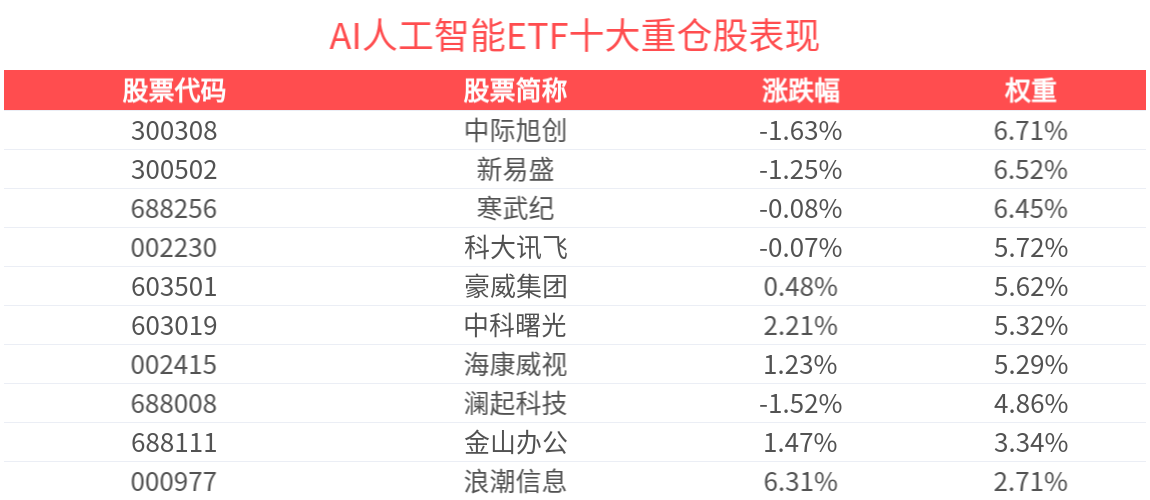
Core Insights - Alibaba announced a partnership with NVIDIA for Physical AI collaboration, covering various aspects such as data synthesis, model training, environmental simulation reinforcement learning, and model validation testing [1] - By 2032, the energy consumption of Alibaba Cloud's global data centers is projected to increase tenfold compared to 2022 [1] Market Performance - As of September 25, 2025, the CSI Artificial Intelligence Theme Index (930713) rose by 0.56%, with notable increases in component stocks such as Desay SV (7.56%), Inspur Information (6.31%), and 37 Interactive Entertainment (4.36%) [1] - The AI Artificial Intelligence ETF (512930) increased by 0.51%, with a latest price of 2.19 yuan, and has seen a cumulative increase of 3.03% over the past week [1] ETF Composition - The CSI Artificial Intelligence Theme Index tracks 50 listed companies involved in providing foundational resources, technology, and application support for artificial intelligence [2] - As of August 29, 2025, the top ten weighted stocks in the index accounted for 60.82% of the total index weight, including companies like NewEase (6.71%) and Zhongji Xuchuang (6.52%) [2] Stock Performance - The performance of key stocks within the index shows varied results, with Zhongji Xuchuang down by 1.63% and NewEase down by 1.25%, while Inspur Information saw a significant increase of 6.31% [4]


万和财富早班车-20250925
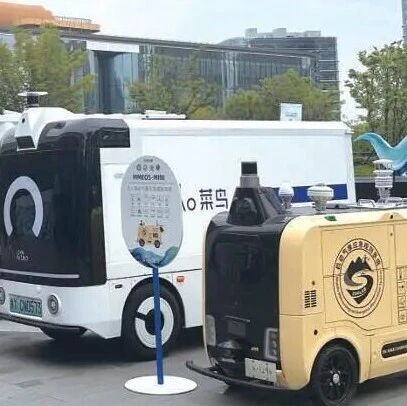
Vanho Securities· 2025-09-25 02:06
Core Insights - The report highlights a steady growth in the national electrification rate, projected to reach approximately 35% by 2030, with an annual increase of about 1 percentage point [6] - The construction of "vehicle-road-cloud integration" pilot cities is accelerating, with companies rapidly expanding their layouts, indicating potential investment opportunities in related stocks [7] - The semiconductor and AI sectors are experiencing significant advancements, with companies like Zhongtai Co. and Guokewi planning to enhance their product offerings in AI chips and battery technologies [8] Domestic Financial Market - The Shanghai Composite Index closed at 3853.64, up 0.83%, while the Shenzhen Component Index rose by 1.80% to 13356.14, indicating a positive market sentiment [4] - The market saw a total trading volume of 2.33 trillion, a decrease of 167.6 billion from the previous trading day, suggesting a slight contraction in trading activity [9] Industry Developments - Six departments have prohibited the addition of new cement clinker and flat glass production capacity, requiring new projects to develop capacity replacement plans, which may impact related industries [6] - The "AI investment advisory brokerage" is nearing realization, with advancements in platforms like "Xiangcai + Dazhihui," indicating a shift towards AI-driven financial services [7] Company Focus - Zhongtai Co. is expected to achieve a net profit of 325 million to 355 million, representing a year-on-year growth of 71.36% to 87.19% by the third quarter of 2025 [8] - Guokewi plans to develop a full range of vehicle-mounted AI chips over the next three years, indicating a strong focus on innovation in the automotive sector [8] - The company Qiaocheng Ultrasonic has made progress in advanced semiconductor packaging, receiving formal orders for its products, which may enhance its market position [8]
乘用车企拐点将至,关注汽零强势赛道&客户 | 投研报告
Zhong Guo Neng Yuan Wang· 2025-09-25 01:55
Core Viewpoint - The automotive industry is experiencing a recovery in fundamentals, particularly in the commercial vehicle sector, with significant contributions from the sales of buses and heavy trucks, leading to a valuation rebound in the sector [1][2]. Group 1: Commercial Vehicles and Parts - The commercial vehicle sector has shown improved fundamentals, with a notable increase in sales of buses and heavy trucks contributing to the sector's valuation recovery [1][2]. - The automotive parts sector is influenced by the progress in humanoid robotics, as many companies are diversifying into this area due to the similarities and synergies with automotive components [1][2]. - The automotive parts sector achieved a revenue of 357.29 billion yuan in Q2 2025, reflecting a year-on-year increase of 7.6% [3][4]. Group 2: Price Wars and Profitability - The passenger vehicle sector saw a revenue growth of 10.4% year-on-year in Q2 2025, driven by the launch of high-end models by domestic manufacturers, despite a decline in net profit due to intense price competition [3][4]. - The average selling price of vehicles increased by 0.20 million yuan per vehicle in Q2 2025, indicating a shift towards higher-end models [3]. - The net profit for the passenger vehicle sector dropped by 19.6% year-on-year to 8.84 billion yuan in Q2 2025, primarily due to the impact of price wars on gross margins [3][4]. Group 3: Market Outlook - The passenger vehicle market is expected to see a recovery in profitability as the price war eases, with several key models set to launch in Q3 and Q4 2025 [3][6]. - The commercial vehicle market is anticipated to continue its upward trend due to ongoing policy support and a recovery in domestic demand [5][6]. - The bus sector is projected to benefit from a resurgence in tourism and government subsidies for public transport, leading to sustained market vitality [5]. Group 4: Investment Recommendations - Companies in the passenger vehicle sector that are in a strong product cycle, such as Great Wall Motors and Xpeng Motors, are recommended for investment [6]. - In the automotive parts sector, companies with strong supply chains and those involved in humanoid robotics and intelligent driving are highlighted as potential investment opportunities [6]. - Leading companies in the commercial vehicle sector, such as Weichai Power and Yutong Bus, are also recommended due to their expected benefits from industry recovery [6].
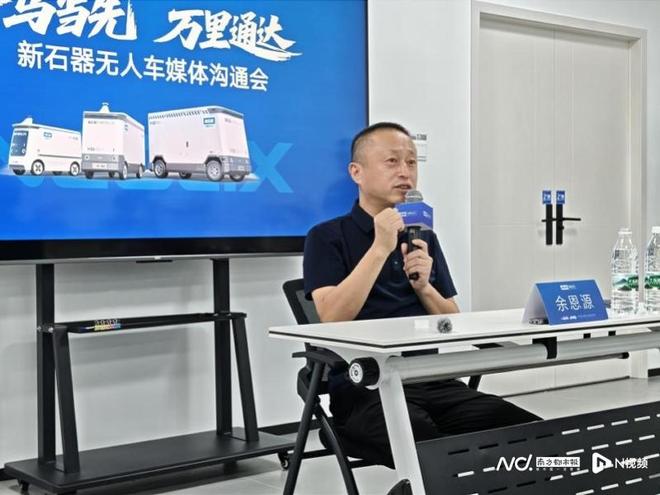
无人物流车迎爆发拐点,新石器CEO回应台风天无人车送外卖
Nan Fang Du Shi Bao· 2025-09-24 11:12
Core Insights - The core viewpoint of the article emphasizes that the true business model of autonomous vehicles lies in providing transportation services rather than selling vehicles, as highlighted by the CEO of New Stone Autonomous Vehicles, Yu Enyuan [1][6]. Company Overview - New Stone Autonomous Vehicles has achieved a significant milestone by delivering its 10,000th vehicle, marking the world's first fleet of autonomous delivery vehicles at this scale, indicating a major leap from technology validation to large-scale commercialization [1][6]. - The company has reported achieving monthly profitability and aims to produce profitable products without engaging in price wars [1][8]. Market Dynamics - The autonomous vehicle sector is experiencing intense competition driven by price, as many players enter the market to capture market share, which is seen as an early-stage behavior in the industry [1][6]. - The company has become the largest supplier of autonomous delivery vehicles for major logistics firms, capturing over 90% of the orders from SF Express, JD.com, and China Post, and over 70% from other platforms [2][6]. Technological and Regulatory Factors - The growth of the autonomous delivery vehicle market is attributed to advancements in AI technology, decreasing costs of core sensors, and increasing market demand, with 2025 expected to be a pivotal year for explosive growth in this sector [3][5]. - The opening of road rights in over 200 cities across the country is facilitating the expansion of autonomous vehicle applications [3][5]. Future Projections - The company anticipates delivering over 15,000 vehicles this year, with expectations of 30,000 units sold by 2025 and potentially 600,000 units by 2030, achieving an 18% market penetration [8][9]. - The CEO projects that the demand for autonomous vehicles will significantly increase, with expectations of 40,000 to 50,000 units in the next year, and over 100,000 units in subsequent years when including overseas markets [9][12]. Strategic Opportunities - The company sees substantial growth potential in instant logistics and urban delivery, with expectations that demand from these sectors will surpass that of the express delivery industry [14][15]. - The overseas market is viewed as a significant strategic opportunity, with the company recently obtaining the first license for autonomous delivery vehicles in the Middle East, indicating a move towards full commercialization in that region [15][16].
德赛西威:智能驾驶传感器方面有多款摄像头、雷达等产品,已获得长安汽车、吉利汽车等车企新项目订单
Mei Ri Jing Ji Xin Wen· 2025-09-24 09:40
Core Viewpoint - The company has received new project orders from several leading automotive manufacturers, indicating a strong demand for its intelligent driving sensors and laser radar products in the market [2]. Company Summary - The company offers a variety of intelligent driving sensors, including cameras, radars, and smart antennas, catering to diverse needs of different automotive manufacturers based on various levels of assisted driving, vehicle types, and cost considerations [2]. - The company has secured new project orders from prominent domestic and international automotive brands such as Changan Automobile, Geely Automobile, SAIC Volkswagen, Renault, Honda, and Dongfeng Nissan during the reporting period [2].

德赛西威完成43.99亿元定增发行 深化汽车智能化战略布局
Zheng Quan Ri Bao Wang· 2025-09-24 07:40
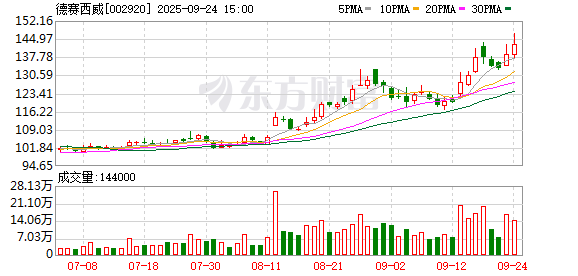
资金将主要用于中西部基地建设项目(一期)和智能汽车电子系统及部件生产项目(惠南二期),通过推进 上述项目,公司将进一步完善区域产能布局,强化运营效能和核心竞争力,有效降低运营成本,提高本 地化服务效率,巩固行业领先地位。 成都智算中心的建设将为公司高阶智能化产品研发提供关键算力支持,更好地响应客户新项目定点开发 需求;同时,舱驾融合平台研发项目将聚焦软硬件融合、高阶智能化功能集成及舱行泊一体化等前瞻技 术,持续构建技术壁垒,推动业务生态向高附加值、多元化方向发展。 此次定增的成功发行,既体现了市场对德赛西威在汽车智能化领域综合实力的高度认可,也是公司优化 资本结构、增强资金实力的关键举措。借助此次融资,德赛西威将加速推进技术升级和产业布局,夯实 可持续发展基础,把握汽车智能化发展的战略机遇。 本报讯(记者王镜茹)近日,惠州市德赛西威(002920)汽车电子股份有限公司(以下简称"德赛西威")完 成定增发行工作,募集资金总额43.99亿元。作为公司上市以来的首次再融资,此次定增不仅实现了资 本运作的重要突破,也标志着德赛西威战略发展进入新阶段,充分体现了资本市场对公司核心竞争力和 未来成长性的高度认可。 本次发 ...
一年狂飙171%,人工智能接下来何去何从?
券商中国· 2025-09-24 05:11
近来,人工智能掀起的浪潮,比盛夏酷暑更炽烈地灼烧着时代神经。 本轮A股行情中,科技板块仍是市场中最为璀璨的星辰。Wind数据显示,截至9月16日,科技TMT指数同期涨 幅高达105.77%,上证科创板人工智能指数近一年更是狂飙171.79%。9月1日,该指数还强势突破历史峰值, 创下基日以来新高。 时至今日,人工智能早已跳出单纯的技术议题范畴,蜕变为大国战略竞争的核心战场。资本市场的反应,也逐 渐超越对短期热点的追逐,转而以更长远的视野,拥抱这场注定重构经济肌理与文明形态的深刻革命。 在此背景下,如何精准卡位中国人工智能产业的核心增长极,成为投资者必须直面的关键命题。银华上证科创 板人工智能ETF(588930),恰是回应这一命题的精准落子。它所紧密跟踪的上证科创板人工智能指数,径直 锚定中国AI发展的核心基础设施与头部队列:它们不仅是产业的领跑者,更是国家战略中打通技术堵点、实 现自主可控的重要力量。 置身于此,便不再是观望者,而是直接站在了人工智能革命第一线的"主战场"中央,与中国AI的核心力量并肩 前行。 拐点前夜 毫无疑问,人工智能的时代巨幕,正以前所未有的速度升起。这不再只是一轮简单的题材行情,而是 ...

无人物流车火了!上市公司纷纷入局
证券时报· 2025-09-24 04:31
Core Viewpoint - The article discusses the rapid development and commercialization of unmanned delivery vehicles in China, driven by favorable policies, market demand, and decreasing costs, highlighting the strategic moves of various listed companies in this sector [6][12]. Industry Overview - The cost of last-mile delivery accounts for over 30% of total logistics costs, and with rising labor costs, the demand for unmanned delivery solutions is increasingly urgent [3][4]. - Recent policies have facilitated the deployment of unmanned vehicles in sectors such as pharmaceuticals, heavy goods delivery, and express logistics, leading to significant commercial achievements [4][6]. Policy Support - National policies have been introduced to support unmanned logistics vehicles, including the issuance of "pass licenses" and the gradual opening of road rights across provinces, laying a foundation for large-scale applications [6][12]. - By September 2025, over half of China's 3,600 districts and counties will support unmanned vehicles on the road, with ongoing expansion of policy support [6]. Market Demand - The explosion of market demand, particularly in the pharmaceutical sector, has driven the need for timely delivery, with traditional delivery methods failing to meet current requirements [6][14]. - The growth of the instant retail market has exacerbated the capacity shortage, necessitating technological solutions to address high logistics costs [4][14]. Cost Reduction - The cost of unmanned vehicles is rapidly decreasing, with prices dropping from over 1 million yuan in 2018 to below 20,000 yuan for the latest models [7]. - Key components such as lidar and cameras have seen significant price reductions, further enabling the scalability of unmanned vehicle applications [7]. Strategic Moves by Listed Companies - Companies like Desay SV and Youjia Innovation are entering the unmanned delivery vehicle market with differentiated strategies, focusing on low-speed unmanned vehicles and leveraging existing data for algorithm optimization [9][10]. - Desay SV's "Chuanxing Zhiyuan" brand has launched low-speed unmanned vehicles with innovative technologies, targeting high-demand markets such as instant delivery and urban logistics [9]. Commercialization Achievements - The collaboration between Zhongying Pharmaceutical Group and Cainiao has set a benchmark in pharmaceutical delivery, achieving a 50% reduction in delivery costs and a 70% increase in efficiency through unmanned vehicles [14]. - In the express delivery sector, unmanned vehicles have demonstrated a 70% cost reduction, with per-package costs dropping to 0.1 yuan [14]. Challenges Ahead - Despite rapid growth, the industry faces challenges related to system integration, balancing costs, performance, and development cycles [15]. - The potential for unmanned vehicles to replace traditional transport methods could lead to a market size of 207.1 billion yuan annually, with significant implications for the logistics industry [15].
汽车行业2025年半年报综述:乘用车企拐点将至,关注汽零强势赛道、客户
CHINA DRAGON SECURITIES· 2025-09-24 04:10
Investment Rating - The report maintains a "Recommended" investment rating for the automotive industry [2] Core Insights - The automotive sector is experiencing a turning point, with a focus on strong automotive parts sectors and key customers [1] - The commercial vehicle sector shows improvement, while humanoid robot valuations are recovering [5] - The passenger vehicle market continues to show high demand, with significant growth in L2.5 and above intelligent driving penetration [23] - Price wars are suppressing profitability, but a turning point for the sector is expected in Q3 [9] - The performance of automotive parts companies is diverging, with a focus on strong customers and growth sectors [6] Summary by Sections Passenger Vehicles - The passenger vehicle market maintained high demand, with wholesale sales reaching 7.003 million units in Q2 2025, a year-on-year increase of 13.2% [23] - The average price of new vehicles increased by 0.20 million yuan per vehicle in Q2 2025, driven by the launch of high-end models by domestic manufacturers [36] - The passenger vehicle sector achieved revenue of 531.8 billion yuan in Q2 2025, with a year-on-year growth of 10.4% [36] - The net profit attributable to the parent company in Q2 2025 was 8.84 billion yuan, a decrease of 19.6% year-on-year due to intense price competition [40] - New energy passenger vehicle sales reached 3.59 million units in Q2 2025, with a penetration rate of 51.3% [23] Automotive Parts - The automotive parts sector achieved revenue of 357.29 billion yuan in Q2 2025, a year-on-year increase of 7.6% [6] - The net profit attributable to the parent company in Q2 2025 was 19.84 billion yuan, a year-on-year increase of 7.2% [6] - Companies in the automotive parts sector are focusing on advantageous sectors and high-growth customers to enhance profitability [6] Commercial Vehicles - The commercial vehicle sector is expected to see a recovery in market conditions, supported by government policies and increasing demand for new energy buses [6] - The bus sector achieved revenue growth of 4.3% year-on-year in Q2 2025, while the heavy truck sector saw a revenue increase of 1.0% [6] - The heavy truck sector's net profit attributable to the parent company in Q2 2025 was 3.38 billion yuan, a decrease of 16.0% year-on-year [6] Investment Recommendations - The report suggests focusing on companies in strong product cycles such as Great Wall Motors, Seres, SAIC Motor, and XPeng Motors [6] - It also highlights key automotive parts companies like Longsheng Technology, Junsheng Electronics, and Desay SV [6] - For commercial vehicles, it recommends focusing on leading companies like Weichai Power and Yutong Bus [6]