
饿了么

Search documents
京东外卖被四川监管约谈,近期多次涉及商家资质问题
2 1 Shi Ji Jing Ji Bao Dao· 2025-05-23 10:34
21世纪经济报道记者肖潇 北京报道 5月22日,"天府新区市场监管"发文表示,四川天府新区市场监管局近日约谈了京东平台。 据通报消息,当地市场监管局在网络餐饮专项检查中发现,"京东外卖"平台存在多个问题:部分商家公 示的门店照片与线下实际不符,部分商家超范围经营,部分商家以低价低质手段扰乱市场秩序。 京东平台被要求严肃整改,举一反三,加强自查自纠。"京东外卖"西南区域负责人回应称,将加大对违 规商家的惩戒力度,进一步提升资质审核与食品安全管理水平。 今年年初,四川省市场监管局发布了《四川省网络餐饮服务食品安全监督管理办法》,其中明确要求: 外卖商家必须有实体经营门店,并在许可或备案范围内从事经营活动;平台需承担资质审核责任。而 《网络餐饮服务食品安全监督管理办法》早在2018年就已在全国正式施行,同样明确要求线上平台对入 驻餐饮商家负有审核和管理义务。 4月23日,福州市市场监管局召集京东召开行政指导座谈会,要求平台履行主体责任,规范网络订餐行 为。 更早之前的4月初,河南洛阳市消费者权益保护中心也收到消费者投诉,称某外卖平台宣传"品质堂 食",但实际并无堂食接待能力。 实际上,不止京东,商家资质审核是困扰所 ...

2025年中国外卖市场现状报告-MCR嘉世咨询
Sou Hu Cai Jing· 2025-05-23 01:35
Market Size and Structure Characteristics - The online food delivery market in China is projected to reach CNY 16,357 billion in 2024, with a year-on-year growth of 7.2%, and a user base of 553 million, accounting for 50.3% of internet users [1][18] - The market exhibits a significant "Matthew effect," with the restaurant chain rate increasing from 35% in 2020 to 50% in 2025, indicating that chain brands dominate due to supply chain and standardization advantages [1][18] - Lower-tier cities are becoming the main growth driver, with over 60% of users in these markets ordering takeout more than three times a week [1][30] Platform Competition Landscape - The market is characterized by a "dual oligopoly" structure, with Meituan and Ele.me holding a combined market share of 92%, where Meituan accounts for 70% and Ele.me for 30% [1][21] - JD.com is entering the market in 2025 with a "zero commission" policy to attract merchants, prompting Meituan and Ele.me to adjust their commission strategies [1][23] - Vertical platforms like "Run Fast" are focusing on local services in townships, shifting competition from price wars to differentiated services [1][22] Category Expansion and Consumer Upgrade - The delivery category is expanding from traditional food to include fresh produce, pharmaceuticals, and electronics, reflecting a trend towards "instant delivery of everything" [1][26] - Healthy meal orders are expected to rise from 12% in 2020 to 25% in 2025, with pre-made dishes like Hema's "30-minute banquet package" achieving sales of over 800,000 during the Spring Festival [1][26] - Low-frequency high-value scenarios, such as late-night orders, are growing at a rate of 15%, with Meituan testing "home service + delivery" combo packages [1][26] Technology-Driven Efficiency Improvement - AI and big data are core drivers, with Ele.me's "Ark" algorithm reducing delivery times by 43%, and Meituan's drone delivery costs decreasing by 37% [2][4] - The application of blockchain technology in food safety traceability has led to a 62% reduction in complaint rates for JD Fresh's "one code traceability" system [2][4] - The penetration rate of green packaging has increased from 30% to 65%, with costs of eco-friendly materials dropping by 40%, promoting industry transformation towards sustainability [2][4] Business Model and Regulatory Changes - The commission model is facing challenges, with JD's zero-commission strategy prompting a reevaluation of profitability models across the industry [3][34] - Rider rights protection has become a focal point, with JD and Meituan beginning to pay social insurance for riders, benefiting an estimated one million riders at an annual cost of approximately CNY 13 billion [3][40] - Regulatory measures are tightening, with the Supreme Court clarifying labor relationship standards and the market regulator enhancing food safety and anti-monopoly measures [3][40] Future Trend Outlook - The market is expected to exhibit four major trends: community and personalized services, omnichannel integration, deep technological empowerment, and sustainable development [4][4] - By 2027, the market size is projected to reach CNY 19,567 billion, with growth driven by lower-tier markets, technological innovation, and diversified services [4][4]


广州端午消费盛宴即将启幕,龙舟文化点燃湾区活力
Sou Hu Cai Jing· 2025-05-22 22:54
Group 1 - Guangzhou has actively implemented national policies to boost consumption, creating the "New Eight Scenic Spots of Consumption" brand, integrating commerce, tourism, culture, and sports [1] - From January to April, Guangzhou's retail sales increased by 4% year-on-year, leading among first-tier cities, with a 35.2% increase in foreign tourists during the May Day holiday [1] - Over 1,000 events have been held around four themes, contributing to a sustained rise in the consumption market [1] Group 2 - The "2025 Greater Bay Area Consumption Season" will kick off on May 24, featuring the theme "Same Boat, Cantonese Rhythm Guangzhou," combining traditional and innovative consumption experiences [3] - The event will include unique cultural performances, food, and interactive experiences, showcasing Guangzhou's urban charm [3] - Key dining merchants will offer themed "Dragon Boat Banquet" packages, and financial institutions will innovate consumption models [5] Group 3 - Guangzhou will launch 50 "event tourism" boutique routes themed "Flower City is Fortunate, Welcoming the National Games" to attract overseas tourists [8] - Special transit visa-free travel routes and discounted travel packages will be developed in collaboration with airlines [8] - Various platforms, including China UnionPay, will provide one-stop services for travel payments, currency exchange, and tax refunds to facilitate consumption [8]

长沙牧壹农产品宁鹏杰:深耕猪肉零售 地道生意经
Sou Hu Cai Jing· 2025-05-22 12:12
Core Insights - The article highlights the entrepreneurial journey of Ning Pengjie, who has successfully established a niche in the pork retail sector through innovative business models and resilience [1][3]. Company Overview - Ning Pengjie is the chairman of Changsha Mu Yi Agricultural Products Co., Ltd., which operates the brand "Zhu Si Ling" focusing on high-quality, affordable pork products [4]. - The company was founded in August 2021, emphasizing a business model that combines self-operated and franchise elements, allowing partners to invest in stores while the company manages supply and marketing strategies [4]. Business Growth - The company began its offline pork wholesale business in October 2020 and opened its first retail store in March 2021, achieving profitability in the first month [3]. - The number of stores grew from 5 in 2021 to 12 in 2022, and surged to 56 in 2023, with projected revenues of 1.5 billion in 2023 and 3.2 billion in 2024 [3][4]. Market Strategy - The brand differentiates itself by focusing on fresh products, competitive pricing, and effective marketing strategies, including discounts and a daily fresh supply model [4]. - The core competitive advantages include a unique operating model, precise market positioning, and effective marketing strategies [4]. Challenges and Vision - The company faces challenges such as a lack of middle management, which could impact its growth [4]. - Ning Pengjie aims to expand the brand into a national chain and establish it as a century-old enterprise, with a vision of becoming a publicly listed company that benefits society [6].


互联网大厂都在抢,医药即时零售新风口来了
Xin Lang Cai Jing· 2025-05-22 08:18
Core Viewpoint - The competition among major platforms like Ele.me, JD.com, and Meituan in the food delivery sector has expanded into the pharmaceutical category, leading to a significant rise in the instant retail of medicines, with platforms investing in traffic resources, supply chains, and innovative marketing strategies [1][4]. Group 1: Market Dynamics - The instant retail of pharmaceuticals is experiencing rapid growth, becoming a crucial part of the outpatient pharmaceutical retail market [1][4]. - JD Health's "Buy Medicine in Seconds" feature has seen a threefold increase in order volume due to enhanced traffic resources [4][6]. - The instant retail sector is evolving from high-frequency to low-frequency demand, now covering a full range of categories, including pharmaceuticals [5][6]. Group 2: Platform Strategies - JD.com has prominently featured "24h Delivery of Medicines" on its app, enhancing visibility and traffic for its instant retail services [3][4]. - Meituan has launched its instant retail brand "Meituan Flash Purchase," further intensifying competition in the pharmaceutical retail space [4][6]. - Taobao's instant retail service has been upgraded to "Taobao Flash Purchase," which includes a significant category for purchasing medicines [3][4]. Group 3: Industry Trends - The transformation of physical pharmacies is driving the adoption of instant retail, as many pharmacies are closing, leading to a competitive environment where digital solutions are essential [7][8]. - The integration of online medical services with instant retail is creating a comprehensive service model for users, enhancing the purchasing experience [7][8]. - The collaboration among platforms, pharmaceutical companies, and pharmacies is deepening, allowing for more effective marketing and sales strategies [8][10]. Group 4: Financial Performance - One Heart Hall's new retail segment saw a 47.6% year-on-year increase in revenue, with the O2O instant retail channel contributing 78.2% [15][16]. - Yifeng Pharmacy reported online sales of 2.127 billion yuan in 2024, with 1.721 billion yuan coming from O2O, accounting for 80.9% of total online sales [16][17]. - The overall trend indicates that if online medical insurance is fully opened, the share of instant retail in physical pharmacies could rise to 32.1% by 2030 [16][17]. Group 5: Future Outlook - The competition for instant retail in pharmaceuticals among major platforms is expected to continue, with Douyin's unique position in social media marketing presenting both opportunities and challenges [18]. - The penetration of instant retail in lower-tier markets is anticipated to grow, making it a significant growth driver in the outpatient pharmaceutical retail market [18].






下沉市场外卖新势力,跑腿快车在巨头阴影下的本土创新
Zhong Guo Chan Ye Jing Ji Xin Xi Wang· 2025-05-22 08:10
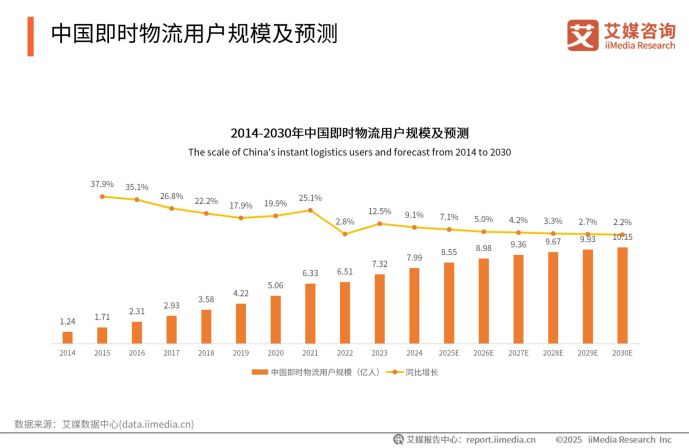
Core Viewpoint - The rise of instant delivery services is significantly driven by consumption upgrades and digital transformation, making it an essential part of life in lower-tier markets [1][2]. Group 1: Market Trends - The lower-tier market, including third-tier cities and rural areas, is becoming a new growth area for the food delivery industry, with a user base expected to grow from 124 million in 2014 to 799 million by 2024 [2]. - The online food delivery market in China is projected to reach a scale of 1.6357 trillion yuan in 2024, with a year-on-year growth of 7.2% and a penetration rate of 28% [4]. - Retail sales in urban areas are expected to reach 42.1166 trillion yuan in 2024, growing by 3.4%, while rural retail sales are projected at 667.29 billion yuan, with a growth rate of 4.3% [7]. Group 2: Policy and Competitive Landscape - Government policies are enhancing the commercial infrastructure in rural areas, promoting initiatives like "delivery to villages" to improve service coverage and reduce costs [10]. - Major players like Meituan, JD, and Ele.me are fiercely competing for market share in lower-tier cities, employing strategies such as zero commission and substantial subsidies [11]. - Local platforms like "Runter Kuaiche" are emerging to cater to specific needs in rural markets, leveraging their local knowledge and community ties to provide personalized services [16][17]. Group 3: Consumer Behavior - The primary consumer group in the lower-tier market consists of individuals aged 25-44, with a significant female user base of 67.01%, who prefer a blend of online and offline shopping experiences [19]. - Over 60% of users order food delivery more than three times a week, with social recommendations playing a crucial role in their decision-making process [19]. Group 4: Future Outlook - The lower-tier market is anticipated to become the "second growth curve" for China's instant delivery industry, driven by ongoing policy support and technological advancements [21].
消费参考丨影市下滑,阿里影业“走出”电影
2 1 Shi Ji Jing Ji Bao Dao· 2025-05-21 23:46
Group 1 - Alibaba Pictures is rebranding itself as part of a strategy to diversify its business beyond film, with the new name "Damai Entertainment" reflecting its broader scope including performances, commercial derivatives, series, and artist management [1][31] - The company aims to focus on "entertainment and AI" as its two strategic keywords, aspiring to become a leading technology-driven entertainment company in Asia [1] - The term "Real-life Experience" is introduced to emphasize live entertainment that contrasts with digital and fragmented entertainment, highlighting the importance of on-site, interactive, and immersive experiences [1] Group 2 - The film market is currently experiencing a downturn, with the box office for the May Day holiday dropping to 747 million yuan, a year-on-year decline of 51.1%, marking one of the lowest daily averages in a decade [2] - Alibaba Pictures' film-related segment revenue fell to 2.712 billion yuan, a 10% decrease year-on-year, with a significant drop in segment performance by 91% due to underperforming film projects and a weak overall film industry outlook for 2024 [2] - In contrast, Damai's revenue surged to 2.057 billion yuan, a 236% increase year-on-year, driven by a booming performance market, with ticket sales projected to grow by 15.4% nationwide in 2024 [2] Group 3 - Alibaba Pictures recorded an investment impairment of 428 million yuan, primarily related to its stake in Bona Film Group [3] - The capital market reacted positively to the rebranding, with Alibaba Pictures' stock price rising by 22.95% to 0.75 HKD per share on May 21 [3][4]
2025年中国外卖市场现状报告
MCR嘉世咨询· 2025-05-21 07:25
Investment Rating - The report does not explicitly state an investment rating for the industry Core Insights - The Chinese takeaway market has shown rapid growth, with the market size reaching approximately 1.2 trillion yuan in 2023, accounting for 22.6% of total restaurant revenue [7] - The online takeaway user base has reached 553 million, representing 50.3% of the total internet users in China, indicating widespread adoption of takeaway services [7] - The market is expected to grow to 1.9567 trillion yuan by 2027, suggesting significant future growth potential [11] Summary by Sections Section 1: Analysis of the Chinese Takeaway Market Structure - The market size for online takeaway reached 16,357 billion yuan in 2024, with a year-on-year growth of 7.2% and a penetration rate of 28% [10] - The competitive landscape is dominated by Meituan and Ele.me, which together hold approximately 92% of the market share, with Meituan at 70% and Ele.me at 30% [13] - The takeaway market is expanding beyond traditional food delivery to include a variety of products such as groceries and household items, reflecting a diversification trend [18] Section 2: Evolution of Takeaway Industry Business Models - Commission rates are a key revenue source for takeaway platforms, with Meituan's rates generally between 6%-8%, while JD Takeaway has introduced a zero-commission policy for new merchants until May 2025 [26] - The introduction of social security benefits for delivery riders by major platforms like JD and Meituan marks a significant shift in labor relations within the industry [30] Section 3: Insights into Consumer Behavior Changes - The consumer base for takeaway services is diversifying, with a notable increase in older users (60+) and a strong presence of younger consumers (Z generation) [42] - Factors influencing consumer choice include platform reputation and user reviews, particularly in lower-tier markets where consumers prioritize reliability and cost-effectiveness [45] Section 4: Assessment of Technology-Driven Factors - The application of AI and big data is enhancing operational efficiency and service quality within the takeaway industry, with platforms leveraging these technologies to optimize delivery processes [36] - Innovations in delivery methods, such as the use of drones and robots, are reducing operational costs and improving service efficiency [52] Section 5: Analysis of Regulatory Environment Impact - The evolving legal landscape regarding labor relations is prompting platforms to clarify their responsibilities towards delivery riders, which may affect operational costs and business models [34] Section 6: Future Trends Outlook - The market is expected to see increased focus on health-conscious food options and pre-prepared meals, with health food orders projected to rise significantly [39] - The expansion into lower-tier cities and rural areas is anticipated to drive future growth, as these markets show increasing demand for takeaway services [24]
中国外卖,全是输家
Hu Xiu· 2025-05-21 04:17
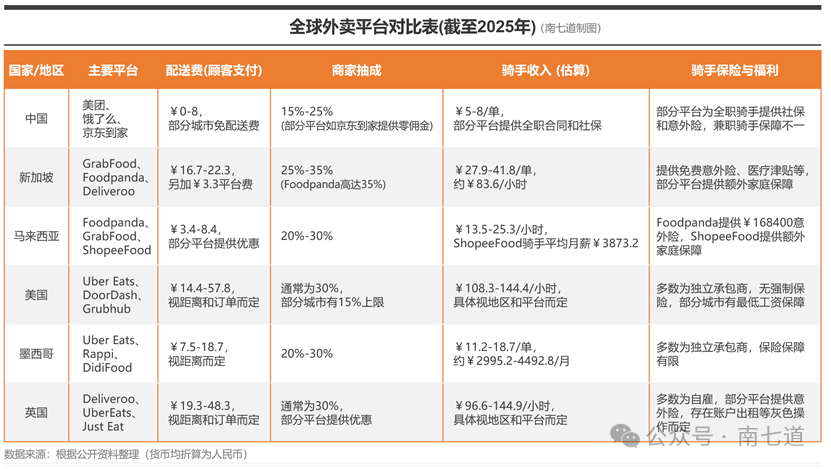
Core Insights - The article discusses the challenges and dynamics of the food delivery industry across different countries, highlighting the stark contrasts between the operational models and profitability of food delivery services in China compared to other regions like Mexico and Malaysia [1][2][3][4][7][8]. Group 1: Industry Dynamics - In Mexico, local restaurants thrive with a business model that includes high profit margins, with some achieving monthly gross profits exceeding 100,000 RMB [1]. - The food delivery market in China is characterized by intense competition, with platforms like Meituan, Ele.me, and JD.com battling for market share, leading to unsustainable pricing strategies [8][11]. - The average delivery fee in China is the lowest globally, while the delivery speed is the fastest, driven by a high population density and a fast-paced work culture [7][18]. Group 2: Profitability and Business Models - Meituan's food delivery business shows low profitability, with operating profit margins between 6% to 8% and net profit margins as low as 3% to 5% after accounting for marketing and R&D expenses [8]. - In contrast, food delivery services in Malaysia and Mexico report higher profit margins, with local restaurants managing to operate successfully despite higher commission rates [11][20]. - The article notes that many Chinese restaurants are resorting to standardized, semi-finished products to maintain profitability in a highly competitive environment [9]. Group 3: Labor and Compensation - The working conditions for delivery riders in China are described as harsh, with long hours and low pay, leading to a high turnover rate and a competitive environment among riders [16][19]. - In other countries like Malaysia and Singapore, delivery riders earn significantly higher wages, reflecting the local labor market conditions and the value placed on their work [20][21]. - The article emphasizes that the low wages and poor working conditions for riders in China are a result of intense competition and a market that has become accustomed to low prices [18][21]. Group 4: Consumer Behavior - Consumers in China have developed a habit of expecting low prices for food delivery, which has led to a cycle of price wars among platforms and restaurants [21][22]. - The article suggests that the expectation for cheap, fast, and good service is unsustainable, as it leads to compromises in food quality and service [21][24]. - The long-term implications of this pricing strategy could negatively impact the overall value perception of the food delivery industry and the broader economy [22][23].
人民财评:因业施策 标本兼治是治“内卷”新思路
Ren Min Wang· 2025-05-21 01:55
Core Viewpoint - The National Development and Reform Commission emphasizes the need to address the issue of "involution" in competition across various industries, advocating for targeted measures to promote healthy industrial development and upgrades [1][2]. Group 1: Involution in Competition - Involutionary competition is characterized by practices such as selling products at extremely low prices, even below cost, which disrupts fair competition and must be rectified [1][2]. - The food delivery industry exemplifies this issue, with instances of ultra-low pricing like "3 yuan for a cup of milk tea" and "2.9 yuan for a hamburger set," raising concerns about a potential new price war [1][2]. Group 2: Regulatory Response - There is a consensus across society to firmly address involutionary competition, as indicated by signals from the Central Economic Work Conference and the Government Work Report [2]. - Regulatory bodies, including the State Administration for Market Regulation, have engaged with major platforms like JD.com, Meituan, and Ele.me to ensure the protection of consumer and operator rights within the food delivery sector [2]. Group 3: Recommendations for Improvement - The regulatory approach includes promoting innovation and self-regulation within industries, encouraging adherence to legal competition practices, and resisting low-price dumping and negative competition [2]. - For the food delivery industry, there are opportunities to improve food safety, service quality, labor rights for delivery workers, and innovation in business models [2]. Group 4: Conclusion on Competition - The clear message from regulatory authorities is that there are no winners in involutionary competition, and only high-quality, healthy competition can drive sustainable economic and social development [3].