李宁

Search documents
中泰证券:家纺大单品驱动增长 低基数下服装行业缓慢复苏
智通财经网· 2025-11-18 06:43
Core Insights - The sportswear industry is experiencing significant demand differentiation due to a warm autumn and weak consumer spending, with running and outdoor categories maintaining high demand, and online channels outperforming offline ones [1][2] - The home textile industry shows a moderate recovery, with leading companies achieving growth through a big product strategy, particularly highlighted by Mercury Home Textile's successful launches of innovative products [1][3] - The apparel industry is slowly recovering from a low base, with men's wear remaining stable but under profit pressure, while women's wear shows signs of recovery, emphasizing the importance of cost optimization [1][4] Sportswear Industry - Demand differentiation is evident, with running and outdoor categories maintaining high demand, while online sales channels outperform offline [2] - Anta Sports shows low single-digit growth in main brand revenue, while other brands within its portfolio achieve 45-50% growth, effectively mitigating market pressures [2] - Li Ning's inventory turnover is at 5-6 months, with expectations for improvement by year-end [2] - Xtep International's main brand revenue shows low single-digit growth, but its sub-brand Saucony performs well with over 20% growth [2] - 361 Degrees reports 10% and 20% year-on-year growth in offline and e-commerce sales, respectively, and expands its superstore count to 93 [2] Home Textile Industry - The overall recovery is moderate, but leading companies leverage big product strategies for superior growth [3] - Mercury Home Textile's Q3 revenue growth accelerates by 20.19%, driven by innovative products like the "ice cream quilt" and "ergonomic pillow," which also boost gross margin by 4.2 percentage points to 44.74% [3] - Luolai Life benefits similarly, with a 9.90% year-on-year revenue increase and a gross margin improvement of 3.8 percentage points to 48.05% [3] - Mercury Home Textile and Luolai Life see significant increases in net profit attributable to shareholders, up 43.18% and 50.14%, respectively [3] - Fuanna is in a phase of channel adjustment and inventory reduction, with a 7.58% year-on-year revenue decline, but plans to launch new products in early 2026 [3] Apparel Industry - The apparel sector is slowly recovering from a low base, with men's wear stable but facing profit pressures [4] - Haier's revenue and profit show slight growth, supported by new business and overseas expansion [4] - Women's wear shows signs of recovery, with cost optimization being crucial [4] - Dizhu Fashion reports double-digit profit recovery in Q3, while other brands like Ge Li Si and Xin He show varying performance with expectations for improvement [4] - Semir sees revenue and profit growth in Q3, while Taiping Bird experiences a loss due to channel and cost structure adjustments [4] Investment Recommendations - For sportswear, focus on leading companies that can maintain market share in a competitive environment, such as Anta Sports, Li Ning, Xtep International, and 361 Degrees [5][6] - In the home textile sector, prioritize companies like Mercury Home Textile and Luolai Life that show significant growth potential through big product strategies and improved e-commerce efficiency [5] - In the apparel sector, consider brands like Haier and Semir that are managing to improve profitability and expand their market presence [6]

2026年纺织服装行业投资策略:整固蓄势,挖掘新消费,看好全球制造
Shenwan Hongyuan Securities· 2025-11-18 01:48
Investment Strategy Overview - The report emphasizes the stabilization of global tariff negotiations, which does not alter the core competitiveness of global manufacturing, and highlights optimism towards two major industrial chains and a price increase cycle [3][4]. Industry Performance Review - As of November 14, 2025, the SW textile and apparel index has increased by 16.9%, ranking 17th in relative performance across the market. The manufacturing sector shows higher certainty compared to brands still in recovery [4][8]. - Domestic demand is at a low point in 2025 but is expected to recover in 2026-2027, focusing on the characteristics of young consumer groups to explore high-growth areas in new consumption [4][21]. New Consumption Trends - High-performance outdoor apparel is identified as a growth area with low penetration and high potential, with the market size projected to reach 102.7 billion yuan in 2024, growing by 17% year-on-year [4][33]. - Discount retail is highlighted as a scarce high-growth area within the consumption sector, with rapid expansion in urban outlets and hard discount specialty stores [4][46]. - The personal care and cleaning market, particularly wet wipes, is noted for its rapid growth and increasing necessity among young consumers, with a market size in China expected to reach 100 billion yuan [4][62]. - The sleep economy is emerging as a significant market, with explosive growth in household textile products, driven by young consumers' acceptance [4][20]. - The report discusses Nike's innovation cycle, which is expected to benefit from inventory replenishment and product innovation, similar to Adidas's recovery cycle [4][20]. - The Australian wool price increase cycle is anticipated due to supply contraction and demand highlights, with potential market space comparable to previous high points in 2011 and 2018 [4][20]. - The healthcare material upgrade cycle presents broad replacement opportunities for overseas non-woven fabrics [4][20]. Global Manufacturing Insights - The report notes that the resolution of tariff variables is expected to lead to a new growth phase for leading companies [4][27]. - The textile industry has undergone a pressure test for external demand, with recent tariff negotiations expected to boost export chain expectations for 2026 [4][26]. Investment Recommendations - The report suggests focusing on high-growth new consumption areas and the competitive strength of global manufacturing as key investment strategies [4][27].




2025年第45周:服装行业周度市场观察
艾瑞咨询· 2025-11-18 00:04
Group 1: Market Trends - The reasons for young consumers purchasing gold have shifted from value preservation and weddings to self-pleasure and personal expression, driven by emotional consumption and product innovation [3][4] - The luxury goods market in China is still in its early development stage, with recent stock price increases following LVMH's better-than-expected quarterly report, but a full recovery is still needed [5] - The rise of the "谷子经济" (Guziko economy) has led to a surge in demand for game-related merchandise, although it has not significantly boosted the core game consumption [6] Group 2: Industry Dynamics - The high-end down jacket market is thriving due to a nationwide temperature drop, with brands like North Face and Bosideng seeing significant sales growth [7] - Airports in China are increasingly transforming into luxury retail spaces to enhance non-aeronautical revenue, with a focus on high-end brands [8] - The sportswear industry is experiencing a wave of "instant retail" strategies, with major brands like Anta and Li Ning seeing substantial sales growth [9] Group 3: Company Developments - SEASE, a luxury sportswear brand, combines high-quality materials with outdoor functionality, targeting affluent male consumers [10][11] - Kering Group reported a 5% decline in revenue for Q3 2025, with Gucci's revenue down 14%, although there are signs of recovery in North America and Western Europe [12] - Balabala leads the children's clothing market in Asia by focusing on emotional connections between parents and children, aiming to become a global lifestyle brand [13] Group 4: Competitive Landscape - Lao Feng Xiang is entering the luxury market to compete with Lao Pu Gold, facing challenges in brand positioning and high-end transformation [14][15] - Lululemon is struggling in North America, facing a significant drop in stock price and competition from emerging brands [16] - LVMH's Q3 report shows a 1% increase in global revenue, with a notable recovery in the Chinese market, highlighting the importance of innovation and retail transformation [17] Group 5: Future Outlook - The luxury goods industry requires a balance between creativity and commercial viability to achieve significant growth, as emphasized by the chairman of KKR Italy [18] - Lao Pu Gold has seen a substantial increase in revenue but faces challenges in maintaining quality and brand integrity [19]


低基数下品牌环比改善,制造仍承压但预计筑底:纺织服装行业 2025 年三季报综述
Changjiang Securities· 2025-11-17 12:36
Investment Rating - The investment rating for the textile and apparel industry is "Positive" and is maintained [9] Core Insights - The textile and apparel industry showed a slight improvement in brand performance in Q3 2025, despite ongoing pressures in manufacturing, which is expected to stabilize [4][18] - Revenue for the textile and apparel sector in Q1-Q3 2025 reached 1176.8 billion, with a net profit of 104.1 billion, reflecting a year-on-year change of +0.1% and -3.9% respectively [4][18] - In Q3 2025, the sector achieved revenue and net profit of 379.9 billion and 29.8 billion, showing a year-on-year increase of +0.8% and +3.7% [4][18] Revenue Summary - For Q1-Q3 2025, revenue growth rates by segment were as follows: mass market (+1.6%), home textiles (+1.4%), textile manufacturing (-0.1%), mid-to-high-end (-1.5%), and footwear and hats (-2.8%) [2][6] - In Q3 2025 compared to Q3 2024, home textiles led with a growth of +9.5%, followed by footwear and hats (+4.8%), mass market (+3.6%), textile manufacturing (-1.3%), and mid-to-high-end (-1.6%) [2][6] Profit Summary - For Q1-Q3 2025, profit growth rates by segment were: mid-to-high-end (+2.1%), textile manufacturing (-0.6%), home textiles (-3.4%), mass market (-12.4%), and footwear and hats recorded a loss of 0.6 billion [7][6] - In Q3 2025 compared to Q3 2024, mid-to-high-end profits surged by +36.1%, home textiles by +24.0%, mass market by +8.2%, while textile manufacturing saw a decline of -10.1% [7][6] Segment Analysis Mid-to-High-End - In Q1-Q3 2025, the mid-to-high-end segment reported revenue of 188.8 billion and net profit of 20.2 billion, with year-on-year changes of -1.5% and +2.1% respectively [20] - Q3 2025 figures showed revenue of 59.3 billion and net profit of 6.8 billion, with year-on-year changes of -1.6% and +36.1% [20] Mass Market - The mass market segment achieved revenue of 296.6 billion and net profit of 24.3 billion in Q1-Q3 2025, reflecting year-on-year changes of +1.6% and -12.4% [35] - In Q3 2025, revenue was 90.5 billion with a net profit of 4.4 billion, showing year-on-year increases of +3.6% and +8.2% [35] Home Textiles - The home textiles segment reported revenue of 624.1 billion in Q1-Q3 2025, with a slight year-on-year increase of +0.3% [4] - In Q3 2025, revenue reached 379.9 billion, marking a year-on-year increase of +9.5% [4] Textile Manufacturing - The textile manufacturing segment faced challenges with revenue of 117.6 billion in Q1-Q3 2025, reflecting a year-on-year decline of -0.1% [4] - In Q3 2025, revenue was down by -1.3% compared to Q3 2024 [6] Operational Quality - In Q3 2025, the cash received from sales as a percentage of revenue improved slightly, indicating stable operational quality across segments [4][6]
安德玛不想给库里“打工”了
Xin Lang Cai Jing· 2025-11-17 10:32
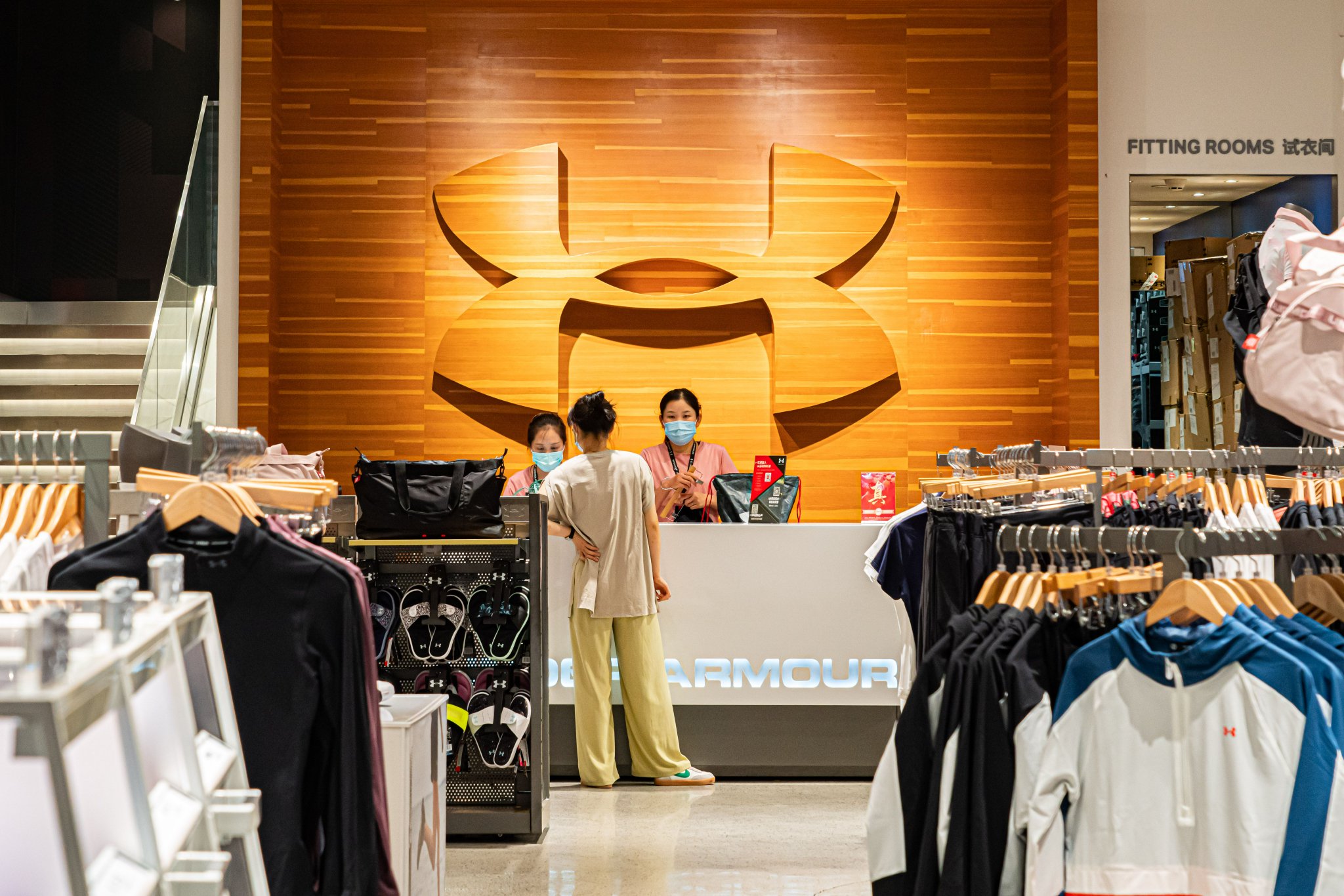
Core Insights - Under Armour has decided to cut ties with its once lucrative Curry Brand, incurring a restructuring cost of $255 million, which includes termination compensation for Stephen Curry and operational costs [1][20] - The Curry Brand generated $1 billion in annual revenue, indicating its significance in the sports brand market [1] - The decision reflects a shift in the traditional sports business model, where brands are increasingly seen as operating entities for star athletes rather than the other way around [1] Historical Context - Under Armour's partnership with Curry began in 2013 after Nike underestimated Curry's potential during contract negotiations [3][4] - The collaboration proved successful, with Curry leading the Warriors to a championship and significantly boosting Under Armour's market presence and stock price [5][6] - In 2020, Under Armour established the Curry Brand, aiming to replicate the success of Nike's Jordan brand, with Curry taking on a more active role in brand management [6][7] Financial Implications - The lifetime contract signed in 2020 was valued at over $1 billion, with Curry receiving substantial cash and stock incentives [8][9] - However, Under Armour's stock price decline has led to a significant reduction in the value of Curry's stock options, impacting his overall earnings from the partnership [9][10] - Despite the financial struggles of Under Armour, Curry's personal brand continues to thrive, with projected earnings surpassing $159.6 million in the 2025 season [10] Market Challenges - Under Armour has faced declining revenues, particularly in North America, where it has lost market share to competitors like Nike and emerging brands [12][13] - The brand's performance in the Asia-Pacific region has also deteriorated, with a notable decline in the Chinese market, which was once a growth engine [14][15] - The company struggles with brand perception, being viewed as outdated and less appealing to younger consumers compared to local brands [16][18] Strategic Shift - Under Armour's decision to part ways with Curry is part of a broader strategy to refocus on core products and regain market competitiveness [20][21] - The company aims to launch new basketball products and improve its engagement with younger consumers to reverse its declining sales trend [21][22] - The evolving landscape of athlete-brand relationships highlights the increasing power of star athletes in negotiating terms that reflect their market value [22]
可选消费W46周度趋势解析:A/H高股息和中高端消费回升带动子板块关注度提升-20251117
Haitong Securities International· 2025-11-17 07:49
Investment Rating - The report assigns an "Outperform" rating to multiple companies in the discretionary sector, including Nike, Midea Group, JD Group, Haier Smart Home, Gree Electric, Anta Sports, and others [1]. Core Insights - The report highlights a recovery in mid-to-high-end consumption and increased focus on high-dividend A/H stocks, which has driven attention to sub-sectors within discretionary consumption [1][4]. - Various sub-sectors have shown different performance trends, with overseas sportswear leading the gains, followed by luxury goods and domestic sportswear [4][12]. Performance Review by Sub-Sector - **Weekly Performance**: Overseas sportswear increased by 6.8%, luxury goods by 5.2%, and domestic sportswear by 3.8%. In contrast, the pet sector saw a decline of 5.8% [4][12]. - **Monthly Performance**: The gambling sector led with an 8.4% increase, while domestic cosmetics experienced a significant decline of 14.3% [12]. - **Year-to-Date Performance**: The gold and jewelry sector outperformed with a 137.2% increase, while overseas sportswear saw a decline of 21.5% [12]. Sub-Sector Analysis - **Overseas Sportswear**: Notable gains driven by strong Q3 FY25 earnings, particularly in EMEA and Asia-Pacific regions, alleviating market concerns [6][15]. - **Luxury Goods**: Companies like Samsonite and Burberry reported better-than-expected earnings, boosting market confidence [6][15]. - **Domestic Sportswear**: OEM companies confirmed growth expectations for 2026 orders, contributing to positive stock performance [6][15]. - **Gold and Jewelry**: The sector benefited from rising international gold prices and favorable tax regulations in Hong Kong and Macau [8][15]. - **Pet Sector**: Experienced a decline post Double Eleven sales, with increased competition among brands [15]. Valuation Analysis - The report indicates that most sub-sectors are trading below their historical five-year average P/E ratios, suggesting potential undervaluation [9][16]. - **Projected P/E Ratios for 2025**: - Overseas sportswear: 29.1x (55% of historical average) - Domestic sportswear: 14.8x (78% of historical average) - Gold and jewelry: 23.8x (45% of historical average) - Luxury goods: 27.0x (49% of historical average) [9][16].
纺织服装行业2025年三季报总结:品牌复苏方向明确,制造端关注订单修复
Shenwan Hongyuan Securities· 2025-11-17 07:15
Investment Rating - The report maintains a positive outlook on the textile and apparel industry, indicating a "Buy" rating for the sector in 2025 [2][5]. Core Insights - The report highlights a clear recovery direction for brands, with a focus on order restoration in the manufacturing sector. The domestic demand is showing a steady recovery, while external demand is under short-term pressure due to export declines [4][5]. - The retail performance of brands has been improving since the third quarter, with monthly growth rates gradually increasing from a low of 1.8% in July to 6.3% in October. The fourth quarter is expected to continue this trend due to seasonal demand and consumption promotion policies [5][13]. Summary by Sections 1. Industry Overview - Domestic demand is on a steady recovery path, with retail sales in the textile and apparel sector growing by 3.5% year-on-year to 1205.3 billion yuan from January to October 2025. The overall retail sales for the same period increased by 4.3% to 41.2 trillion yuan [4][13]. - Export pressures are evident, with textile and apparel exports in October 2025 amounting to $22.26 billion, a year-on-year decline of 12.6% [4][16]. 2. Hong Kong Sports Sector - The sports sector experienced a slight weakening in sales in Q3 2025, with brands like Anta and FILA showing low single-digit growth. However, other brands saw growth rates between 45-50% [4][24]. - Li Ning's overall sales decreased in Q3, while its youth brand maintained double-digit growth. Xtep showed stable performance with low single-digit growth in its main brand [4][24]. 3. Textile Manufacturing - The manufacturing sector faced disruptions due to tariffs in Q3 2025, with companies like Huayi and Yueyuan reporting revenue declines of 0.3% and 6.1%, respectively. However, a gradual recovery is expected as tariff impacts stabilize [4][29]. - The upstream textile sector showed steady growth, with companies like Weixing and Xin'ao reporting revenue increases of 1% year-on-year [4][29]. 4. Men's and Women's Apparel - Men's apparel showed stable revenue growth, but increased marketing and channel expansion costs pressured profits. Women's apparel is showing signs of recovery, with brands like Ge Li Si experiencing significant profit improvements [4][22]. - The report notes that women's apparel companies generally saw single-digit revenue declines, but the rate of decline has narrowed compared to 2024 [4][22]. 5. Children's Apparel - Children's apparel brands reported steady revenue growth, but increased expenses led to weaker profit performance. Companies like Semir and Jiama reported revenue growth of 5% and 3%, respectively, but faced significant profit declines [4][22]. 6. Home Textiles - The home textile sector showed varied performance, with brands like Luolai and Shuixing exceeding expectations due to successful product launches. Luolai's revenue grew by 6% year-on-year, while Shuixing's grew by 11% [4][22]. 7. Investment Analysis - The report suggests that improving domestic demand is a key investment theme for 2025, with a focus on high-quality domestic brands and recovery opportunities in the textile manufacturing sector. Recommended stocks include sports brands like Bosideng, Anta, and Li Ning, as well as home textile companies like Luolai and Shuixing [4][5].
国信证券:纺服行业预计明年结构性突破 制造企稳预期先于品牌服饰
Zhi Tong Cai Jing· 2025-11-17 02:24
Core Insights - The textile and apparel industry is expected to face pressure in 2025, with brand performance remaining subdued and manufacturing exports impacted by tariffs [1][2] - In 2026, manufacturing is anticipated to stabilize before brands, with investment opportunities focusing on resilient sectors such as outdoor sports, quality manufacturing firms benefiting from order recovery, and companies innovating in products and marketing [1][3] Industry Overview 2025 - Industry data indicates that apparel brand retail sales growth is slow, and textile manufacturing exports are weakening due to tariff impacts. Despite a low base in Q2 and Q3, growth accelerated in September and October [2] - The textile manufacturing sector experienced a high start but a decline in performance, while revenue drops in apparel and home textiles have narrowed. The sportswear segment showed better revenue growth, and online channels outperformed offline for home textiles [2] - The A-share textile and apparel index underperformed the broader market, with continuous downward adjustments in brand expectations and slow valuation increases in manufacturing [2] Outlook for 2026 - The textile manufacturing sector is expected to stabilize before the apparel sector, with structural opportunities in the industry. Key areas include the dominance of sports and outdoor categories, strong online growth driven by major home textile products, and new brands leveraging social media marketing and product iterations [3] - Brands with mid-to-high pricing power, the ability to explore niche markets, and innovative product offerings are likely to stand out in a cautious consumption environment [3] Manufacturing Opportunities - Tariff disruptions are showing signs of stabilization, with a recovery trend in exports of footwear and apparel products. Some raw materials, like wool, have seen a short-term price rebound [4] - Textile manufacturing firms are experiencing order pressures, but as tariff costs are gradually passed down, expectations for order stabilization have improved for Q4 and early next year. Companies with strong new product development and efficiency management are viewed favorably for both fundamental and valuation growth [4] Investment Recommendations - Investment focus should be on three main areas: outdoor sports, quality manufacturing, and brand innovation. The outdoor sports sector is expected to have long-term growth advantages, while brands that can innovate products and drive structural price increases are also promising [5] - Specific companies to watch include Anta Sports, Li Ning, and Xtep in the sports sector; Shenzhou International, Huali Group, and Kai Run in manufacturing; and Bosideng and Haier in the apparel and home textile sector [5]


巴黎世家发布新创意总监首支广告,GARCON BY GARCON首开线下店|是日美好事物
Xin Lang Cai Jing· 2025-11-17 01:50
Group 1: Balenciaga's New Campaign - Balenciaga has launched its first brand advertisement featuring creative director Pierpaolo Piccioli, showcasing a new female image that embodies strength and composure [1][2] - The advertisement captures moments of confidence and elegance with models Zhang Xiaofei, Yang Chaoyue, and Roh Yoon Seo in Piccioli's designs, emphasizing the philosophy of "beauty as emotion" [2][3] - The campaign aims to revive two classic symbols of the brand, the Rodeo and Le City handbags, representing a blend of practicality and refined charm [2][3] Group 2: GARCON BY GARCON's First Store - GARCON BY GARCON has opened its first offline store in Shanghai, designed by architect Guo Liao Hui, inspired by traditional Chinese architecture [8][9] - The store, named "HOME SWEET HOME," features a dialogue with Chinese traditional culture through its design and decor, showcasing a range of clothing and lifestyle products [8][9] Group 3: ARKET's New Flagship Store - ARKET has unveiled a new flagship store in Shanghai, marking its fifth location in China, with a design collaboration with Frank Chou that merges traditional and modern Chinese aesthetics [13][14] - The store offers a selection of men's, women's, and children's clothing, as well as home goods, emphasizing practicality and timeless fashion [14] Group 4: FILA's New Down Jacket Series - FILA has launched the "4810凌峰鹅绒" down jacket series, featuring a three-layer protection system designed for extreme cold environments [19][20] - The series includes high-quality materials and design elements that enhance functionality and comfort, suitable for temperatures as low as -25°C [19][20] Group 5: Li-Ning's Collaboration with Pokémon - Li-Ning has introduced a collaboration with Pokémon, creatively reimagining several classic shoe models with popular characters [24][25] - The designs incorporate elements from characters like Pikachu and Eevee, blending nostalgia with modern footwear technology [24][25] Group 6: Aesop's Seasonal Gift Boxes - Aesop has launched a seasonal gift box series themed "Fragrance in Abundance," offering a variety of options for different gifting needs [34] - The gift boxes feature unique designs inspired by everyday objects and are made from eco-friendly materials, reflecting Aesop's commitment to design excellence [34]

行业聚焦:全球羽毛球装备行业头部生产商市场份额及排名调查
QYResearch· 2025-11-17 01:21
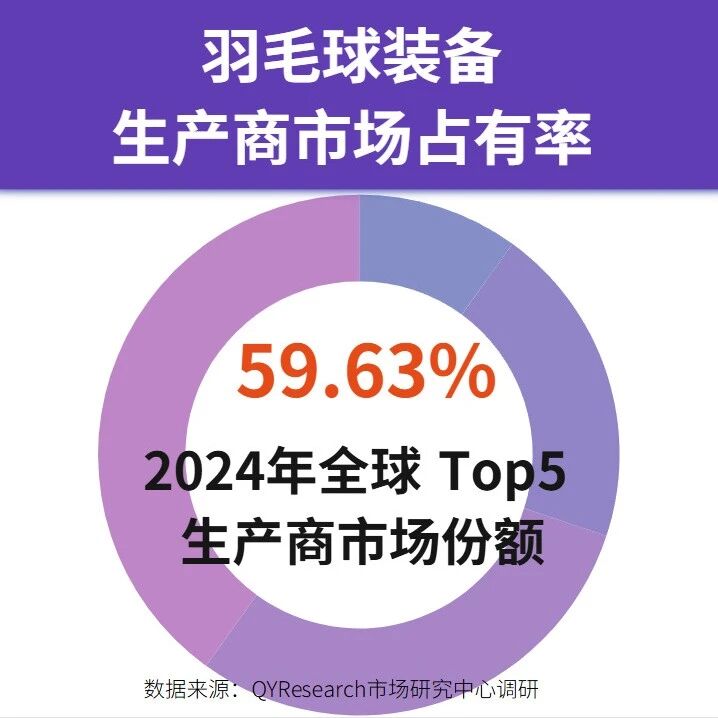
Core Viewpoint - The badminton equipment market is experiencing diversification, technological advancement, and market expansion, driven by the global popularity of badminton, especially in Asia, and the increasing demand for high-performance, personalized, and smart equipment [1][6]. Market Overview - The global badminton equipment market is projected to reach USD 1.659 billion in 2024 and is expected to grow to USD 2.421 billion by 2031, with a compound annual growth rate (CAGR) of 5.7% from 2025 to 2031 [2]. - Major companies in the market include Yonex, Victor, Li Ning, Kawasaki, and Lingmei, with the top five companies holding a market share of 59.63% as of 2024 [3]. Regional Distribution - The Asia-Pacific region dominates the global badminton equipment market, particularly in countries like China, India, Japan, and South Korea, due to the widespread popularity of the sport [6]. - The European market is growing, especially in Denmark and the UK, driven by a robust badminton training system and professional events [6]. - North America is in a developmental stage, with increasing market potential as badminton gains popularity [6]. Market Drivers - National fitness policies are promoting badminton as a low-barrier, high-participation sport, leading to increased market demand [7]. - Rising consumer income levels are driving a shift from basic to high-end, specialized equipment, fostering product innovation [7]. - The expansion of e-commerce and digital channels is lowering sales costs and broadening the consumer base, enhancing market penetration [7]. - The proliferation of badminton events and professional athletes is stimulating demand for specialized equipment [7]. Market Opportunities - The development of synthetic shuttlecock technology is reducing costs and promoting wider adoption [8]. - Environmental sustainability is becoming a key trend, with leading companies developing eco-friendly products and circular economy initiatives [8]. - Increasing consumer demand for personalized and high-end products is creating significant growth opportunities in the market [8]. Market Challenges - Intensifying competition is leading to price wars, which compress profit margins and impact brand image [10]. - Fluctuations in raw material costs, particularly for carbon fiber and natural feathers, can increase production costs and affect profitability [10]. - The cyclical nature of consumer demand for badminton equipment can lead to inventory buildup and sales pressure [10]. - Continuous innovation and R&D investment are necessary to meet the rising demand for high-performance equipment, with the risk of obsolescence for brands that fail to innovate [10].