
宁德时代

Search documents
韩国“唯一领先战略技术”被中国反超
Guan Cha Zhe Wang· 2026-02-22 10:31
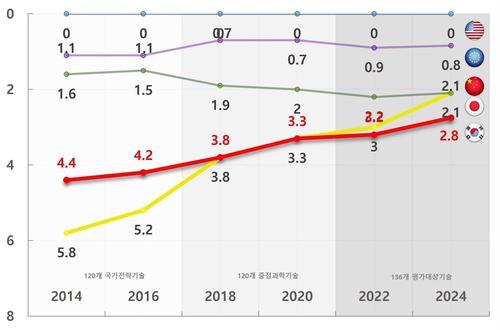
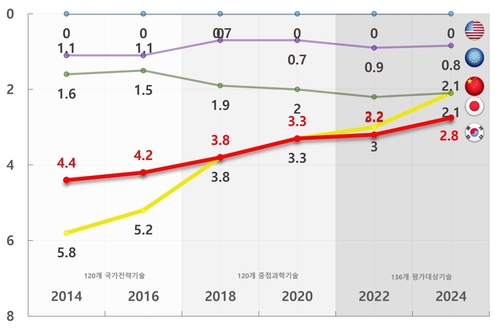
韩联社2月22日报道,2022至2024年间,在韩国重点布局的11大领域、136项核心科学技术中,韩中两国 技术水平差距进一步拉大。战略技术领域,韩国曾唯一保持领先的二次电池也被中国反超。 韩国科学技术信息通信部近期向韩国家科学技术咨询会议提交一份《2024年度技术水平评估结果(草 案)》(下称《评估结果》)。其中显示,2022年,韩国在二次电池领域曾位居第一,当时领先0.9 年。但2024年评估显示,中国已跃居第一,韩国与中国之间形成0.2年的技术差距。 中科院网站介绍,二次电池,也被称为充电电池或蓄电池,通过可逆的化学反应来储存和释放电能,在 放电后可以通过充电再次使用。常见的二次电池有镍镉电池、铅酸(或铅蓄)电池、锂离子电池等,应 用于手机、笔记本电脑、电动车等领域。 本次评估围绕11个领域136项国家核心技术,对韩、中、日、欧、美5个国家和地区的论文与专利进行定 量分析,并结合1180名专家问卷调查的定性评价综合形成。 韩科学技术信息通信部绘制的五大经济体科技发展水平走势图 《评估结果》还显示,在2022年韩国位居第二的半导体与显示领域,2024年韩国落后美国0.7年、中国 落后美国0.8年。在技术水 ...


韩媒称韩国“唯一领先战略技术”二次电池,被中国反超
Guan Cha Zhe Wang· 2026-02-22 10:27
韩联社2月22日报道,2022至2024年间,在韩国重点布局的11大领域、136项核心科学技术中,韩中两国 技术水平差距进一步拉大。战略技术领域,韩国曾唯一保持领先的二次电池也被中国反超。 韩国科学技术信息通信部近期向韩国家科学技术咨询会议提交一份《2024年度技术水平评估结果(草 案)》(下称《评估结果》)。其中显示,2022年,韩国在二次电池领域曾位居第一,当时领先0.9 年。但2024年评估显示,中国已跃居第一,韩国与中国之间形成0.2年的技术差距。 中科院网站介绍,二次电池,也被称为充电电池或蓄电池,通过可逆的化学反应来储存和释放电能,在 放电后可以通过充电再次使用。常见的二次电池有镍镉电池、铅酸(或铅蓄)电池、锂离子电池等,应 用于手机、笔记本电脑、电动车等领域。 《评估结果》还显示,在2022年韩国位居第二的半导体与显示领域,2024年韩国落后美国0.7年、中国 落后美国0.8年。在技术水平占比上,韩国为91.2%,中国为91.5%,中国也实现反超。 这份报告还显示,在整体技术水平方面,以美国为100%计,欧盟为93.8%,中国为86.8%,日本为 86.2%,韩国为82.8%。2024年中国与美 ...

算力大利空?OpenAI算力支出被爆腰斩!背后发生了什么?
Xin Lang Cai Jing· 2026-02-22 08:50
来源:投行圈子 6000亿美元的"妥协背后":OpenAI突然砍掉一半算力预算,这场AI军备竞赛要转向了? 这两天科技圈却被一条消息炸得人仰马翻。 OpenAI告诉投资者,到2030年,它的总算力支出"仅"为6000亿美元。 等等,几个月前奥特曼不还在嚷嚷着要砸1.4万亿美元搞基建吗?这砍掉的可不是小数目——8000亿美 元,相当于少建了3个特斯拉或者5个宁德时代。 消息一出,评论区立刻分成两派。一派高呼"AI泡沫要破了",另一派则忙着解释"这是两个口径,不能 简单对比"。 但无论怎么解读,有一点是确定的:那个曾经喊着"给我钱,别的甭管"的OpenAI,终于开始算账了。 从1.4万亿到6000亿,这不仅仅是数字的变化。它可能意味着整个AI行业的游戏规则,正在发生一次根 本性的转向。 今天,我们就来聊聊这6000亿美元背后,到底藏着什么信号。 01 奥特曼的"妥协" 先说清楚这6000亿到底怎么回事。 去年11月,奥特曼公开画了一张大饼:未来8年投入约1.4万亿美元,用于AI基础设施建设,主要砸向数 据中心和计算资源。这个数字有多大?相当于再造一个苹果的市值。 当时整个硅谷都倒吸一口凉气。1.4万亿,这已经不是 ...

崔东树:1月我国电池供需逐步改善 重卡电池暴增
智通财经网· 2026-02-22 06:12
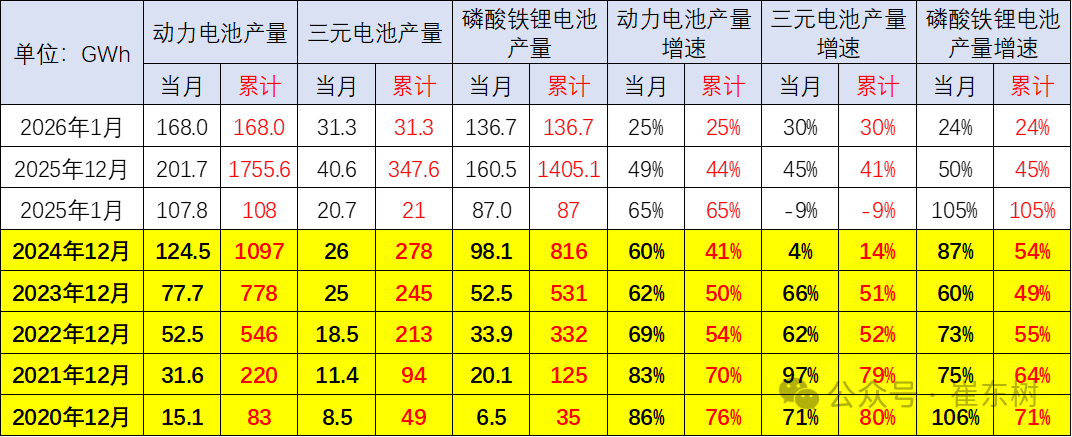
2月22日,乘联会秘书长崔东树发文称,2026年1月动力电池走势较弱,无论是出口还是内销的表现均较一般,原有的年末新能源装车高增长带来的电池增 长落空,实际状态很差。1月,我国动力和其它电池合计产量为168GWh,同比增长25%;电池增速从40%以上降到25%,电池供需逐步改善。1月的装车 电池需求极度依赖超高补贴的重卡电池暴增。 动力电池的装车占比 | 单位:GWh | | 动力电池产量 | 三元电池产量 | | | 磷酸铁锂电池 产量 | 动力电池产量 | | | 三元电池产量 | 磷酸铁锂电池 | 产量增速 | | --- | --- | --- | --- | --- | --- | --- | --- | --- | --- | --- | --- | --- | | | | | | | | | 増速 | | 増速 | | | | | | 景月 | 累计 | 当月 | 累计 | 当月 | 累计 | 景月 | 累计 | 温月 | 累计 | 景月 | 累计 | | 2026年1月 | 168.0 | 168.0 | 31.3 | 37.3 | 136.7 | 136.7 | 25% | 25% | 30 ...
中国机器人的功夫,把春晚轰向了世界
Xin Lang Cai Jing· 2026-02-21 19:40
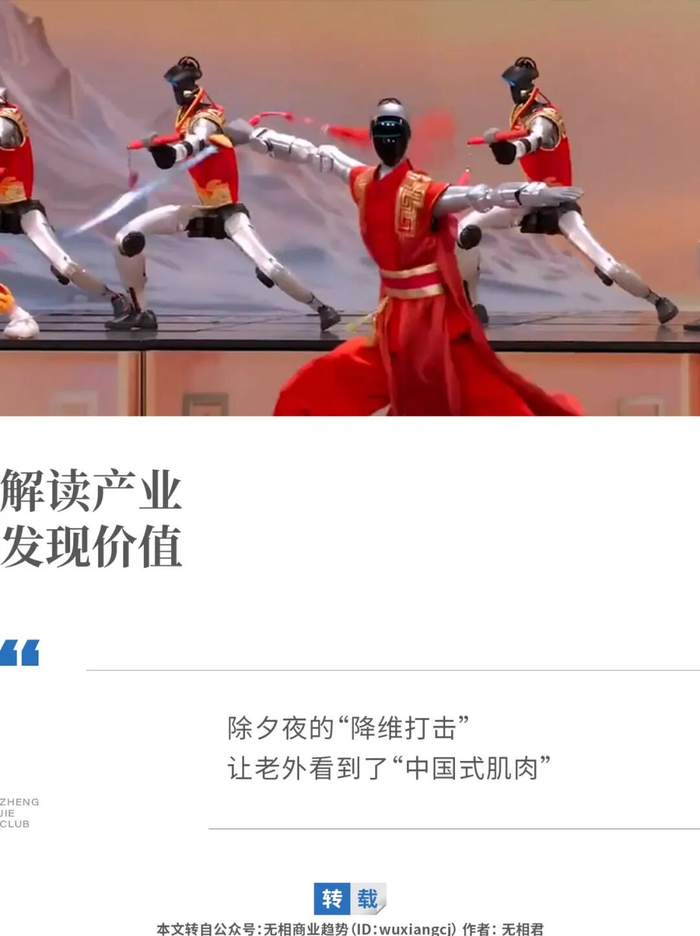
Group 1 - The 2026 Spring Festival Gala has sparked significant international discussion, primarily due to the impressive performance of humanoid robots, which has drawn attention from major foreign media outlets [4][14] - The standout program, "Wu BOT," featured over 20 robots performing complex maneuvers, showcasing advanced technology that allows them to recover after falling [5][6] - The rapid advancements in Chinese humanoid robots have been noted, with companies like Yushutech aiming to produce 10,000 to 20,000 units, significantly outpacing competitors like Tesla [8][9] Group 2 - Companies such as Suzhou Magic Atom and Beijing Songyan Power are innovating in the field, with the former focusing on self-developed hardware and the latter integrating expressive capabilities into their robots [9][10] - The performance of robots at the gala serves as a demonstration of practical applications, with companies like Galaxy General showcasing robots performing tasks that highlight their commercial viability [12] - The international perception of Chinese technology has shifted, with the gala providing a "global common language" through the demonstration of technical prowess, contrasting with traditional cultural symbols that may not resonate with foreign audiences [13][14] Group 3 - The competition in humanoid robotics is increasingly seen as a supply chain battle, with Chinese manufacturers benefiting from lower material costs and a comprehensive supply chain that is unmatched by competitors in the West [16][18] - The U.S. technology sector is focused on defining the future through significant investment, while Chinese companies are prioritizing practical applications and cash flow generation [20][21] - The Spring Festival Gala has signaled China's ambition to not only be a part of the supply chain but to lead in the field of humanoid robotics, potentially shifting international capital towards China [23] Group 4 - Despite the advancements, there are still challenges, particularly in the AI capabilities that serve as the "brain" of robots, where the U.S. currently holds an advantage [25][26] - The ability of Chinese robots to operate autonomously in unfamiliar environments remains a work in progress, and the commercial viability of these robots outside of events like the gala is a critical question for the industry [27]


低温、循环、成本:钠电为何可能吃下电动化下半场
高工锂电· 2026-02-21 11:49
摘要 电车已过山海关。 锂电池可以卖半个地球,钠电池可以卖整个地球。对于新能源汽车而言,同样如此。 中汽协数据显示, 2025 年新能源汽车在国内汽车总销量中的占比首次突破 50% ,达到 50.8% ,甚至在去年的个别月份出现了近 6 成的渗透 。 锂电作为电动化前半场的绝对主角,可能会在新能源汽车渗透过半这个关键节点遇到真正的卡点:北方市场如何推进?冬季低温容量衰减如何解决? 电车不过山海关能否被破解? 宁德时代研发体系联席总裁、 21C 研究院院长欧阳楚英曾表示,钠电池在低温场景和循环寿命上,具有无法替代的优势,特别适合北方区域寒冷环 境场景。 钠电池将是推进电动化下半场的重要参与者,锂钠协同可以被视为电动化进程的必然演化。 为进一步验证钠电池在北方乘用车市场的适配性,宁德时代联合长安汽车在牙克石通过了冬测。 结果显示,搭载钠新电池的乘用车,在 -30 ℃条件下,整车放电功率比同电量常规铁锂车型提升近 3 倍、 -40 ℃极寒下容量保持率超 90% ,甚 至在 -50 ℃的极端环境下,还能稳定放电。 作为国内最早发布钠电产品的企业,宁德时代近年来密集交付了产品样本、技术样本、甚至是商业化样本。 尽管中间 ...

美国1750亿美元关税退税,对A股的影响(附50股)
Sou Hu Cai Jing· 2026-02-21 11:41
Group 1 - The core point of the article is that the recent US Supreme Court ruling on the $175 billion tariff refund has significant implications for both China and the A-share market, despite the refund being an internal US matter [2][6][28] - The $175 billion in tariffs was primarily collected from imports, including a 10% tariff on Chinese goods, and is now being refunded to US importers [8][10] - The refund will indirectly benefit Chinese companies as US importers, who have been financially strained by tariffs, will use the refunded money to pay off debts to Chinese suppliers and resume orders [12][14][28] Group 2 - The immediate impact on the A-share market is expected to be positive, with a potential "opening red" for A-shares as market sentiment improves following the ruling [40][46] - The ruling is seen as a signal that the previous high tariffs on Chinese goods may not be a permanent state, which could lead to a more favorable environment for Chinese exports [20][48] - Structural opportunities in the A-share market are identified, focusing on five main lines: export-oriented sectors, domestic substitution, strategic resources, domestic consumption, and new energy [51][62][88] Group 3 - Export-oriented sectors, particularly those with high exposure to the US market, are expected to benefit directly from the tariff refunds, with companies like Midea Group and Haier expected to see improved performance [52][72][73] - Domestic substitution and self-sufficiency in sectors like semiconductors and military equipment are highlighted as long-term strategic focuses, with companies like SMIC and AVIC Shenyang Aircraft being key players [53][78][86] - Strategic resources such as rare earths and gold are also expected to see price support due to ongoing global supply chain disruptions, benefiting companies like Northern Rare Earth and Shandong Gold [56][87]





兴业证券:2026年关注电新、TMT、新消费等出海机会
智通财经网· 2026-02-21 07:29
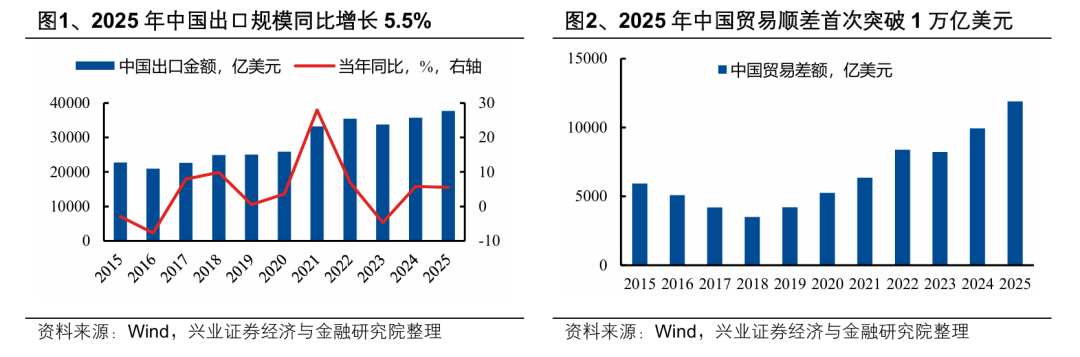
Core Viewpoint - The global industrial system is undergoing a significant paradigm shift from "efficiency first" to "security and autonomy," leading to increased demand for infrastructure and industrial construction, with China transitioning from a "final product exporter" to a "global basic industrial provider" [1][39]. Group 1: China's Foreign Trade Trends - China's foreign trade is diversifying and moving towards higher-end products, with exports reaching a historical high of $2.5 trillion in 2025, a year-on-year increase of 5.5% [2]. - The trade surplus surpassed $1 trillion for the first time, marking a significant year-on-year increase of 19.8% [2]. - Net exports contributed 1.64 percentage points to GDP growth in 2025, the second-highest level since 2007 [5]. Group 2: Regional and Product Structure - The diversification of external demand is strengthening, with emerging markets compensating for declines in the U.S. market. Exports to the U.S. fell by 19.79% year-on-year, while exports to ASEAN, Africa, and the Middle East grew by 13.64%, 25.9%, and 9.7%, respectively [8]. - High-end manufacturing products such as electrical machinery, machinery, automobiles, and ships remain the mainstay of exports, contributing 44.10%, 17.67%, 16.05%, and 6.99% to the total export scale [13]. Group 3: Opportunities for Overseas Expansion - In 2026, there are strong overseas opportunities in sectors such as electric new (batteries, grid equipment), machinery, TMT (electronics, communication, gaming), innovative pharmaceuticals, new consumption, shipbuilding, commercial vehicles, automotive parts, and chemical products [57]. - The restructuring of global supply chains is accelerating the globalization of Chinese enterprises' production capacity, with 229 companies establishing production facilities or subsidiaries in ASEAN, India, and Mexico by 2025, nearly doubling from 2024 [29]. Group 4: AI Expansion Cycle - The AI expansion cycle is a core focus in the Chinese capital market, with significant capital expenditure expected from major tech companies. For instance, capital expenditures from major cloud service providers in North America are projected to reach $598.7 billion in 2026, a 67% increase year-on-year [45][46]. - The demand for AI-related hardware is expected to drive growth in related sectors, benefiting domestic manufacturing leaders in robotics and consumer electronics [48]. Group 5: Cultural and Technological Output - Chinese enterprises are also focusing on cultural and technological exports, with significant growth in overseas revenue from IP (e.g., toys, games) and lifestyle brands (e.g., new tea drinks, e-commerce) [49][50]. - The innovative pharmaceutical sector is becoming a key player in the global market, with several new drugs commercialized in the U.S. and Europe, indicating strong potential for further overseas opportunities in 2026 [53].

烧了540亿,机器人进入“吃鸡游戏”拐点
Xin Lang Cai Jing· 2026-02-21 06:56
Core Insights - The 2026 Spring Festival Gala showcased a strong presence of robots, indicating a shift in the robotics industry towards a survival-of-the-fittest competition, moving from market expansion to a "battle royale" scenario focused on practical applications [1][6][10] Industry Overview - The number of humanoid robot companies in China is projected to increase from over 120 in 2023 to over 320 by 2025, with industry financing exceeding 58 billion yuan [2] - In 2025, the financing amount for robots is expected to reach 38 billion yuan [3] - In January 2026 alone, the financing amount reached 16 billion yuan, indicating a robust investment climate [4] Competitive Landscape - The "Hundred Machines Battle" has transitioned from concept to reality, with notable companies like Yushu Technology and ZhiYuan Robotics leading the charge, while new entrants like UniX AI are rapidly emerging [5] - Major tech firms such as Tencent, Baidu, and JD.com are now investing in the robotics sector, intensifying competition [5] - The Spring Festival Gala served as a platform for companies to gain exposure, with estimates suggesting that each company spent nearly 100 million yuan for a few minutes of airtime [6] Market Dynamics - The global shipment of humanoid robots is expected to reach 18,000 units in 2025, a staggering increase of 508% year-on-year, with Yushu Technology and ZhiYuan Robotics capturing nearly 60% of the market share [7] - The industry is entering a phase of consolidation, with predictions that over 230 companies will significantly reduce in number as competition intensifies [8] Investment Trends - The investment landscape is shifting, with a 31.7% decrease in the number of financing events but a 46.8% increase in average financing amounts, indicating a focus on companies with clear market applications [12] - Companies are increasingly required to demonstrate practical applications of their robots to attract investment [13] Technological Advancements - Companies like UniX AI are innovating with new robot models designed for real-world applications, emphasizing the importance of practical functionality [14] - The cost of humanoid robots currently ranges from 300,000 to 800,000 yuan, posing challenges for widespread adoption [15] - The Chinese robotics industry benefits from a robust supply chain, which is expected to drive down costs significantly in the coming years [16][19] Future Outlook - The integration of advanced manufacturing capabilities and the development of core components are expected to enhance the competitiveness of Chinese robotics firms [17][18] - Predictions suggest that the price of humanoid robots could drop to several thousand yuan within the next few years, facilitating broader market penetration [19] - The industry faces challenges related to data scarcity for training robots, but companies are exploring innovative solutions to overcome these hurdles [20]
宁德时代终止股权置换交易,股价波动引关注
Jing Ji Guan Cha Wang· 2026-02-21 06:42
经济观察网 2026年2月中旬,宁德时代与永太科技的股权置换交易终止成为焦点。永太科技于2月14日 公告,因交易各方未能就方案达成一致,决定终止筹划以发行股份购买宁德时代持有的永太高新25%股 权。行业分析指出,天赐材料子公司诉永太科技商业秘密侵权,索赔金额达8.87亿元,是交易的主要障 碍,直接影响估值与合作信任。此外,宁德时代于2月16日被纳入恒生指数成分股,可能带来被动资金 配置。 股票近期走势 财报分析 根据2026年2月19日的市场解读,宁德时代2025年三季报显示稳健表现:前三季度归母净利润近500亿 元,同比增长显著;储能业务成为第二增长曲线,毛利率高于动力电池;经营现金流超800亿元,体现 强健的财务质量。分析认为,公司成本控制与产品结构优化支撑了盈利韧性。 以上内容基于公开资料整理,不构成投资建议。 宁德时代股价在2026年2月13日出现波动,收盘报365.34元,单日下跌2.80%,振幅3.19%;主力资金净 流出11.52亿元,换手率0.52%。同期,电力设备板块下跌2.03%,电池板块下跌1.59%。截至2月13日, 宁德时代5日涨跌幅为-1.02%,20日涨跌幅为3.70%,市盈率( ...