宁德时代

Search documents
力勤资源申请深交所主板上市获受理,计划募资40.47亿元
Xin Lang Cai Jing· 2026-02-21 02:29
Company Projects - Company plans to raise no more than 4.047 billion yuan for wet method slag resource demonstration project and MHP refining production project, which will help expand capacity, deepen industry chain integration, and enhance resource supply capabilities to domestic downstream enterprises such as new energy vehicles and stainless steel industry [1] Company Valuation - As of January 26, 2026, the market capitalization of the company's H-shares is approximately 38.3 billion HKD, with a price-to-earnings ratio of 12-15 times, while similar A-share peers have a price-to-earnings ratio range of 24-28 times, indicating potential for value re-evaluation upon returning to A-shares [2] - The A-share market has a larger investor base, which is expected to attract more domestic institutional funds and improve the low liquidity situation of the Hong Kong stock market, where the turnover rate was only 0.32% on February 20, 2026 [2] Industry and Risk Analysis - Company leads globally in nickel product trade volume, with significant cost advantages in wet method projects (gross margin of 39.7%), and has established partnerships with battery companies such as CATL and Rongbai Technology, which can further strengthen brand influence and support new energy industry chain layout upon returning to A-shares [3] Stock Performance - The process of returning to A-shares may serve as a short-term catalyst for stock price, as seen on February 11, 2026, when the stock price rose over 7% due to news of Indonesia reducing nickel ore quotas, but then fell 8.38% on February 13, reflecting sensitive market sentiment [5] - Long-term focus should remain on nickel price trends, project production progress, and industry supply-demand changes, with Goldman Sachs raising the 2026 nickel price forecast to 17,200 USD per ton [5]
【兴证策略张启尧团队】2026年出海链有哪些投资机会?
Xin Lang Cai Jing· 2026-02-21 01:42
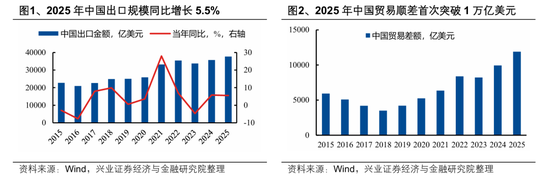
Group 1 - In 2025, China's foreign trade showed strong resilience, with total exports reaching a historical high, growing by 5.5% year-on-year, despite a complex external environment [1][57] - China's trade surplus exceeded $1 trillion for the first time, marking a significant increase of 19.8% year-on-year [1][57] - The net export of goods and services contributed 1.64 percentage points to GDP growth, the second-highest level since 2007, only behind 2021 [3] Group 2 - The diversification of external demand has strengthened, with emerging markets compensating for the decline in exports to the US, which fell by 19.79% year-on-year [6] - Exports to ASEAN, Africa, and the Middle East saw significant growth rates of 25.9%, 13.64%, and 9.7% respectively, contributing positively to the overall export scale [6] - The share of US exports in China's total exports decreased by 3.53 percentage points to 11.15% [6] Group 3 - The product structure of China's foreign trade is shifting towards higher value chains, with high-end products like electrical machinery, machinery, automobiles, and ships being the main export drivers [8] - Traditional light industrial products such as furniture and toys have seen a decline in export scale due to tariff friction and industrial chain relocation [8] Group 4 - The restructuring of global supply chains is creating significant opportunities for Chinese companies, with a notable increase in the number of Chinese enterprises establishing production capacities abroad, reaching 229 in 2025, nearly doubling from 2024 [18] - ASEAN, Mexico, and India are the primary destinations for Chinese production capacity outflows, with ASEAN covering a wide range of industries [18] Group 5 - The AI expansion cycle is a core focus in the Chinese capital market, with significant growth expected in AI computing hardware, supported by macro investment scales and healthy balance sheets of major tech companies [29][30] - The capital expenditure of major cloud service providers is projected to increase significantly, reflecting strong demand for AI computing [35] Group 6 - Cultural and technological value output is becoming a major trend for Chinese enterprises going abroad, with significant growth in IP exports and innovative products in sectors like gaming and new dining [39][41] - The Chinese innovative pharmaceutical sector is increasingly integrated into the global supply chain, with more products commercialized in the US and Europe [41] Group 7 - Key sectors with strong overseas expansion opportunities in 2026 include new energy (batteries, grid equipment), machinery, TMT (technology, media, telecommunications), and innovative pharmaceuticals [46] - The gaming industry is also highlighted for its potential, with significant overseas revenue growth expected [49]





宁德时代公布国际专利申请:“电池单体、硅碳复合材料及制备方法、电池装置及用电装置”
Sou Hu Cai Jing· 2026-02-21 00:18
Core Viewpoint - CATL has filed an international patent application for a new battery technology, indicating its ongoing commitment to innovation and research in the battery sector [1] Group 1: Patent Application - The patent is titled "Battery Monomer, Silicon-Carbon Composite Material and Preparation Method, Battery Device and Power Device" with application number PCT/CN2025/079658 [1] - The international publication date for the patent is set for February 19, 2026 [1] Group 2: Research and Development - In 2023, CATL has announced a total of 262 international patent applications, representing a 33.67% increase compared to the same period last year [1] - For the first half of 2025, the company invested 10.095 billion yuan in research and development, which is a year-on-year increase of 17.48% [1]

开局就是奋斗 起步就要奋进丨洛阳千亿项目“加速跑”
He Nan Ri Bao· 2026-02-20 23:16
Group 1 - The Ningde Times Luoyang base is currently undergoing the construction of its third and fourth phases, with over a thousand workers actively engaged on-site during the Chinese New Year [1][3] - The first two phases of the Luoyang base have achieved a cumulative output value exceeding 22 billion yuan [3] - The total area for the ongoing third and fourth phases is approximately 1,600 acres, with a building area of about 710,000 square meters, and the projected annual output value upon completion is expected to exceed 100 billion yuan [3] Group 2 - The project management has optimized personnel scheduling and ensured material supply to maintain construction progress while providing care for workers during the holiday [1][2] - The Luoyang base is a core production facility for Ningde Times globally, emphasizing high-quality construction and efficient progress since its establishment [3] - The production line at the Luoyang base features flexible manufacturing capabilities, allowing for quick switching between different product specifications to meet diverse vehicle requirements [2]
贵州省2025年国民经济和社会发展计划执行情况与2026年国民经济和社会发展计划草案的报告
Xin Lang Cai Jing· 2026-02-20 22:46
Group 1: Traditional Industry Optimization - The strategy focuses on enhancing traditional industries, particularly in mineral resource processing and the development of the liquor industry, with expected growth rates of over 12% in chemical and 10% in non-ferrous industries [1] - The initiative includes the establishment of new coal washing plants and the expansion of coal production to reach 190 million tons, alongside the development of renewable energy projects [1] - The liquor industry aims to strengthen its brand and expand international markets, with plans for a three-year action plan for overseas marketing [1] Group 2: Emerging Industry Cultivation - The digital economy is targeted for growth, with a goal for its core industries to contribute 5.5% to the regional GDP, supported by the establishment of data centers and the implementation of the "East Data West Computing" project [2] - The electric vehicle and new energy materials sectors are expected to see a 10% increase in value, with significant investments in battery production and infrastructure [2] - The advanced equipment manufacturing sector is being developed to support national strategic industries, including aviation and emergency rescue equipment [2] Group 3: Development Zone Enhancement - The management reform of development zones is being implemented, with a focus on increasing the utilization rate of standard factory buildings and establishing a digital management platform [3] - The construction of high-level development zones is underway, with two zones expected to reach a scale of 50 billion and 22 zones at 10 billion [3] Group 4: Service Industry Growth - The logistics sector is being enhanced with the establishment of national logistics hubs and a reduction in logistics costs, aiming for a ratio of logistics costs to GDP to drop to 13.8% [5] - The retail and hospitality sectors are encouraged to innovate, with support for digital supply chains and the introduction of new business models [6] - The tourism industry is being promoted through the development of key scenic areas and the integration of cultural and tourism sectors, with a target of 8% growth in tourist numbers and spending [7] Group 5: Agricultural and Rural Development - The agricultural sector is focused on improving quality and efficiency, with a target of a 2% increase in grain yield and the establishment of emergency supply bases for vegetables [21] - Rural revitalization efforts include enhancing infrastructure and public services, with a goal of covering 53% of the rural population with water supply projects [22] Group 6: Green Transition Initiatives - The implementation of carbon emission control measures aims to reduce CO2 emissions per unit of GDP, with a focus on energy efficiency and low-carbon projects [23] - Pollution prevention and ecological restoration efforts are being intensified, with specific targets for air and water quality improvements [24] Group 7: Risk Management and Stability - Financial risk management is prioritized, with measures to control local government debt and ensure the repayment of existing debts [26] - Safety production measures are being enhanced to prevent major accidents, with a focus on high-risk sectors such as mining and transportation [27] - Social stability is being maintained through comprehensive governance and public safety initiatives [28] Group 8: Social Welfare and Public Services - Employment stabilization measures are being implemented to support key groups, with a focus on enhancing job opportunities and skills training [29] - Public service quality is being improved, particularly in healthcare, with the establishment of regional medical centers and enhanced community health services [30] - Social security measures are being reinforced to ensure basic living standards and support for vulnerable populations [32]
火爆的AI数据中心液冷,核心硬件制造工艺技术与材料梳理,建议收藏!
DT新材料· 2026-02-20 16:04
Core Viewpoint - The rapid growth in sectors such as electric vehicles, data centers, and energy storage systems highlights the critical role of water cooling plates (liquid cooling plates) in determining equipment stability and lifespan. The design of flow channel structures in liquid cooling units significantly impacts the thermal performance of battery modules, with well-designed units enhancing thermal uniformity. The manufacturing process of water cooling plates is influenced by material selection, flow channel design, pressure resistance, and cost efficiency [2]. Group 1: Material Selection and Preprocessing - Aluminum alloy is the primary material for power battery water cooling plates due to its balanced properties of thermal conductivity, lightweight, strength, processability, and cost, with 3003 aluminum alloy being widely used for its good overall performance [5]. - Copper alloy, specifically purple copper (thermal conductivity of 401 W/m.K), is used in high-power scenarios (e.g., 800V high-voltage platforms) but requires nickel plating or anodizing to address corrosion issues [5]. - Composite materials are utilized when higher strength is required, typically in a three-layer structure: core material + brazing layer + sacrificial layer [5]. - Surface degreasing is performed using ultrasonic cleaning (frequency 28-80 kHz) to remove oil and ensure effective subsequent welding or passivation [5]. - Passivation treatment involves forming a nano-level protective film on the surface using chromate or non-chromate passivation solutions, achieving over 1000 hours in salt spray tests [5]. Group 2: Manufacturing Processes - Stamping forming is a core process for mass production, utilizing a servo press to achieve 60 strokes per minute with a flow channel depth tolerance of ±0.05mm, suitable for medium and small cooling plates with over 70% material utilization [6]. - Hydraulic forming is recognized for its ability to create complex flow channels, while extrusion forming offers a low-cost standardized solution by extruding aluminum profiles with pre-formed flow channels [10][11]. - 3D printing represents a breakthrough in structural innovation, allowing for the creation of intricate designs that enhance cooling efficiency [14]. Group 3: Flow Channel Processing - The embedded pipe process involves milling grooves in aluminum substrates and inserting copper pipes, suitable for shallow embedded cooling plates [17]. - Advances in technology include the use of Direct Metal Laser Sintering (DMLS) to manufacture seamless cooling plates, achieving over 6 bar pressure resistance [18]. - Innovative designs, such as oblique fins, have been implemented to improve heat dissipation efficiency by 20% in specific applications [18]. Group 4: Welding Processes - Vacuum brazing is the preferred choice for large-scale production, allowing for complex flow designs and achieving over 30% improvement in heat dissipation efficiency [23]. - Friction Stir Welding (FSW) offers high-strength connections with excellent fatigue resistance, although it has limitations in equipment customization costs and welding speed [26]. - The combination of stamping and brazing processes provides an optimal cost-performance ratio, supporting complex flow channel designs [30]. Group 5: Surface Treatment and Quality Control - Anodizing enhances corrosion resistance by generating a 5-20μm oxide film, improving durability by 10 times [35]. - Helium mass spectrometry leak detection is utilized for battery cooling plates, achieving a leak rate of ≤0.1 sccm [36]. - Internal quality checks include ultrasonic C-SAM detection to identify brazing defects and coordinate measuring machines to verify flow channel dimensions [40]. Group 6: Comparison of Typical Manufacturers' Processes - CATL employs a combination of hydraulic forming, vacuum brazing, and helium testing, achieving a 35% reduction in costs for battery pack cooling plates [37]. - BYD utilizes stamping forming, direct cooling technology, and AI visual inspection, enhancing processing efficiency by 40% [39]. - Tesla integrates 3D printing, biomimetic flow channels, and ultrasonic welding, leading the industry in structural innovation by 2 years [39]. - Valeo combines extrusion forming, biomimetic flow channels, and FSW, resulting in a 20% improvement in cooling efficiency for high-end vehicle cooling plates [42].

港股迎马年首个交易日,机器人板块逆势大涨
凤凰网财经· 2026-02-20 13:07
Core Viewpoint - The Hong Kong stock market experienced a collective decline on the first trading day of the Year of the Horse, with significant interest in robotics stocks following their appearance at the Spring Festival Gala, which led to a strong performance in this sector [1][5]. Market Performance - The Hang Seng Index fell by 0.6%, the Hang Seng Tech Index dropped by 2.28%, and the Hang Seng China Enterprises Index decreased by 0.59% [1]. - Major tech stocks faced pressure, with Baidu Group-SW down 5.67%, Kingdee International down 5.47%, Bilibili-W down 5.12%, and JD Health down 5.03%. Alibaba-W also saw a decline of 3.75% [3][1]. Sector Highlights - Robotics stocks surged, with notable gains including Yujian up over 19%, Suten up over 9%, and UBTECH and Sanhua Intelligent Control both up over 6% [5]. - The electric equipment sector also performed well, with China High-Speed Transmission up over 17%, Shanghai Electric up over 6%, and Harbin Electric up over 4% [7][9]. - The semiconductor sector saw fluctuations, with Lanke Technology rising nearly 2% before retreating, while Tensu Zhixin fell over 6% after reaching a historical high [9]. Investment Recommendations - Haitong Securities suggests focusing on three key areas for future investments: 1. Semiconductor hardware, particularly storage, which is expected to benefit from ongoing global demand [10]. 2. Specialty consumption sectors, such as dining and innovative pharmaceuticals, which are anticipated to see improved market conditions [10]. 3. The electric equipment sector, driven by the need for upgrades in power systems and the influx of passive funds following the inclusion of CATL in the Hang Seng Index [10].

告别泡沫叙事:九大关键词看懂2025中国消费 | 年终盘点
Sou Hu Cai Jing· 2026-02-20 12:37
Group 1: Core Insights - The Chinese consumer market in 2025 is characterized by both chaos and fragmentation, with a shift towards efficiency, value, and trust as the essence of competition [2] - The year witnessed significant events such as the end of the food delivery war, a crisis in the prepared food sector, and the rise of hard discounts while soft discounts declined [2] - Major international brands are seeking survival through divestitures, while the middle class experiences repeated disillusionment in consumption [2] Group 2: Food Delivery War - The food delivery war was ignited by JD's aggressive entry into the market, leading to a fierce subsidy competition among major players like Meituan and Alibaba [5][6] - In Q2 2025, the three major players burned through at least 30 billion yuan, equivalent to the total industry profit of the previous year [6] - The war has severely impacted small businesses and delivery personnel, highlighting the unsustainable nature of the competition [6] Group 3: Prepared Food Crisis - The prepared food crisis began with a public dispute involving a well-known restaurant, exposing significant gaps in consumer trust and industry standards [10][11] - The crisis has led to the closure of 102 stores by the affected restaurant and highlighted the precarious state of the industry, with many companies facing severe losses [12] - The market for prepared foods is projected to grow significantly, with the government moving towards establishing clearer standards [12][13] Group 4: Hard Discount Battle - The hard discount retail sector is experiencing explosive growth, with major players like JD and Hema aggressively expanding their store presence [16][18] - The distinction between hard and soft discounts is becoming more pronounced, with hard discounts focusing on sustainable low prices through private label products [18][19] - The competition is shifting from price wars to efficiency in supply chains and operational capabilities [19] Group 5: Dairy Product Trends - The "milk skin" product has gained immense popularity, evolving from a local specialty to a nationwide trend, with significant sales figures reported [21][22] - The product's success is attributed to its versatility and the ability to integrate into various food categories, driving demand and industry expansion [22] Group 6: Medicinal Food Market - The market for medicinal food has surpassed 370 billion yuan, with a growing emphasis on integrating traditional Chinese medicine into everyday food products [25][26] - The industry is witnessing an expansion of raw materials and innovative product forms, driven by advancements in technology and consumer demand [27][28] Group 7: International Brand Divestitures - In 2025, international brands like Starbucks and Burger King began divesting their Chinese operations, indicating a shift in market dynamics [31][32] - The decline in market share for these brands is attributed to their inability to adapt to the rapidly changing consumer landscape in China [32] - Successful local brands have capitalized on this opportunity, demonstrating the potential for growth through localized strategies [33] Group 8: Middle-Class Consumer Sentiment - The middle class in China is experiencing a sense of disillusionment, reacting negatively to price increases and perceived quality issues [36][39] - This demographic is increasingly critical of brands that do not meet their expectations, indicating a shift in consumer behavior and brand loyalty [39] Group 9: Weight Management Trends - 2025 has been dubbed the "Year of Weight Management," with a national initiative promoting healthy weight control [41][44] - The market for weight management products is projected to reach 326 billion yuan, with a significant increase in demand for functional foods [45][46] Group 10: IPO Activity in Hong Kong - The Hong Kong stock exchange has seen a surge in IPO activity, with 111 companies raising over 250 billion yuan in 2025, surpassing previous expectations [49][50] - The consumer sector has been a major focus, with numerous retail and consumption-related companies going public [50][51] - The trend of dual listings (A+H shares) is also gaining momentum, indicating a robust interest in capital markets [52]

港股马年开市现结构性行情,两大交易所集中释放利好
2 1 Shi Ji Jing Ji Bao Dao· 2026-02-20 10:53
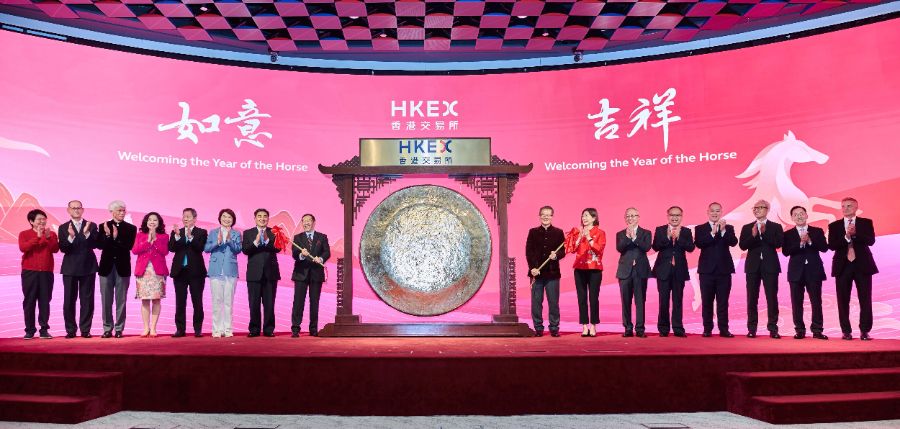
Market Overview - The Hong Kong stock market opened for trading on February 20, 2023, with the Hang Seng Index closing down 1.10% and the Hang Seng Tech Index down 2.91% [1][5] - Despite the overall market decline, several robotics concept stocks rose significantly, driven by the "Spring Festival Gala effect" [1][5] IPO Activity - As of the beginning of the year, 24 new stocks have been listed on the Hong Kong Stock Exchange, raising over 87 billion HKD, with 488 companies currently waiting to go public [1][12] - The average daily trading volume in January exceeded 278 billion HKD, indicating effective liquidity enhancement measures [12] Sector Performance - The technology sector faced pressure, with major internet stocks like Baidu, Alibaba, and Tencent experiencing declines of 6.25%, 4.91%, and 2.06% respectively [5] - In contrast, the robotics sector saw notable gains, with stocks such as Yujian rising by 21.4%, SUTENG by 9.24%, and UBTECH by 4.71% [6][8] Gold Market - The Hong Kong gold market also performed well, with gold prices opening at 46,518 HKD per two taels and closing at 46,685 HKD, marking an increase of over 200 HKD [13] - The Hong Kong government aims to establish the city as an international gold trading center, targeting over 2,000 tons in gold storage within three years [12][13] Index Adjustments - The Hang Seng Index will increase its constituent stocks from 88 to 90, adding companies like CATL and Luoyang Molybdenum, effective March 9, 2023 [16] - The adjustments are expected to influence trading strategies, particularly for stocks that will be included in the Stock Connect program [17]
掌握10万亿美元资产,美国犹太资本巨头,已全面渗透中国
Sou Hu Cai Jing· 2026-02-20 10:23
Core Viewpoint - BlackRock, the world's largest asset management company, has established a significant presence in the Chinese market, managing assets worth $300 billion through a complex financial network [2]. Group 1: Investment Strategy and Market Entry - BlackRock made its initial investment in China in 2006 by acquiring a stake in China Bank Fund, marking the beginning of its strategic entry into the market [4]. - Following the removal of foreign ownership limits in April 2020, BlackRock quickly submitted an application to establish a wholly-owned public fund company in August 2020 [4]. - By June 2021, BlackRock became the first foreign institution allowed to set up a wholly-owned public fund in China, showcasing its first-mover advantage [6]. Group 2: Investment Holdings and Influence - As of the end of 2024, BlackRock indirectly holds stakes in over 1,200 Chinese listed companies through more than 200 fund products, creating a network that spans critical sectors of the Chinese economy [10]. - In the electric vehicle sector, BlackRock is the second-largest institutional shareholder of CATL and holds approximately 6.2% of BYD's H-shares, along with significant stakes in other new energy vehicle companies [10][12]. - BlackRock's investments extend across the entire electric vehicle supply chain, from battery manufacturing to vehicle production and charging infrastructure [12]. Group 3: Regulatory Environment and Challenges - A 2024 report from the U.S. Congress highlighted that BlackRock invested billions in several Chinese companies under U.S. sanctions, prompting calls for legislative action to limit such investments [20]. - In response to foreign capital penetration, Chinese regulatory bodies have begun to enhance oversight, particularly concerning investments in critical information infrastructure and data resources [22]. - New regulations introduced in March 2024 emphasize compliance for foreign financial institutions, with a focus on preventing circumvention of regulations through complex financial structures [24]. Group 4: Future Outlook and Strategic Developments - By the third quarter of 2025, BlackRock's asset management scale in China reached $1.225 trillion, reflecting a 12% year-on-year growth despite regulatory pressures [28]. - BlackRock's ongoing expansion in China signifies a broader trend of foreign capital navigating the balance between openness and security in the financial landscape [30].